
Touring the United Nations Headquarters was one of the more unusual additions to our New York City itinerary. Instead of simply seeing another famous building, our family walked through the rooms where representatives from around the world meet to discuss international conflicts, human rights, development, and other global issues.
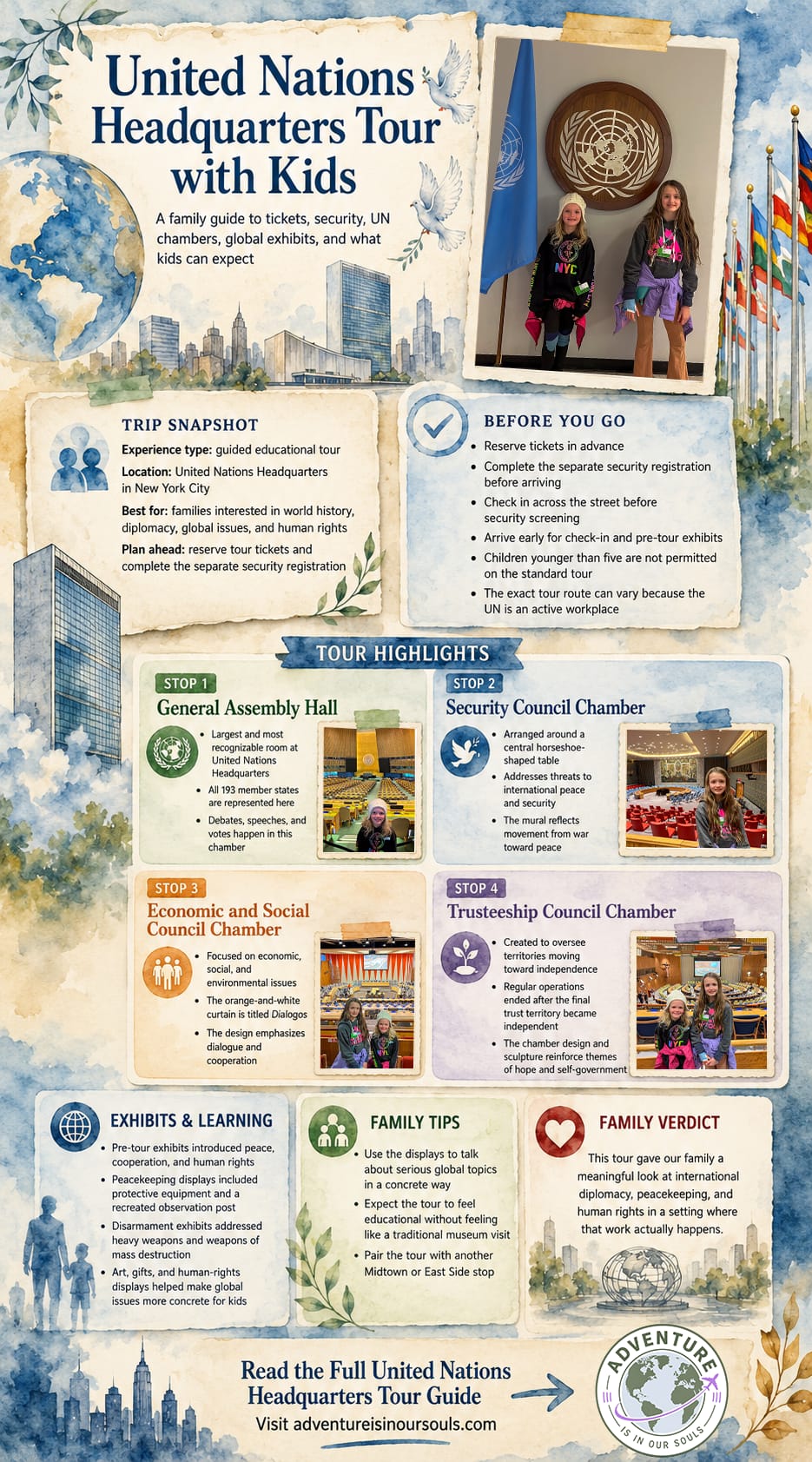
During our guided tour, we visited the General Assembly Hall, Security Council Chamber, Economic and Social Council Chamber and Trusteeship Council Chamber. We also explored exhibits about peacekeeping, landmines, military spending, weapons of mass destruction and human rights. Seeing the chambers and exhibits in person made subjects that can feel distant or abstract much more tangible for Buttercup and Spider Monkey.
What Is the United Nations Headquarters Tour?
The standard guided tour takes visitors through the working headquarters of the United Nations. Guides explain the organization’s history and mission while discussing its work in areas such as peace and security, sustainable development, and human rights.
Because the United Nations Headquarters is an active workplace, the exact tour route can vary. Meetings and official events may limit access to particular chambers. Our timing worked especially well because we were able to see all four of the major chambers included along the tour route, although other visitors should not assume that every room will be available during every tour.
Tickets, Registration and Security
United Nations tour tickets must be reserved in advance. Purchasing a tour ticket does not complete the separate security registration required to enter the property, so families need to make sure that both steps are finished before arriving.
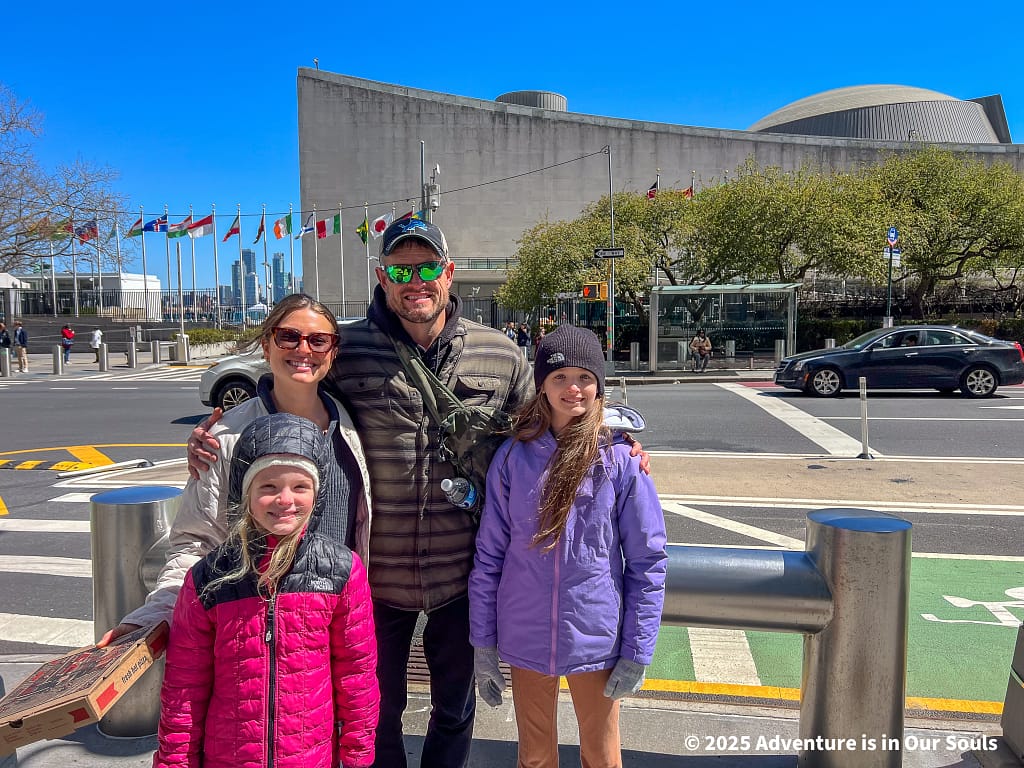
Visitors begin at the check-in office across the street from the United Nations complex and then proceed to the visitors’ entrance for security screening. The United Nations recommends arriving well before the scheduled tour time, and the additional check-in process makes this one attraction where arriving early really does matter. Children younger than five are not permitted on the standard tour, and minors must be registered as part of an adult’s group.
Exploring the United Nations Before the Tour
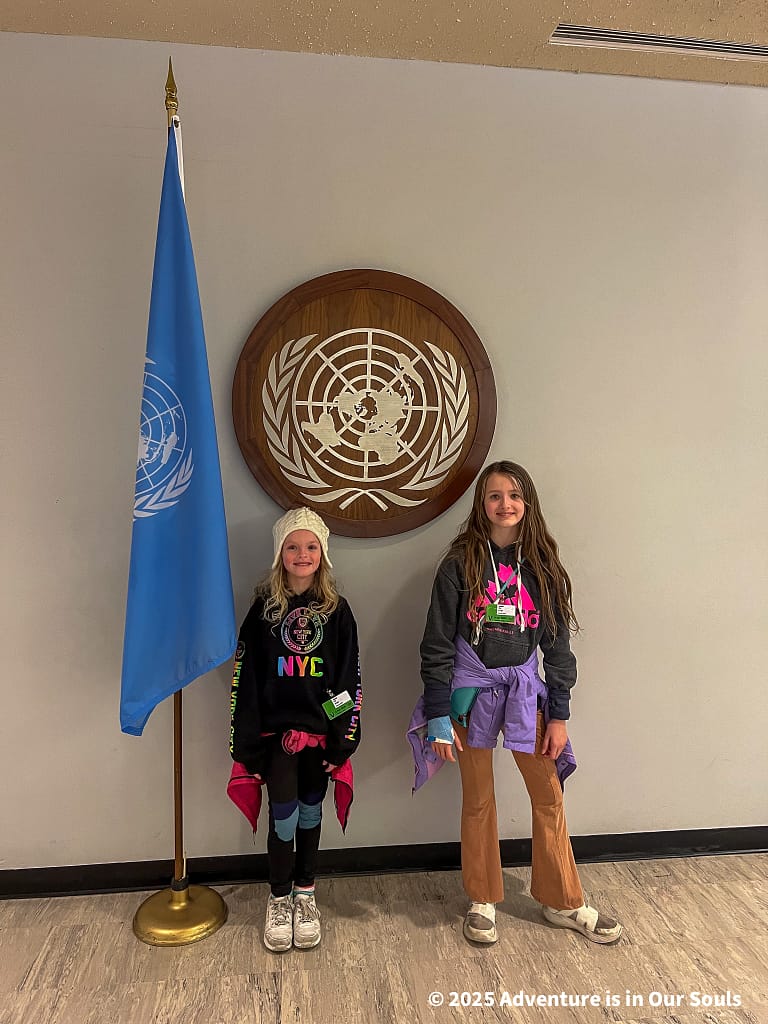
After completing security, we entered the main United Nations building with time to explore before our guided tour began. Rather than waiting in one designated area, visitors can walk through exhibits that introduce the organization’s work and the global issues addressed throughout the tour. During our visit, the indoor displays included art and personal stories representing people and communities from different parts of the world.
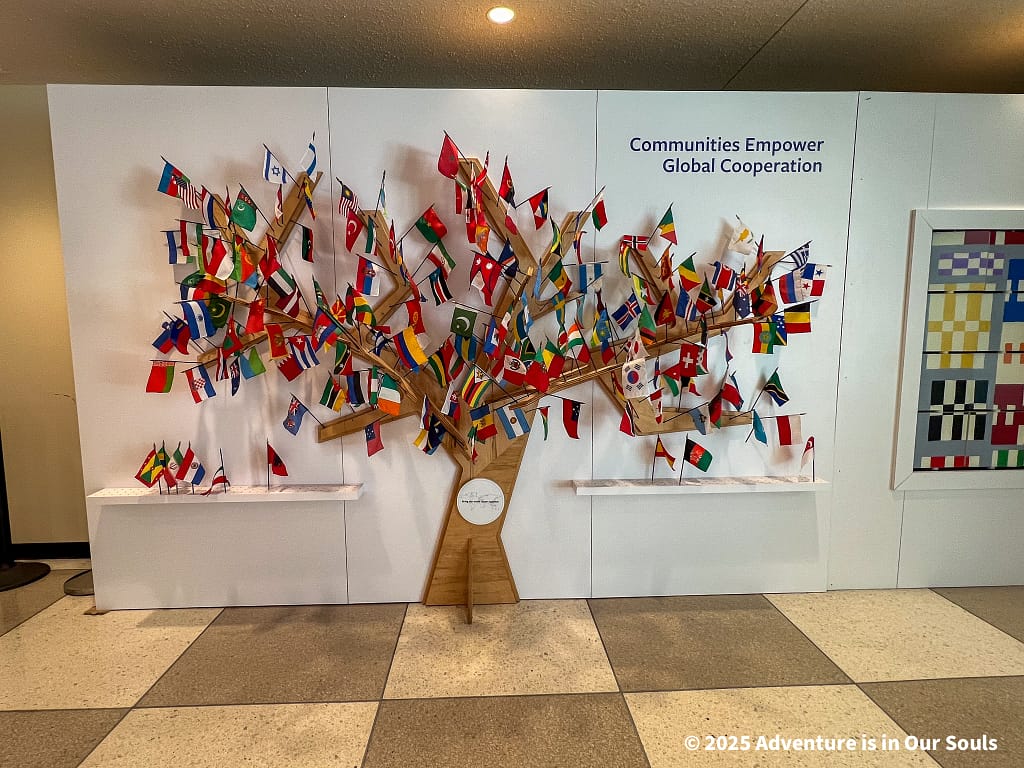
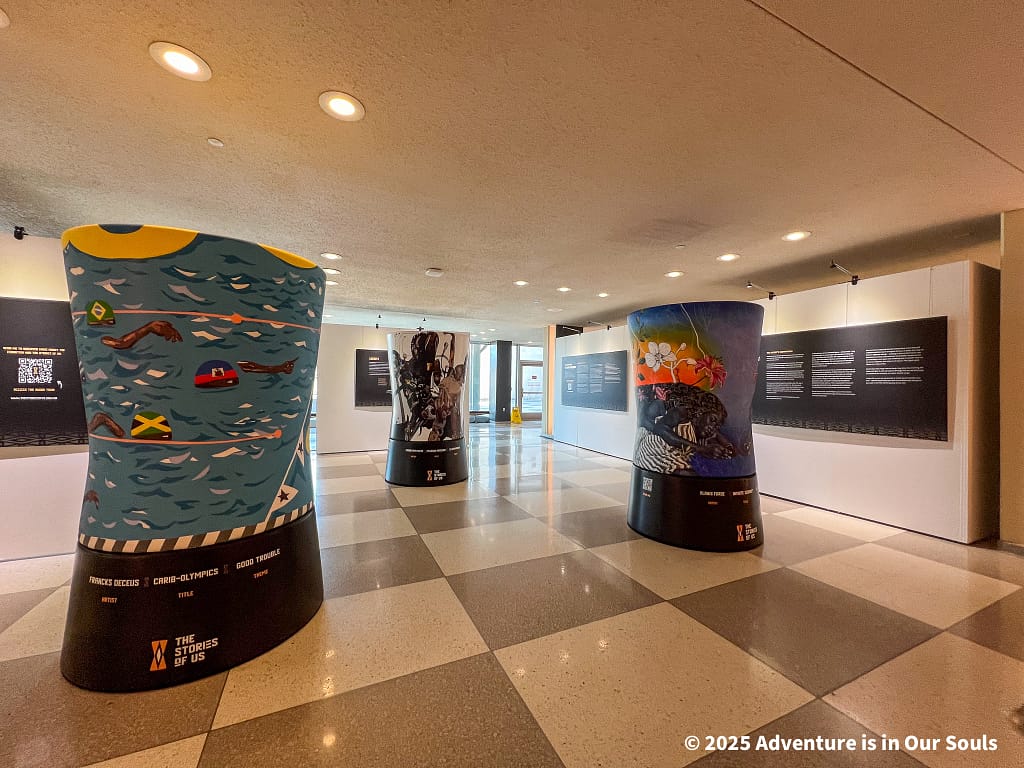
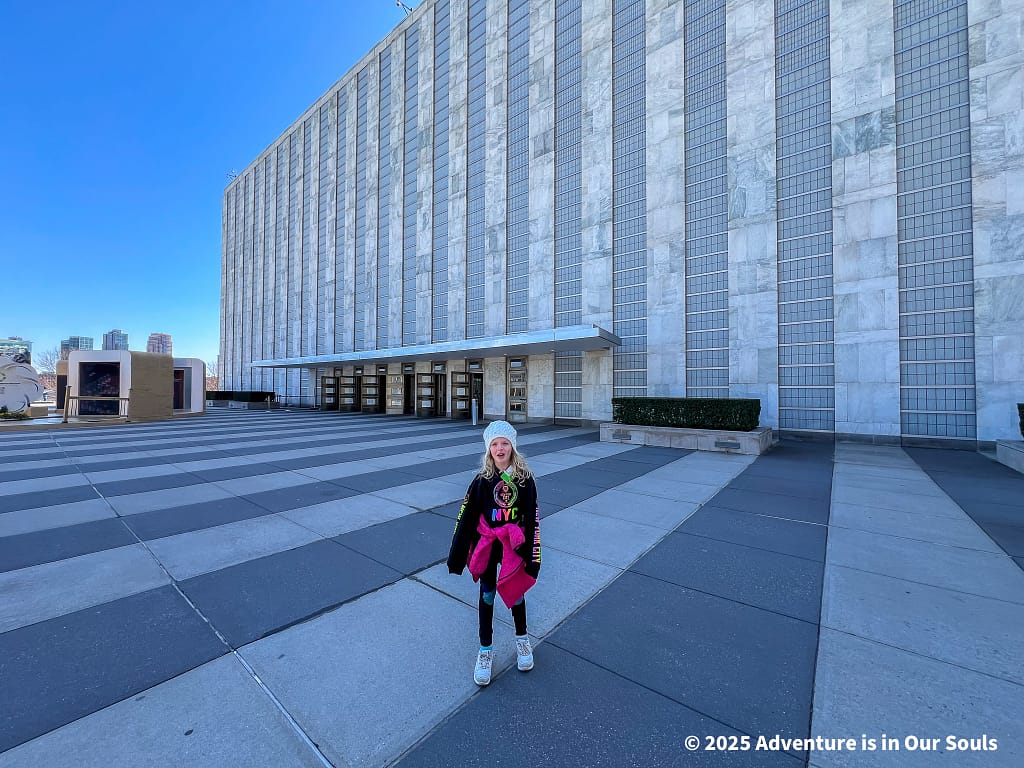
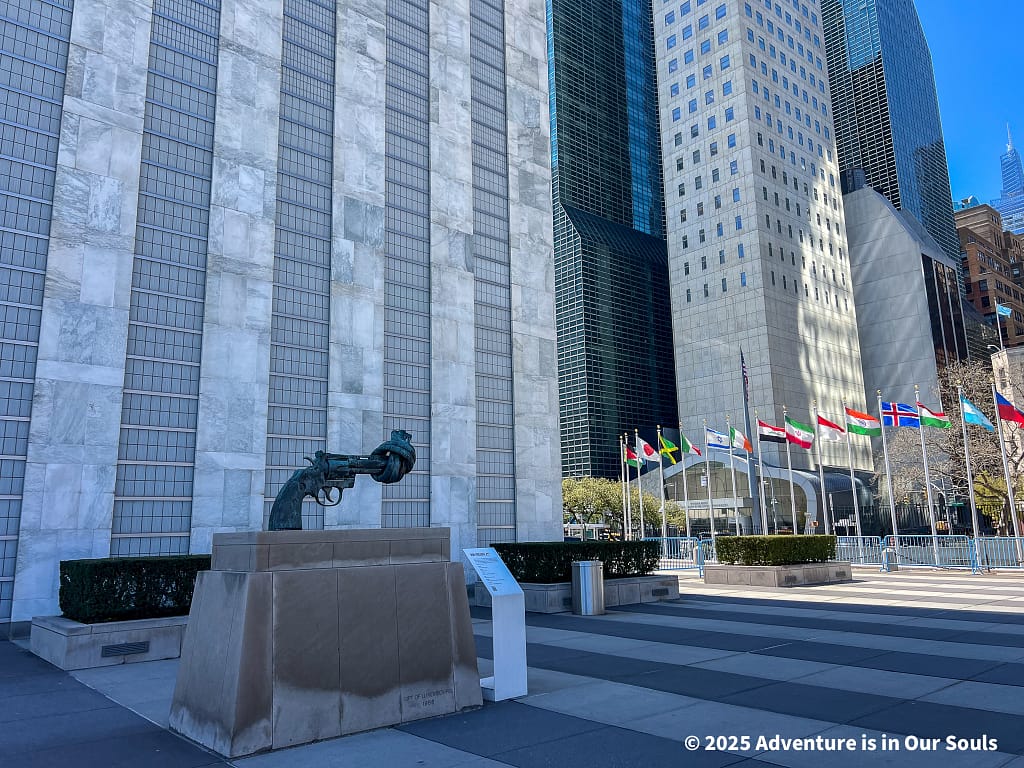
We could also step outside to explore the grounds and view several of the sculptures and exhibits displayed around the United Nations complex. Arriving early gave us enough time to look around without rushing, and it helped introduce Buttercup and Spider Monkey to the themes of international cooperation, peace and human rights before we entered the meeting chambers.
The General Assembly Hall
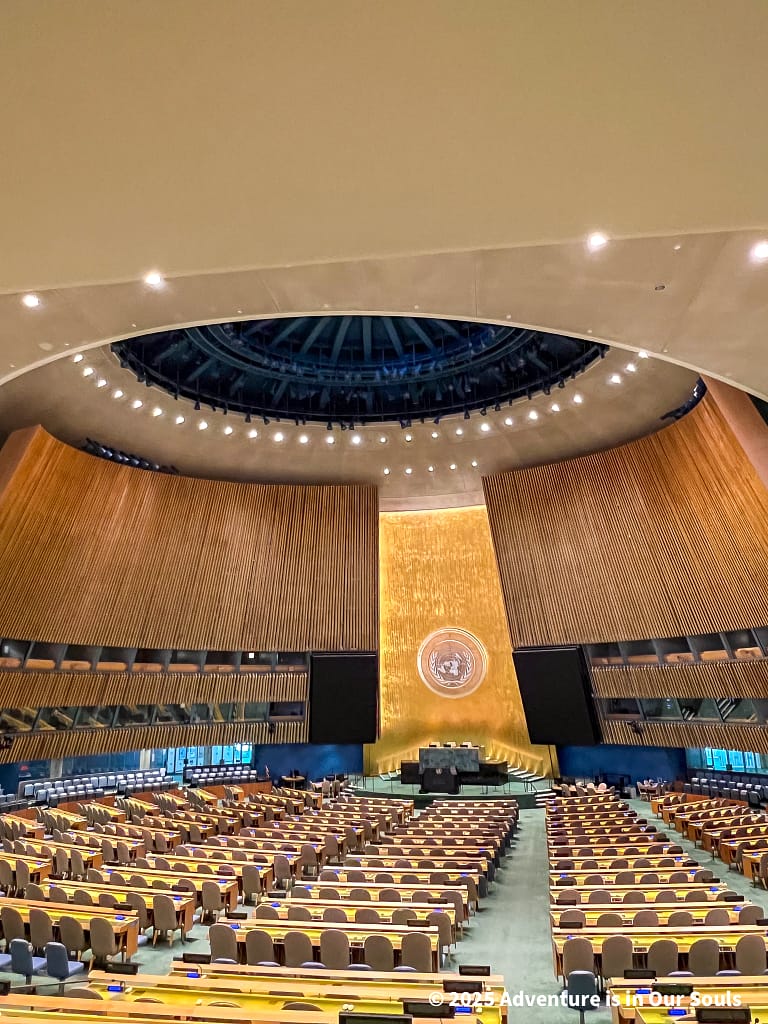
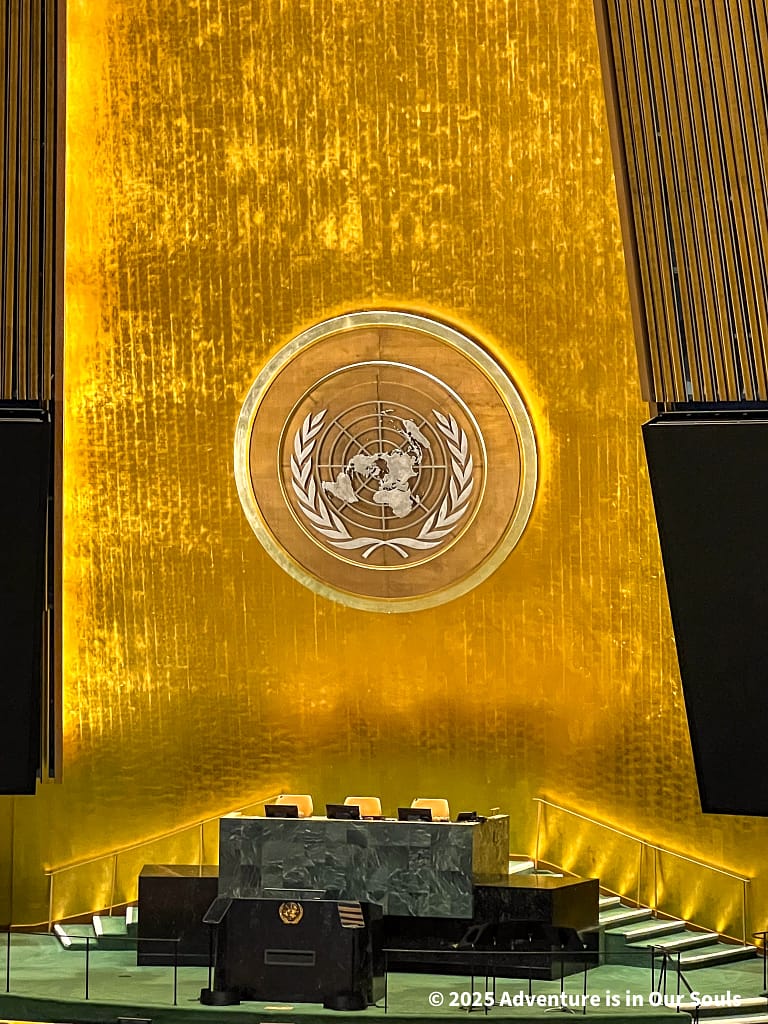
The General Assembly Hall is the largest and most recognizable room at the United Nations Headquarters. All 193 member states are represented in the General Assembly, and the chamber is used for debates, speeches and votes on international issues.
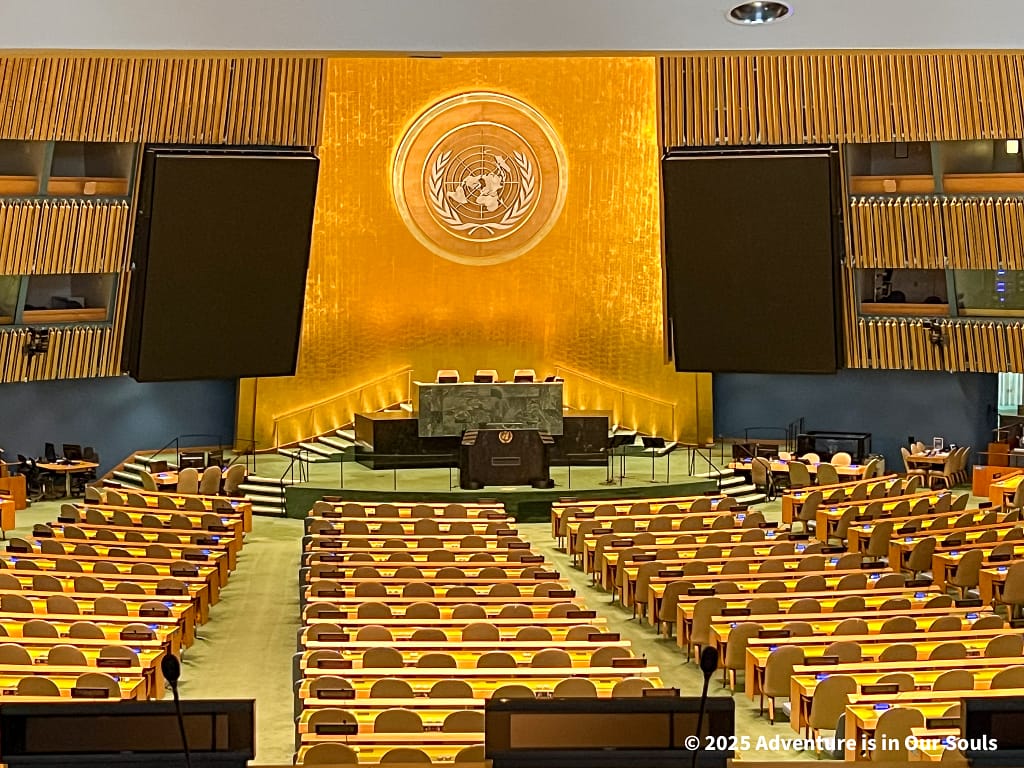
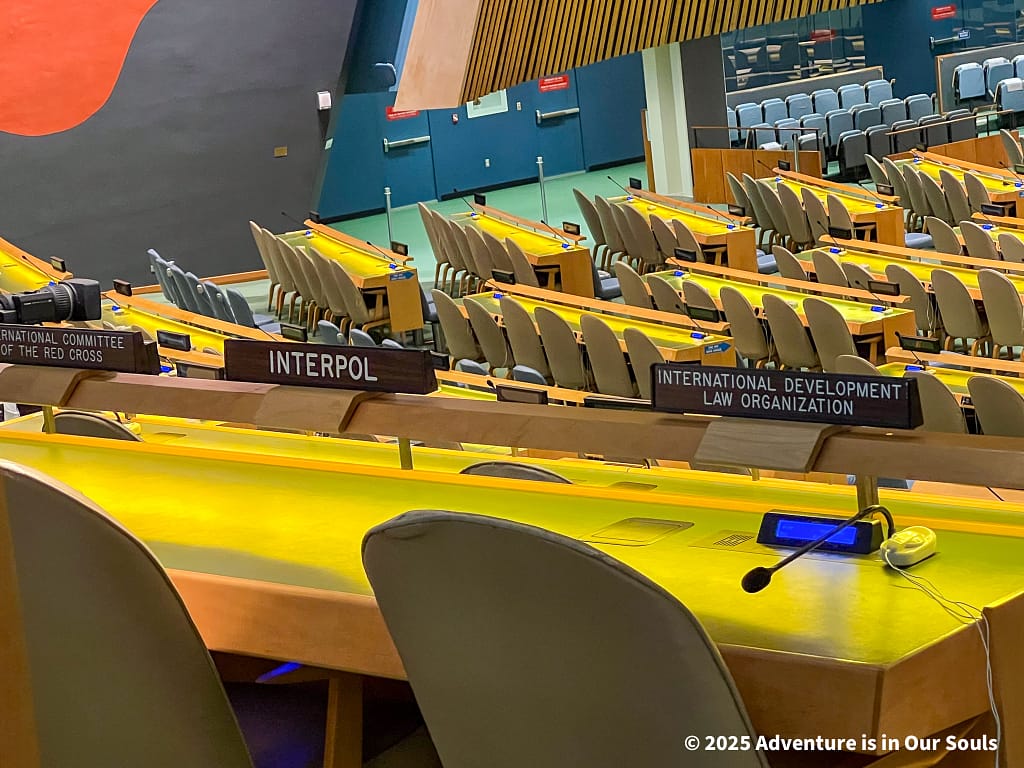
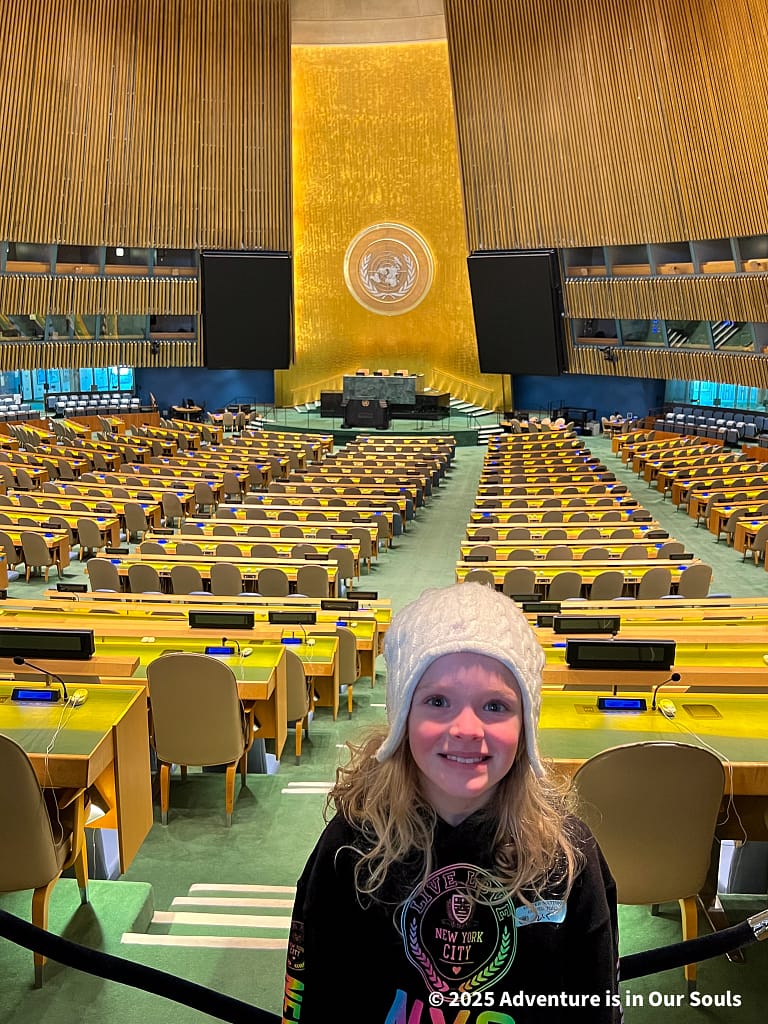
The room is dominated by the enormous gold wall and United Nations emblem behind the podium. Rows of desks fill the floor, with microphones, earpieces and screens used by representatives during meetings. From the visitors’ gallery, the girls could see the scale of the chamber and the many workstations required to accommodate countries from around the world.
The Security Council Chamber
The Security Council Chamber is smaller than the General Assembly Hall and is arranged around a central horseshoe-shaped table. The Security Council addresses threats to international peace and security, with five permanent members and ten elected members serving on the Council.
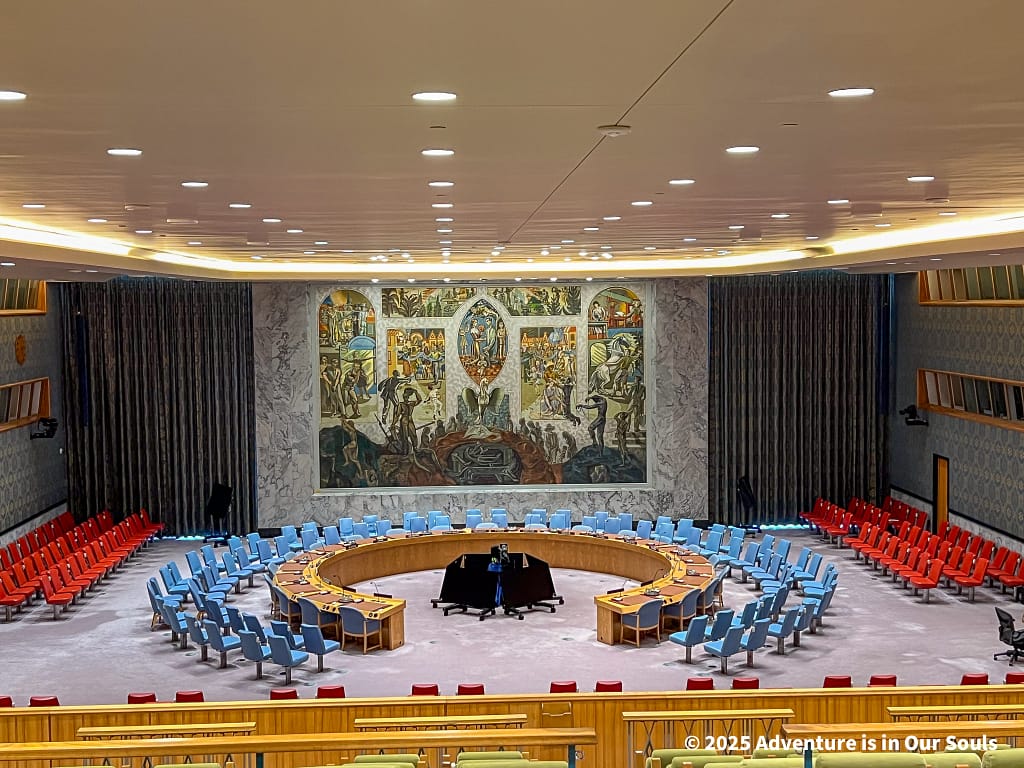
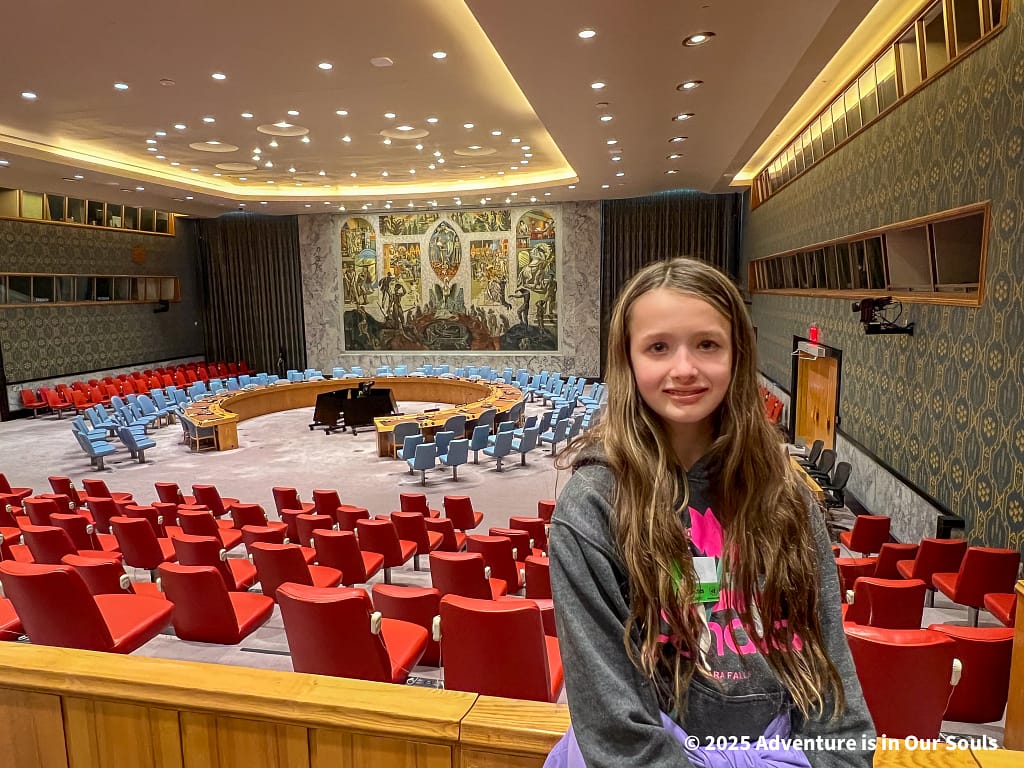
The large mural by Norwegian artist Per Krohg immediately draws attention at the far end of the room. Its darker lower section represents war and suffering, while the lighter upper section represents the movement toward peace, freedom and a better future. Our guide used the chamber to explain how Security Council discussions and decisions work, including why agreement among countries can sometimes be difficult.
The Economic and Social Council Chamber
The Economic and Social Council, usually called ECOSOC, focuses on international economic, social and environmental issues. Its chamber is visually distinctive because of the large orange-and-white curtain behind the main table.
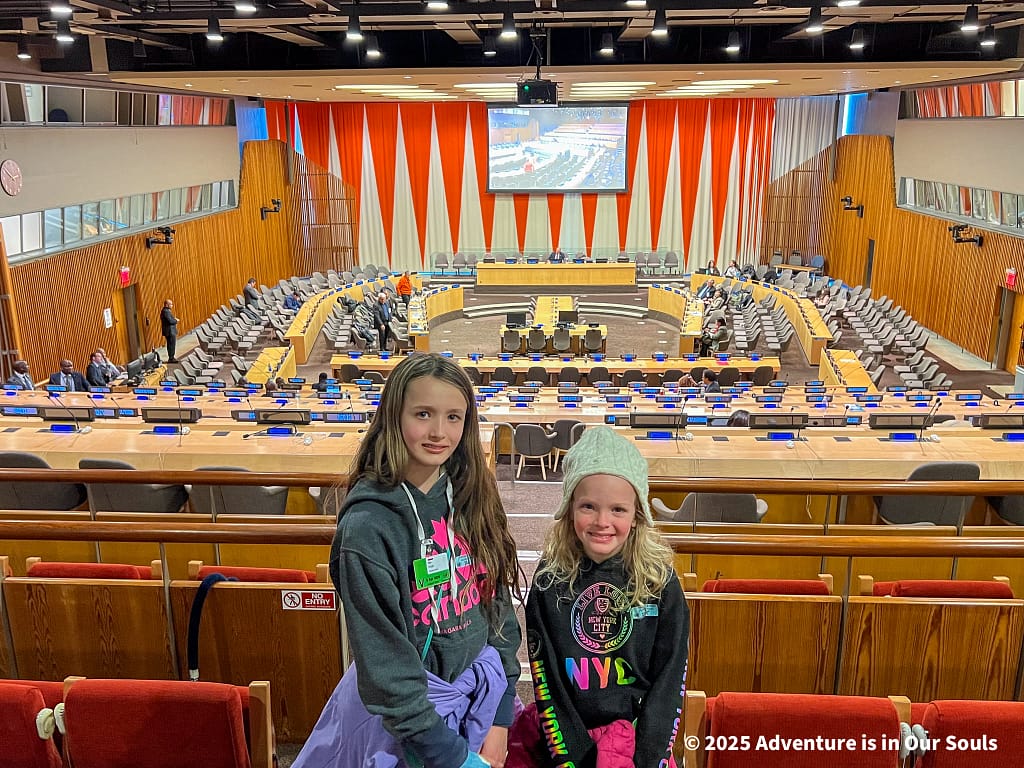
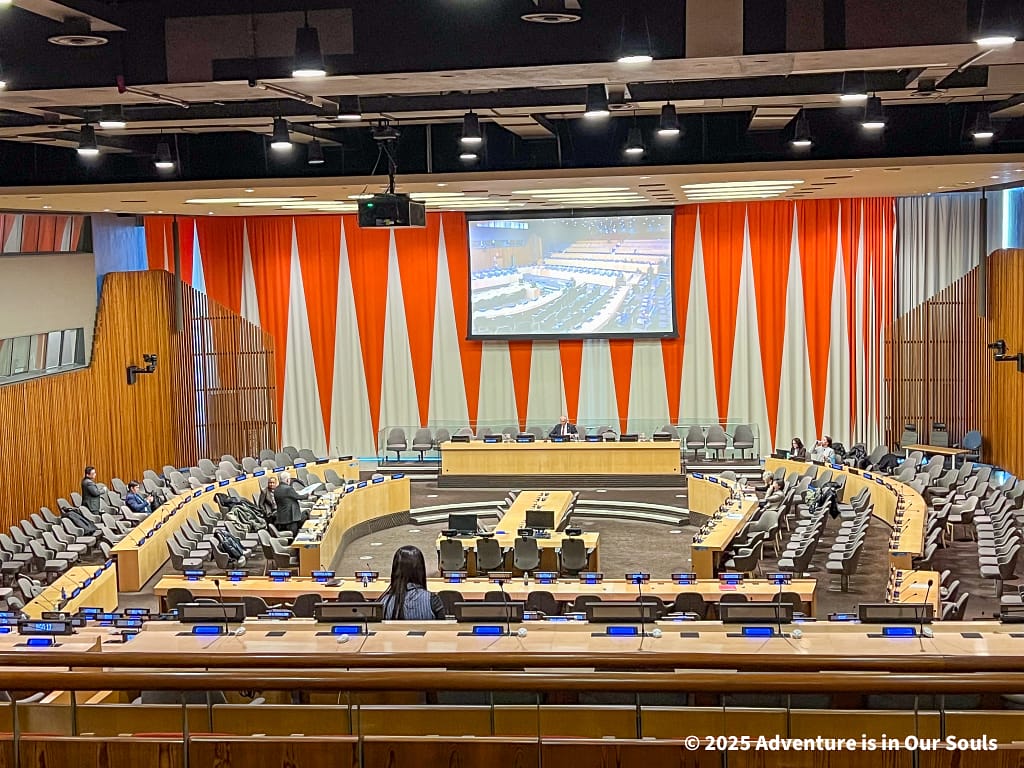
The curtain is titled Dialogos, and its interlocking shapes represent dialogue as the foundation of democratic discussion. The chamber looked less formal than the General Assembly Hall but still provided an interesting look at the spaces where representatives work on issues such as sustainable development, education, public health and economic cooperation.
The Trusteeship Council Chamber
The Trusteeship Council was created to oversee territories moving from colonial administration toward self-government or independence. It suspended its regular operations after the final trust territory became independent, but the chamber remains part of the United Nations Headquarters and is still used for other meetings.
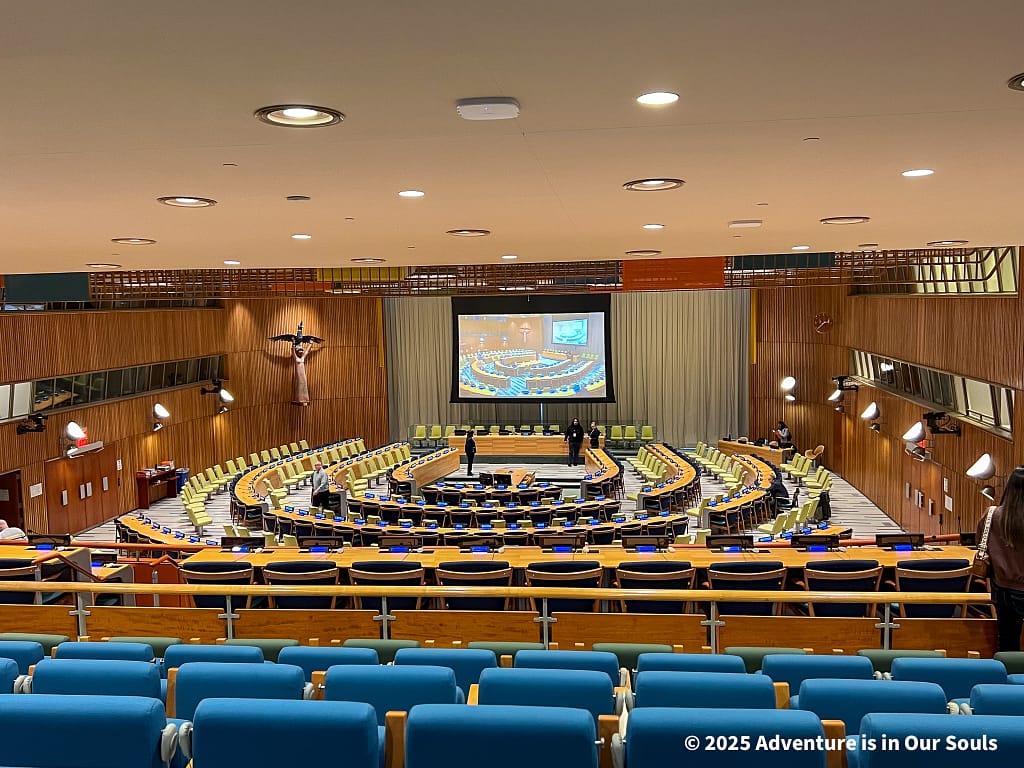
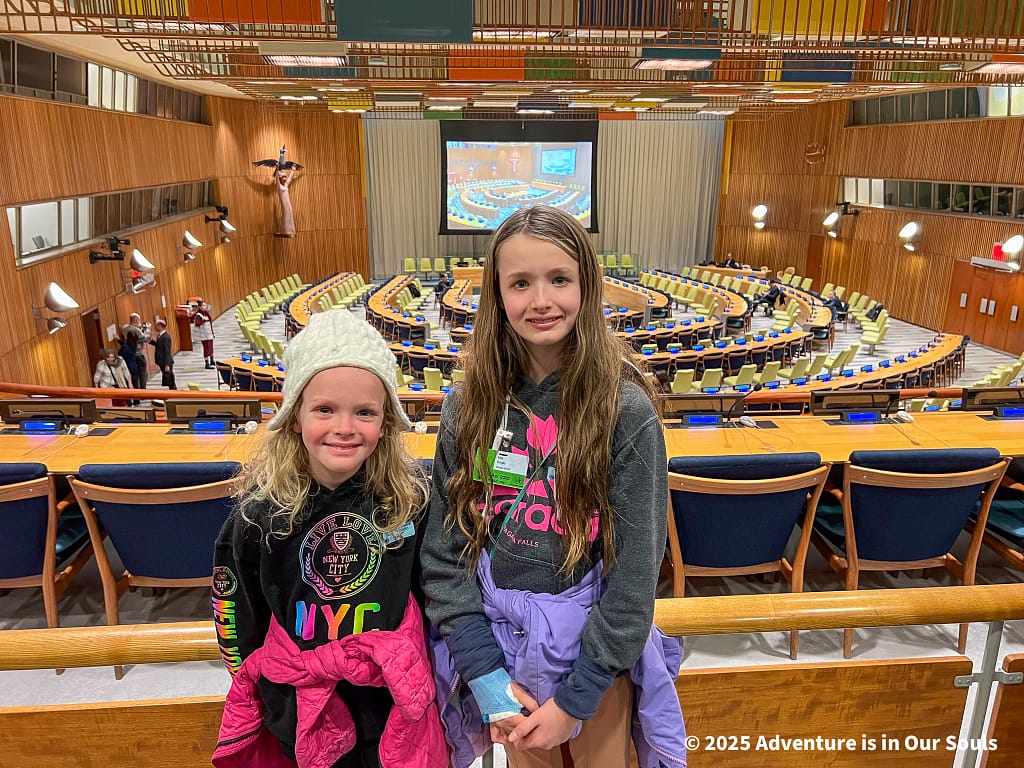
The room was one of the most visually interesting spaces on our tour. Danish architect Finn Juhl designed the chamber as a complete interior, including the wooden walls, colorful ceiling, furnishings, and horseshoe-shaped seating. A suspended sculpture called Mankind and Hope depicts a woman reaching toward a bird and reinforces the room’s original purpose.
Peacekeeping and Disarmament Exhibits
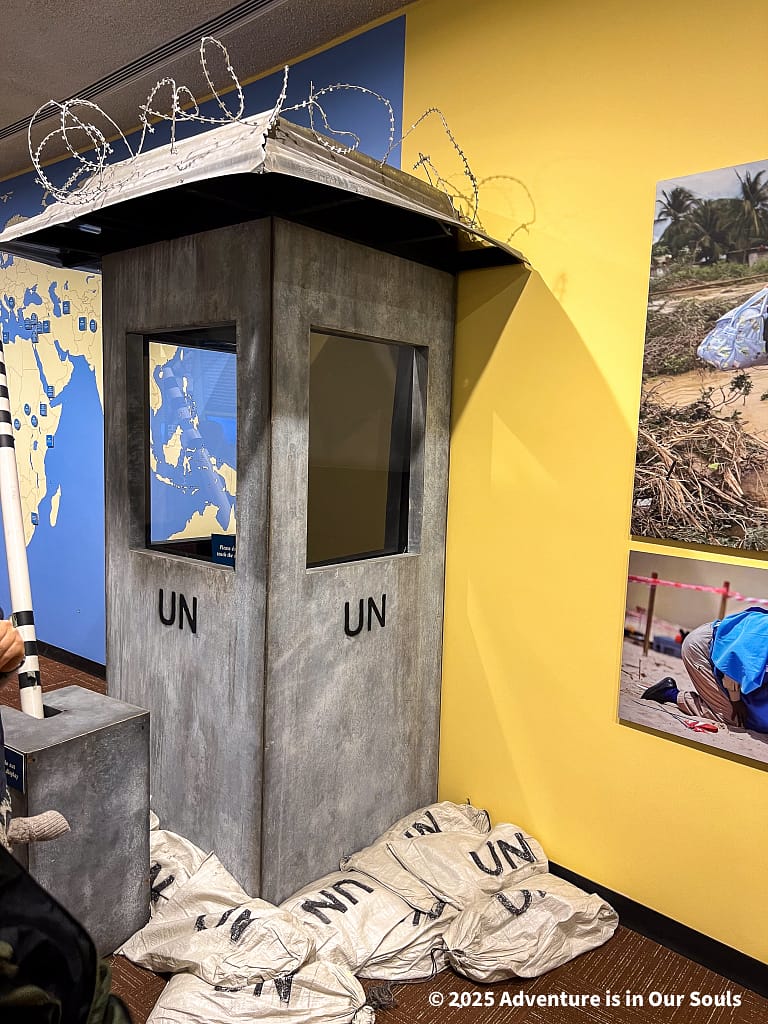
The tour included much more than meeting rooms. Exhibits along the route showed some of the practical work performed by the United Nations and the dangers faced by people working in conflict zones. One display included protective equipment used during landmine-clearance work. Another recreated a small United Nations observation post surrounded by sandbags and barbed wire. These physical displays made it easier for the girls to understand that peacekeeping and humanitarian work can place people in dangerous environments far removed from the conference rooms we had just visited.
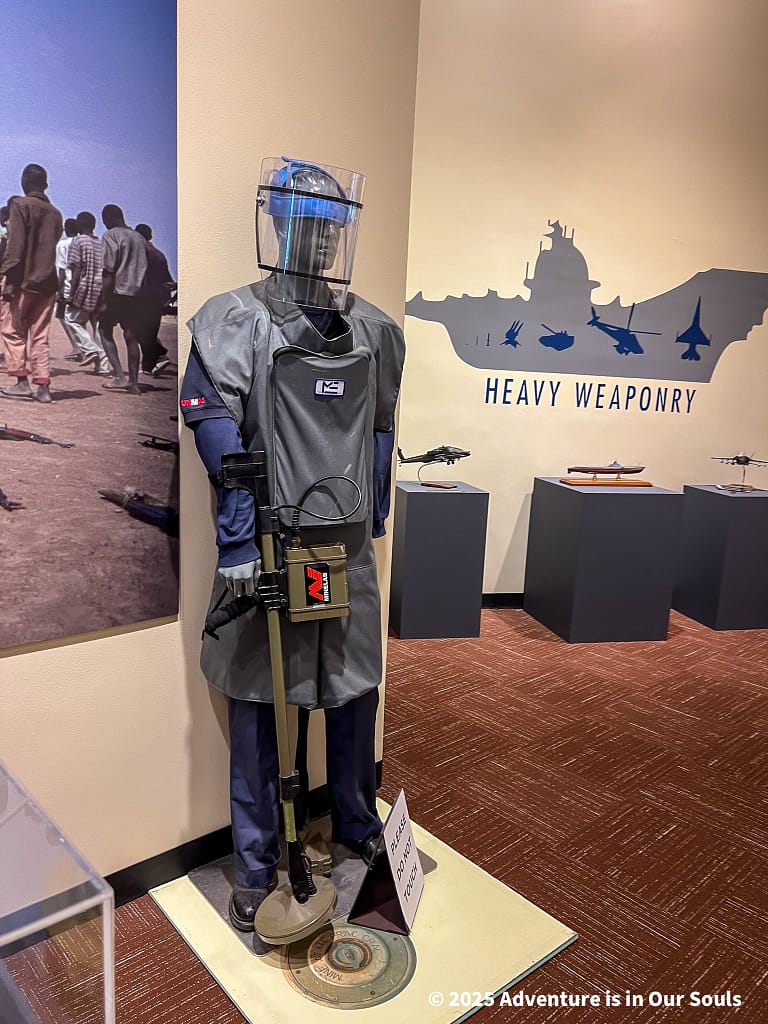
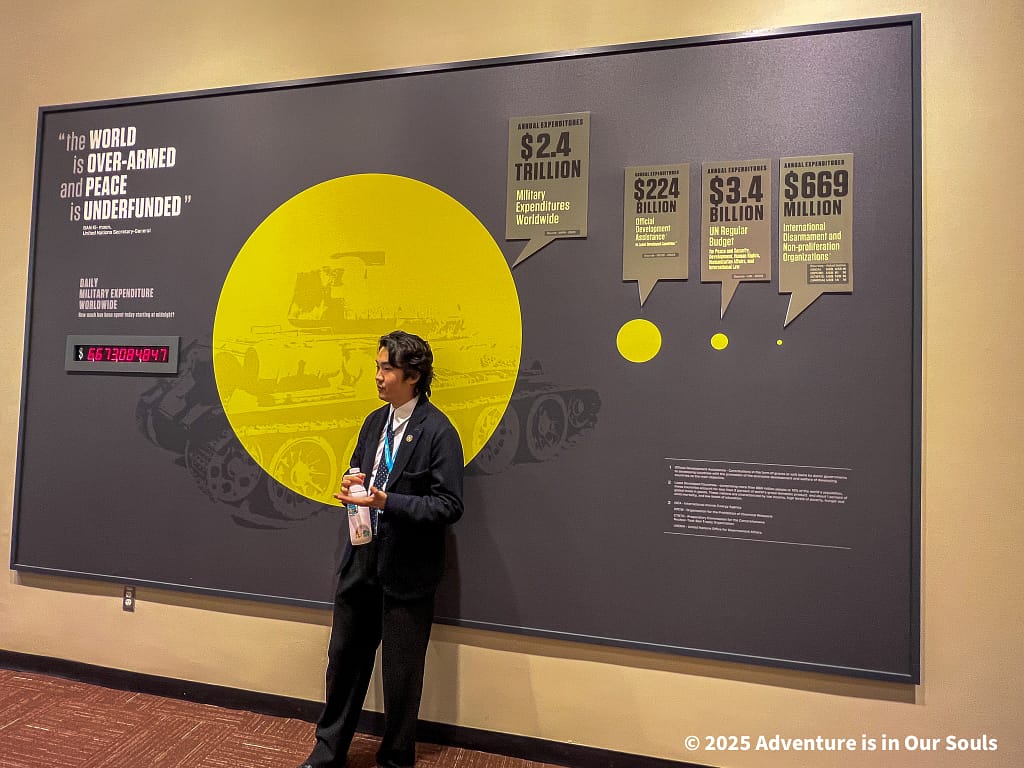
We also saw exhibits about heavy weapons and weapons of mass destruction, including recovered fragments displayed alongside maps and photographs. A large graphic compared worldwide military expenditures with the much smaller amounts spent on international aid, the regular United Nations budget and disarmament efforts.
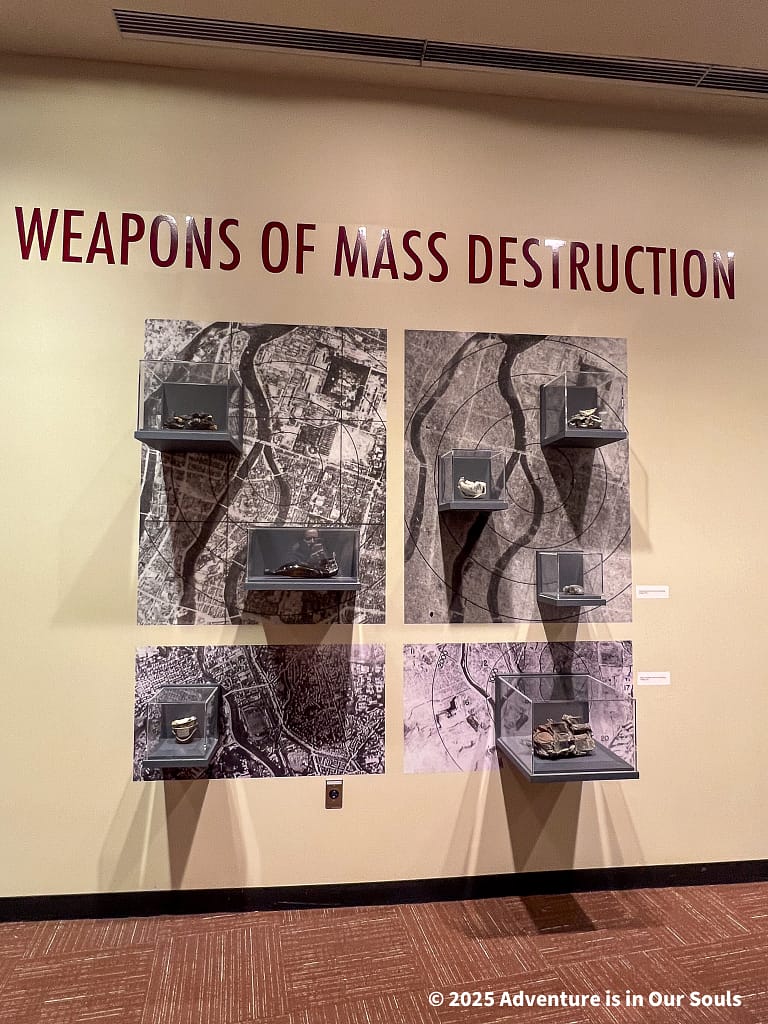
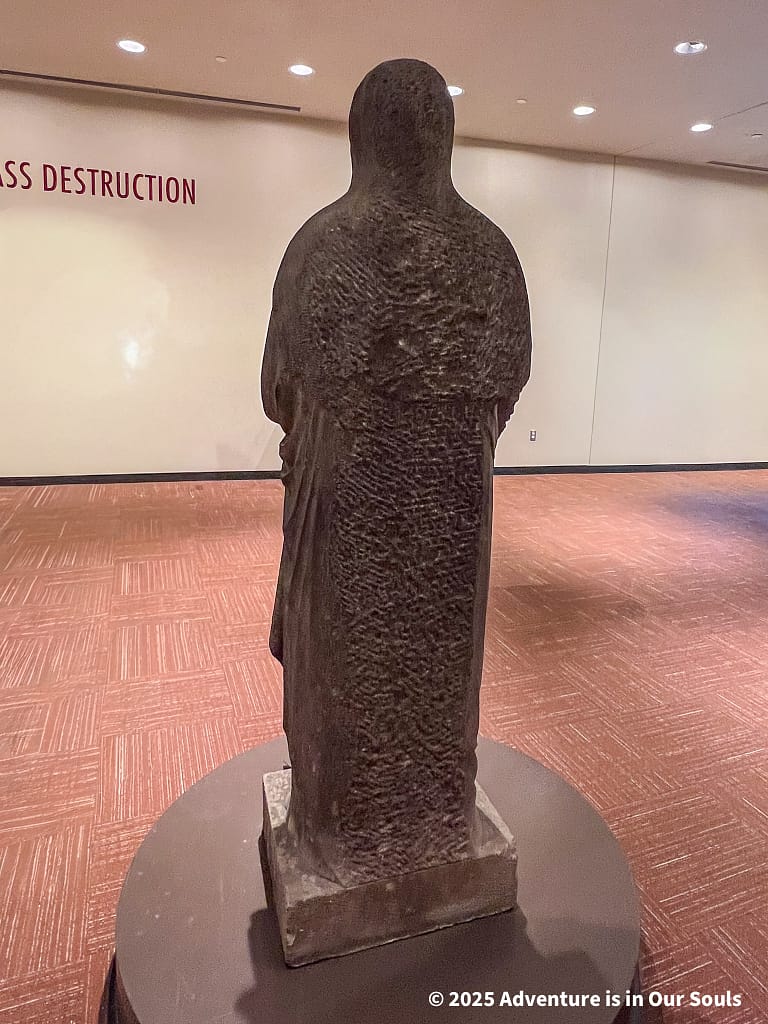
The guide did not treat these as simple museum displays. He used them to explain the choices governments make about spending, security and international cooperation. The subjects were serious, but the displays provided a concrete way to discuss them with older children.
Human Rights and International Exhibits
Another section focused on the Universal Declaration of Human Rights. Individual articles were illustrated on panels addressing rights such as freedom of expression, equality before the law, freedom from slavery and protection from cruel or degrading treatment.
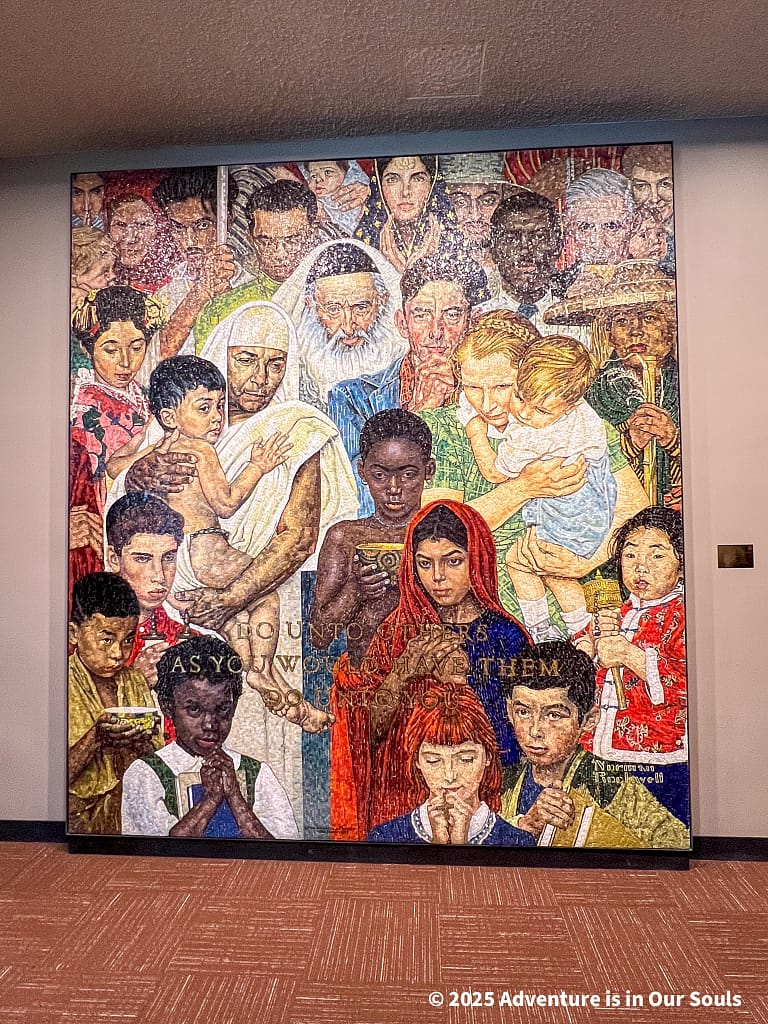
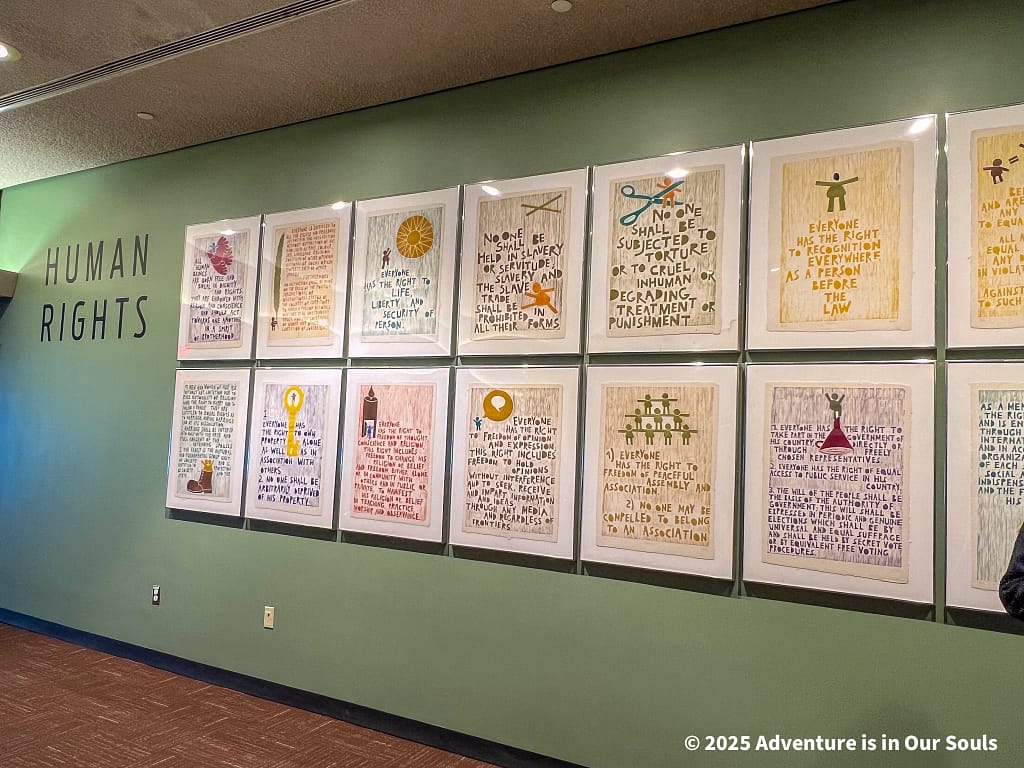
The building also contains art, gifts and temporary exhibitions contributed by countries and artists from around the world. These exhibits can change, so another family’s visit may not include exactly the same displays that we saw. Together, however, they reinforced that the United Nations works on far more than diplomatic meetings and military conflicts.
Family Verdict
The United Nations Headquarters Tour gave our family a different perspective on New York City and an opportunity to introduce the girls to international diplomacy, peacekeeping and human rights in a setting where that work actually occurs. Seeing all four chambers was a highlight, but the physical exhibits made the tour especially accessible for children by connecting broad global issues with recognizable objects and spaces. It was one of the most educational stops on our itinerary without feeling like a traditional museum visit.
Make sure to check out our nearby adventures at NBC Studios, the NYC Catacombs, the Crown of the Statue of Liberty, Rockefeller Center & Top of the Rock, the Empire State Building, Radio City Music Hall, and Central Park via Pedicab. Also, follow along on our complete family adventure through New York City!
Follow along on our other amazing family travel adventures at www.adventureisinoursouls.com.