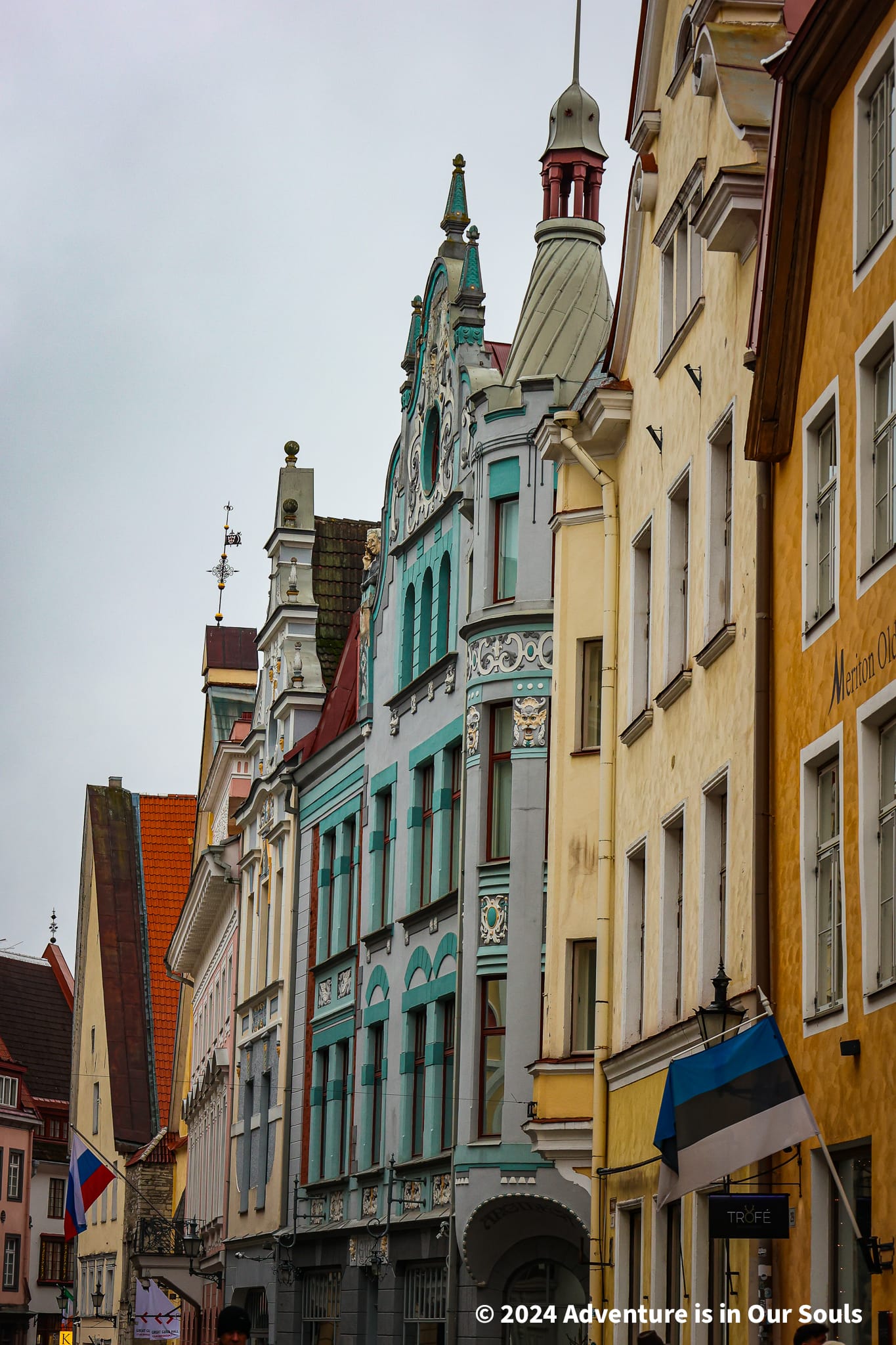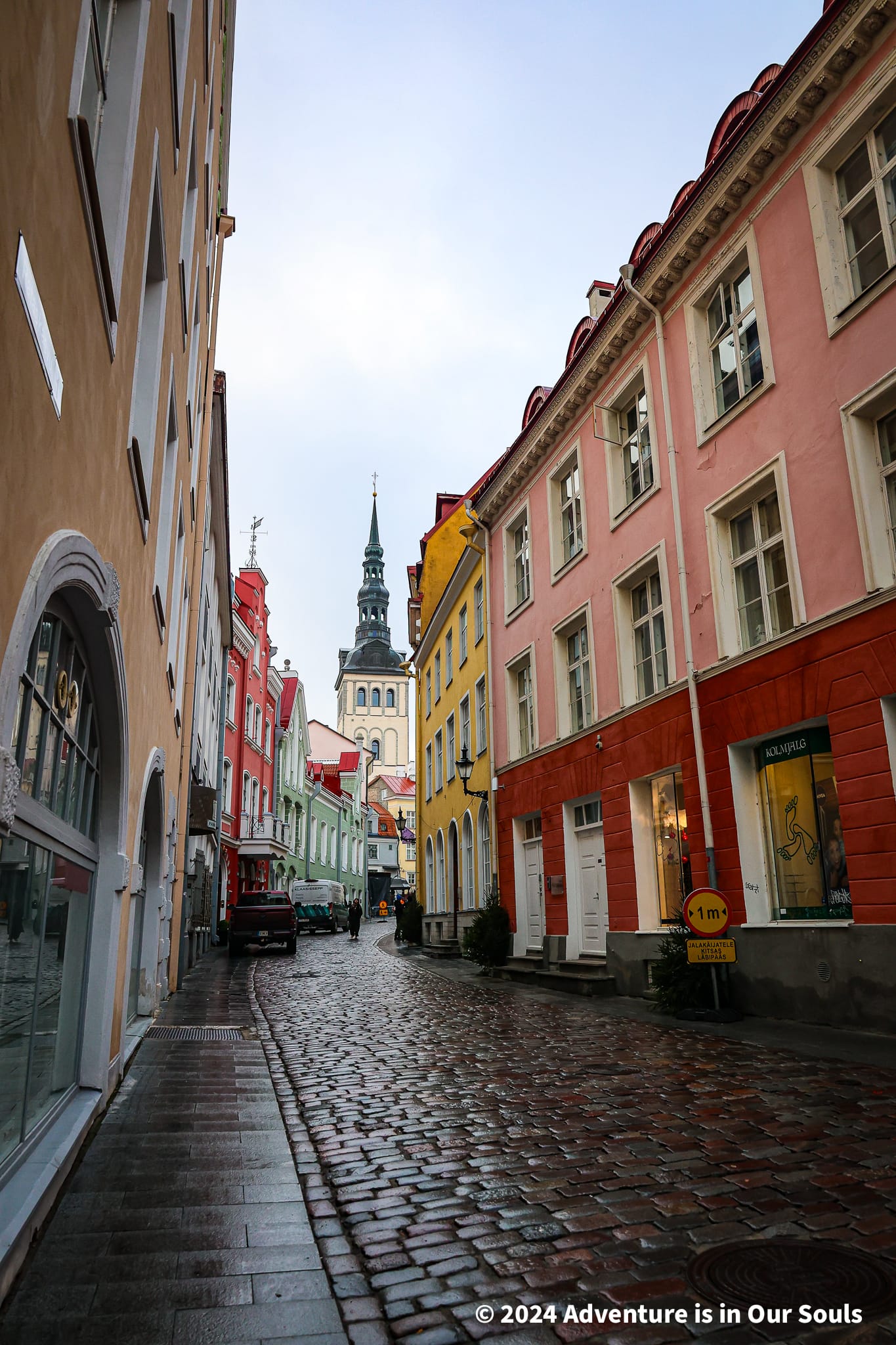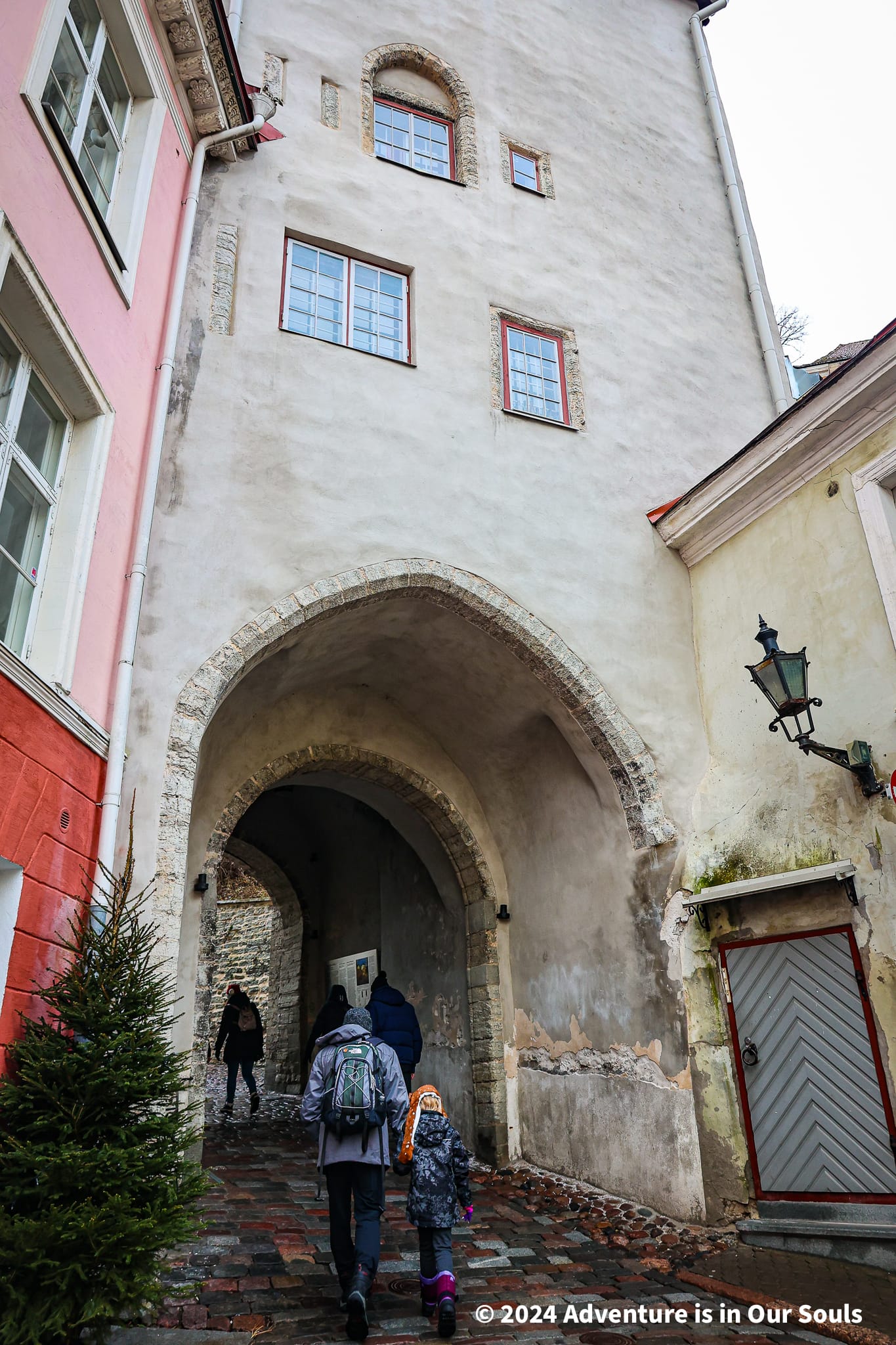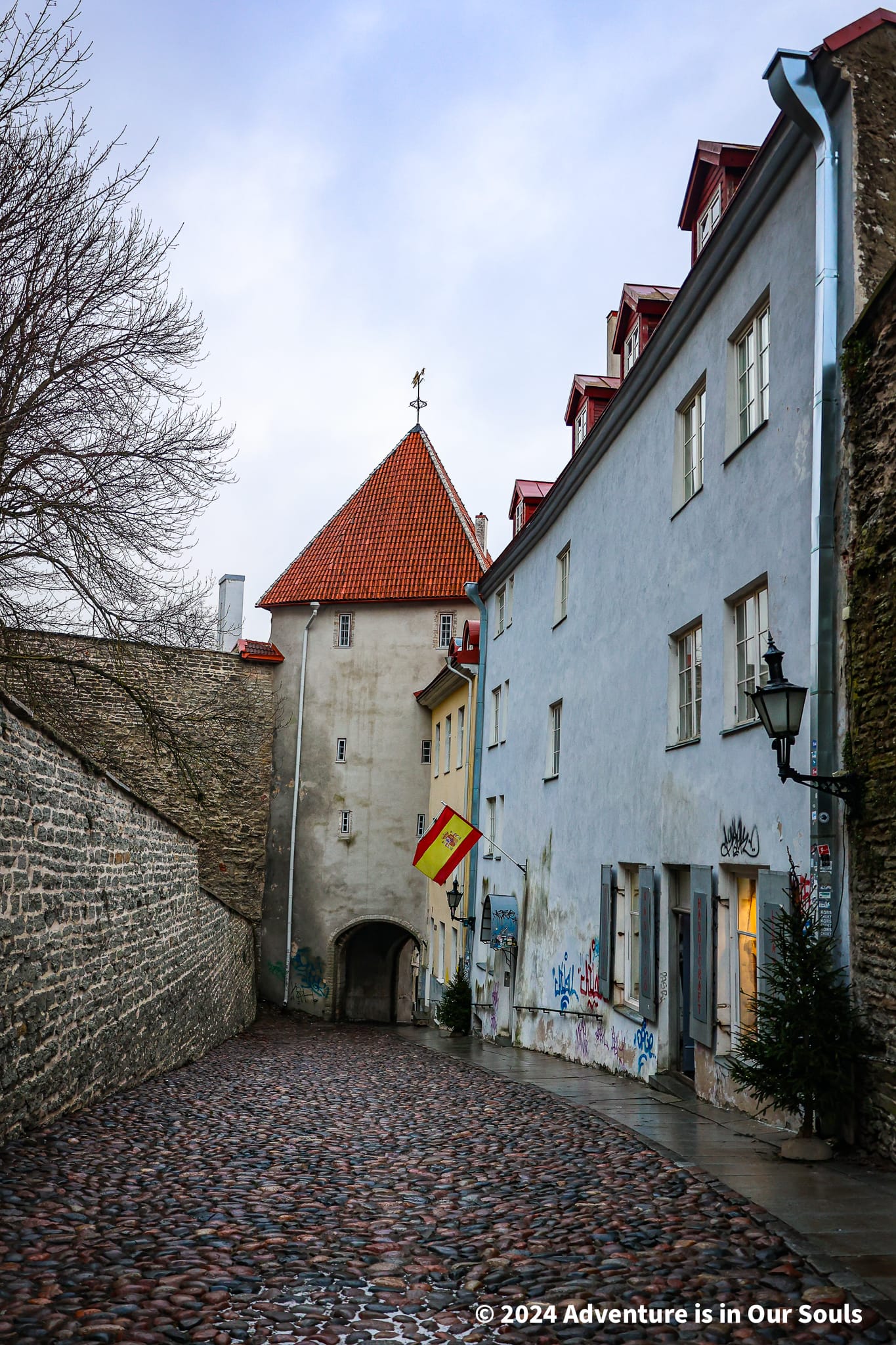
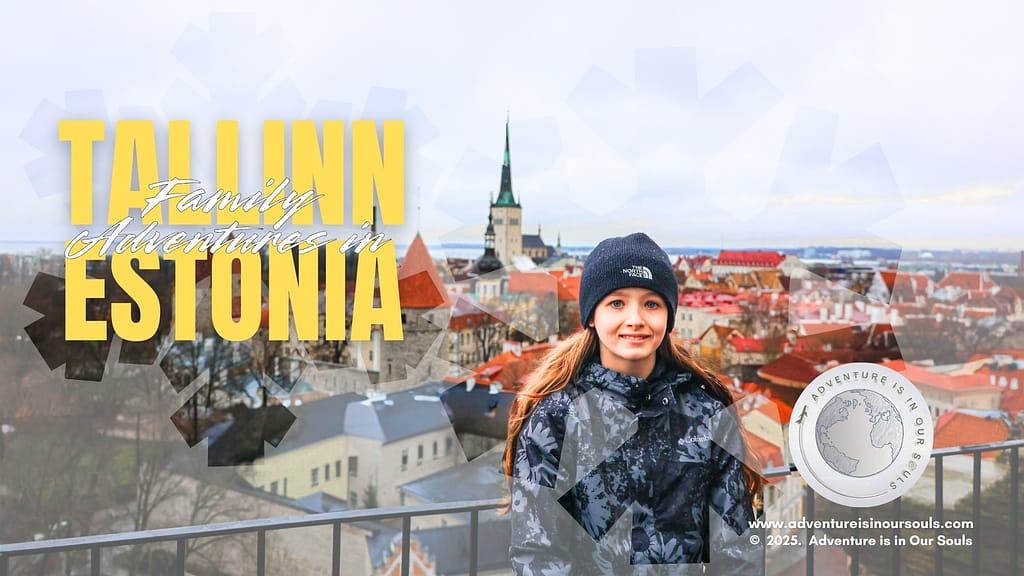
A day trip from Helsinki to Tallinn was one of the easiest ways for our family to add another country to our Finnish Lapland adventure. Tallinn’s Old Town is compact, walkable, and full of medieval streets, city walls, viewpoints, churches, festive market stalls, and cozy places to stop with kids.
This guide covers how we planned our Helsinki to Tallinn day trip, including the ferry from Finland to Estonia, what we saw in Tallinn Old Town, how much we were able to fit into one day, and what worked best for our girls during a winter family visit.
What to Know Before a Helsinki to Tallinn Day Trip with Kids
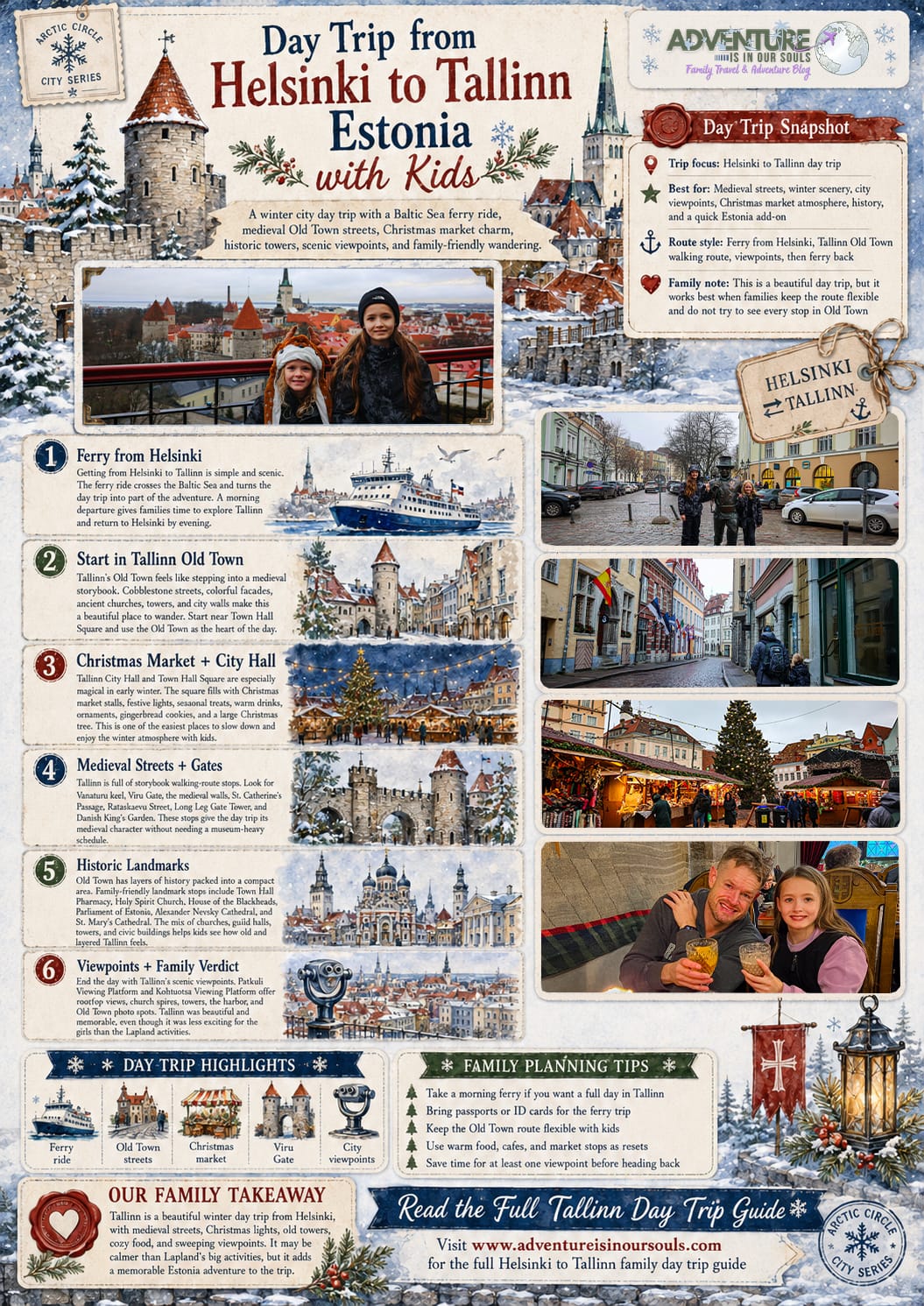
- The ferry makes this an easy day trip. Multiple ferry companies connect Helsinki and Tallinn, and the crossing is short enough to work well for families.
- Bring passports or national ID cards. You are crossing between Finland and Estonia, so confirm current travel document requirements before your trip.
- Old Town Tallinn is very walkable. Most of the stops in this guide are close enough to explore on foot.
- Wear comfortable shoes. Cobblestones, hills, towers, and viewpoints make this a walking-heavy day.
- Winter adds charm but also cold. Layers, warm shoes, gloves, and snack breaks made the day easier for our girls.
What is Tallinn, Estonia?
Tallinn is the capital of Estonia and sits across the Gulf of Finland from Helsinki. Its Old Town is known for medieval streets, historic city walls, church spires, colorful buildings, and viewpoints overlooking the rooftops and harbor.
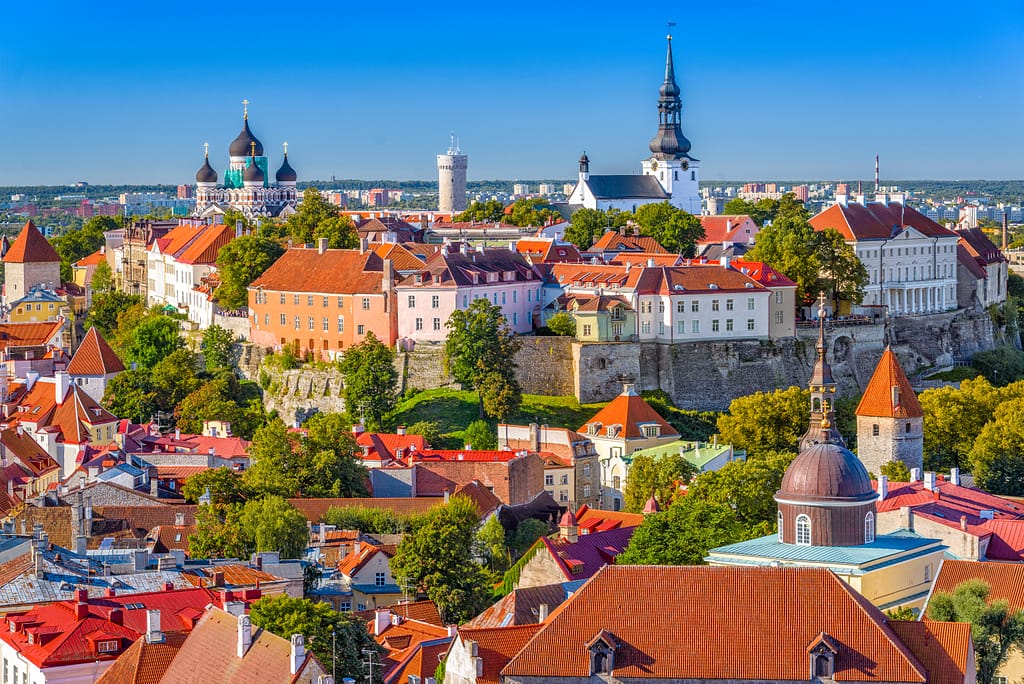
For families, Tallinn works especially well as a day trip because the historic center is compact and easy to explore on foot. We visited in early winter, when the Christmas market, lights, and cold-weather atmosphere made Old Town feel especially festive.
Getting to Tallinn
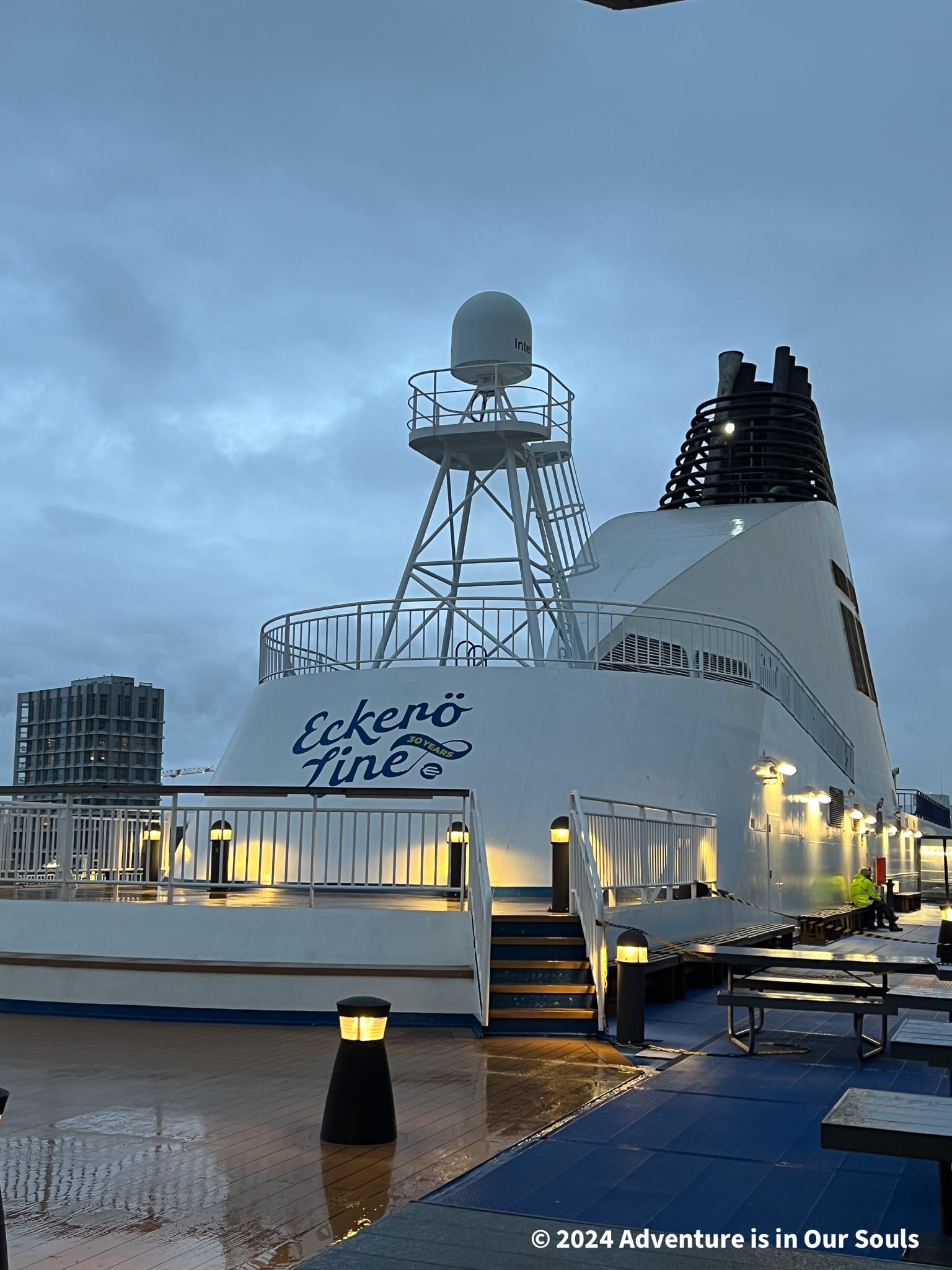
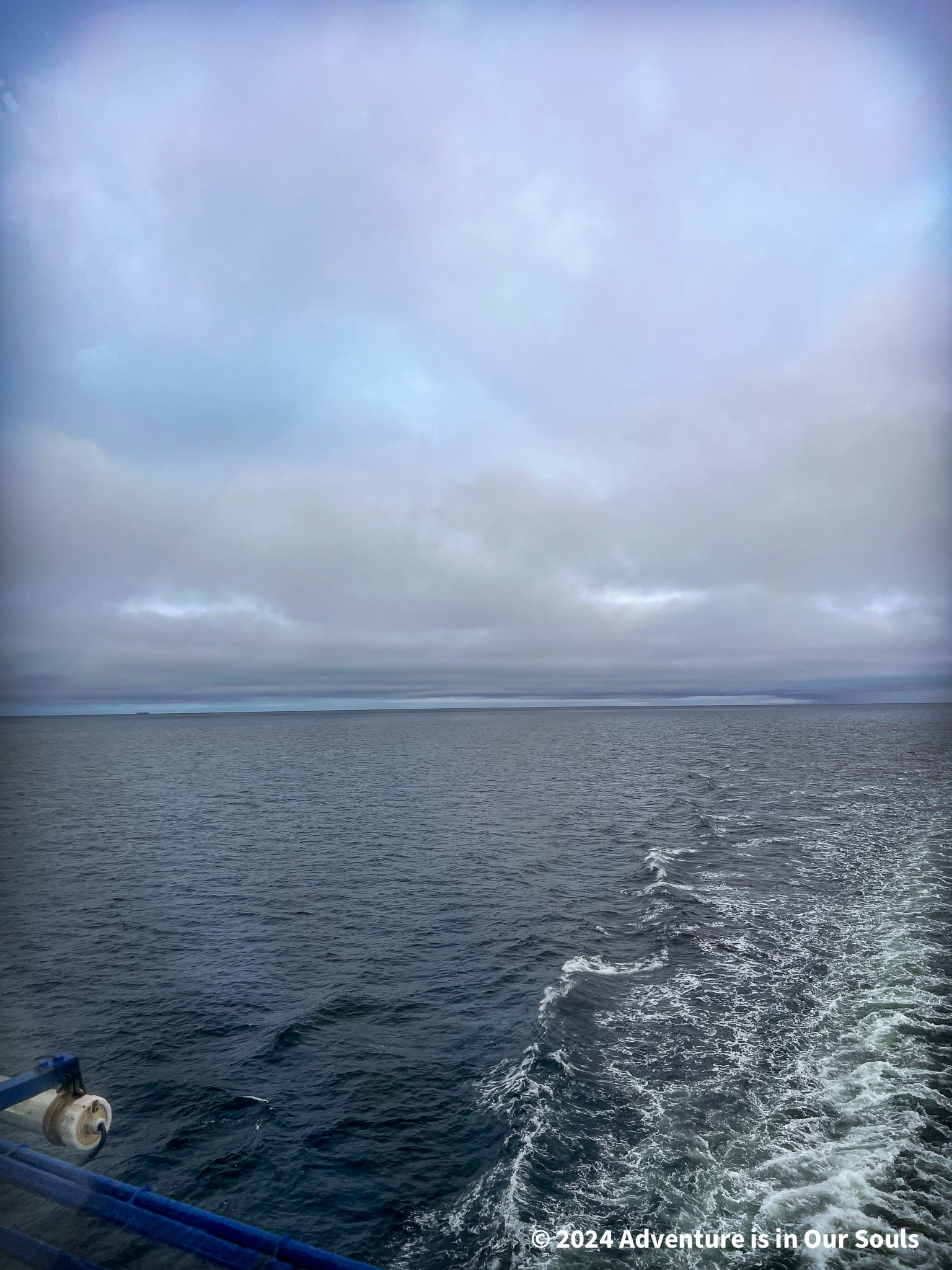
Getting from Helsinki to Tallinn is simple by ferry. We took the Eckerö Line ferry for our day trip, traveling from Helsinki across the Gulf of Finland to Tallinn. The ride was comfortable, easy, and part of the girls’ adventure.
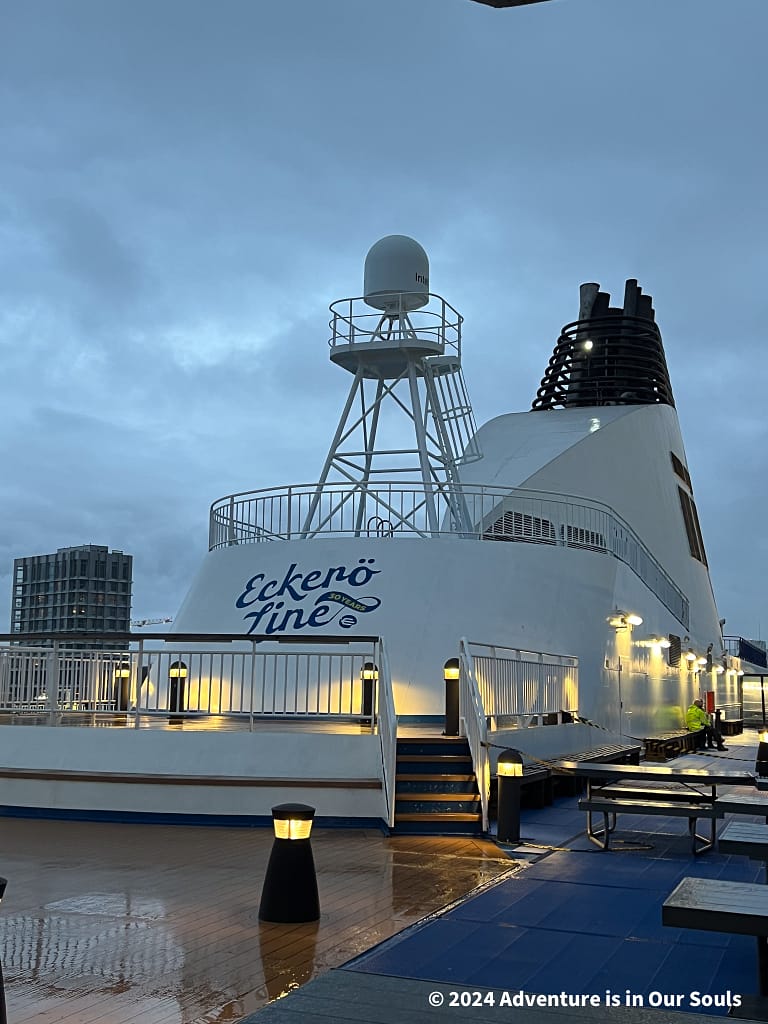

Ferry schedules, travel times, and ticket prices can change by season and operator, so check the current schedule before booking. Eckerö Line, Tallink Silja Line, and Viking Line all operate between Helsinki and Tallinn, and the crossing is usually short enough to make Tallinn work as a full-day trip from Helsinki.
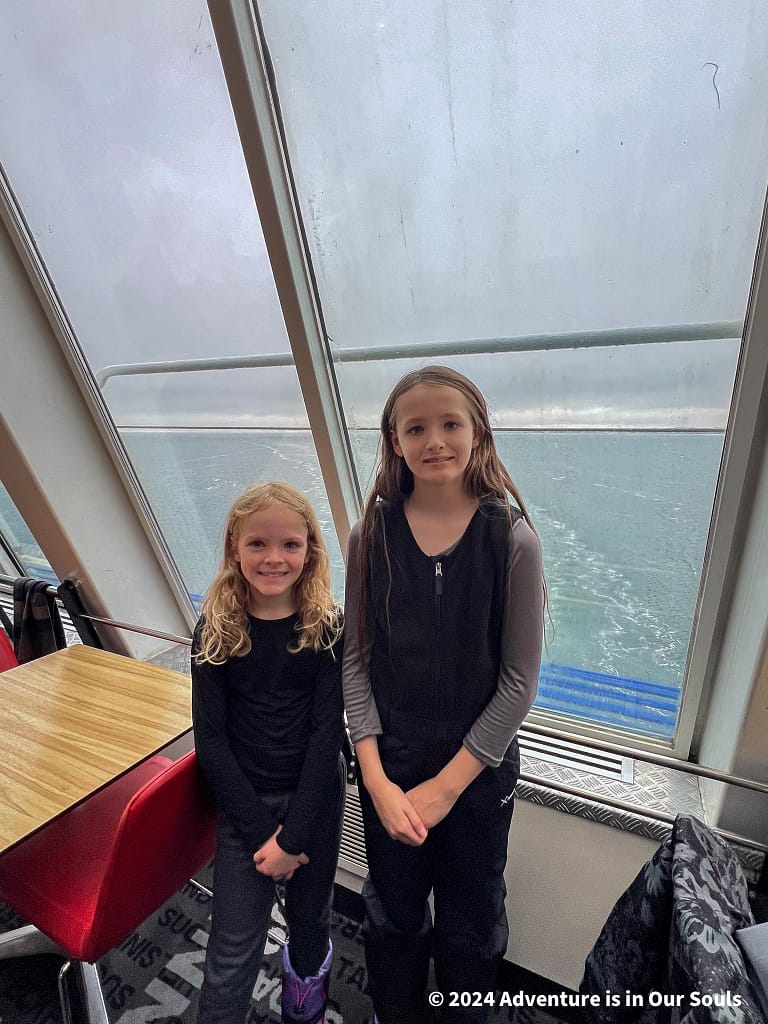
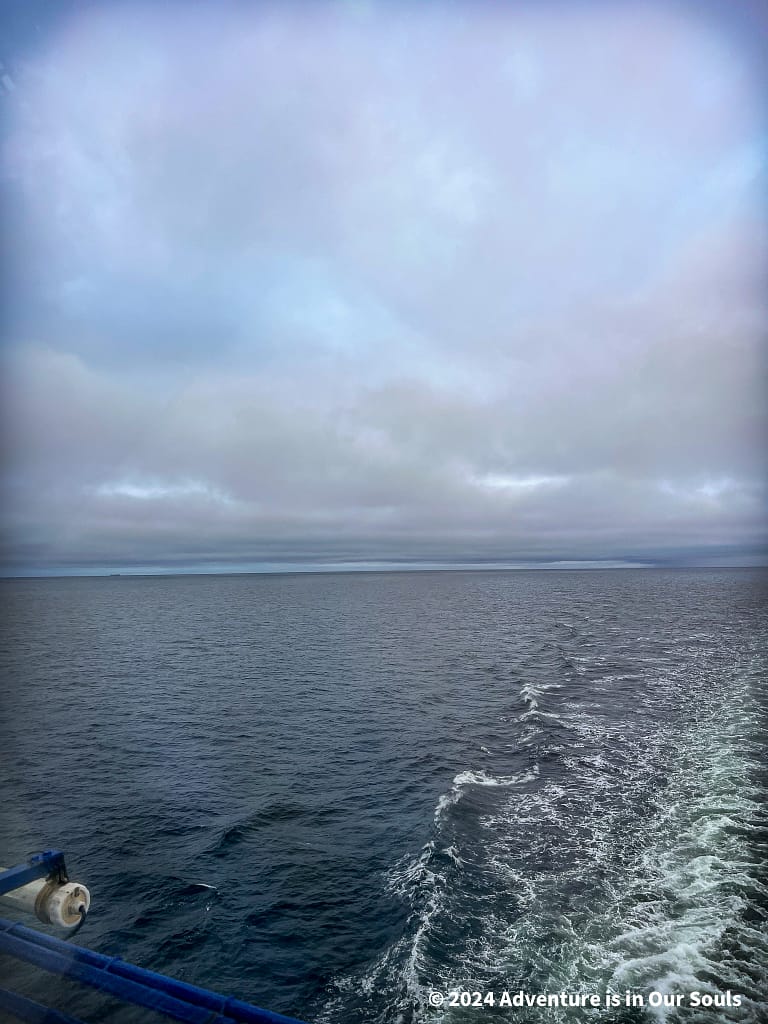
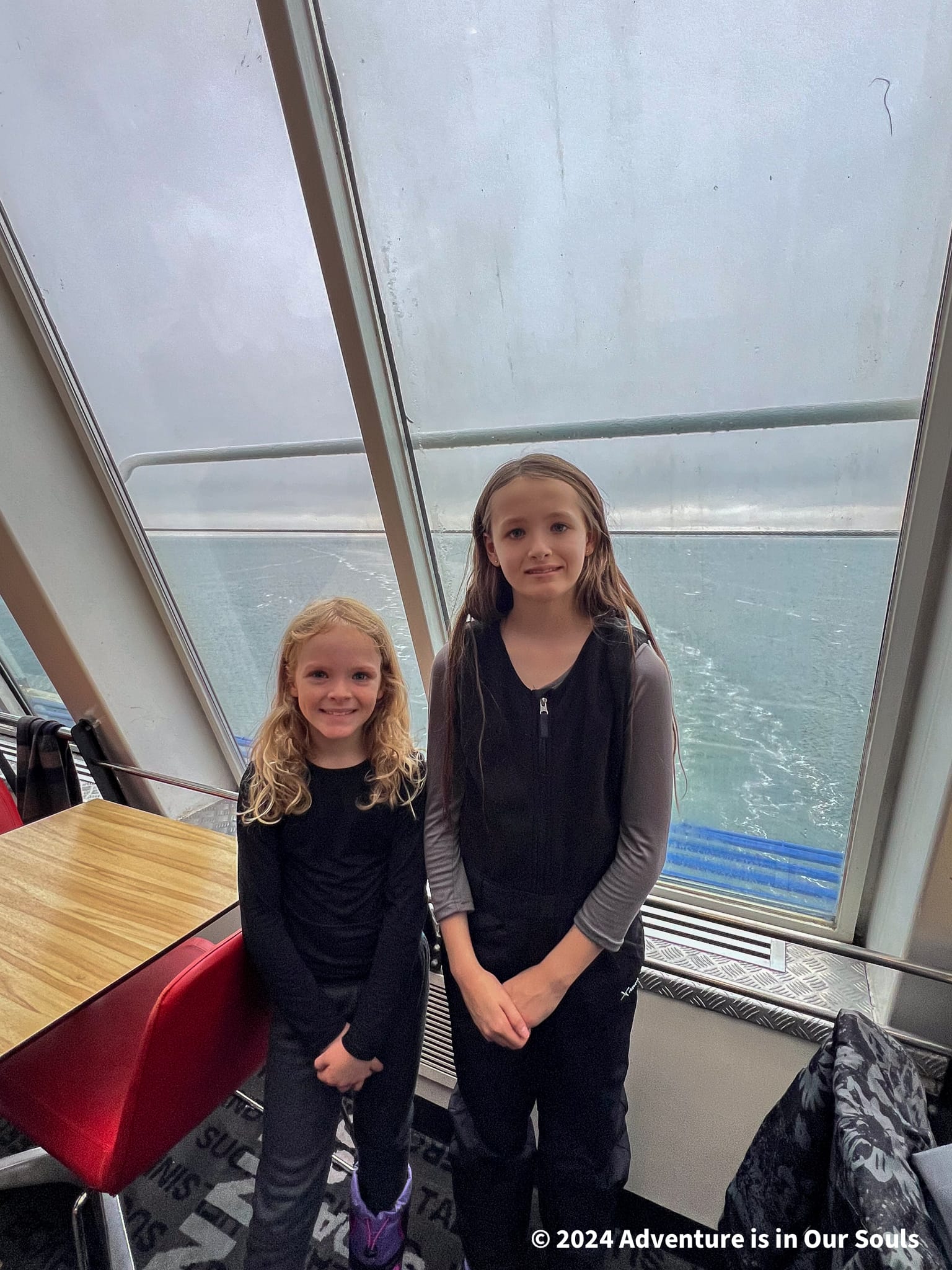
We liked taking a morning ferry because it gave us most of the day to explore Tallinn Old Town before returning to Helsinki in the evening. The ferry had seating areas, food options, shops, and enough space to make the ride feel easy with kids.
Family tip: leave extra time for getting to the terminal, boarding, and walking from the Tallinn port into Old Town. Even though the ferry ride is simple, the day works best when you do not cut the timing too close.
Our Tallinn Old Town Walking Route
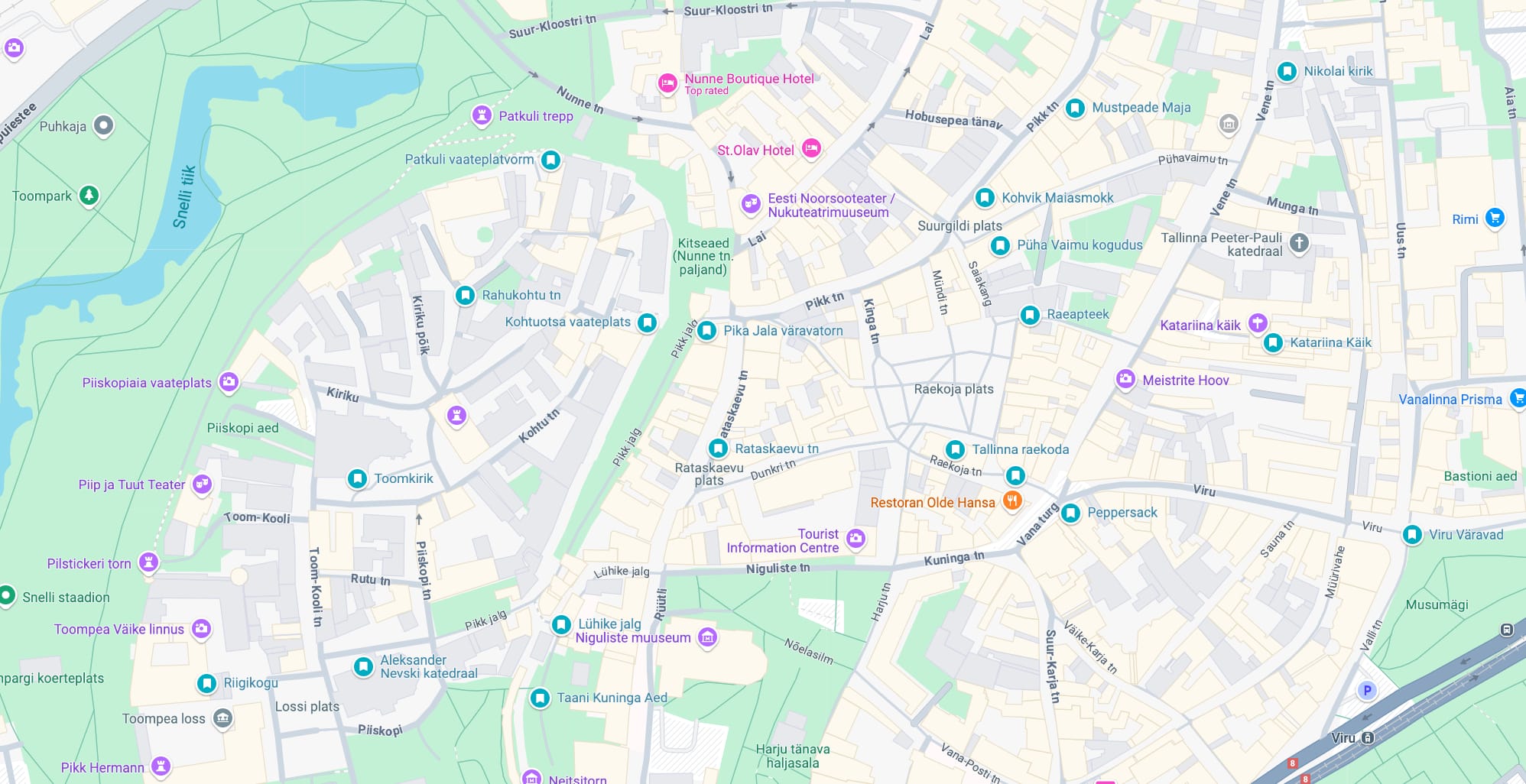
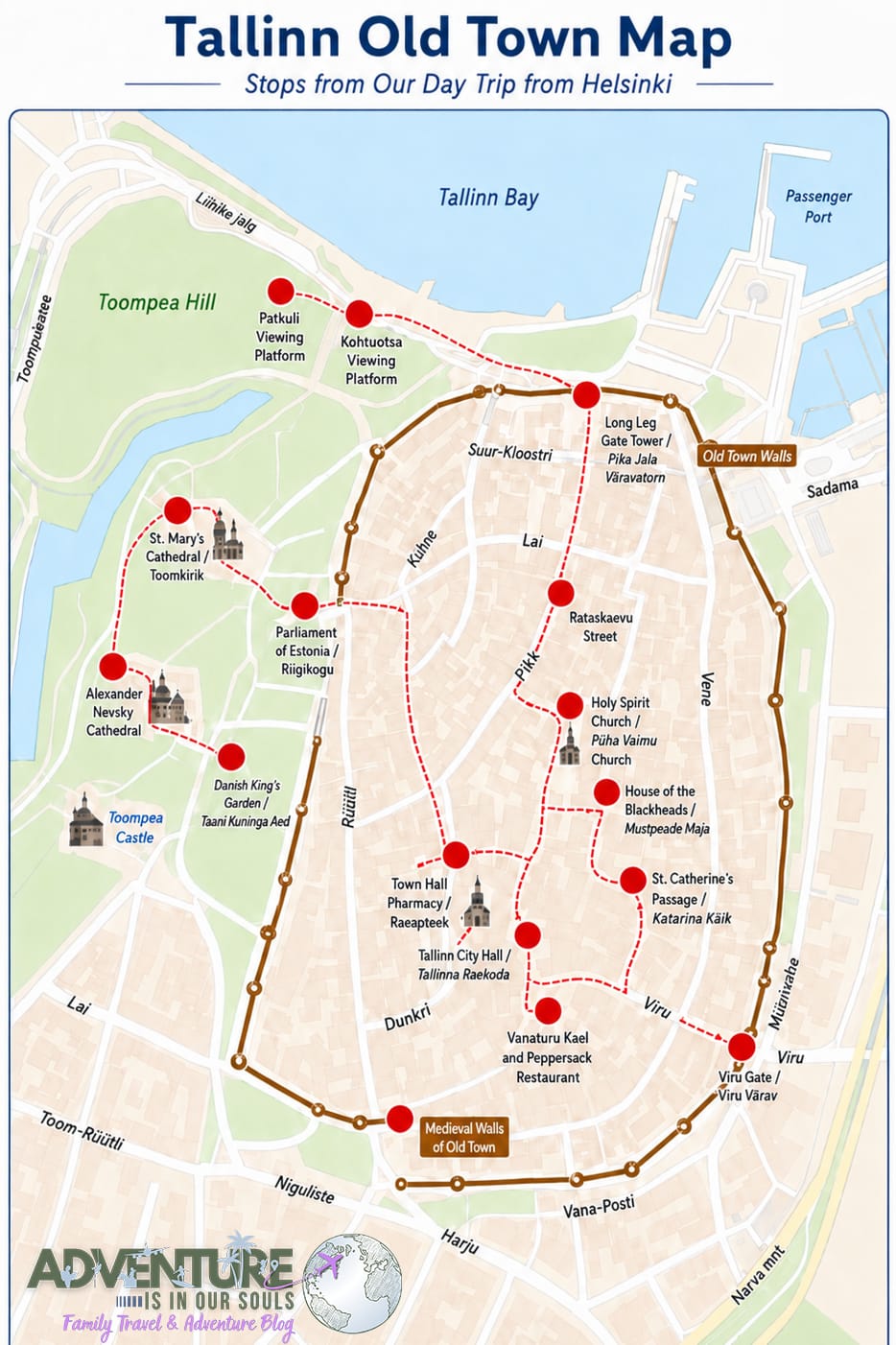
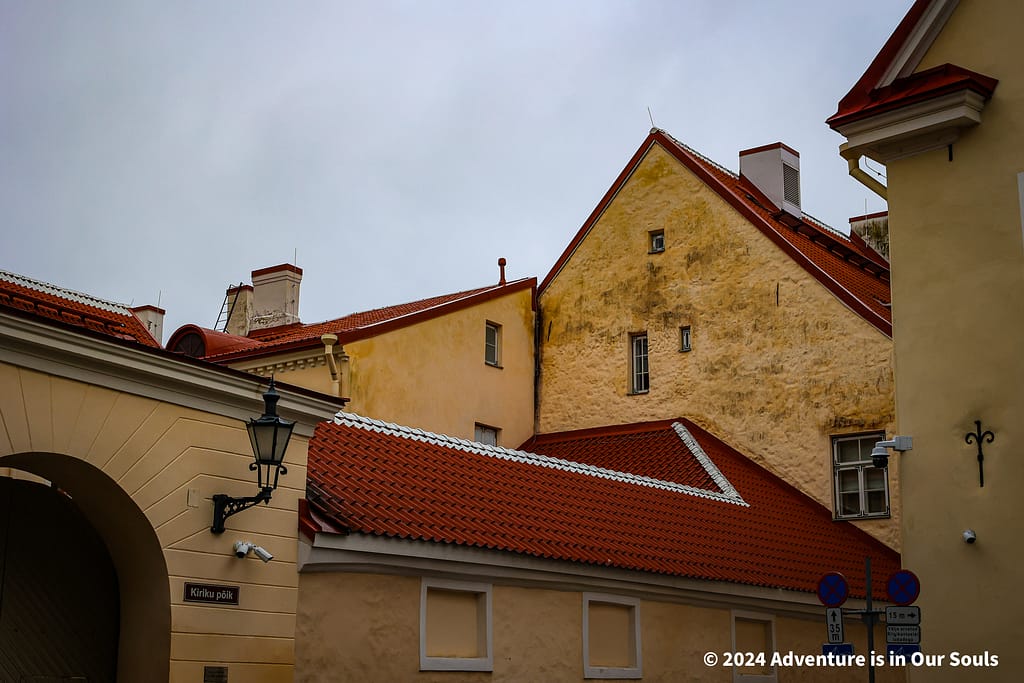
Once we arrived in Tallinn, we focused most of our day on Old Town. This made the day manageable with kids because we could walk between medieval streets, city gates, churches, viewpoints, market areas, and dinner without needing complicated transportation.
The stops below follow the general flow of our walking route, but Tallinn Old Town is compact enough that families can adjust the order based on weather, ferry timing, meals, and how much energy everyone has.
Stop #1 – Tallinn Town Hall / Tallinna raekoda
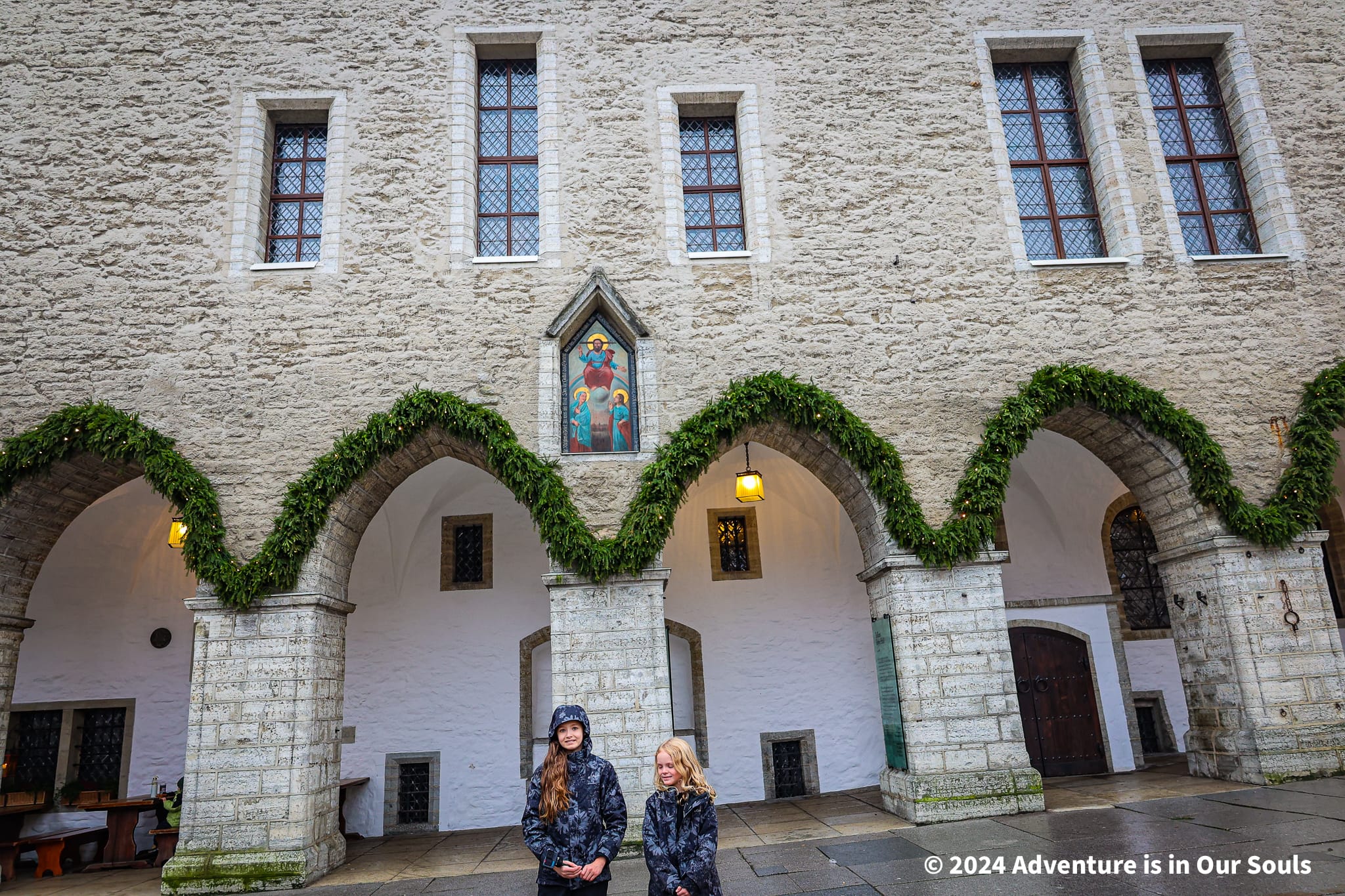
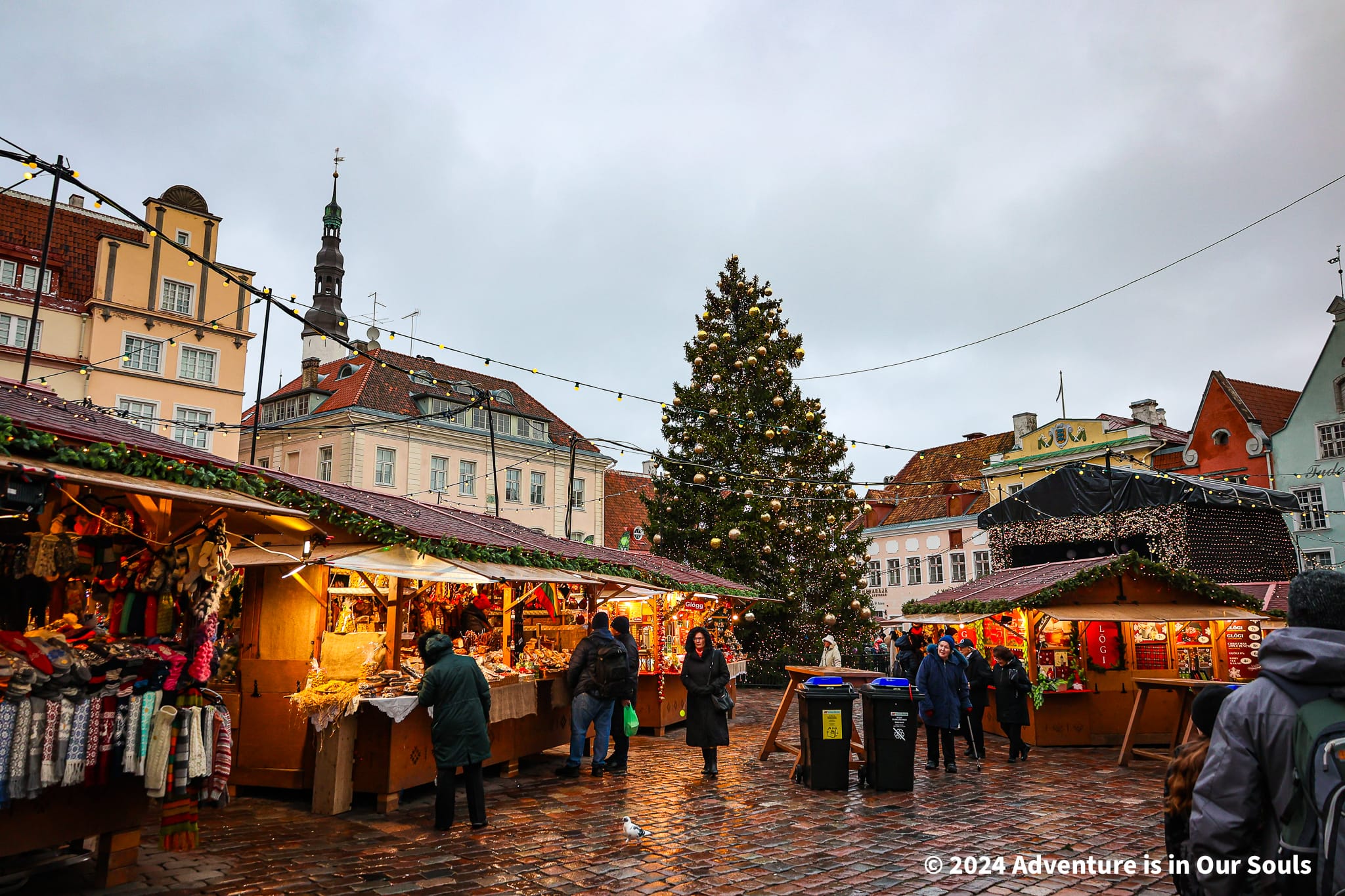
Our walking tour began in the heart of Tallinn’s Old Town at the iconic Tallinn City Hall. Known locally as Tallinna raekoda, this building is one of the city’s oldest and most impressive landmarks. It was built in the early 1400s and remains the only surviving Gothic-style city hall in Northern Europe. The tall spire and unique weather vane of Old Thomas greet visitors from above. We wandered around the square and took in the view of the colorful surrounding buildings. The girls enjoyed spotting the quirky details in the architecture.
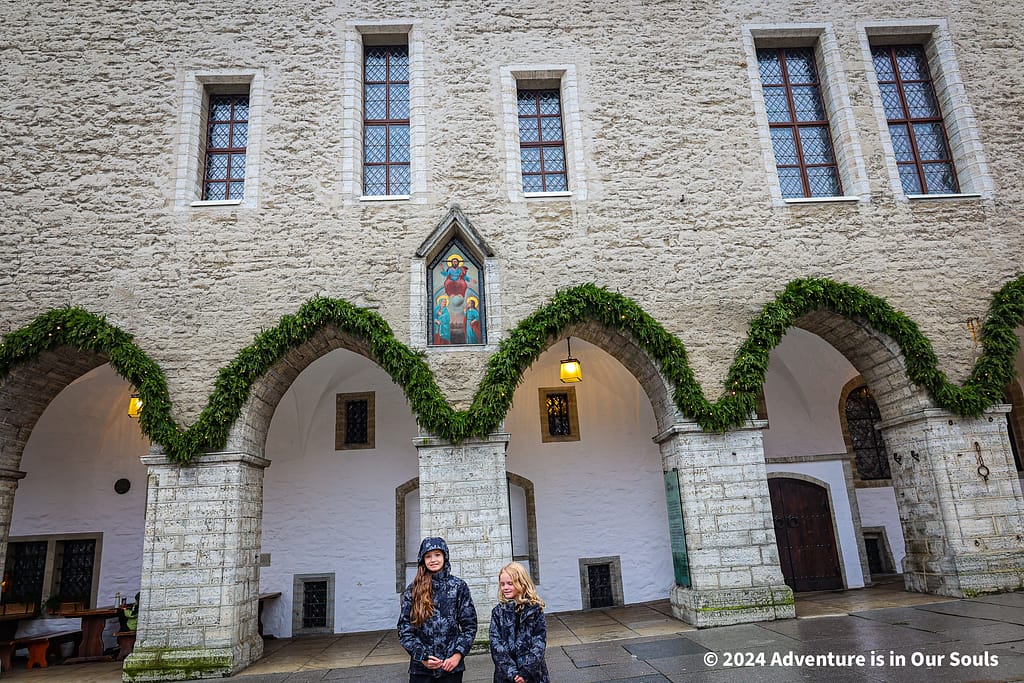
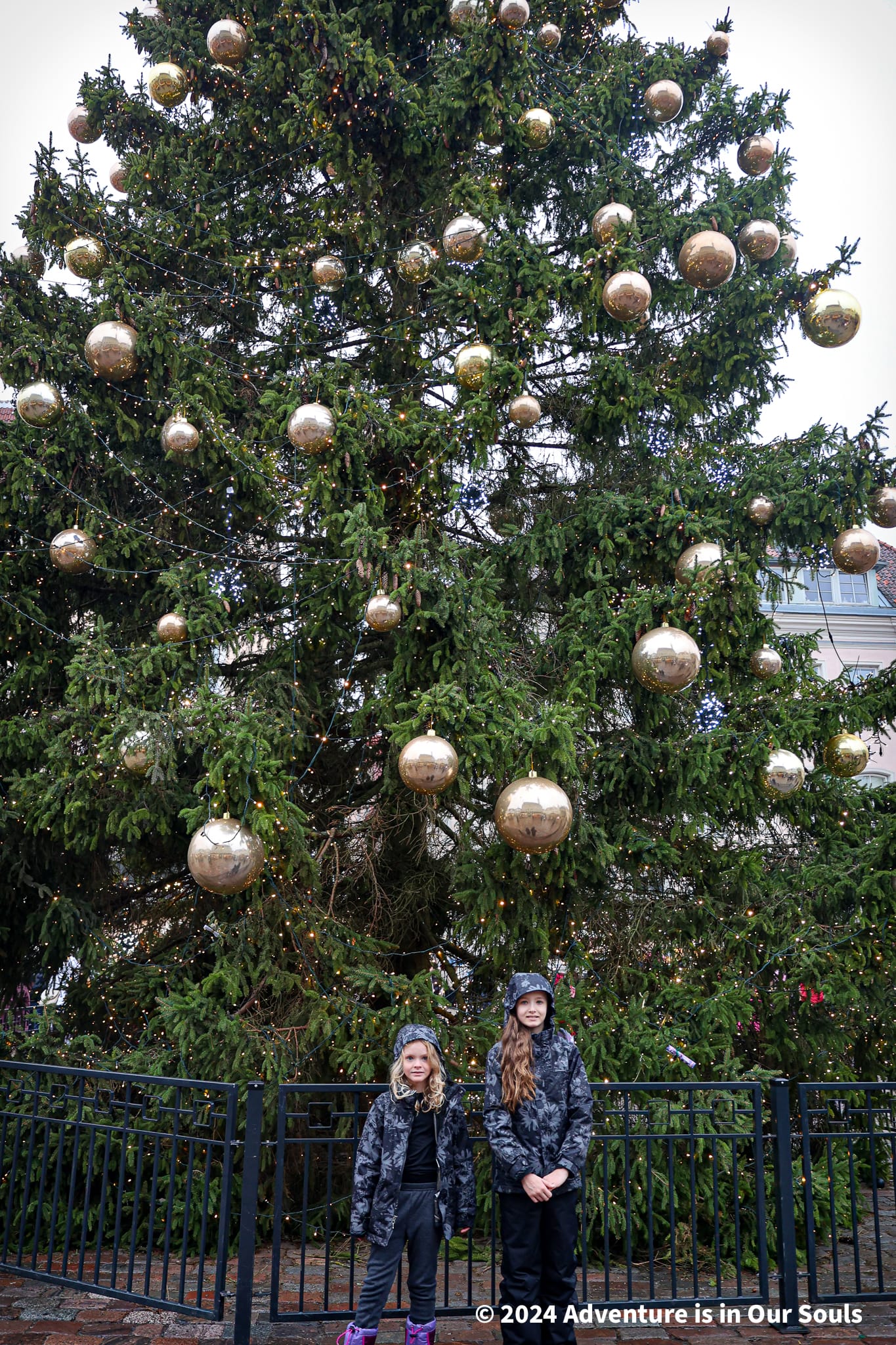
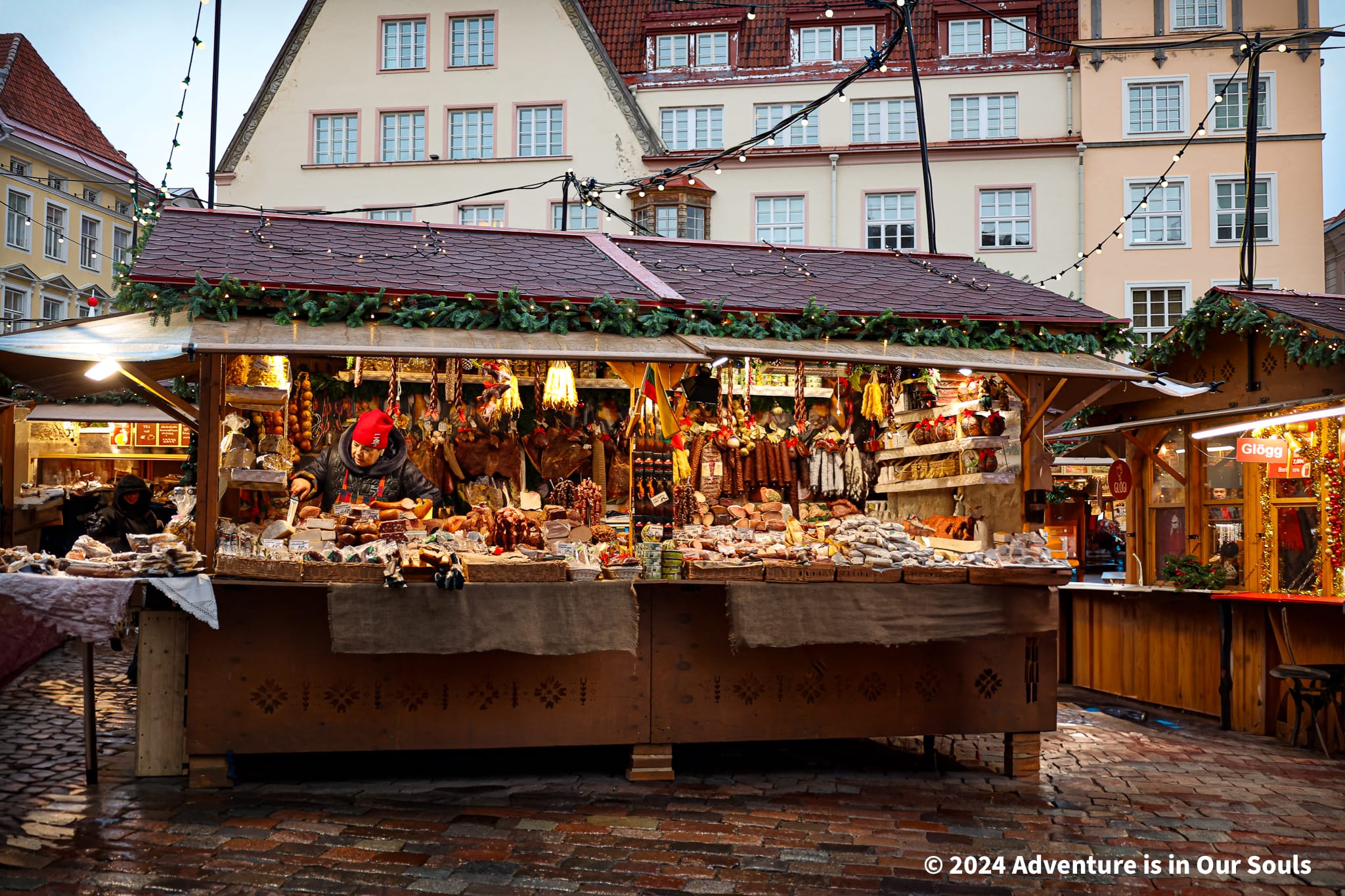
During early winter, the square transforms into a lively Christmas market. Wooden stalls are decorated with twinkling lights and festive garlands. Vendors sell handmade crafts, seasonal treats, and warm drinks like mulled wine and hot chocolate. The air fills with the scent of cinnamon and pine, creating a cozy holiday atmosphere. A massive Christmas tree stands proudly at the center.
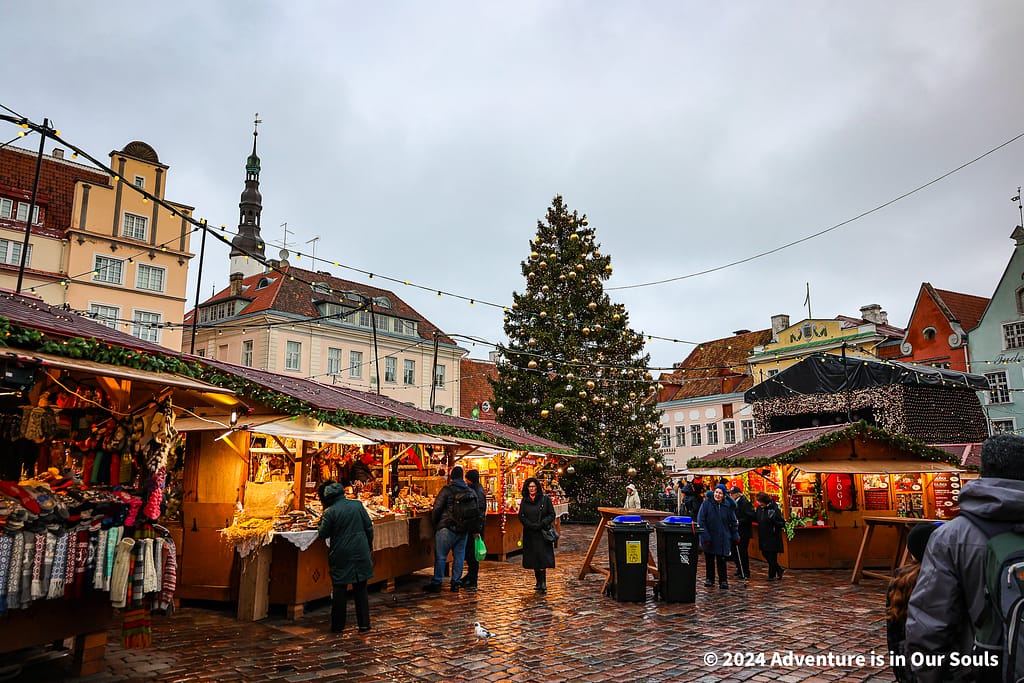
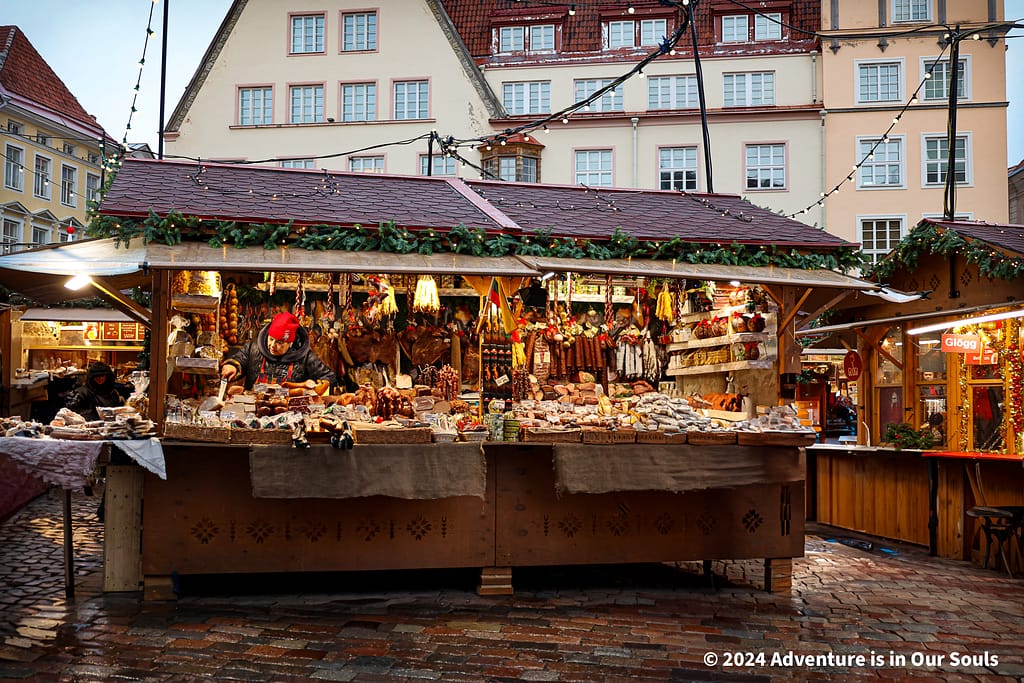
Local families and visitors mingle here, enjoying festive music and occasional performances. The girls loved exploring the stalls, especially the ones with colorful ornaments and gingerbread cookies. This charming market adds a special sparkle to the already beautiful setting around City Hall. It feels like stepping into a holiday postcard and is a highlight of any winter visit to Tallinn.
Stop #2 – Vanaturu kael and Peppersack Restaurant
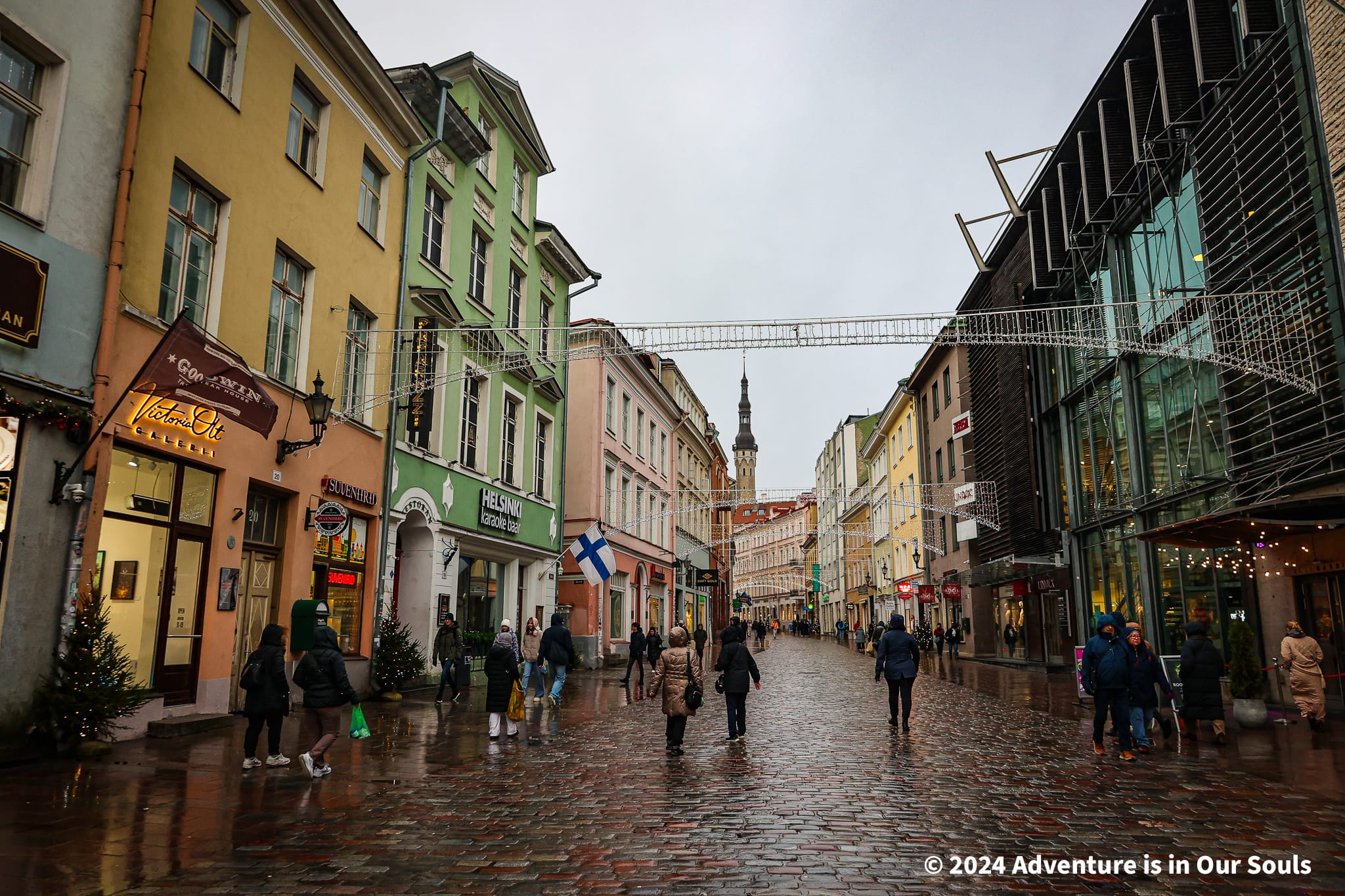
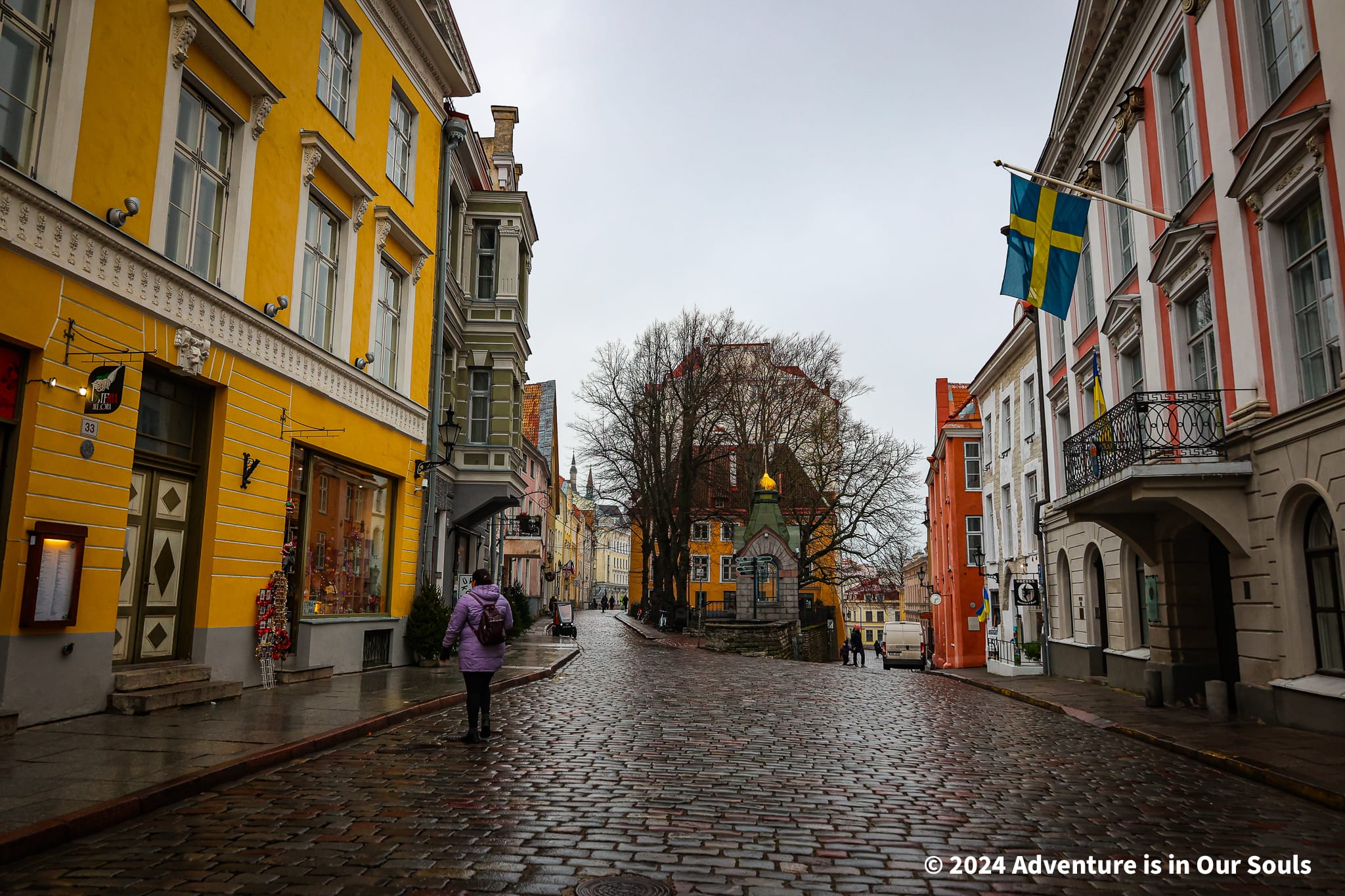
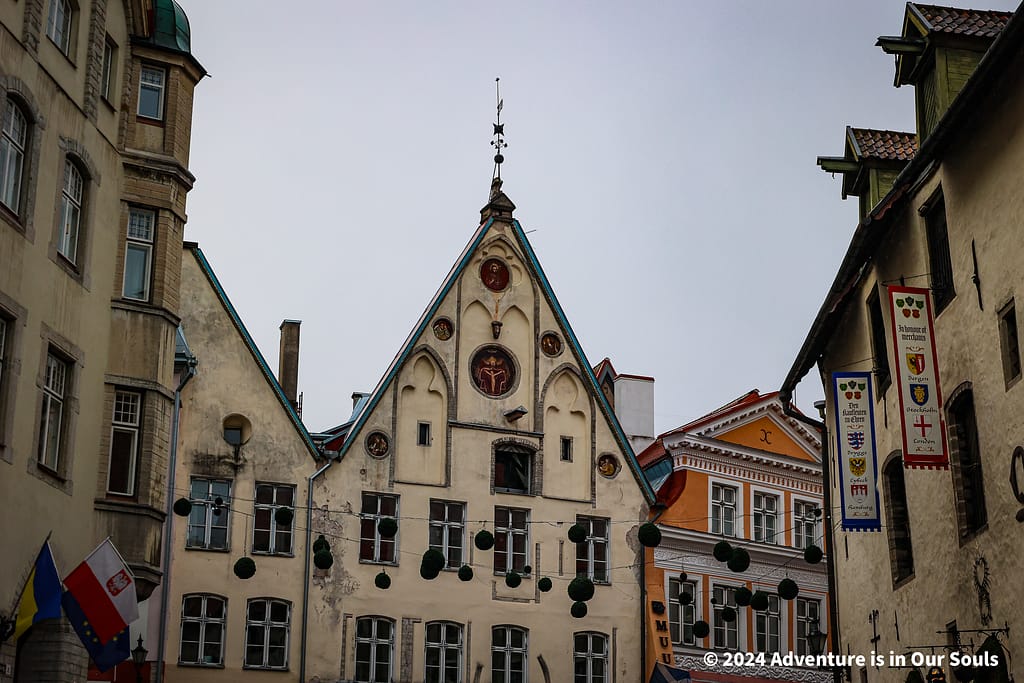
Vanaturu kael is one of the narrowest and most enchanting streets in Tallinn. It winds through Old Town like something out of a fairy tale. Lined with stone buildings and flickering lanterns, it invites visitors to slow down and soak in the charm.
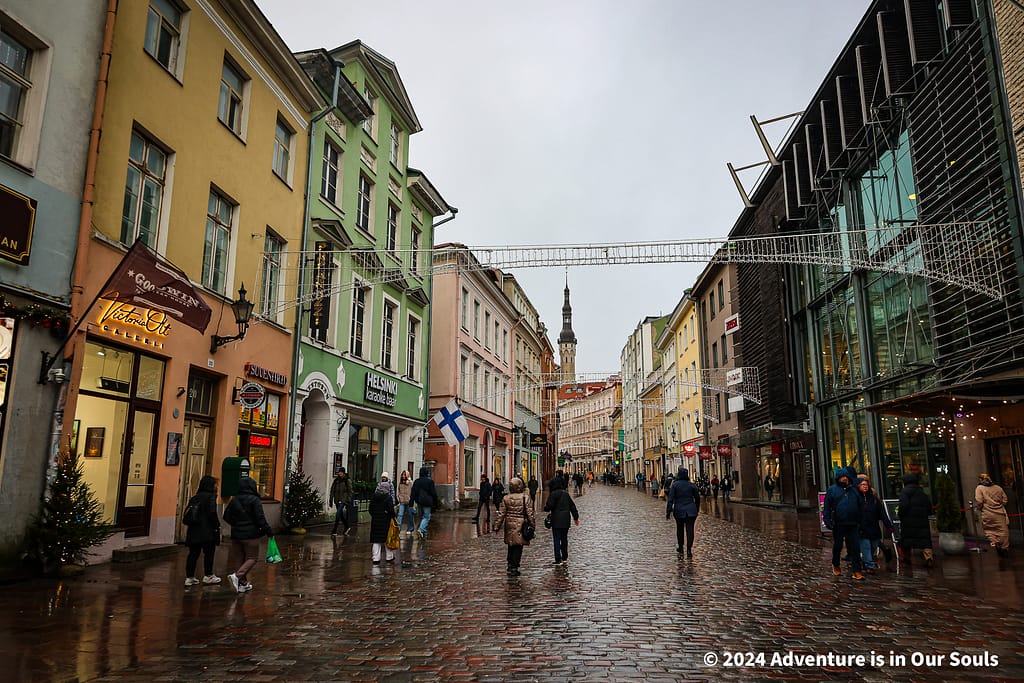
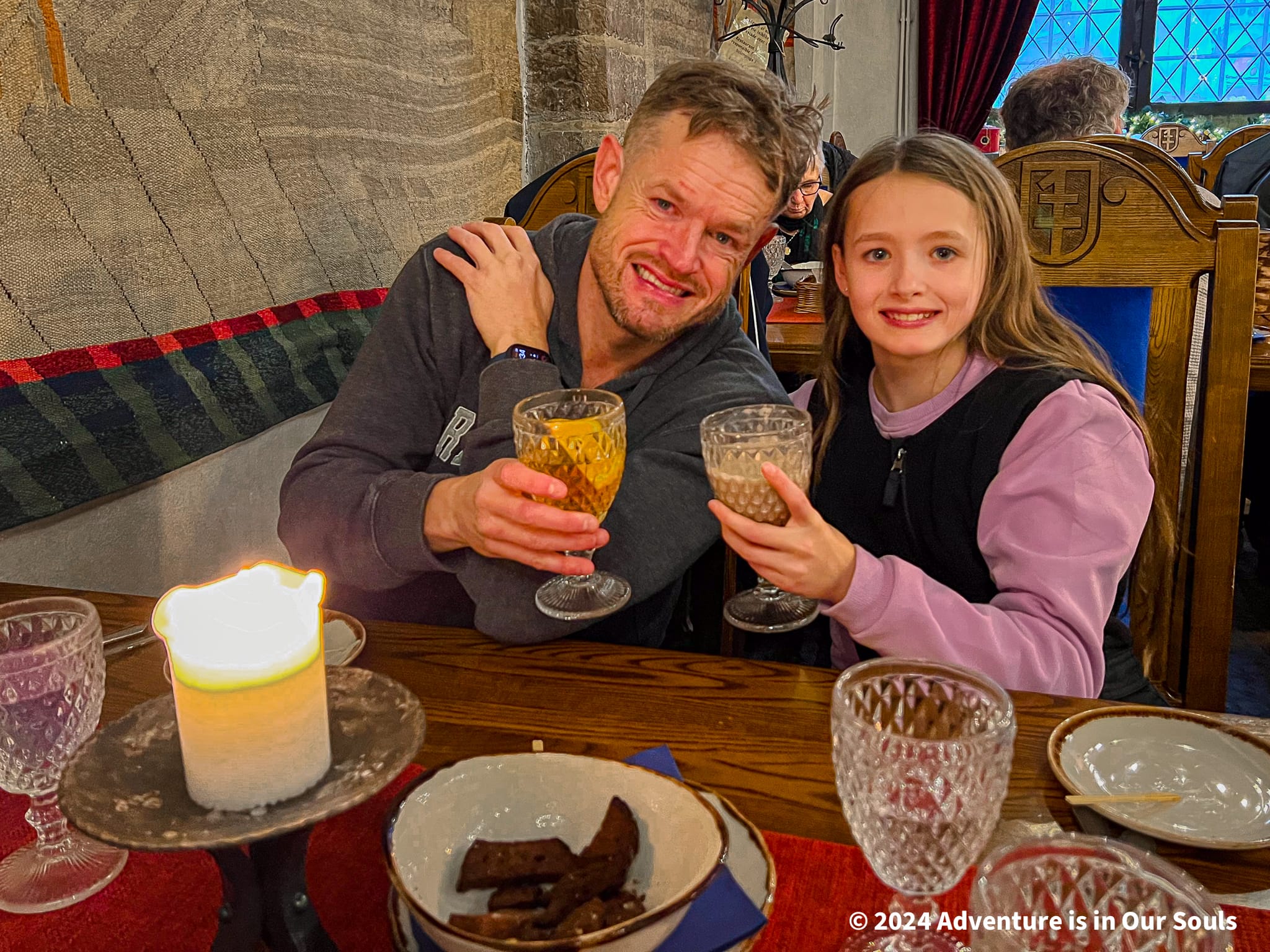
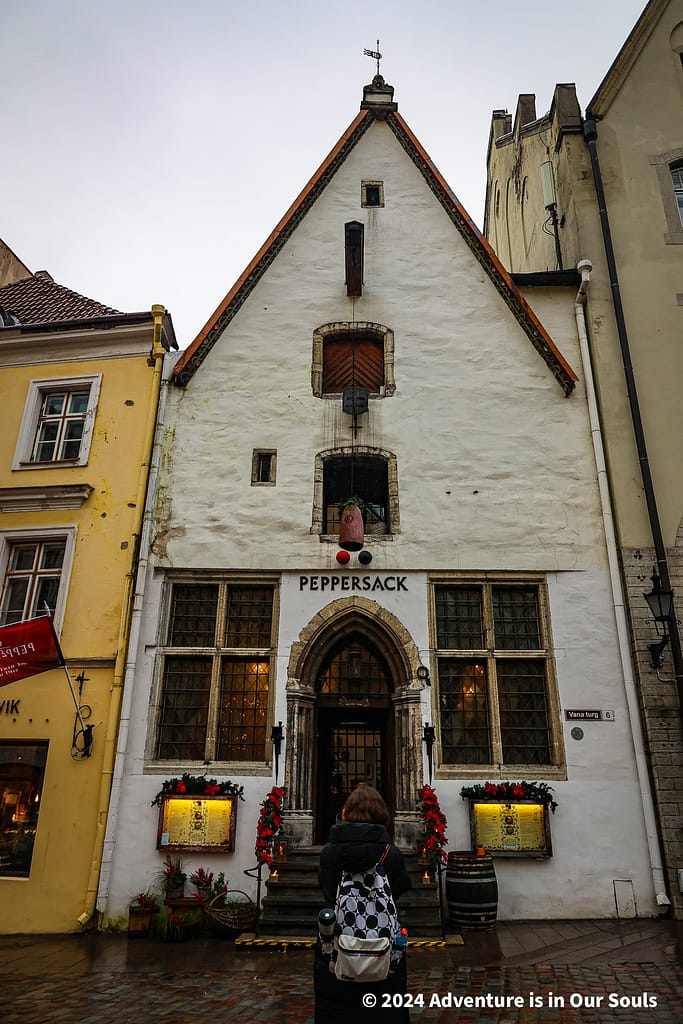
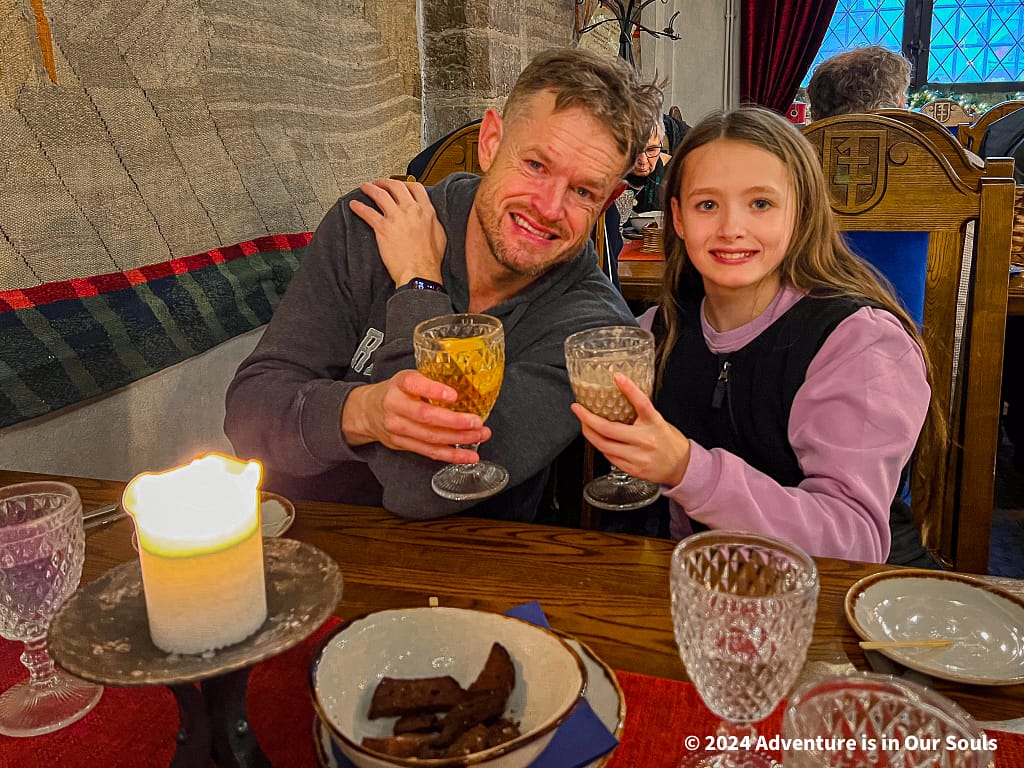
We followed the scent of roasting meat and warm spices to Peppersack restaurant. This spot is famous for its medieval-style meals and cozy atmosphere. We met here later for dinner after a full day of exploring. The garlic bread was absolutely amazing. Made from traditional Estonian black-grain bread, it had a strong flavor and a hearty texture. At first, the girls were hesitant. They weren’t sure about the dark bread. But after the first bite, they were hooked. Be aware that many dishes in Estonia feature heavy dill and spice flavors. Still, the setting was fun, and the food was fantastic.
Stop #3 – Viru Gate / Viru Väravad
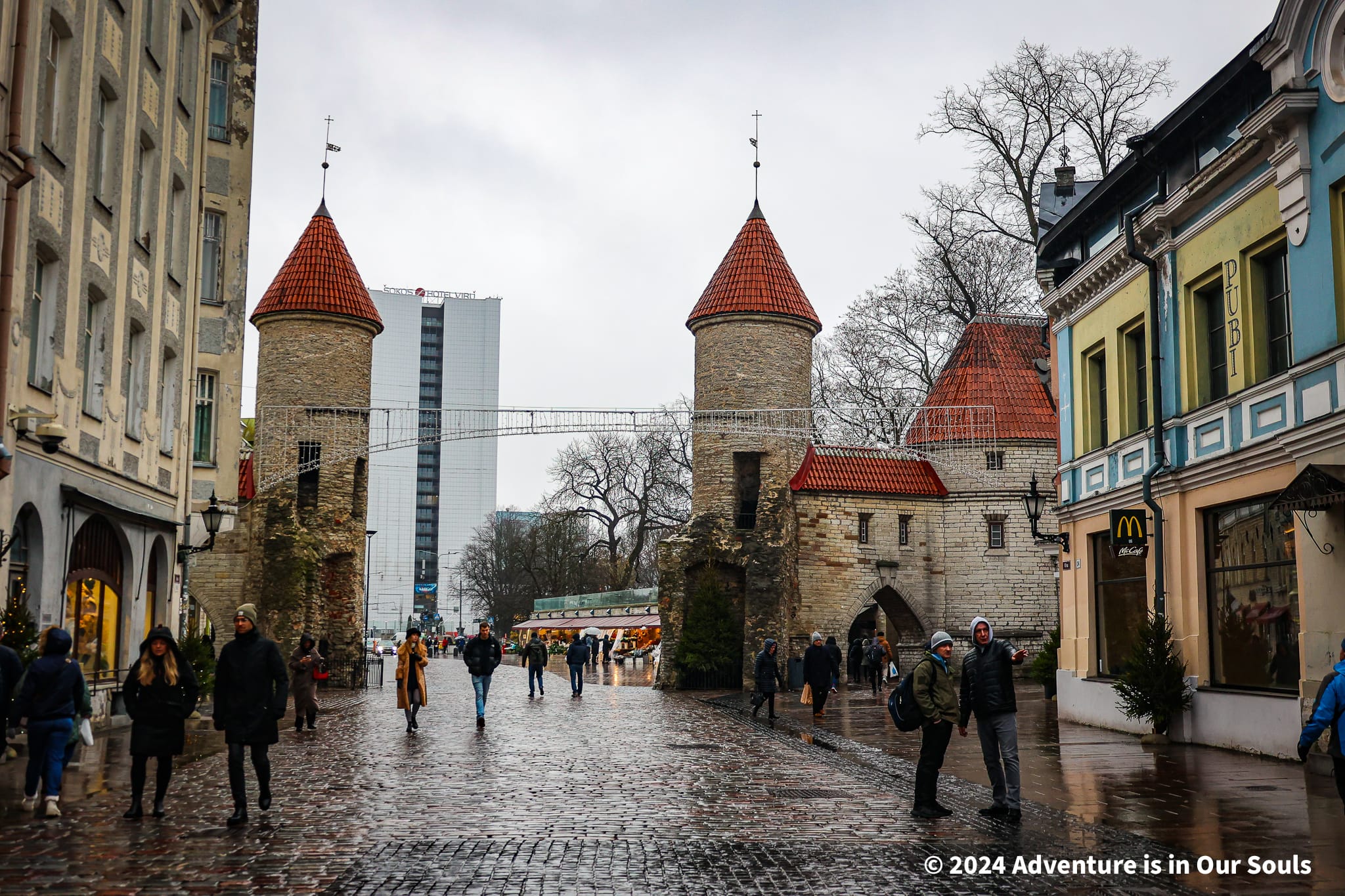
Our next stop was the Viru Gate, one of the most photographed spots in Tallinn. These charming twin towers once guarded the main entrance to the medieval city. Today, they welcome visitors with their storybook look and timeless feel.
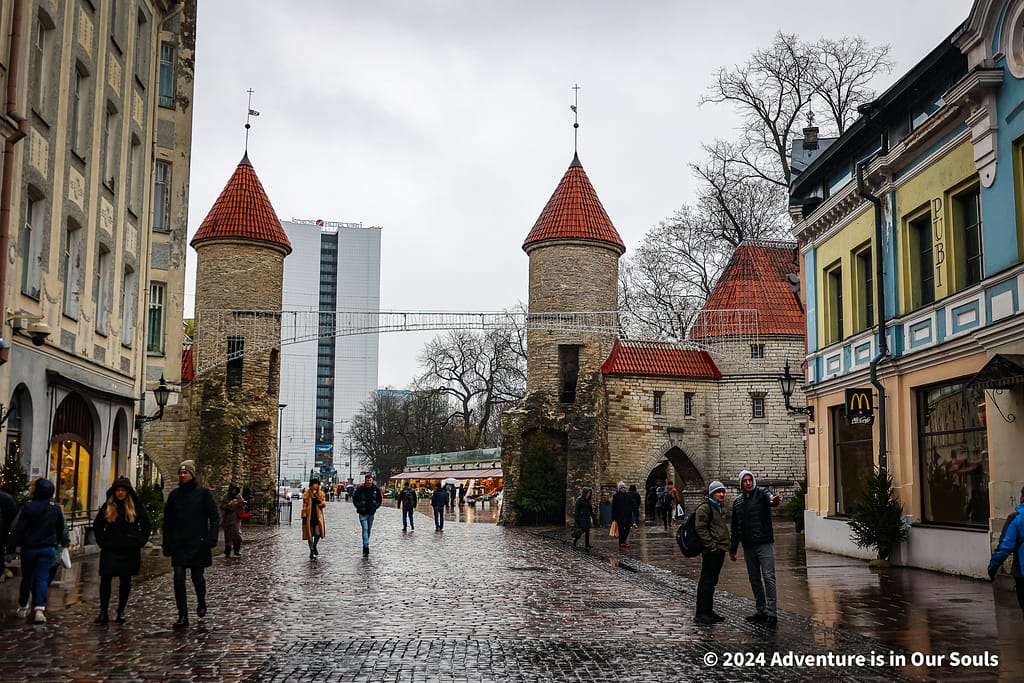
The towers date back to the 14th century. In winter, the cobbled street between them is lined with twinkling lights and festive decorations. As we walked around the gate, we felt like we were in another world! Just outside the gate are flower stalls, sweet shops, and cheerful cafes.
This spot also gave us a great sense of Tallinn’s original city boundaries. It’s easy to imagine knights and traders passing through centuries ago.
Stop #4 – Medieval Walls of Old Town
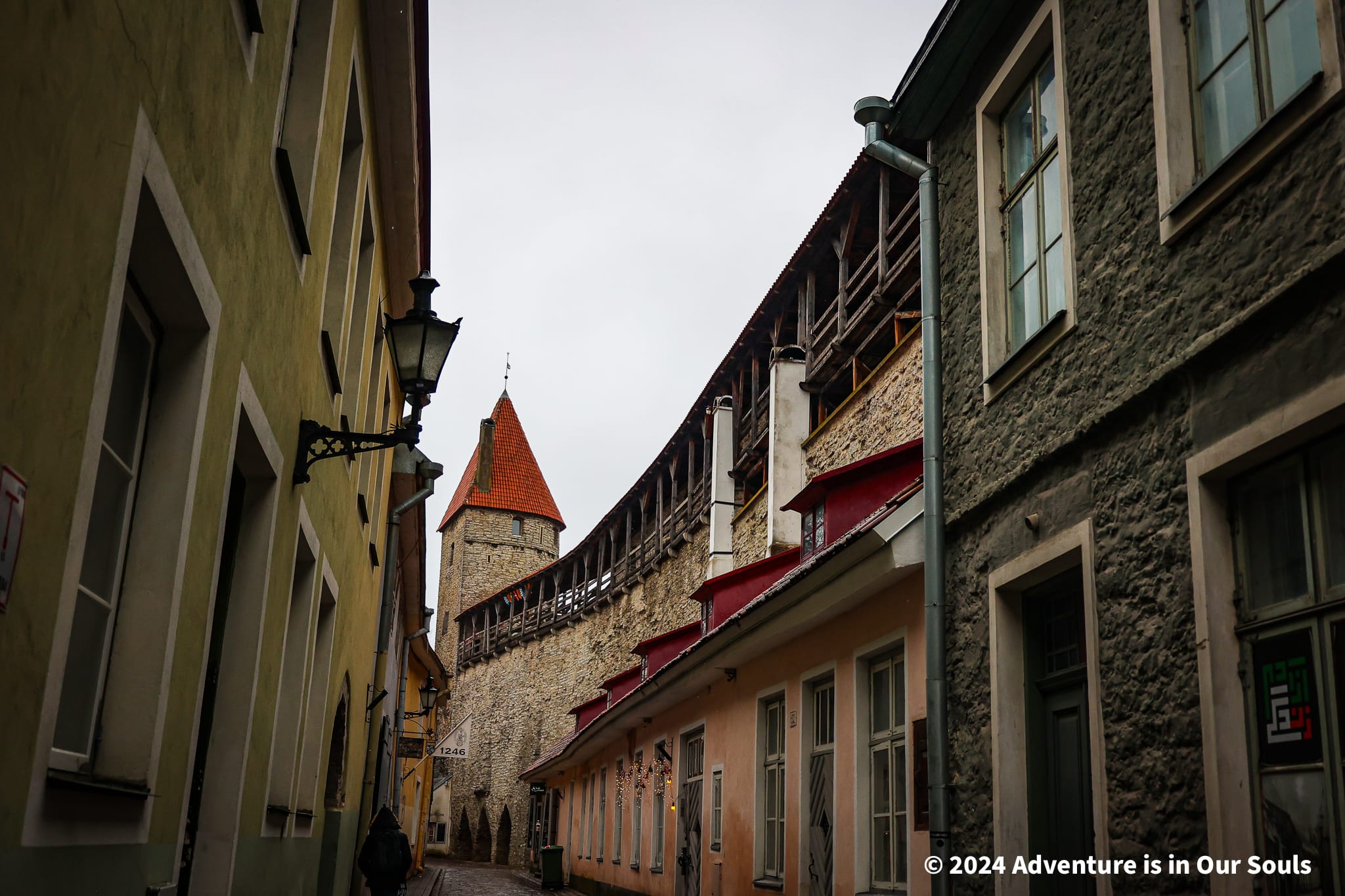
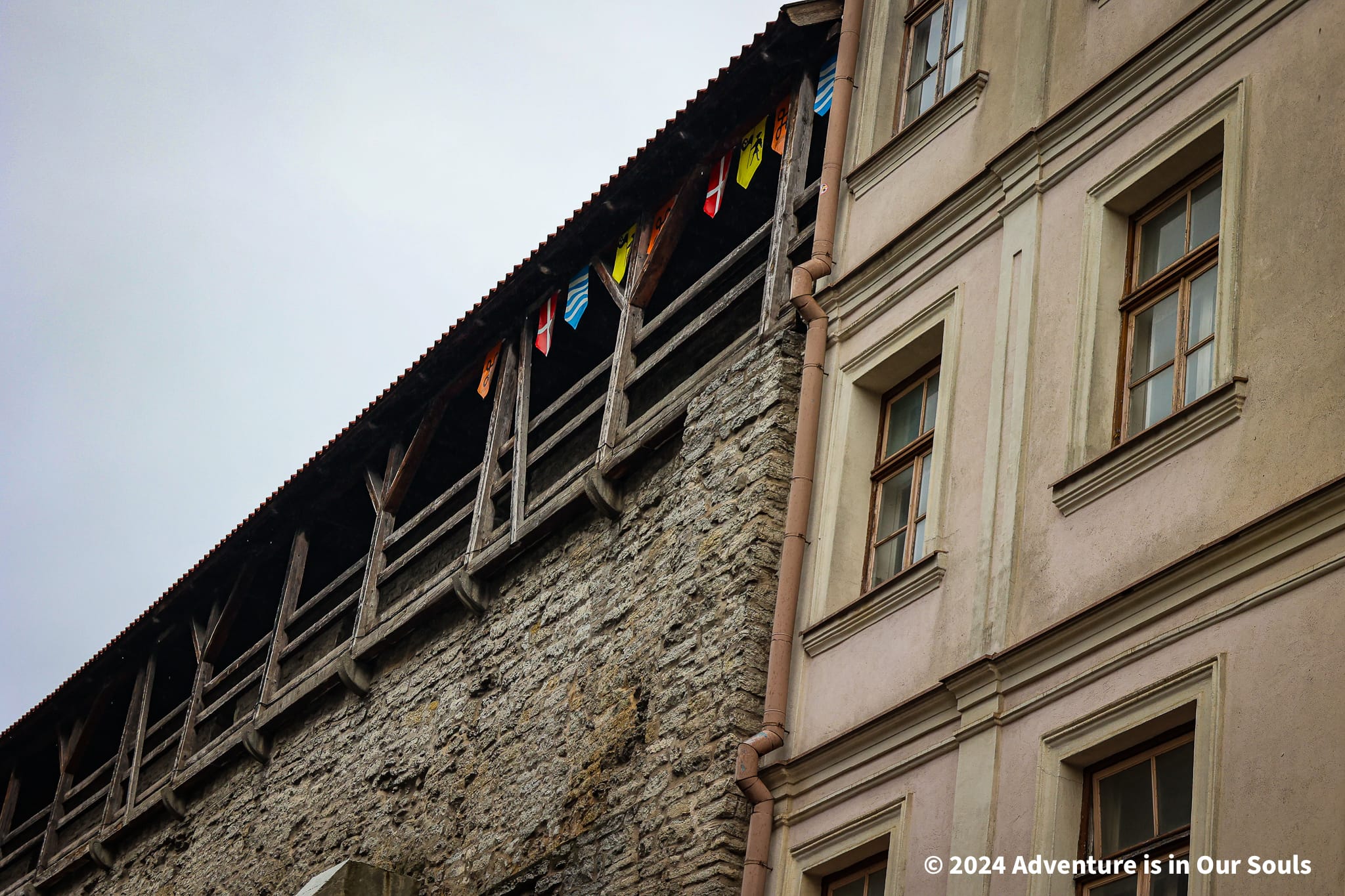
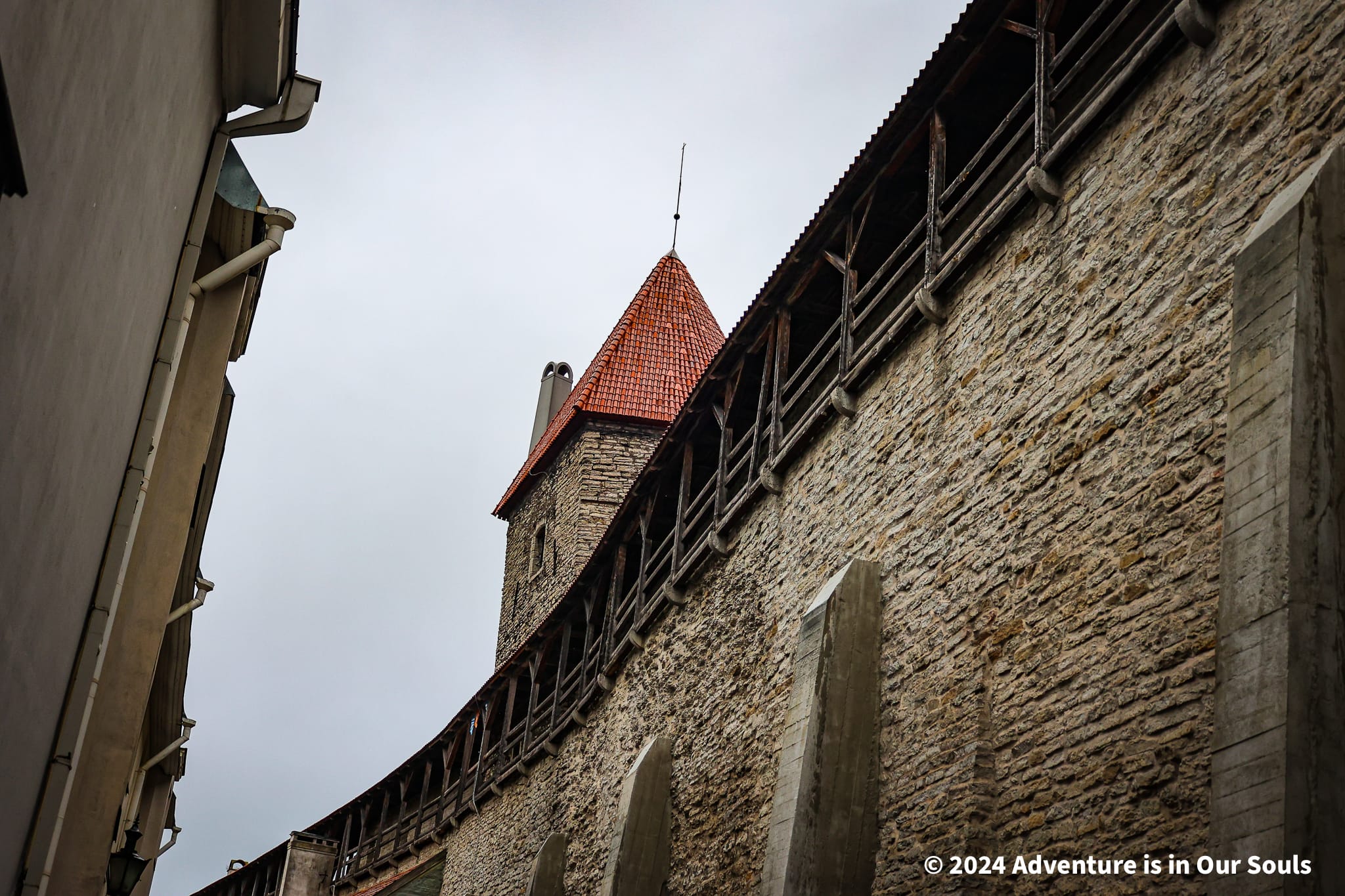
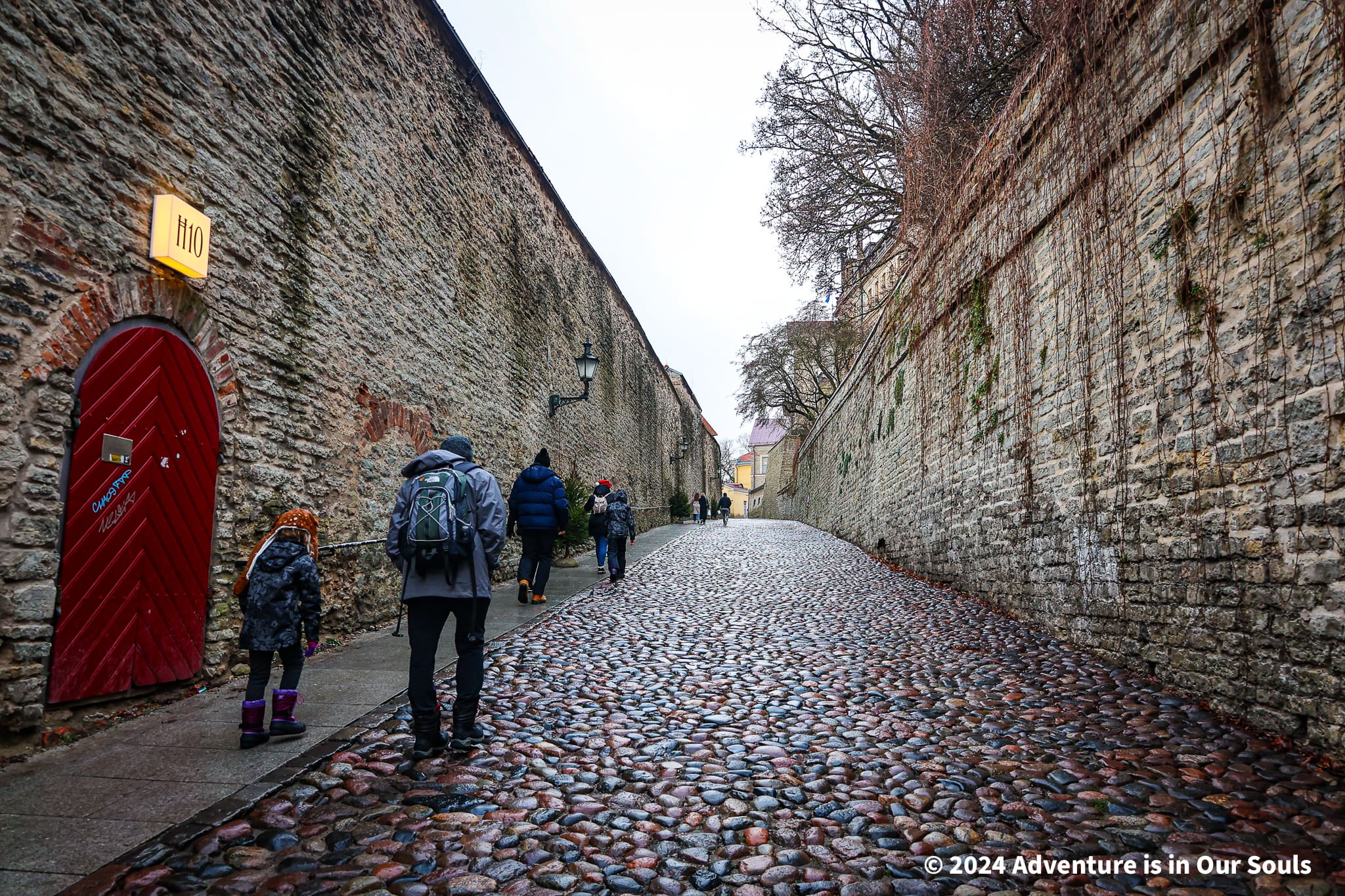
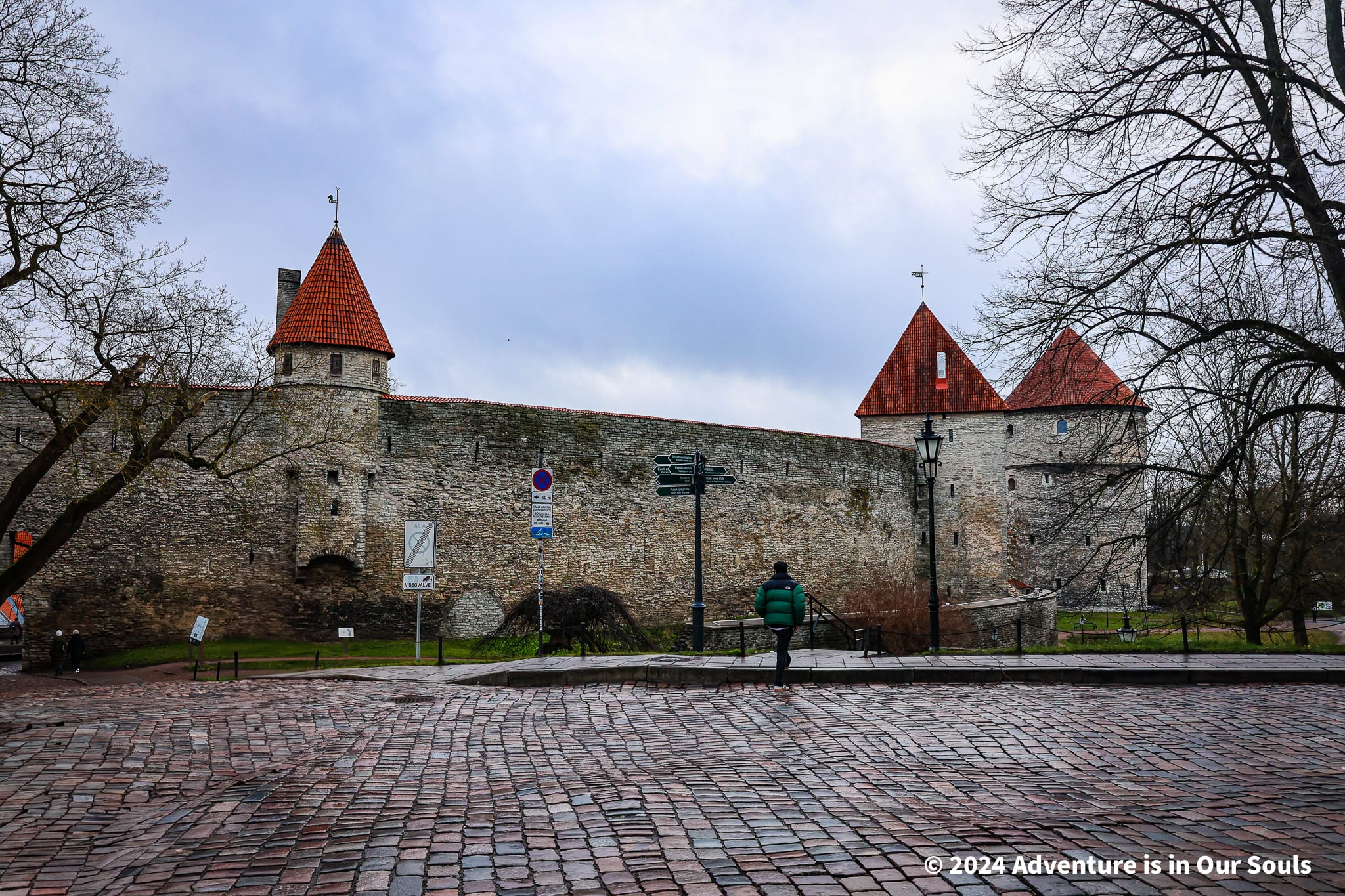
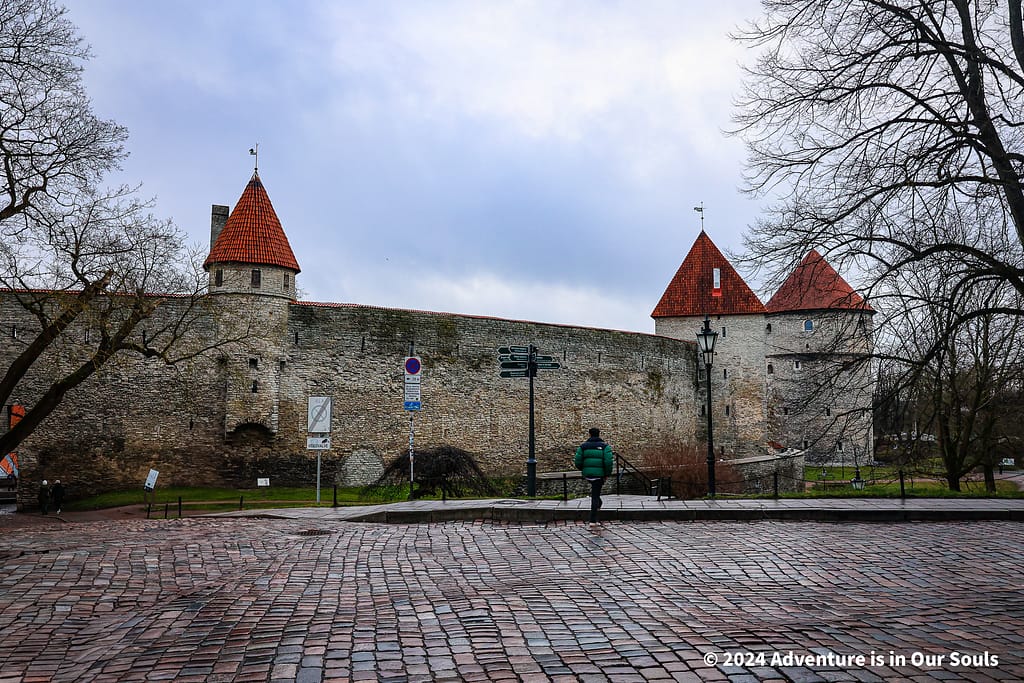
From Viru Gate, we followed the medieval walls of Old Town. Walking along the medieval walls feels like stepping back in time! These impressive fortifications were originally built in the 13th century to protect Tallinn from invading armies. Over the centuries, the walls were expanded and reinforced, eventually stretching nearly two kilometers with around 20 defensive towers. This formidable system helped Tallinn become one of the best-preserved medieval cities in Europe.
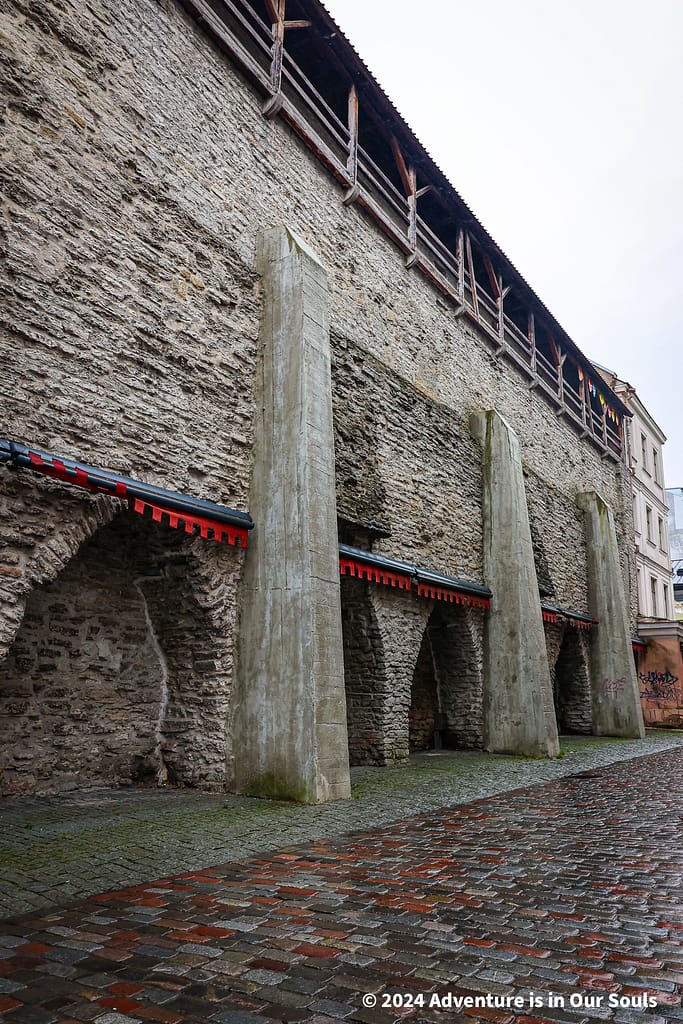
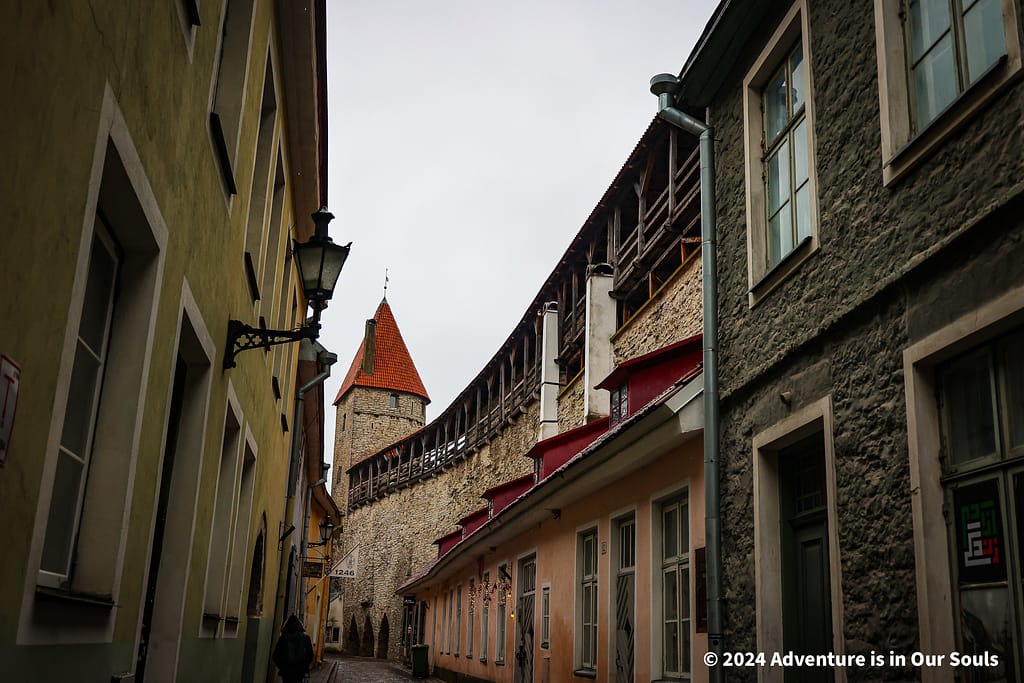
The walls were vital for trade and security, guarding the city’s valuable merchants and residents from frequent attacks. Many of the towers served specific purposes, such as storage, defense, or imprisonment. The craftsmanship is remarkable. These thick stone walls were built to withstand sieges and harsh weather alike.
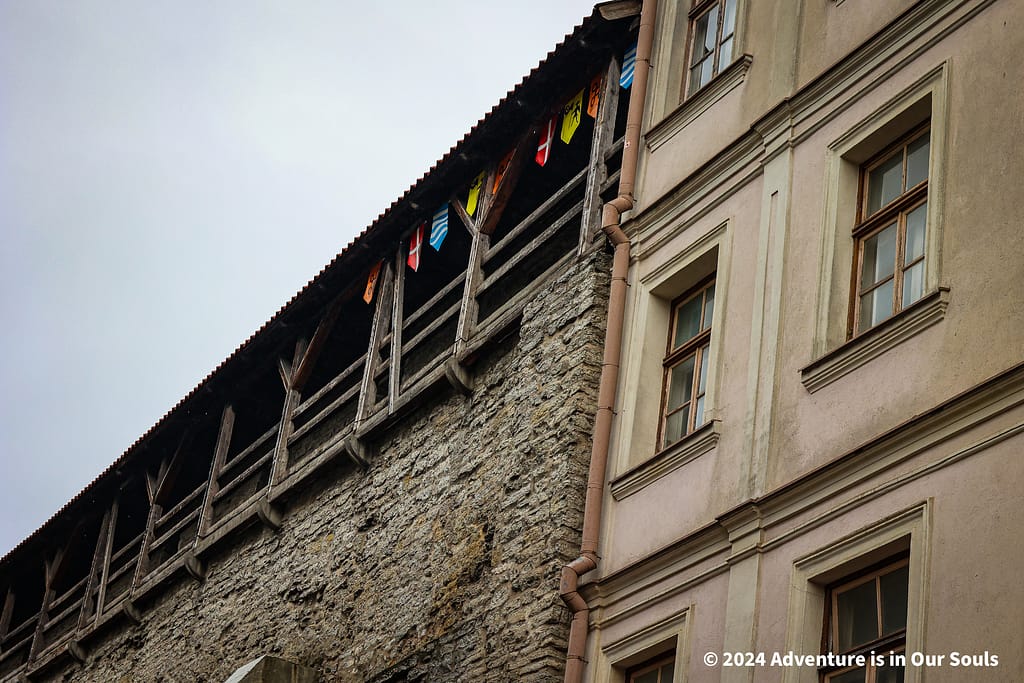
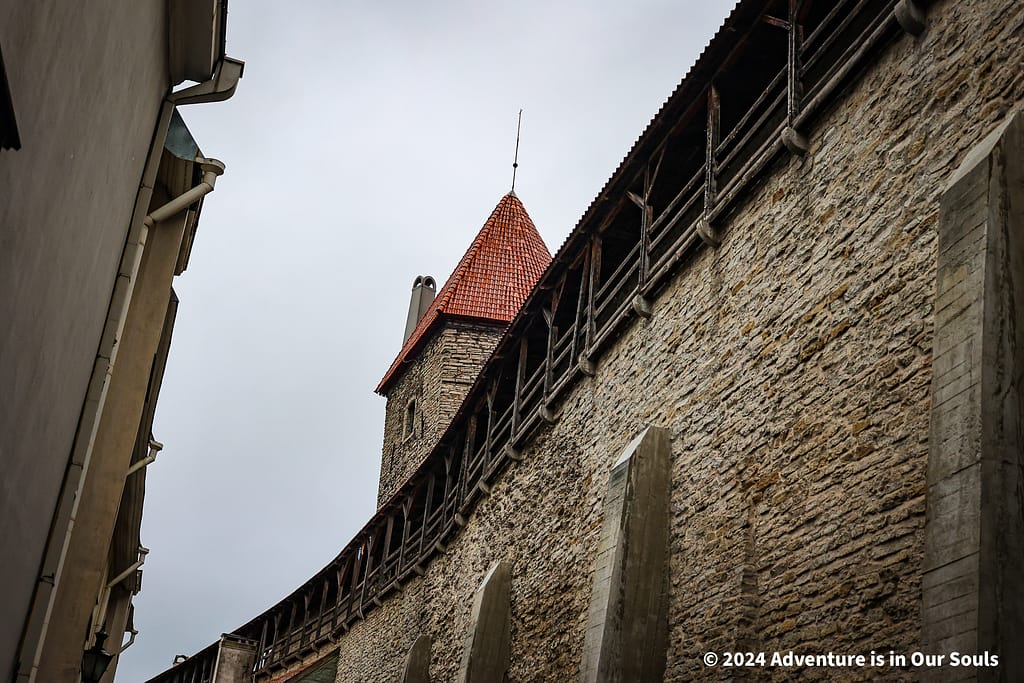
Walking here, you can almost hear the echoes of medieval sentries keeping watch and the hustle of a bustling port city behind the walls. The fortifications stand as a powerful reminder of Tallinn’s strategic importance through history. We loved imagining the watchmen keeping guard centuries ago as the cold wind swept through the narrow streets.
Stop #5 – St. Catherine’s Passage / Katariina Käik
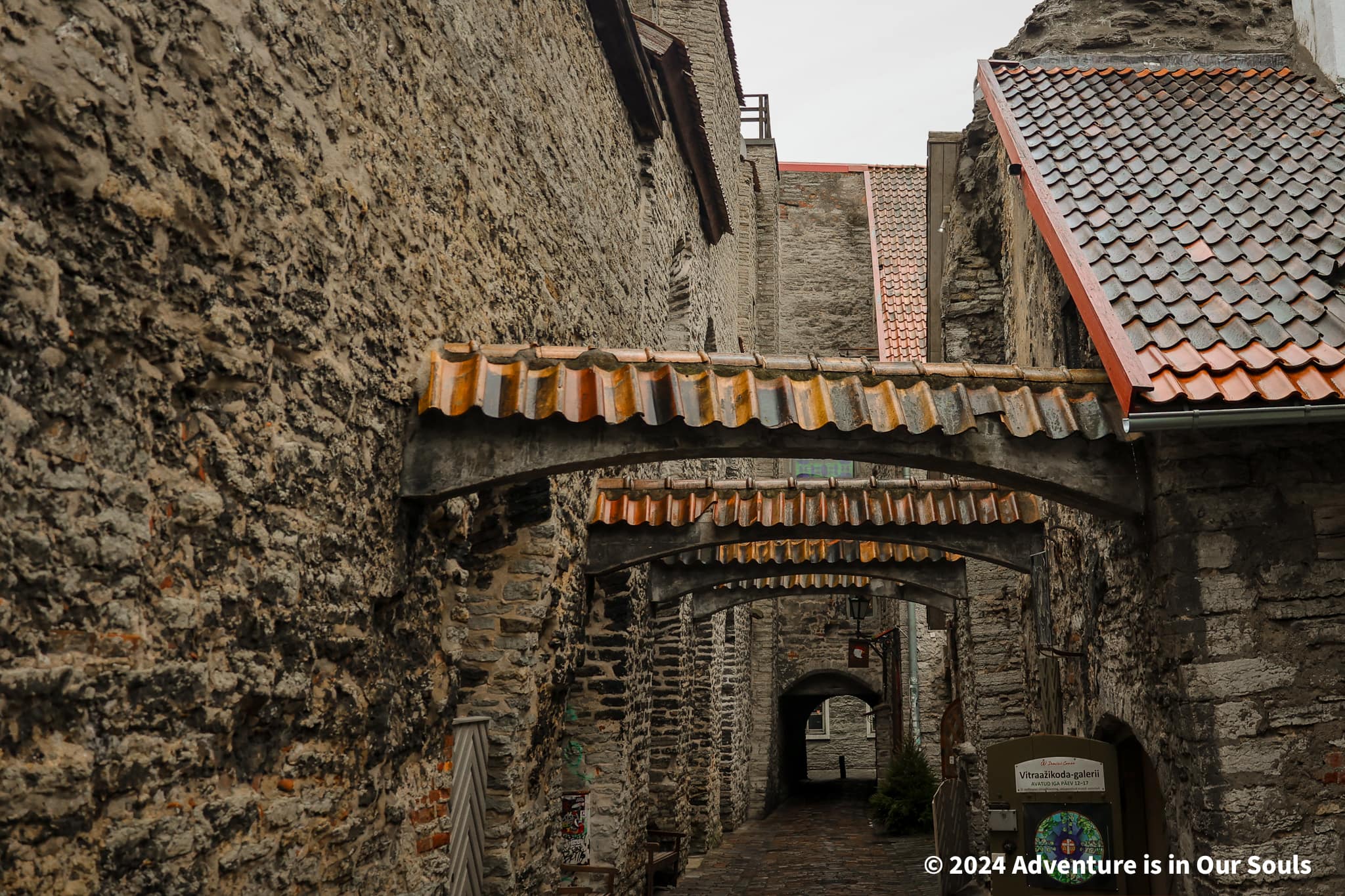
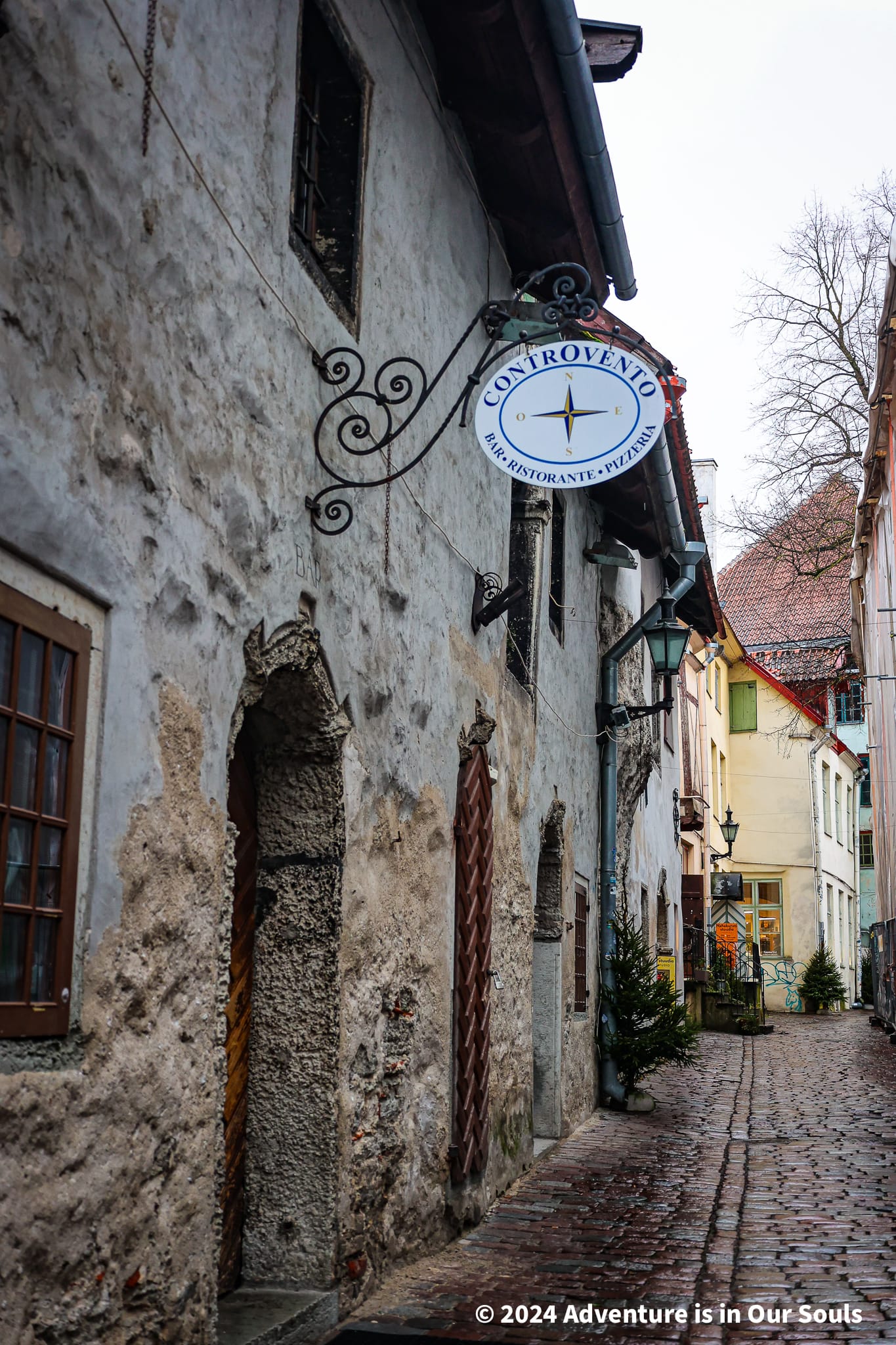
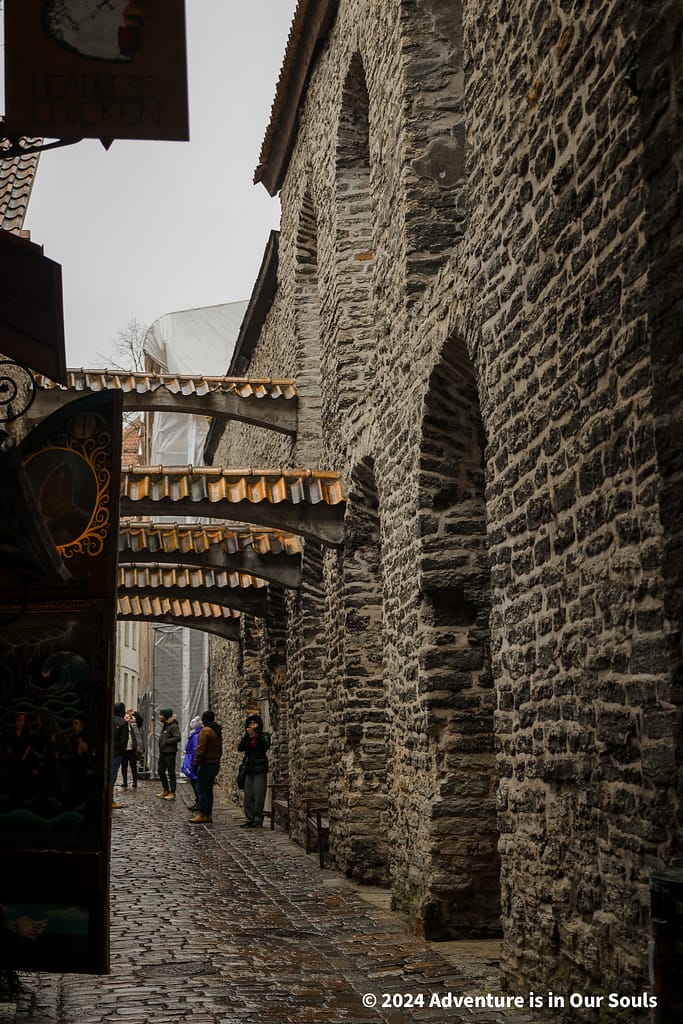
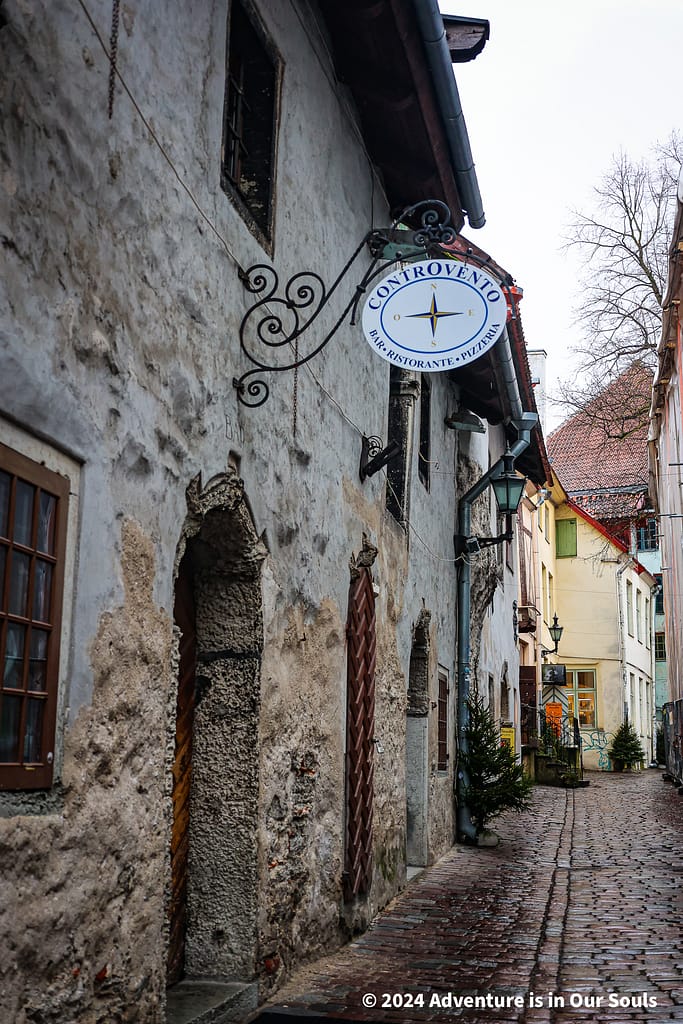
Next on our journey was St. Catherine’s Passage, or Katariina Käik, a quiet and enchanting lane tucked away in Tallinn’s Old Town. This narrow cobblestone alley dates back to the 16th century and was once part of the convent area connected to St. Catherine’s Church. It has long been a place where craftsmen and artists practiced their trades.
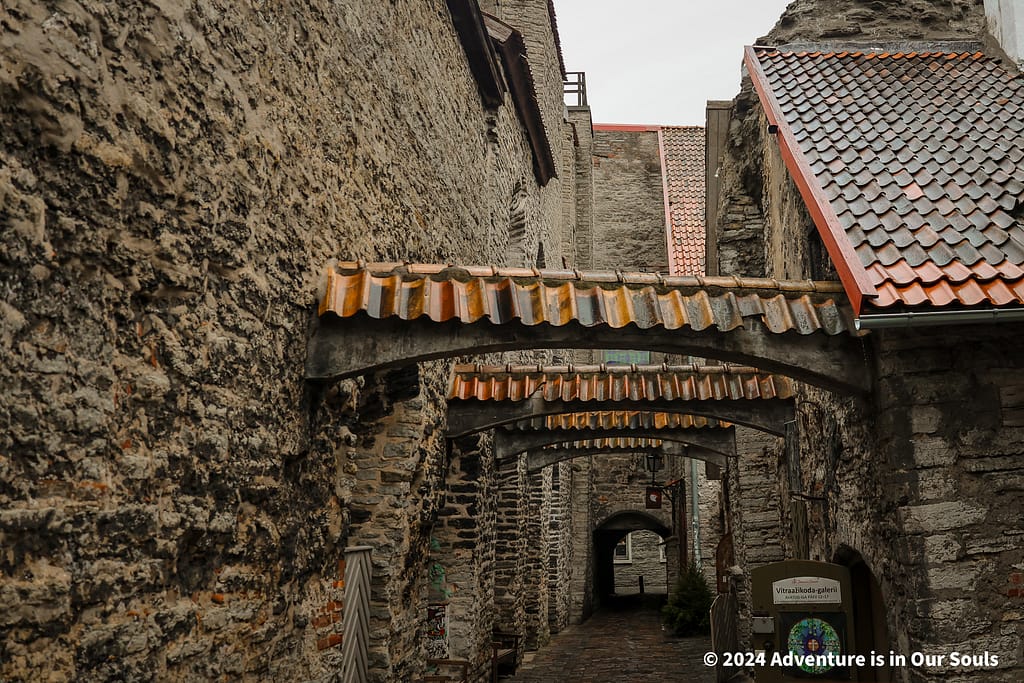
Today, the passage is a vibrant arts hub filled with small workshops where visitors can see jewelry makers, potters, and glass artists at work. The tradition of craft here keeps the medieval spirit alive in a modern way. As we walked through the passage, we felt the peaceful energy of a place that has nurtured creativity for hundreds of years.
Stop #6 – Town Hall Pharmacy / Apteek
Then we made our way to the incredible Town Hall Pharmacy, or Raeapteek, a true highlight of Tallinn’s medieval heritage. Established in 1422, this pharmacy is one of the oldest continuously operating pharmacies in Europe, a living piece of history.
Walking through its doors feels like stepping into a medieval apothecary shop, with centuries-old shelves filled with mysterious bottles, jars, and herbs. For hundreds of years, the pharmacy was a center of healing and medicine in the city.
One of its most famous products is Claret. This is a special medicinal wine made according to a centuries-old recipe, believed to have healing properties. The pharmacy’s records and artifacts tell stories of ancient remedies, superstitions, and medical practices from the Middle Ages. It’s fascinating to see how science and tradition blended here long before modern medicine.
Stop #7 – Holy Spirit Church / Püha Vaimu kogudus
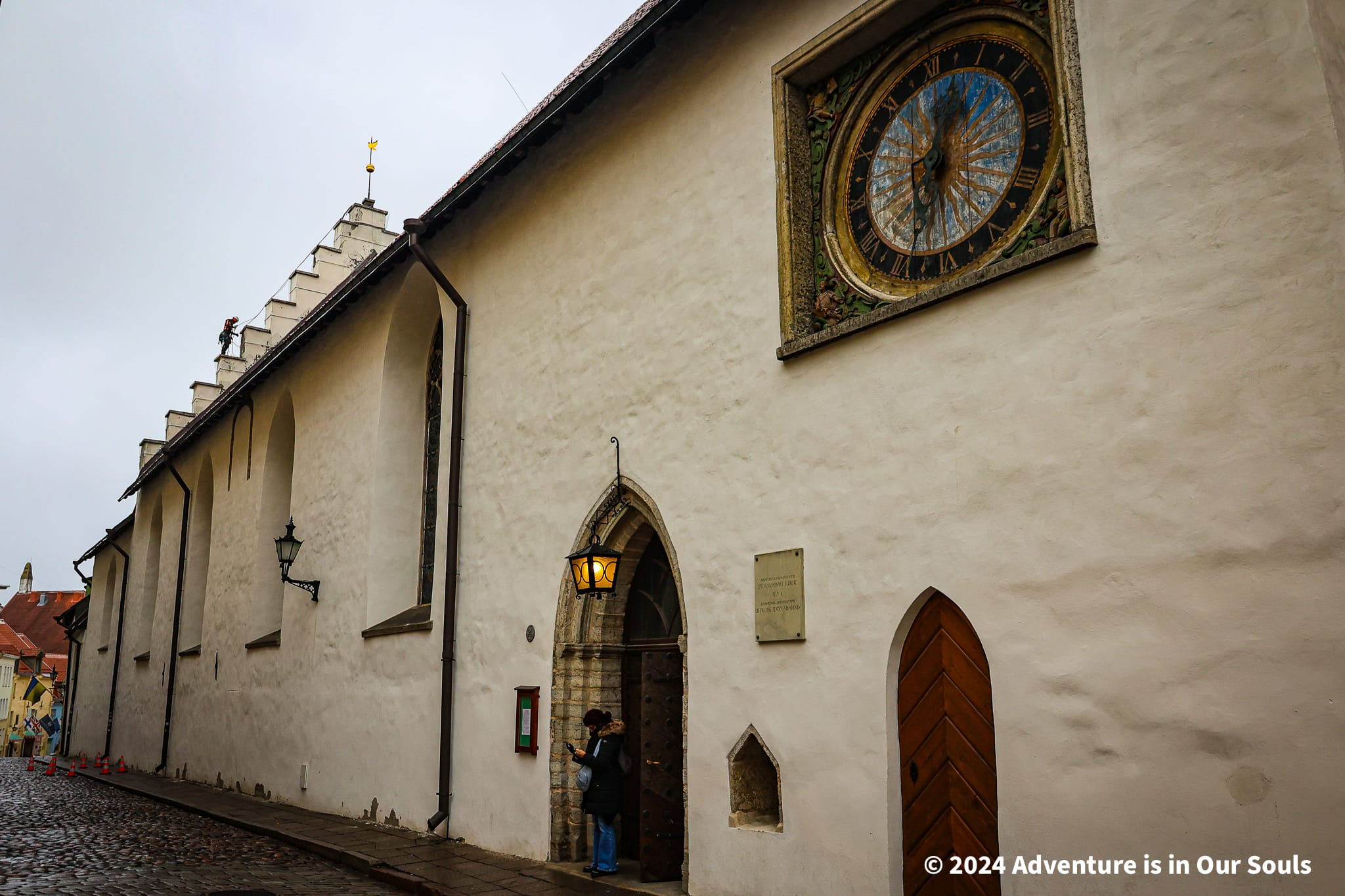
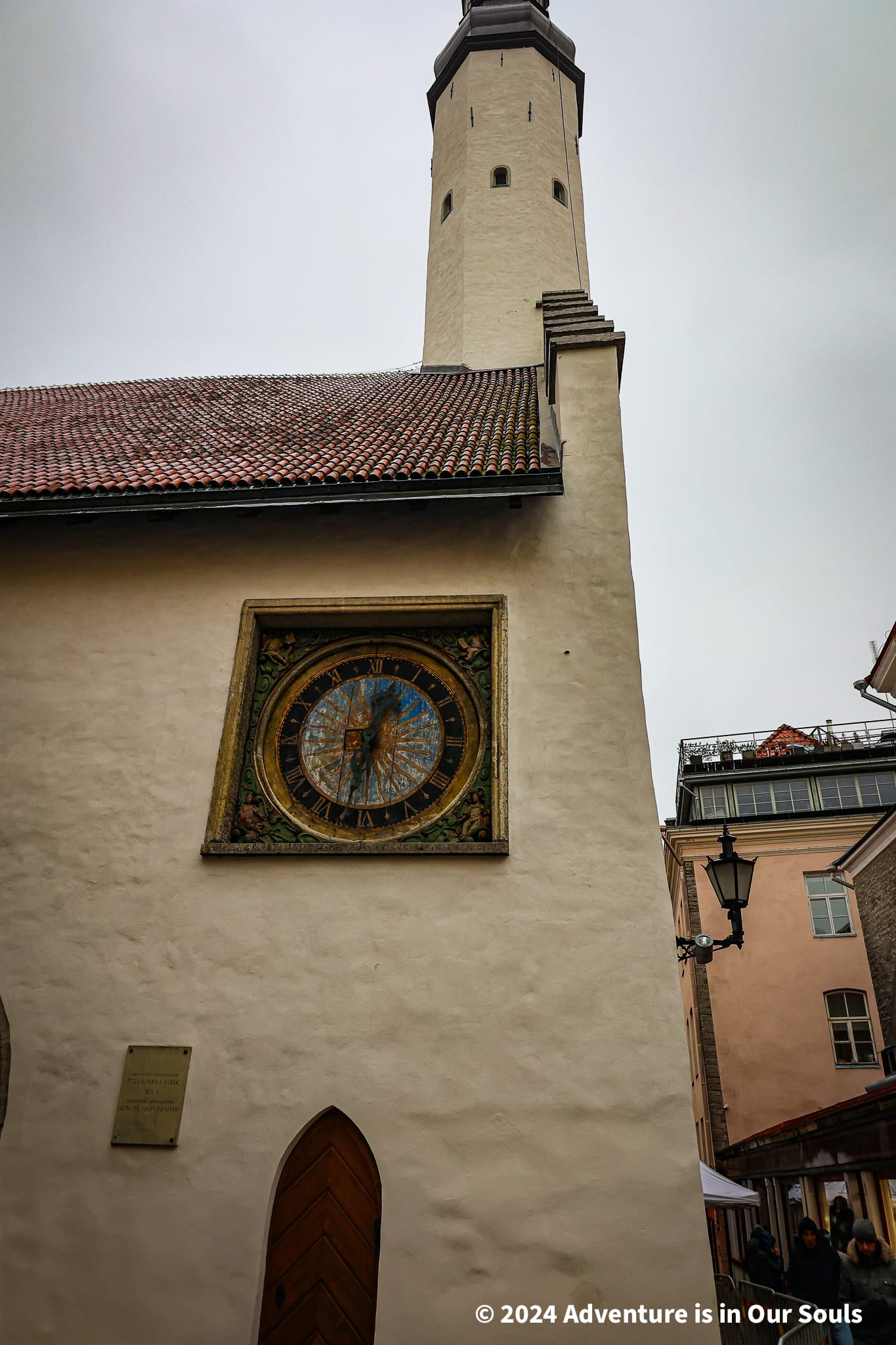
We explored the Holy Spirit Church, also known as Püha Vaimu kogudus. This is one of Tallinn’s oldest churches with roots tracing back to the 14th century. This church has been a spiritual heart for the city through wars, occupations, and peaceful times alike. Its Gothic architecture and colorful wooden interiors showcase the deep faith and artistic craftsmanship of Tallinn’s medieval residents.
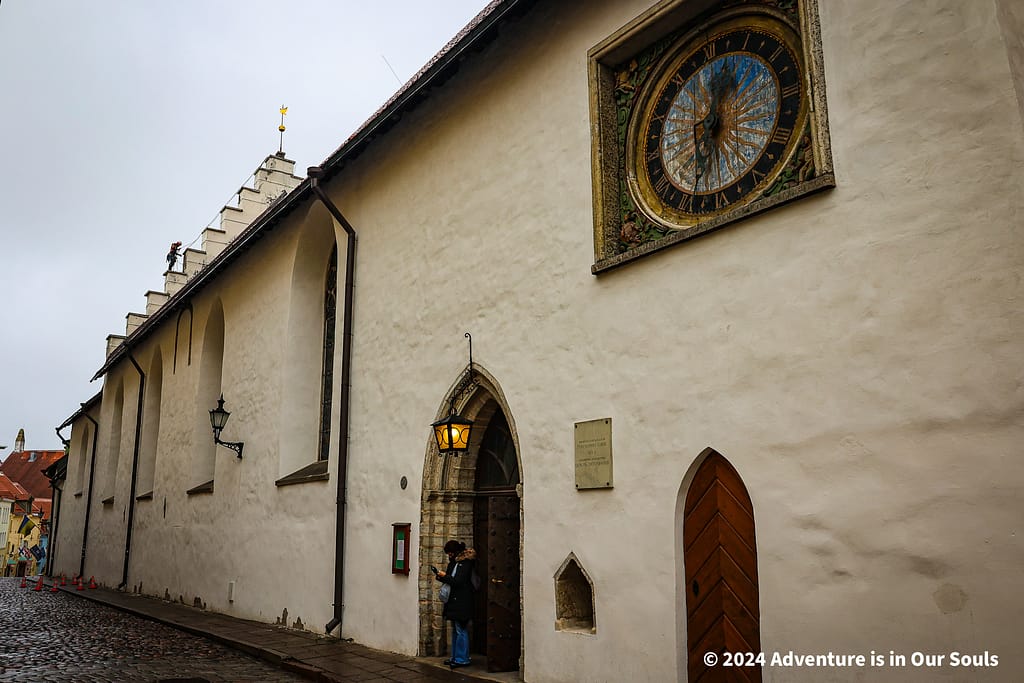
This charming medieval church is famous for its stunning interior and unique atmosphere. Inside, you can see beautiful frescoes and detailed wooden sculptures that tell biblical stories. The church also houses old tombstones and memorial plaques.
Stop #8 – House of the Blackheads / Mustpeade Maja
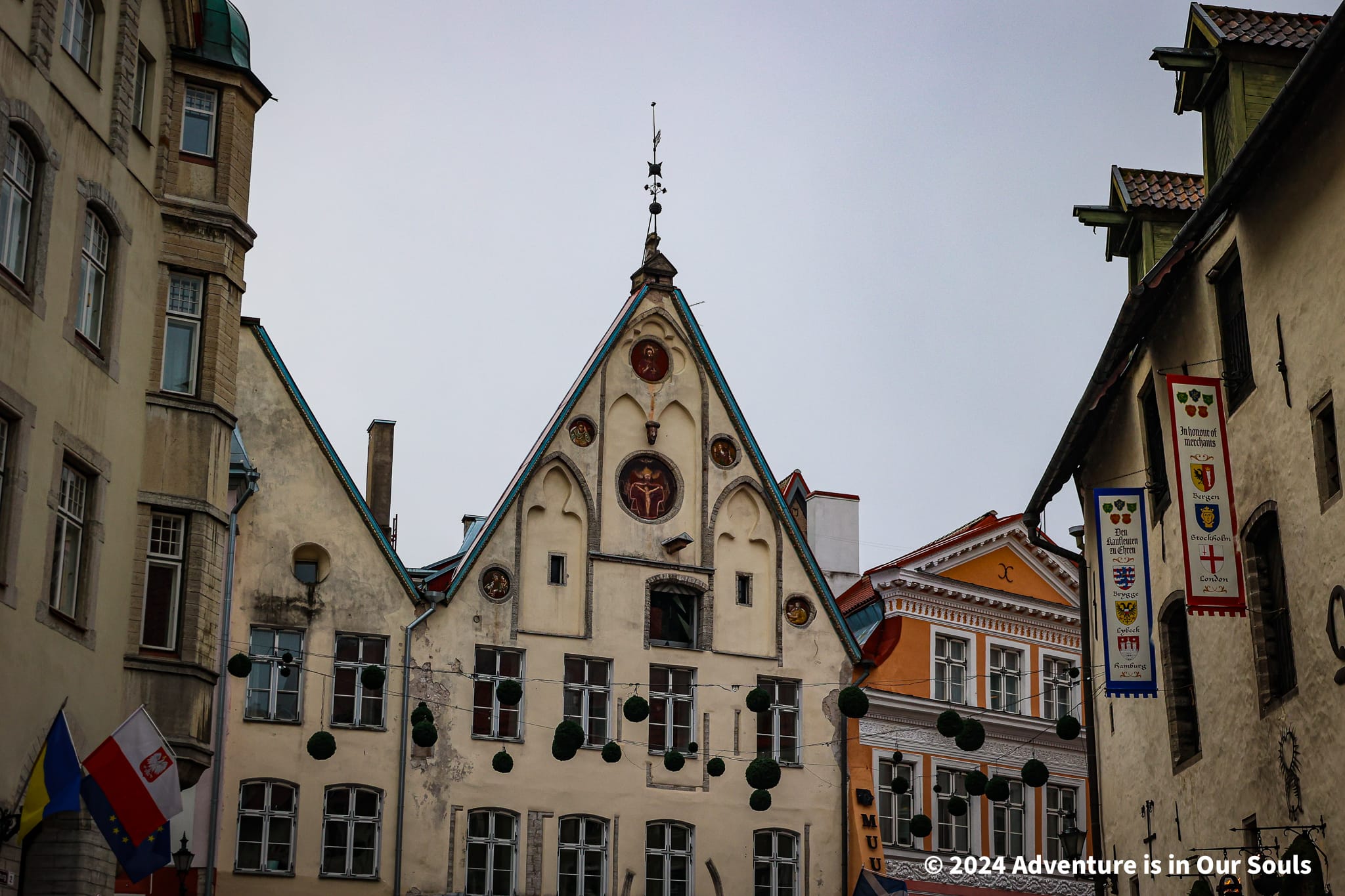
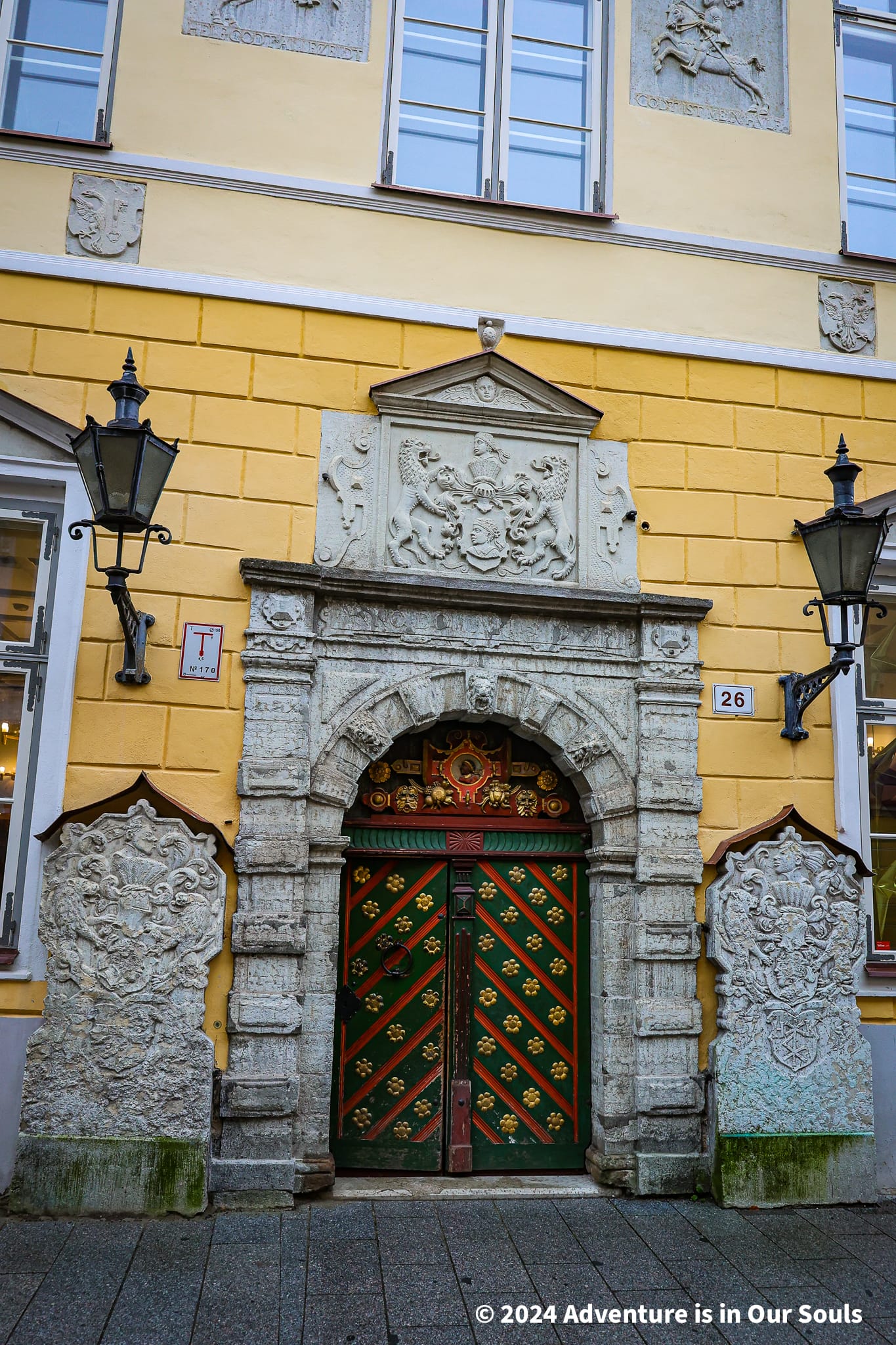
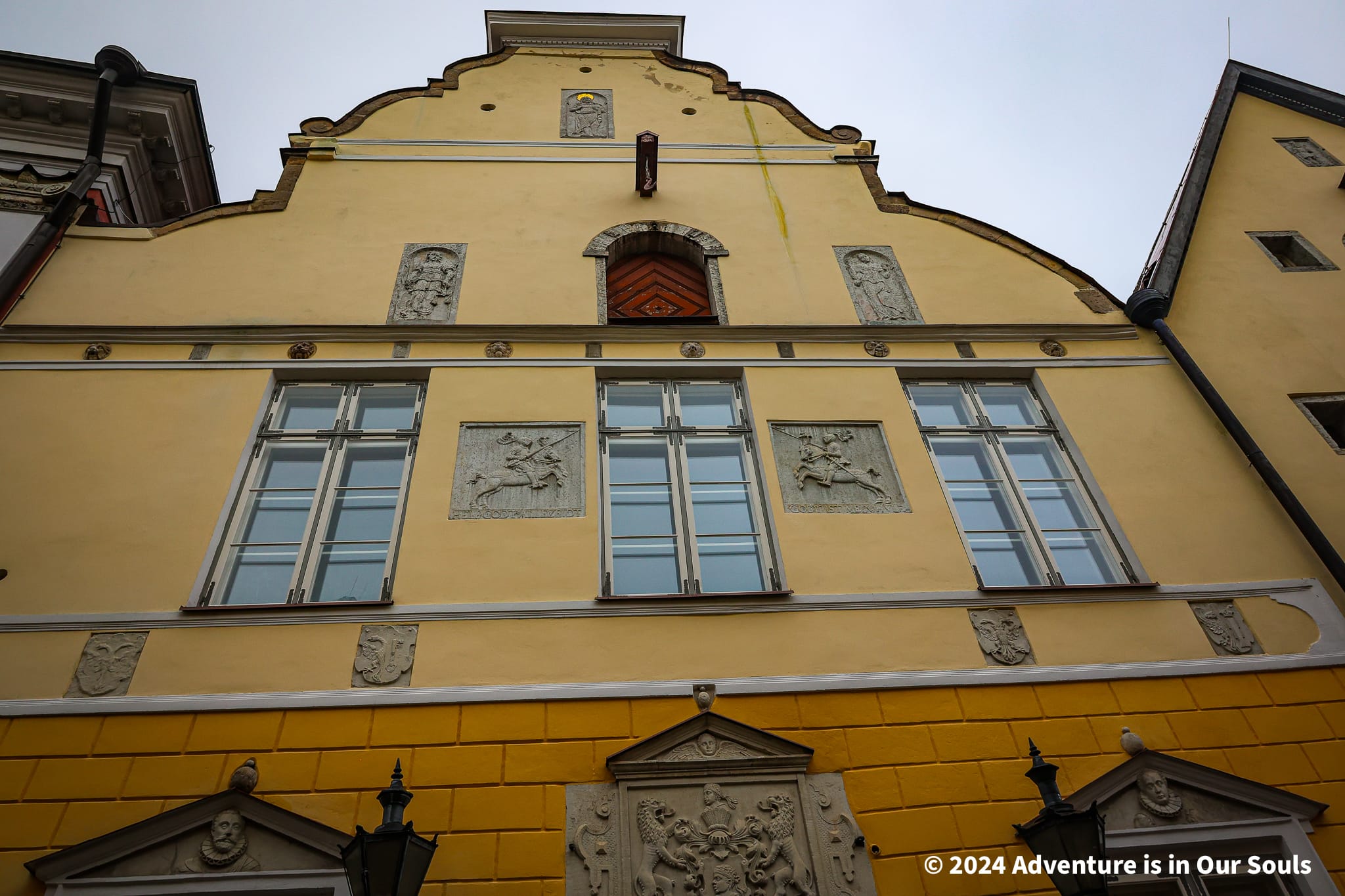
The House of the Blackheads, or Mustpeade Maja, is one of Tallinn’s most striking and storied buildings. Originally built in the early 1400s, it served as a guild hall for unmarried merchants and shipowners, known as the Brotherhood of Blackheads. The name might sound mysterious, but it comes from their patron saint, Saint Maurice, who was often depicted as a black-skinned warrior.
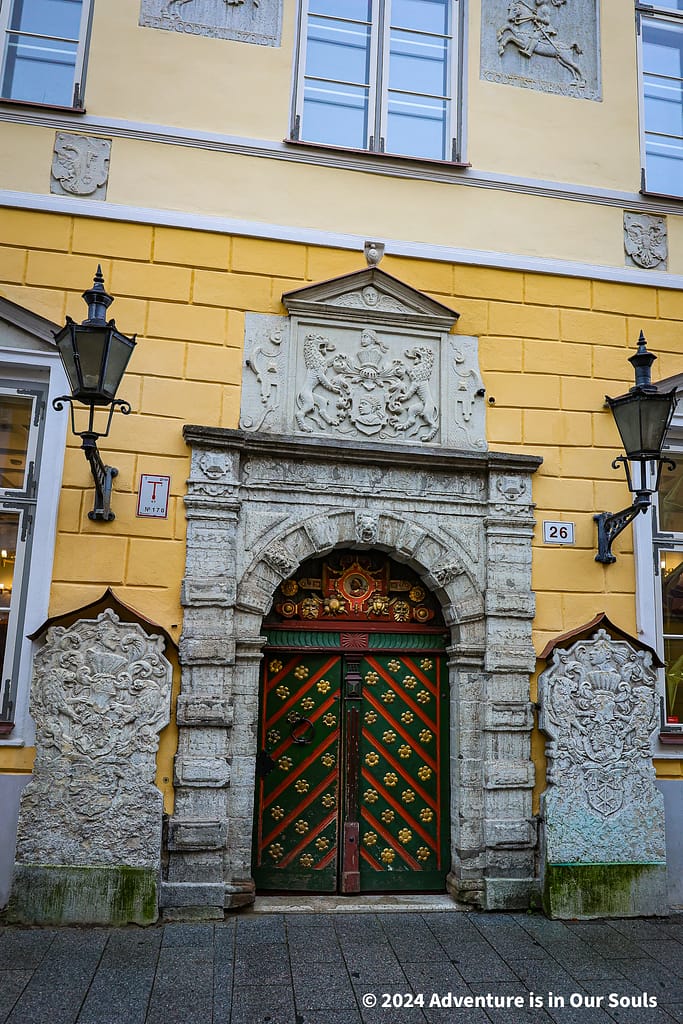
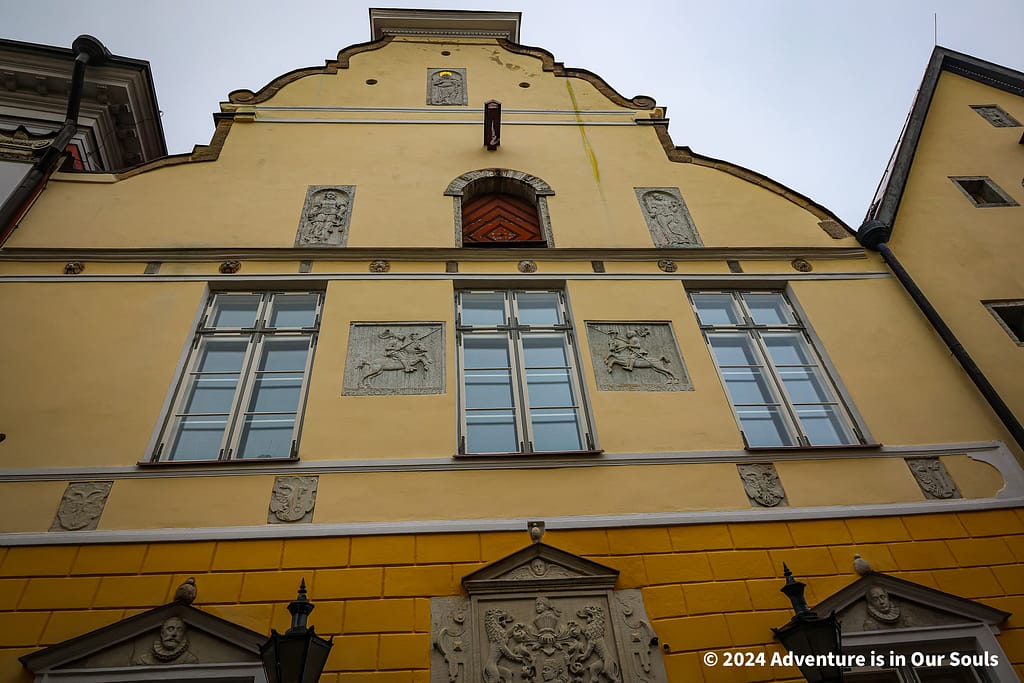
The building’s elaborate Gothic façade is a showstopper, decorated with sculptures, coats of arms, and ornate windows. Though the original was destroyed during World War II, it was meticulously rebuilt and reopened in the 1990s. Inside, visitors can see beautiful halls and learn about the merchant guild’s role in Tallinn’s economic and social life. It’s a symbol of Tallinn’s rich mercantile history and the city’s resilience.
Stop #9 – Rataskaevu Street
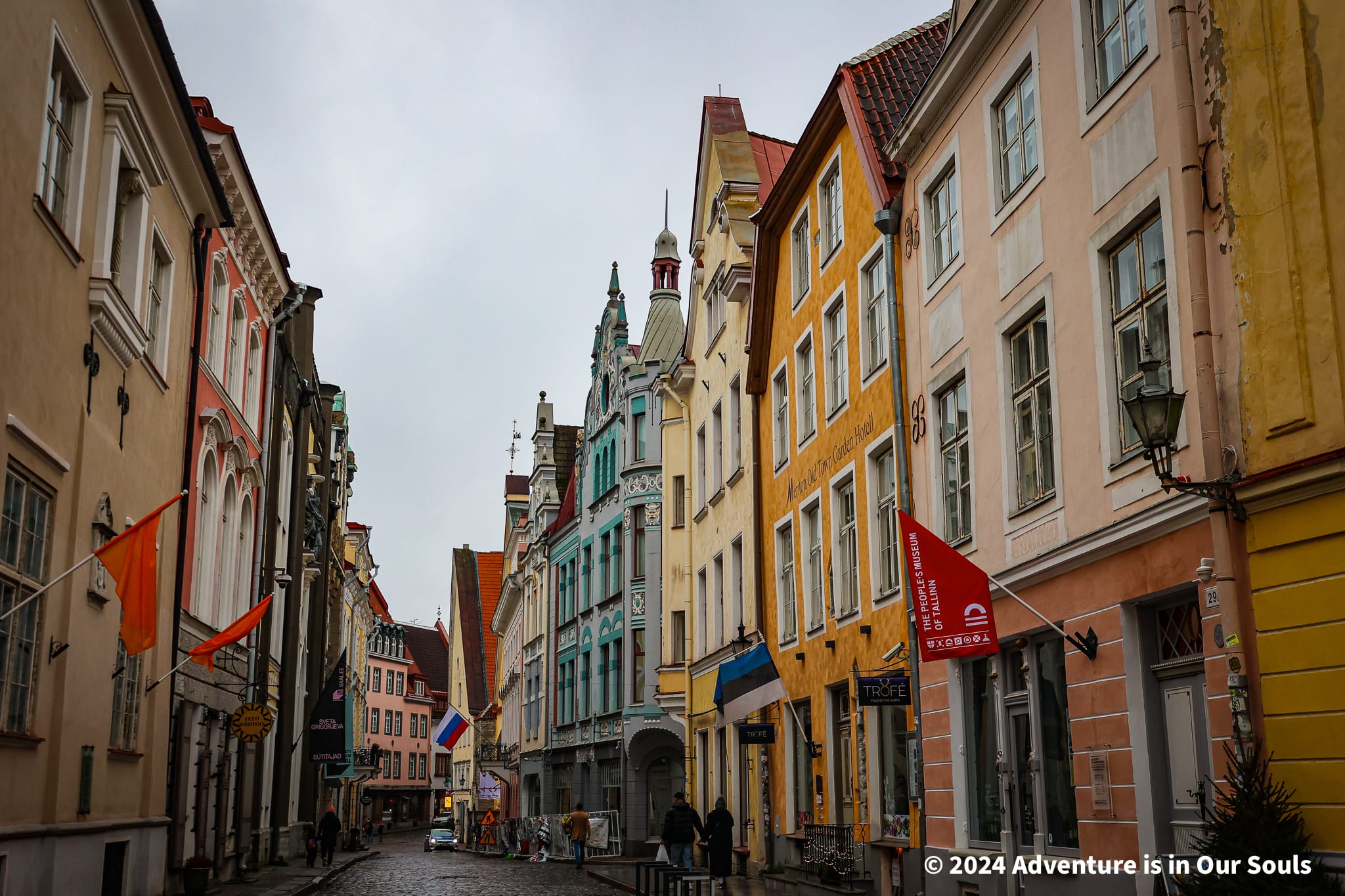
We then followed Rataskaevu Street, a charming, lively street that perfectly captures the cozy spirit of Tallinn’s Old Town. This street has been a favorite among locals and visitors alike for centuries. Lined with colorful buildings, quaint shops, and inviting cafes, it feels like the perfect place to pause and soak up the city’s everyday life. The street is famous for its warm atmosphere and friendly faces.
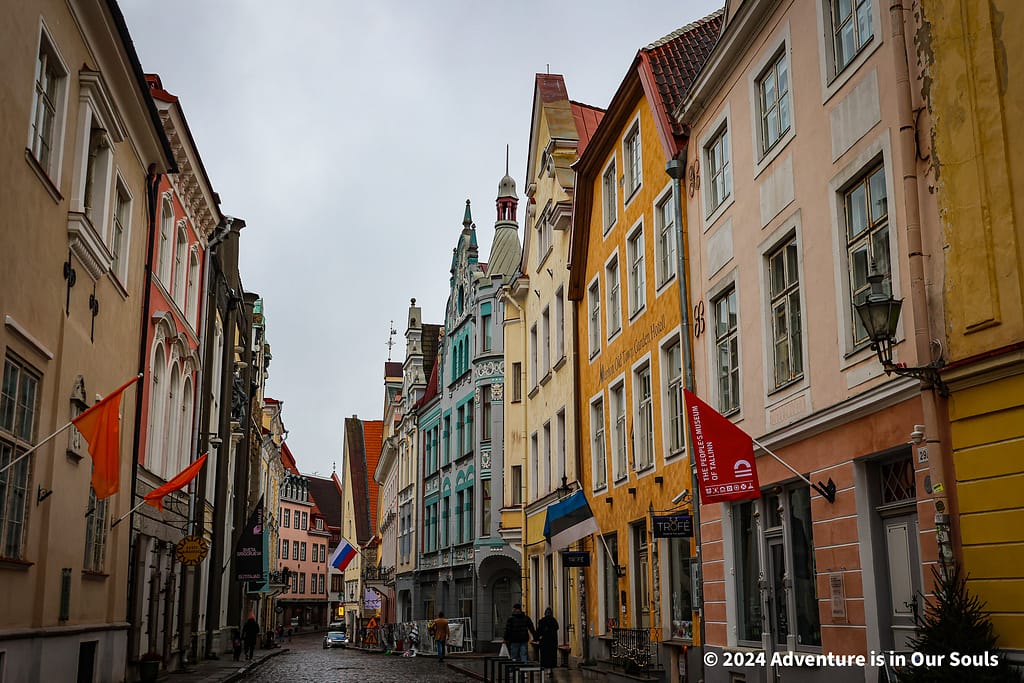
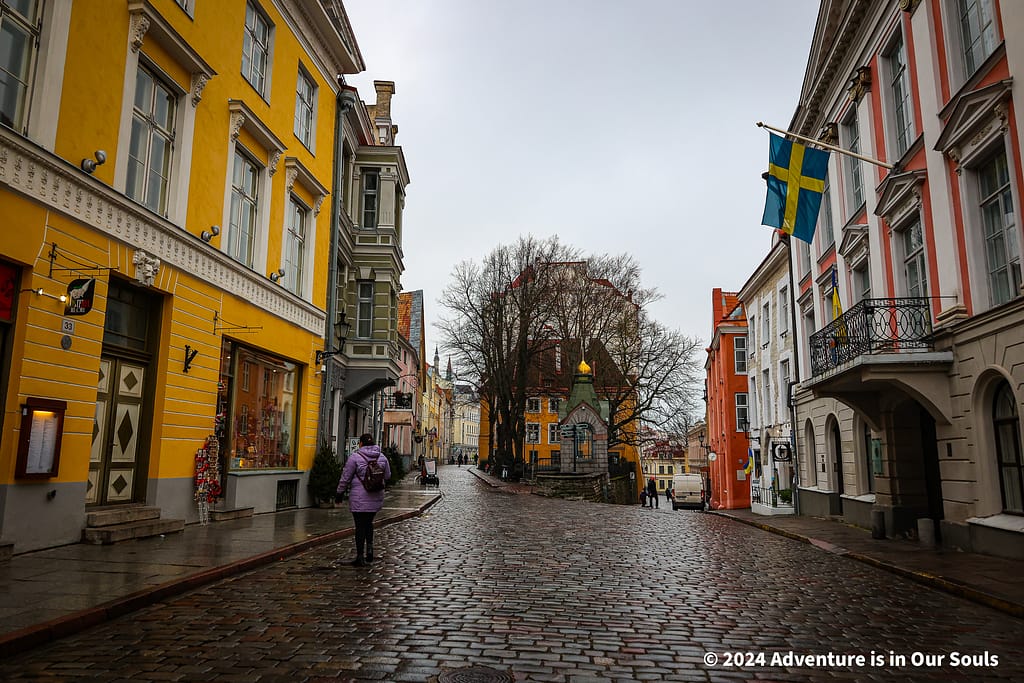
One of the street’s most curious spots is the Cat’s Well, a small, ancient water well tucked between buildings. Legend says the well was guarded by evil water spirits who could bring bad luck to anyone who disturbed it. People long ago believed these spirits protected the city’s water supply, so the well was treated with respect and caution. Today, the Cat’s Well is a fascinating little mystery that adds a sprinkle of medieval magic and intrigue to the street.
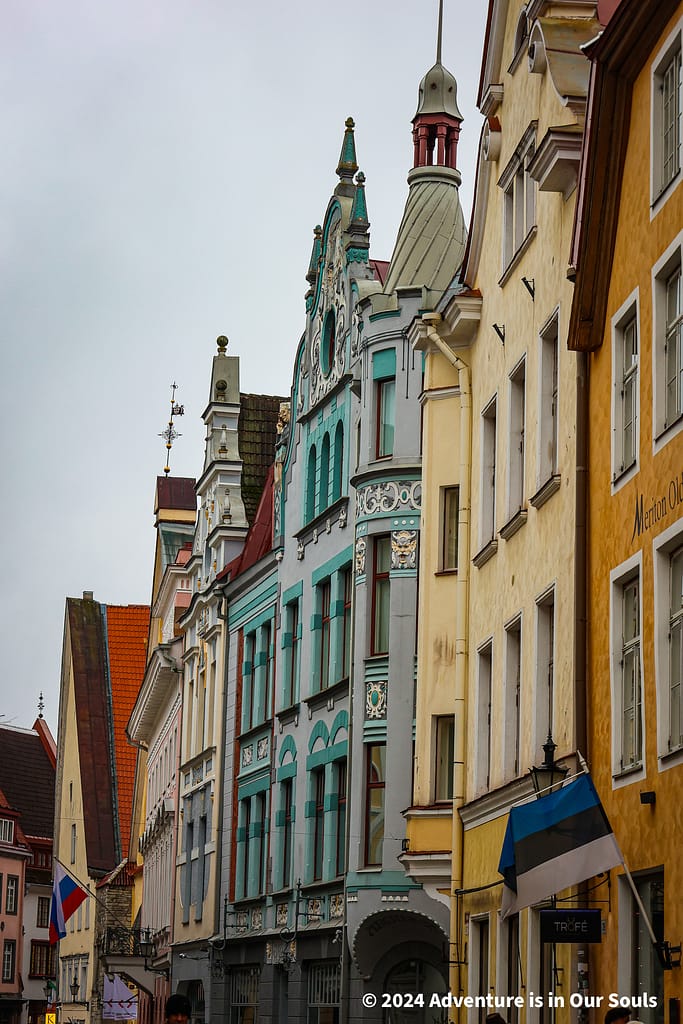
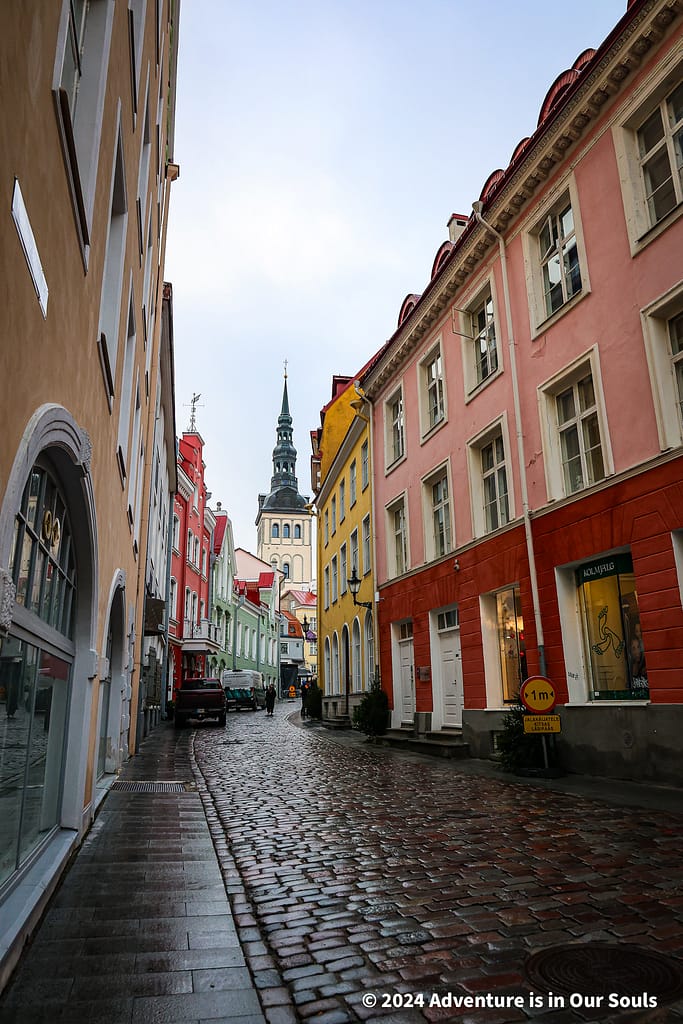
In winter, the twinkling lights and festive decorations make it even more magical! We stopped here to enjoy the sights and smells of local bakeries and to watch street musicians playing cheerful tunes.
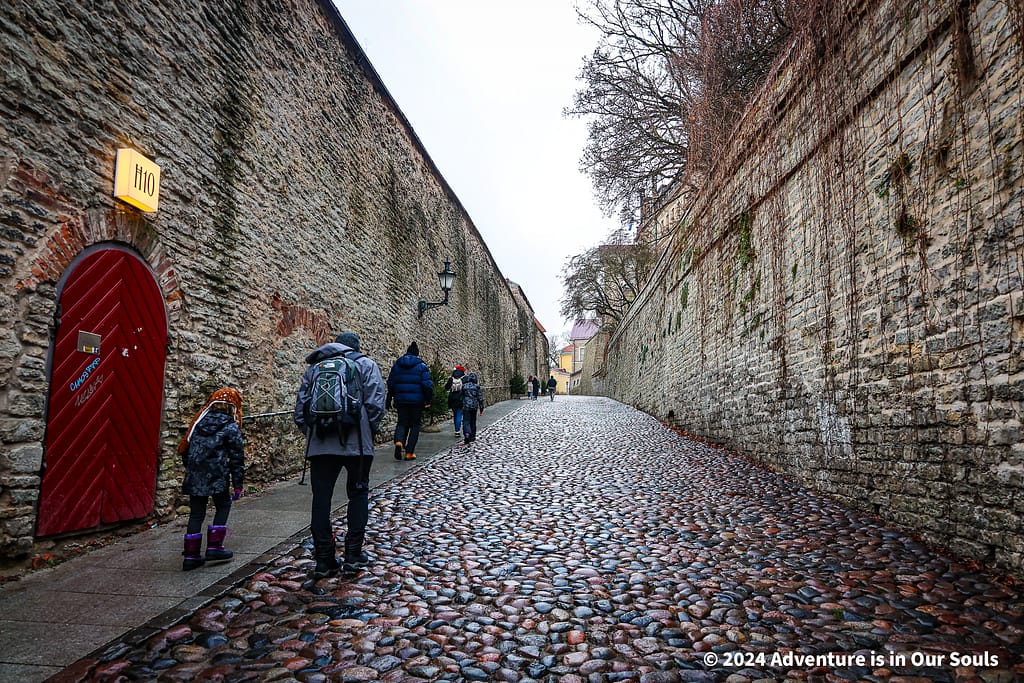
Stop #10 – Long Leg Gate Tower / Pika Jala Väravatorn
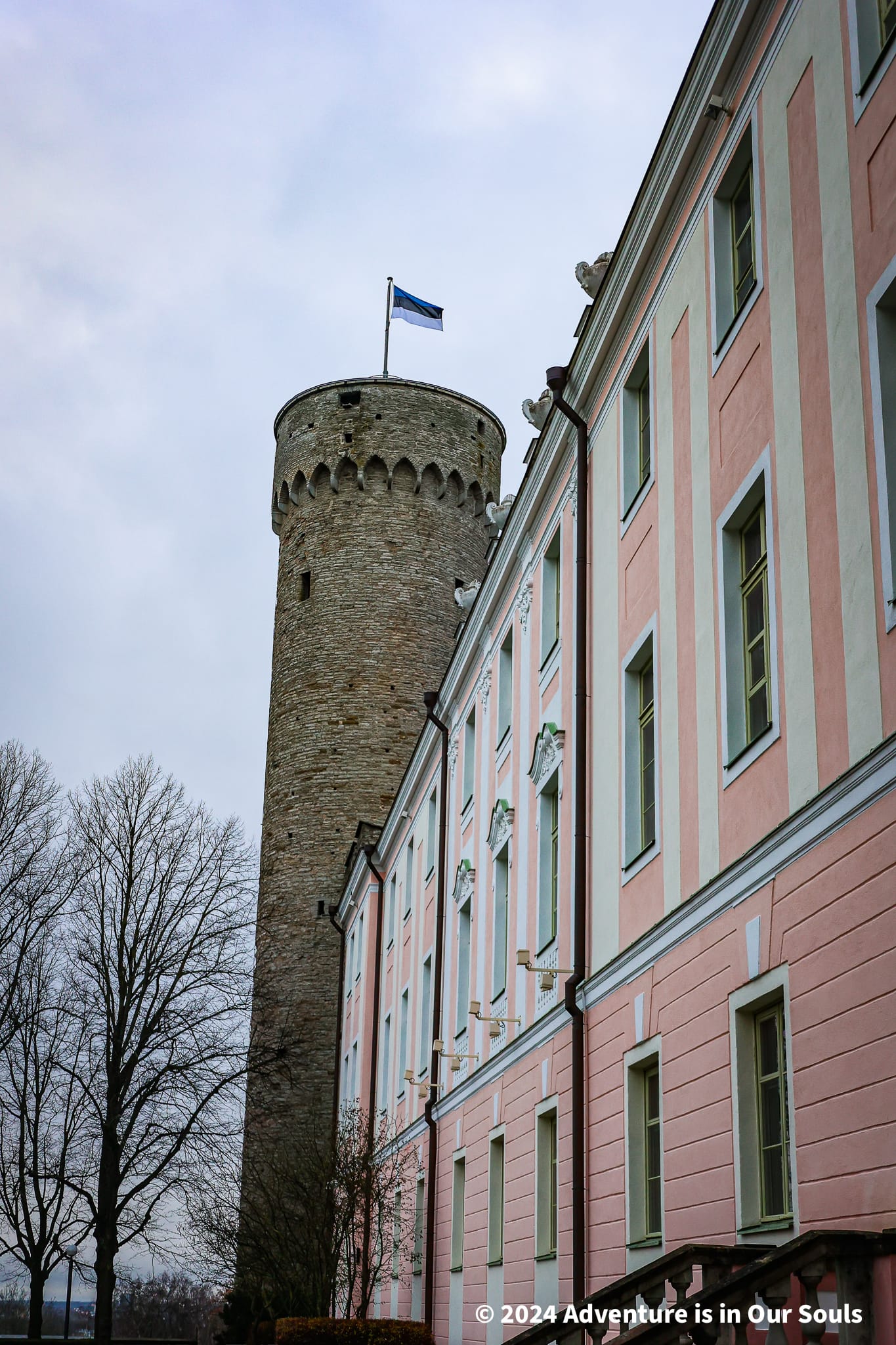
The Long Leg Gate Tower, or Pika Jala Väravatorn, is a fascinating part of Tallinn’s medieval defense system. Built in the 14th century, this tall, narrow tower was one of the main gateways into the city. Its name, “Long Leg,” refers to the tall, slender shape of the tower.
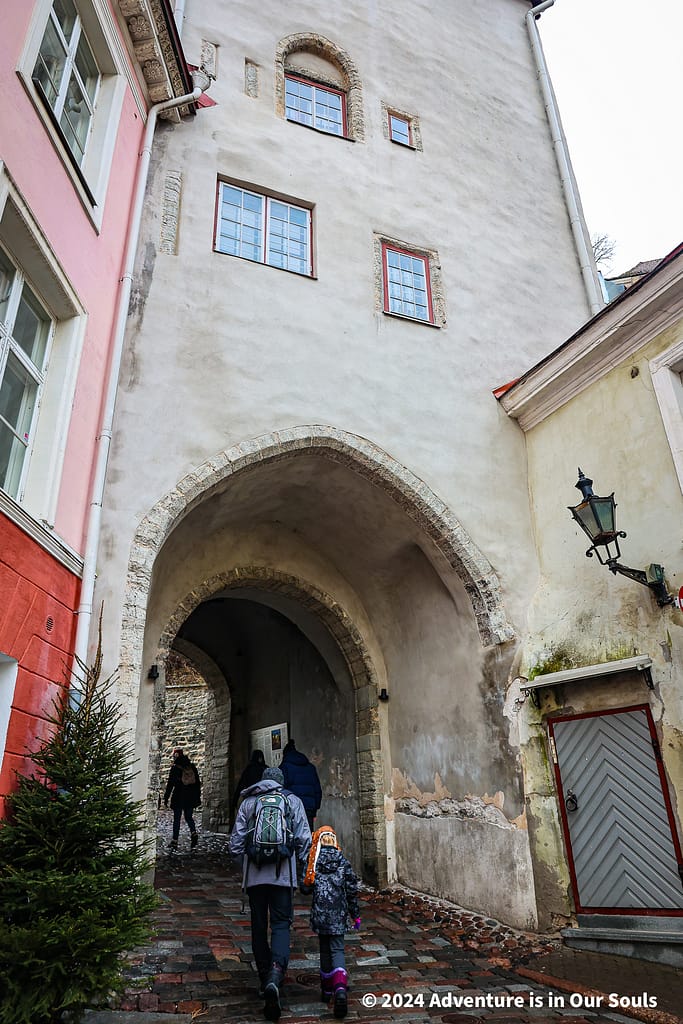
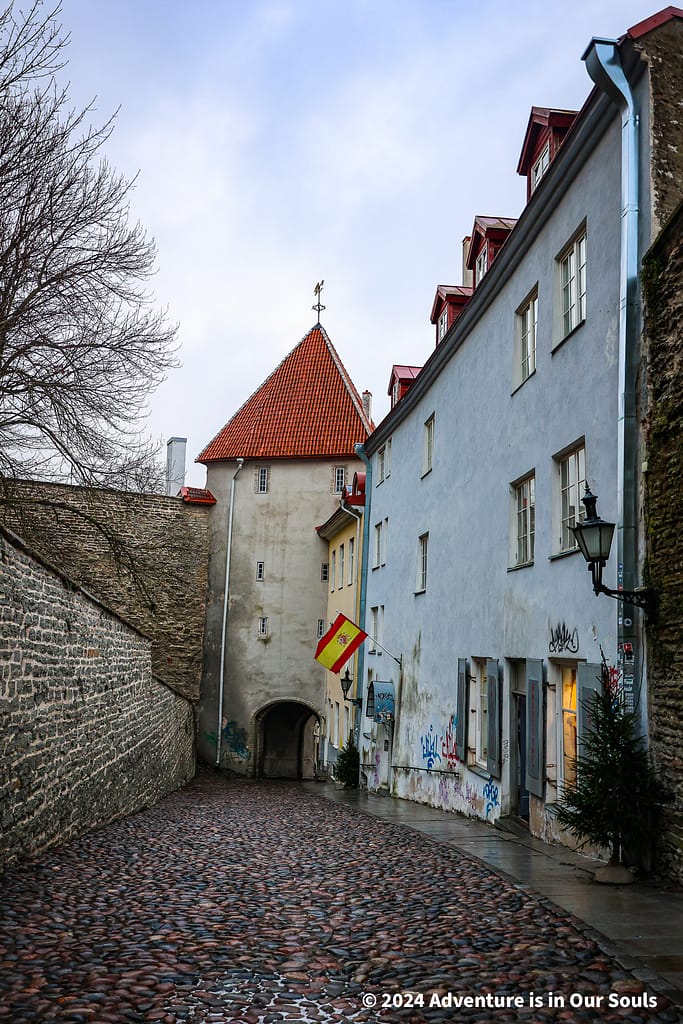
Over the centuries, it was used as a guard post and a prison, playing a key role in protecting Tallinn’s walls. Walking near the tower, you can imagine the watchmen keeping vigilant watch for approaching threats. The tower connects to some of the oldest parts of the city’s fortifications, showcasing the strategic thinking behind Tallinn’s defenses.
Stop #11 – Danish King’s Garden / Taani Kuninga Aed
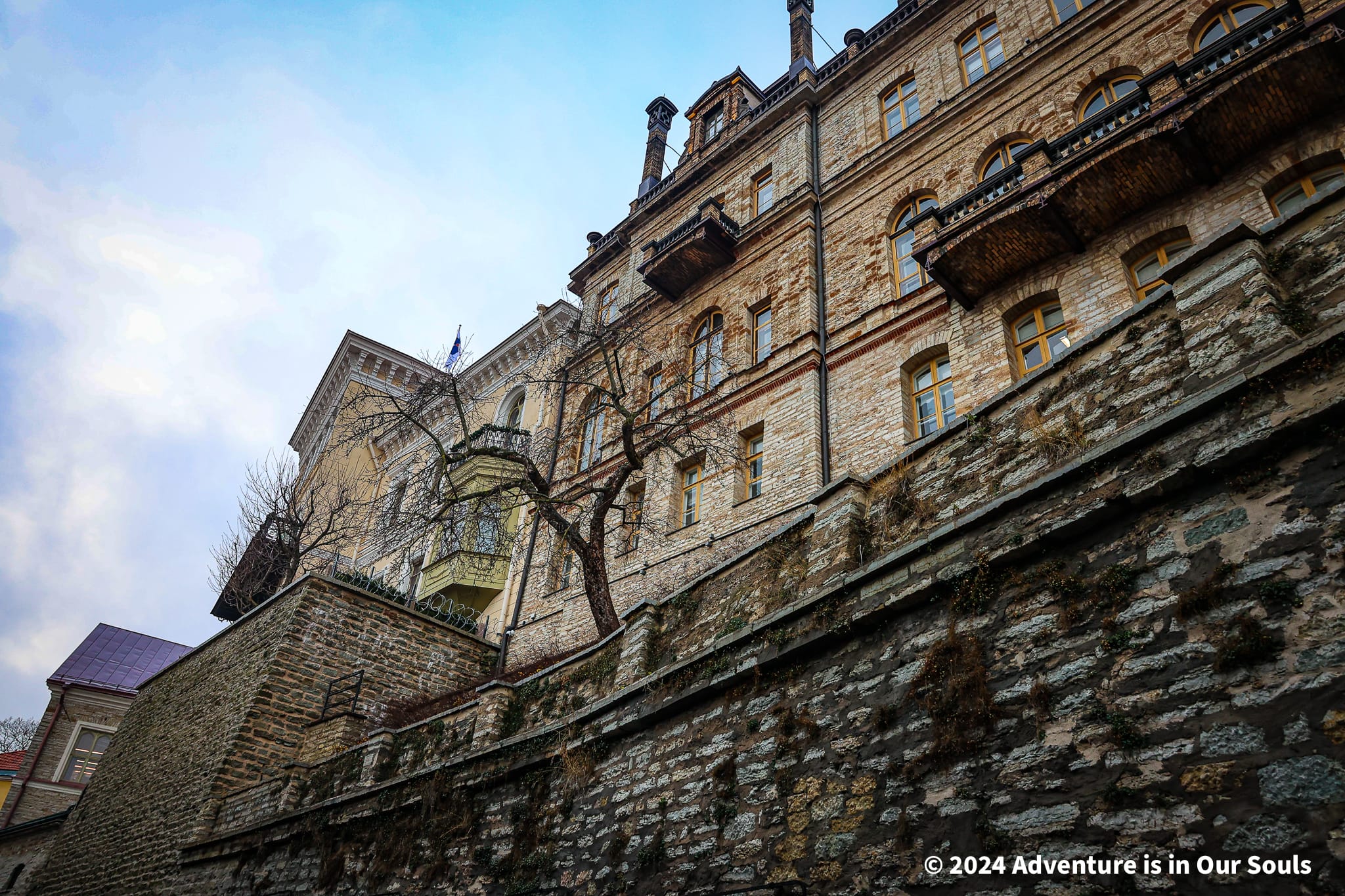
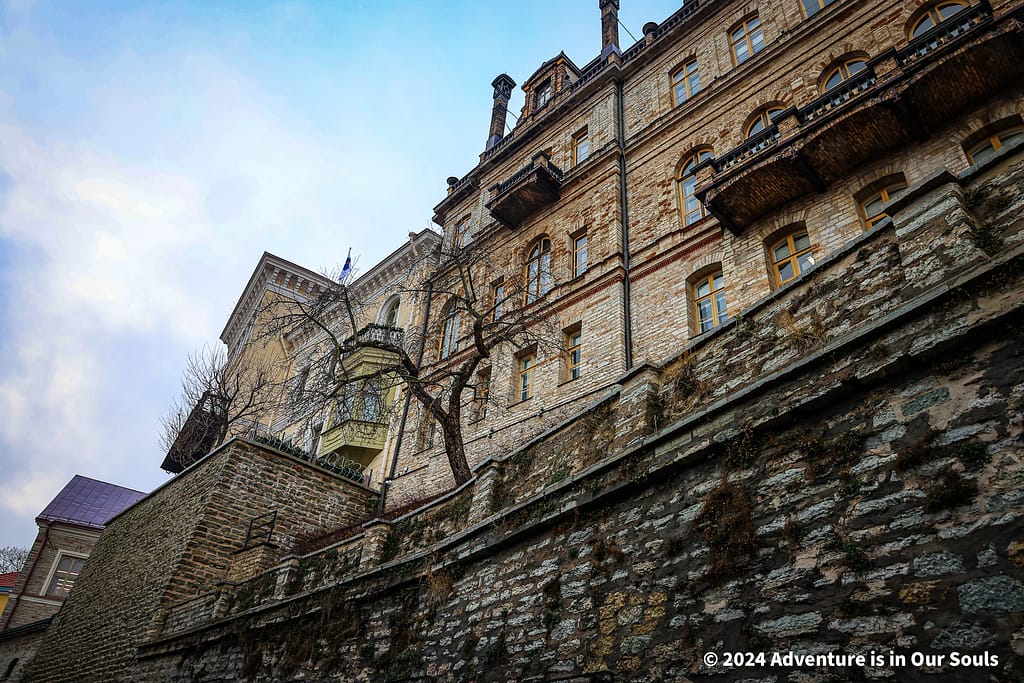
We then made our way to the Danish King’s Garden, or Taani Kuninga Aed. This is a peaceful and beautiful spot tucked just outside the Old Town walls. This park holds a special place in Tallinn’s history, named after King Valdemar II of Denmark, who once ruled the city in the 13th century. The garden’s winding paths and lovely views make it a perfect place to rest and soak in Tallinn’s charm. The garden also features medieval statues, old city walls, and charming benches that invite you to pause and reflect.
Stop #12 – Parliament of Estonia / Riigikogu
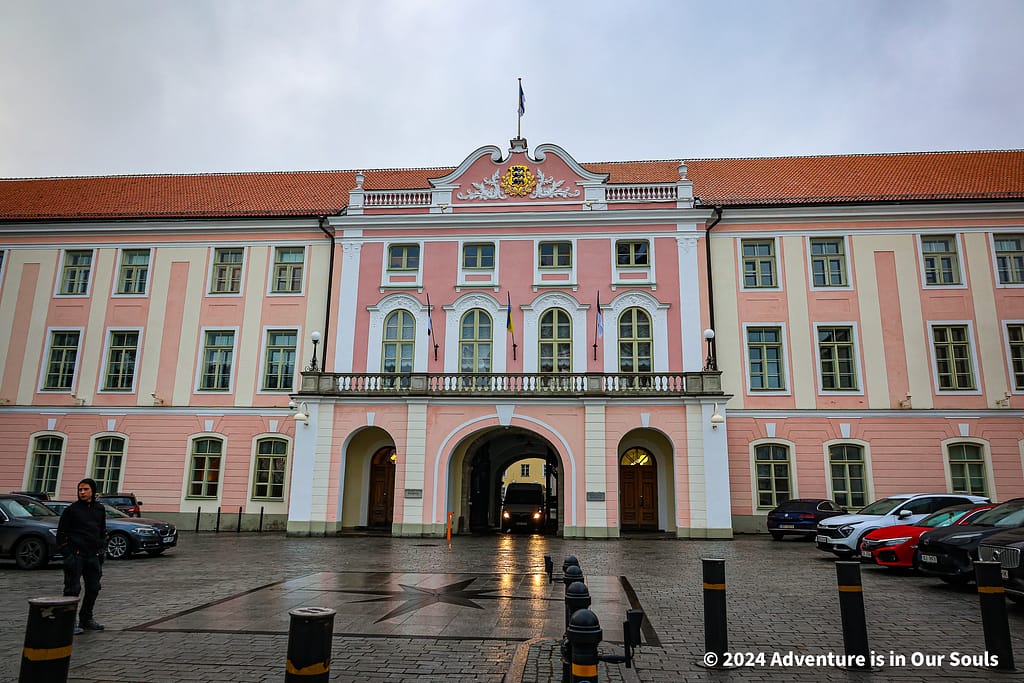
The Parliament of Estonia, or Riigikogu, is the modern political heart of the country. This building represents Estonia’s proud journey from medieval times to becoming a strong, independent nation today. The current parliament building is a beautiful example of early 20th-century architecture, blending elegance and function. It stands as a symbol of democracy and the Estonian people’s resilience through difficult history. It’s inspiring to see how Tallinn blends the old and the new in one amazing city.
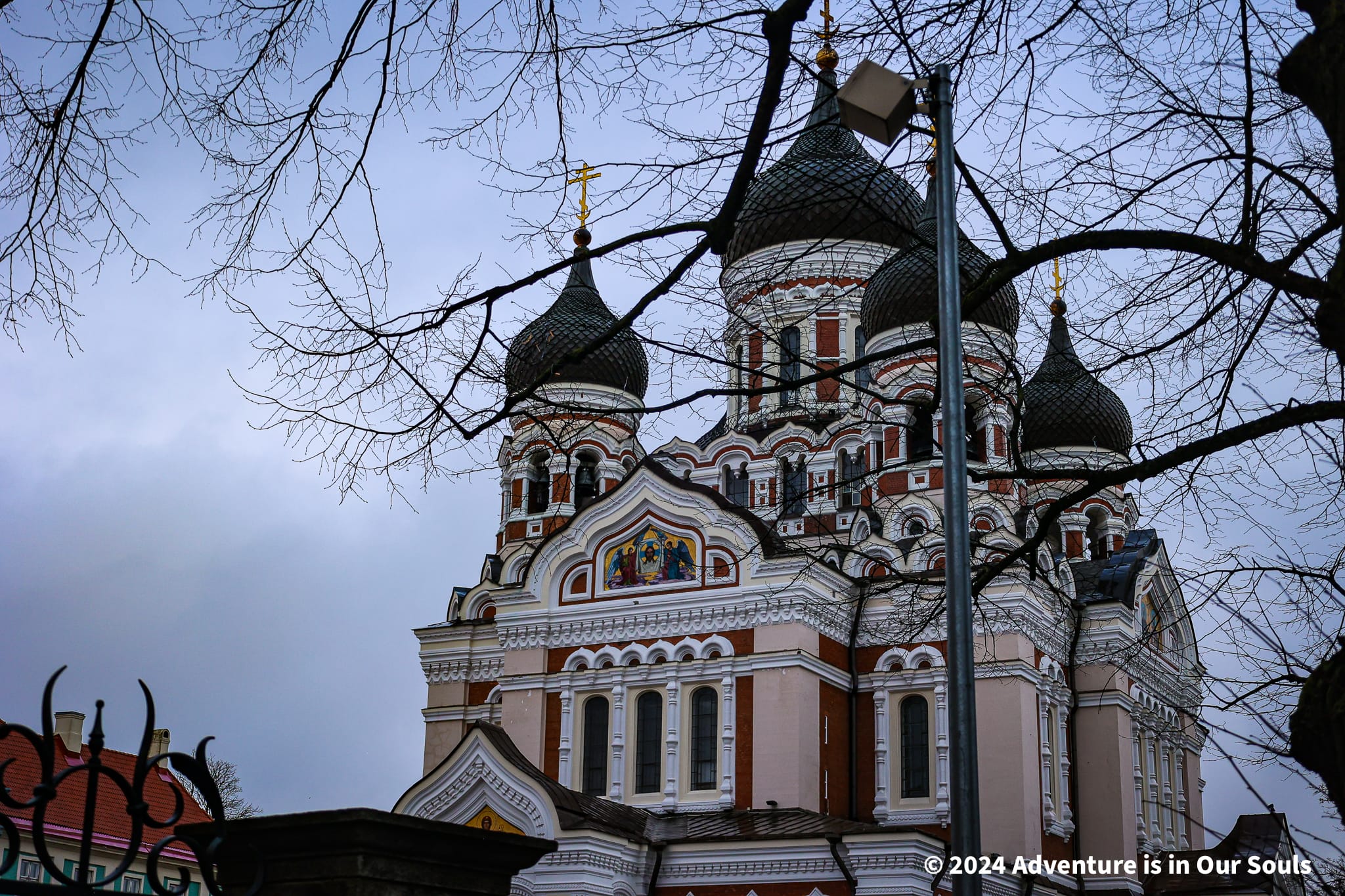
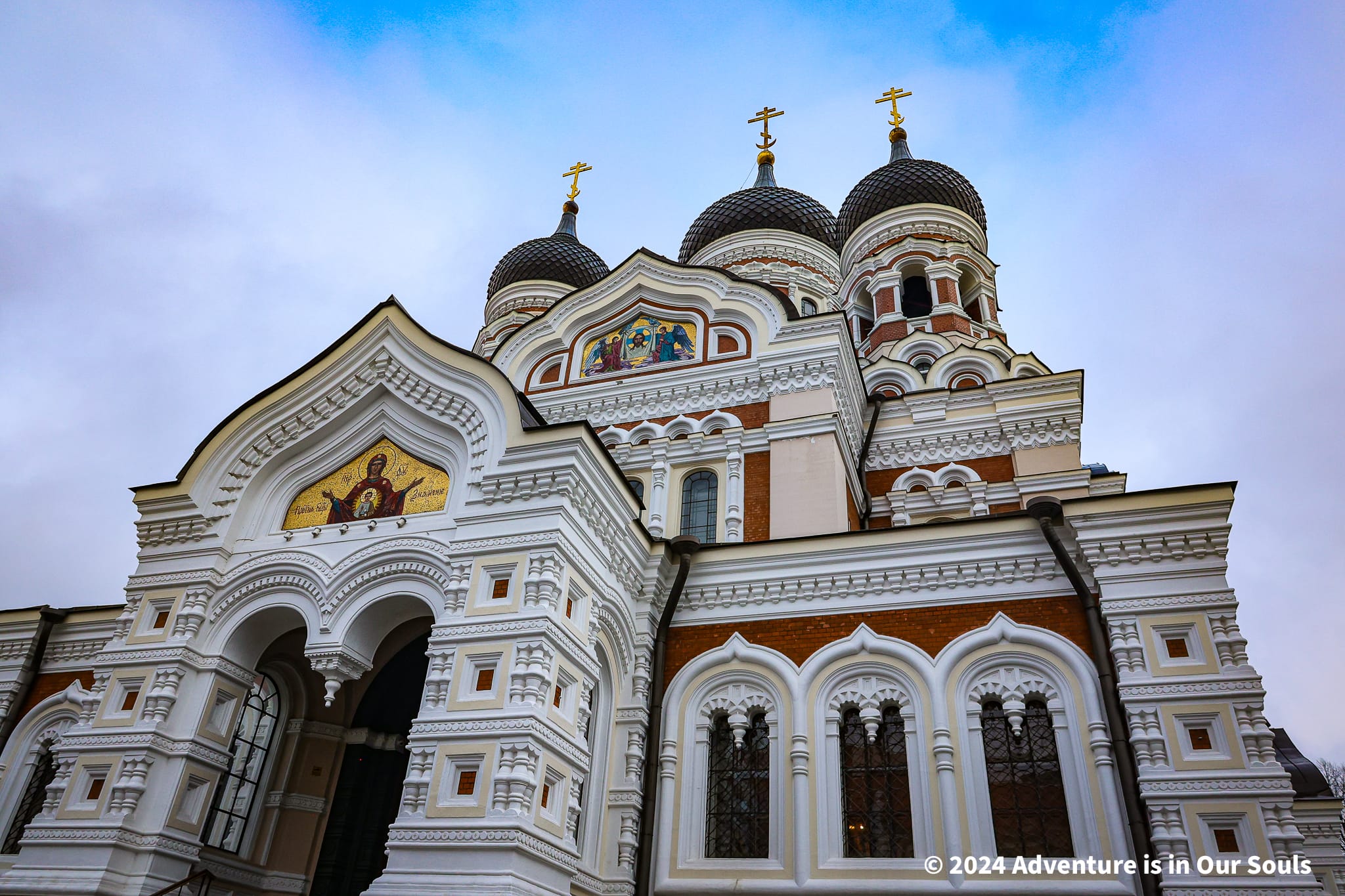
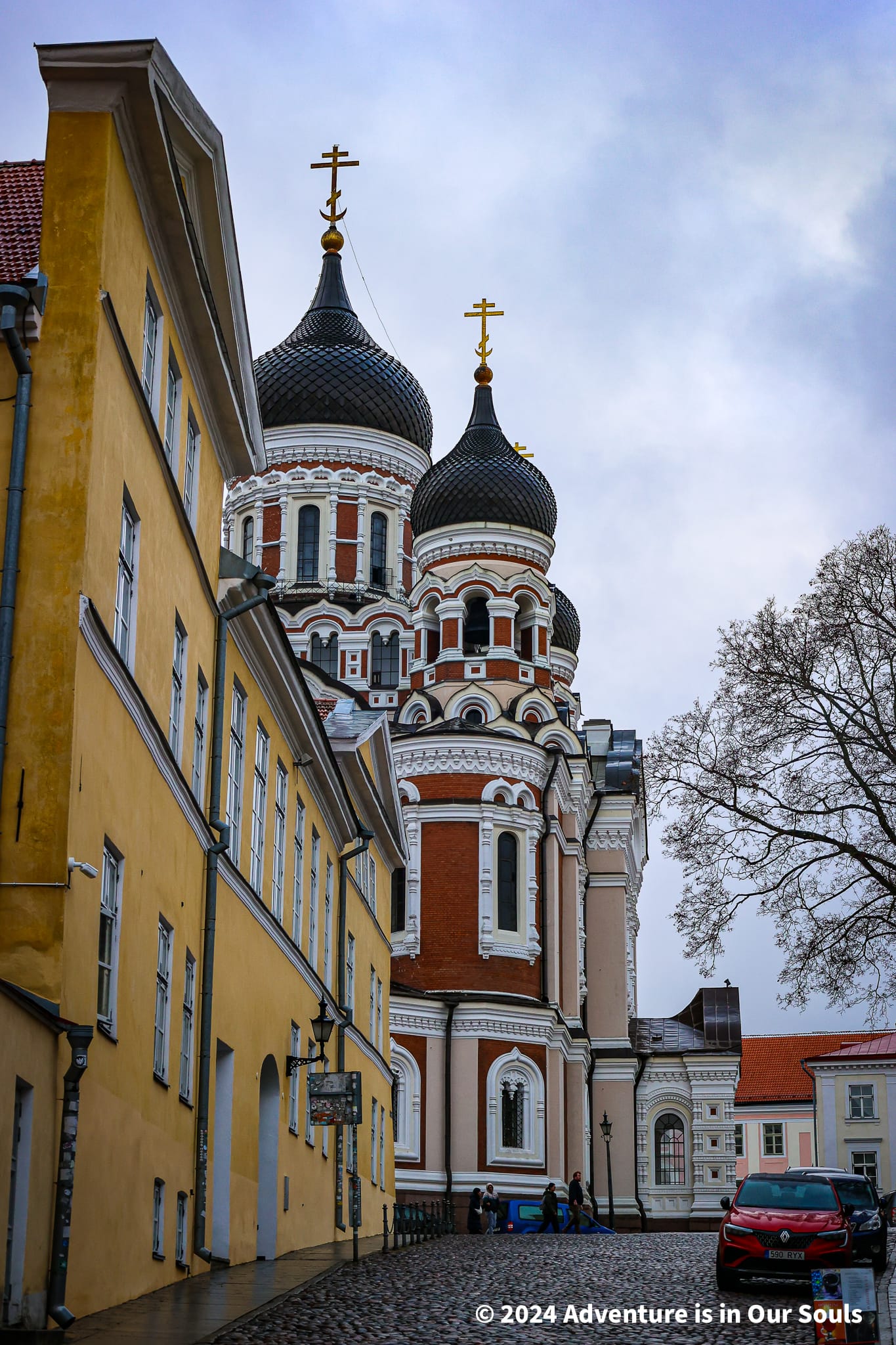
Stop #13 – Alexander Nevsky Cathedral
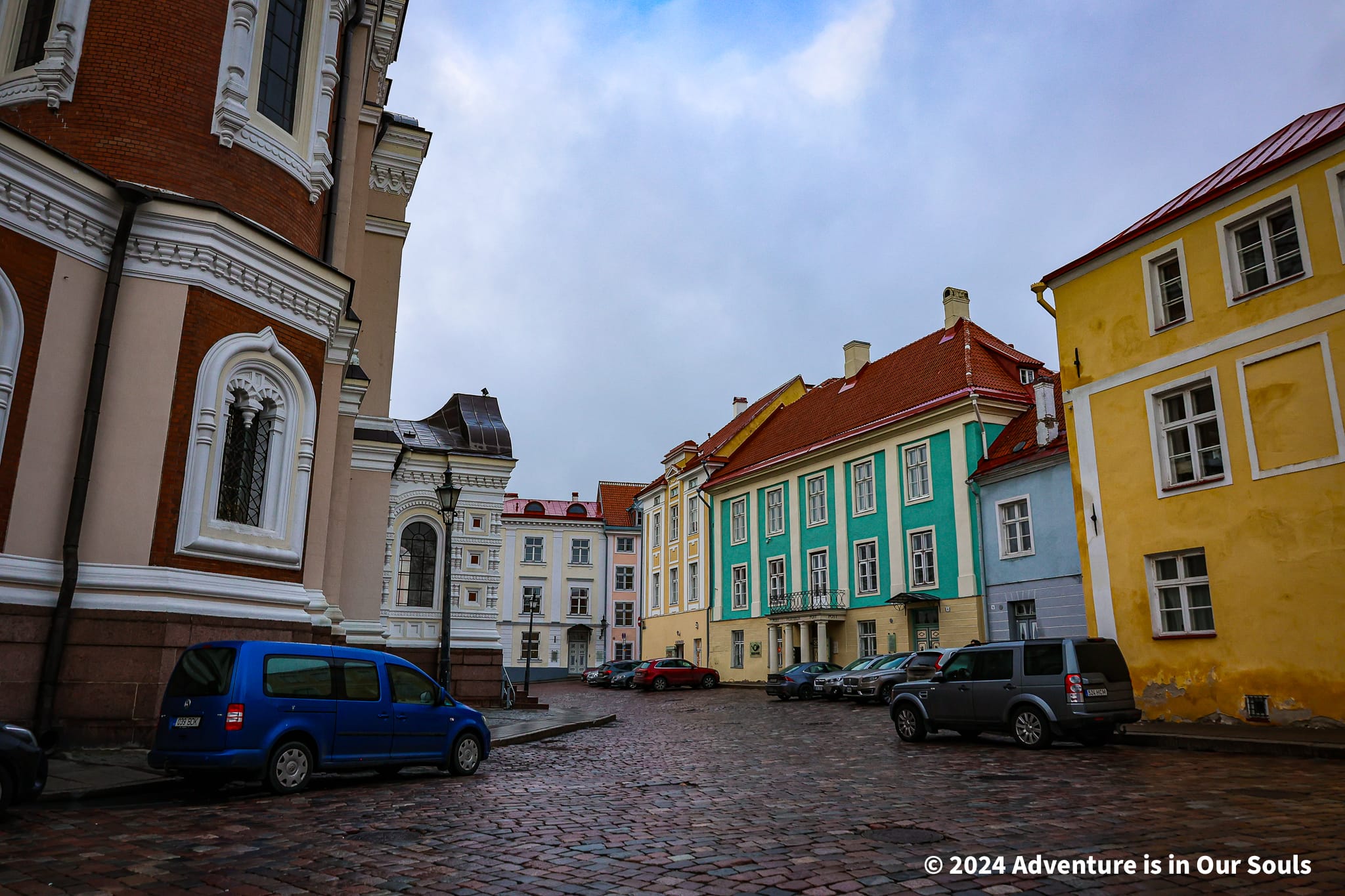
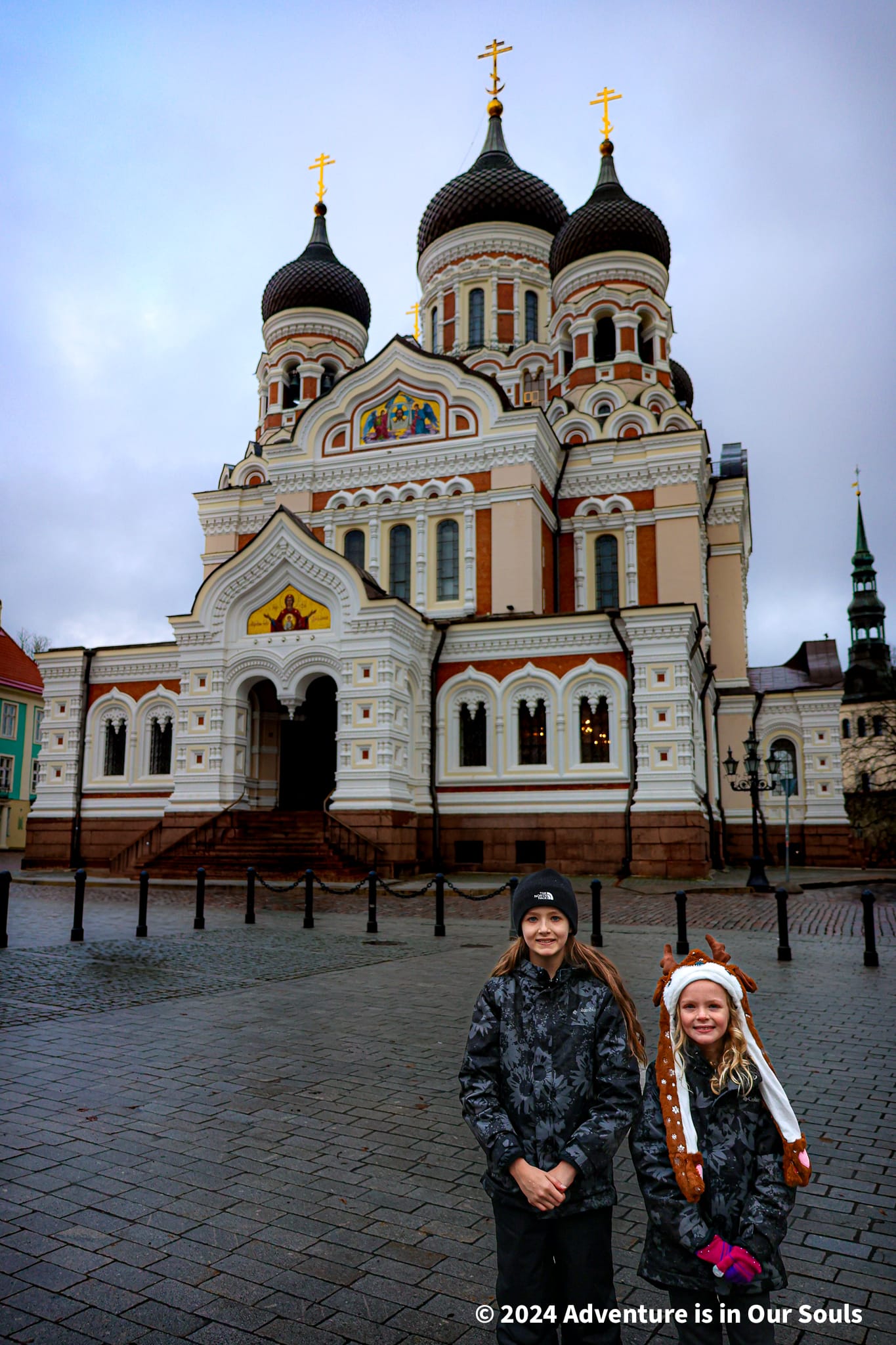
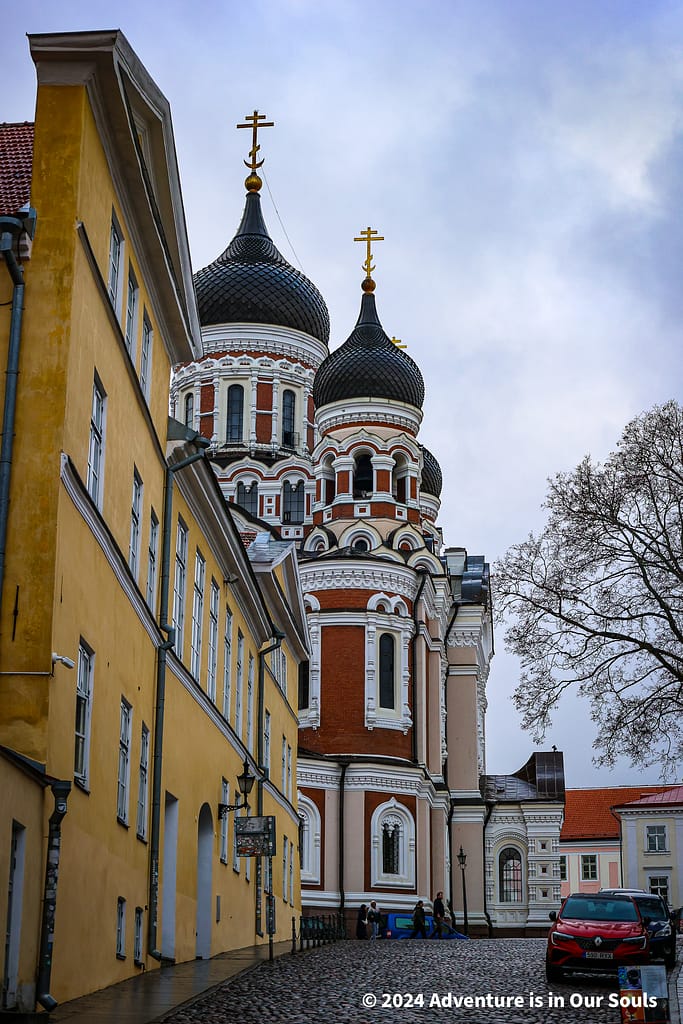
Adjacent to the Parliament building is the Alexander Nevsky Cathedral. The Cathedral is one of Tallinn’s most striking landmarks. This grand Russian Orthodox church was built in the late 19th century during Estonia’s time under Russian rule. Its onion-shaped domes and richly decorated façade make it look like a jewel shining above the city’s skyline. The cathedral is dedicated to Saint Alexander Nevsky, a Russian hero and saint.
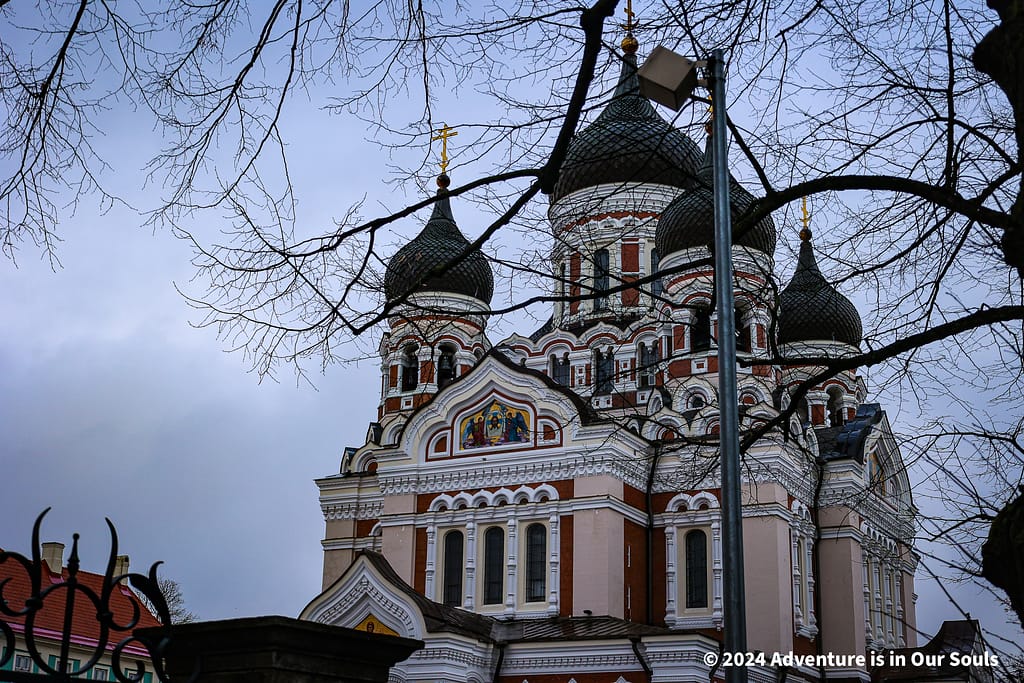
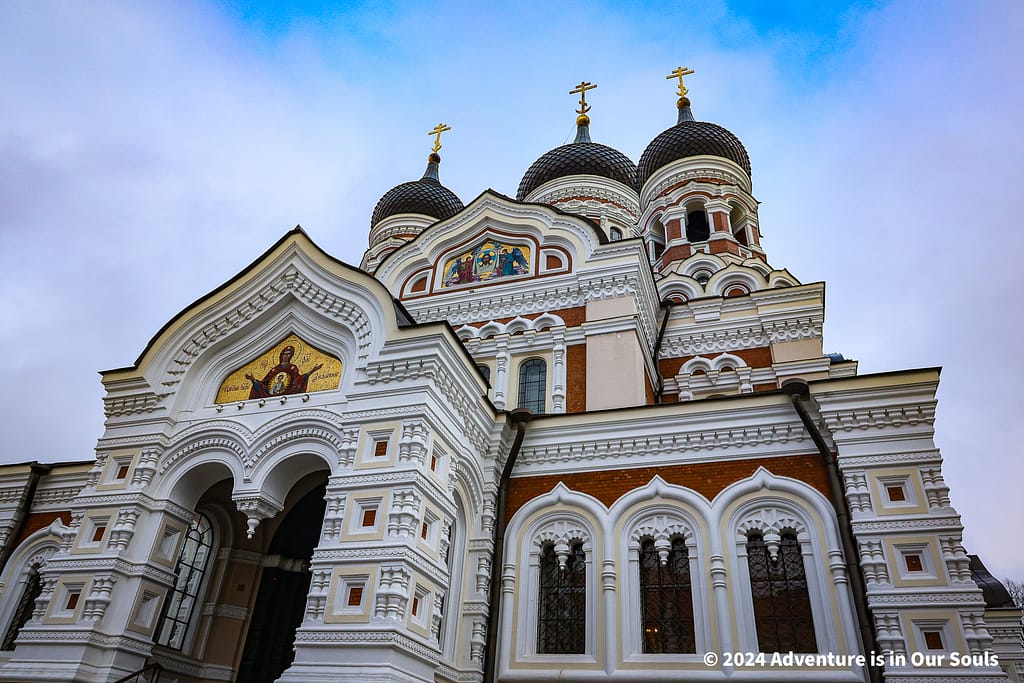
The contrast between this magnificent church and the medieval buildings nearby shows how Tallinn’s history is layered and rich.
Stop #14 – St. Mary’s Cathedral / Toomkirik
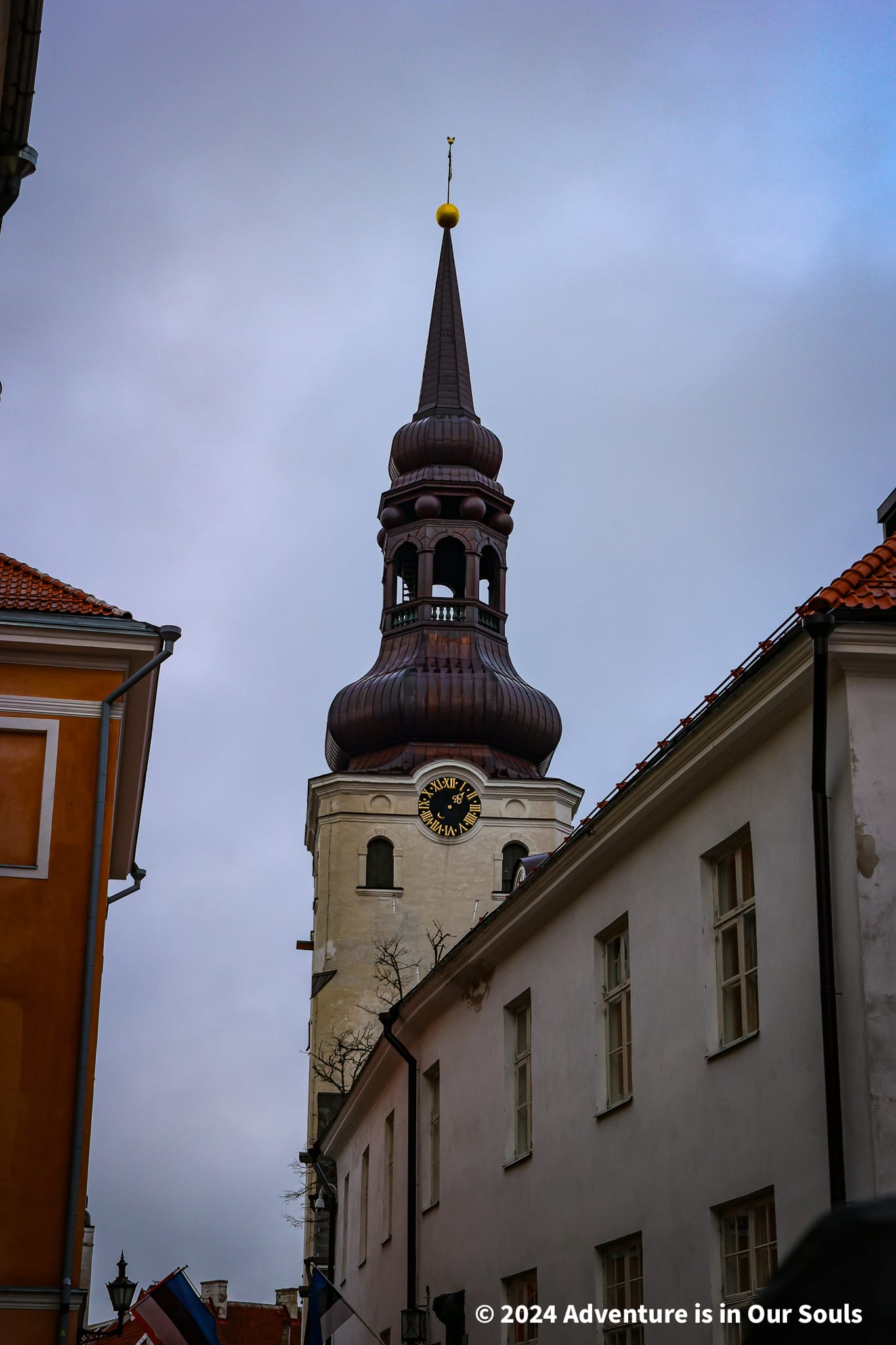
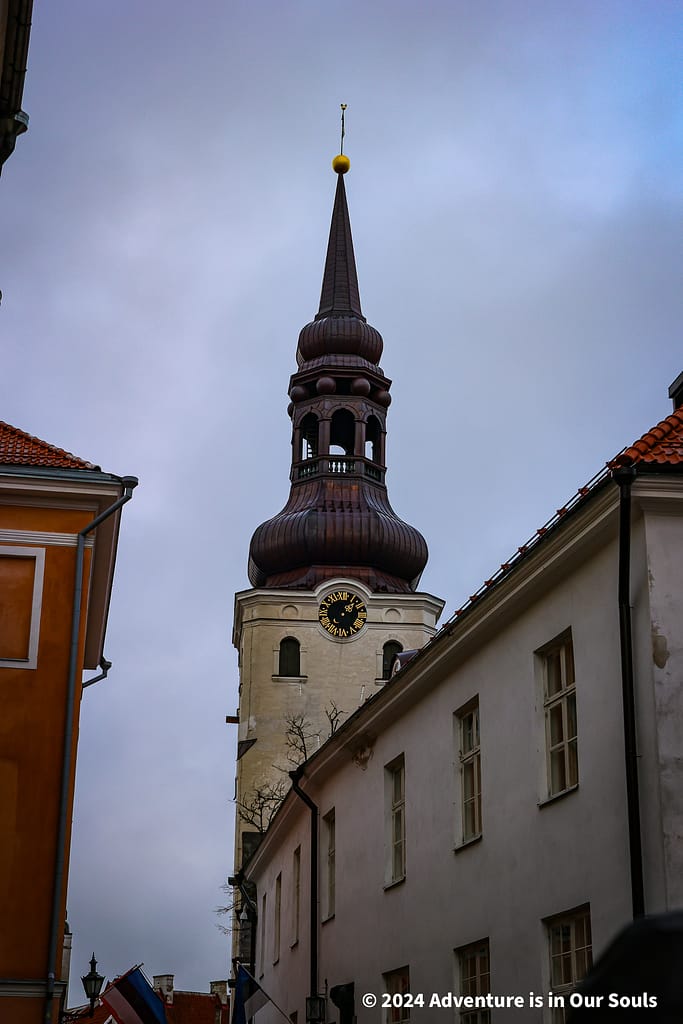
Next, we passed by St. Mary’s Cathedral, also called Toomkirik. St. Mary’s Cathedral is Tallinn’s oldest church, with roots stretching back to the 13th century. This medieval cathedral has a tall spire visible from many points in the city. Over the centuries, it has been the burial place for many important Estonian nobles and clergy.
Stop #15 – Patkuli Viewing Platform
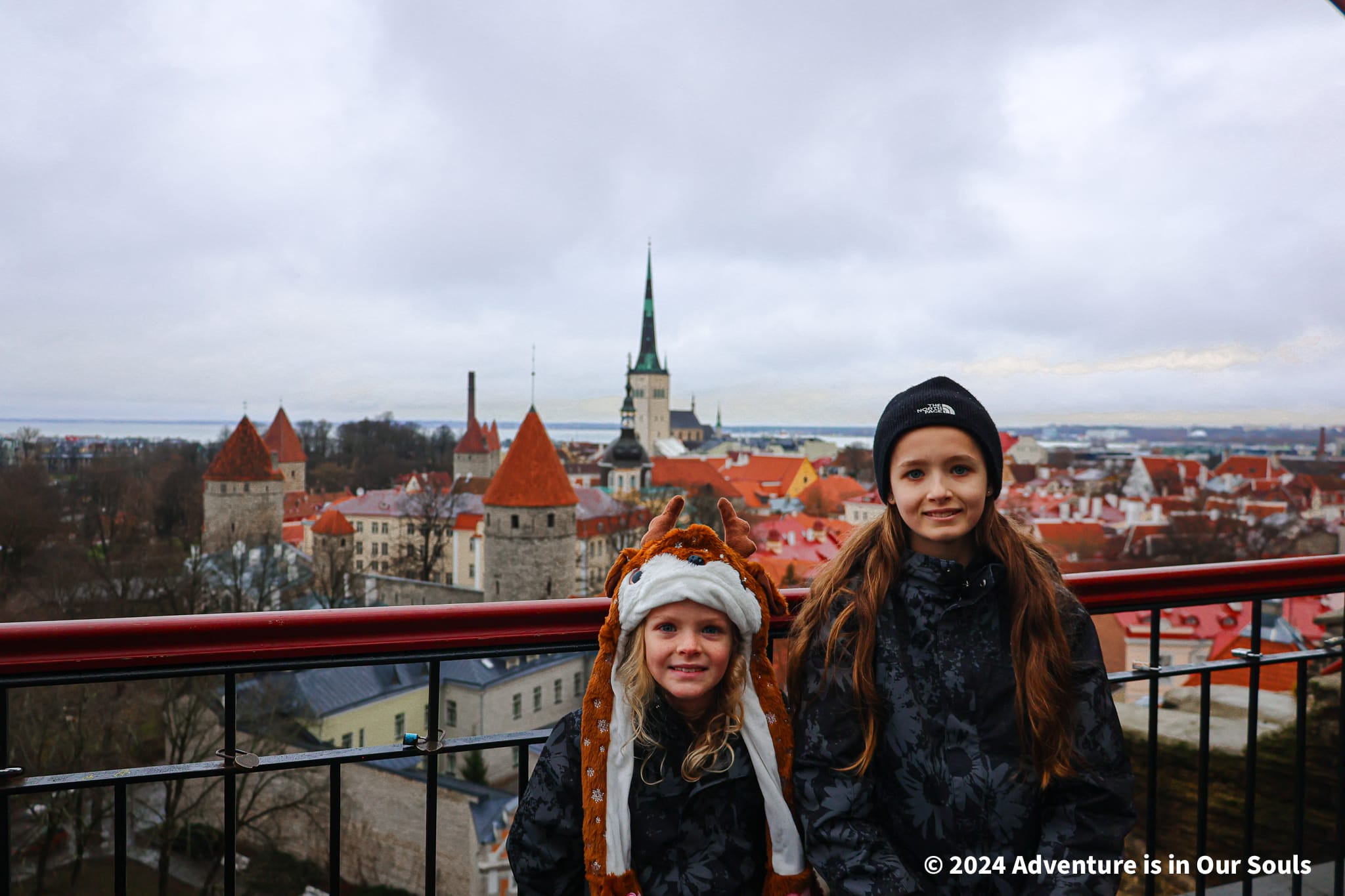
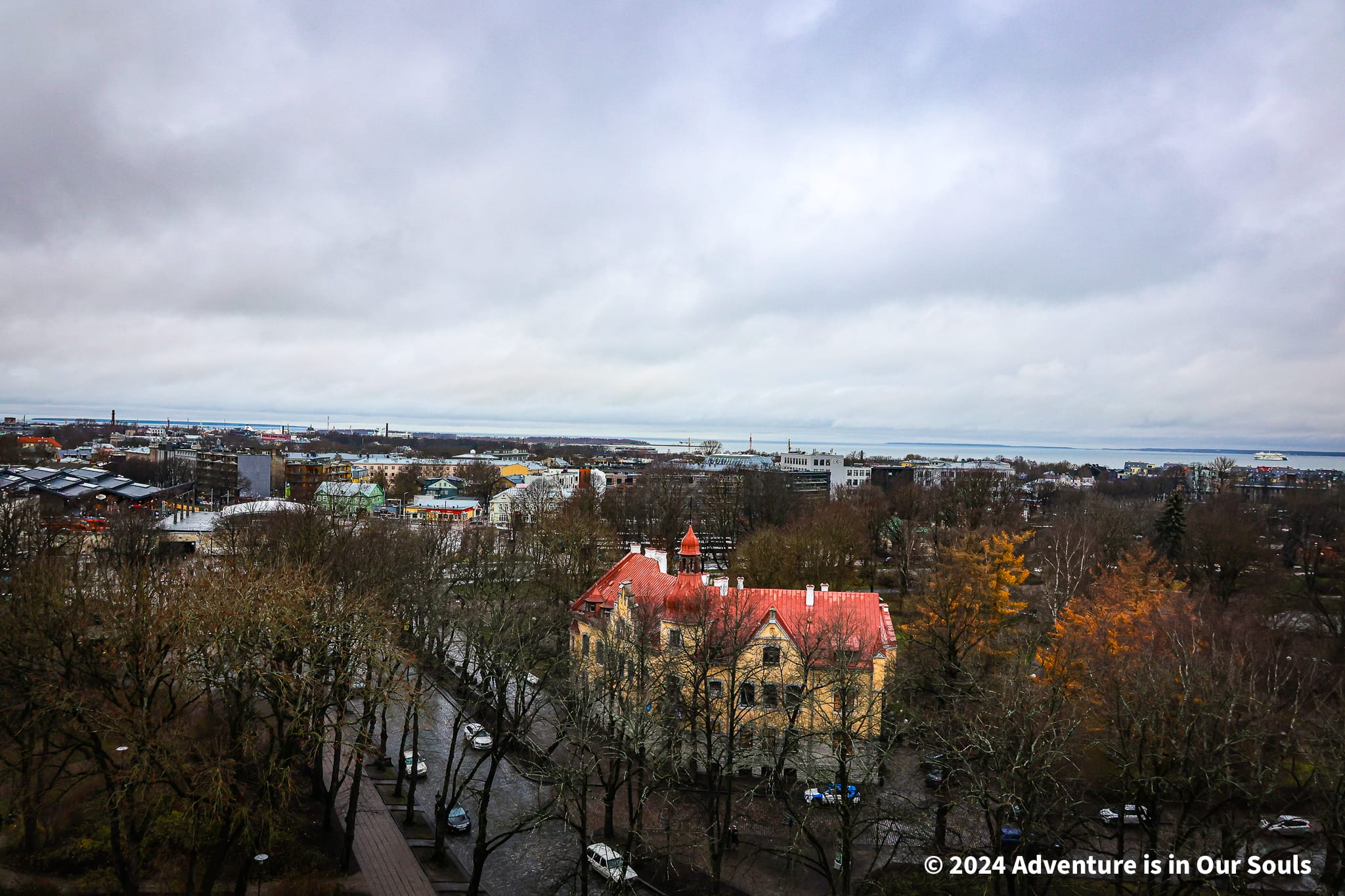
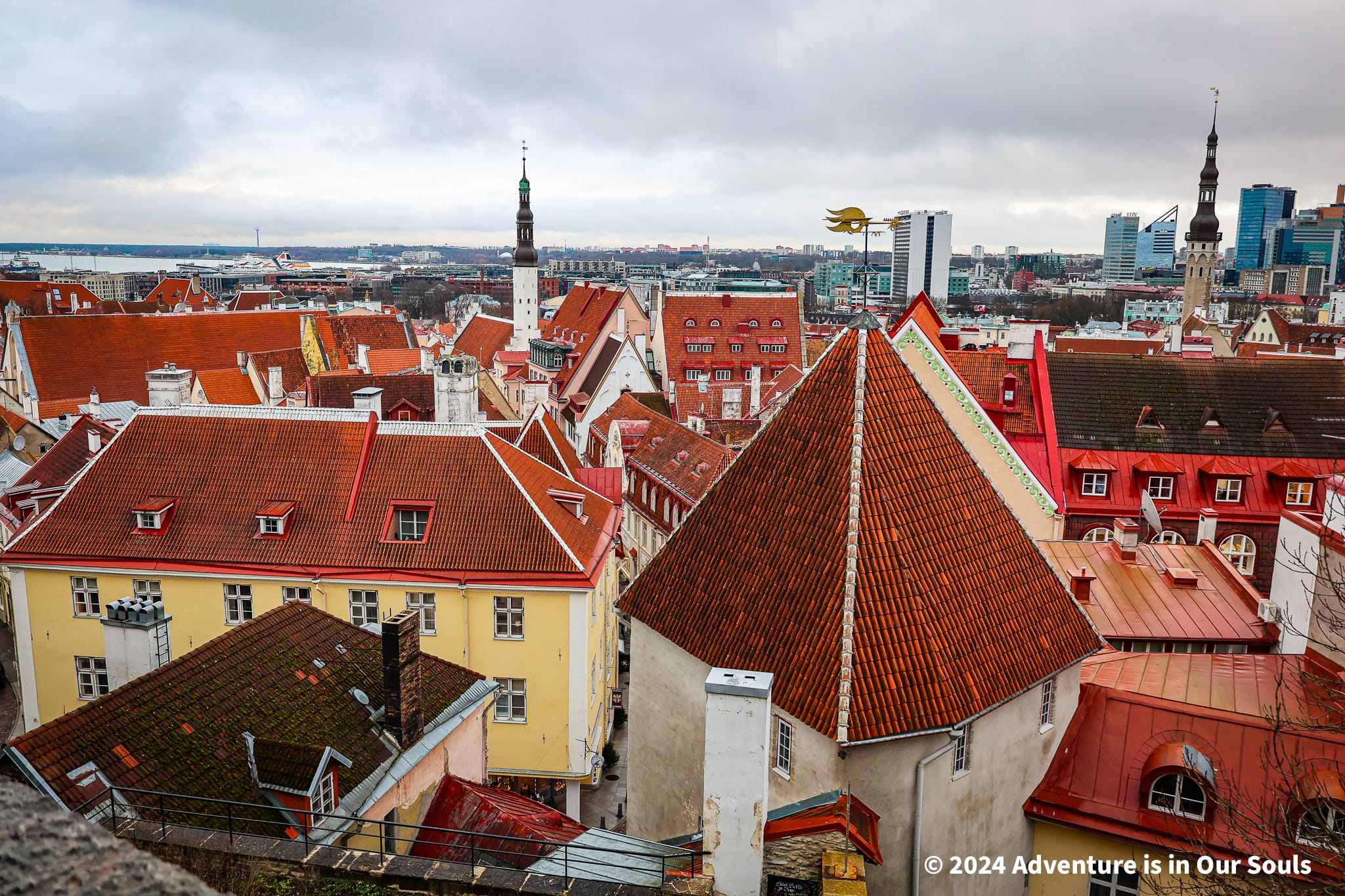
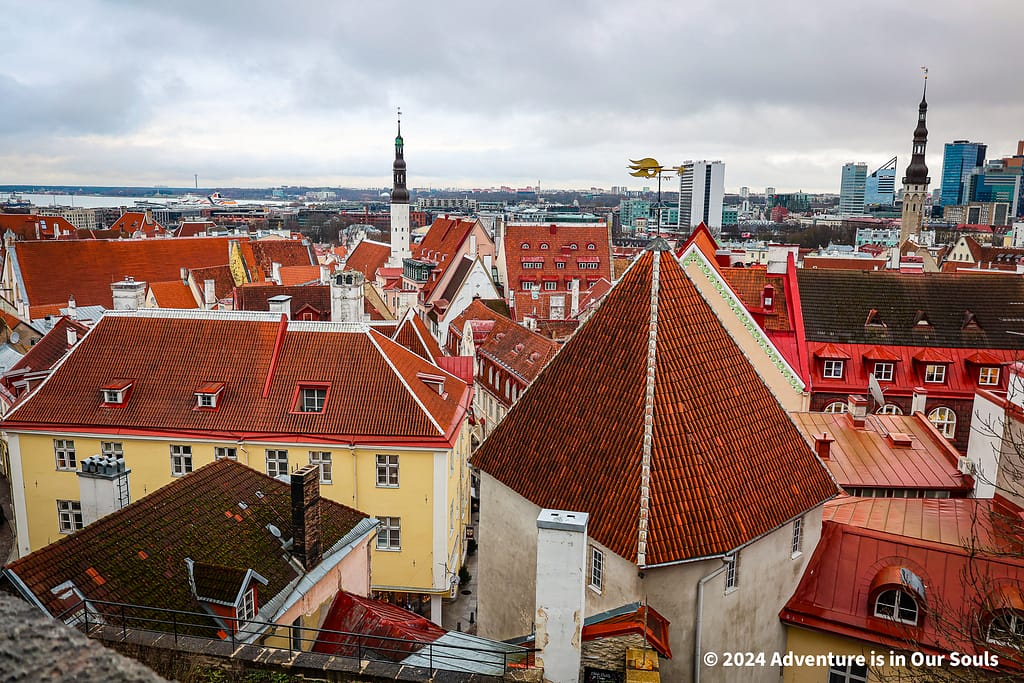
Before leaving Tallinn, you have to take in the views from some of the panoramic viewpoints. Patkuli Viewing Platform offers one of the best panoramic views of Tallinn’s Old Town. From this spot, you can see the terracotta rooftops, church spires, and the shimmering Baltic Sea beyond. It’s the perfect place to take a family photo or simply pause and soak in the beauty around you.
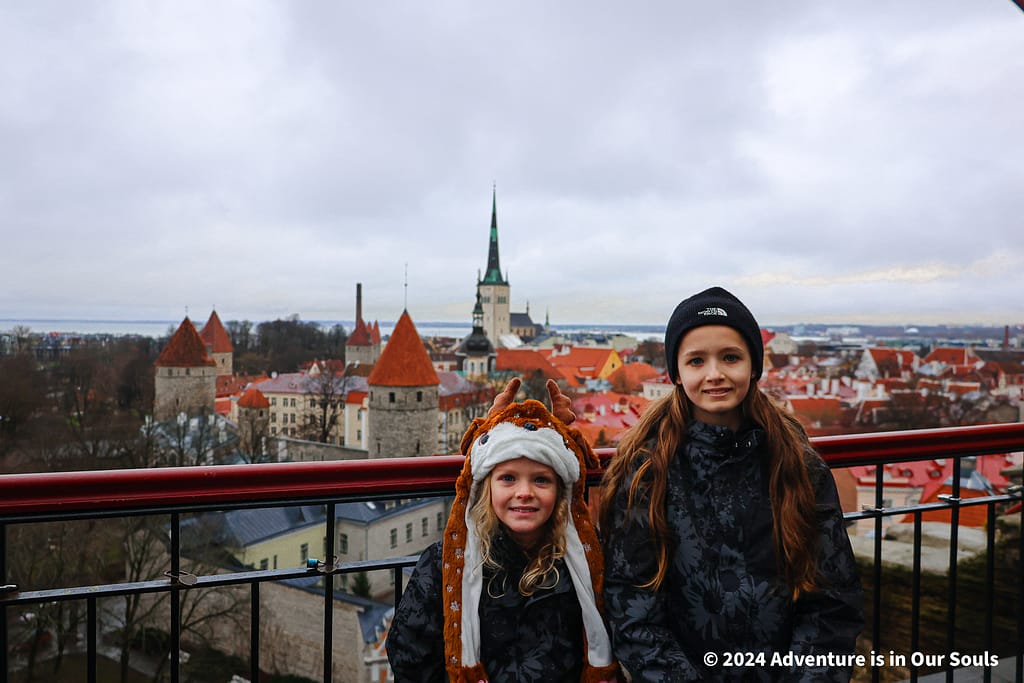
The platform is part of Toompea Hill, a historic area where Estonian rulers once lived. Standing here, you feel connected to centuries of history and the vibrant city life below. We stood in silence for a moment just to take it all in. You can see how the medieval town fits together, with its walls, gates, and narrow alleys winding below. It’s the perfect place for family photos, and we snapped a few with the iconic red roofs behind us.
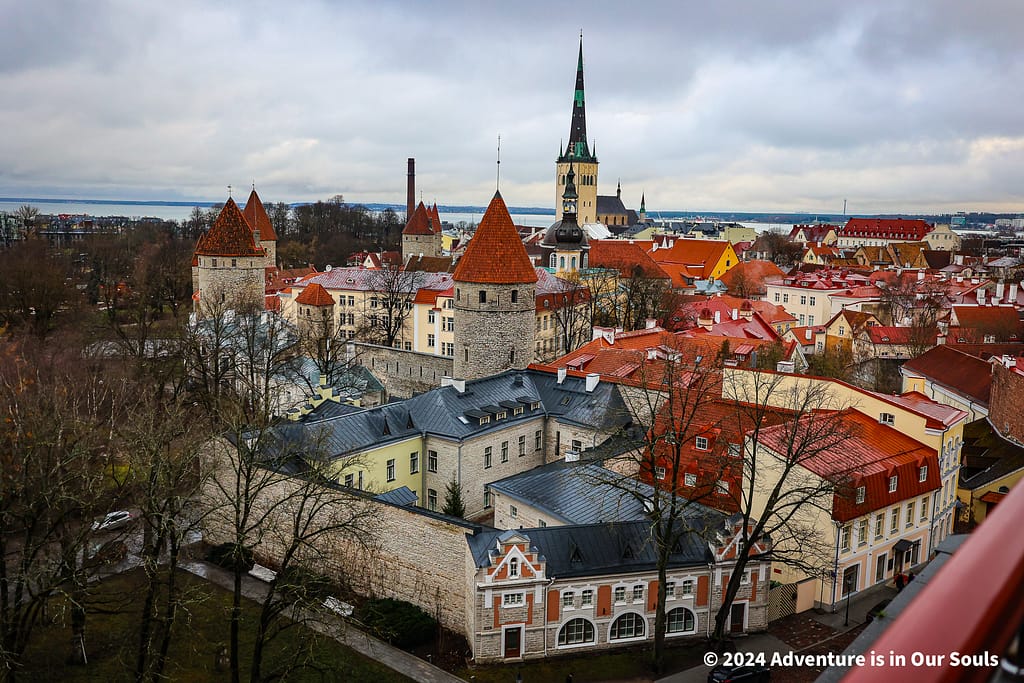
The girls enjoyed spotting tiny details from above, like people walking the cobblestone streets and colorful market stalls. Patkuli Viewing Platform is a magical highlight on our day trip and a reminder of Tallinn’s unique charm.
Stop #16 – Kohtuotsa Viewing Platform
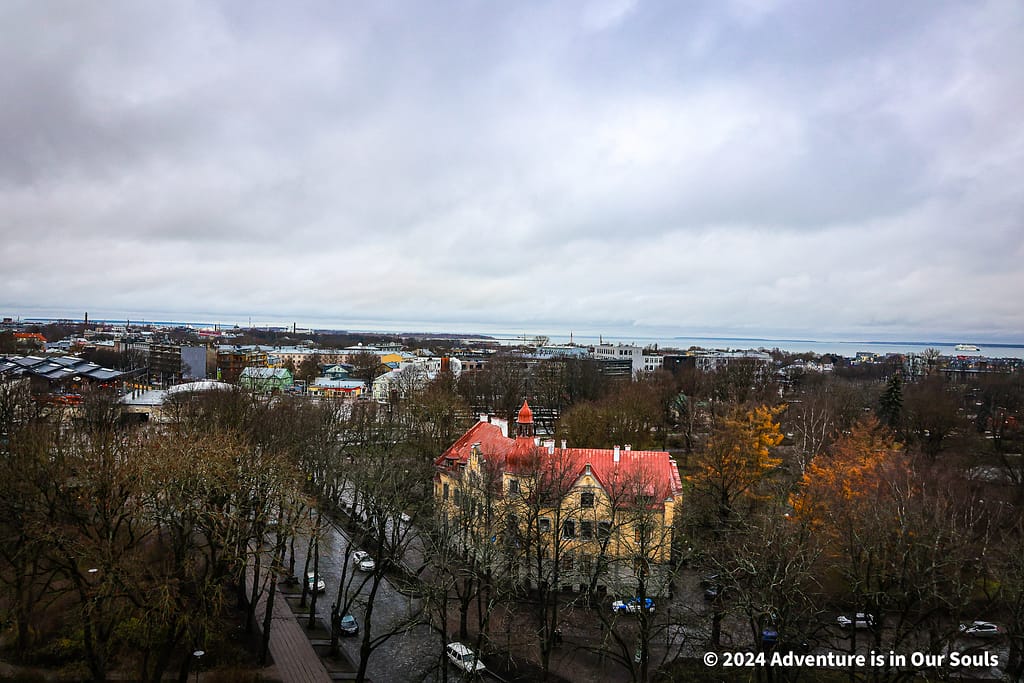
Our final stop was the Kohtuotsa Viewing Platform. Located just a short walk from Patkuli, this platform offers a sweeping view of the eastern part of Tallinn’s Old Town. From here, you can see the city’s iconic towers, the harbor, and even across the sea to Finland on a clear day.
The stone wall here is painted with the words “The Times We Had,” and it really struck a chord. We had such a memorable day exploring this magical city together!
Other Sites to Consider
While we couldn’t fit everything into one day, there are a few more wonderful spots worth mentioning. St. Nicholas’ Orthodox Church is a small, peaceful place with beautiful iconography. Cafe Maiasmokk (Kohvik Maiasmokk) is the oldest café in Tallinn and famous for its marzipan. And the Estonian History Museum (Great Guild Hall) offers a deep dive into the country’s past.
Is Tallinn Worth a Day Trip from Helsinki with Kids?
Yes, Tallinn was worth the day trip for our family. The ferry made it easy to add Estonia to our Finland itinerary, and Old Town gave us a completely different experience from Helsinki and Finnish Lapland.
The best part of Tallinn with kids was that the day did not require complicated planning once we arrived. We could walk through medieval streets, city gates, churches, viewpoints, market stalls, and have dinner, while keeping the day flexible. Our girls were not as enchanted by the city as I was, but they still enjoyed the towers, Christmas lights, food stops, and the feeling of exploring somewhere completely different.
The Family Verdict
Tallinn was one of my favorite stops on our winter trip to Europe. I loved the medieval streets, old buildings, city walls, viewpoints, and cozy winter atmosphere. It felt completely different from Finnish Lapland, making for a great contrast during the same trip.
The girls were less excited about Tallinn than they were about Santa Claus Village and our snowy Lapland adventures, but they still enjoyed the towers, Christmas lights, market stalls, and dinner in Old Town. A day trip from Helsinki to Tallinn can feel quick, but it gave our family a memorable taste of Estonia and left me wanting to return for a longer stay.
Make sure to check out our other Finland and Lapland adventures at Santa Claus Village, a Finnish husky farm, ice fishing in Rovaniemi, a reindeer farm in Rovaniemi, SantaPark in Finnish Lapland, and Helsinki. You can also follow our full Finnish Lapland itinerary for families.
Follow along on our other amazing family travel adventures at www.adventureisinoursouls.com.
Recommended Supplies
Don’t miss out on these recommended supplies for your family adventure!
For Packing:
- Digital Luggage Scale
- Shoe Bags
- Vacuum Storage Bags
- Medicine Organizers
- Compression Packing Cubes and Compression Packing Cubes 2
- Toiletry Covers
- Padded Car Seat Travel Backpack
- Toiletry Bags
For the Airport / Airplane:
- Women’s Compression Socks
- Men’s Compression Socks
- Family Passport / Document Holder
- Portable Cable Organizer
- Neck Pillow
- Airplane Foot Hammock
- Plane Bed for Kids
- Sleep Mask
- Apple Watch Portable Charger
- Expandable Luggage
- Compact Blanket
- iPad / Tablet Case
For the Hotel:
- Portable Sound Machine
- Power Strip
- Travel Toothbrush Set
- LED Night Lights
- Laundry Bags
- European Plug Adaptor Set
Cold Weather Clothing:
- Women’s Base Layer Socks
- Women’s Wool Socks and These
- Women’s Base Layer Tops
- Women’s Base Layer Bottoms
- Women’s Mid Layer Tops and These
- Women’s Mid Layer Bottoms
- Women’s Jacket
- Women’s Snow Pants
- Women’s Snow Boots
- Women’s Snow Gloves
- Women’s Glove Liners
- Balaclava
- Men’s Base Layer Socks
- Men’s Wool Socks and These
- Men’s Base Layer Tops and These
- Men’s Base Layer Bottoms
- Men’s Mid Layer Tops
- Men’s Jacket
- Men’s Snow Pants
- Men’s Snow Gloves
- Kid’s Base Layer Socks and These
- Kid’s Wool Socks, These, These and These
- Kid’s Base Layers, These and These
- Kid’s Mid Layer Tops, These and These
- Kid’s Mid Layer Bottoms
- Kid’s Jacket
- Kid’s Snow Pants
- Kid’s Snow Gloves
- Kid’s Glove Liners
- Kid’s Beanie
- Kid’s Snow Boots
For Extra Fun in the Arctic: