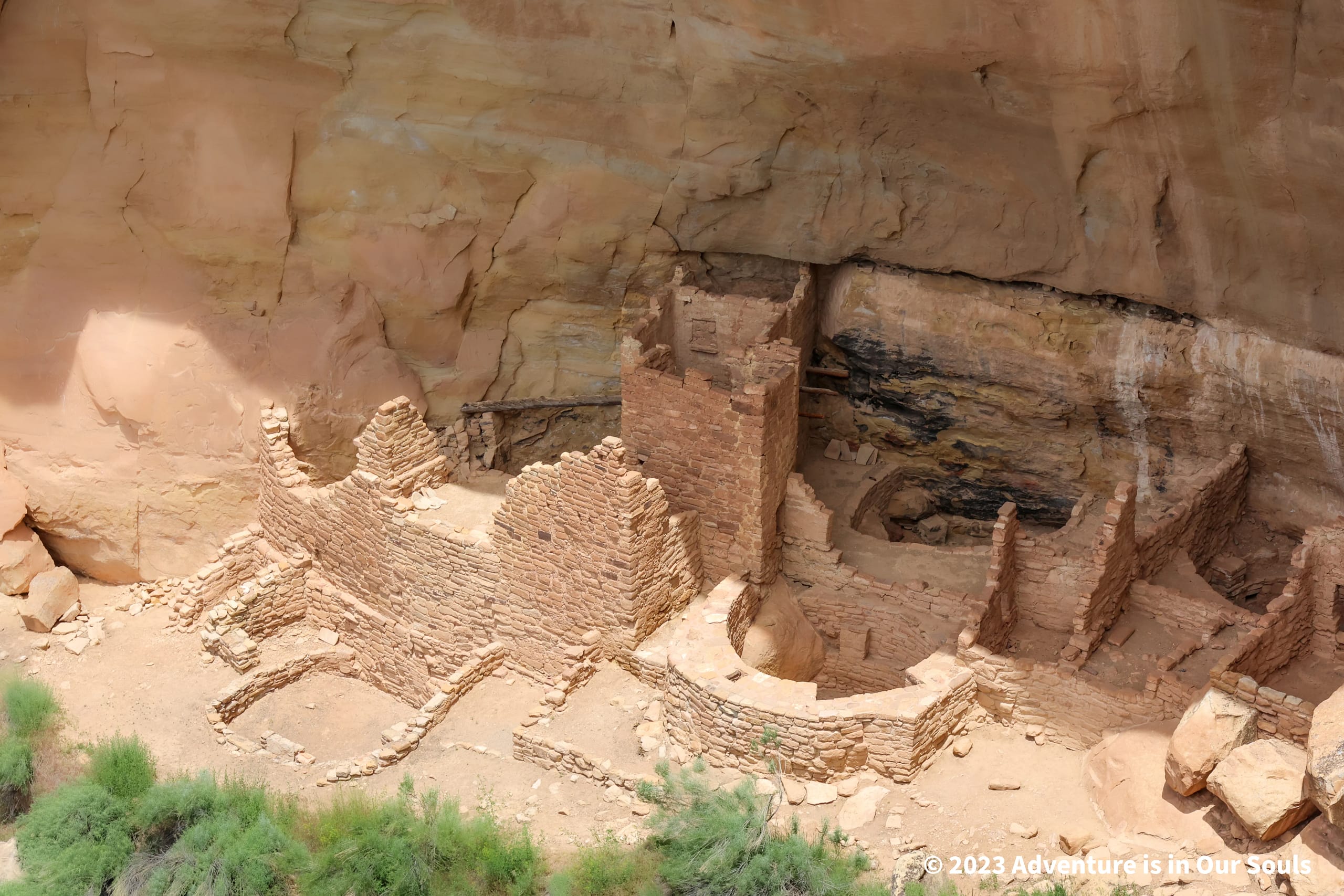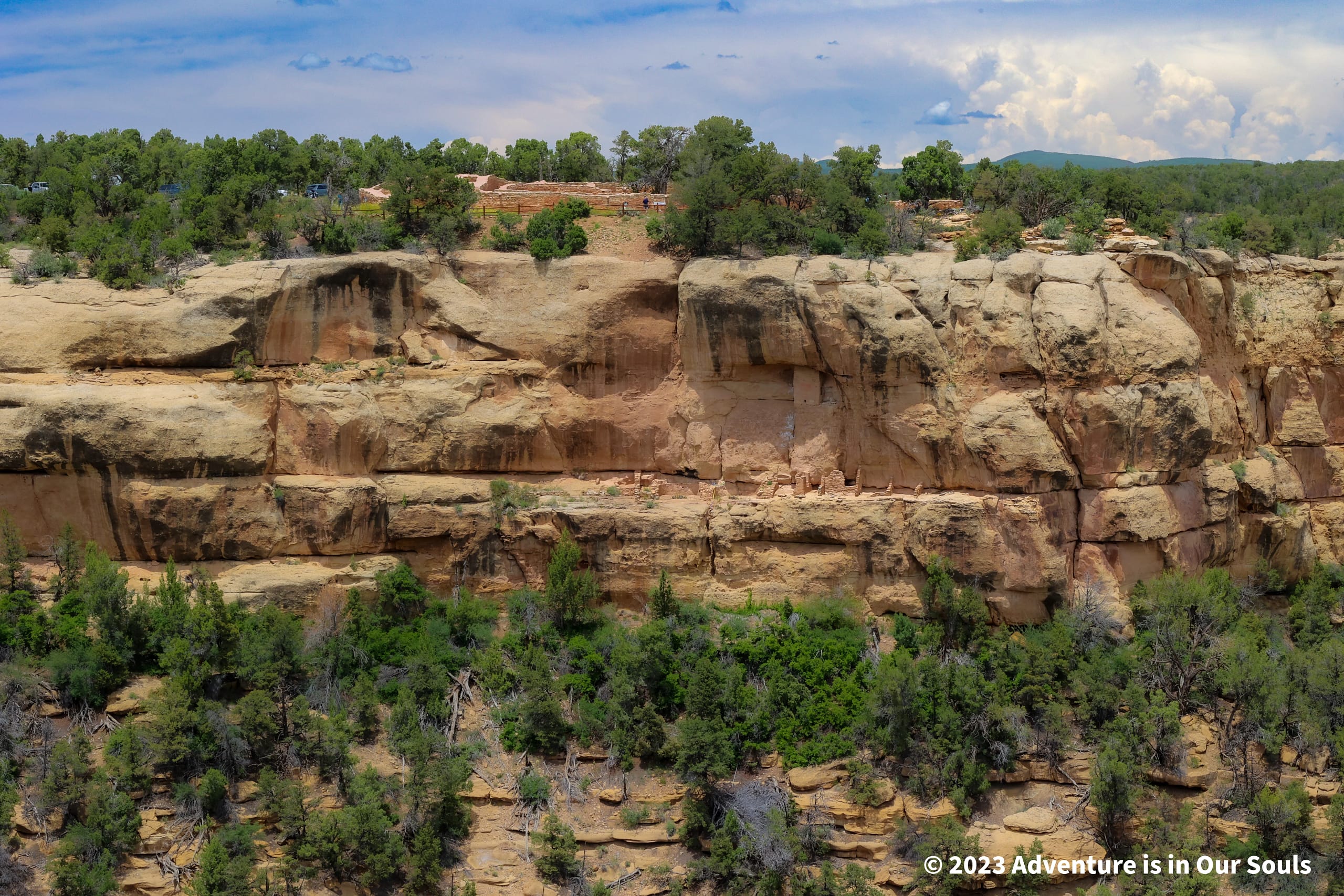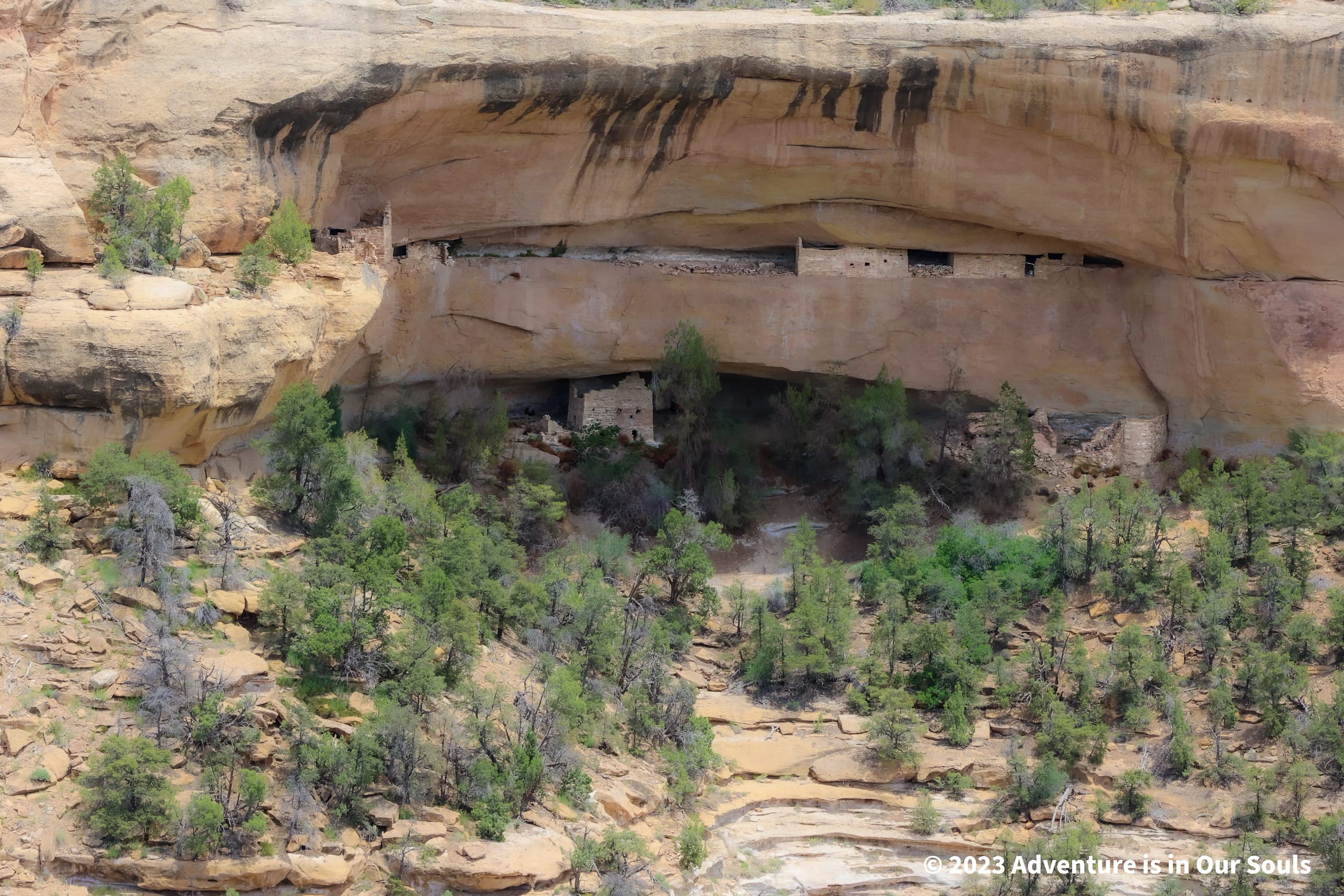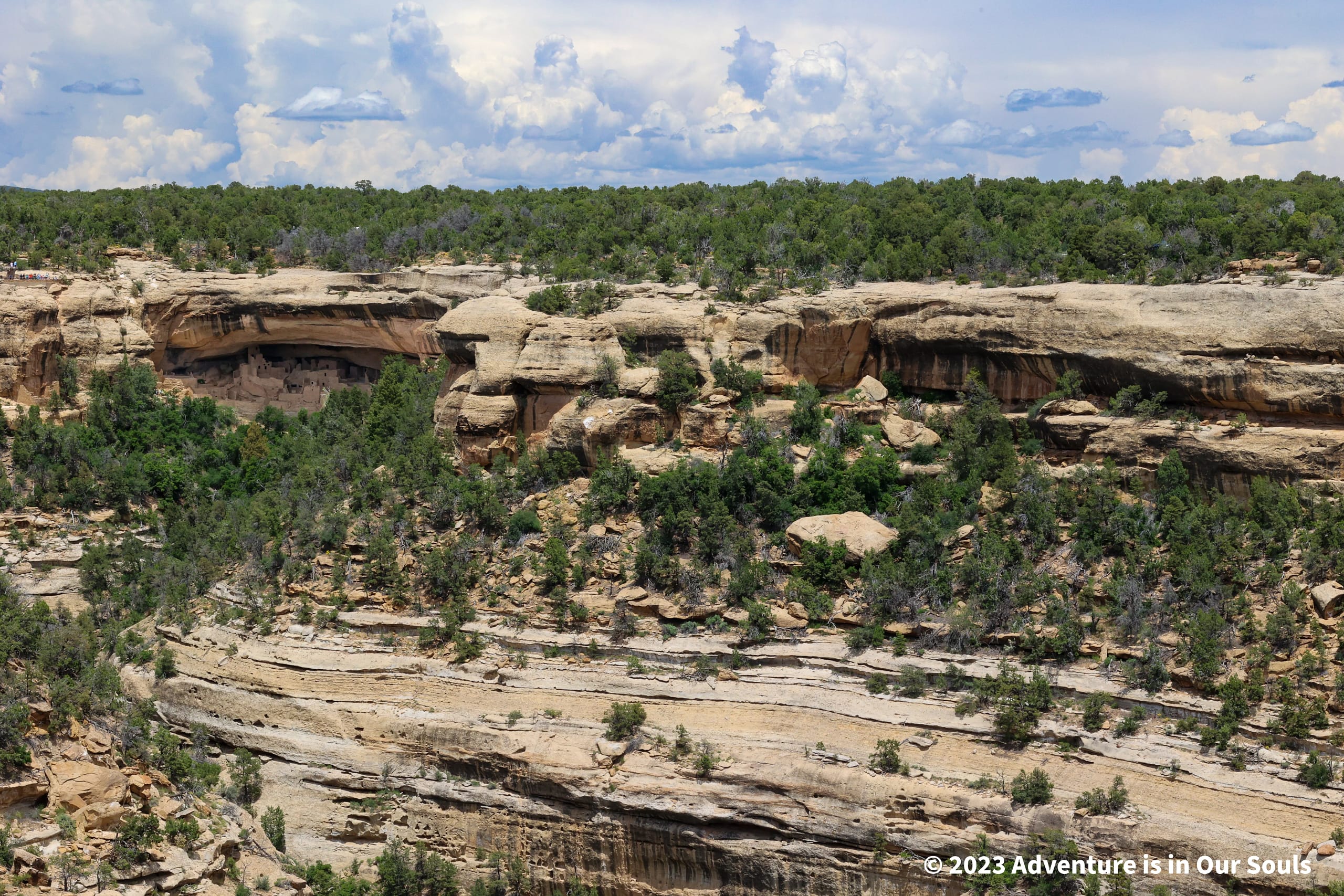
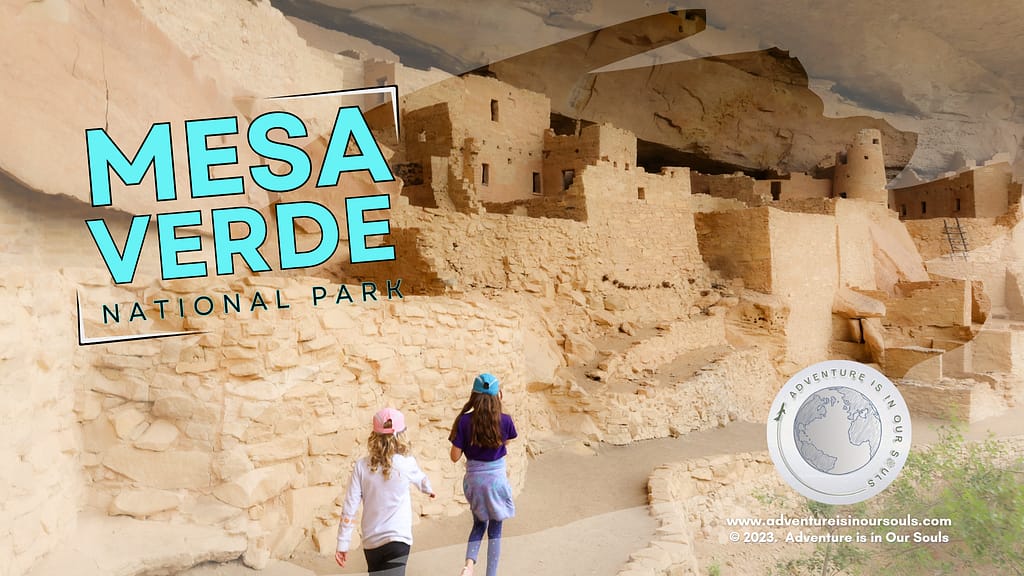
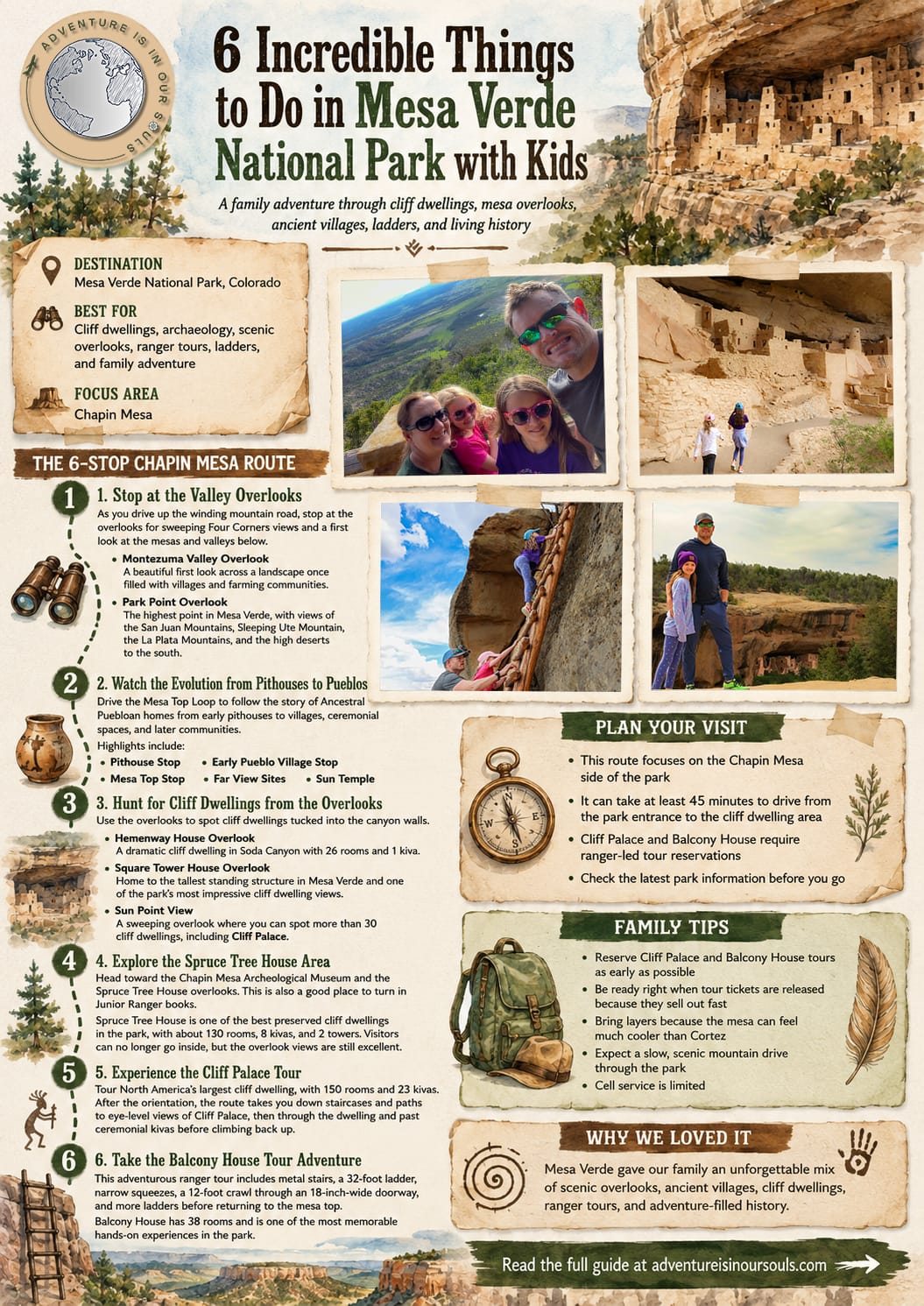
Right here in the American Southwest, you can visit a national park with hundreds of ancient dwellings. From pithouses, pueblos, and cliff dwellings, Mesa Verde National Park is truly an American treasure! To guide your adventures on the Chapin Mesa side of the park, we are bringing you our list of 6 incredible things to do in Mesa Verde National Park. Join our adventure travel family on an amazing exploration through these archeological treasures!
What is Mesa Verde National Park?
Hidden in the southwestern corner of Colorado are some of the most amazing cliff dwellings carved into the canyon walls. For over 700 years, the Ancestral Puebloans built communities on the mesas and cliffs of Mesa Verde. Mesa Verde National Park was established to protect and preserve these archeological sites.
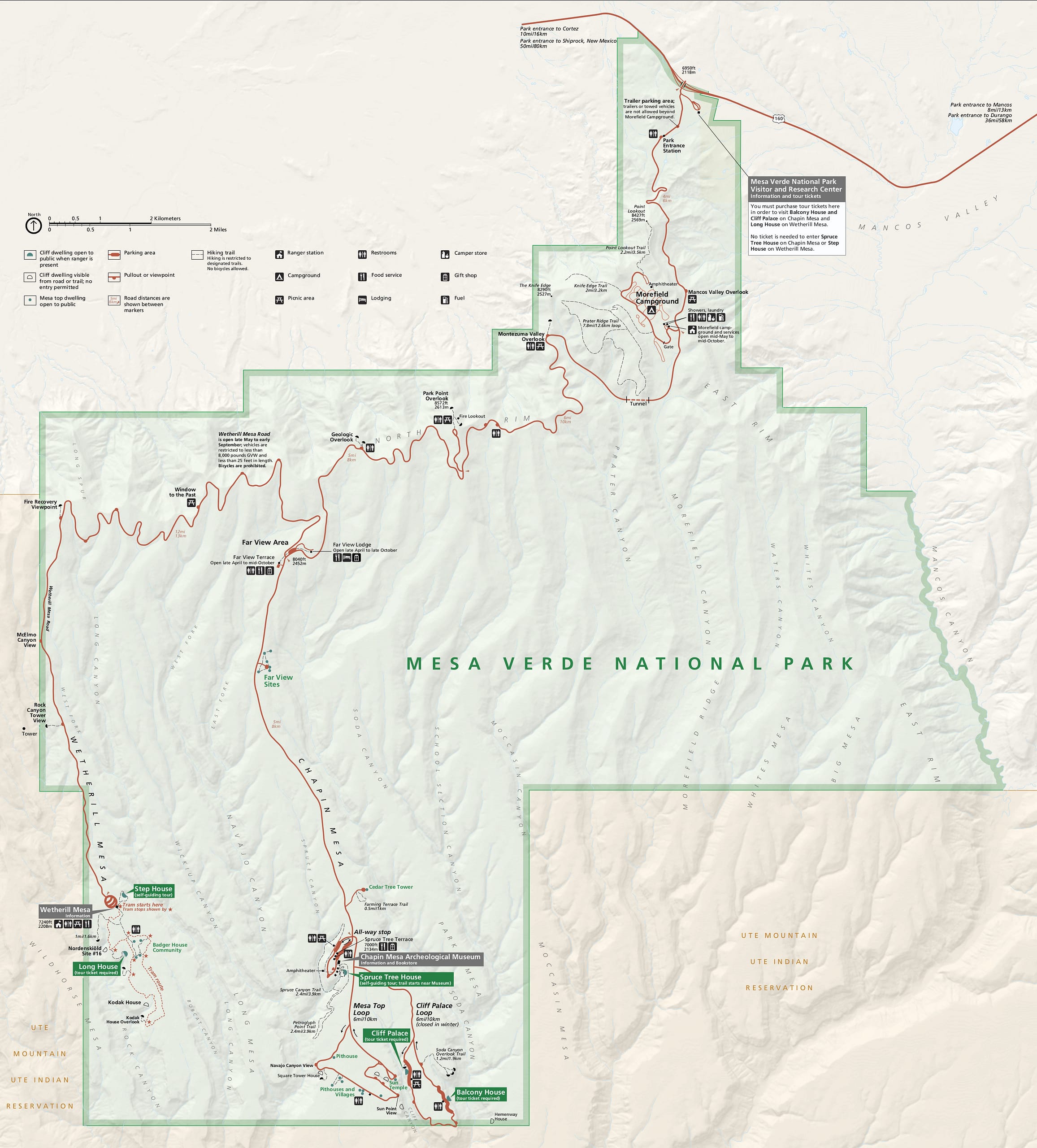
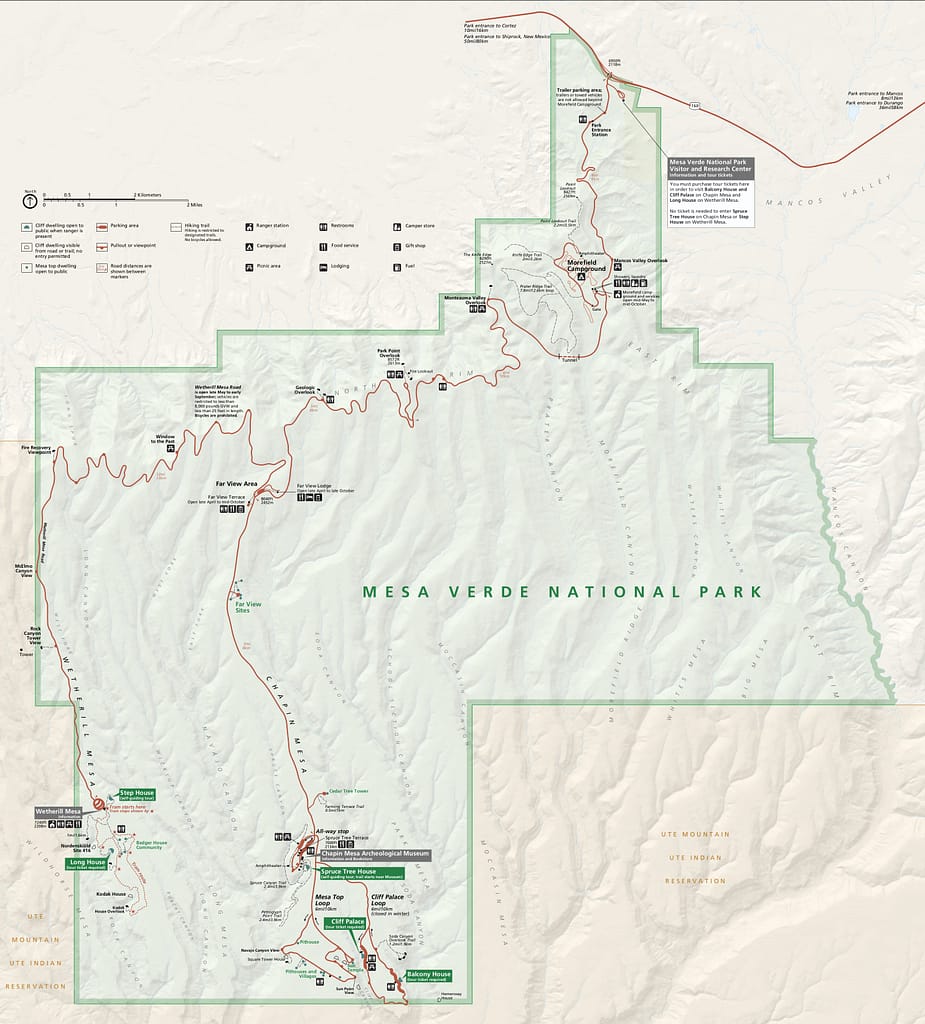
Mesa Verde National Park is pretty big – over 52,000 acres!! It is broken down into 2 main regions. The Chapin Mesa is located in the southeastern part of the park. Chapin Mesa is considered the main area of the park, containing most of the popular cliff dwellings. The other area, Wetherill Mesa, is much more remote in the southwest of the park. All of the recommendations covered in this post are on the Chapin Mesa side of the park.
Visitor Information
| Address | 10 miles east of Cortez along Highway 160 |
| Entrance Cost | National Park entrance pass required (included in your America The Beautiful annual pass) Guided Tours of Cliff Palace and Balcony House: $8 per person per tour |
| Hours | Vary by season |
| Cell Service | Limited |
To enter the cliff dwellings, you must have a reservation for a Ranger-led tour. These sell out fast! They are released 2 weeks before your tour date at 10 am ET on the recreation.gov website. My recommendations for getting tickets:
- Make an account beforehand.
- Be on the website at 9:45 am, logged in, and ready to go.
- Refresh your screen starting at 9:58 am and keep refreshing until the tour times populate.
- Click your time and checkout … quick!
I booked the Cliff Palace tickets first since those sell out fastest. Then I went back to get Balcony House tour tickets. Both were secured before 10:03.
Disclaimer: Always check the latest information on the park website before you arrive.
Getting Here
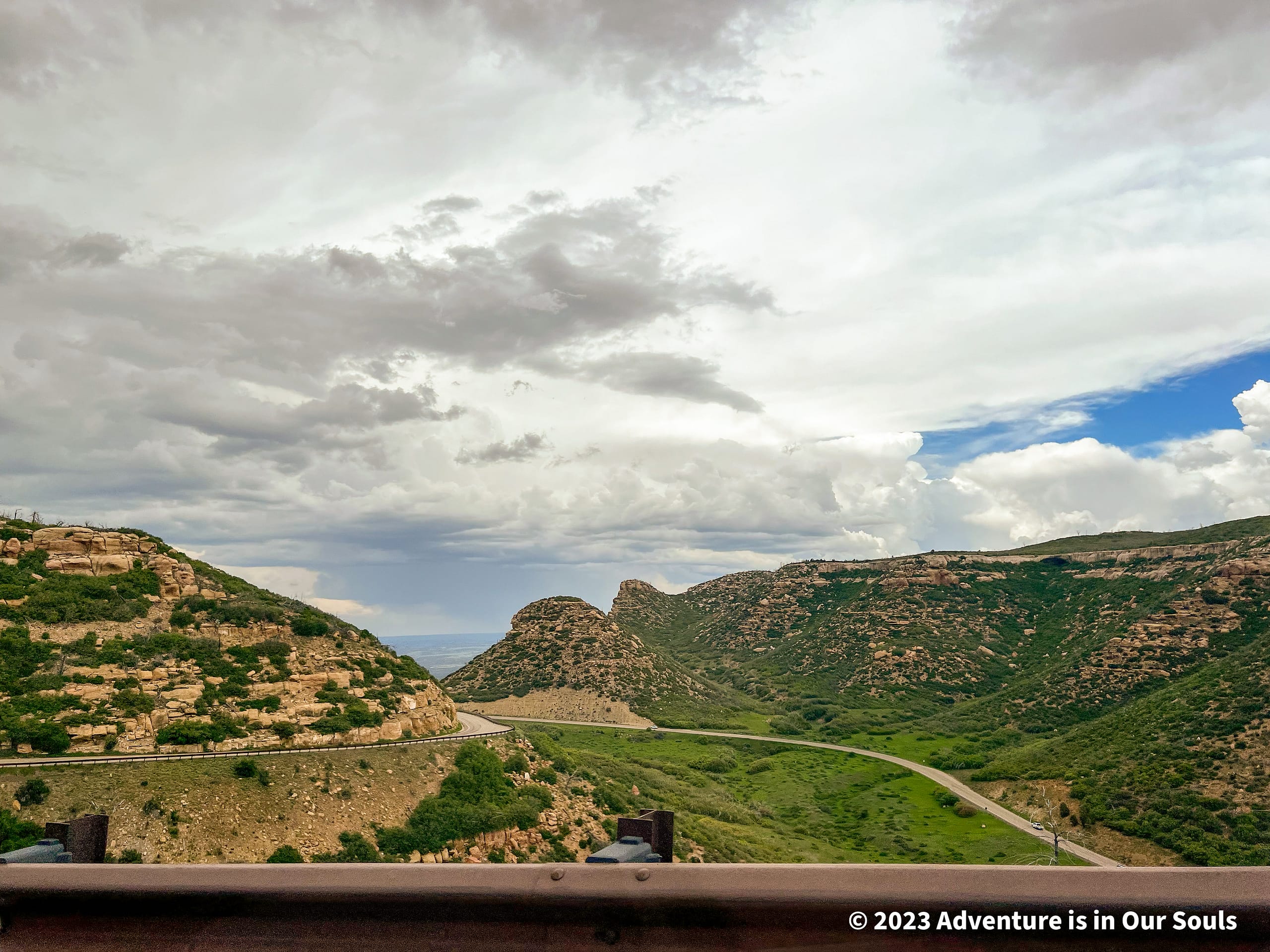
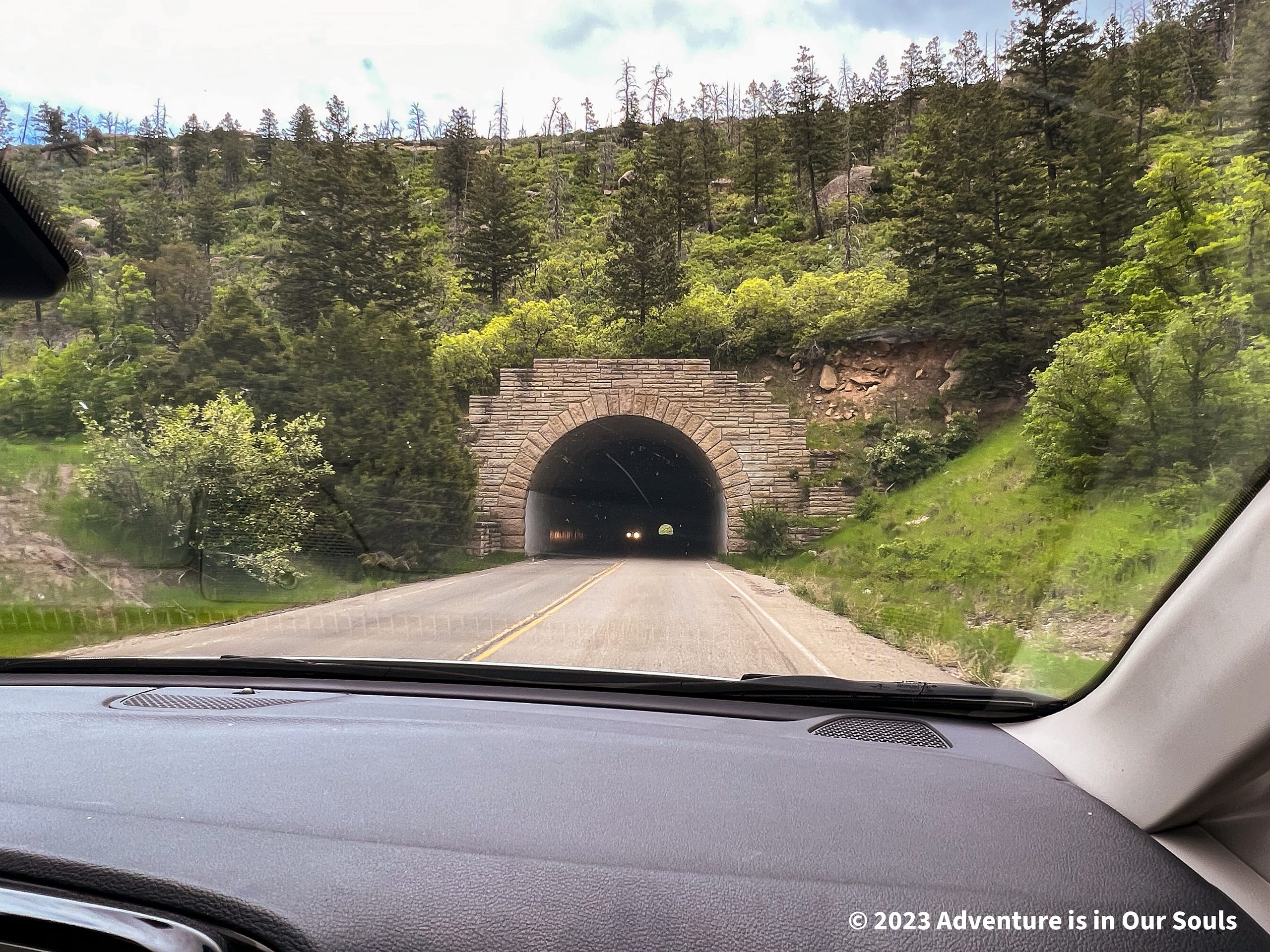
Given the size of the park, it takes at least 45 minutes to reach the cliff dwellings from the entrance of Mesa Verde National Park. The main park road is called Mesa Top Ruins Road. It is a steep, narrow, winding mountain road that takes you from the entrance to the Mesa Top Loop. The drive is scenic, but slow.
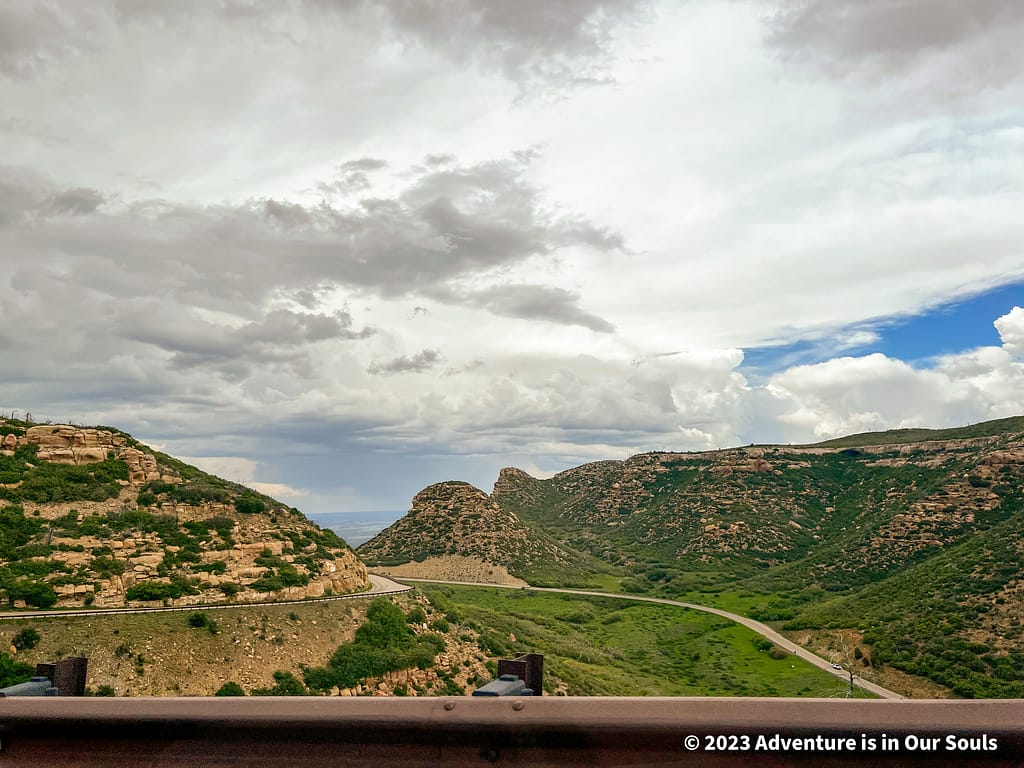
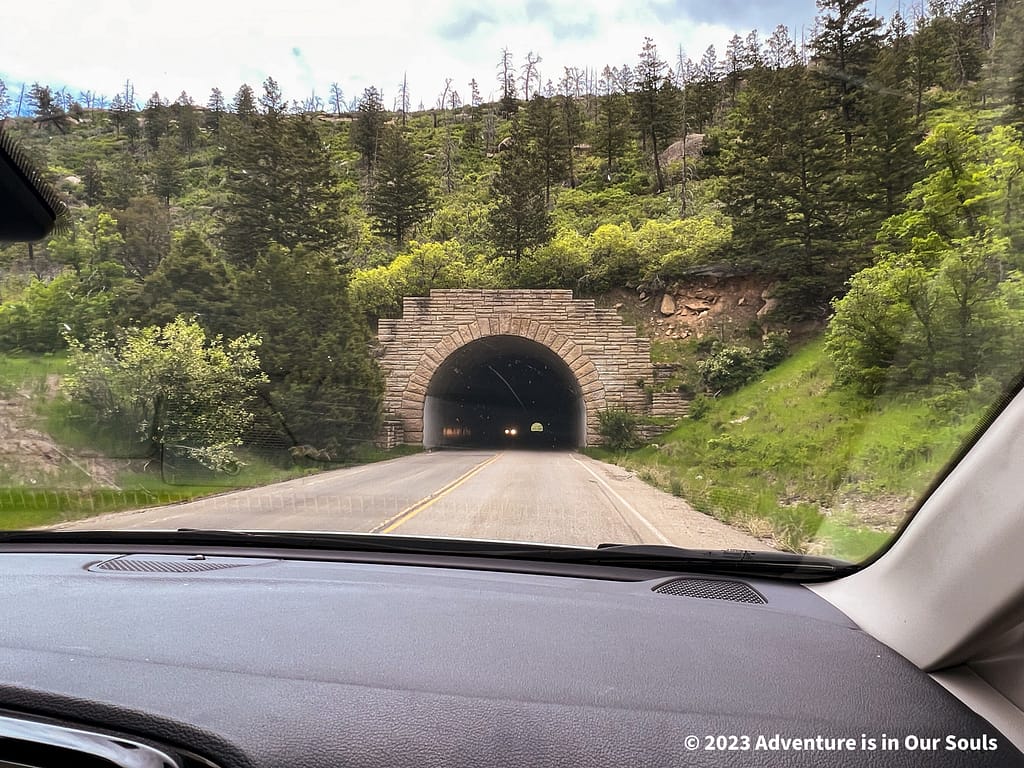
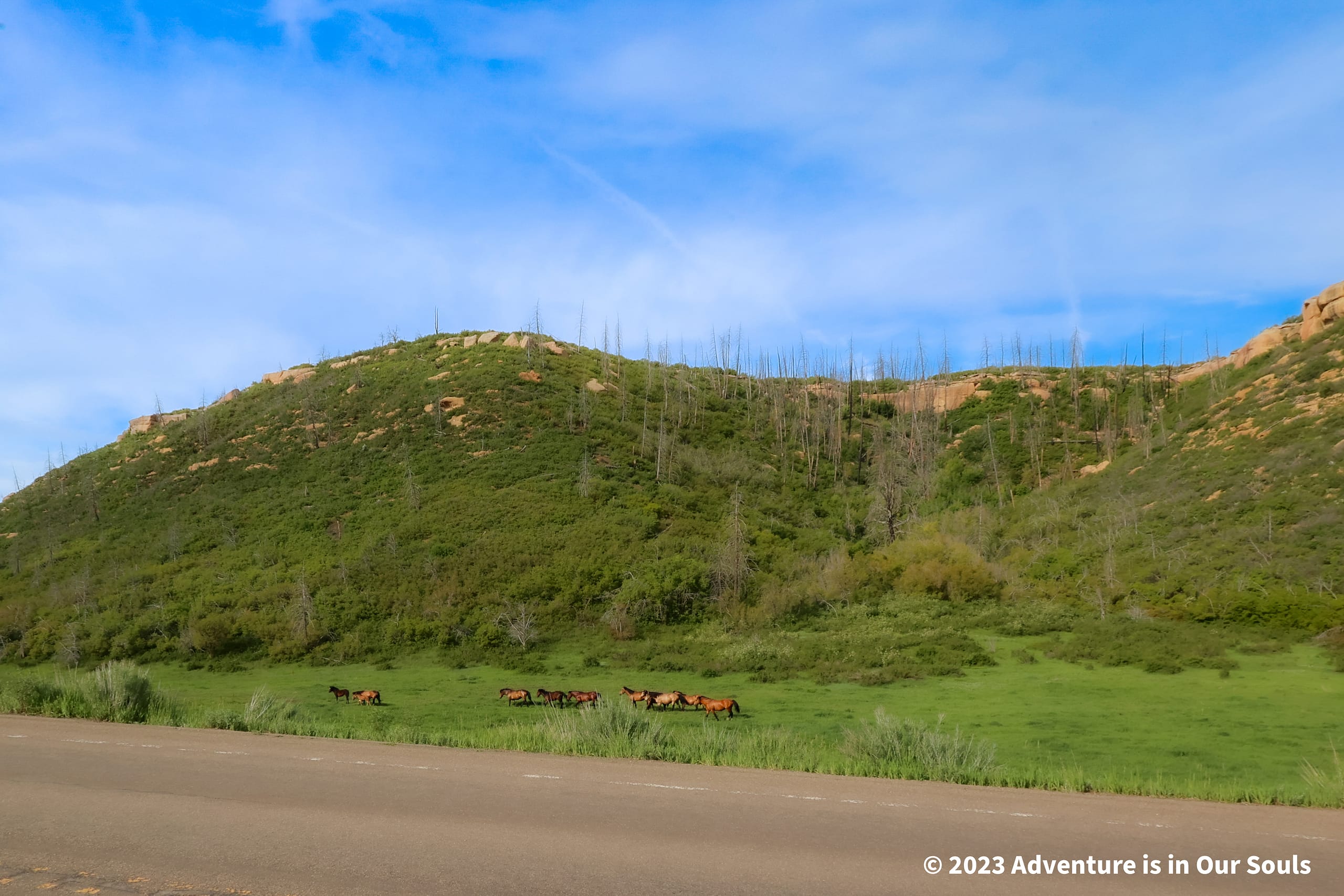
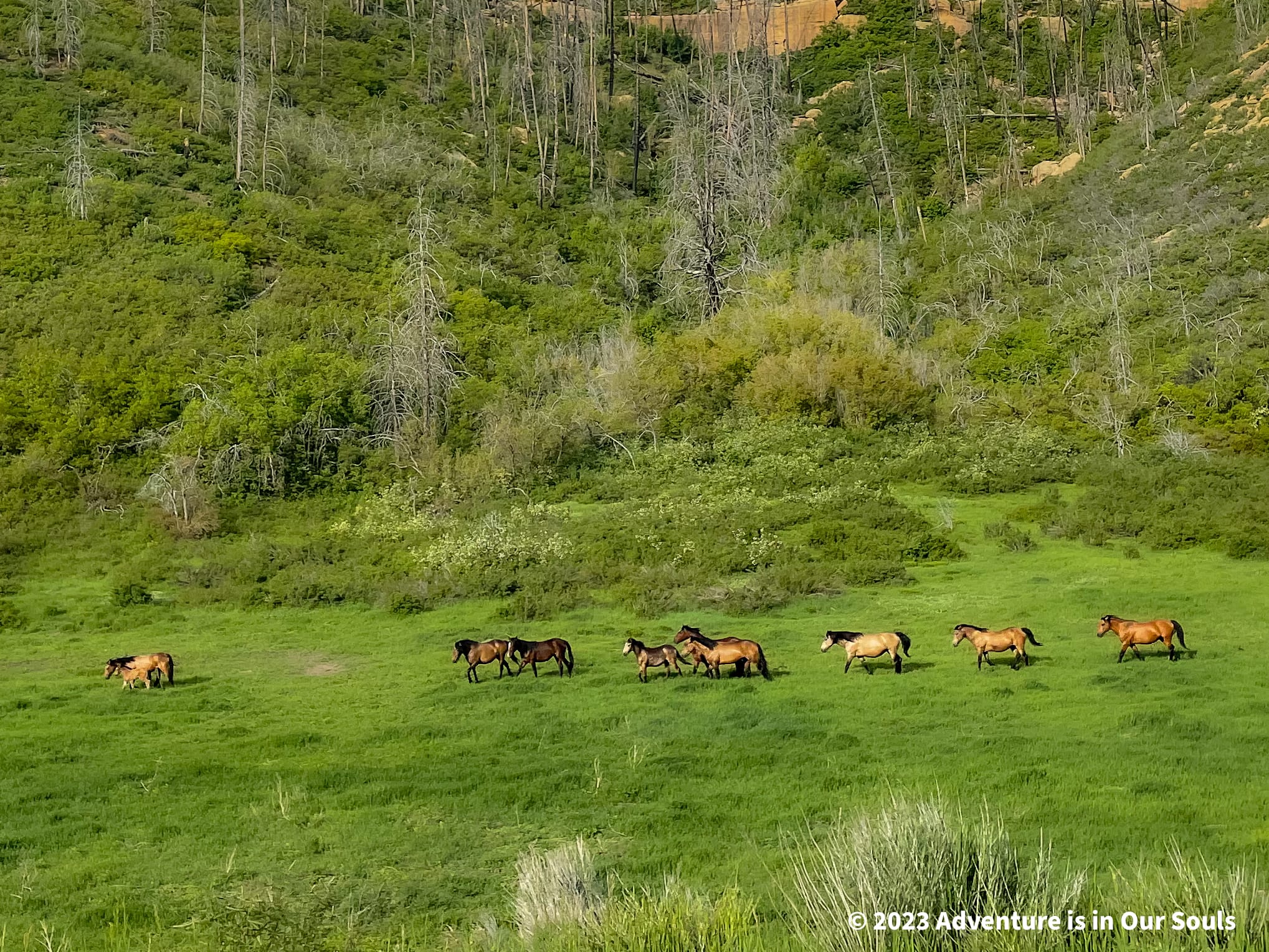
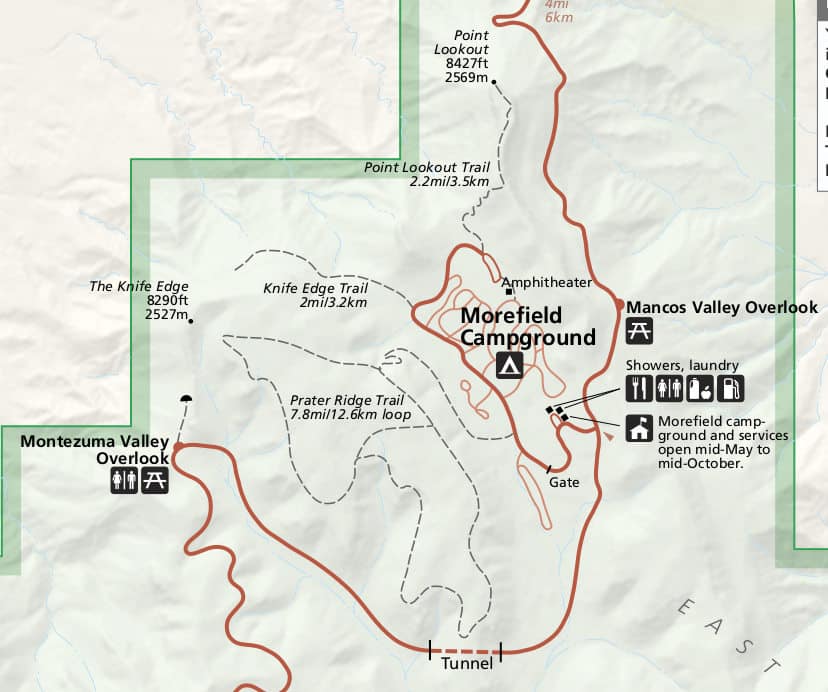
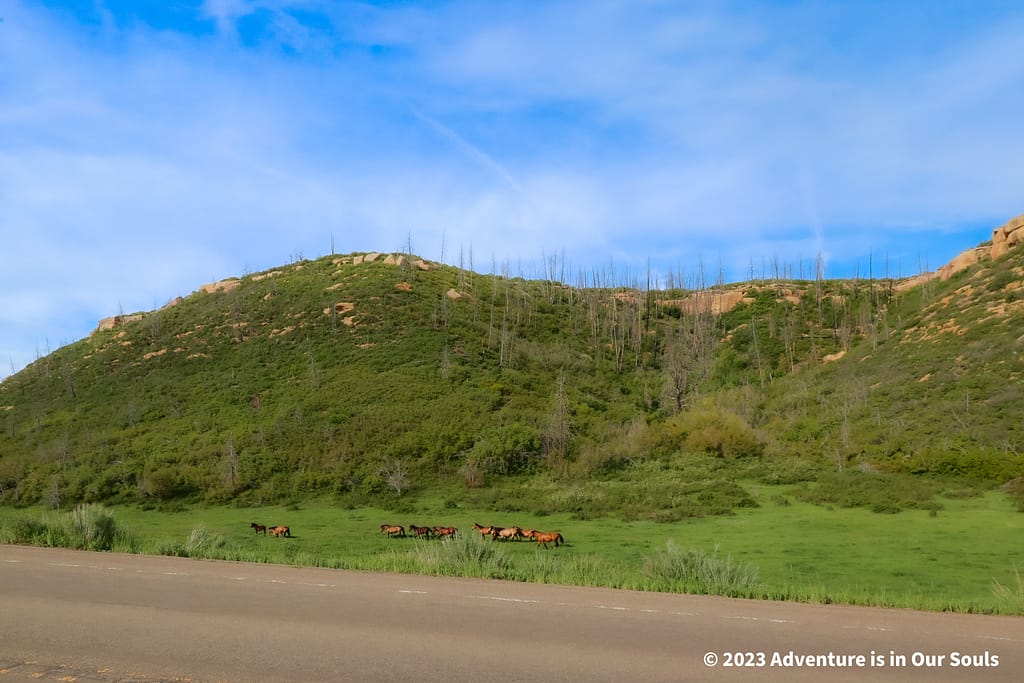
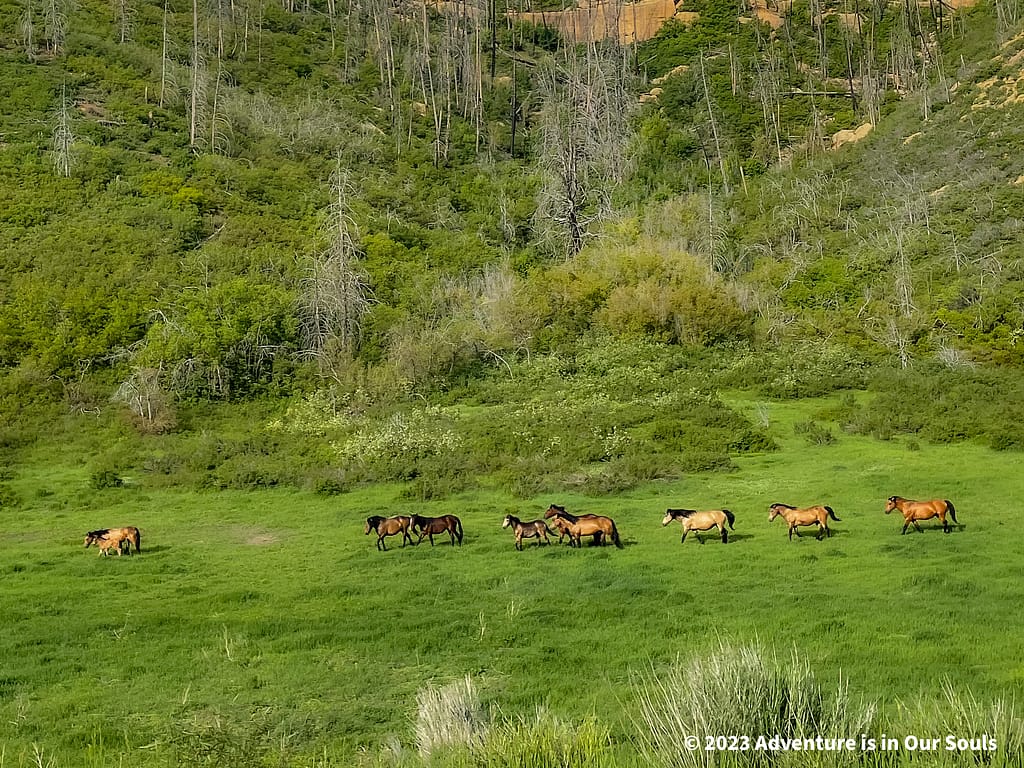
You drive through a short tunnel that cuts through the mesa. As soon as we emerged, we spotted a herd of roaming horses with several foals walking through the hillside. Very cool to see!
Incredible Things to Do in Mesa Verde National Park: Stop at the Valley Overlooks
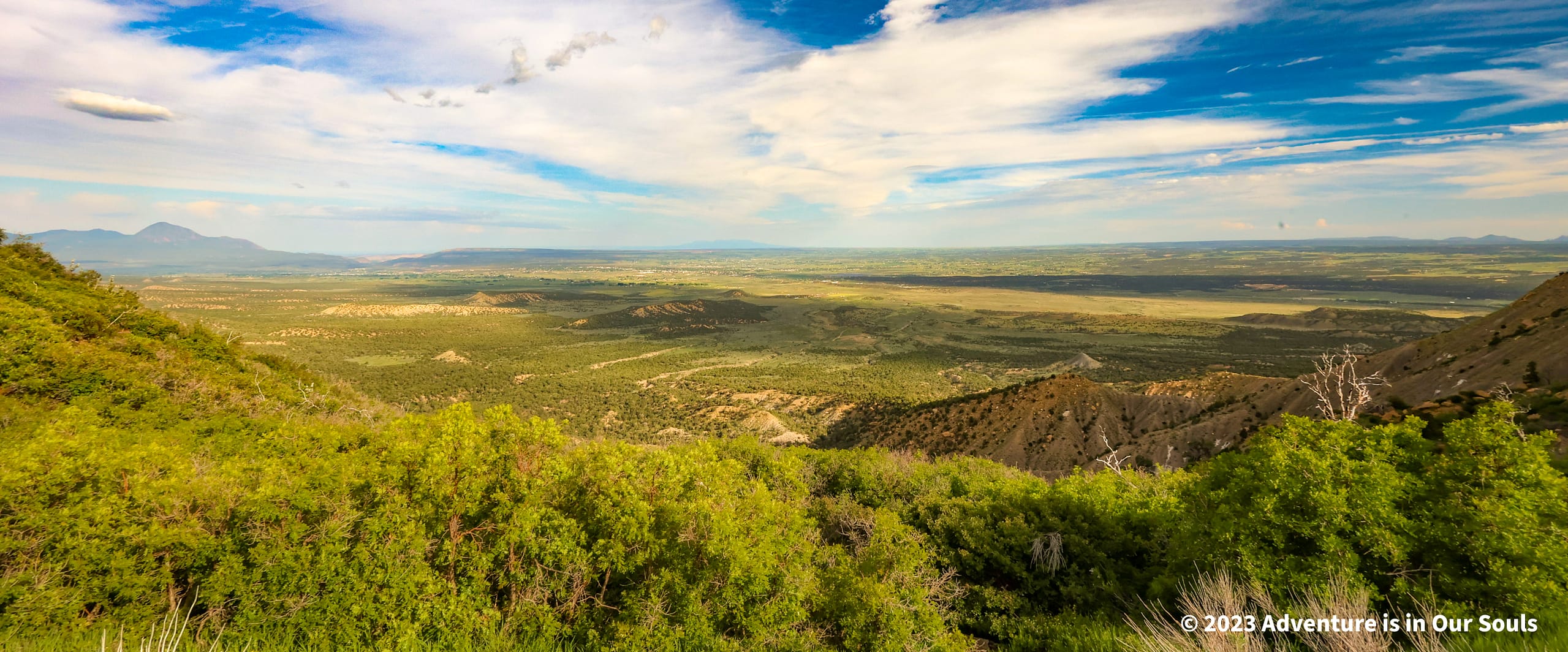
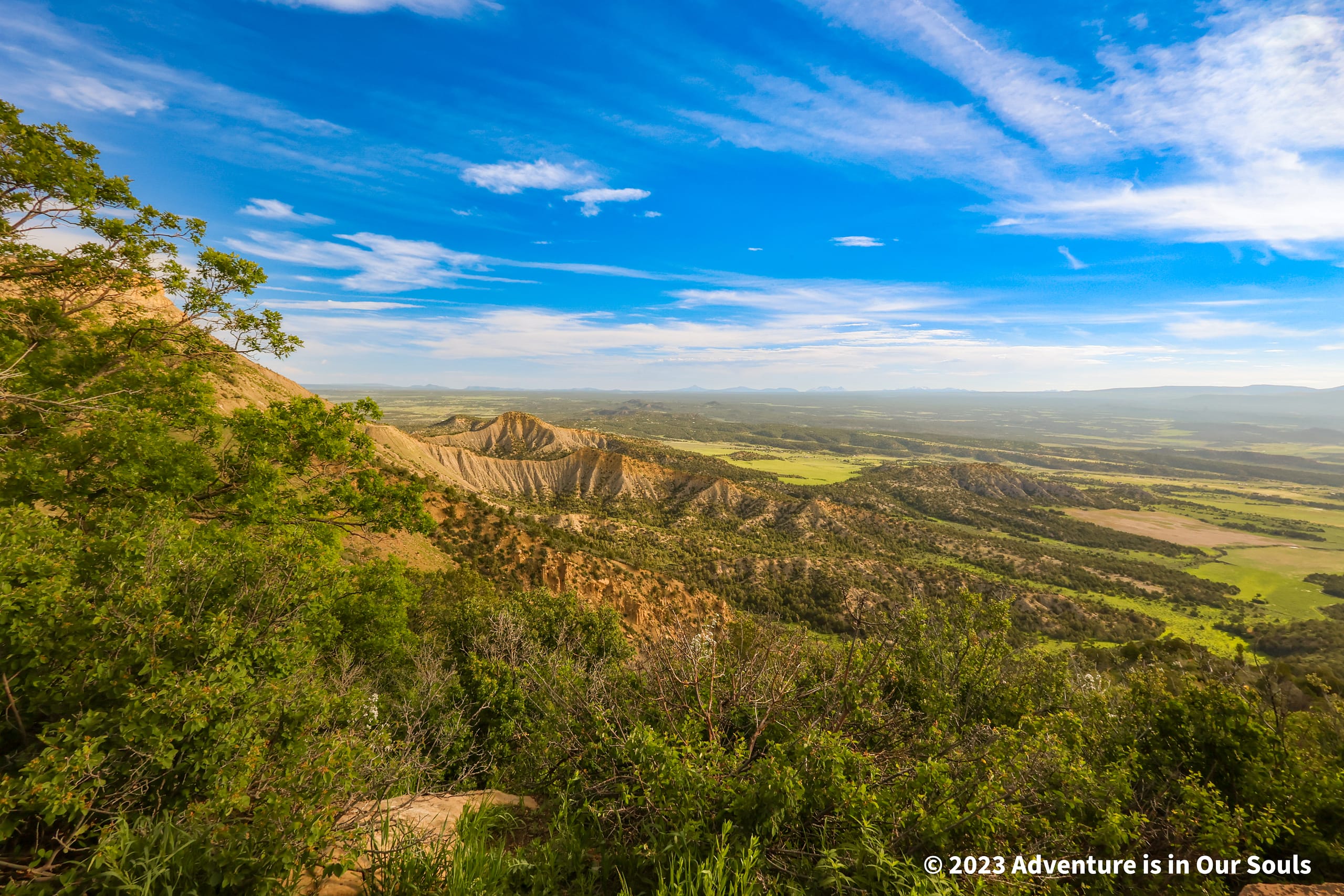
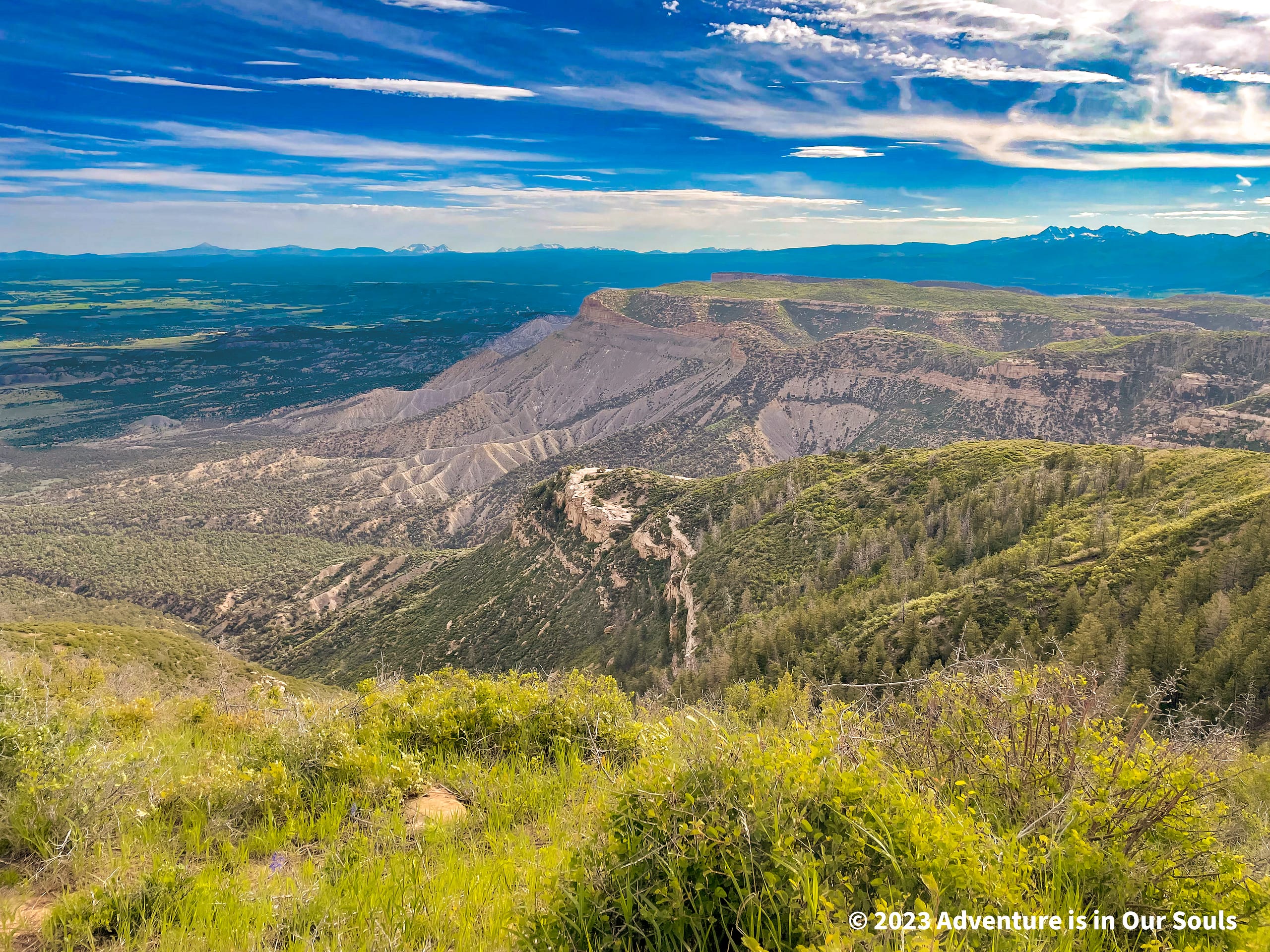
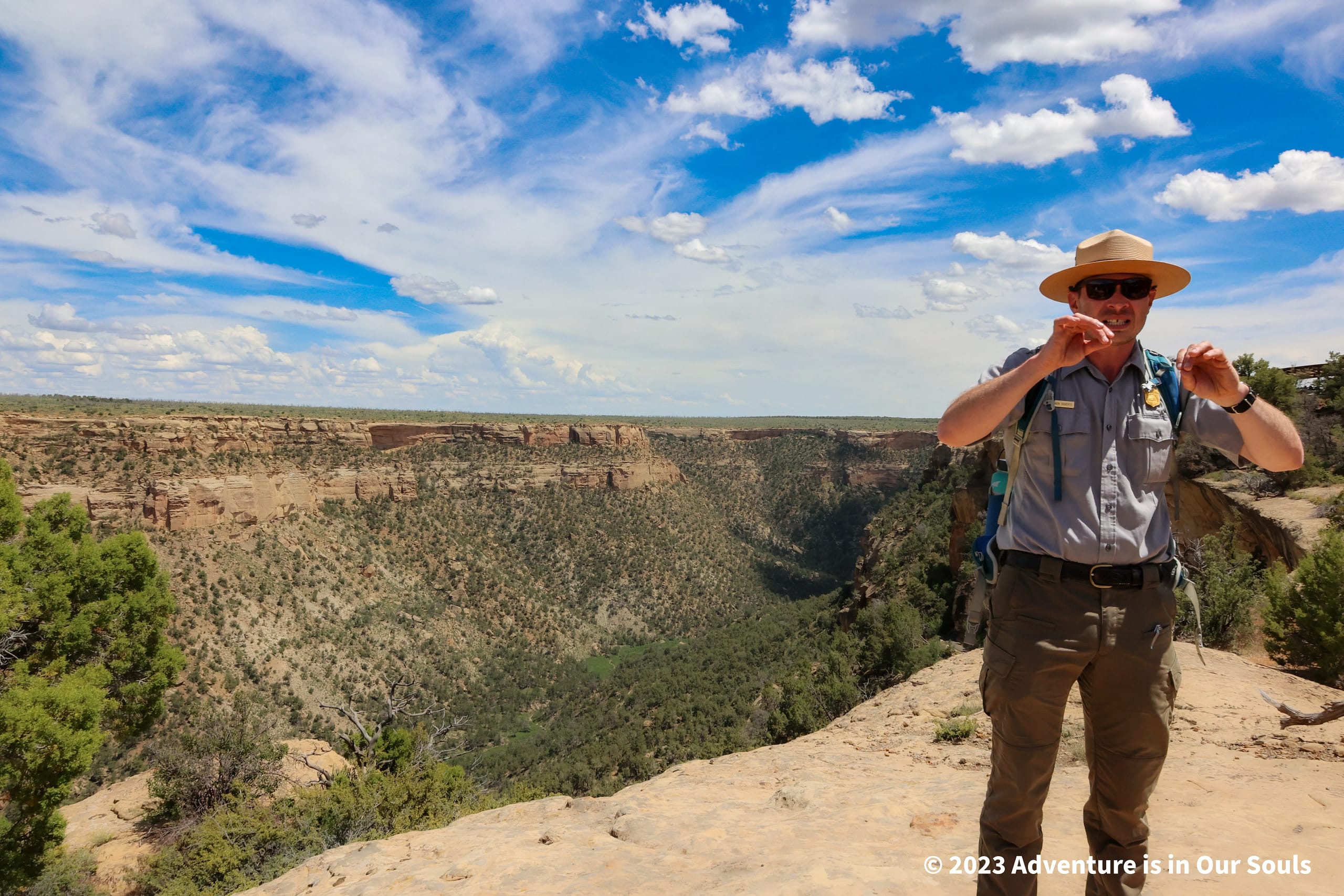
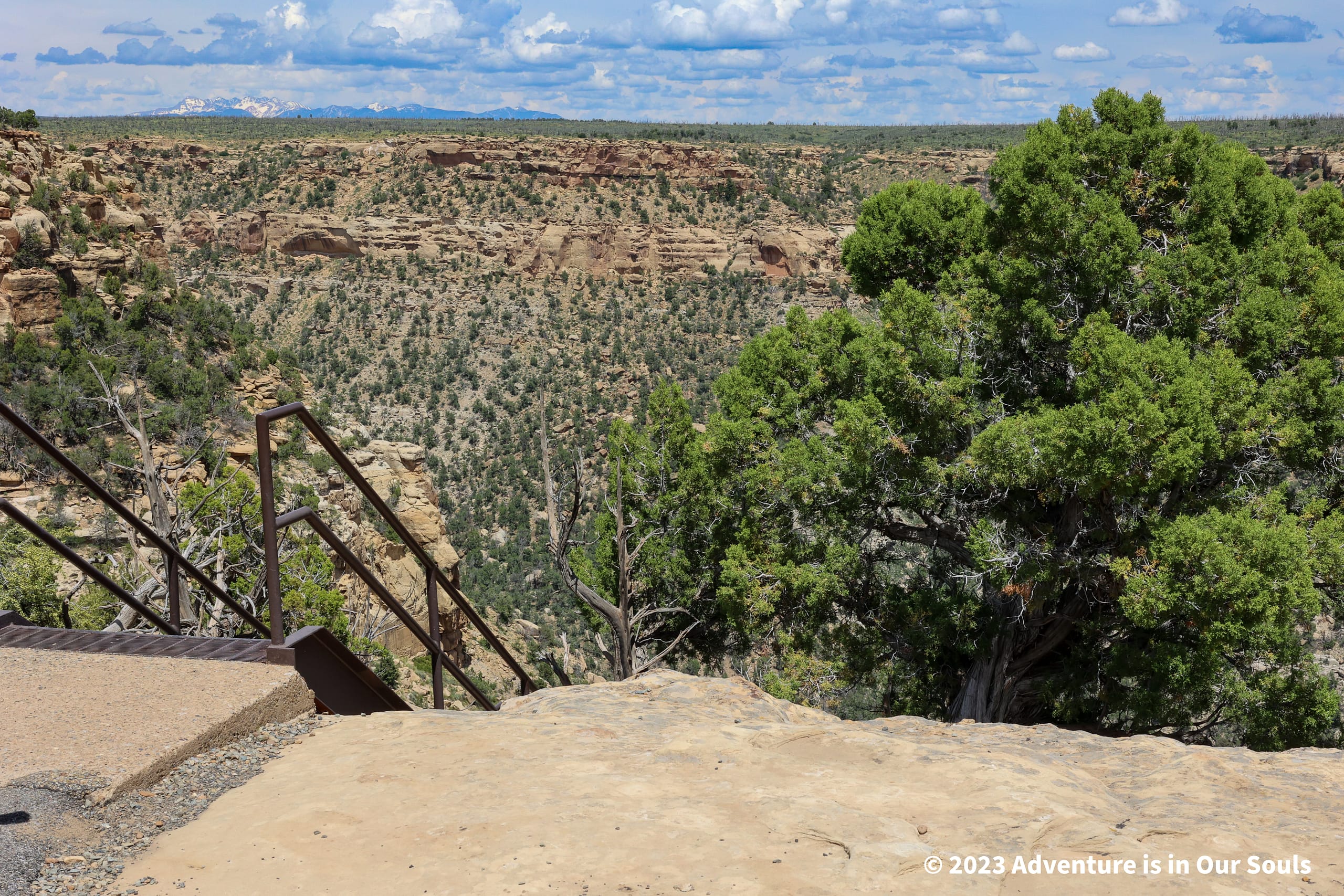
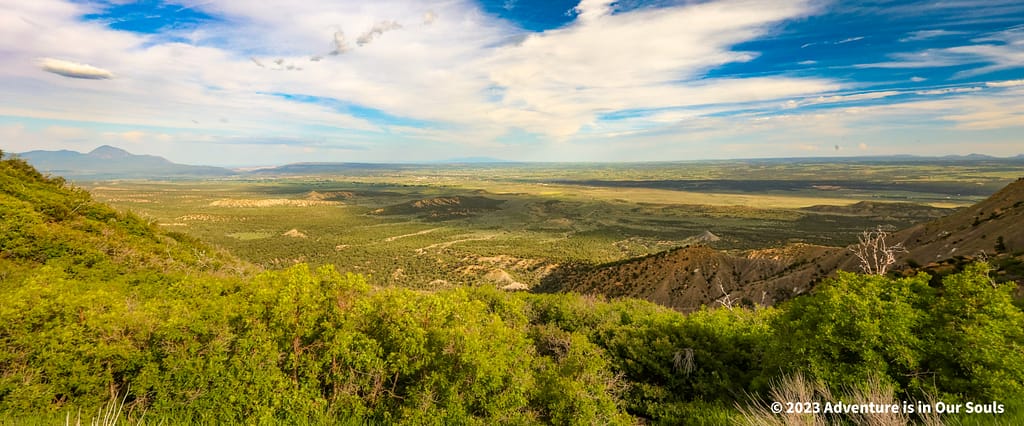
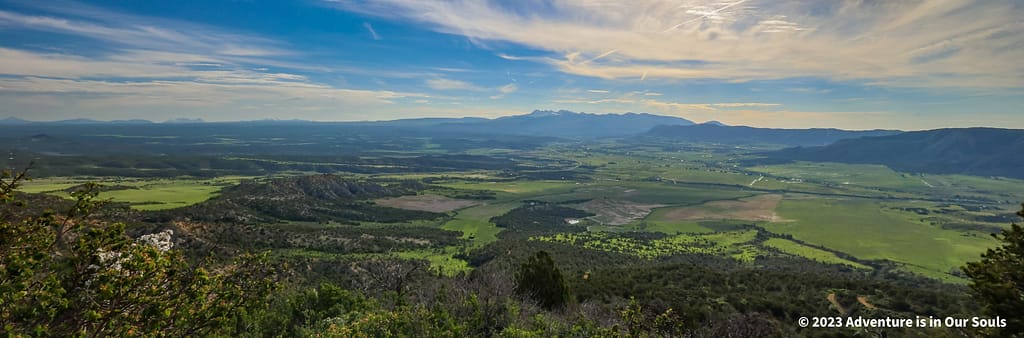
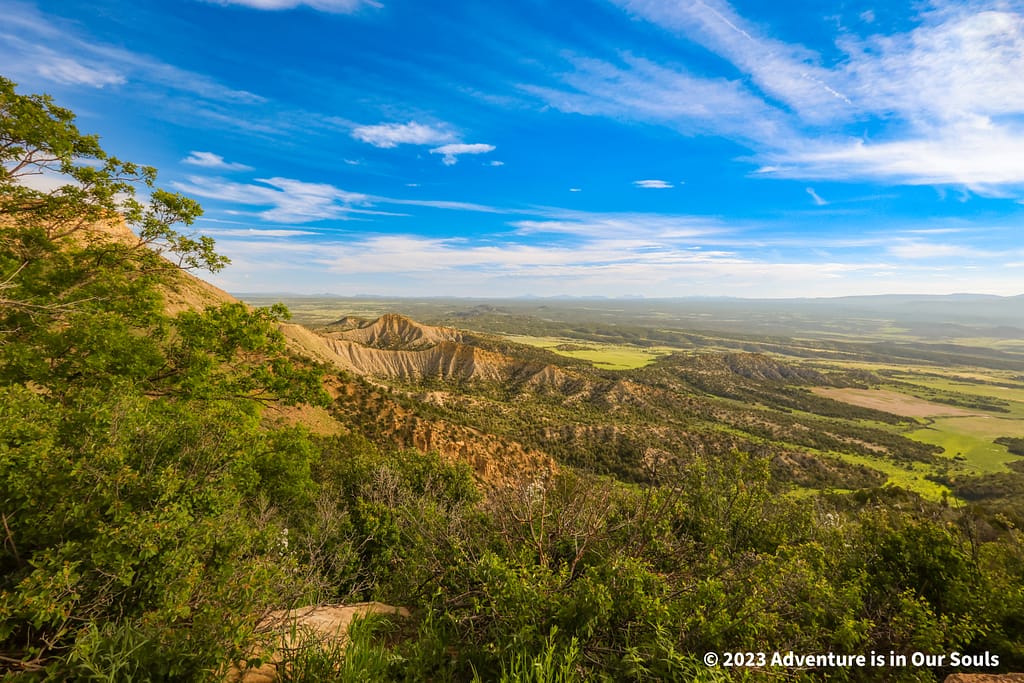
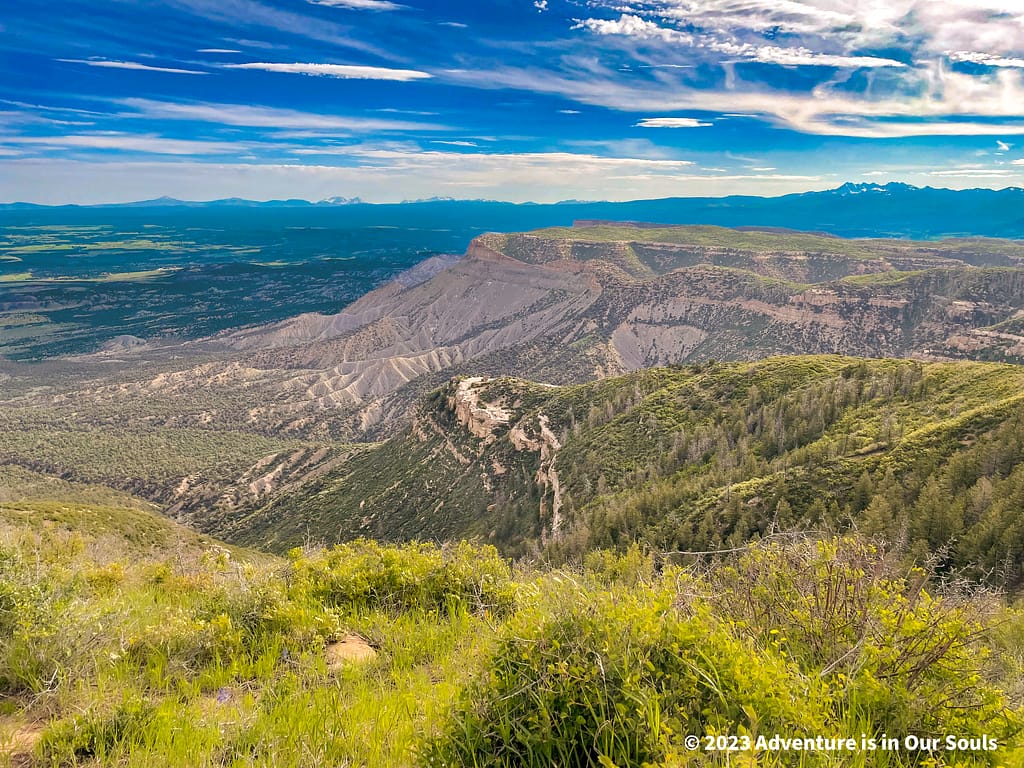
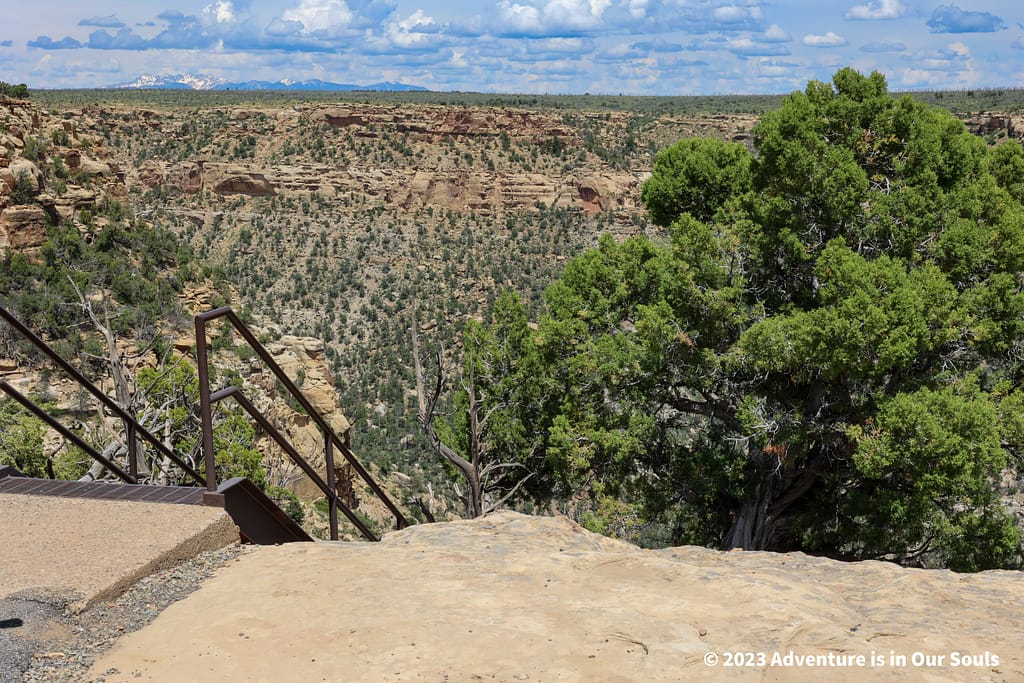
As you drive up the winding mountain road to the Mesa Top Loop, you will pass several overlooks. Stop at some of these. The views are amazing!! This is the Four Corners Region, so you can actually see four different states! The temperature up on the mountain is significantly colder than it was in Cortez. So bring layers that you can remove as the day goes on!
Montezuma Valley Overlook
The views from Montezuma Valley Overlook are your first taste of the beauty of Montezuma Valley. Between 600 and 1280 CE, hundreds of villages and farming communities thrived on the mesas, plateaus, and canyons of this area. Archaeologists estimate that as many as 35,000 Ancestral Puebloan people lived in this region during the 1200s.
Park Point Overlook
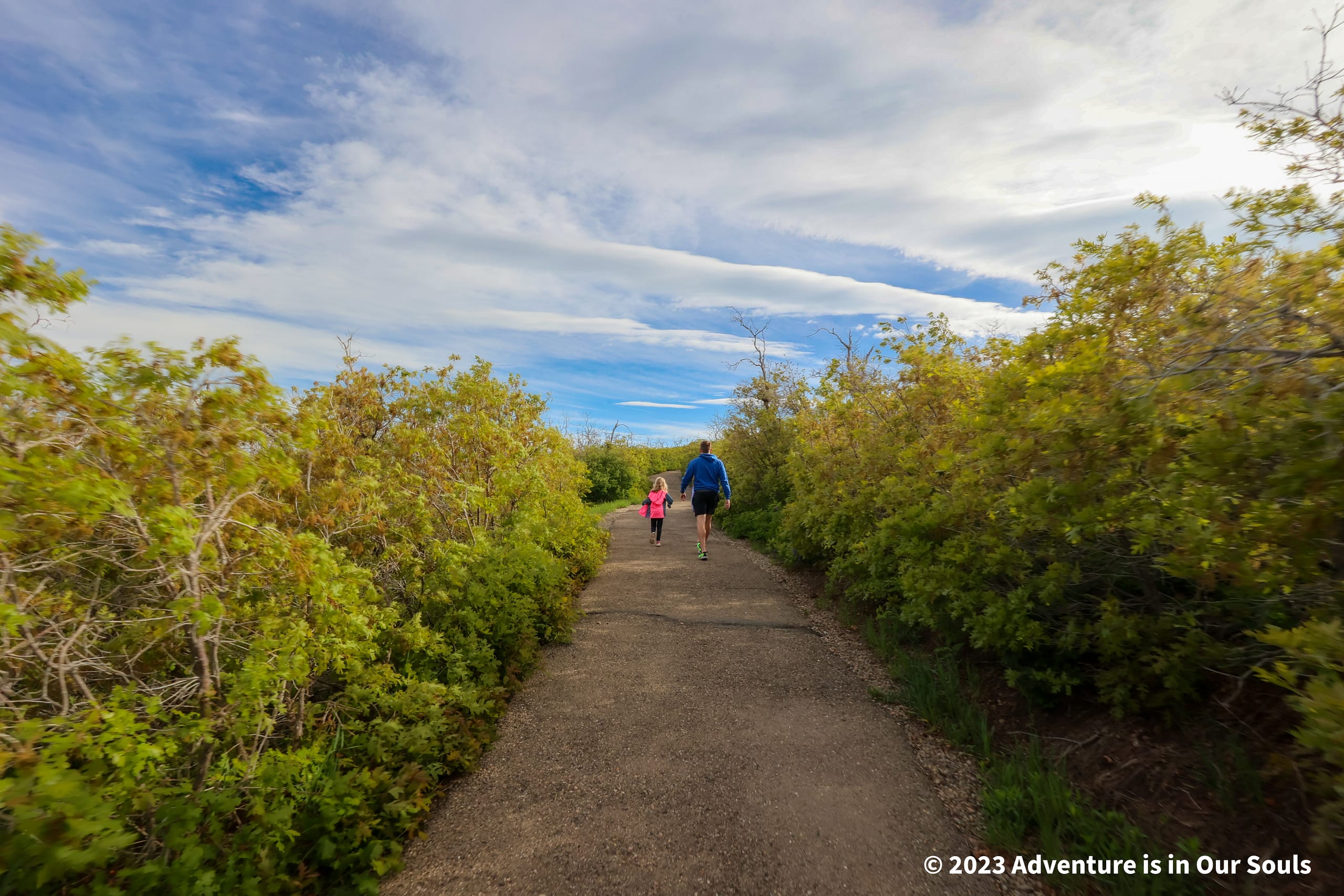
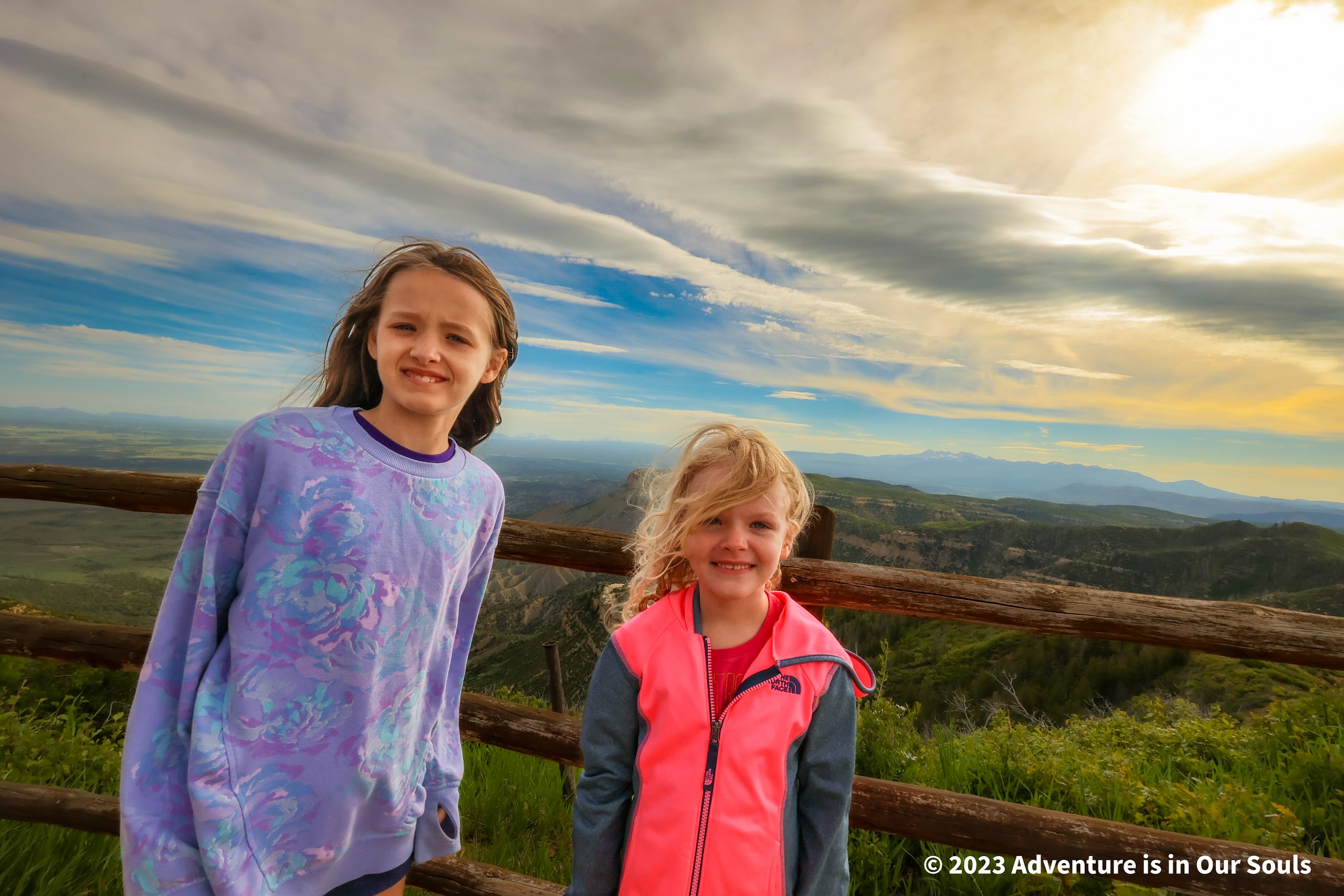
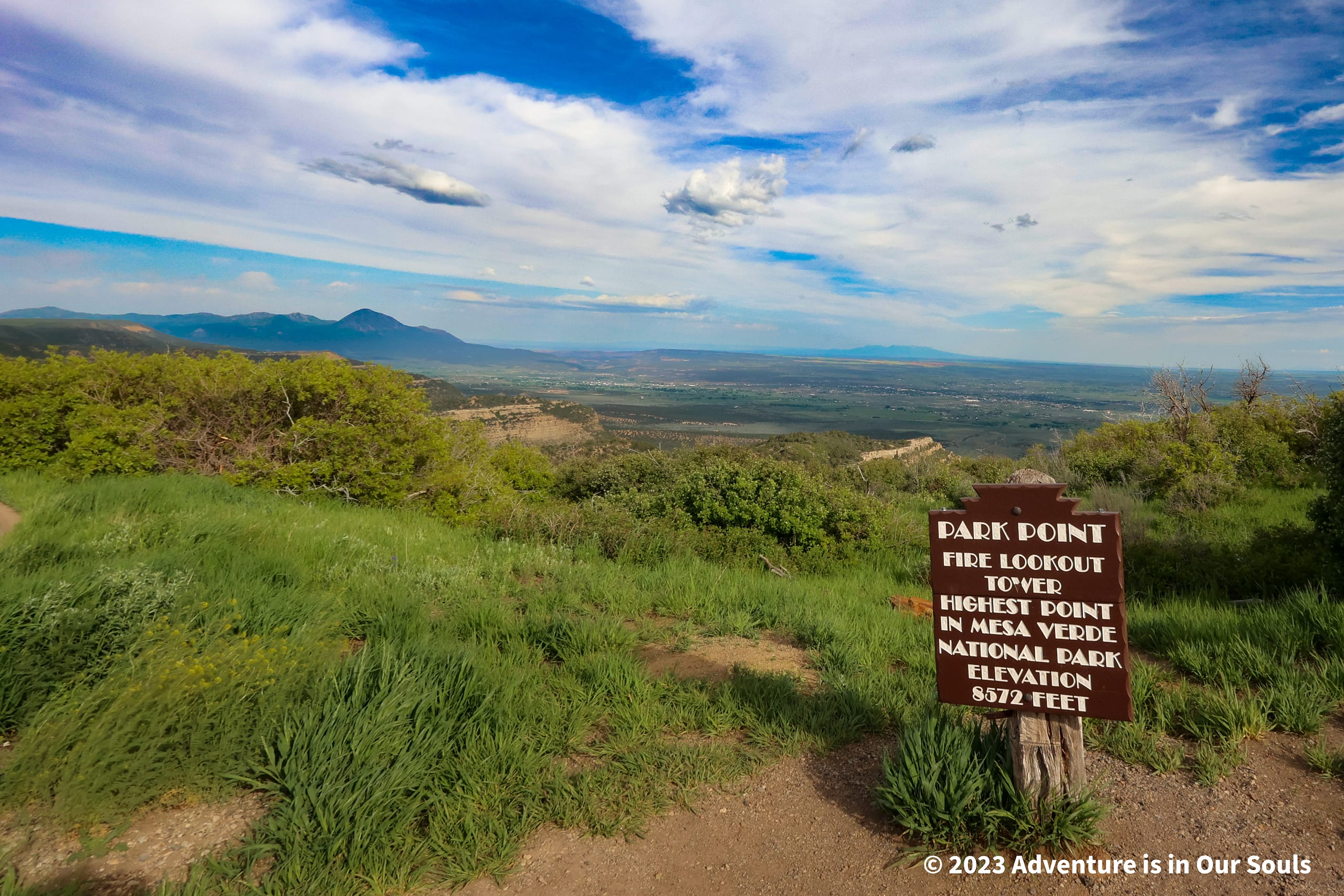
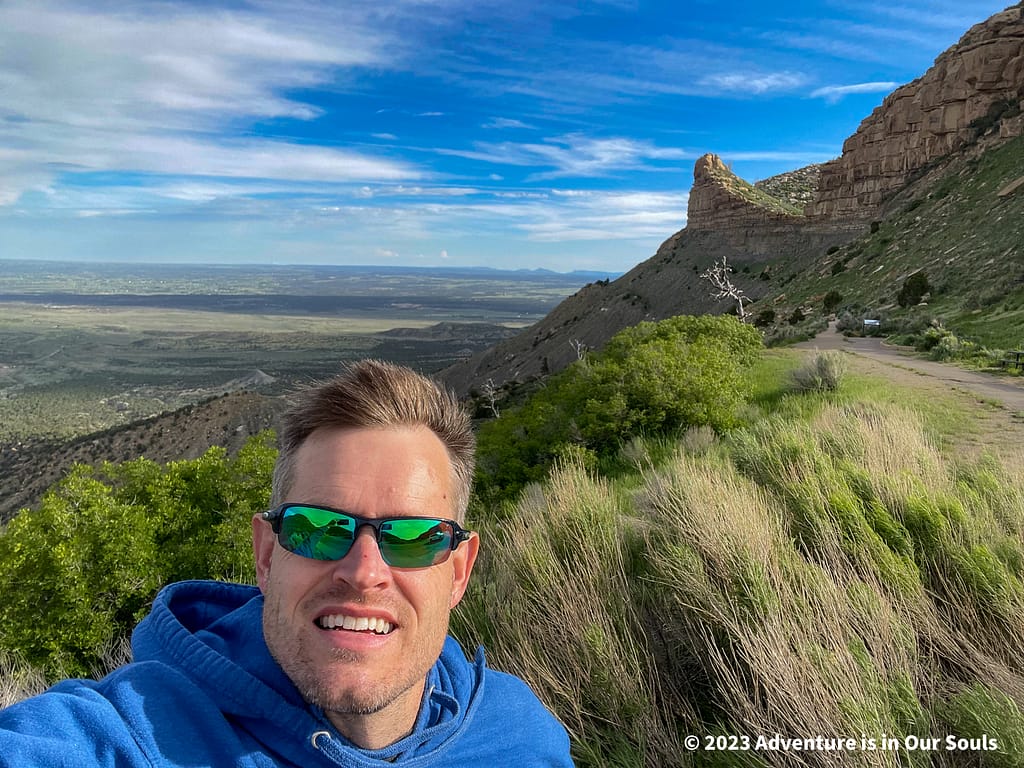
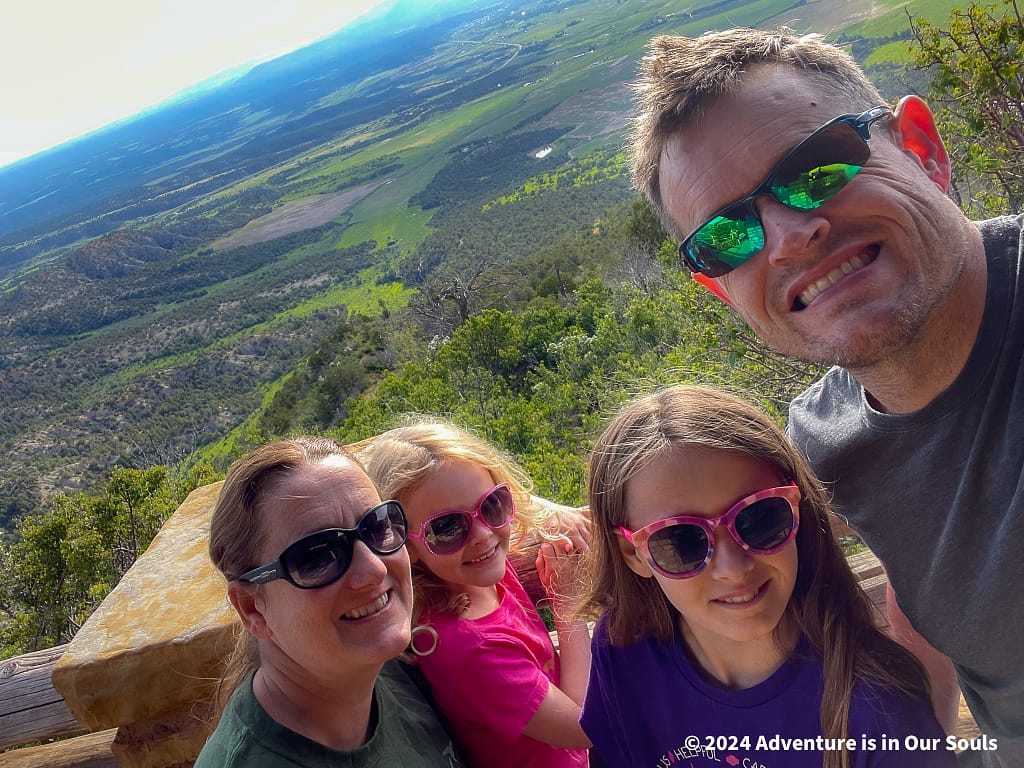
Hike up to Park Point Overlook, the highest point in Mesa Verde. At 8,572 feet above sea level, the wind can be brutal, but the views were amazing! To the north, the 13,000 and 14,000-foot peaks of the San Juan Mountains are visible. To the south, the high deserts of New Mexico stretch out across rocky canyons. To the West is Sleeping Ute Mountain, and to the East lies the La Plata Mountains.
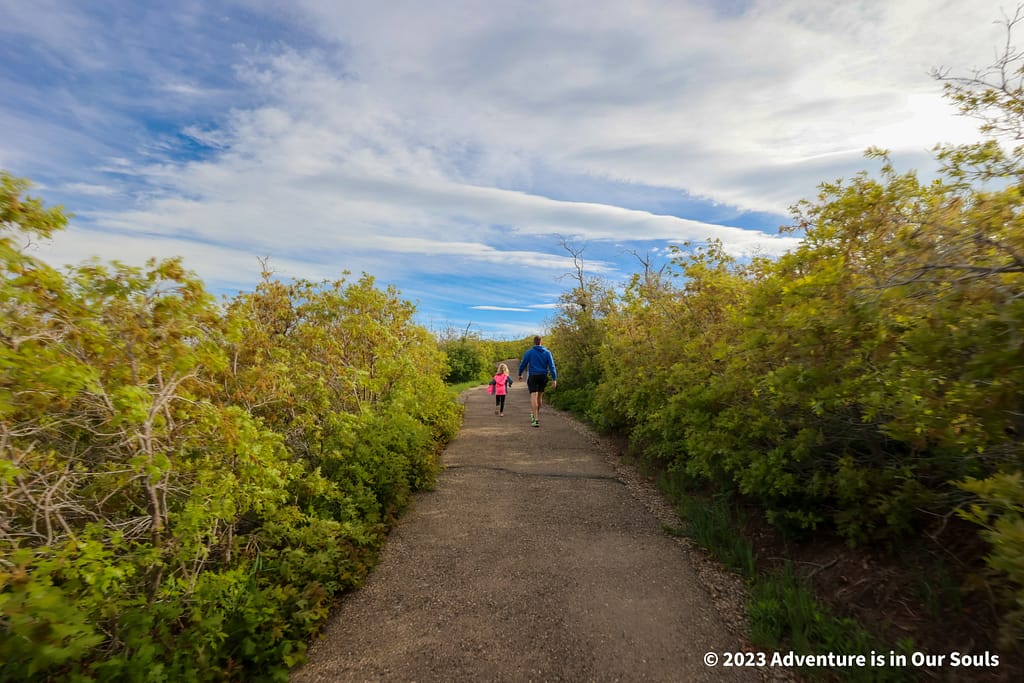
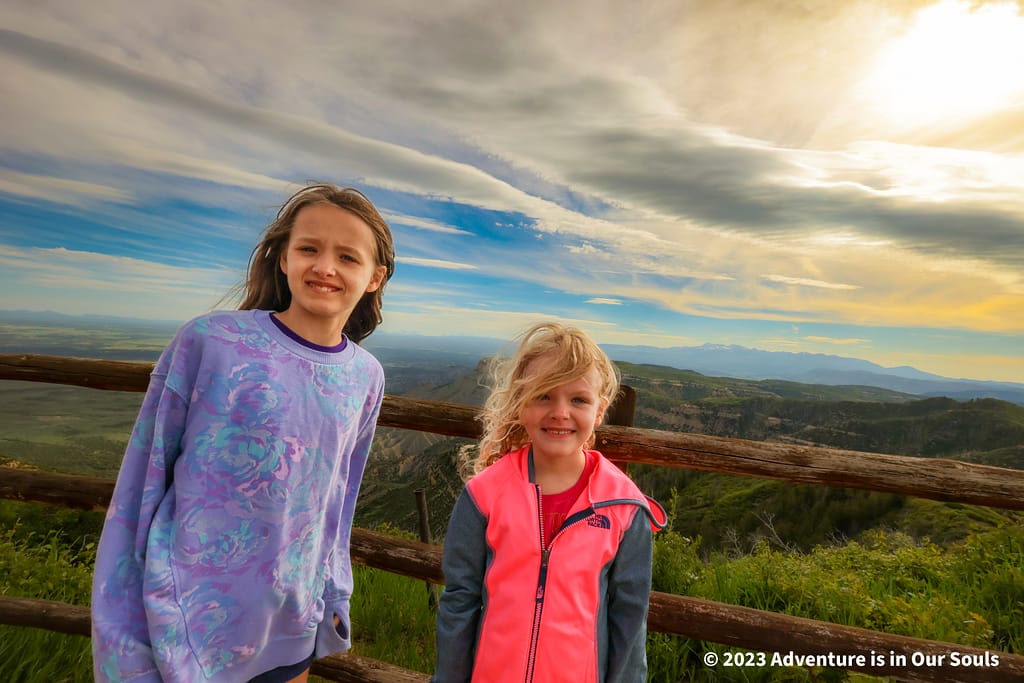
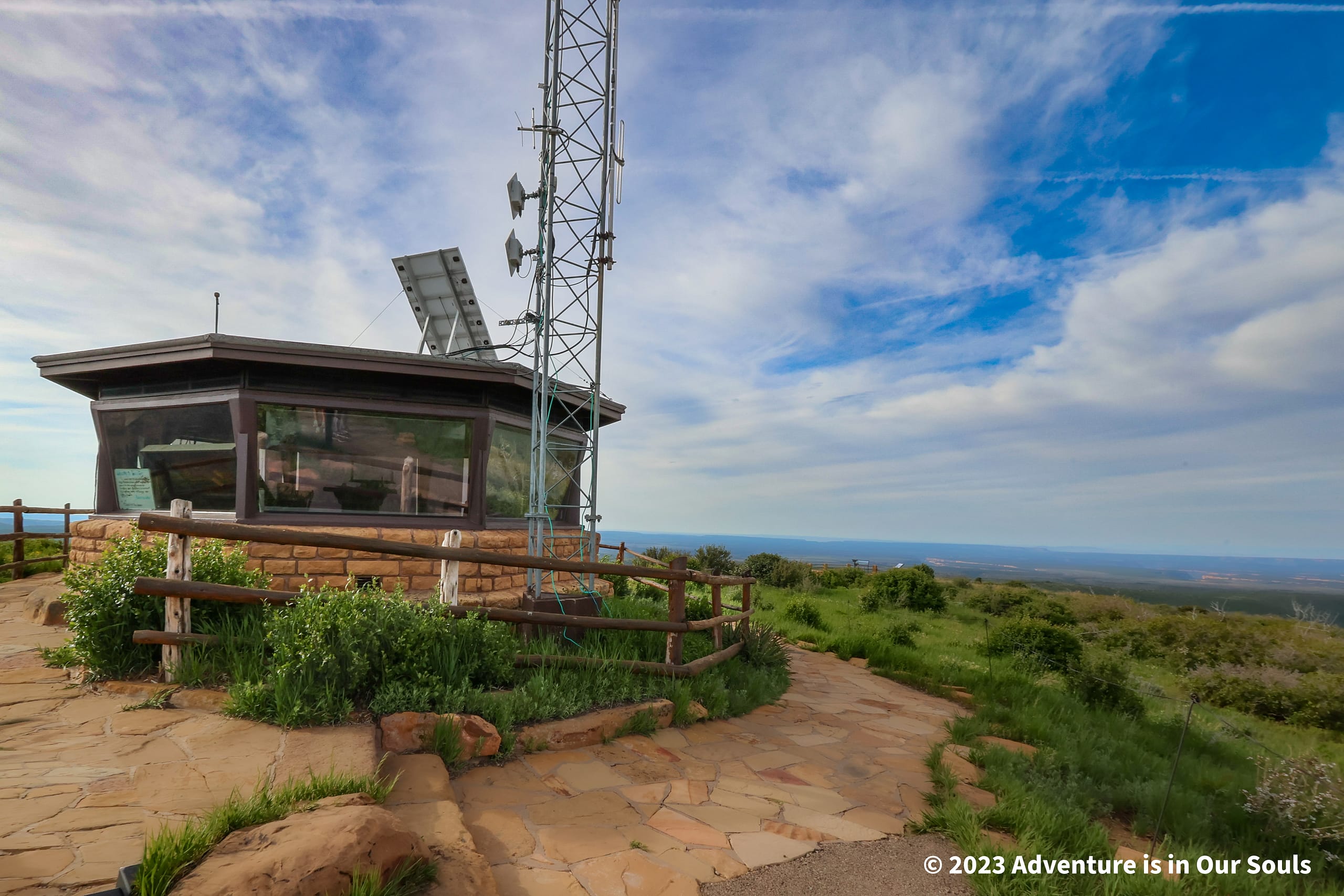
The historic Park Point Fire Lookout sits at the highest point. It is still used today by the park during fire season to communicate weather and fire information.
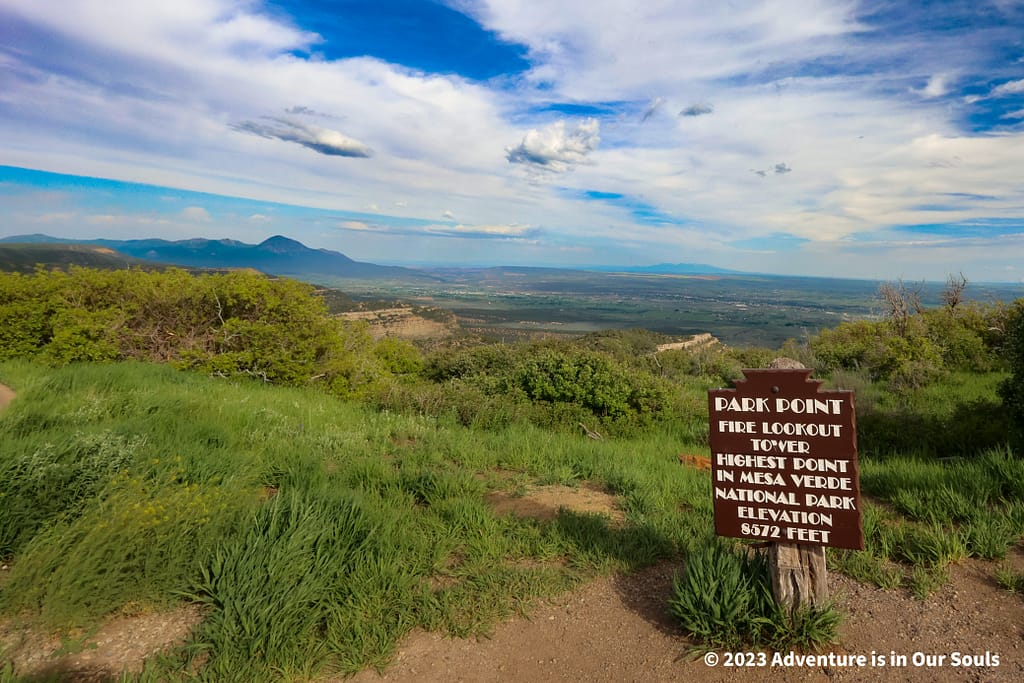
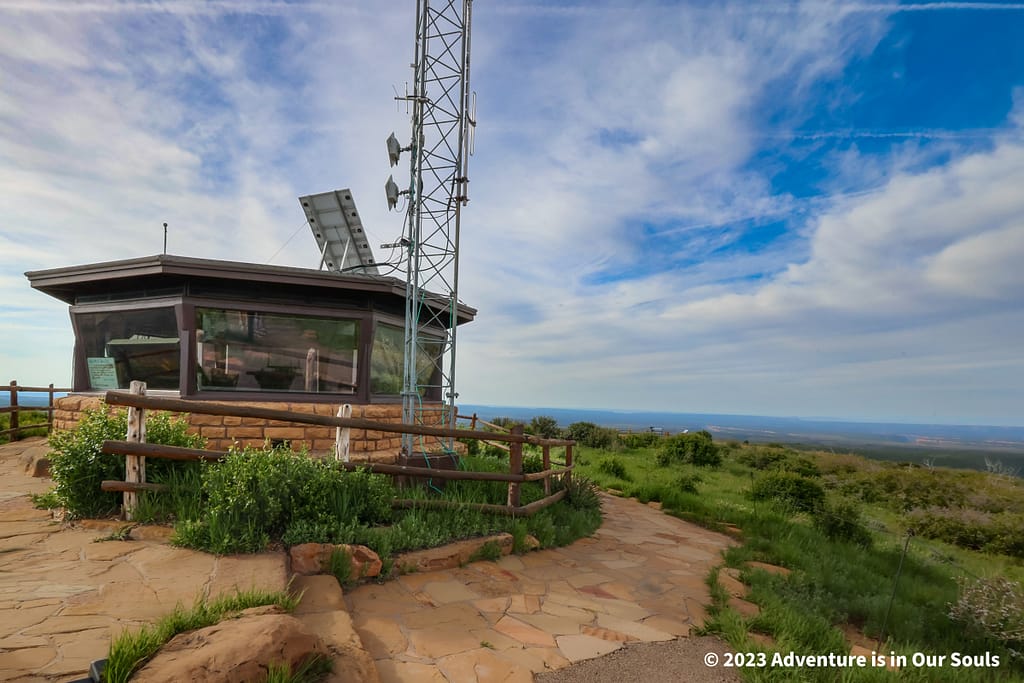
You can see the burned remains of pinon and juniper trees stretching out from the newer greenery around Mesa Verde. These are the remains from the 2002 fire that burned for over a month and consumed over 2600 acres. Pinon and juniper trees are slow-growing, so many areas still look a little bare after the fire.
Incredible Things to Do in Mesa Verde National Park: Watch the Evolution From Pithouses To Pueblos
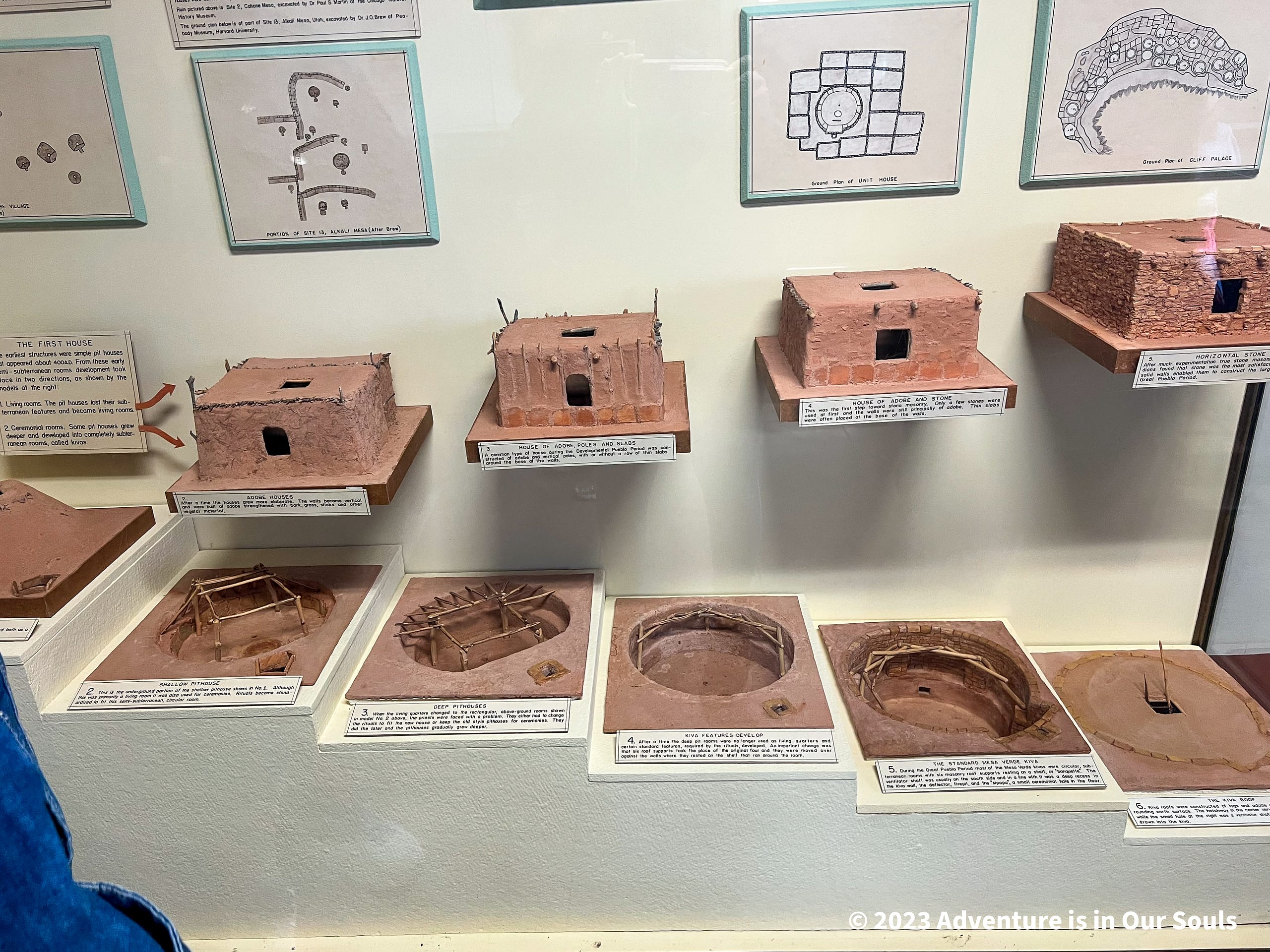
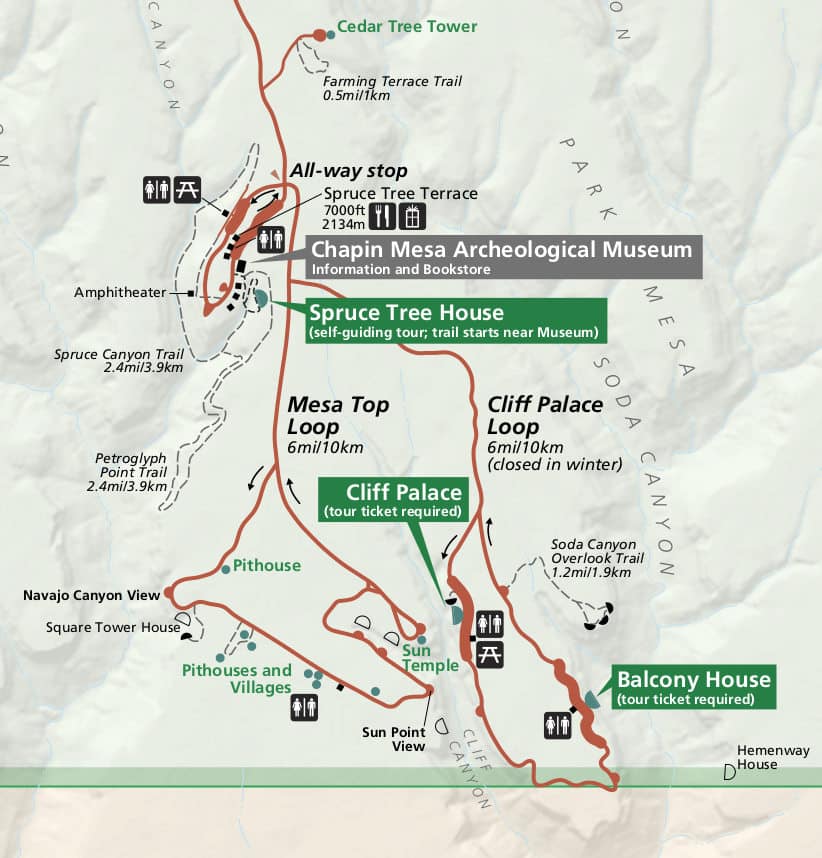
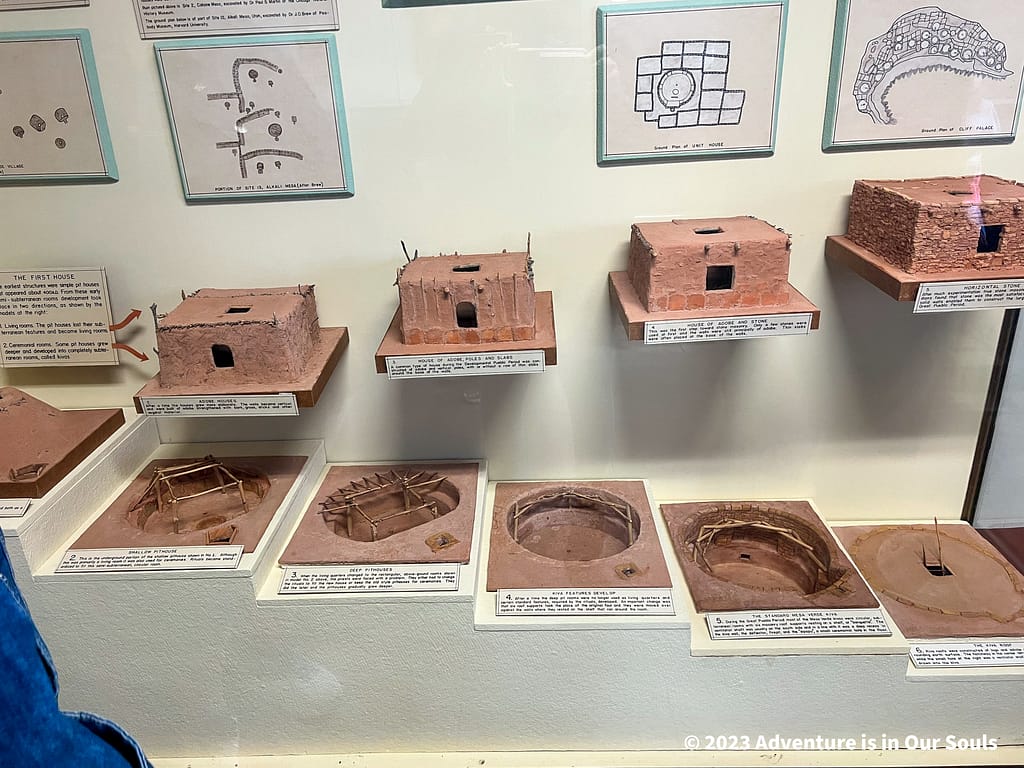
There is a lot of early Ancestral Puebloan history to explore before jumping straight into the cliff dwellings. If you start at the beginning, start with the Mesa Top Loop. This is a one-way loop that takes you through the early evolution of dwellings. Here, you explore the early homes of the Ancestral Puebloan people as we follow the evolution from pithouses to pueblos to cliff dwellings. It is a lot of history, which I find fascinating. Buttercup followed some of it, linking back to some things she learned about pithouses. Spider Monkey was only 6, so this part was not very interesting to her.
After 500 CE, the “Basketmakers” moved from the peripheries of the Mesa Verde archaeological area into the center. They grew corn, squash, and beans, supplementing these crops by hunting game and collecting wild plants. After they moved into the center of Mesa Verde, they developed pottery and the bow and arrow.
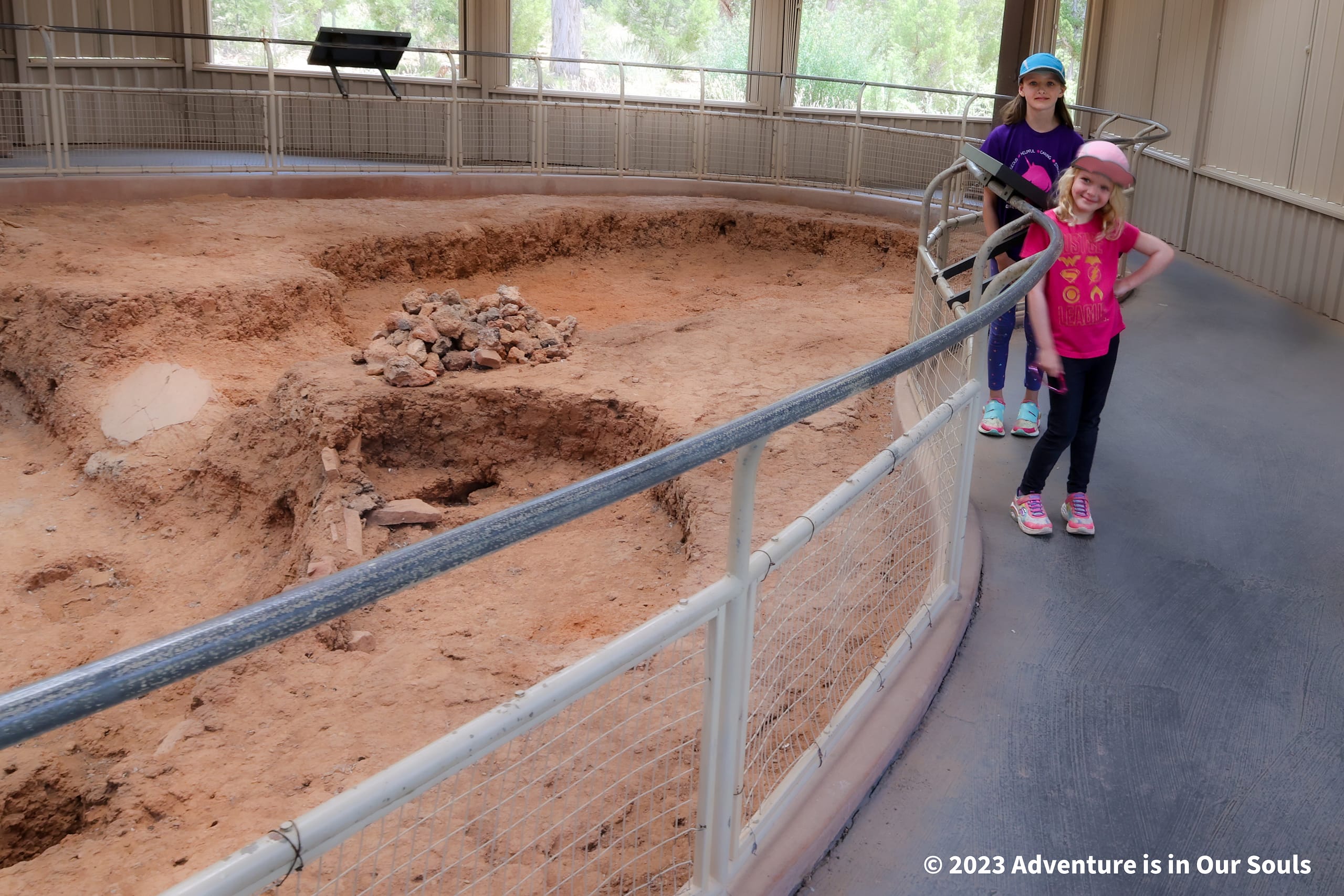
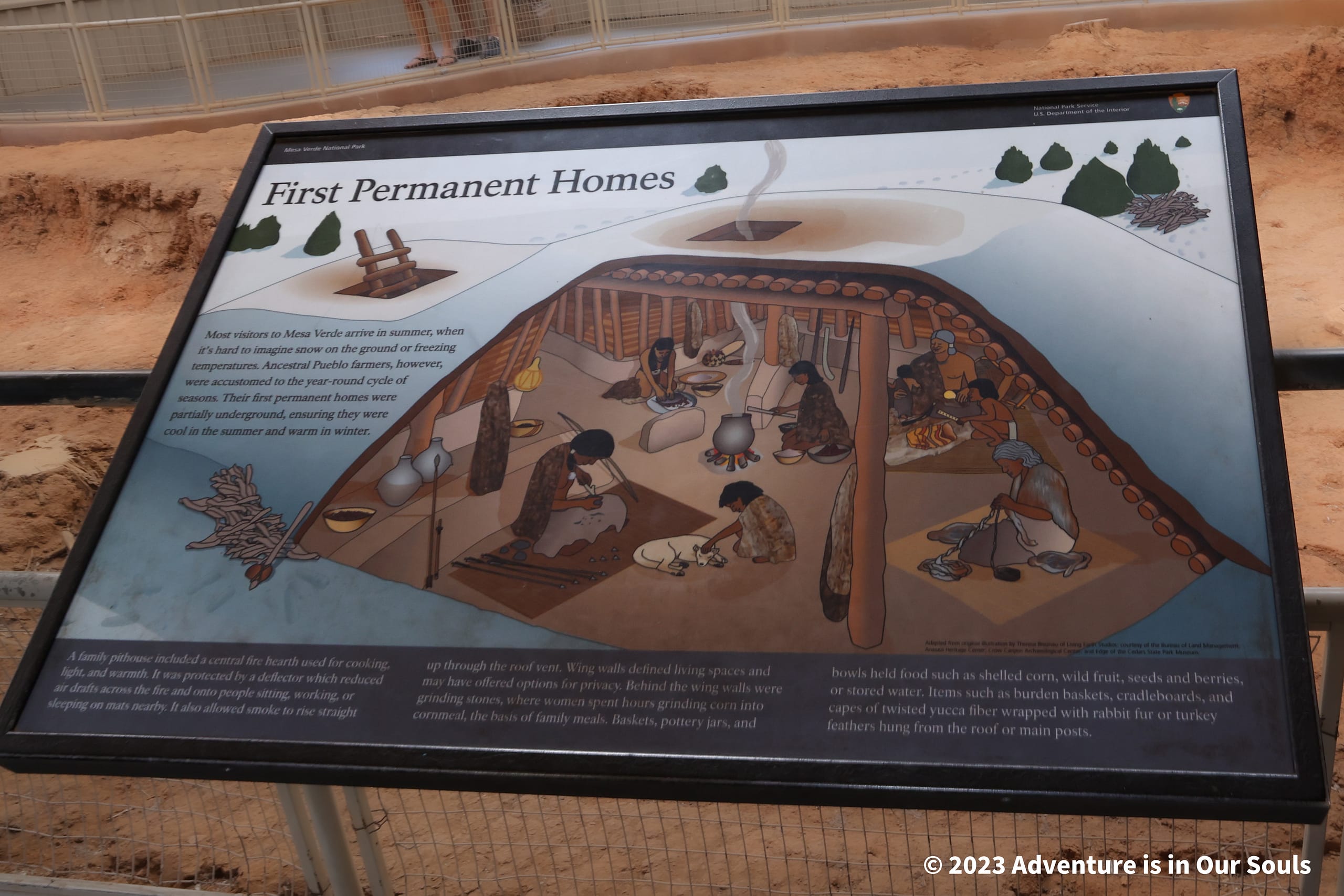
Pithouse Stop
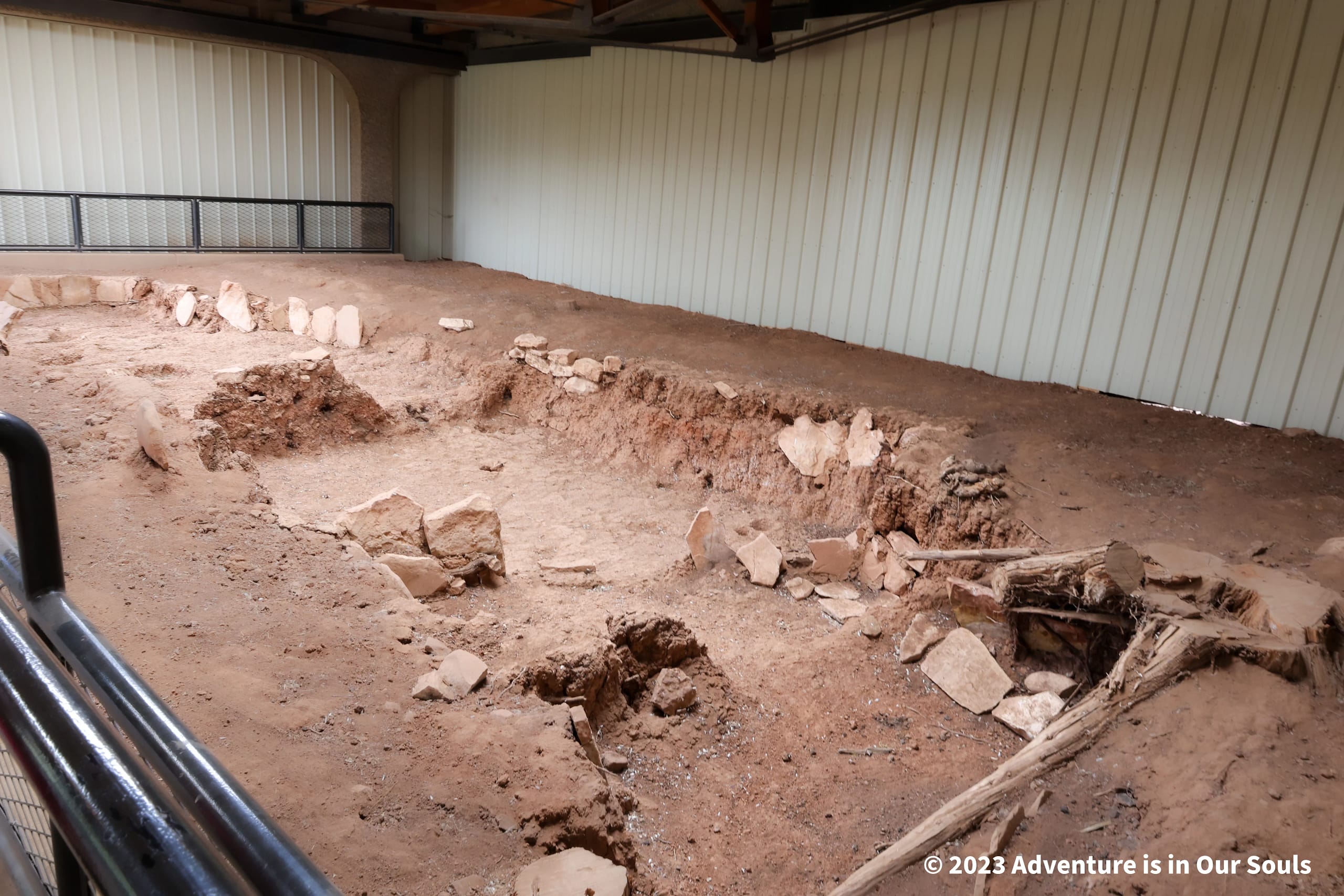
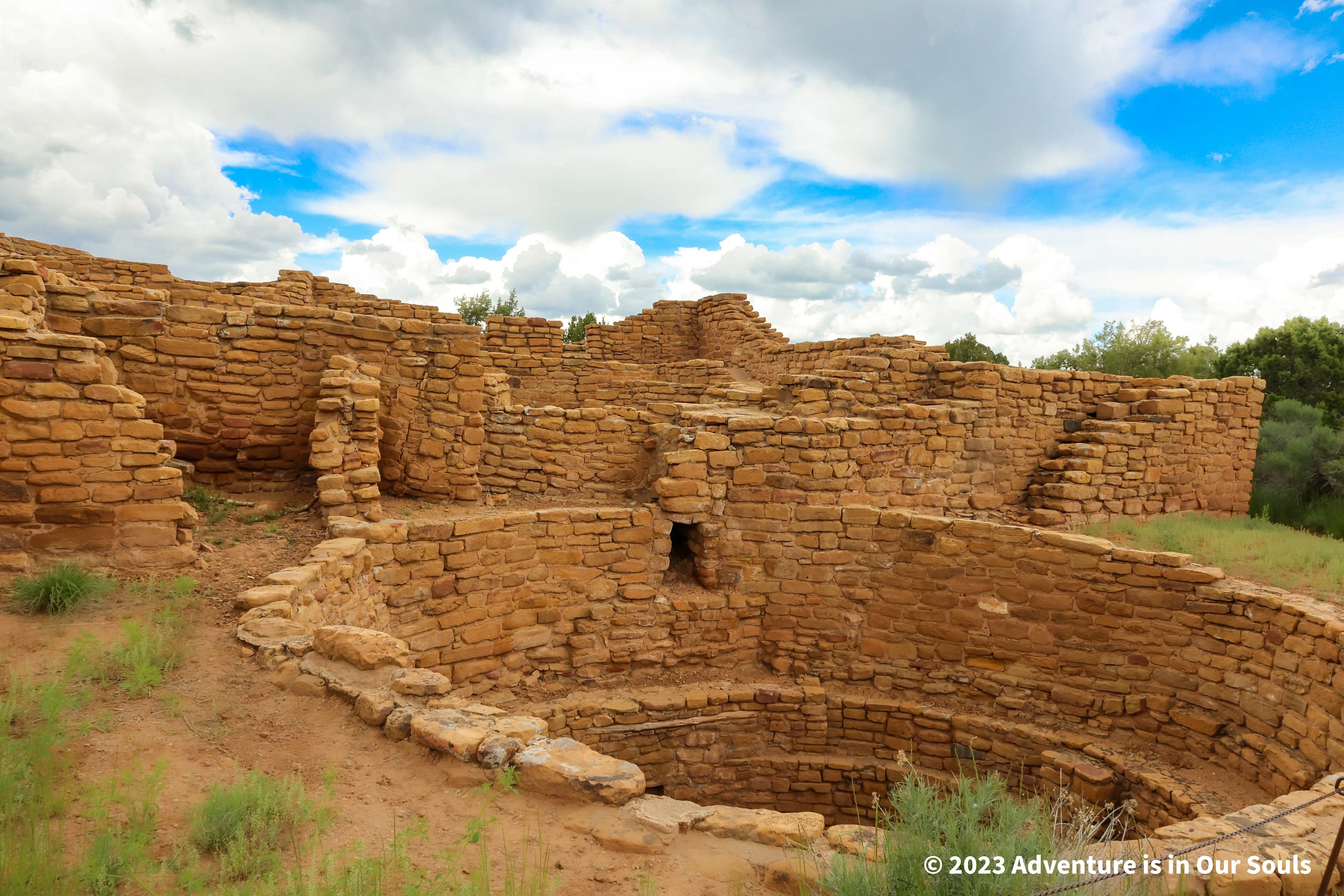
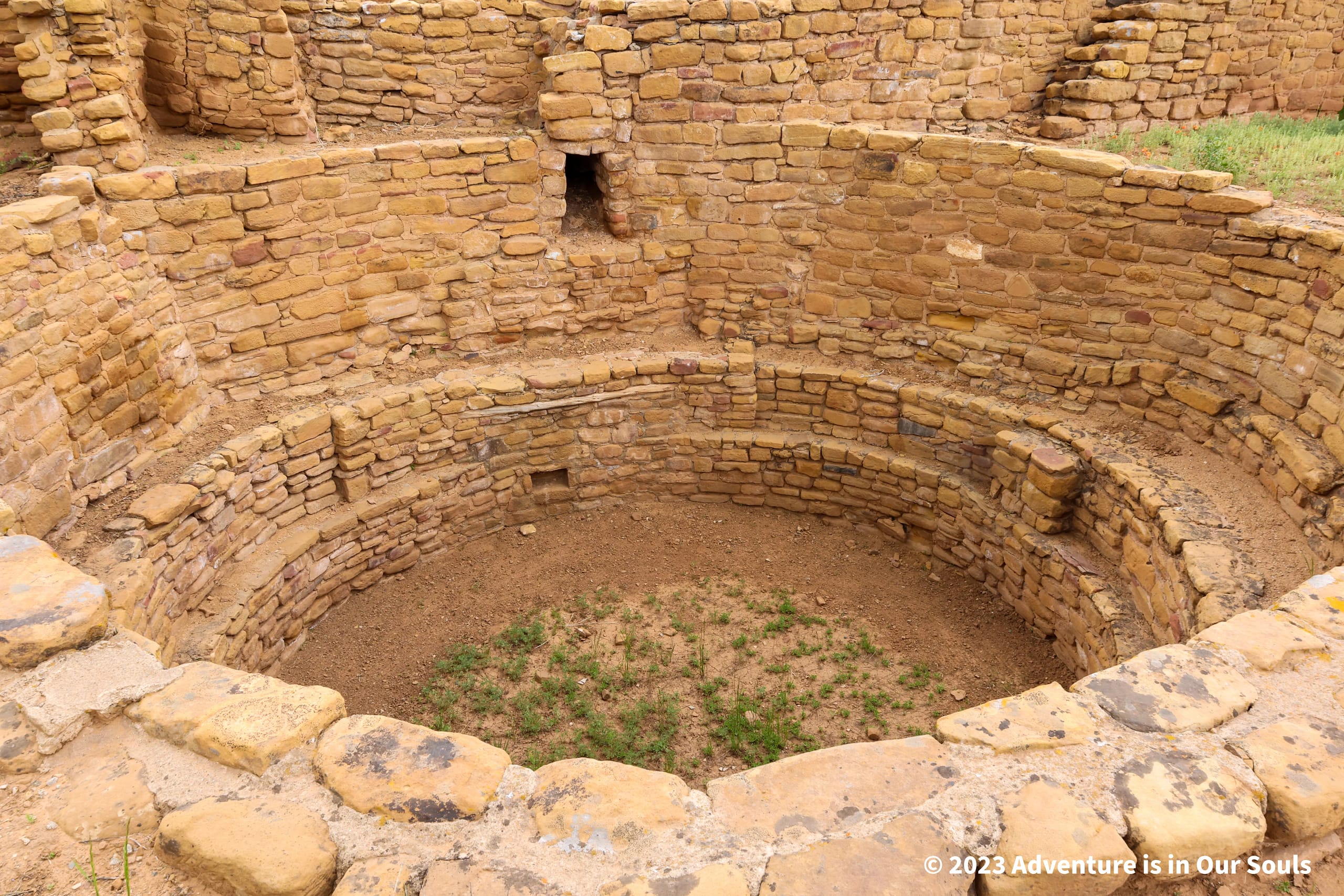
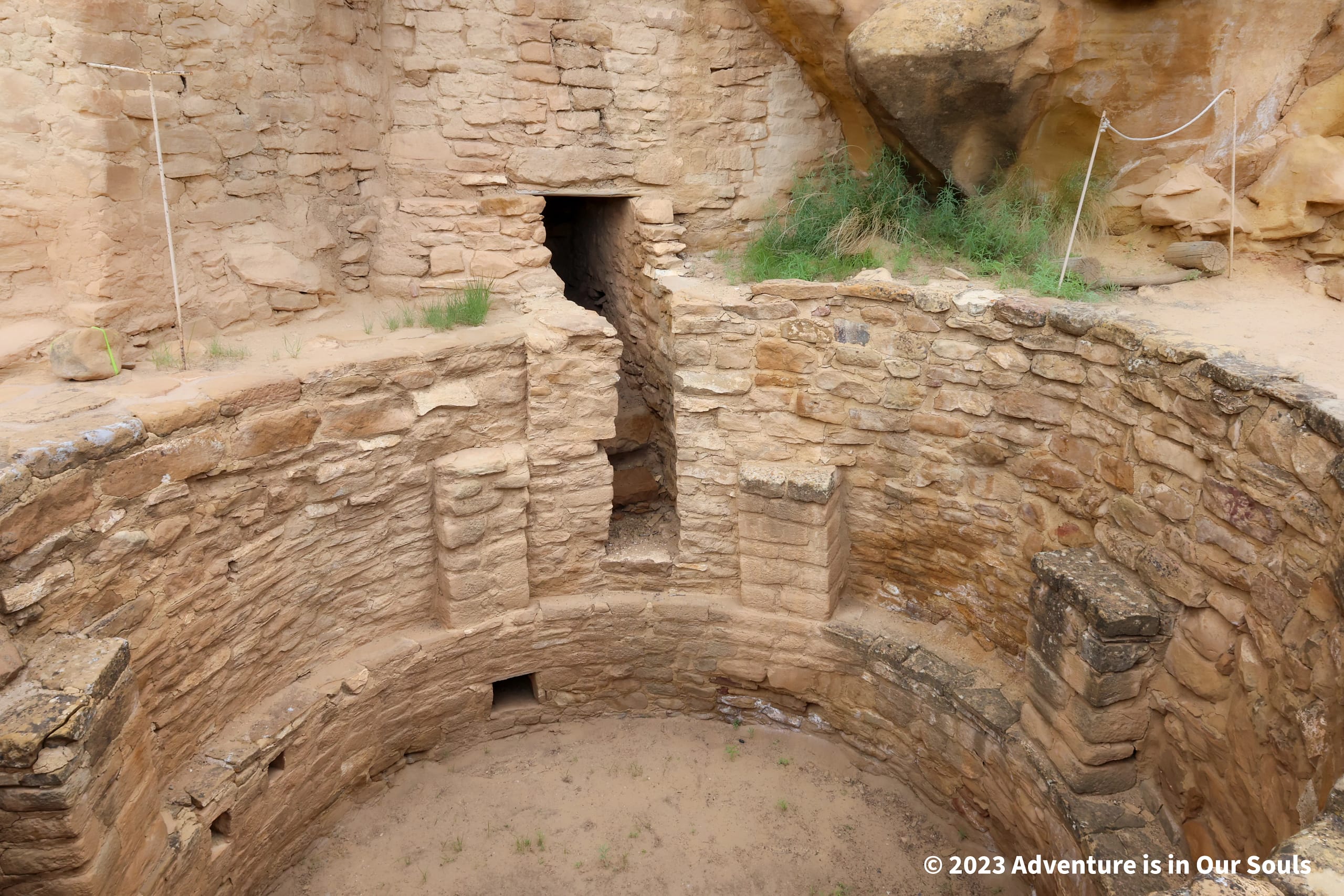
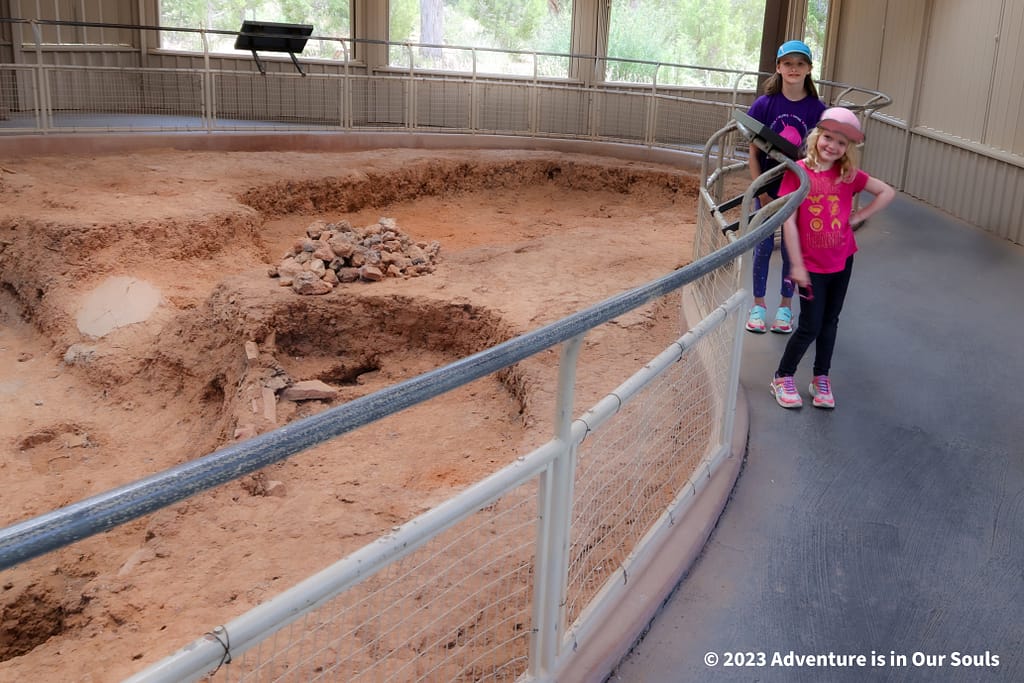
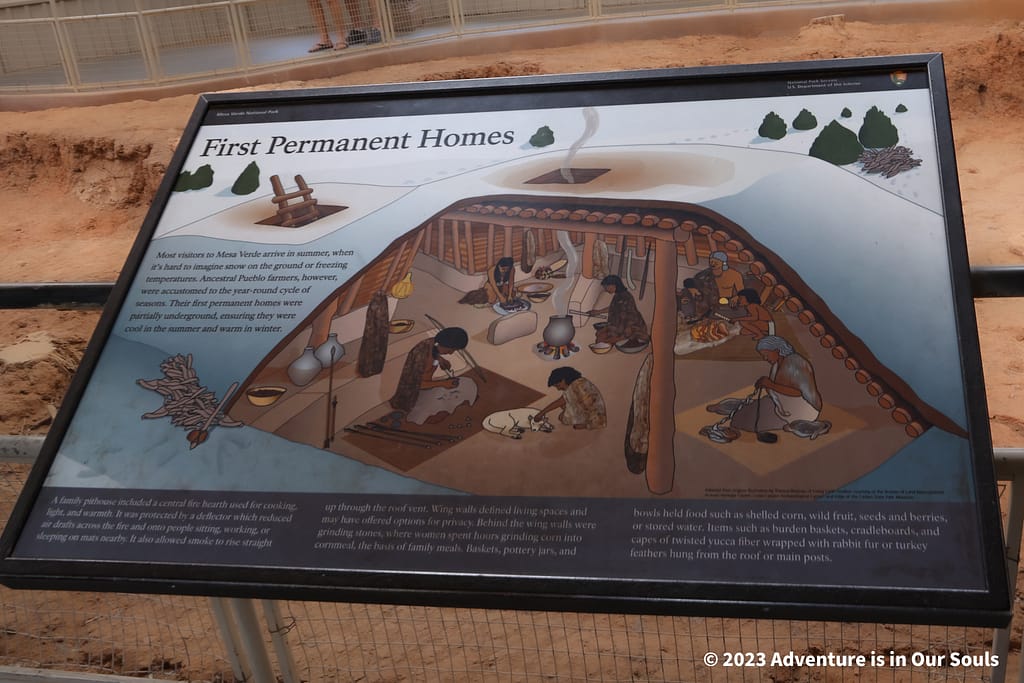
Around 600 CE, they lived in simple pithouses with a hearth, a fire hole, and storage space. They entered through the roof via a ladder. The house was cool in the summer and warm in the winter because it was partly underground. They came together in kivas, which were also located partly underground.
Early Pueblo Village Stop (single-story villages)
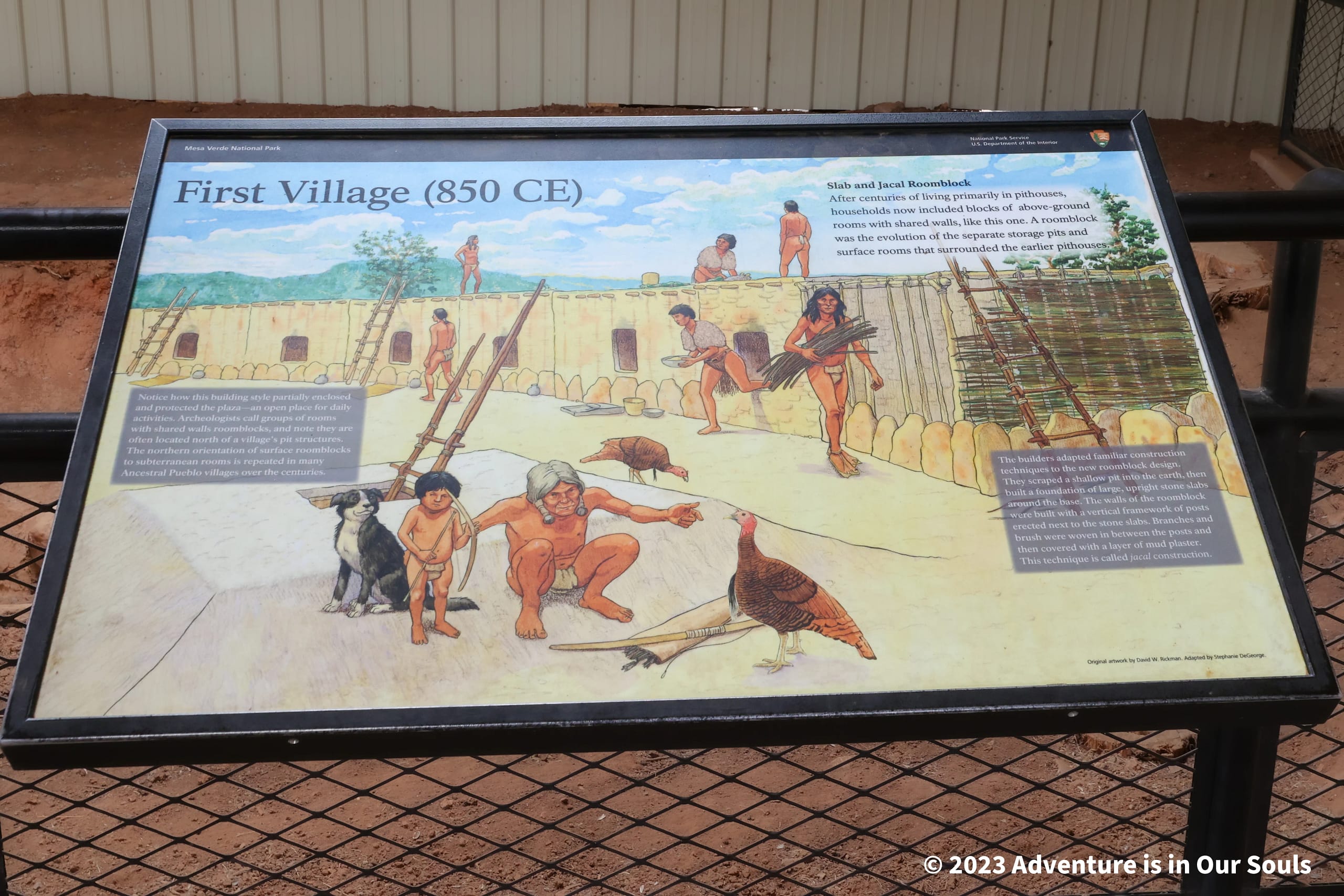
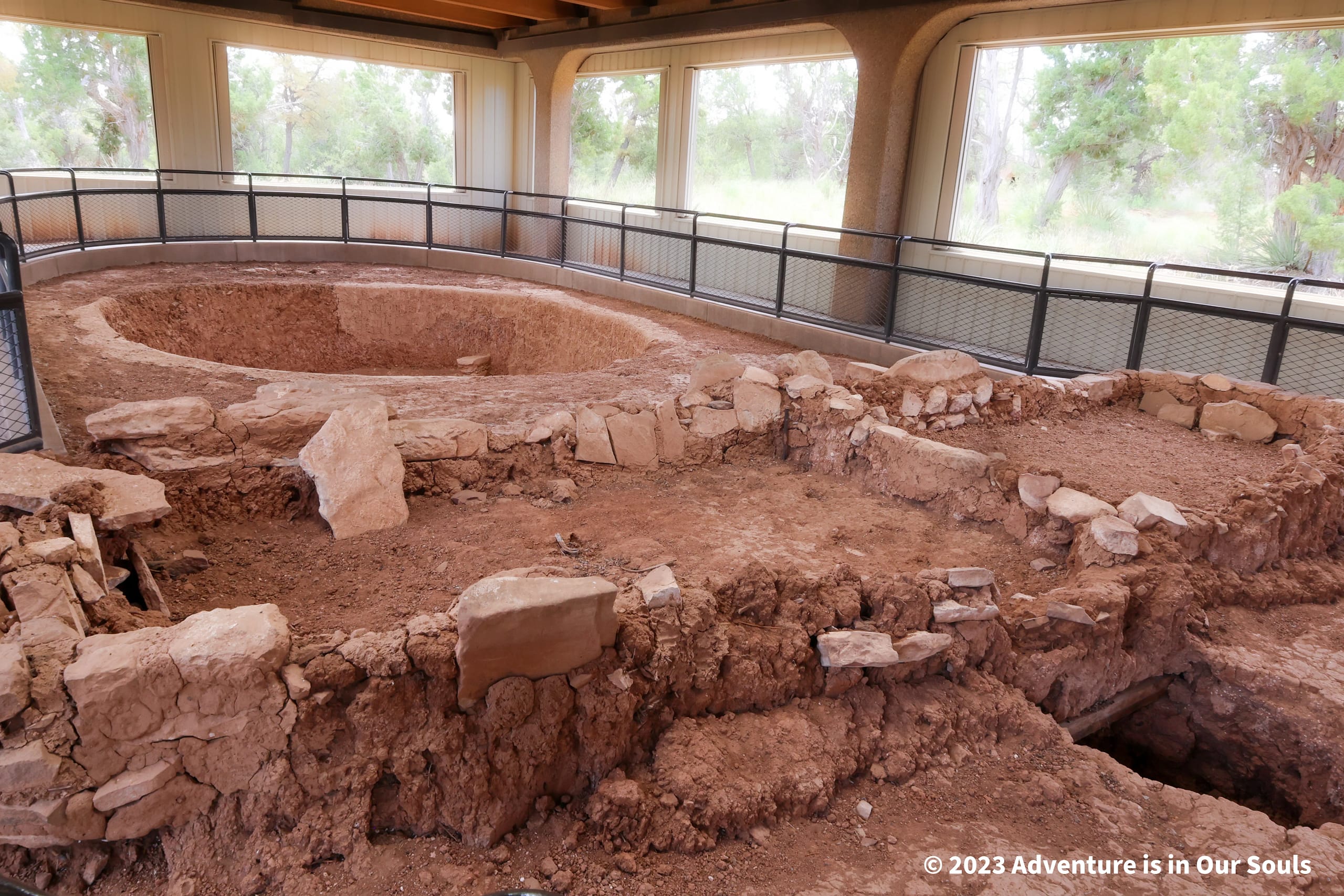
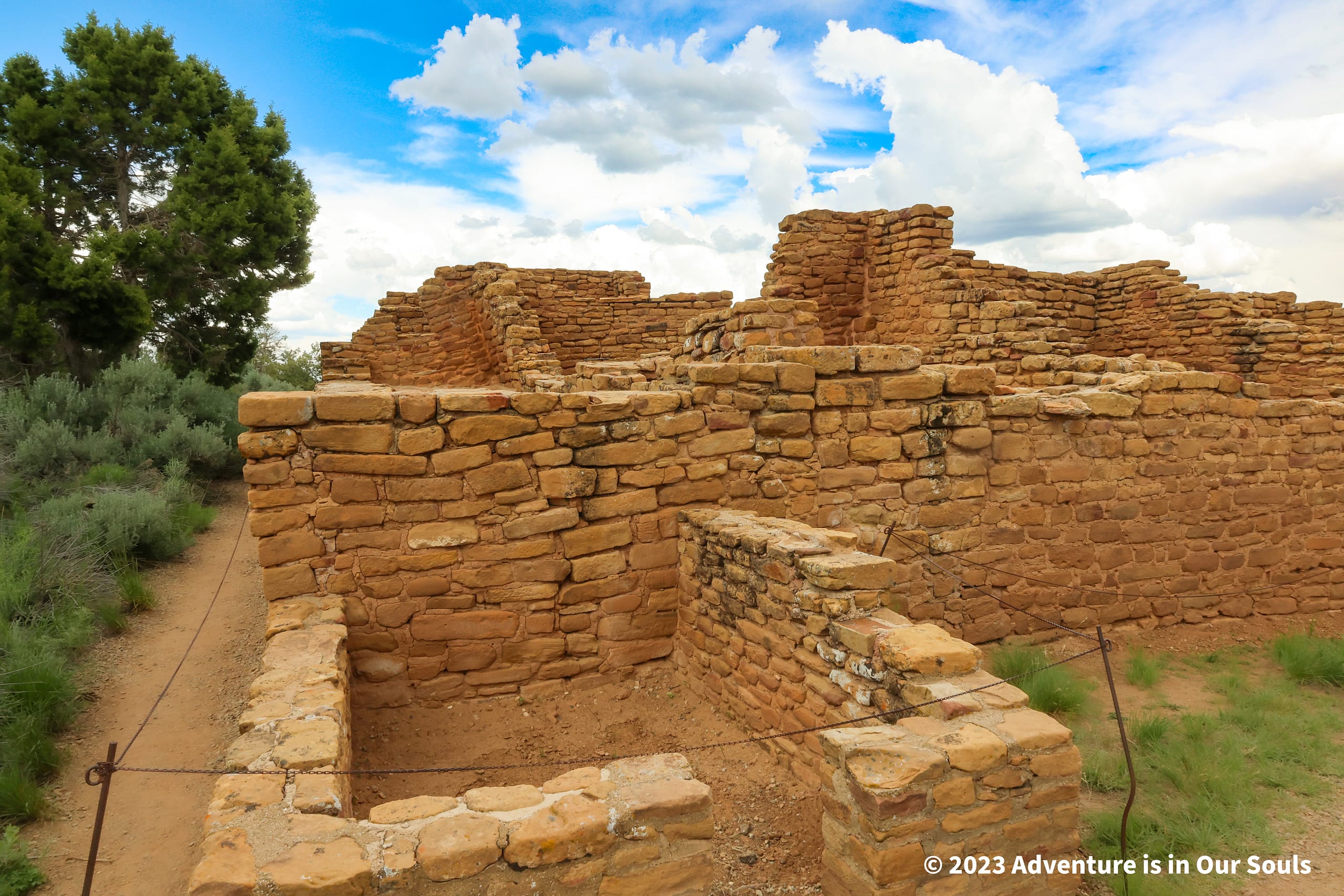
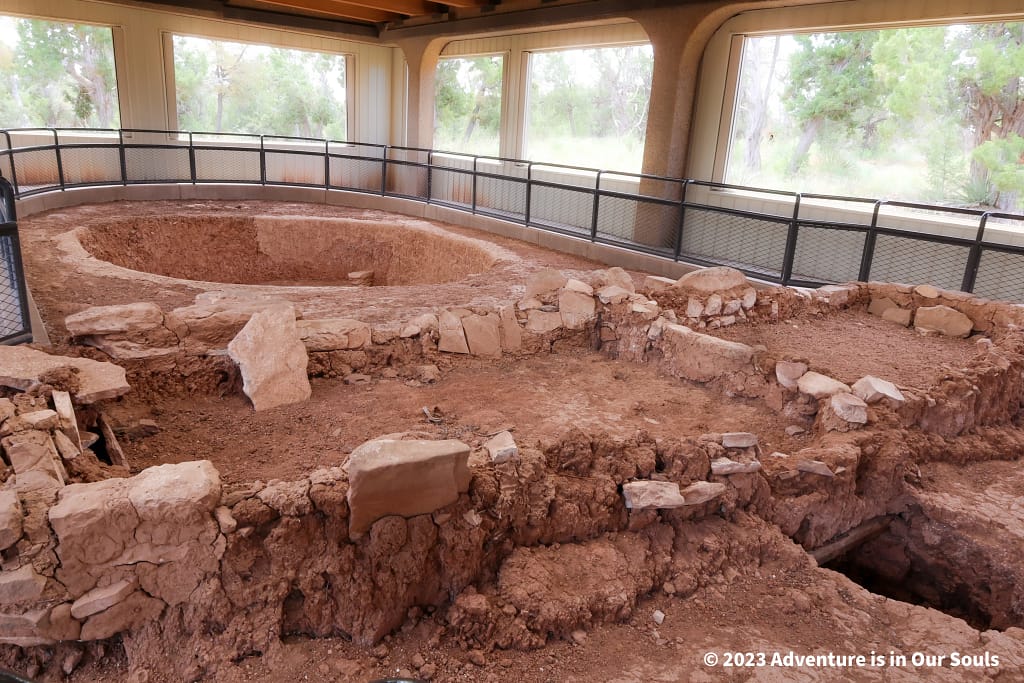
Around 700 CE, they began a village of both pithouses and above-ground rooms made of jacal. Jacal is a wooden lattice plastered with mud, with large stone slabs supporting the base. The pithouses were dug deeper into the ground and began to resemble kivas. A second village was later built on the same site as the first, as the first began to grow.
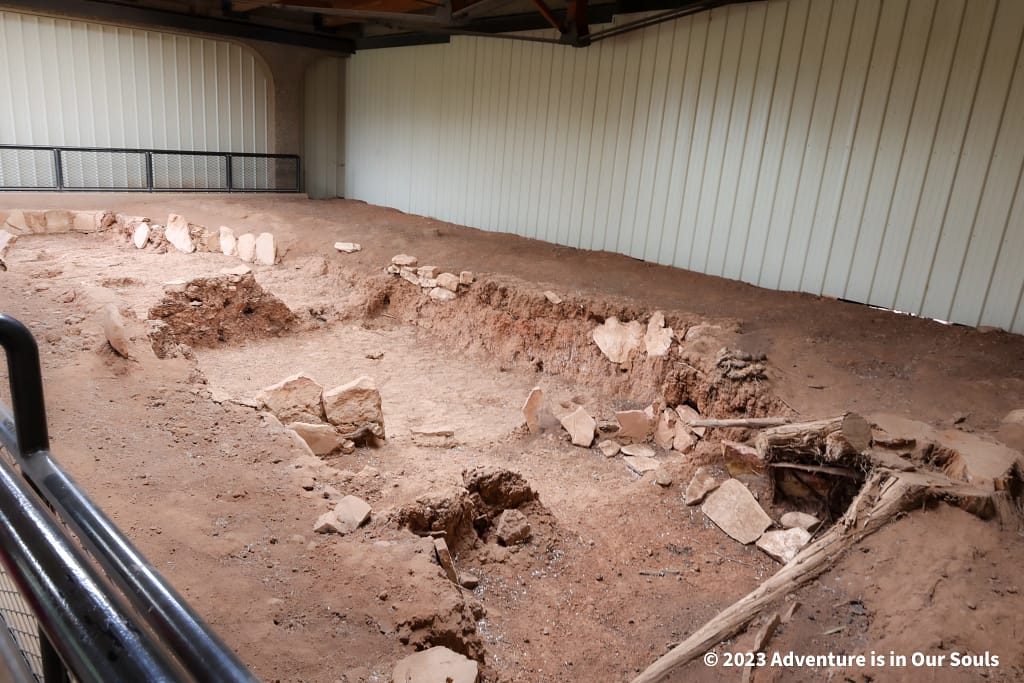
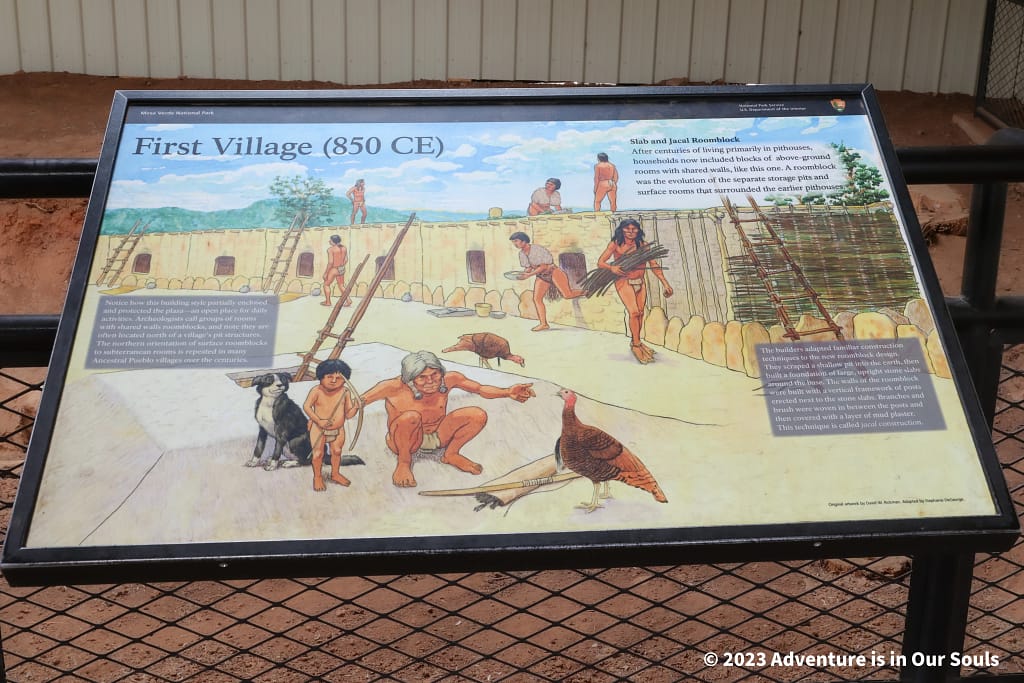
A second village was later built on the same site as the first as the village grew.
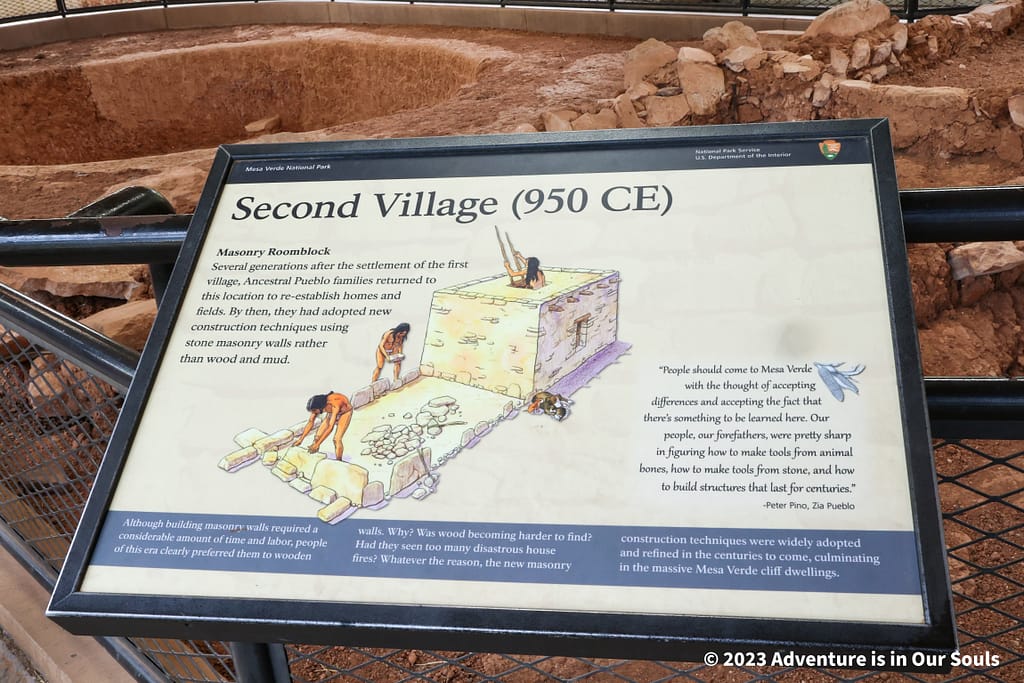
Mesa Top Stop (900-1100 CE)
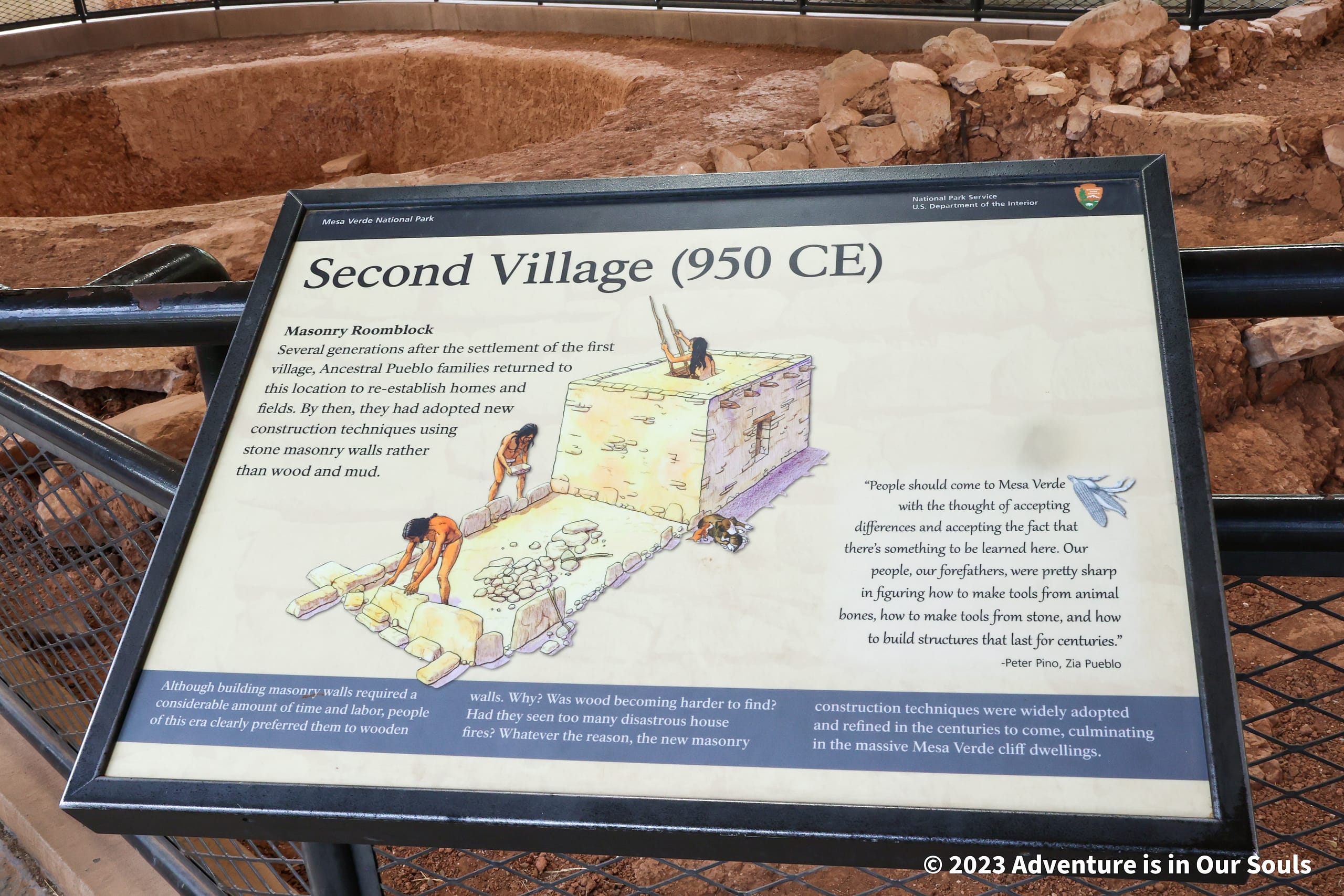
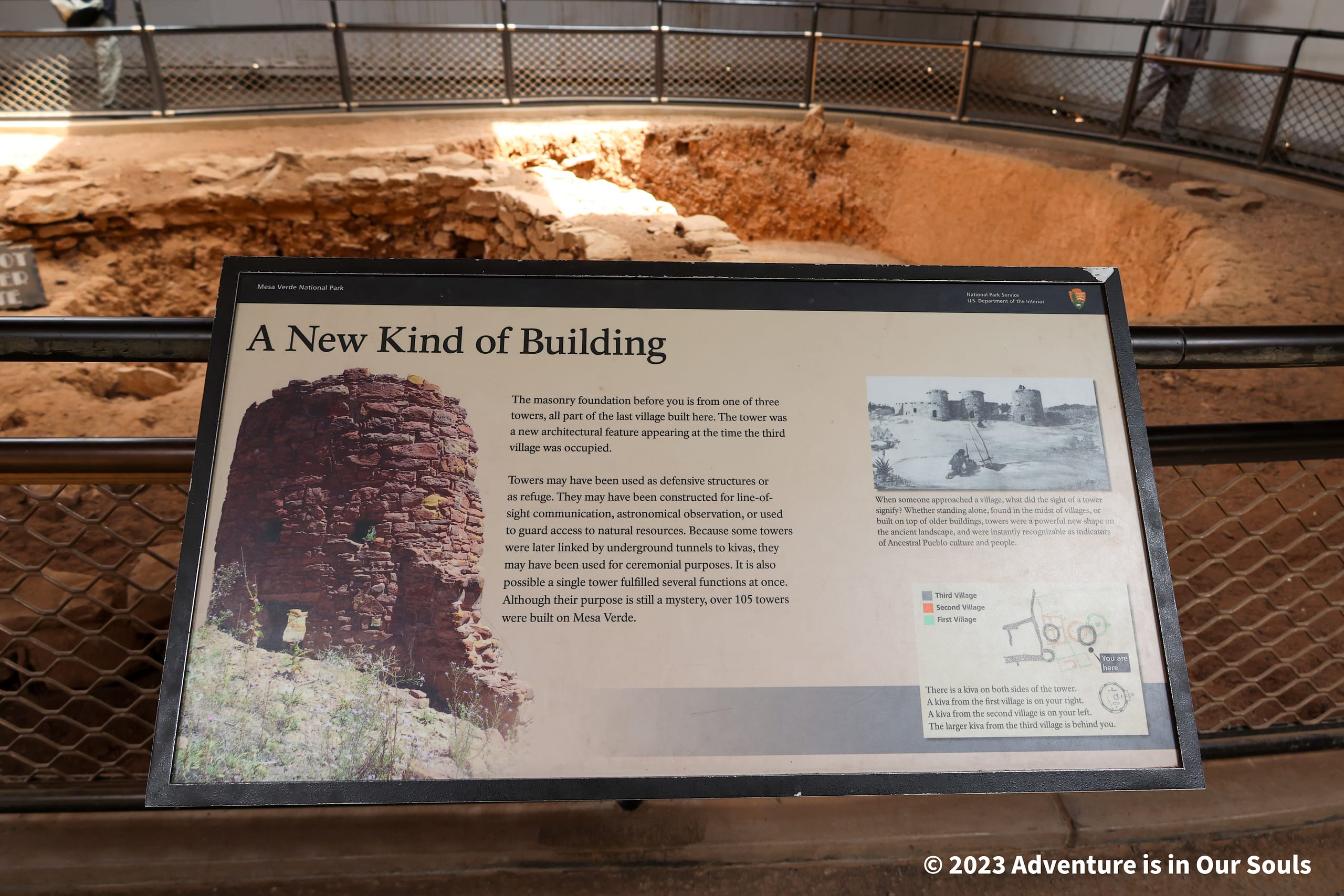
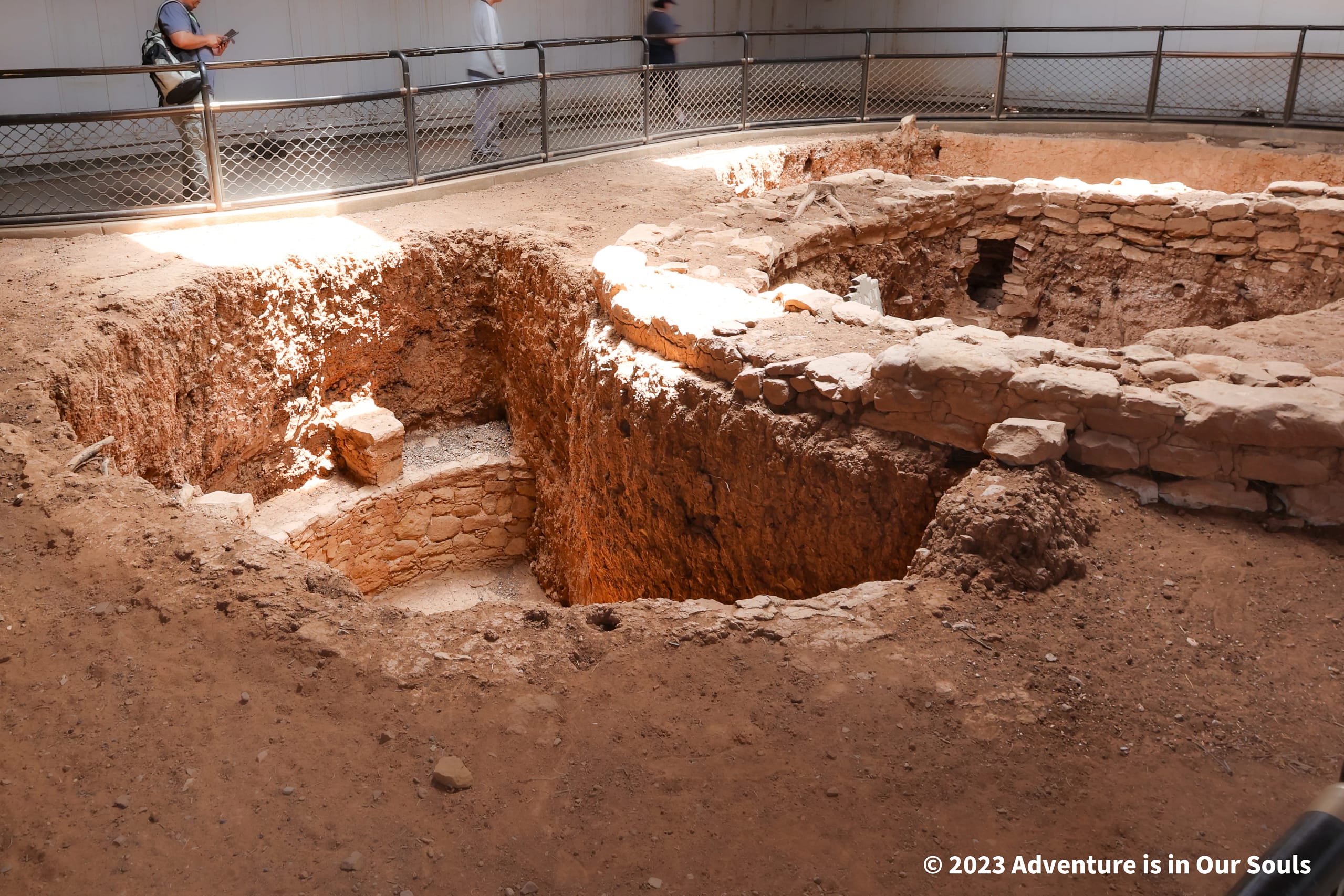
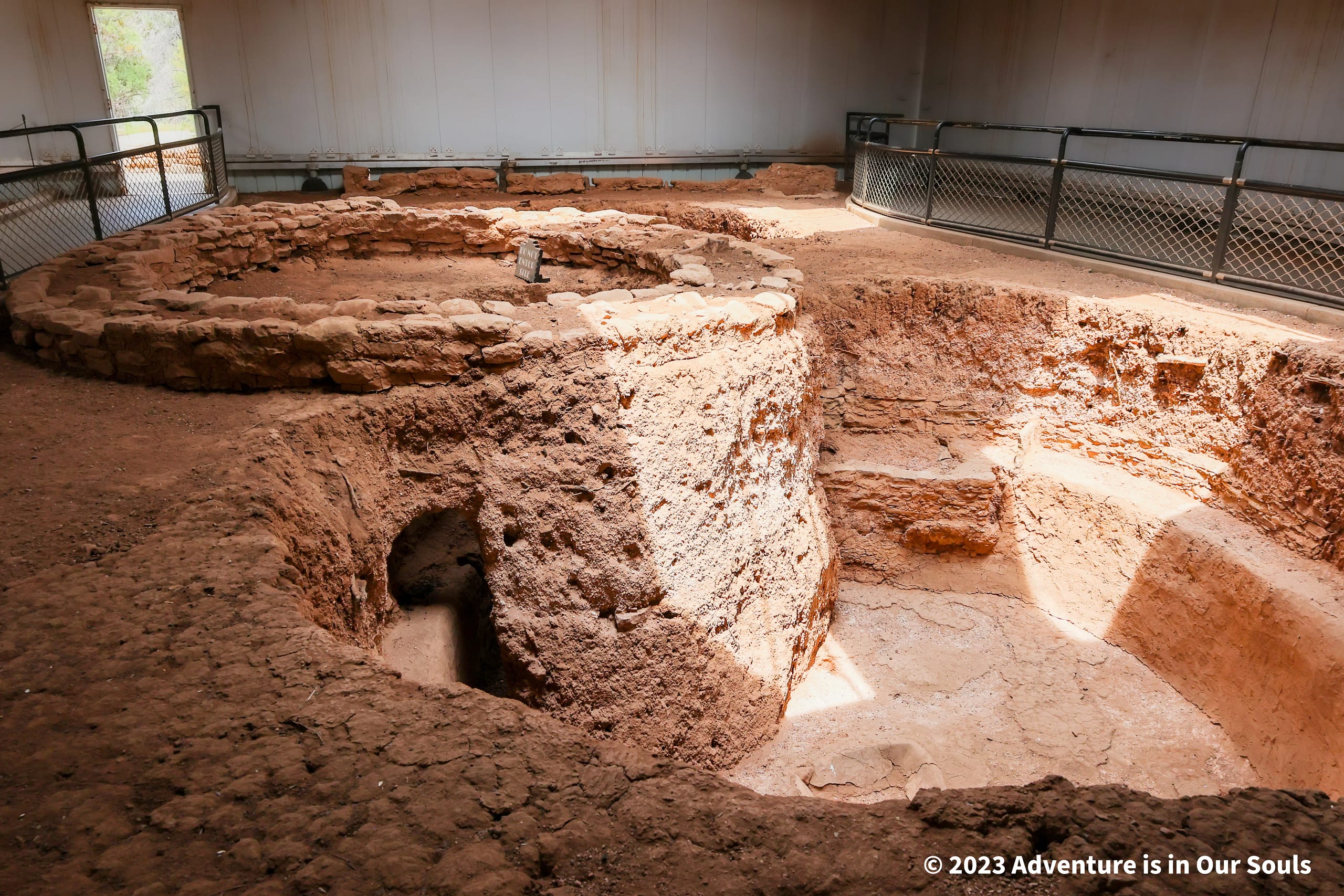
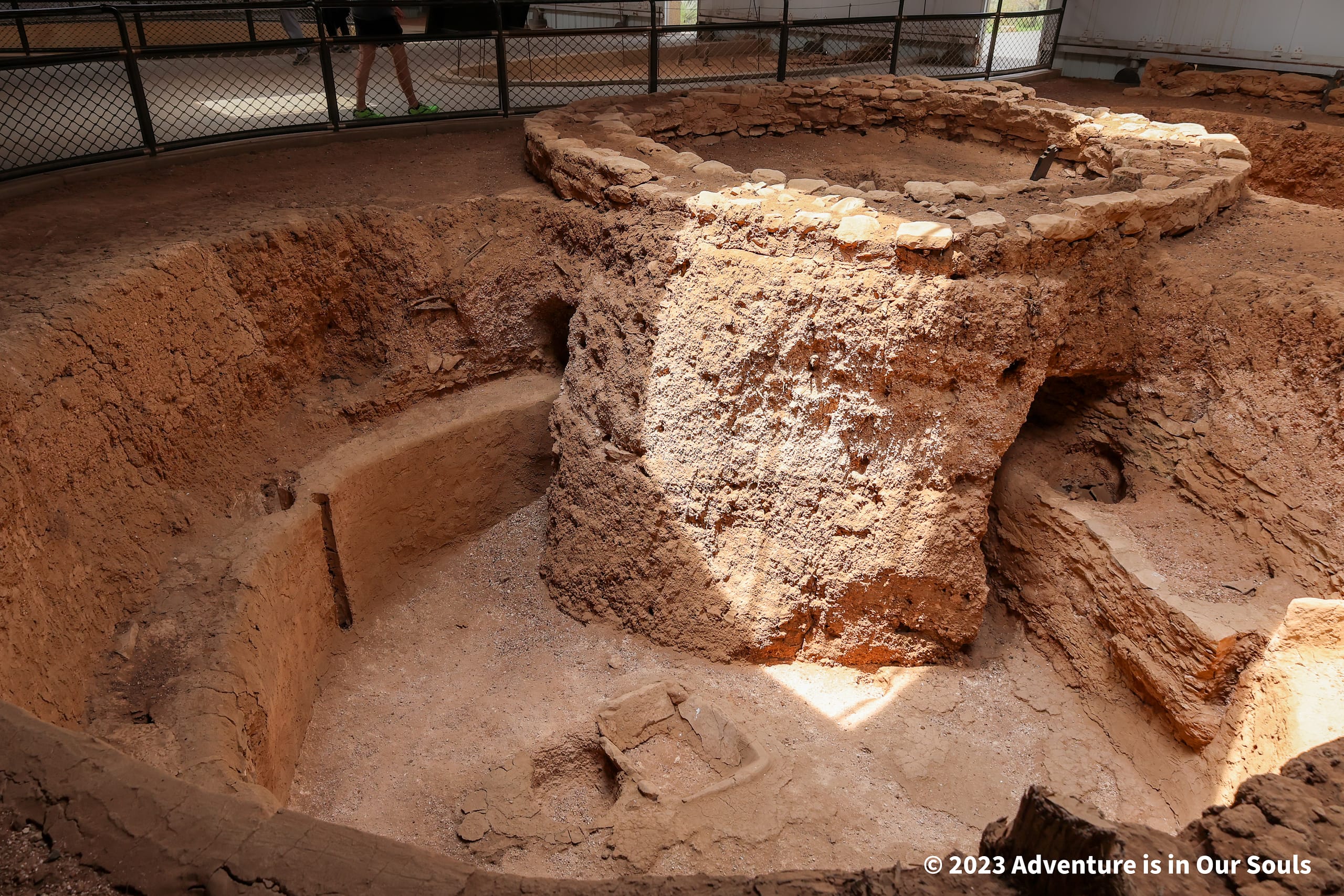
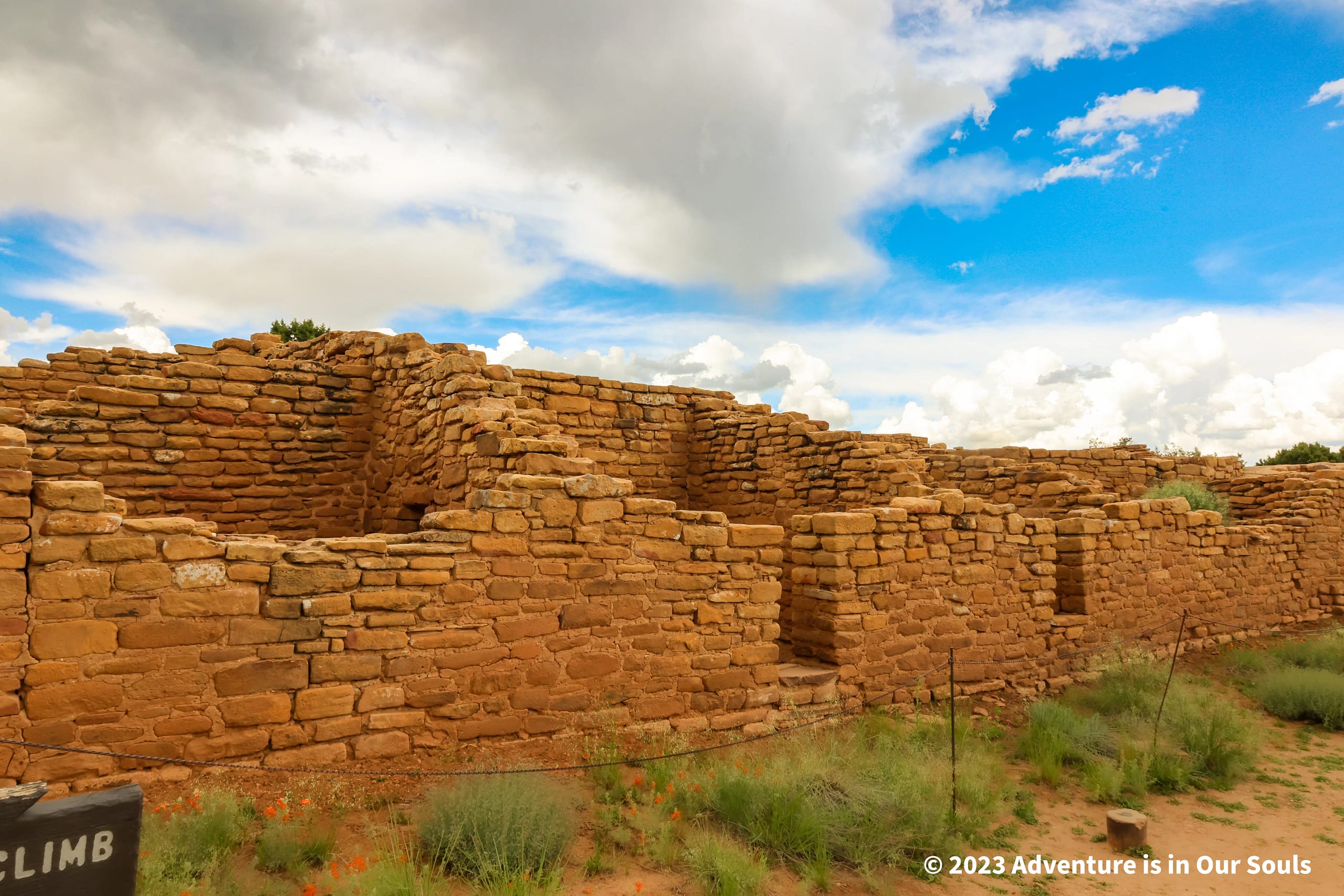
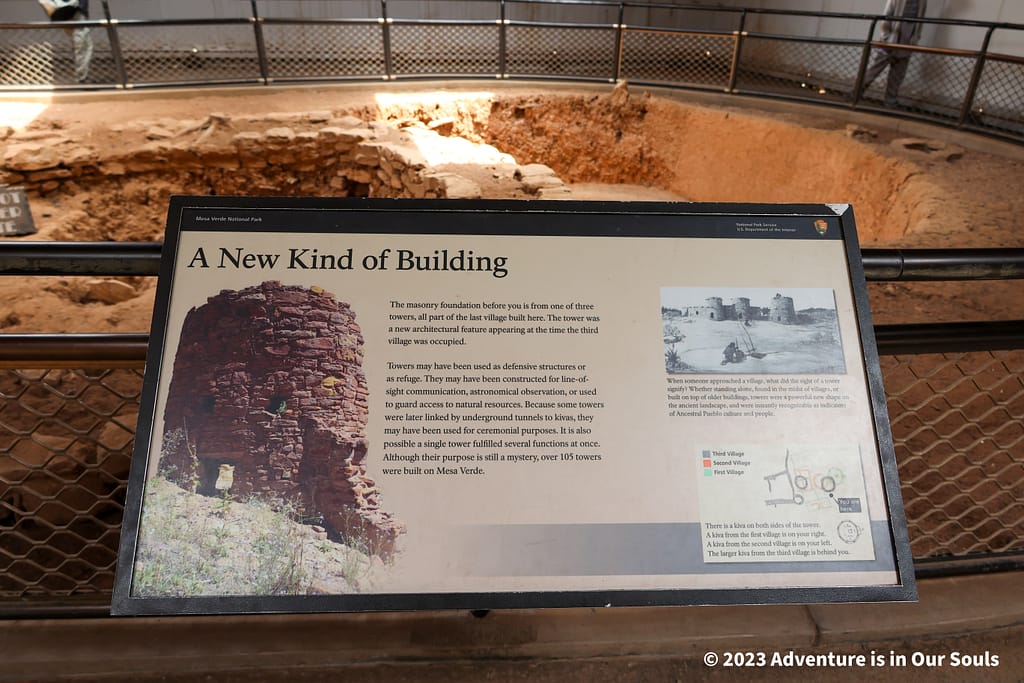
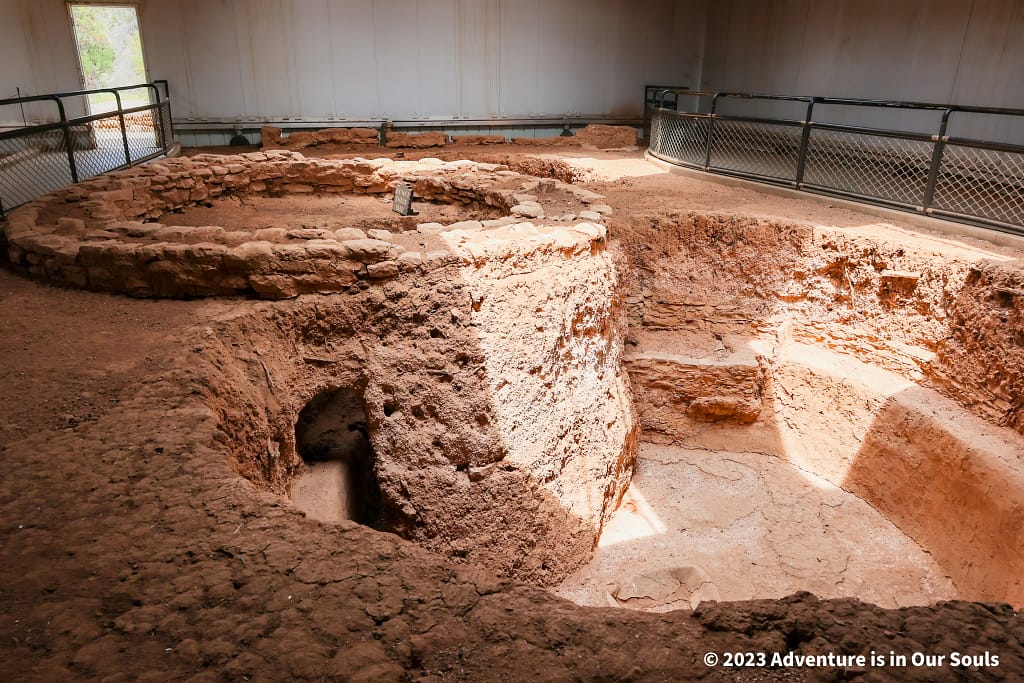
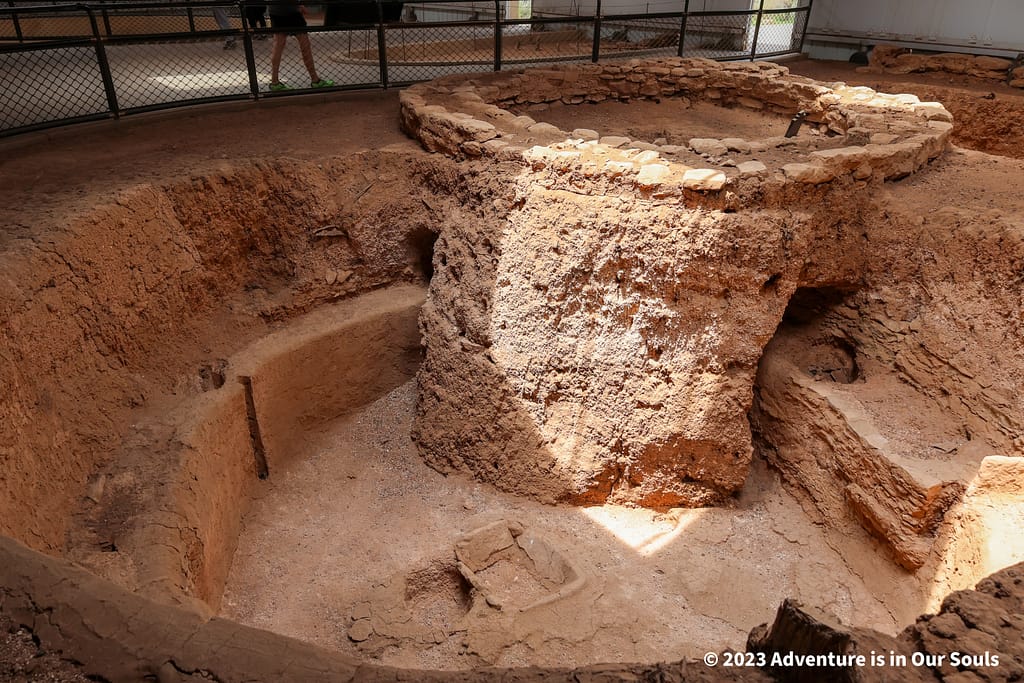
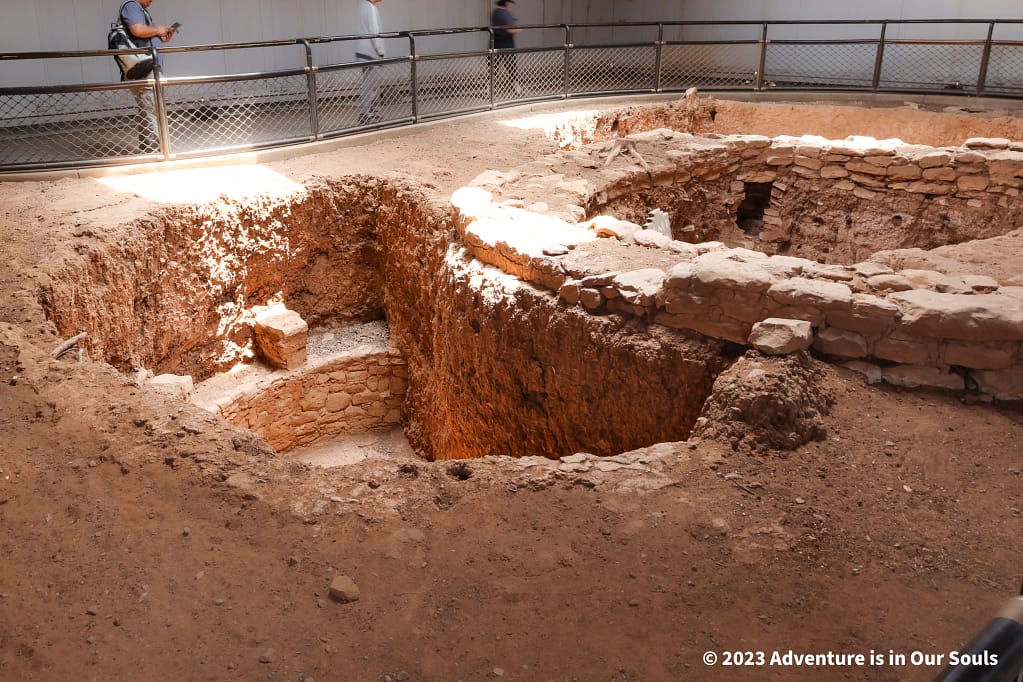
A third village was built using double-stone masonry to construct 3 circular towers. The building method consisted of 2 outer walls with soil and rock fill between them. This allowed them to construct multi-story rooms and towers.
Far View Sites (900-1300 CE)
The Far View Sites are not on the Mesa Loop, but fit here in the timeline. This area was the most densely populated part with 50 identified villages within ½ square mile. Interesting fact: archaeologists use tree-ring dating to date many of the Mesa Verde sites.
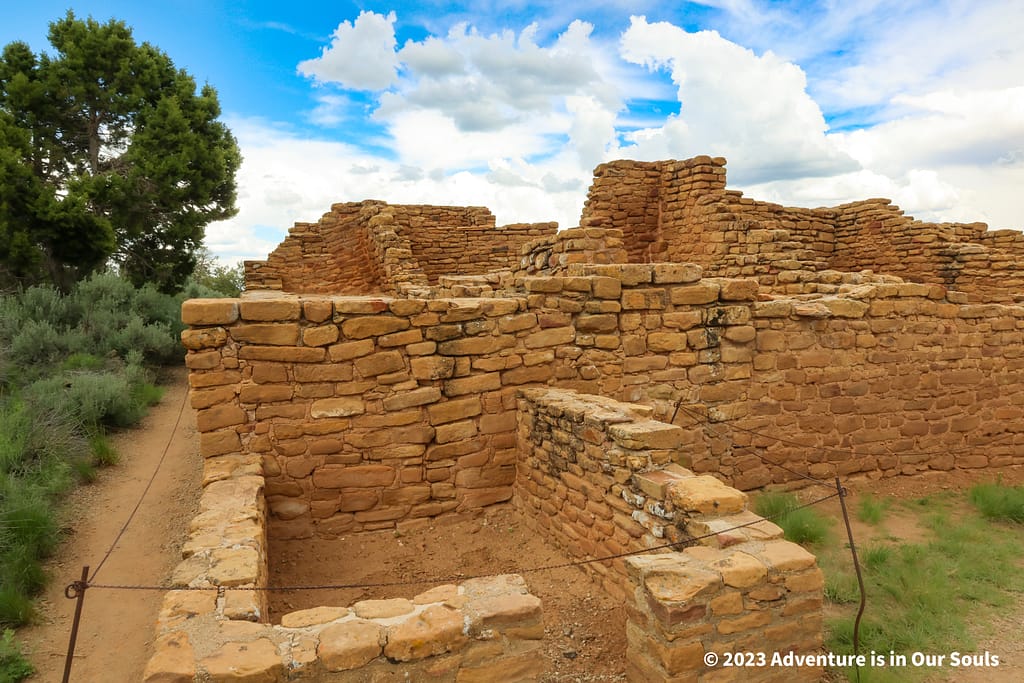
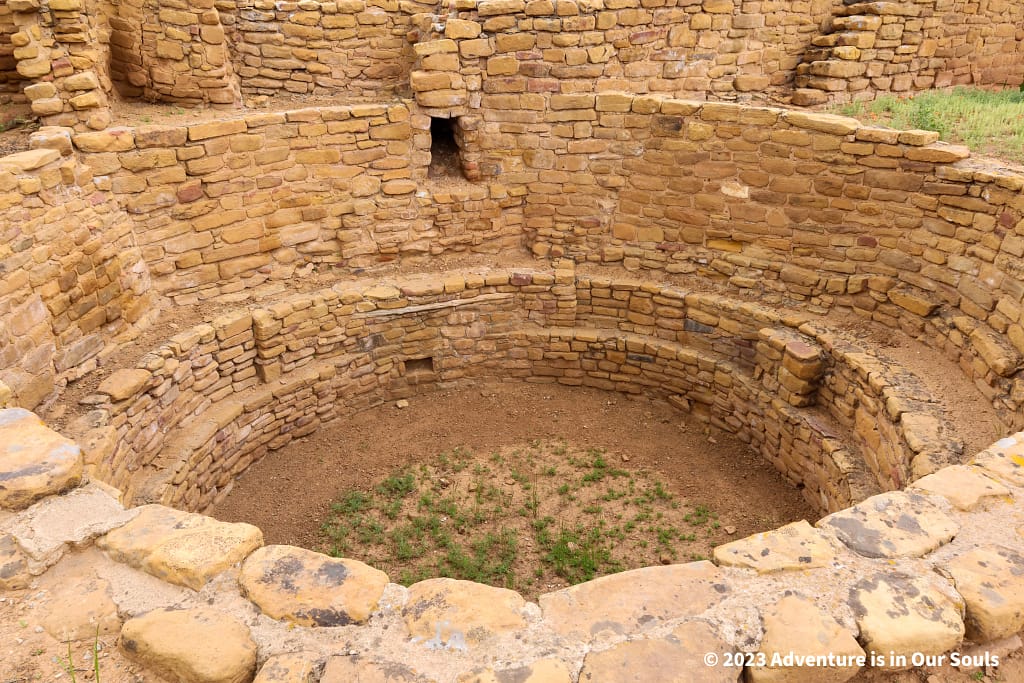
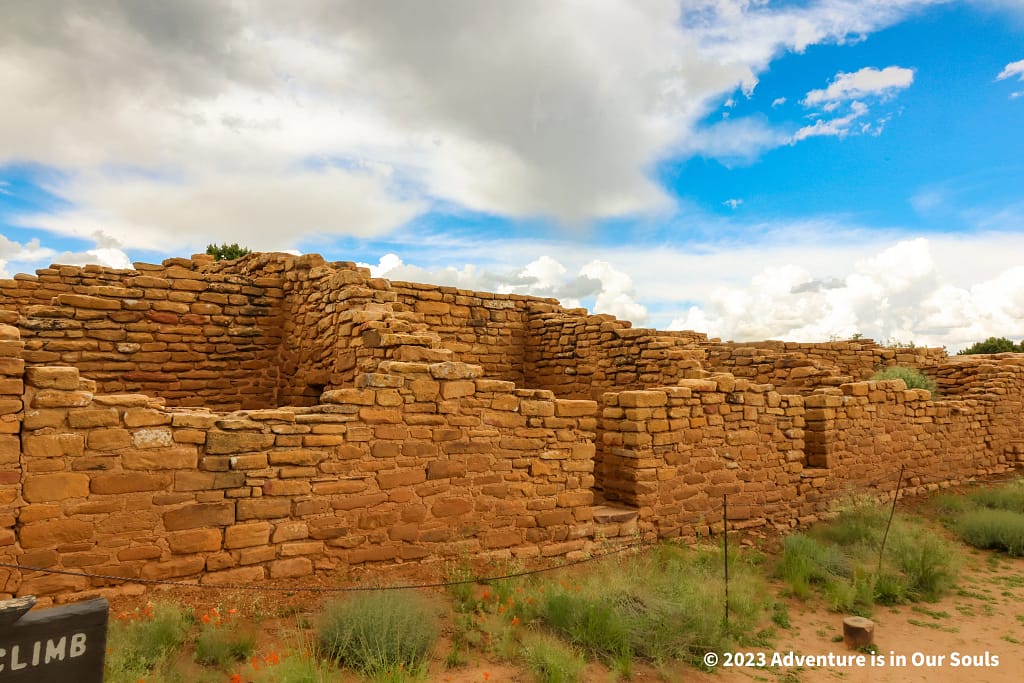
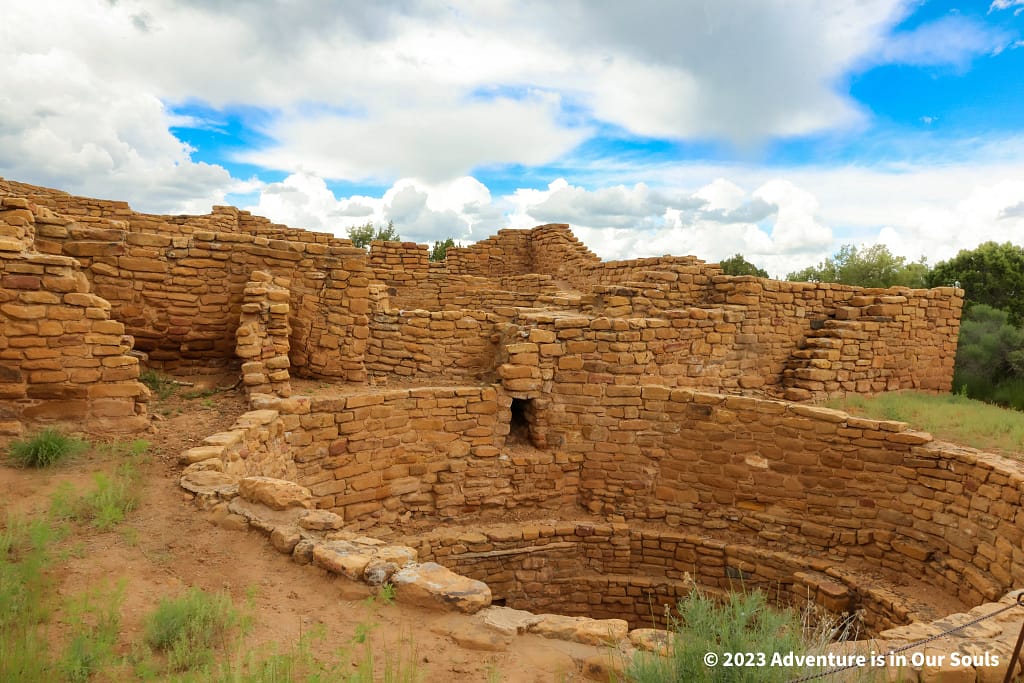
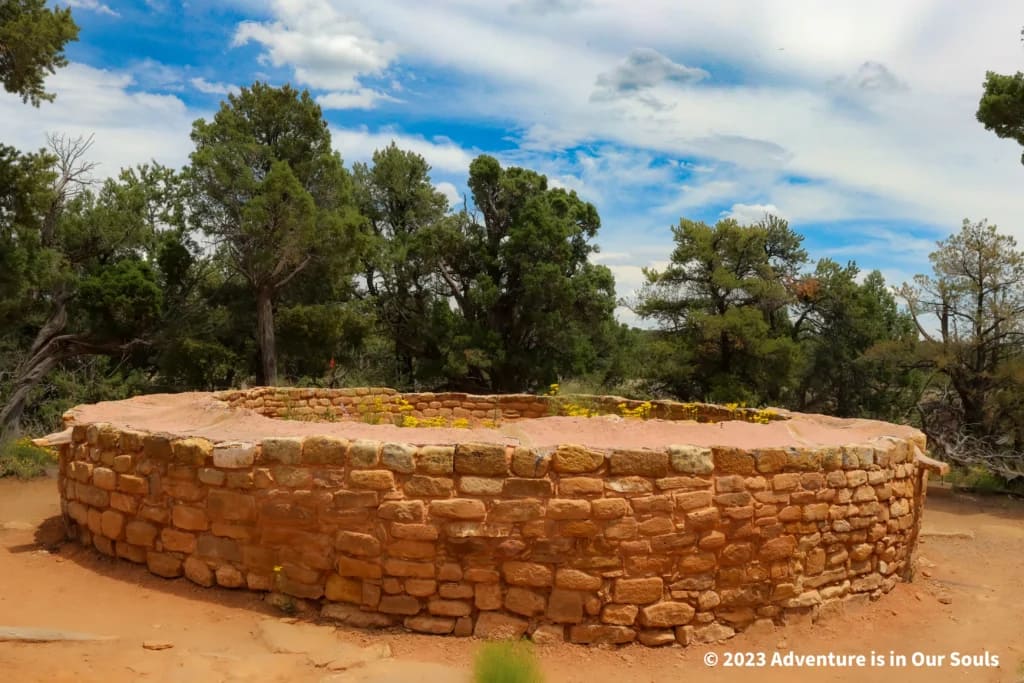
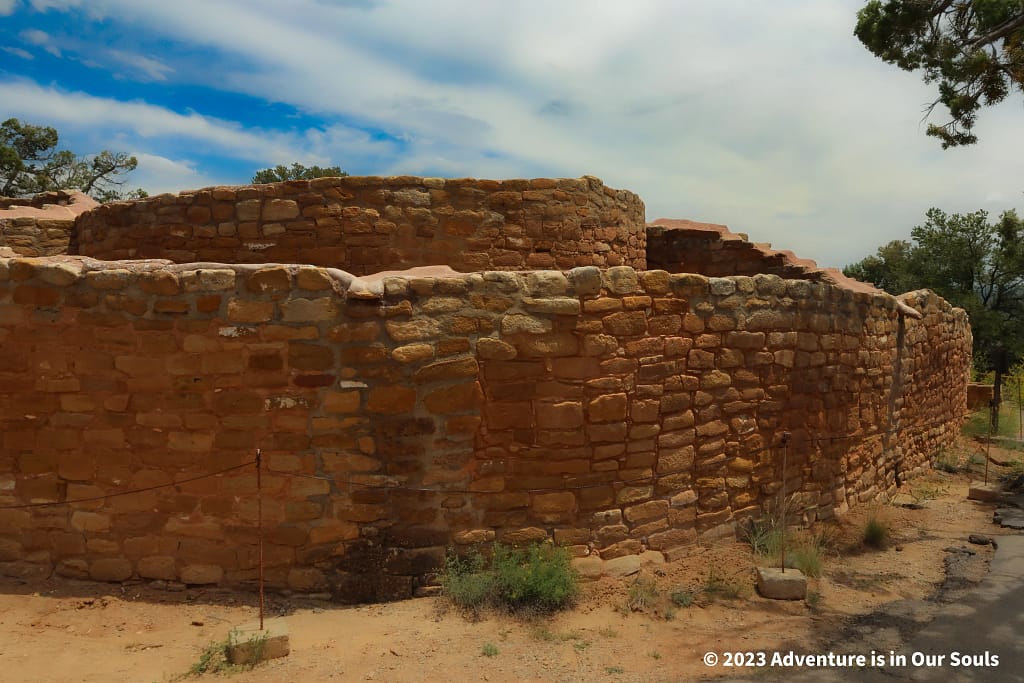
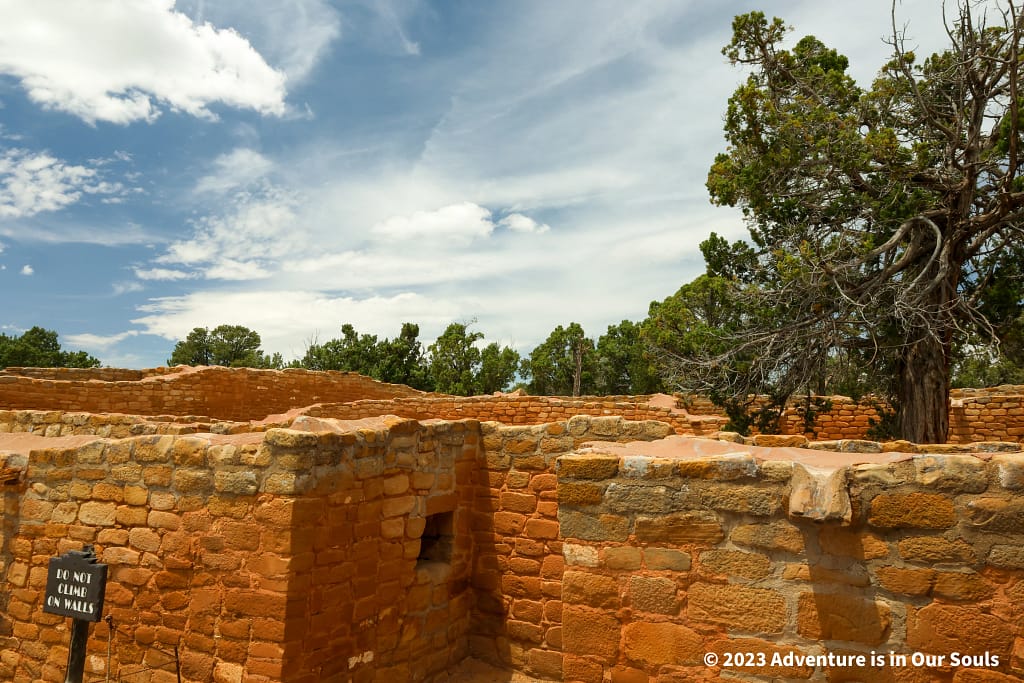
Sun Temple Stop (1250 CE)
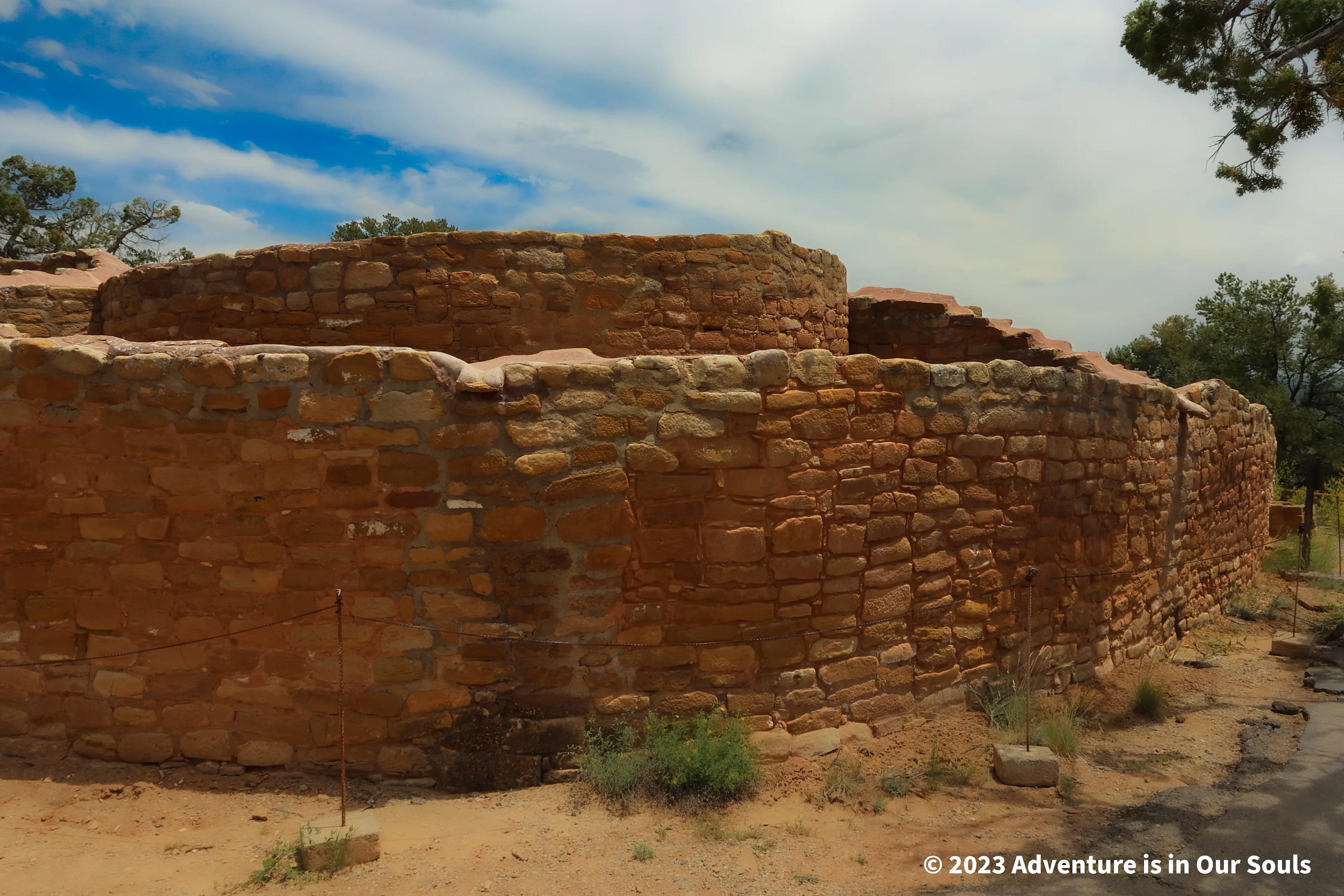
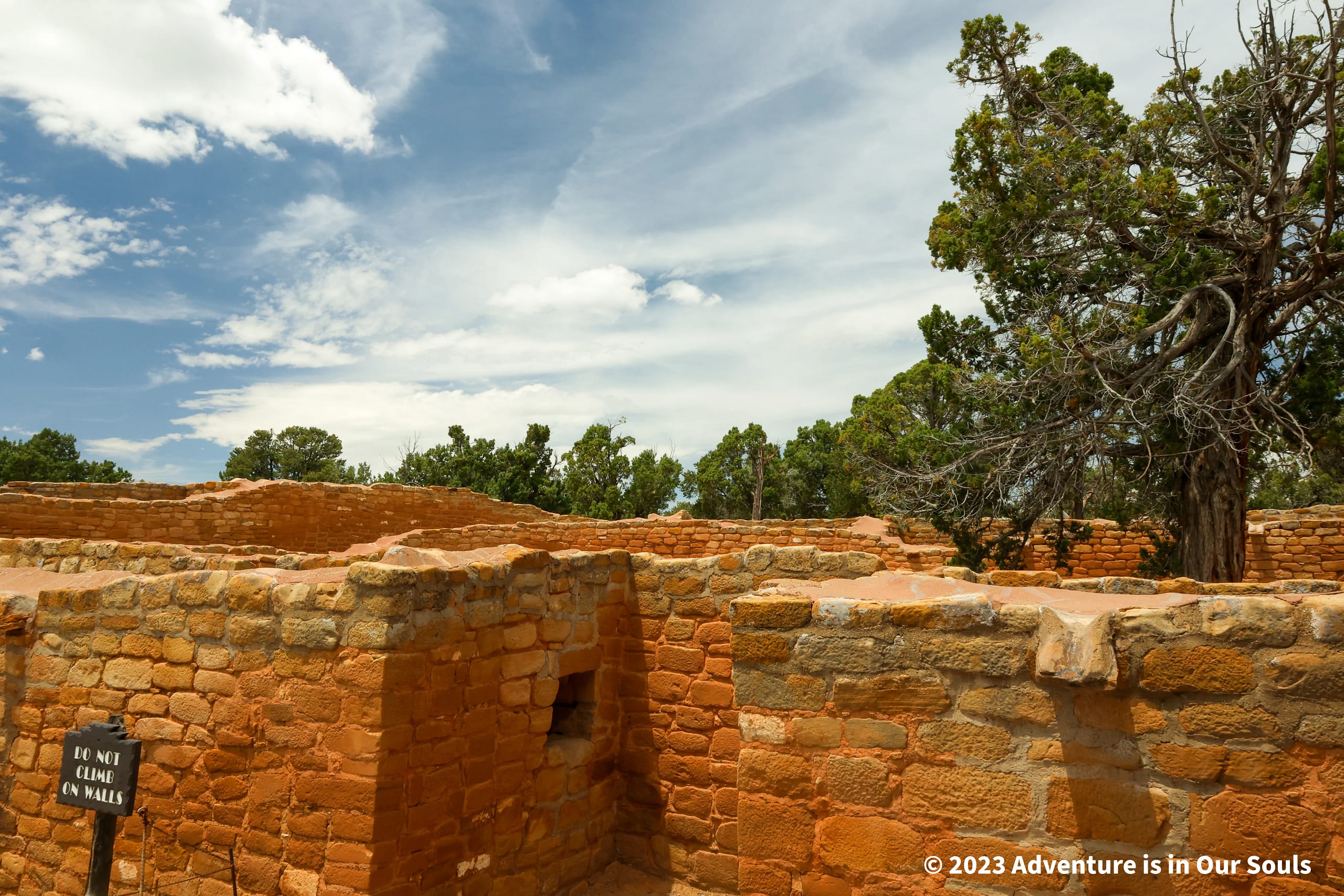
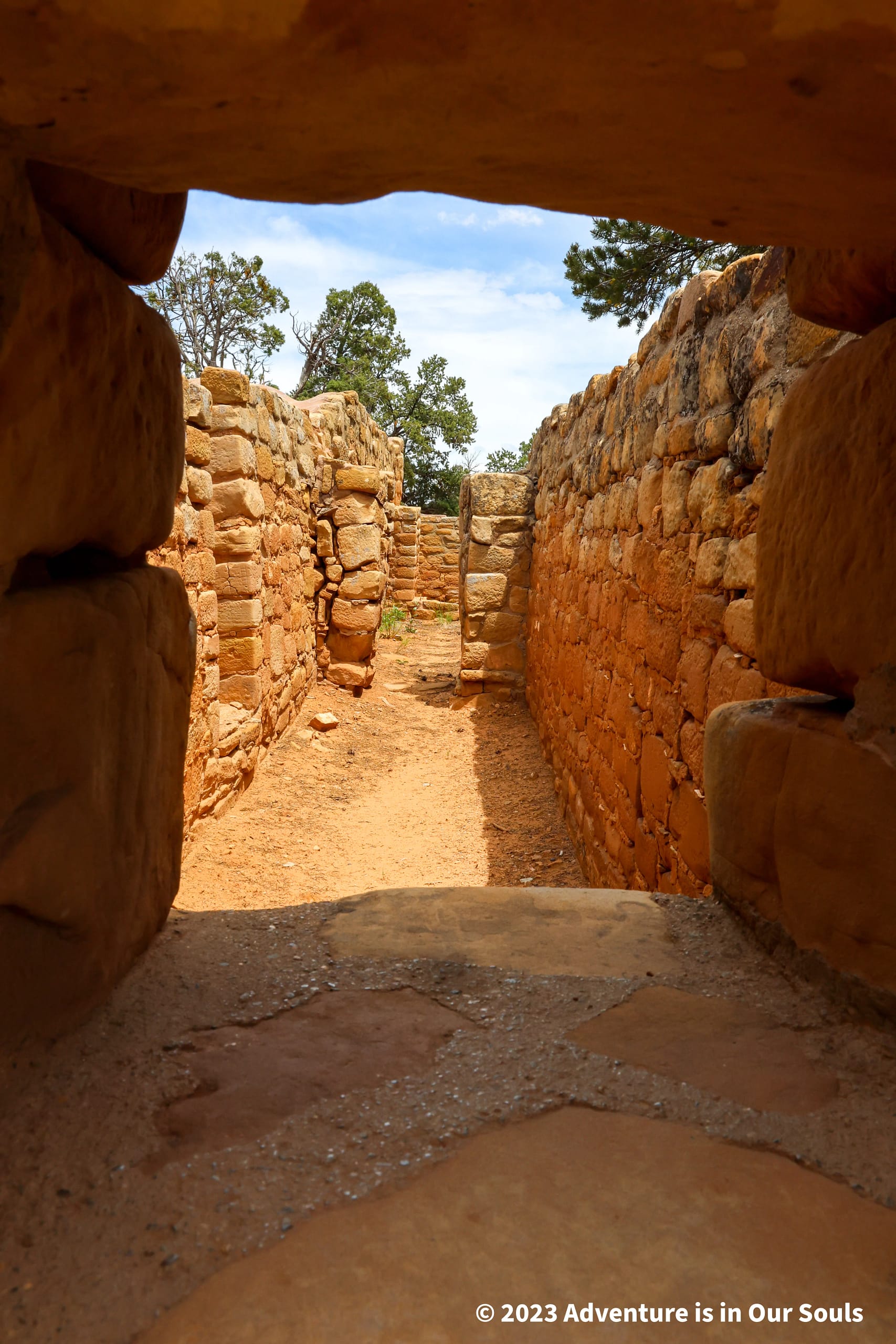
According to modern Pueblo Indians, the Sun Temple’s features classify it as a ceremonial structure. The stones in the fine masonry walls were shaped and given a “dimpled” flat surface. Based upon the amount of fallen stone removed during excavation, the walls were probably between 11 and 14 feet high. The thick walls were double coursed and filled with a rubble core. Today, concrete covers the tops of the walls to prevent moisture from entering the rubble between the walls.
Incredible Things to Do in Mesa Verde National Park: Hunt for Cliff Dwellings from the Overlooks
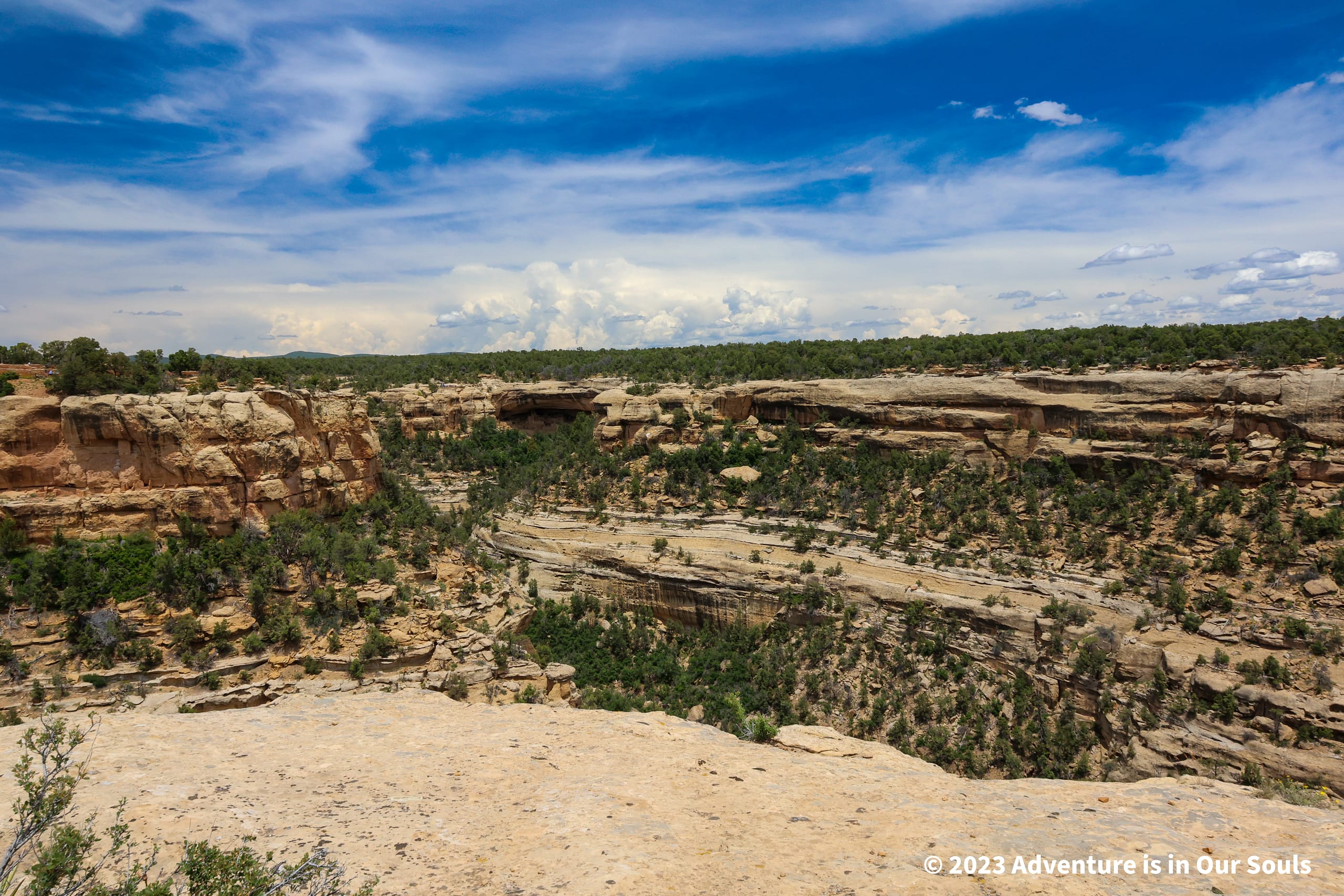
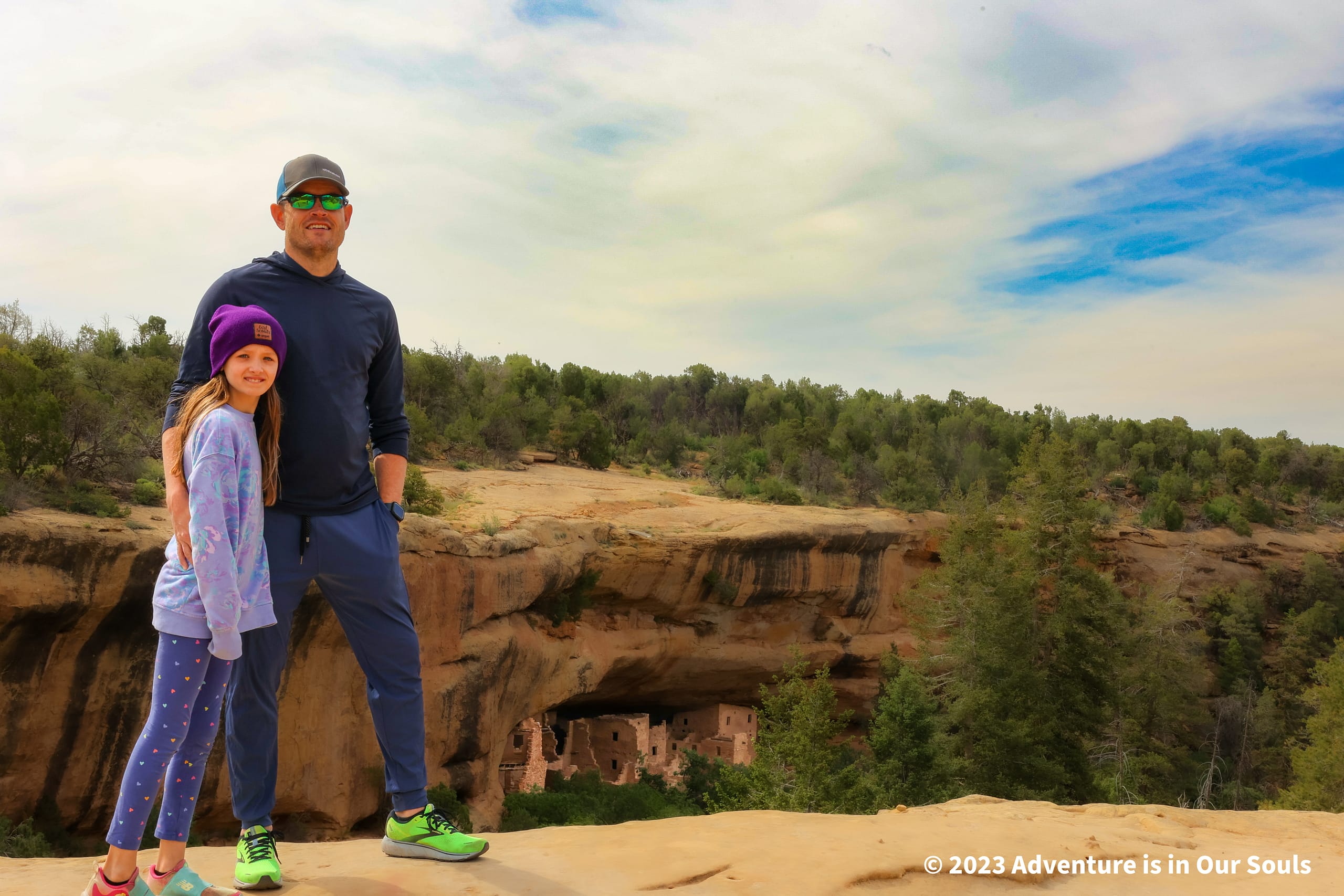
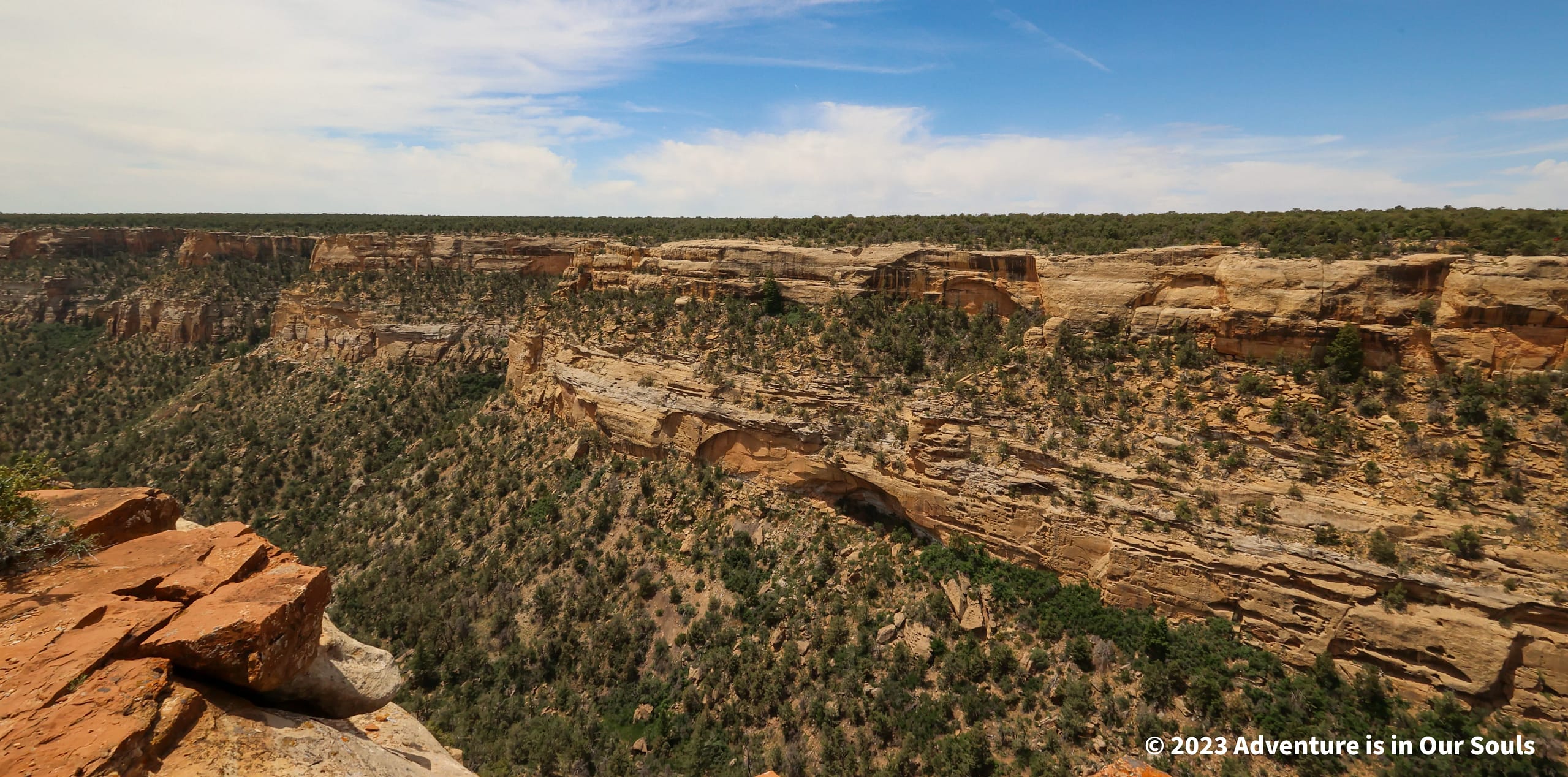
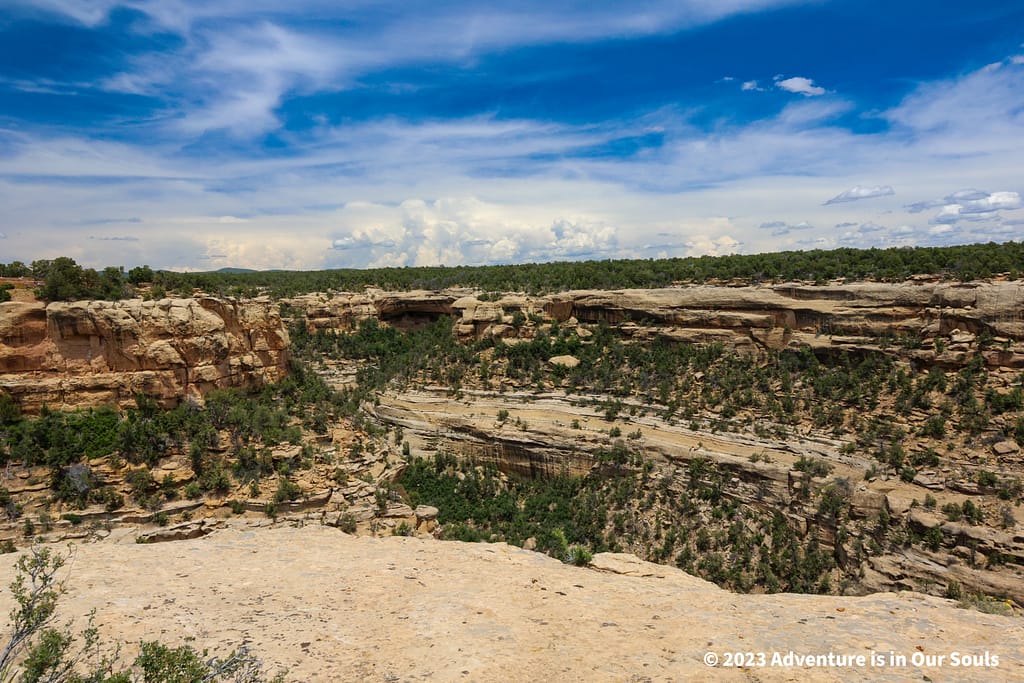
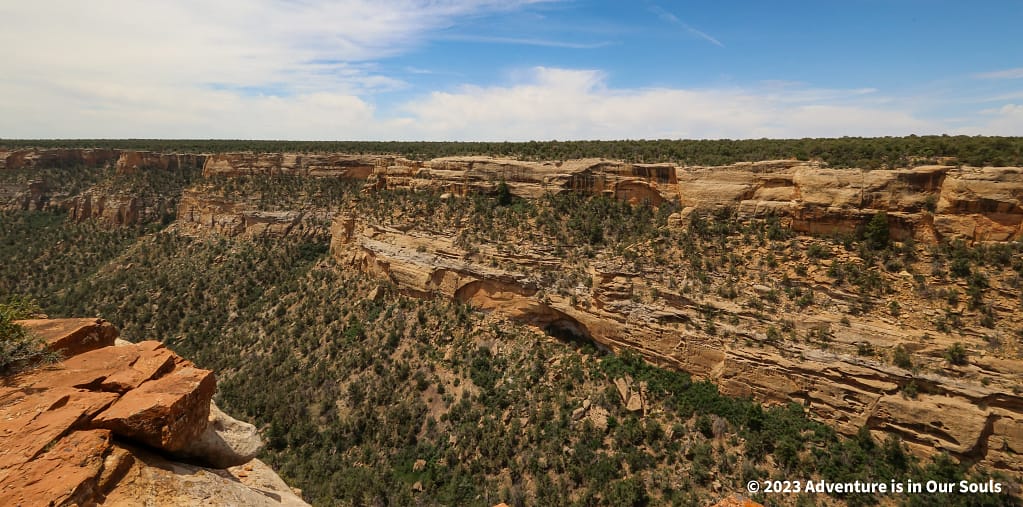
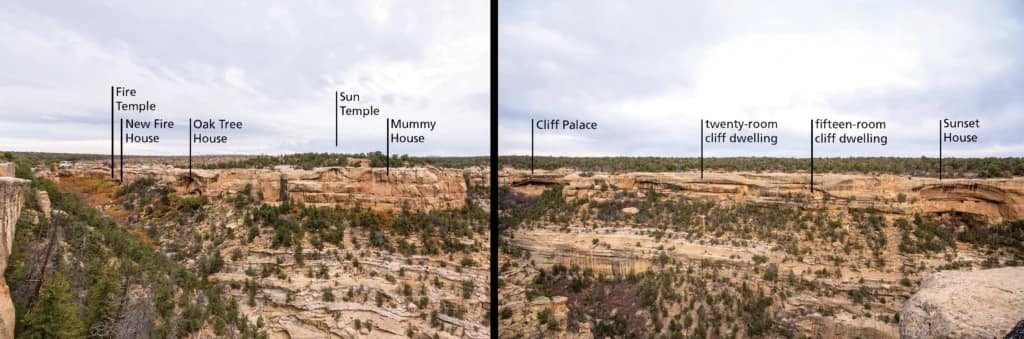
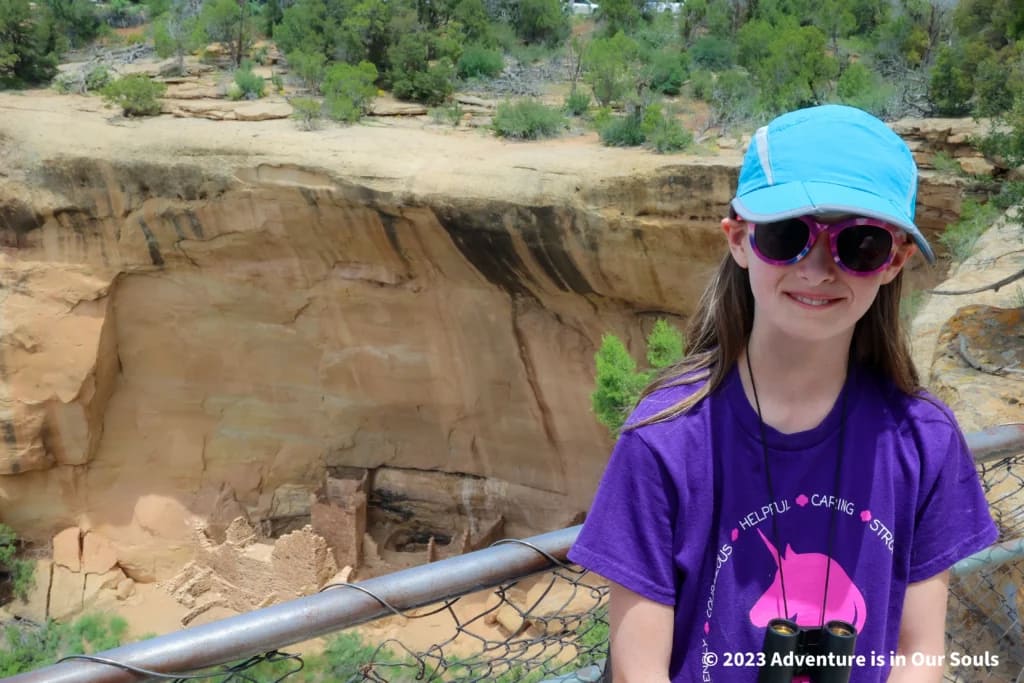
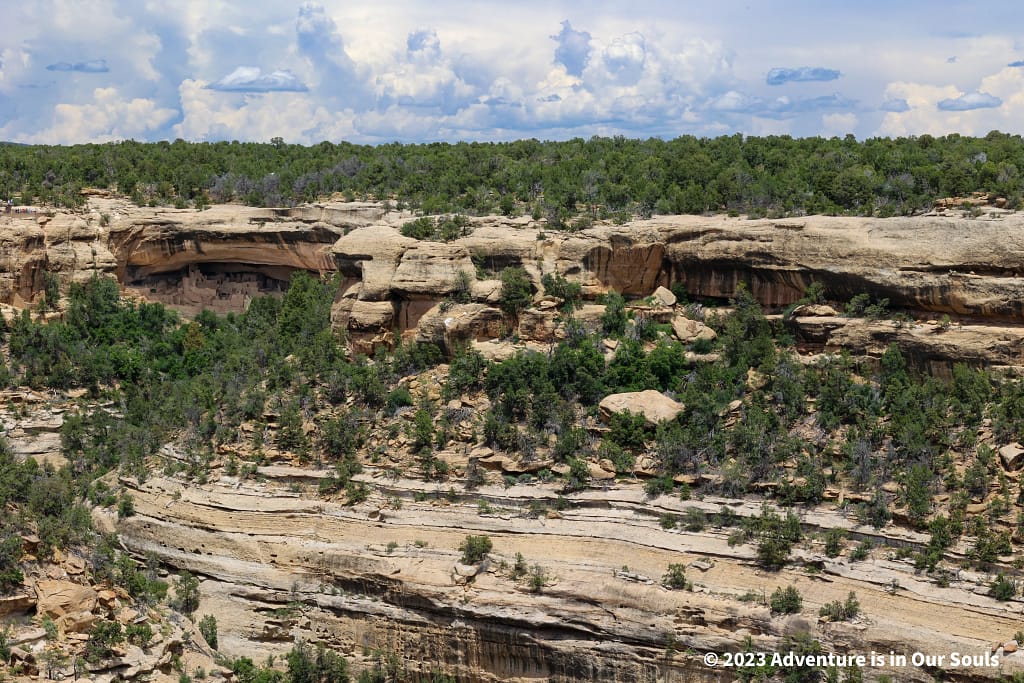
Mixed in with the early homes/villages were cliff overlooks, where you can view different cliff dwellings. Some were hard to spot, even with binoculars, but the girls found most of them.
Hemenway House Overlook
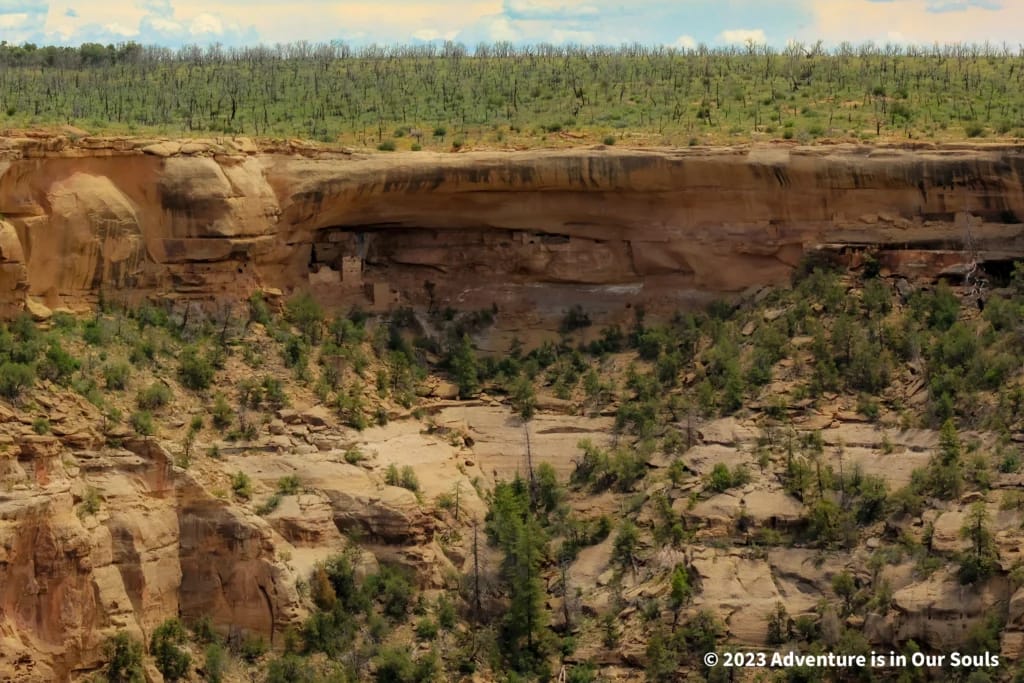
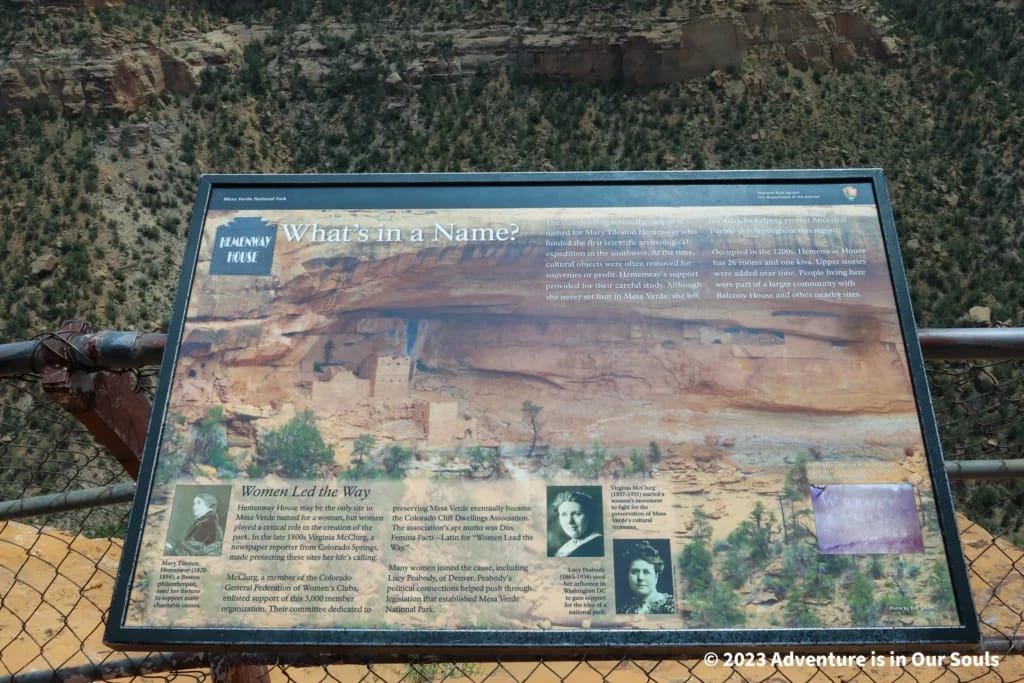
Perched on a remote cliff in Soda Canyon, Hemenway House looks to fall off the small ledge on which it rests. Built in the 1200s, the cliff dwelling has 26 rooms and one kiva and was part of the larger Balcony House community. It was named for Mary Tileston Hemenway, who funded the first scientific archeological expedition in the southwest.
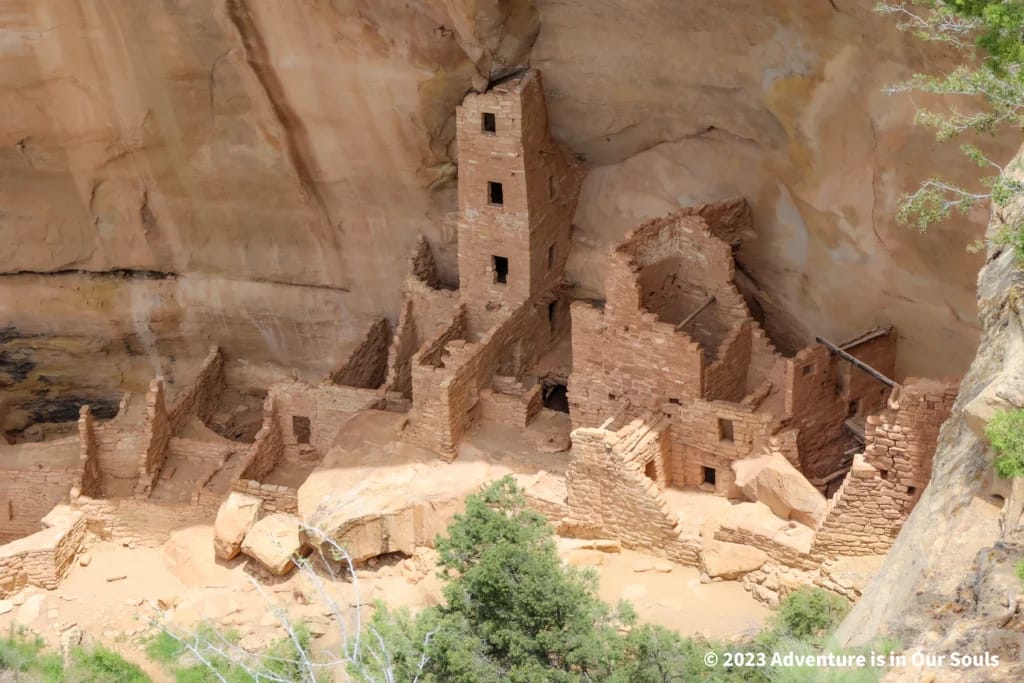
Square Tower House Overlook (1200-1300 CE)
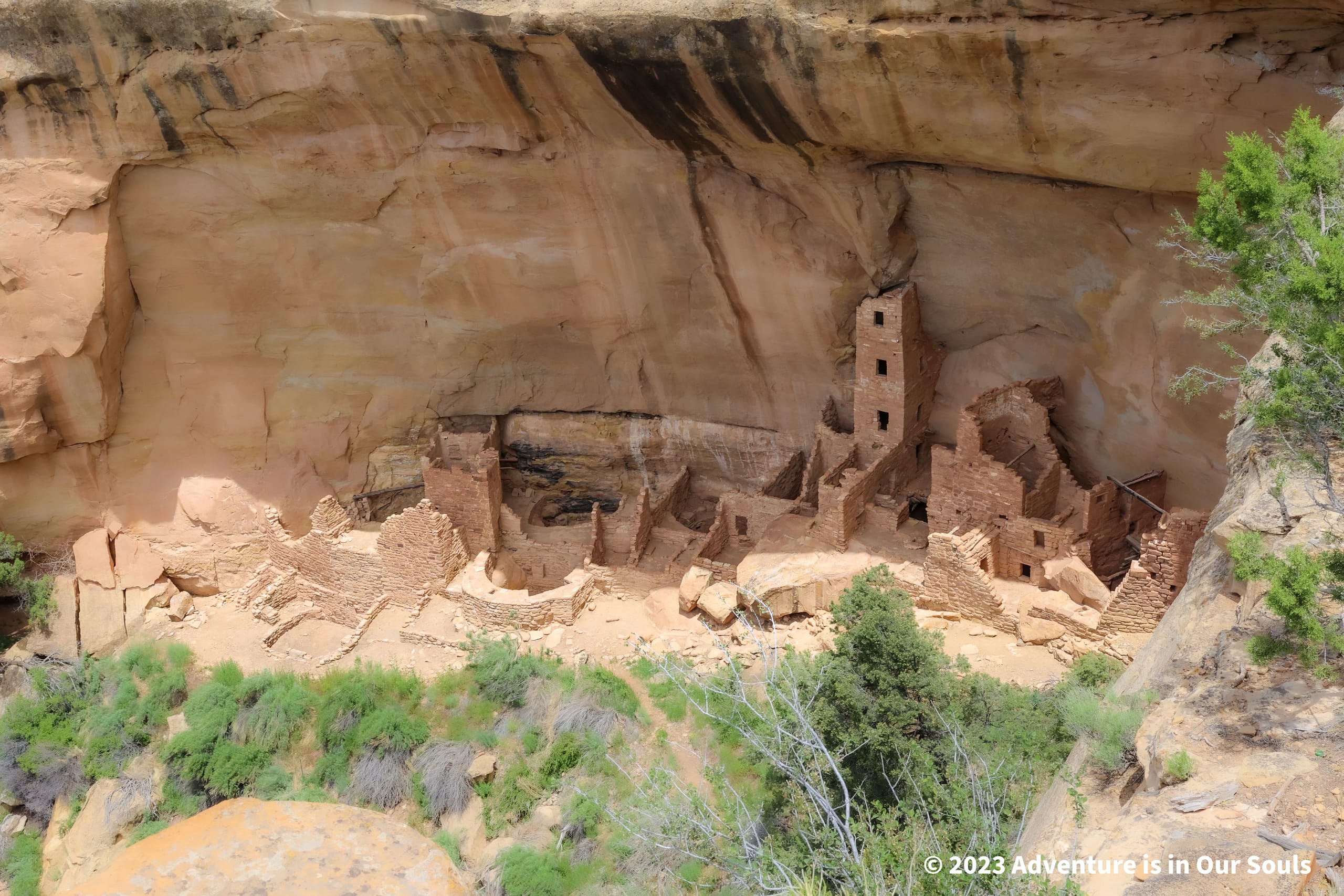
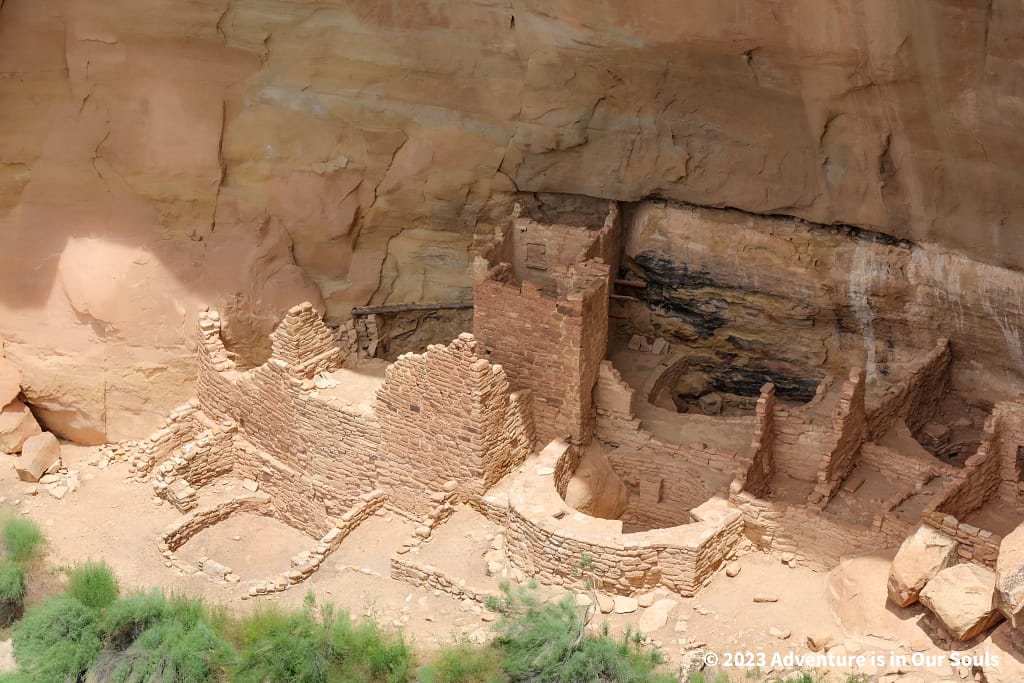
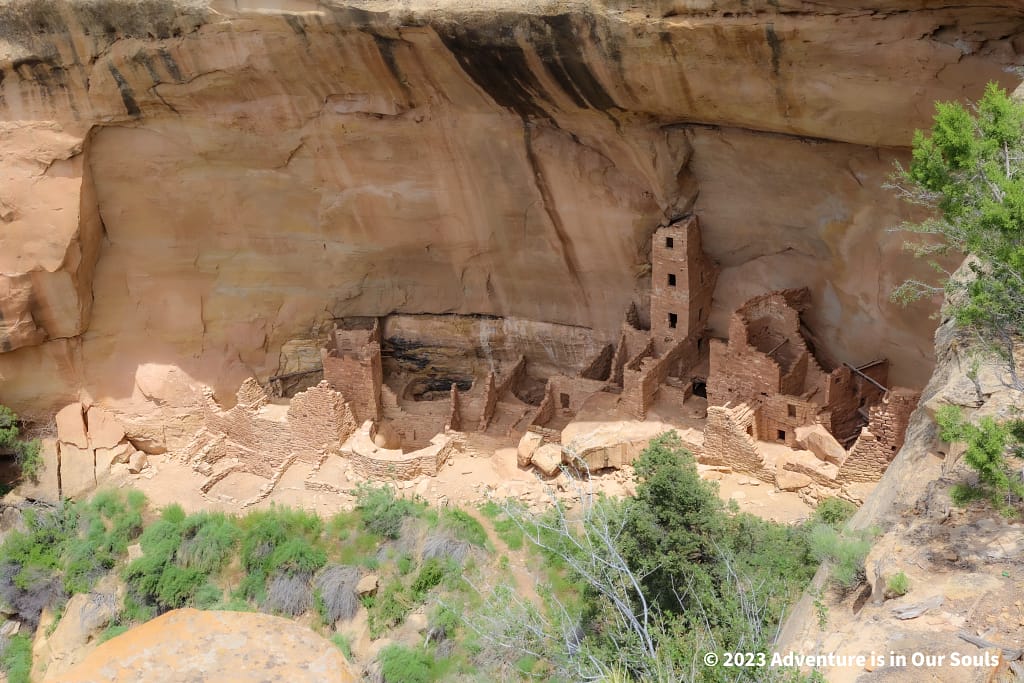
This cliff dwelling includes the tallest standing architecture in Mesa Verde, a four-story, 27-foot (8 m) tall structure that was part of an even larger building complex. Although the site has been stabilized by archeologists, 90% is original. Painted murals and pecked rock art are found throughout Square Tower House. From the overlook, look for original roof beams and intact plastered walls.
Sun Point View
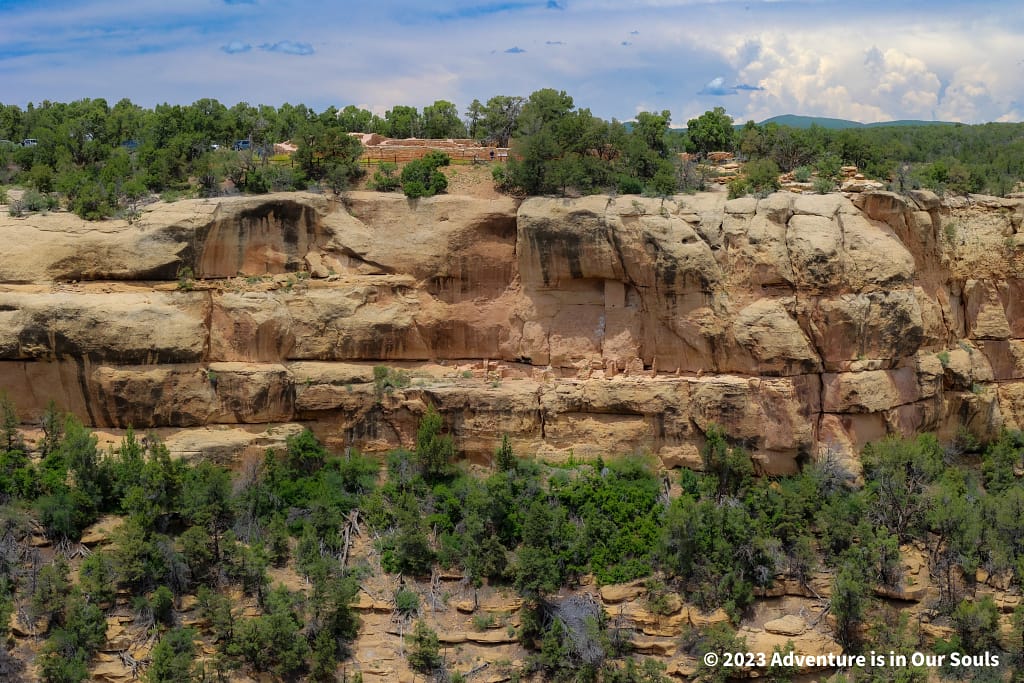
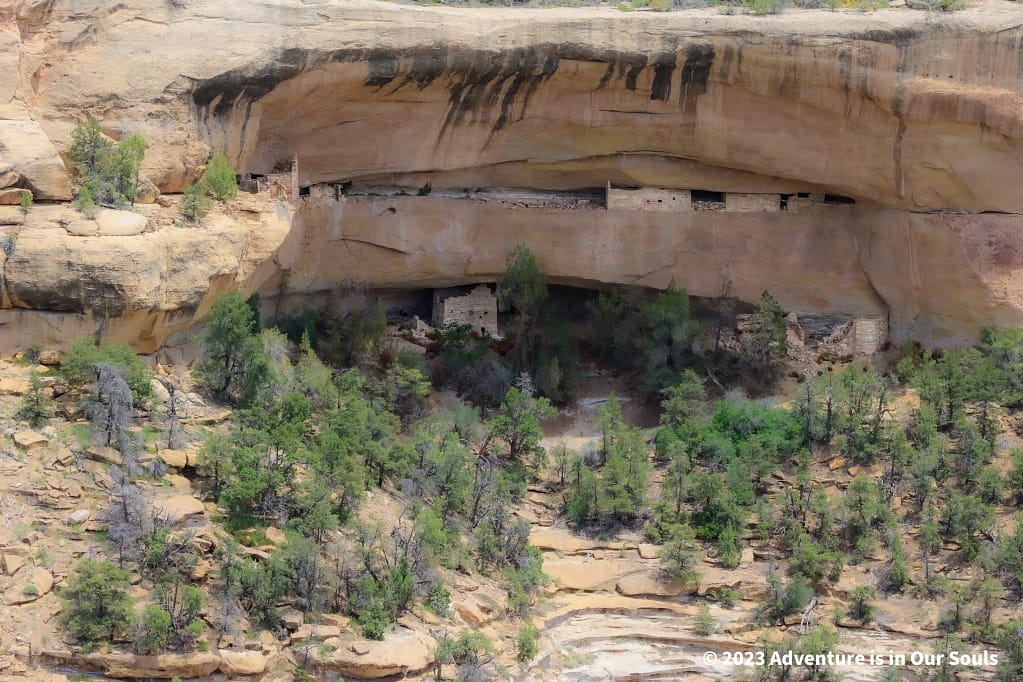
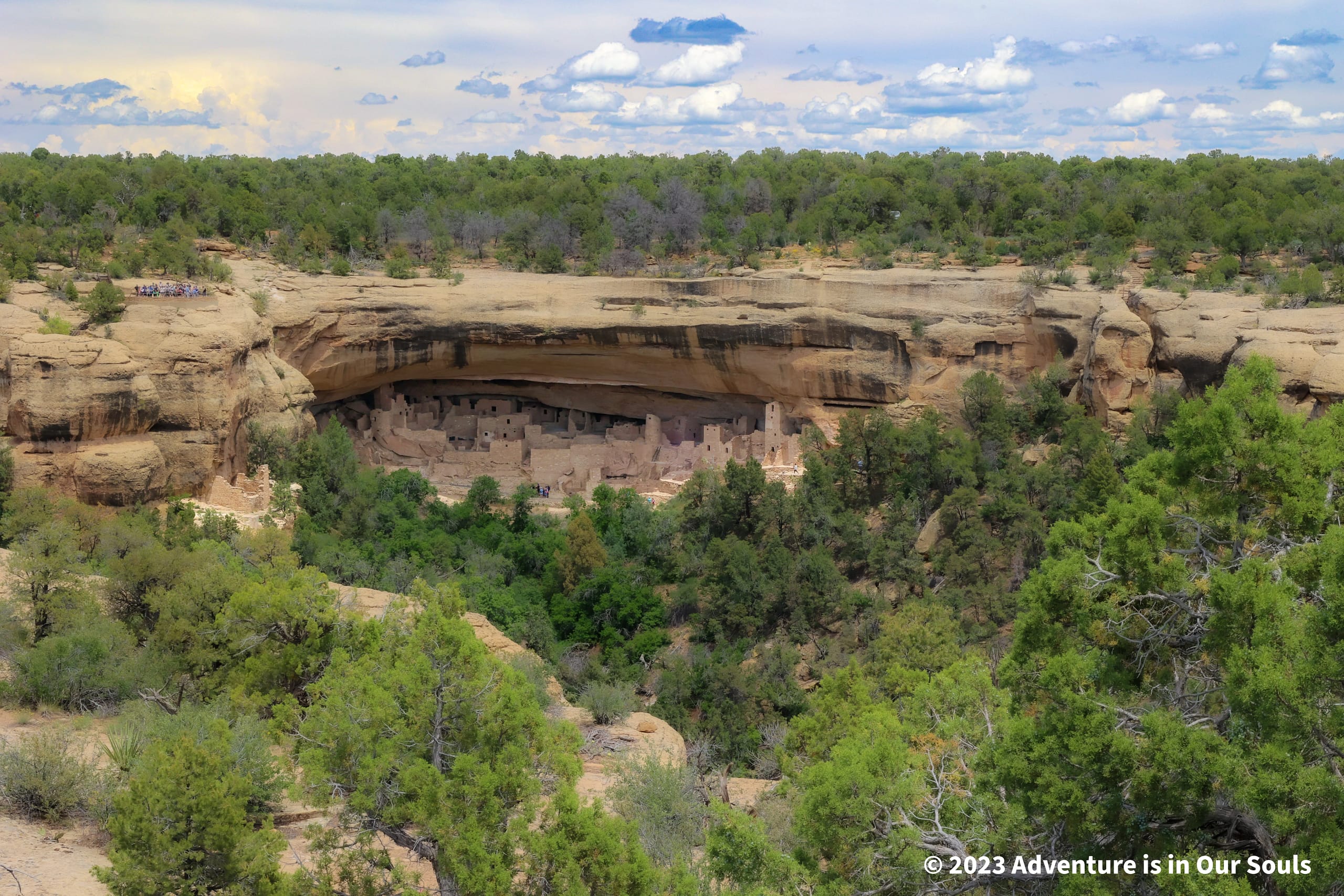
You can view over 30 cliff dwellings from this stop, including Cliff Palace!
Incredible Things to Do in Mesa Verde National Park: Explore the Spruce Tree House Area
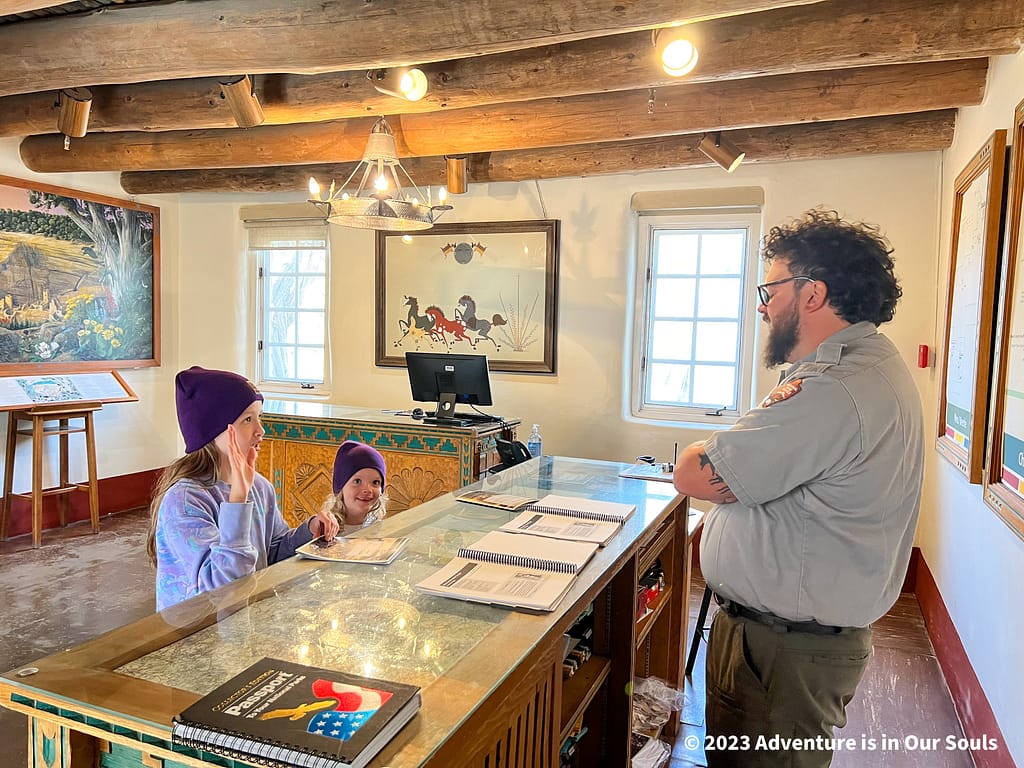
After completing the Mesa Top Loop, drive back towards the Spruce Tree House. The area around Spruce Tree House also contains the Chapin Mesa Archeological Museum. This had a couple of interesting exhibits, but it was pretty run-down when we visited. The girls were able to use this location to turn in their Junior Ranger books, though.
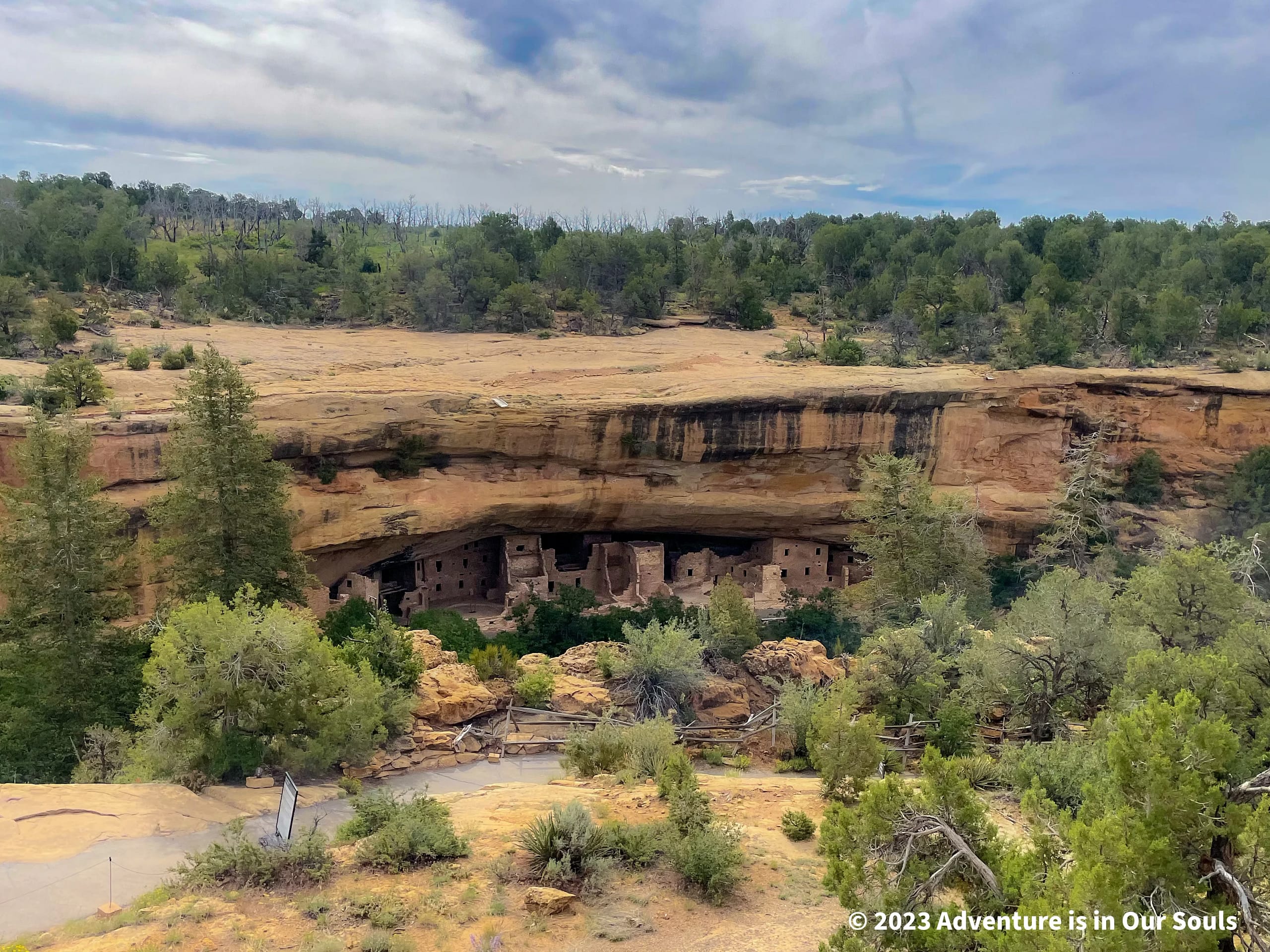
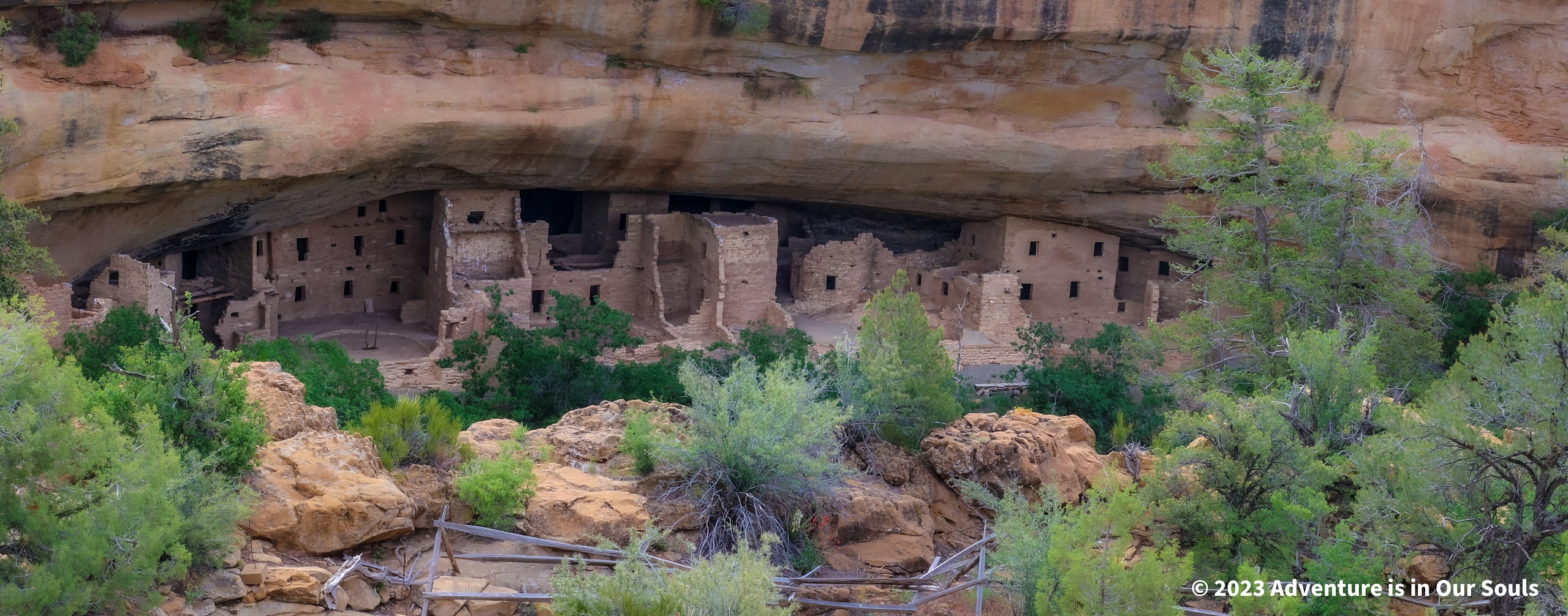
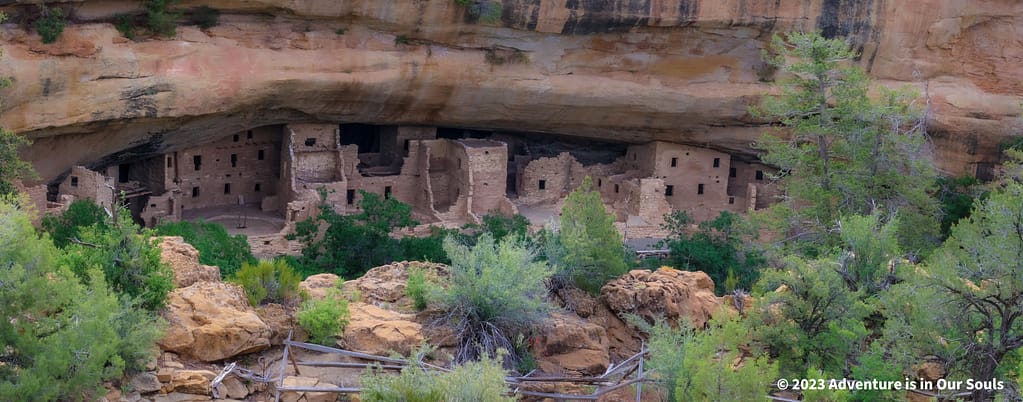
There is a short hike to the overlooks for Spruce Tree House. You can tour some of the cliff dwellings with a Park Ranger, but others are only viewable from overlooks. Spruce Tree House is considered one of the best-preserved cliff houses. But visitors can no longer enter it after a 2015 rockfall raised concerns about unstable ground.
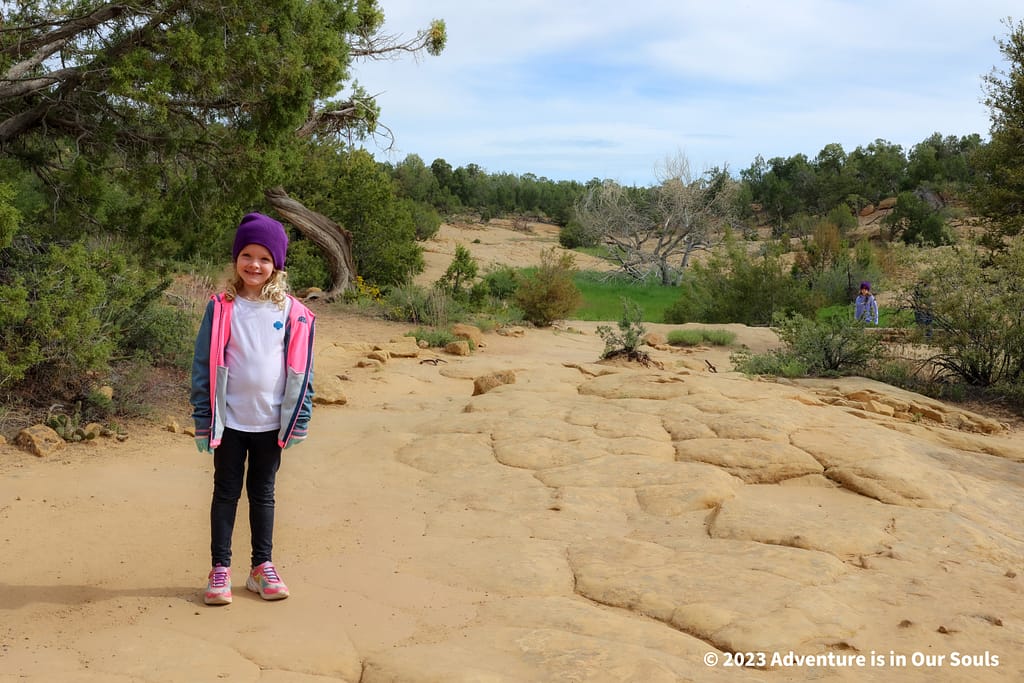
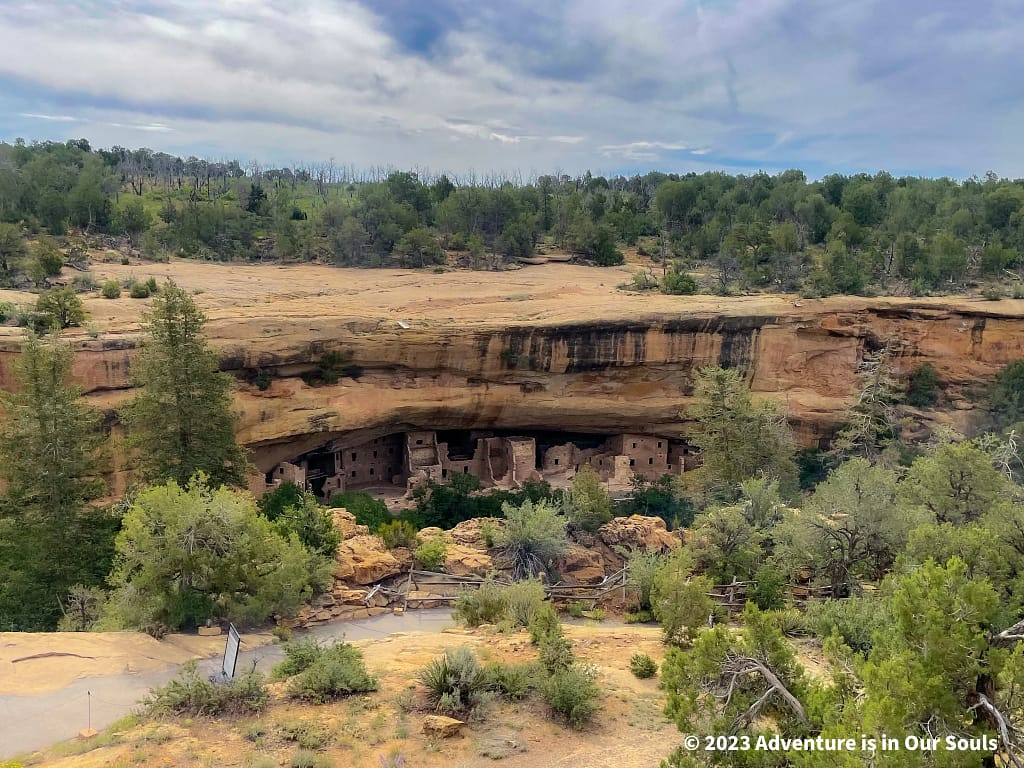
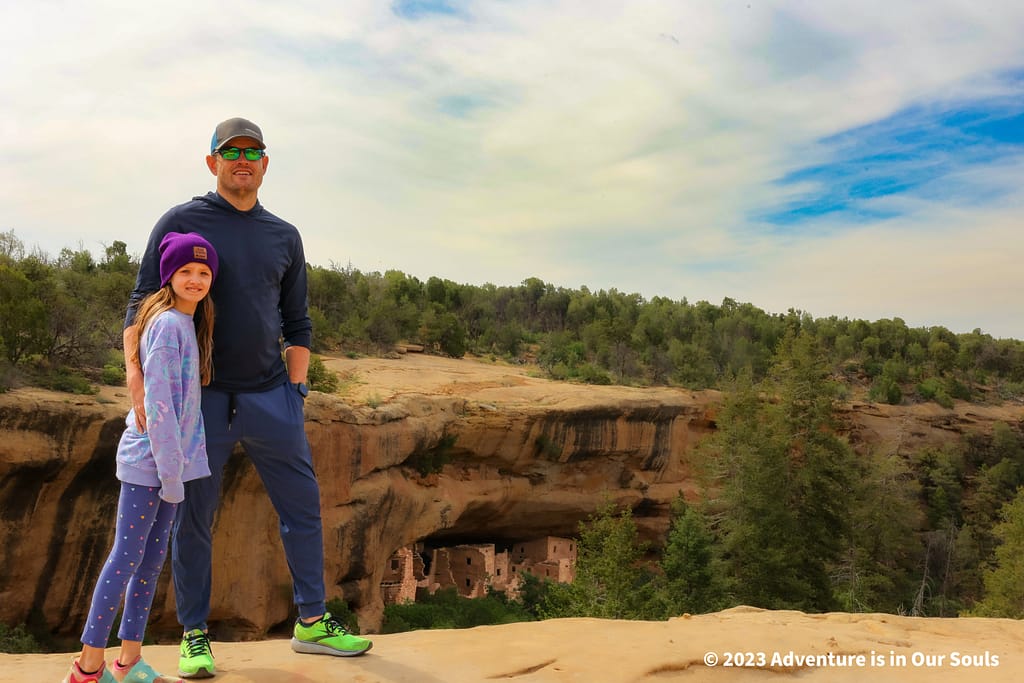
Spruce Tree House is larger than many of the 600+ other cliff dwellings in Mesa Verde. Constructed between AD 1200 and 1278, the dwelling has about 130 rooms, 8 kivas, and 2 towers. It looks so small from a distance, but these cliff dwellings are huge when you go down into them! This dwelling is 216 feet long and 89 feet deep and was home to 60-90 people (about 19 households).
Incredible Things to Do in Mesa Verde National Park: Experience the Cliff Palace Tour
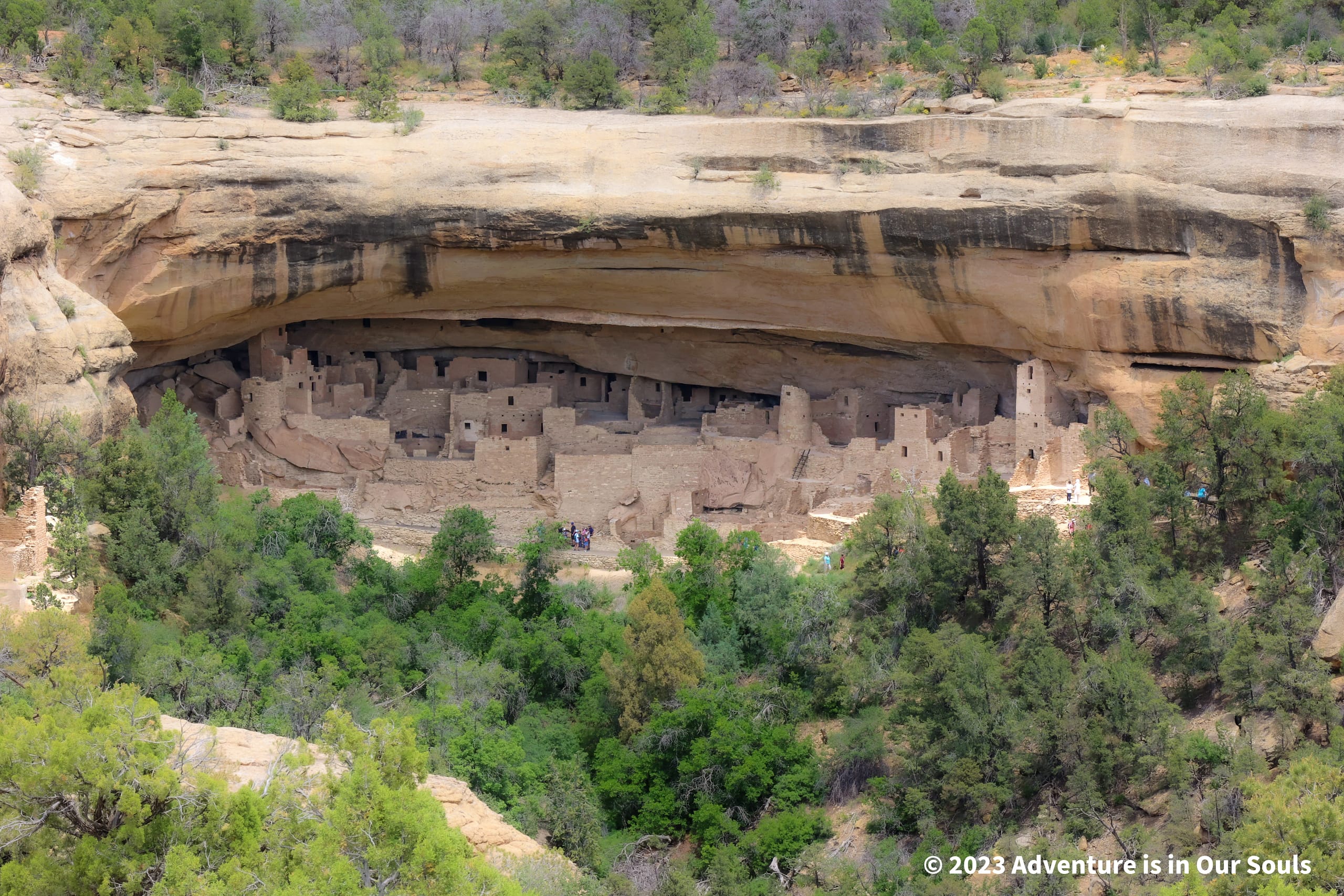
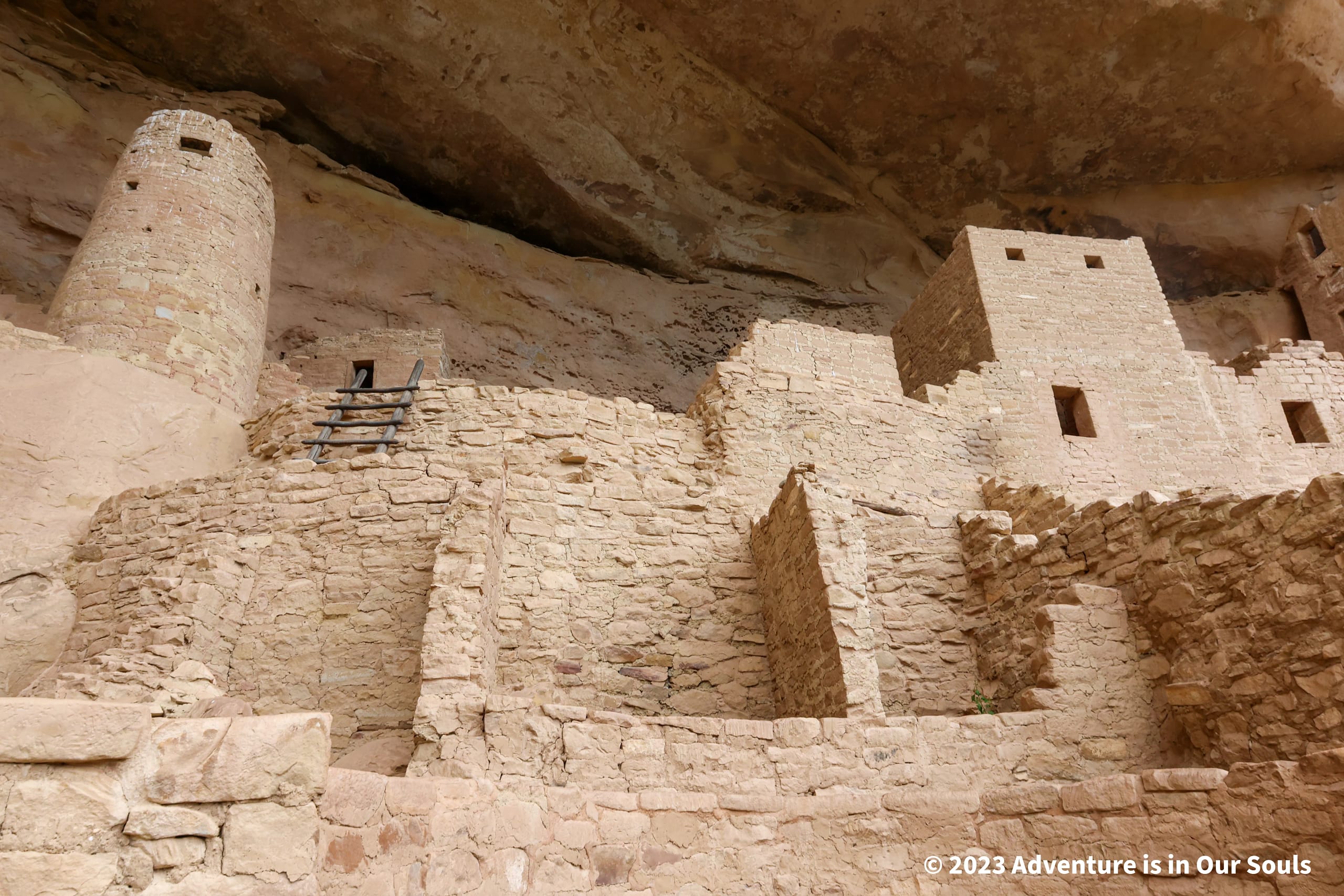
Cliff Palace is North America’s largest cliff dwelling. It has 150 rooms and 23 kivas, which housed approximately 100 people. Given its size, it is believed that Cliff Palace held special significance for the original occupants.
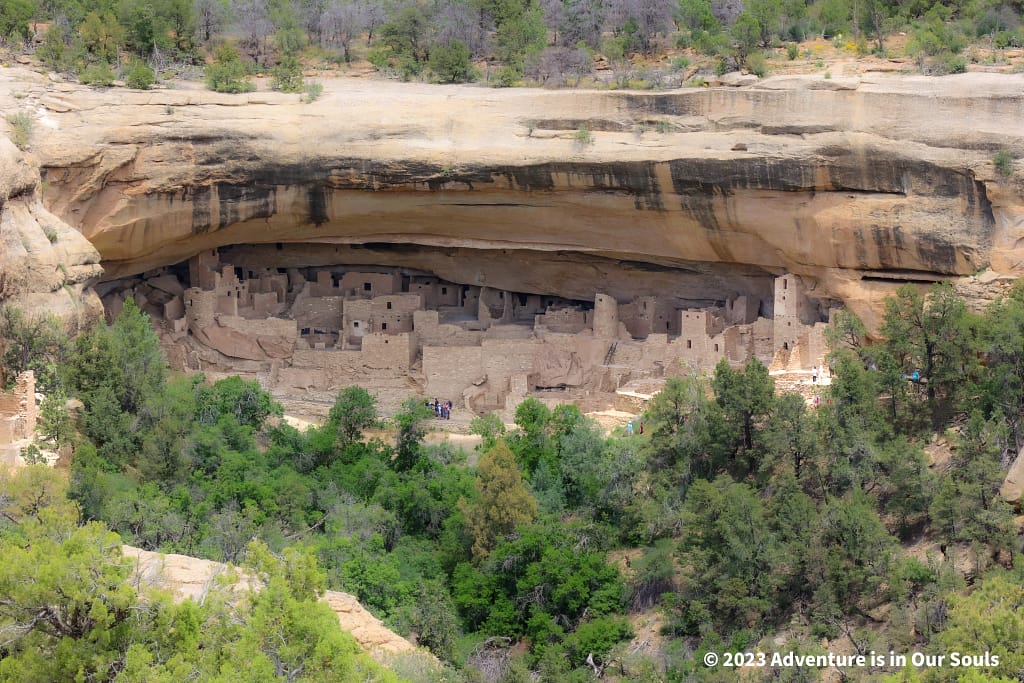
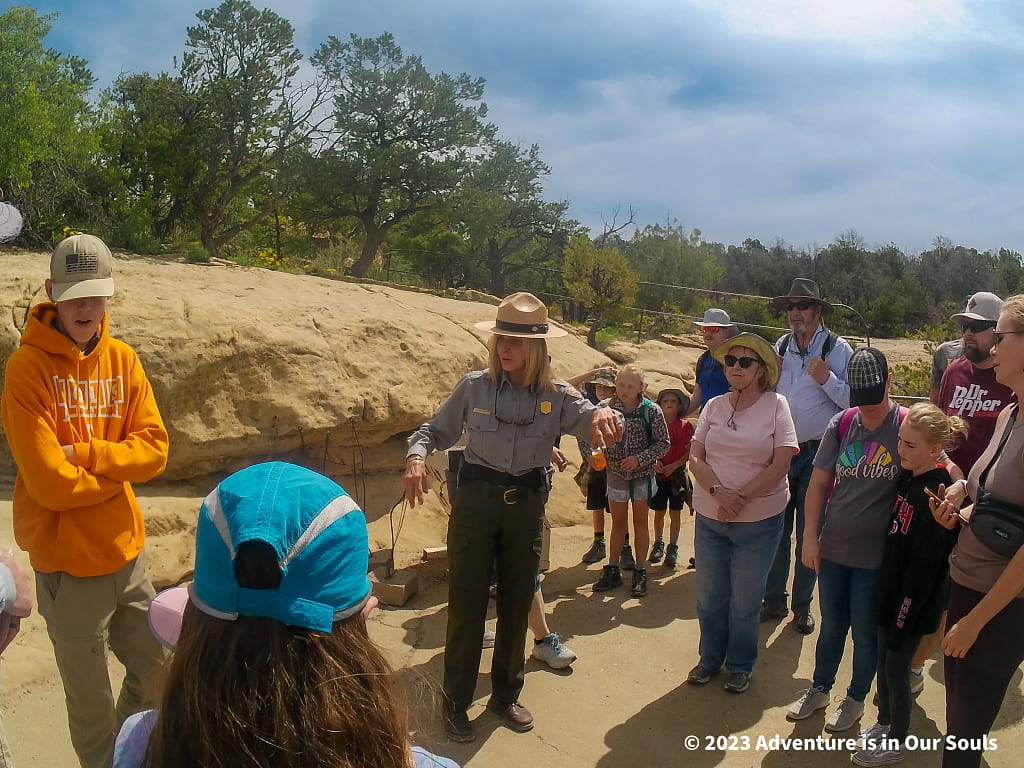
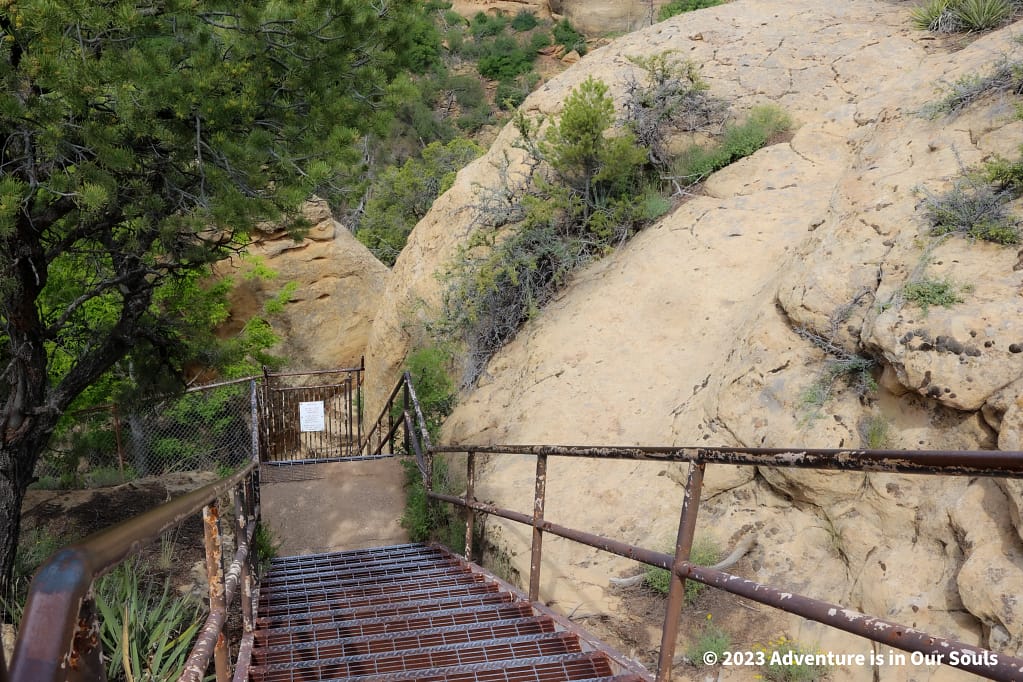
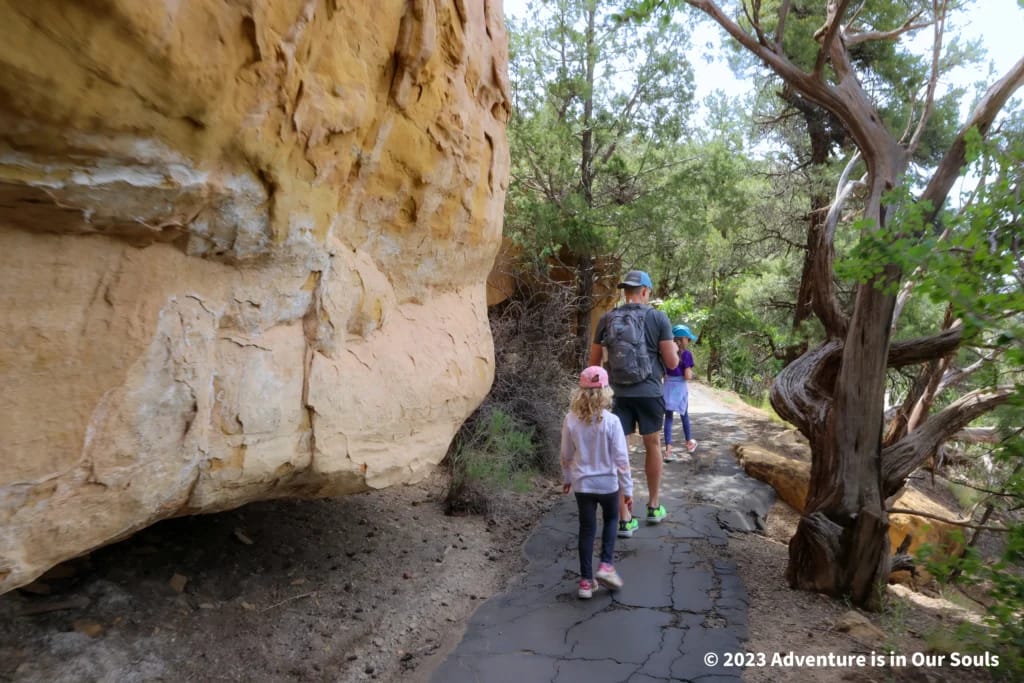
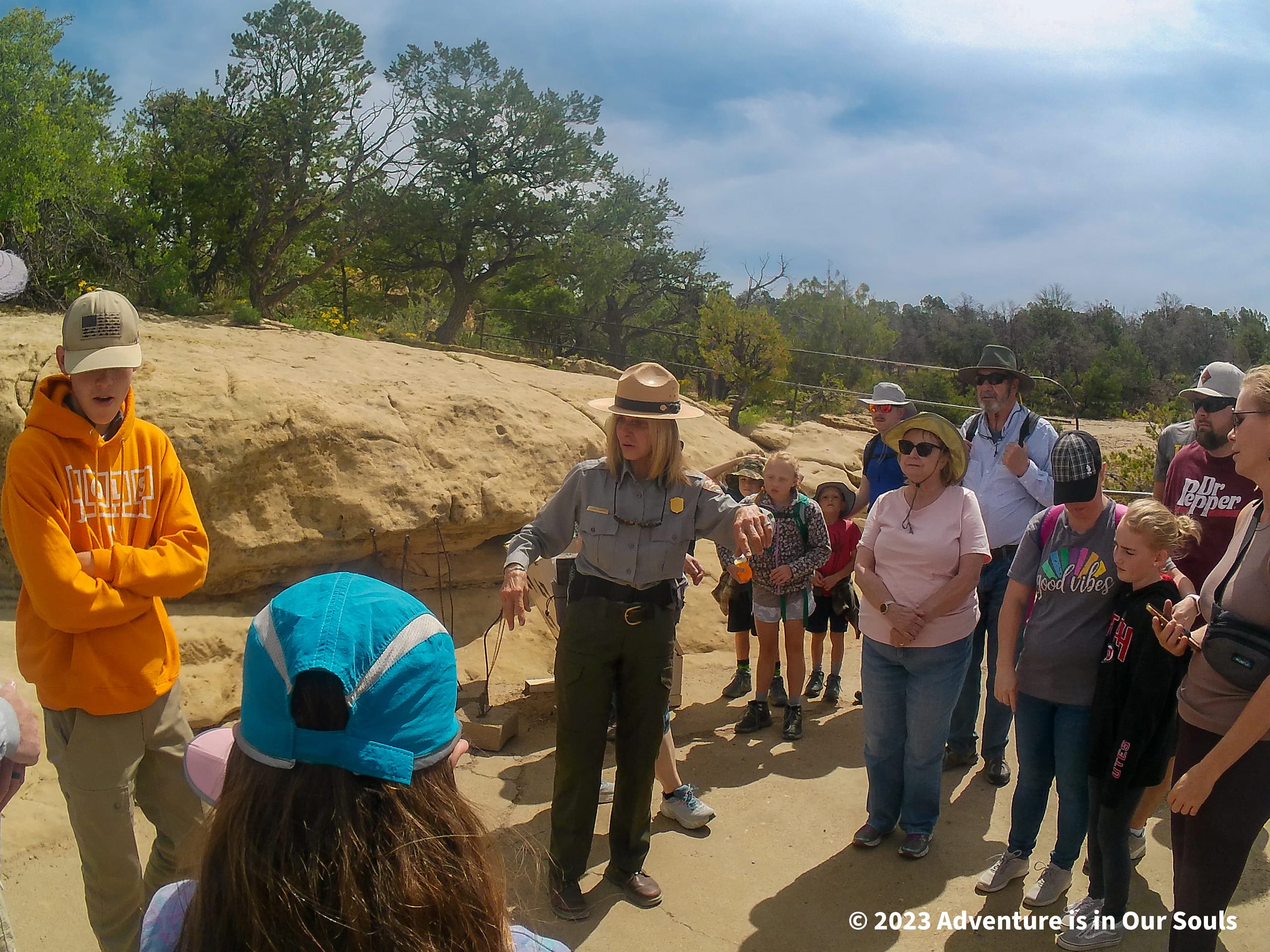
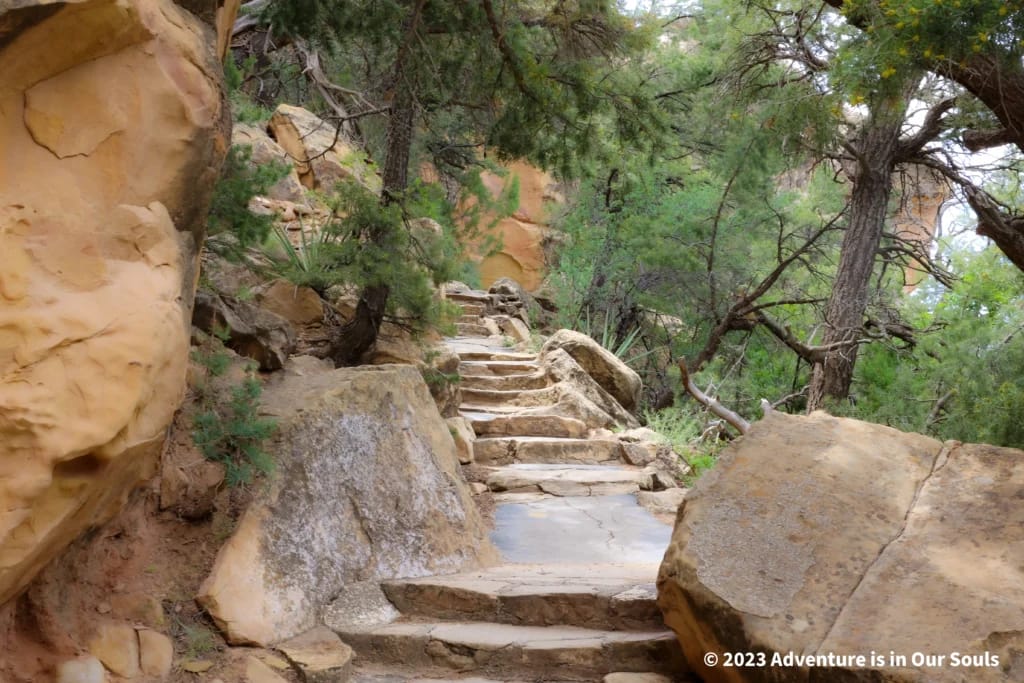
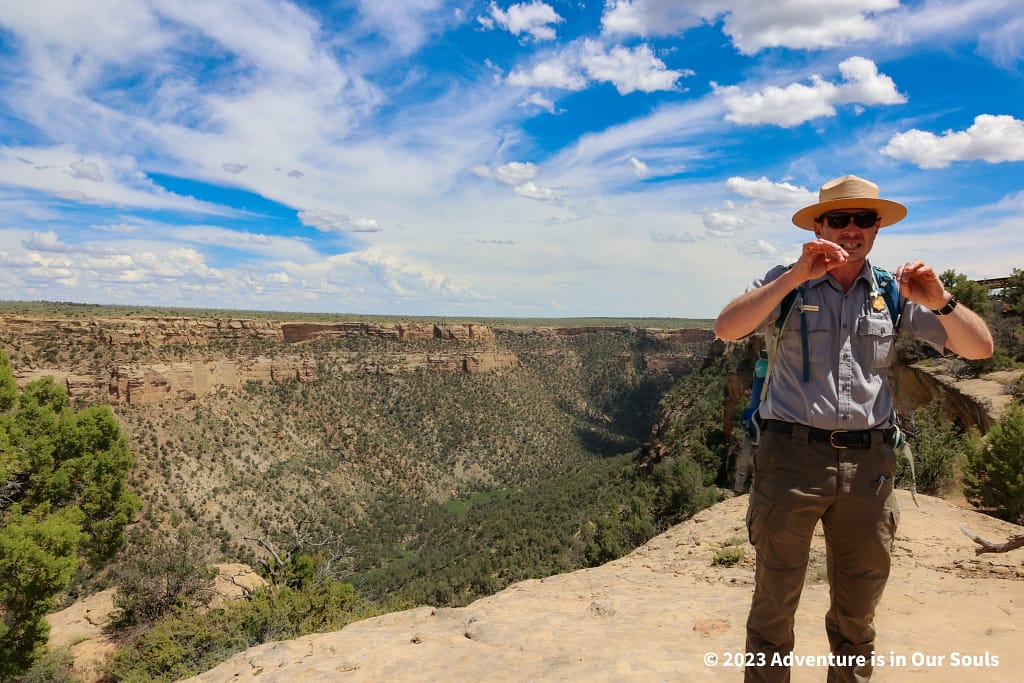
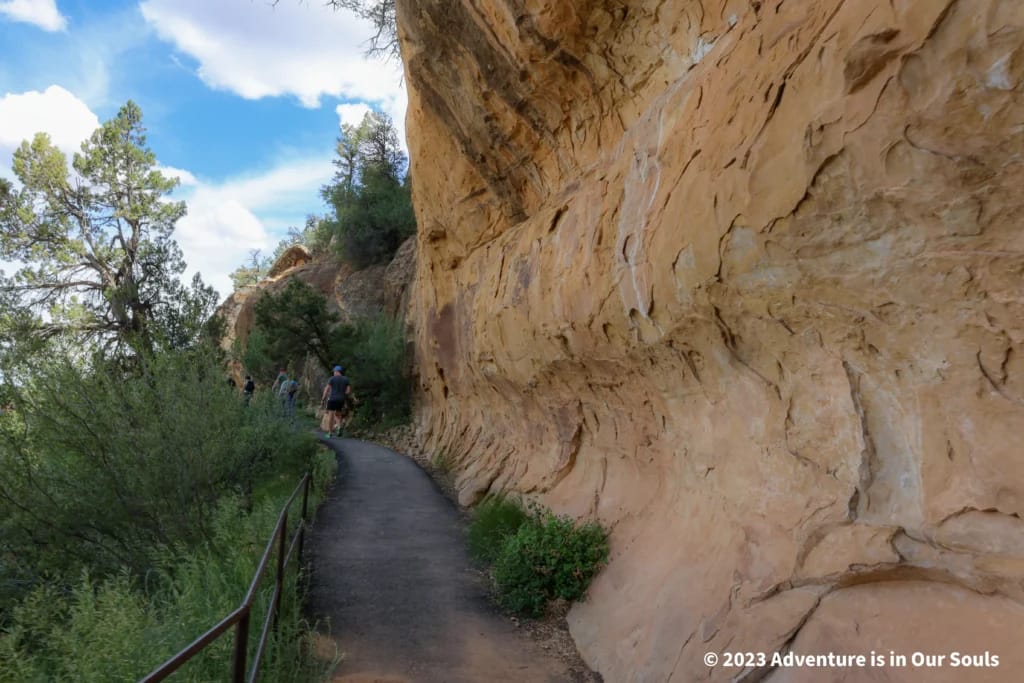
After an orientation, we hiked down the mountain. There were some sections of staircases and some sections of paved paths. Then you round a bend and get your first glimpse of Cliff Palace at eye level. After a short climb up a ladder, everyone gathers in the first alcove of Cliff Palace.
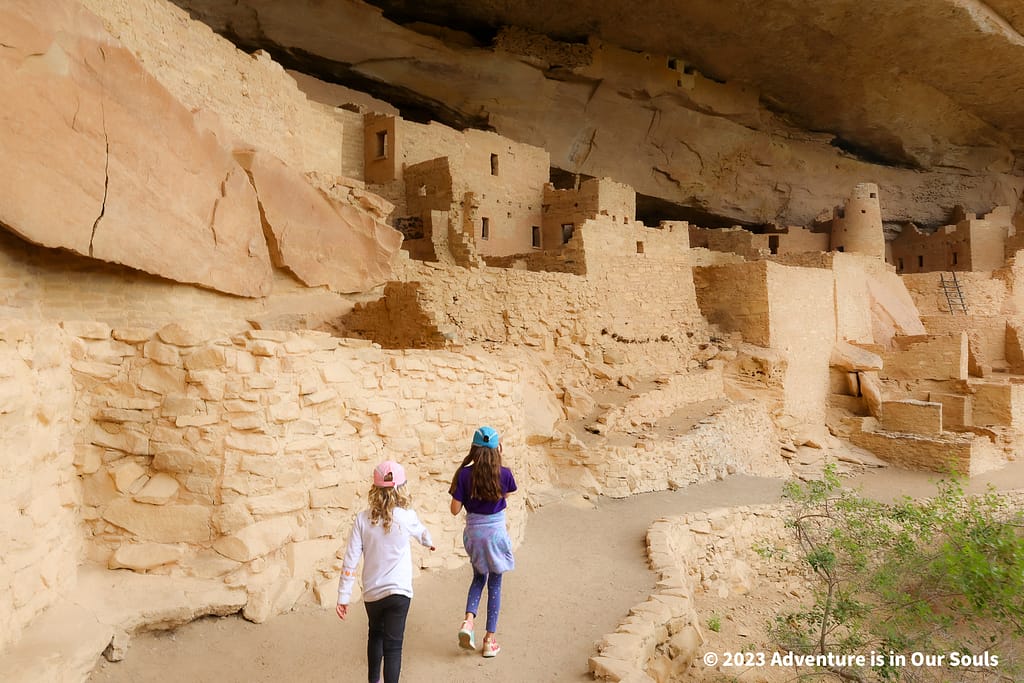
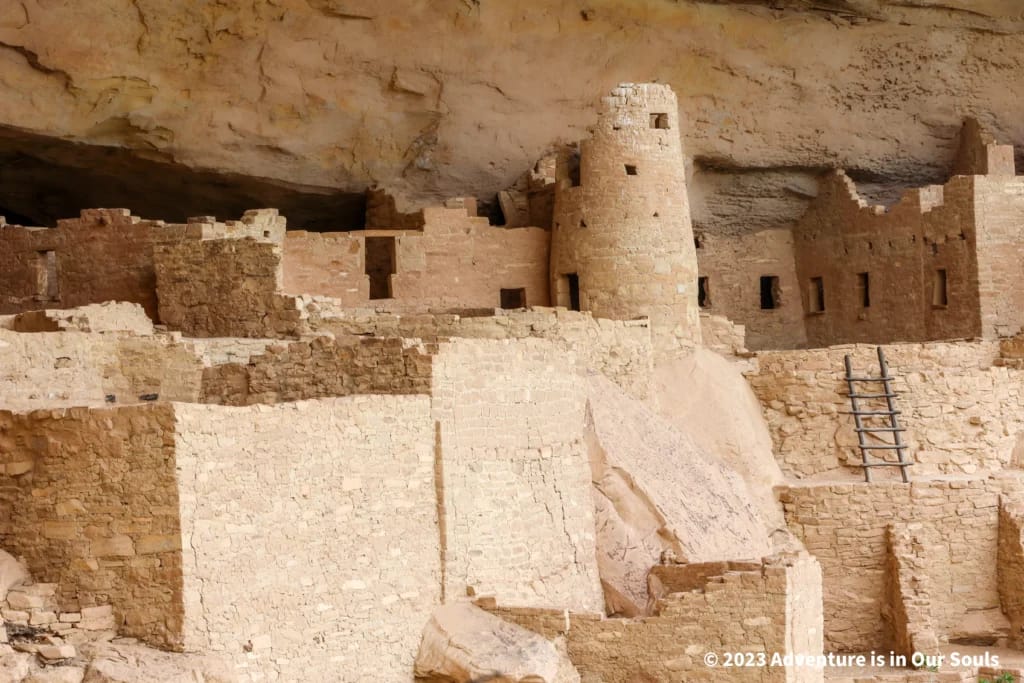
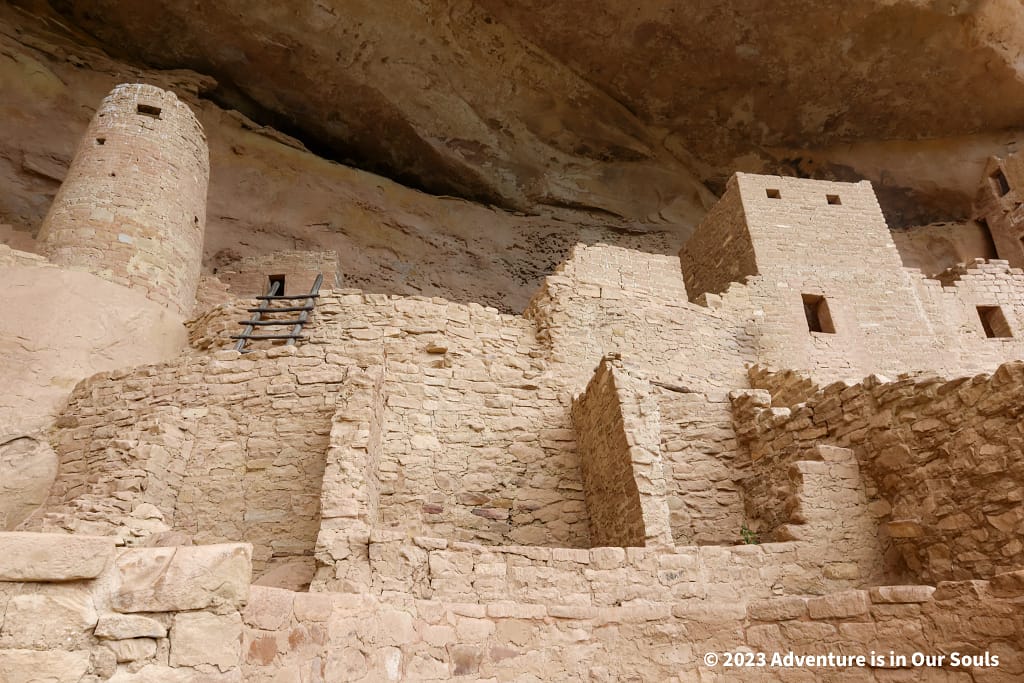
From there, we explored the bottom level of the dwelling.
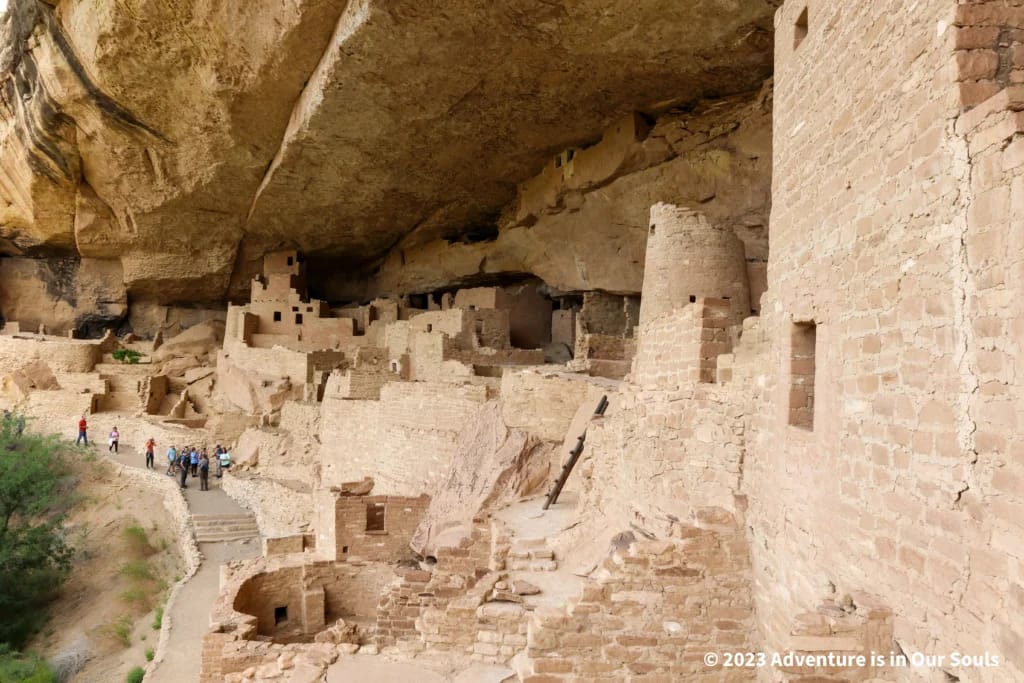
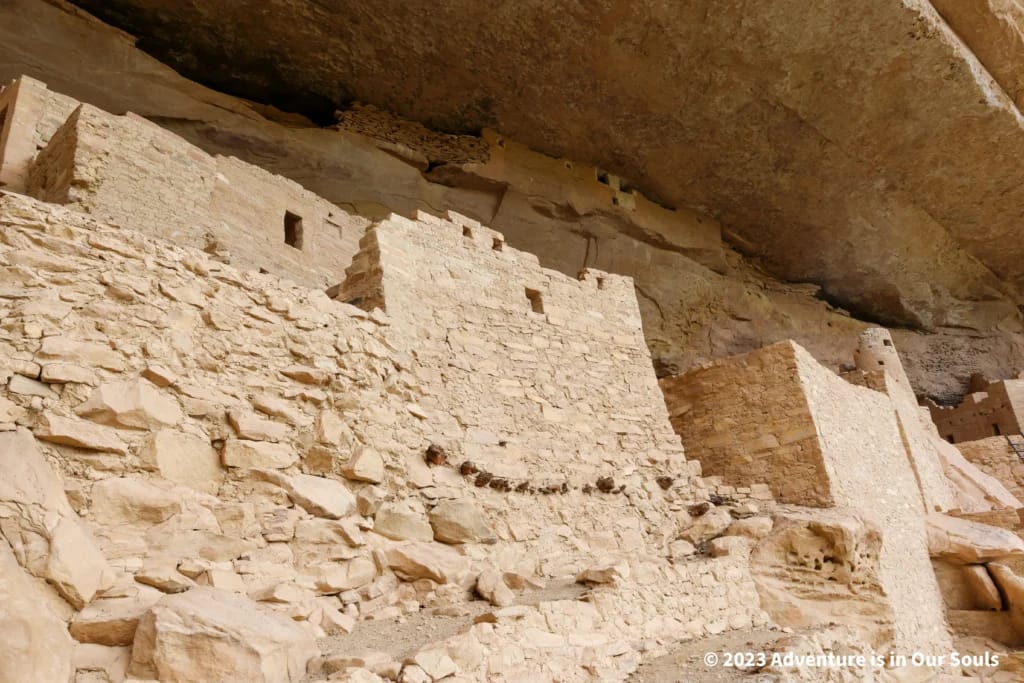
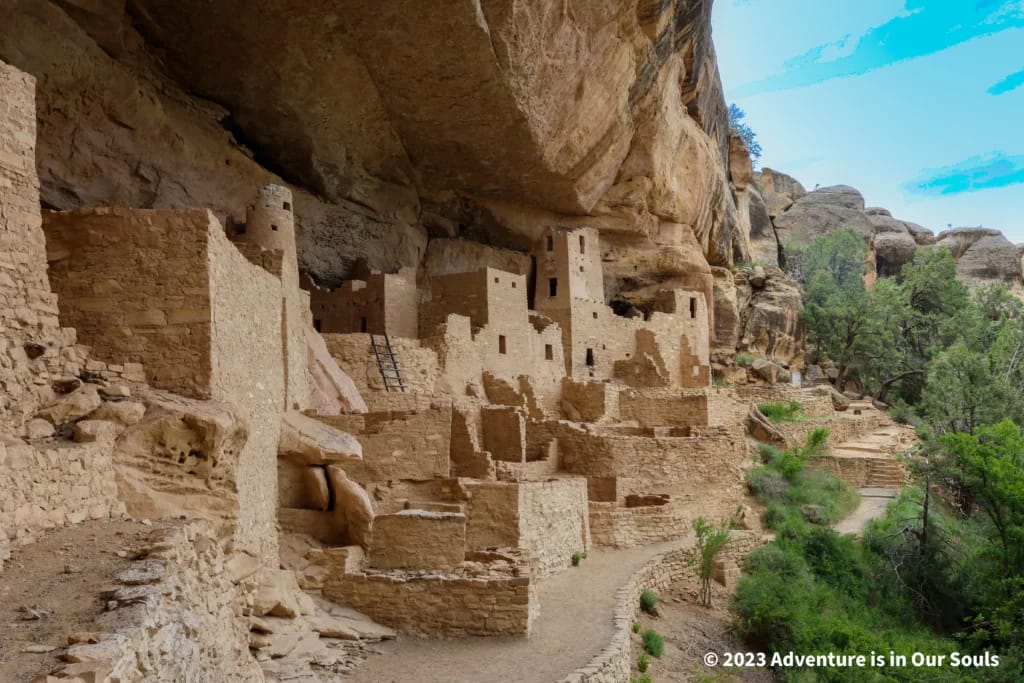
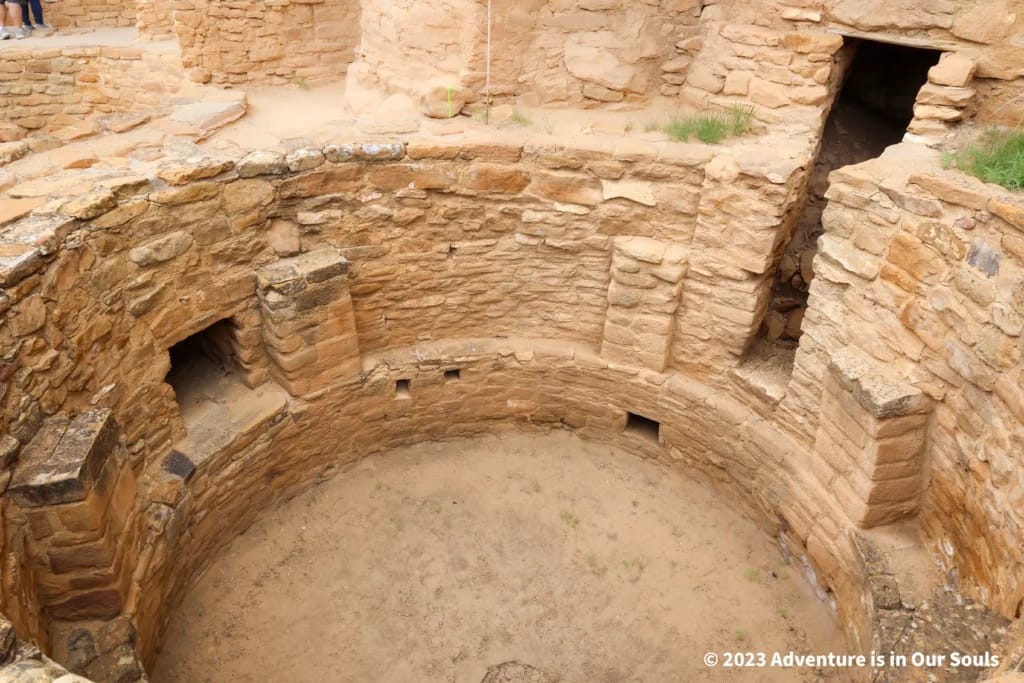
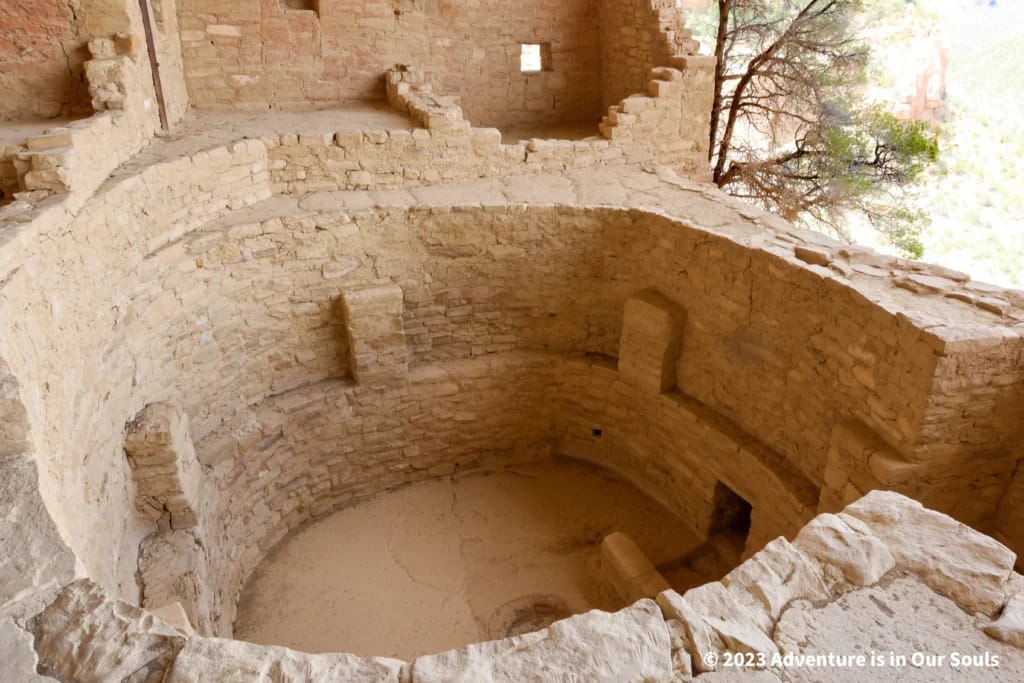
From there, we explored the bottom level of the dwelling. The tour continued along the cliffside and up a small trail to the kivas. Here, the Ranger explained that kivas are round, sunken rooms of ceremonial importance. The families lived in rooms organized around the kivas. A kiva had a wood-beamed roof supported by 6 columns. Each kiva had a fire pit, a ventilation shaft, and a deflector. They also had a small, round hole in the floor, north of the fire pit, called a sipapau. These were thought to represent the hole through which humans climbed into this world.
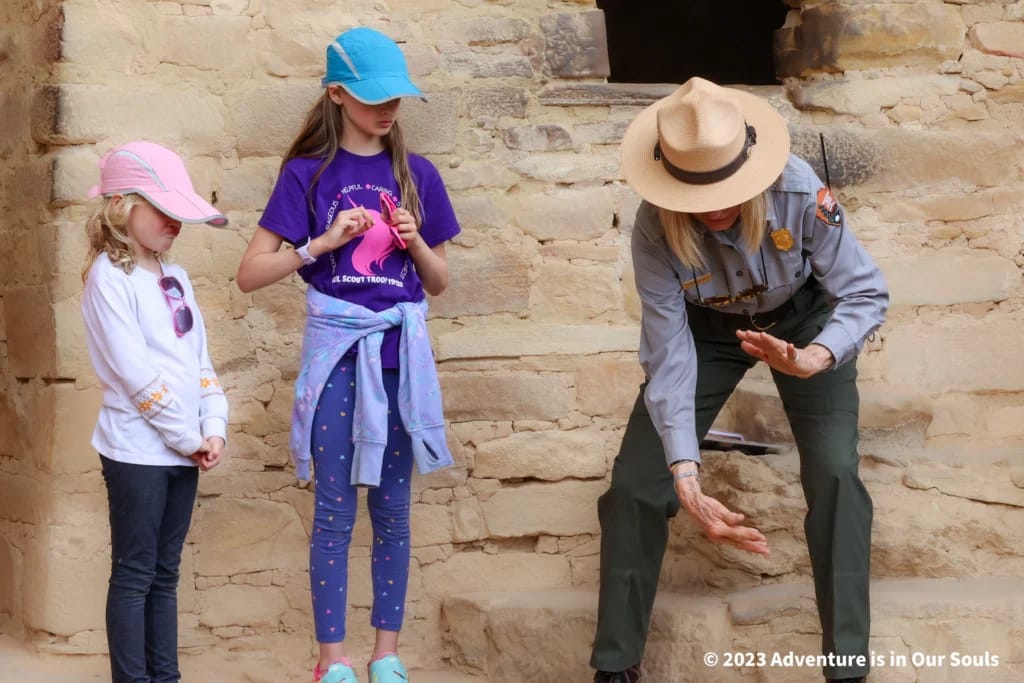
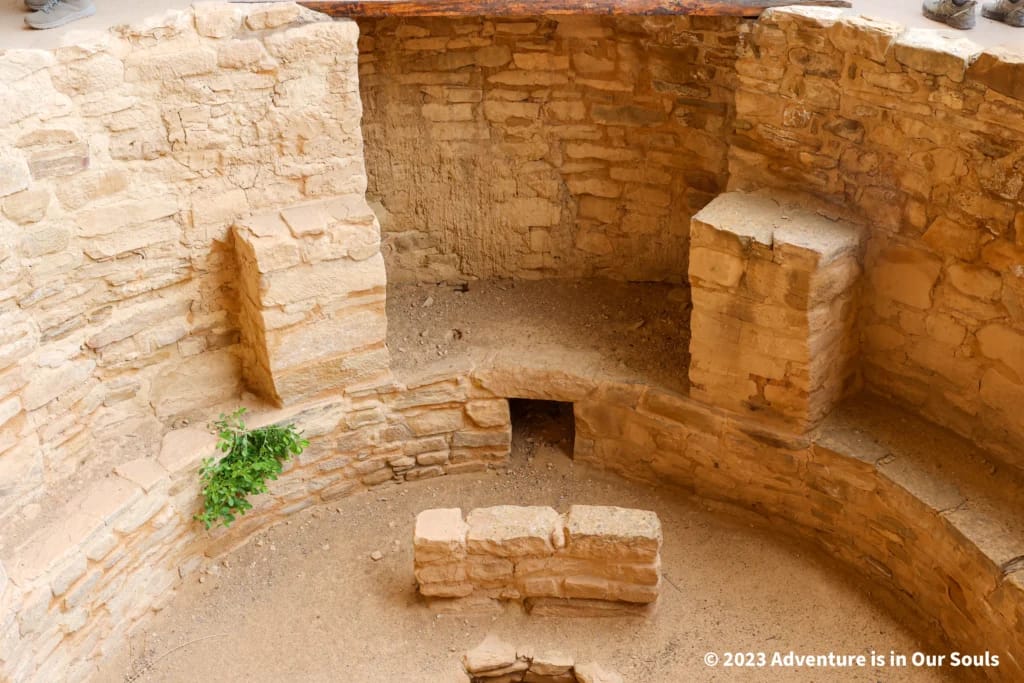
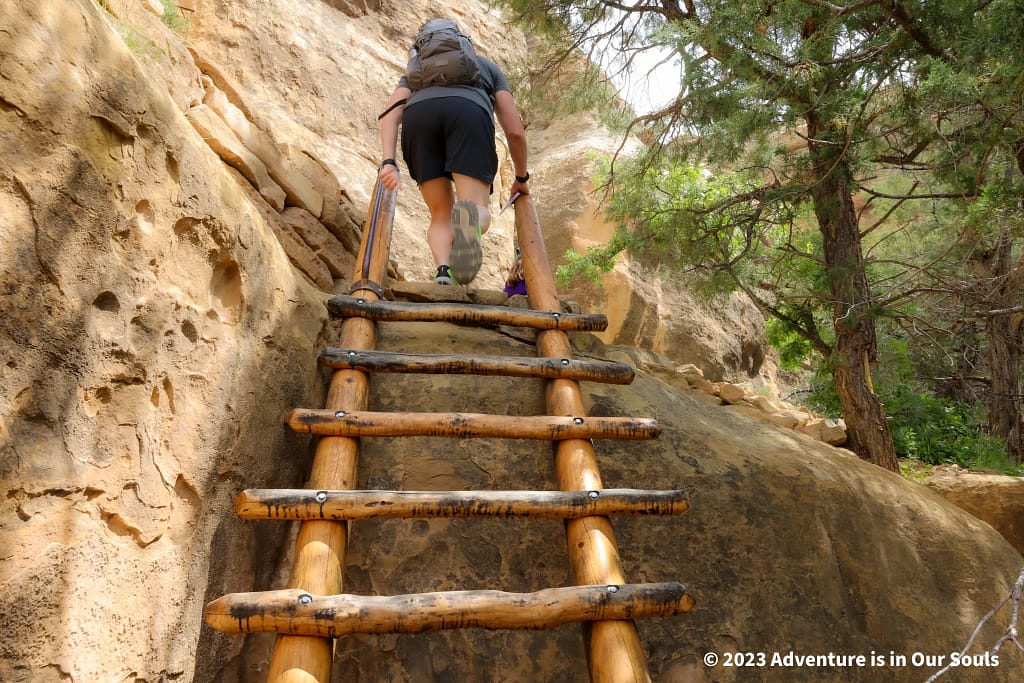
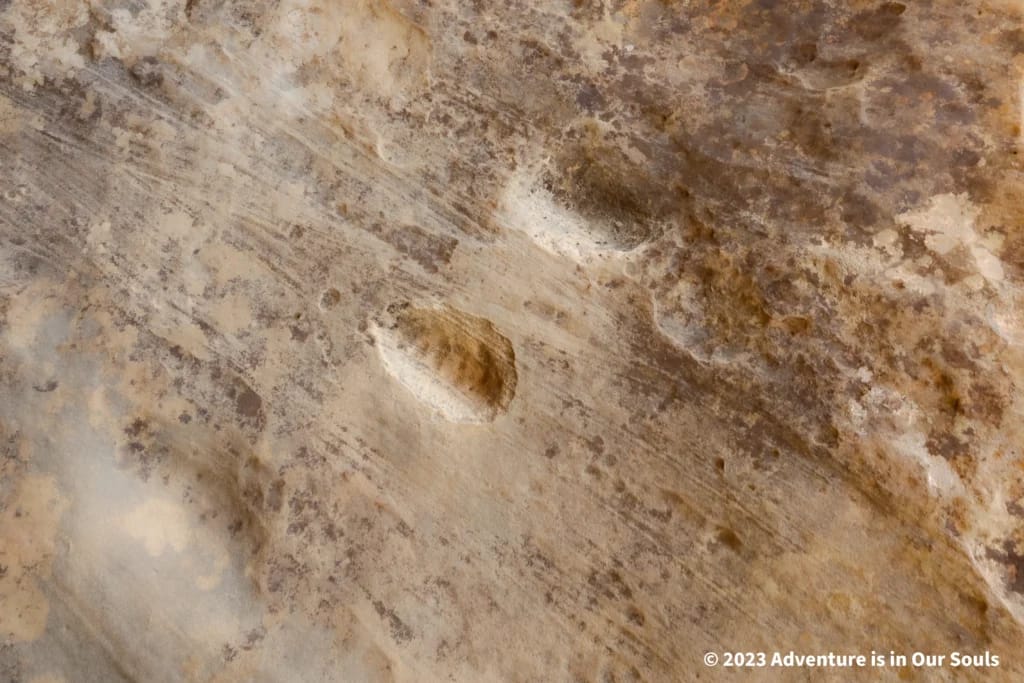
The hike up was along steep stone steps and more wooden ladders. The remnants of the ancient hand and toe holds are visible from the steps. The girls did amazingly well on the tour! To my surprise, they were really excited to tour the next cliff dwelling.
Incredible Things to Do in Mesa Verde National Park: Take the Balcony House Tour Adventure
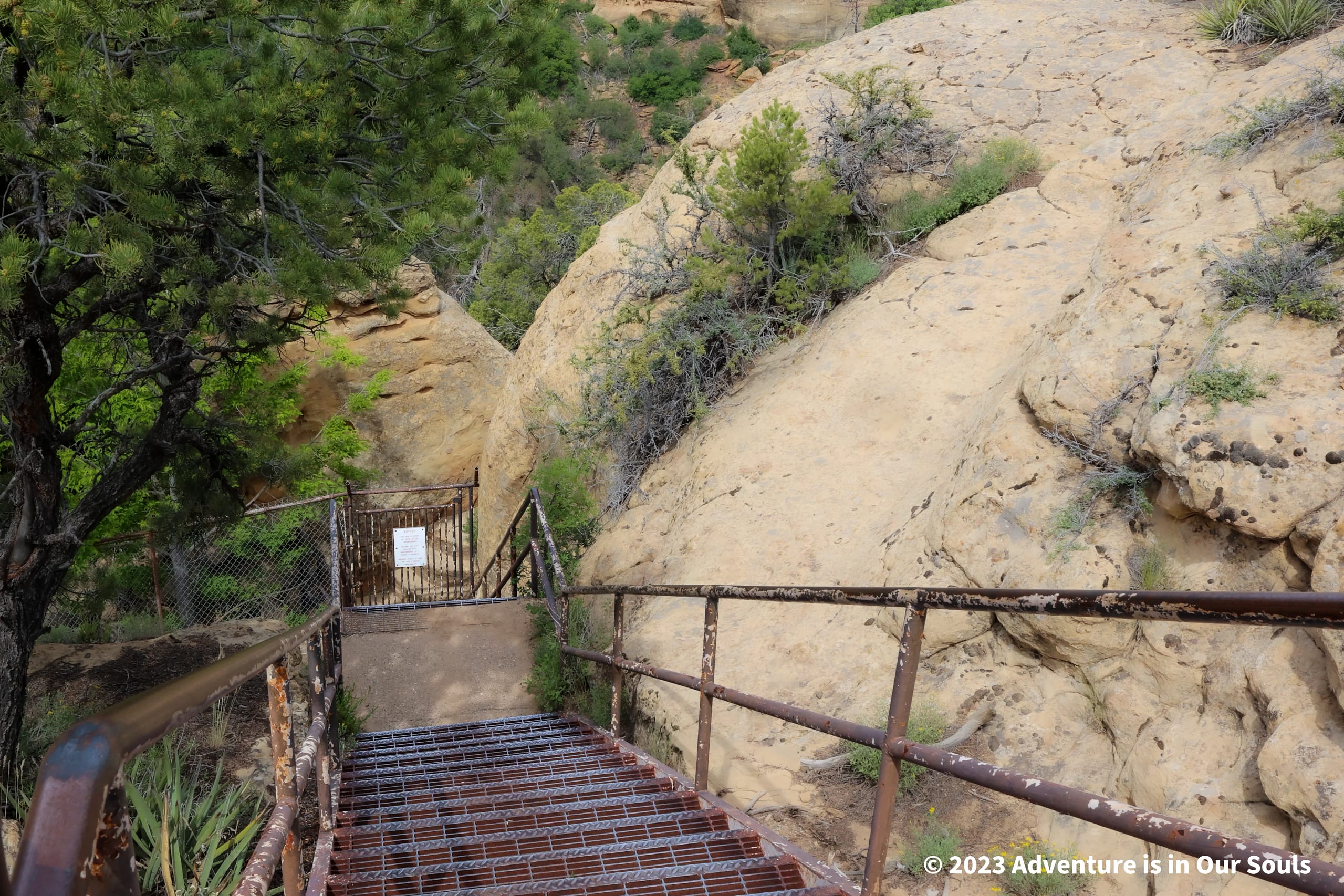
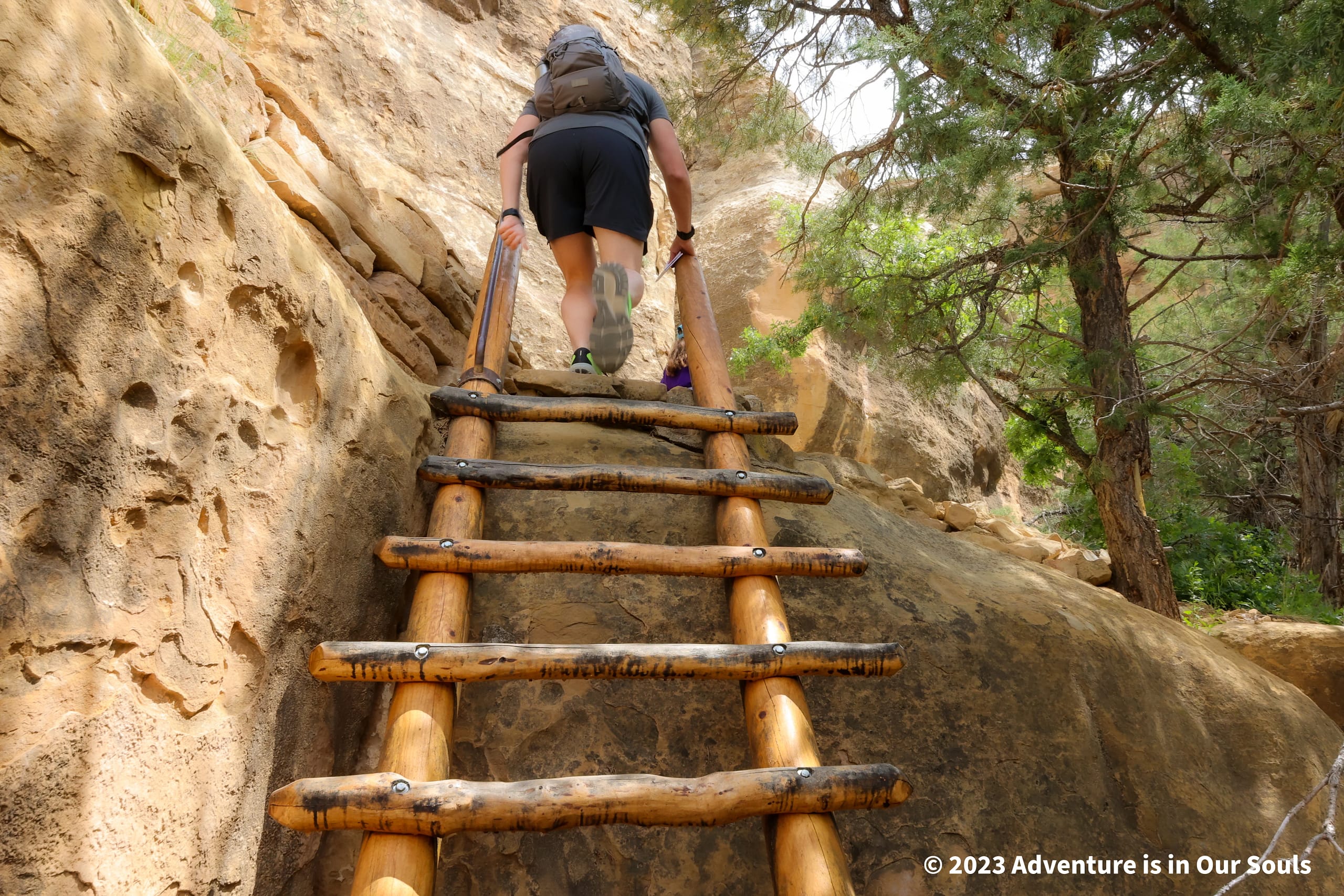
This tour starts pretty easily. There are some paved trails and some metal staircases. Then, you approach a giant ladder that is 32 feet tall and goes straight up the cliffside. Spider Monkey handled it like a champ at age 6, so anyone can handle it!
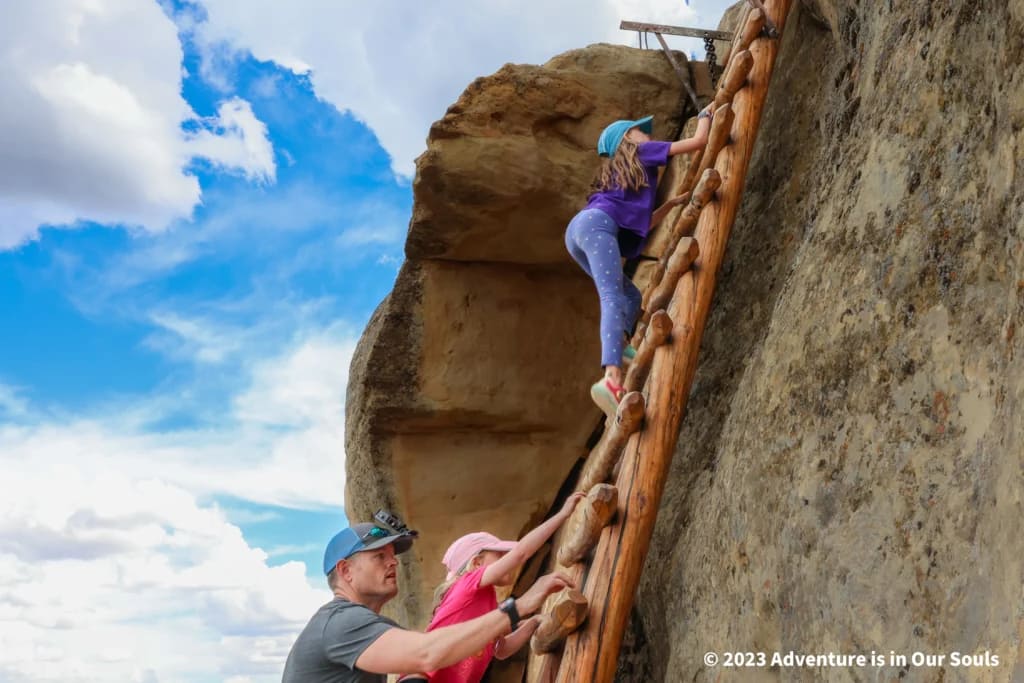
Once you clear the ladder, you squeeze through a narrow opening in the rocks and up another small ladder. Then you are in Balcony House!
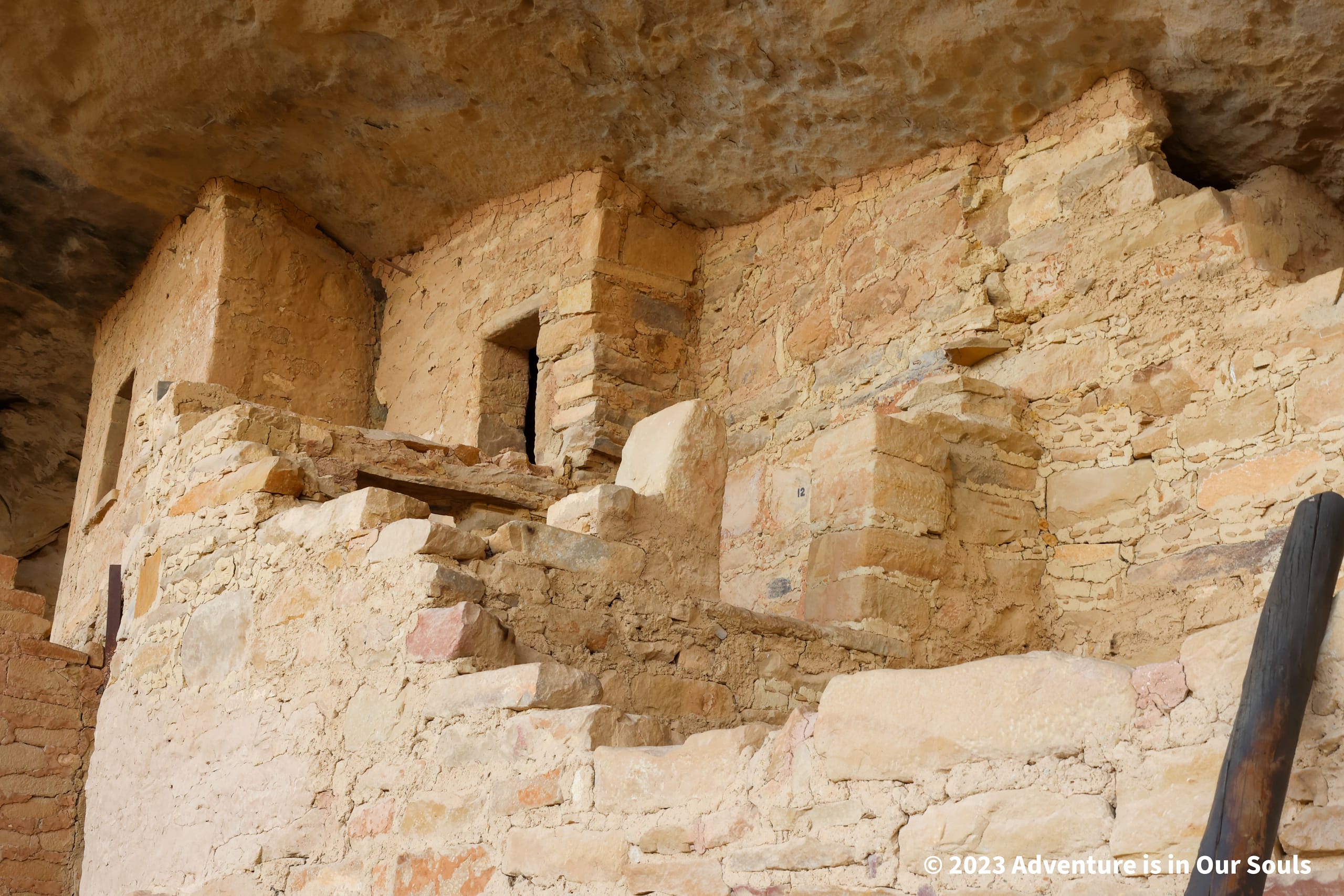
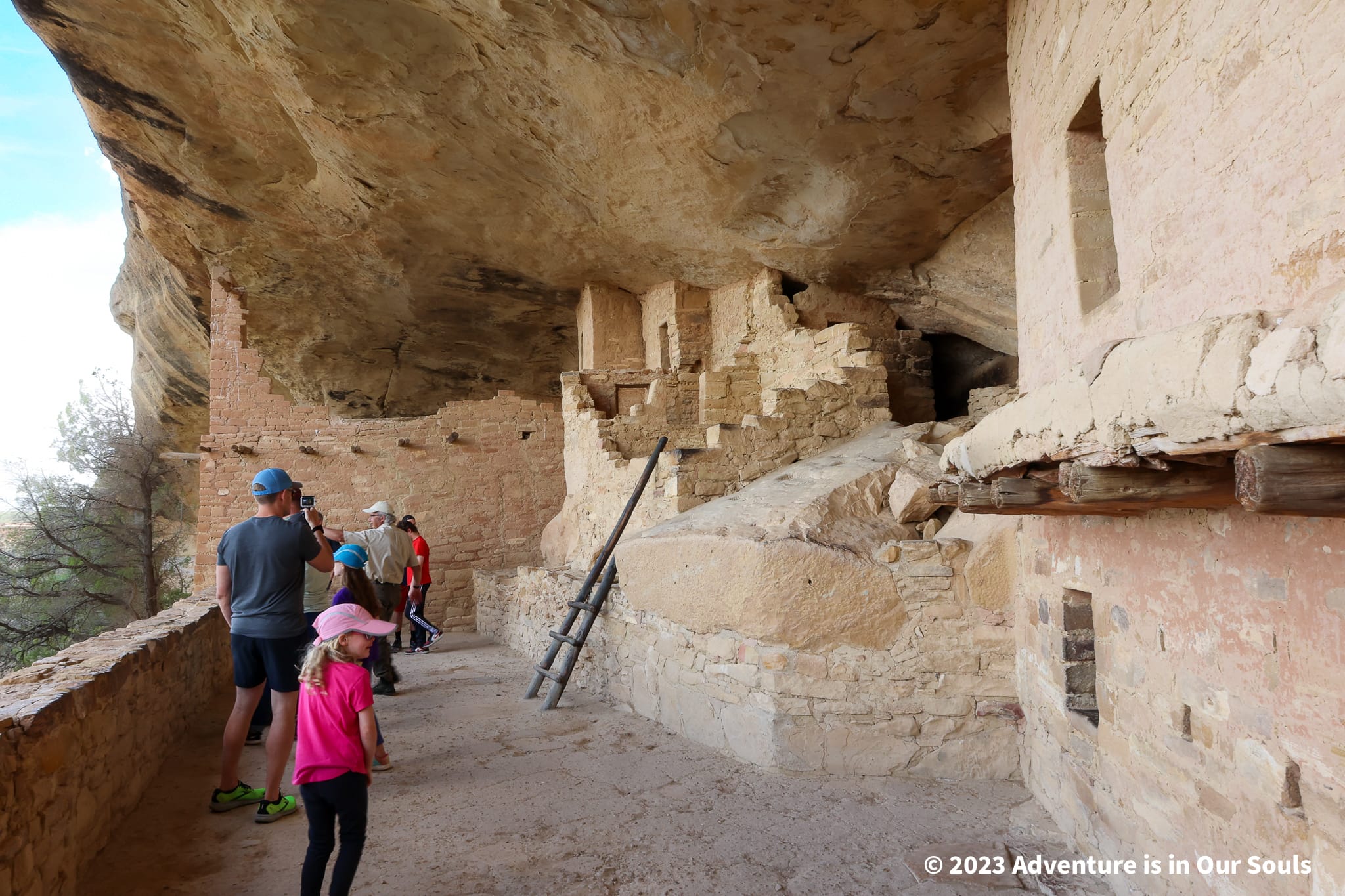
Balcony House is considered a “medium-sized” cliff dwelling with 38 rooms. It gets its name because the structures in the North Plaza have actual balconies. The cliff dwelling is built on a small ledge, but the NPS thankfully added a small retaining wall to the North Plaza.
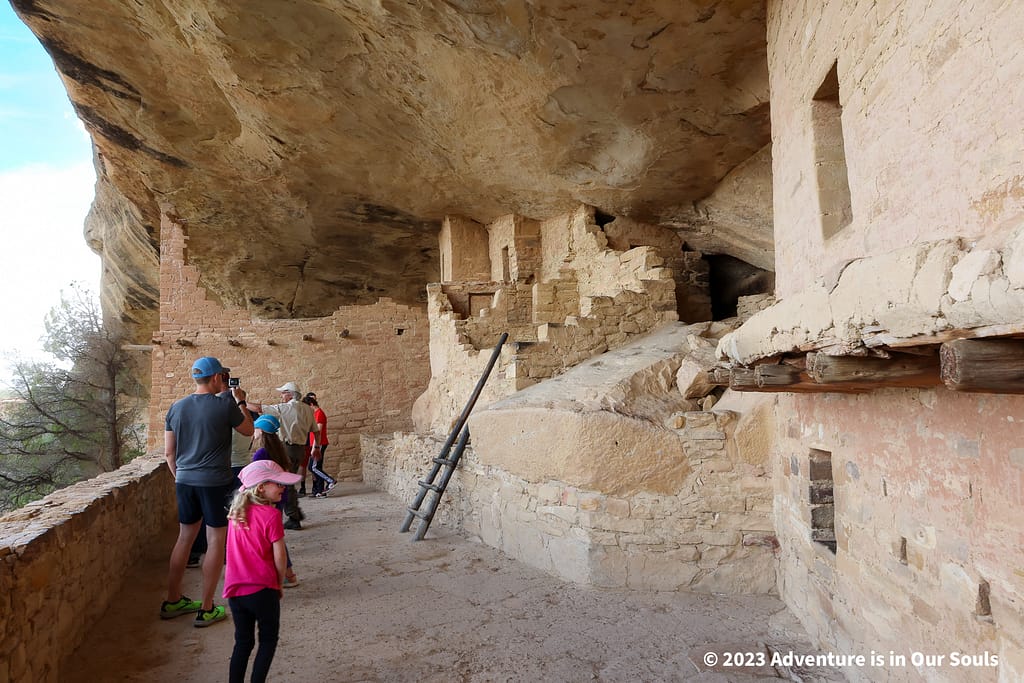
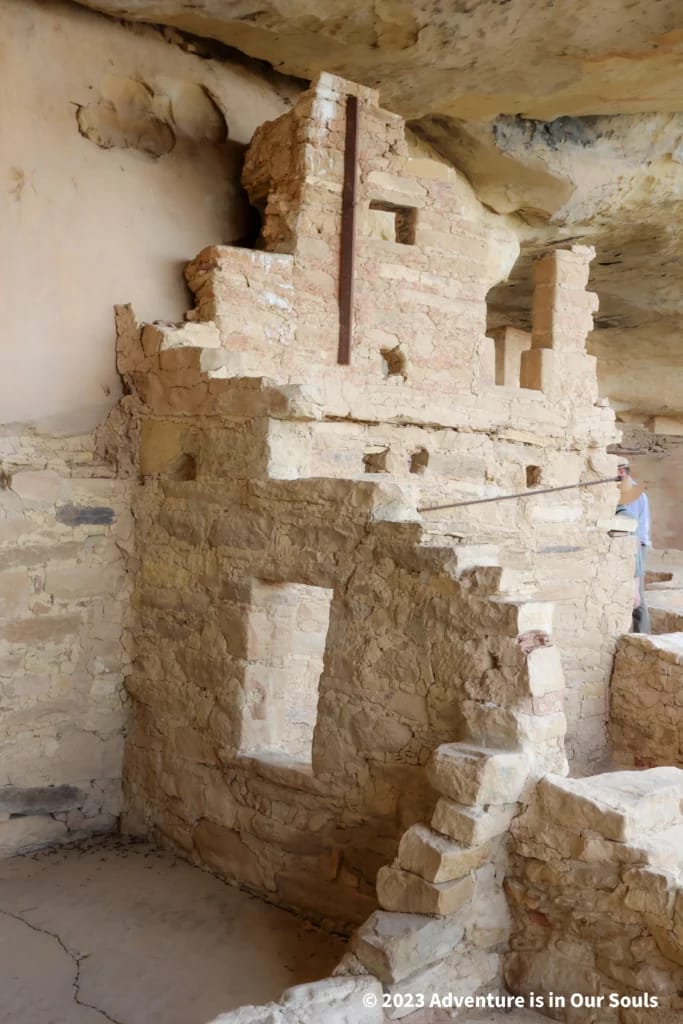
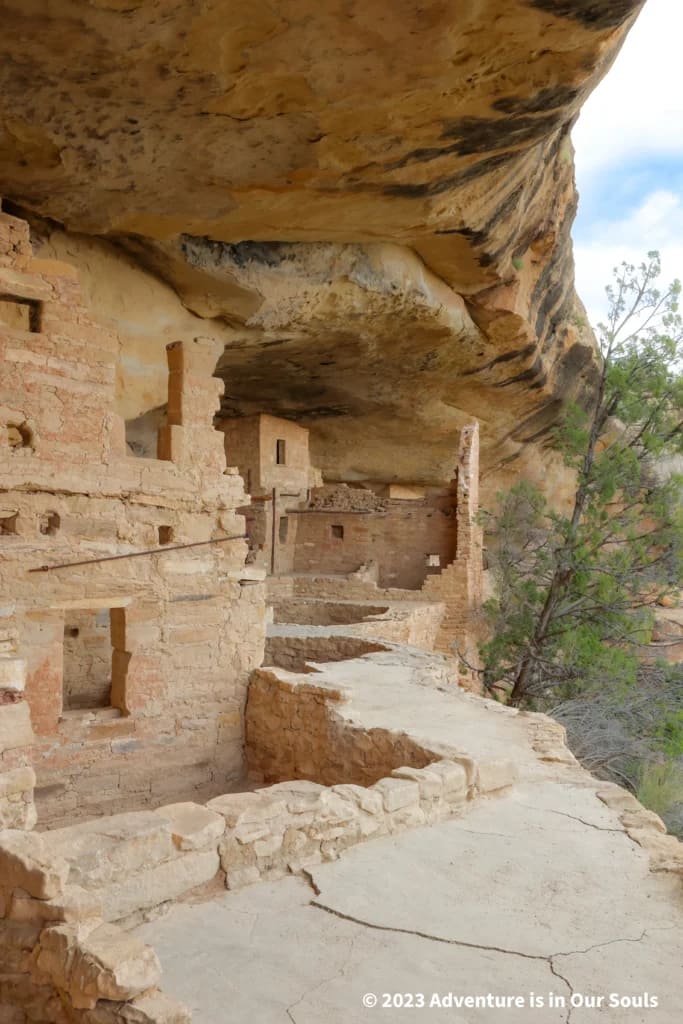
After exploring North Plaza, we climbed a small ladder and used the hand and toe holds to reach Kiva Plaza.
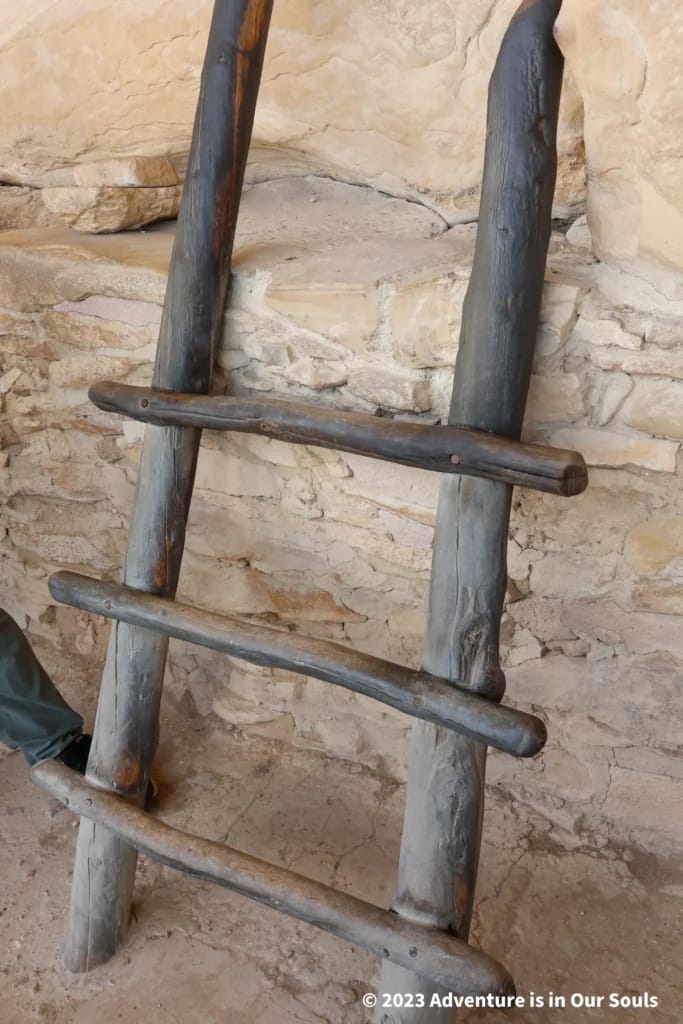
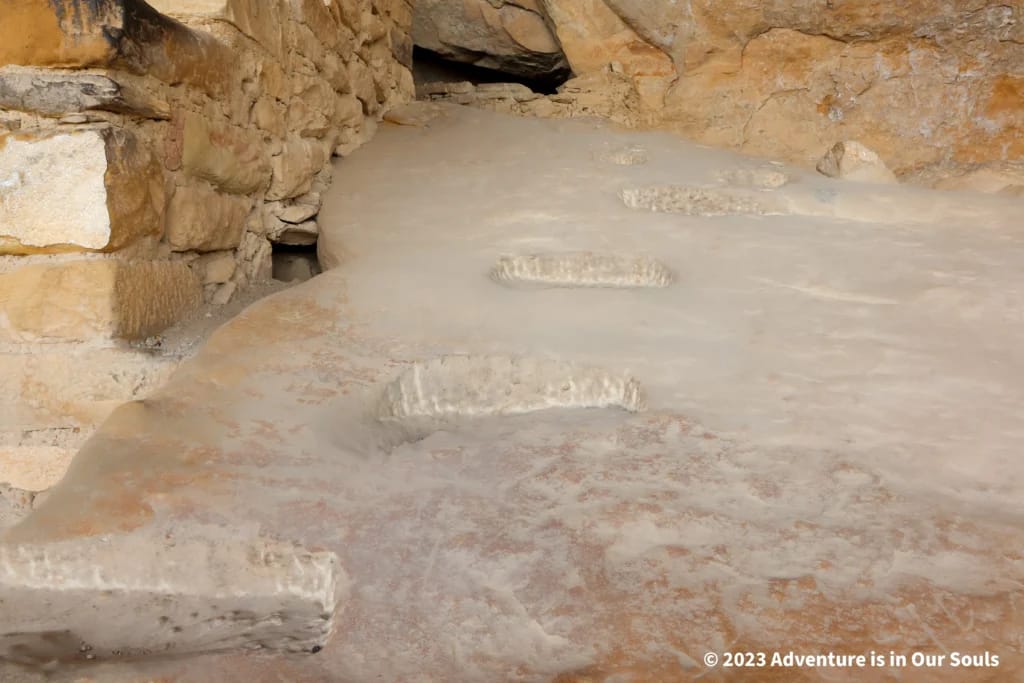
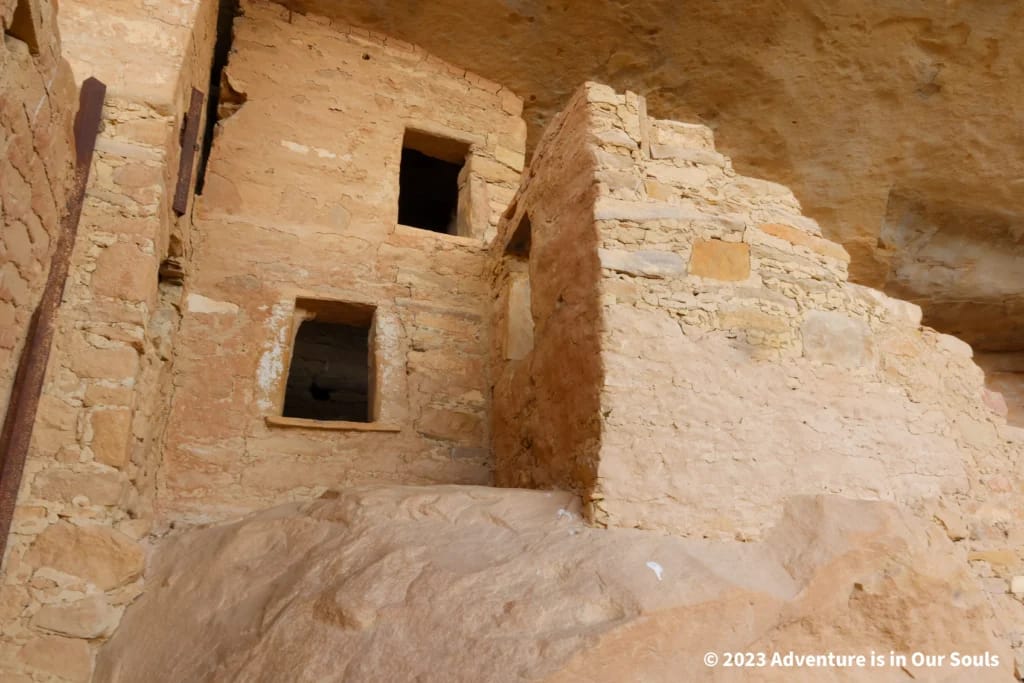
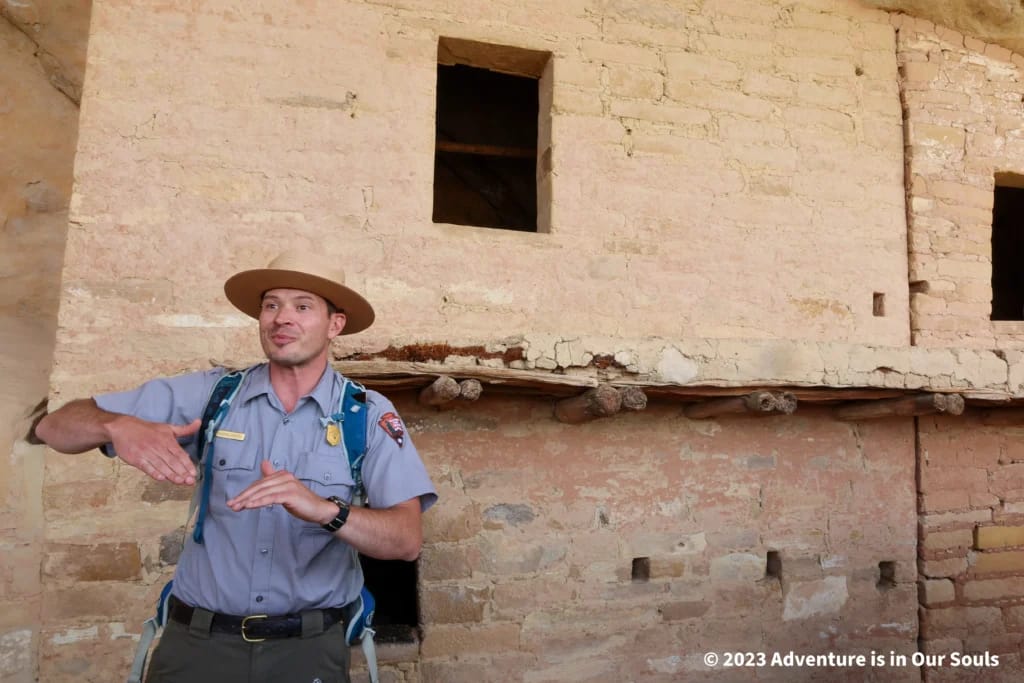
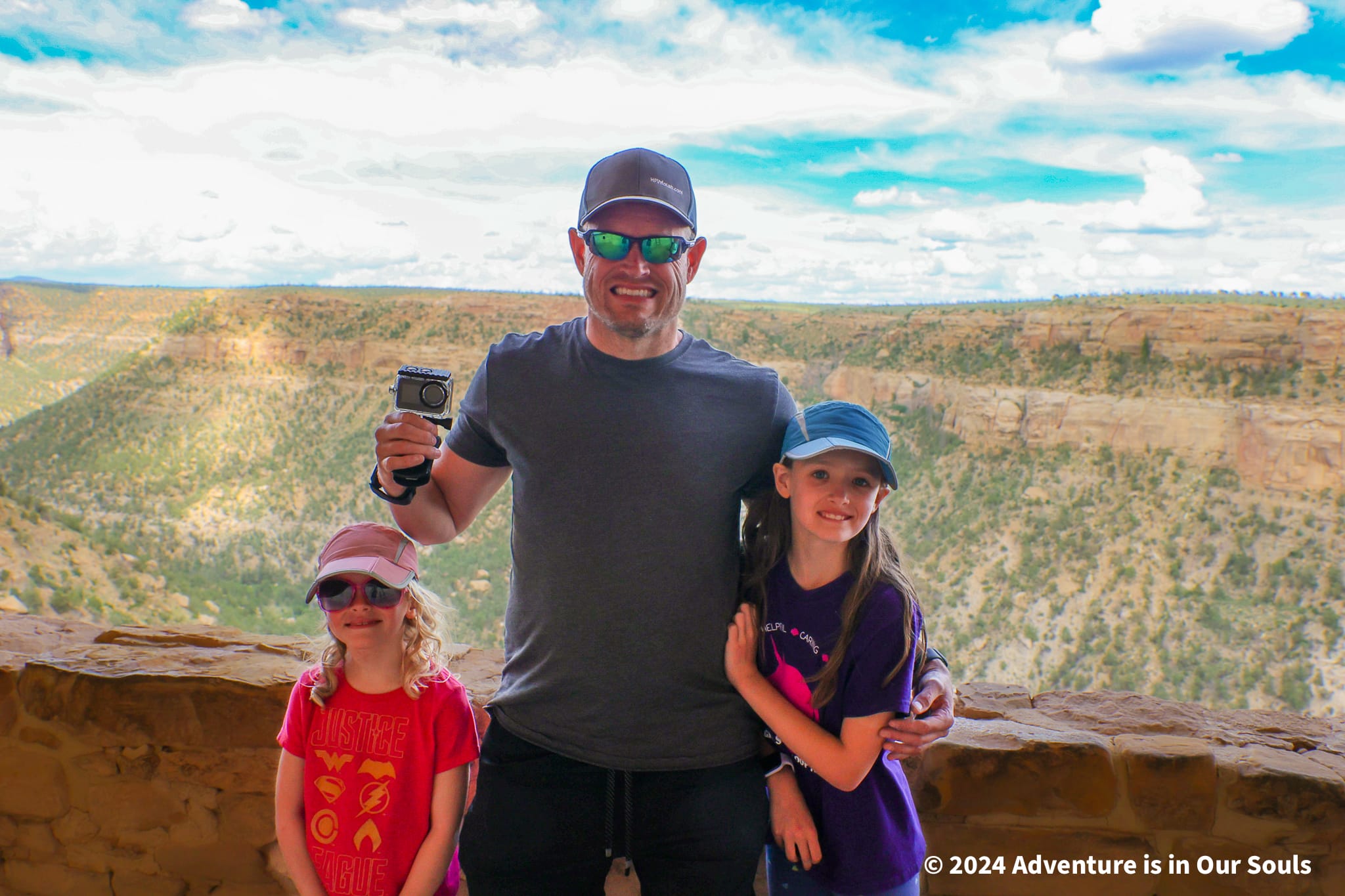
In Kiva Plaza, we explored the kivas and surrounding structures. We observed the stone tools and listened to the Ranger’s stories about life in Balcony House. There is no retaining wall along the cliff side in Kiva Plaza here, so we kept the girls close.
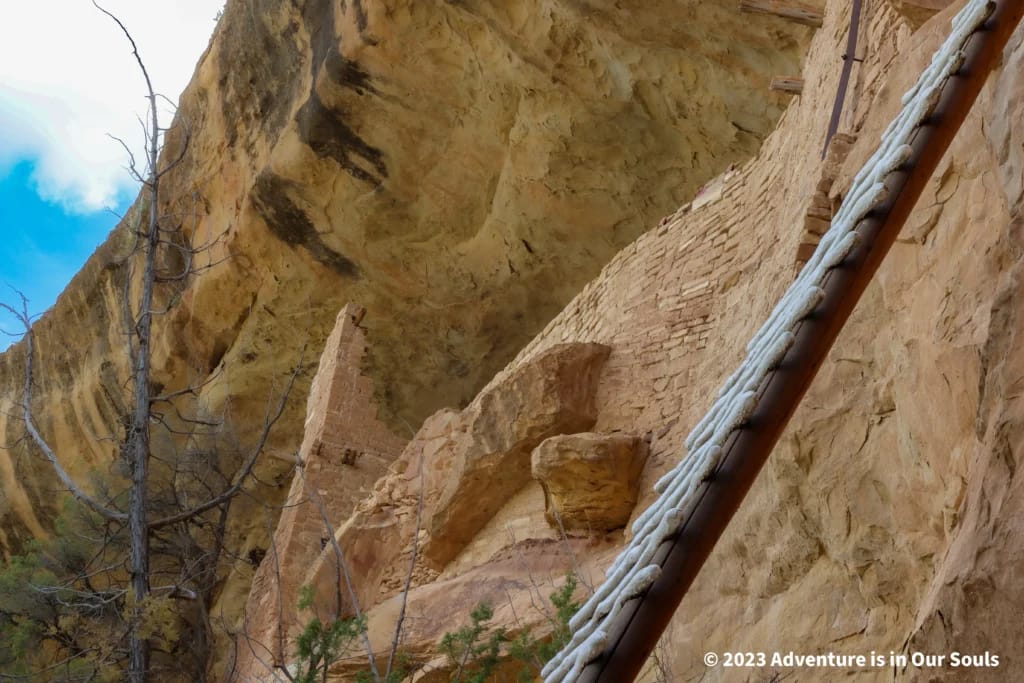
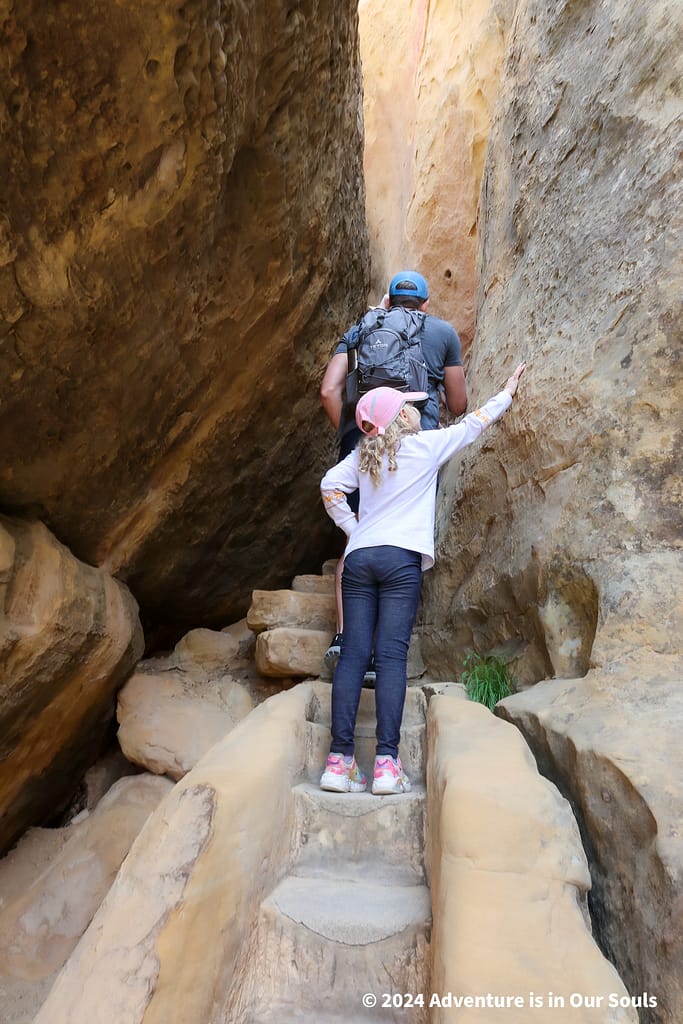
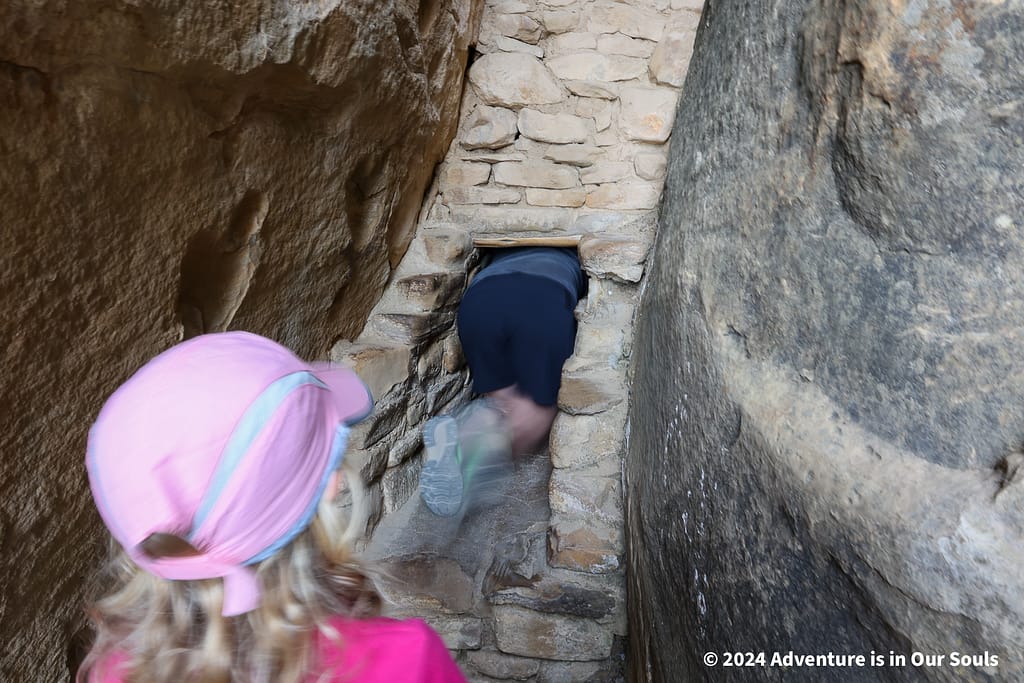
The hike back up the mesa was also full of adventure. First, there was a short walk along the cliffside and a squeeze between the rocks. Then, a 12-foot crawl through an 18-inch wide “doorway”. We climbed up a couple of 17-foot ladders and up tiny, steep steps carved into the cliffside.
The adventurous hike in and out of Balcony House was what made this tour one of our favorites!
The Family Verdict
Chapin Mesa is home to pithouses, pueblos, and cliff dwellings. It is really remarkable to see the evaluation of homes all in one area! The highlight of our family adventures was definitely the cliff house tours. There was a sense of adventure that drew us in as we explored areas that have remained largely untouched for hundreds of years. So cool!
Make sure to check out our adventures in nearby Grand Canyon, Horseshoe Bend, Antelope Canyon, Monument Valley, Mesa Verde, Arches NP, Canyonlands, and Bryce Canyon. Also, follow along on our road trip through the American Southwest!
Follow along on our other amazing family travel adventures at www.adventureisinoursouls.com.