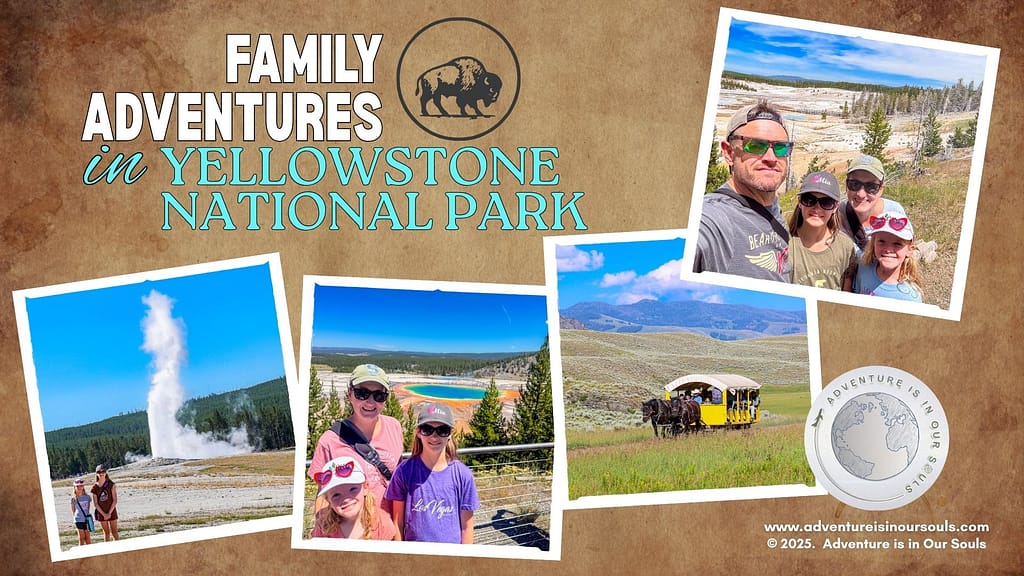
Yellowstone with kids is the ultimate family adventure destination. From spotting bison and elk in Lamar Valley to exploring steaming geysers, colorful terraces, and iconic waterfalls, the park offers endless opportunities for awe and discovery. Our family loved every moment, from stagecoach rides to scenic viewpoints, making this trip unforgettable for children and adults alike.
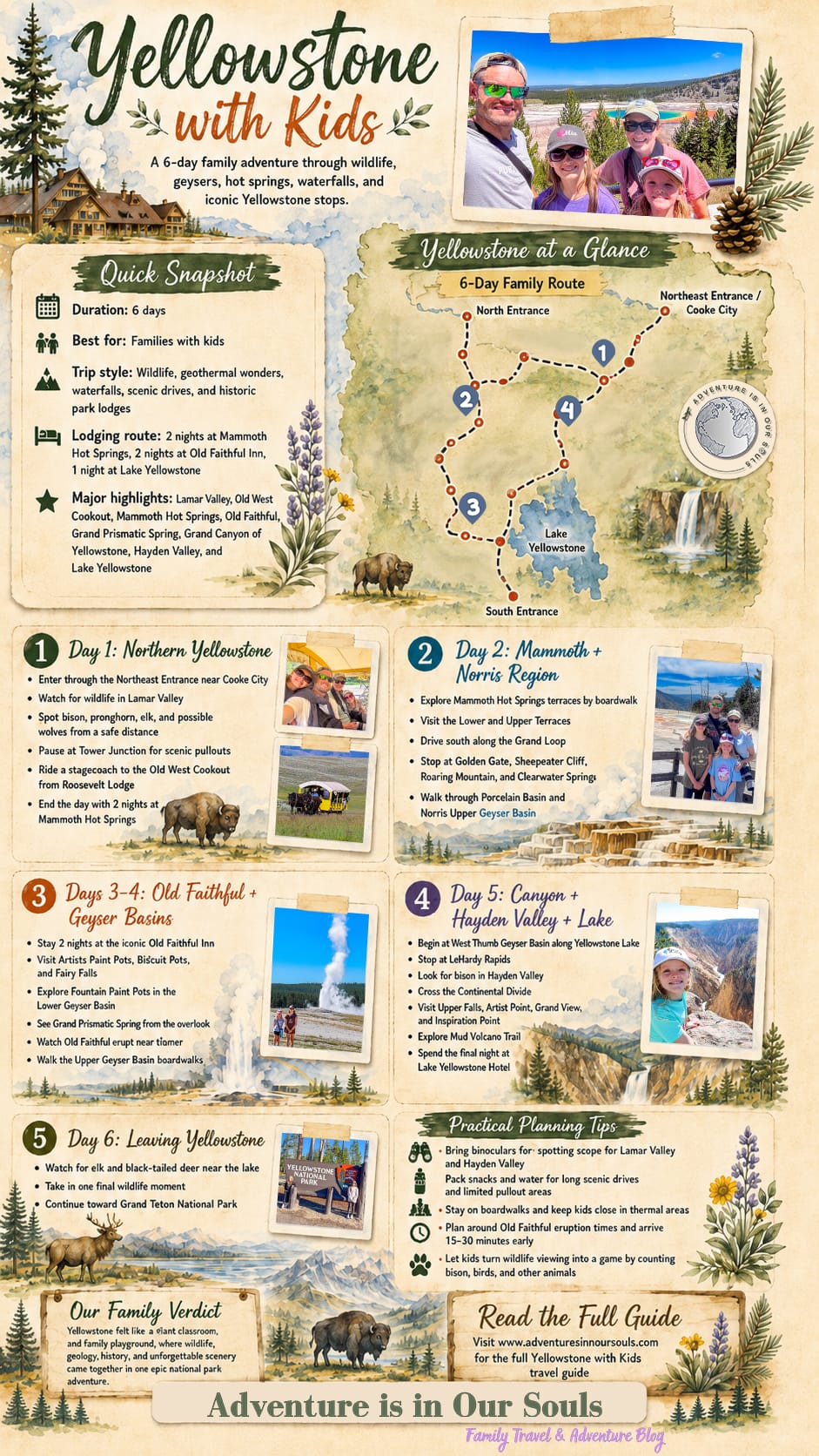
Day 1: Northern Yellowstone Area
Lamar Valley
Our Yellowstone adventure began as we drove along the scenic Beartooth Highway, one of America’s most breathtaking routes, before entering the park through the Northeast Entrance near Cooke City. Excitement ran high as the landscape shifted dramatically, with rolling valleys, distant peaks, and vast meadows stretching for miles.
Our first major stop was Lamar Valley, often called the “Serengeti of North America” for its incredible wildlife. This area is perfect for families who want to spot animals in their natural habitat.
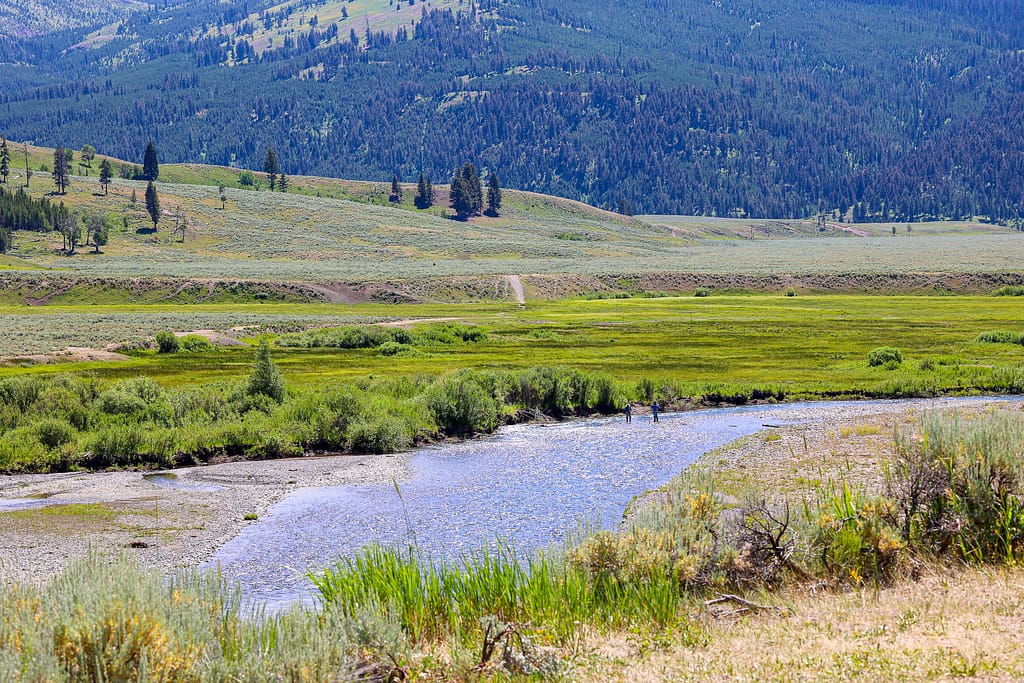
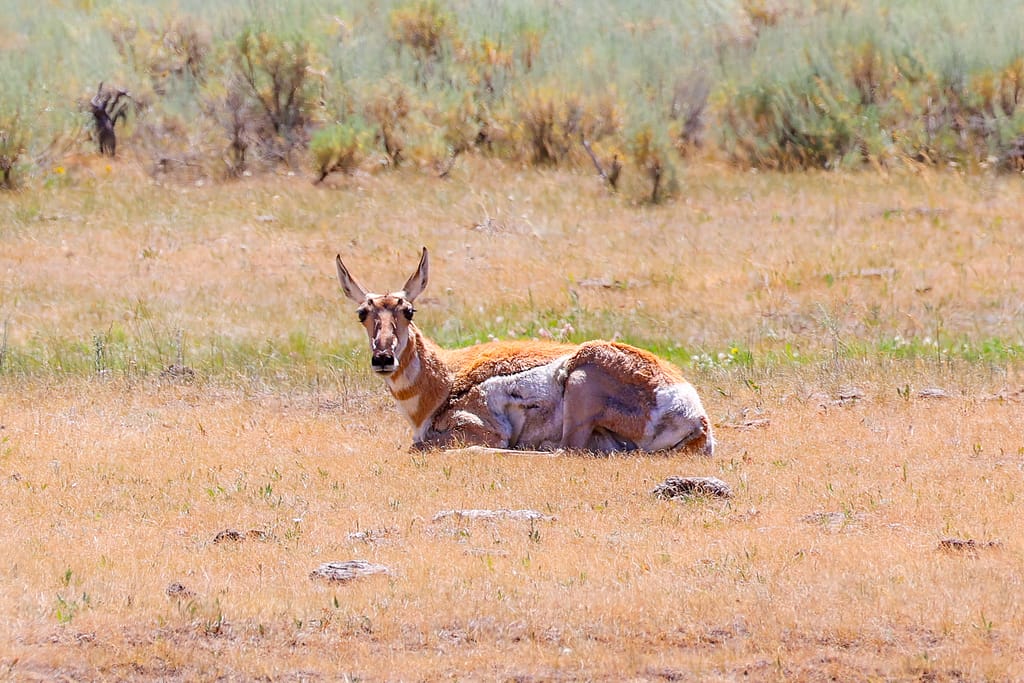
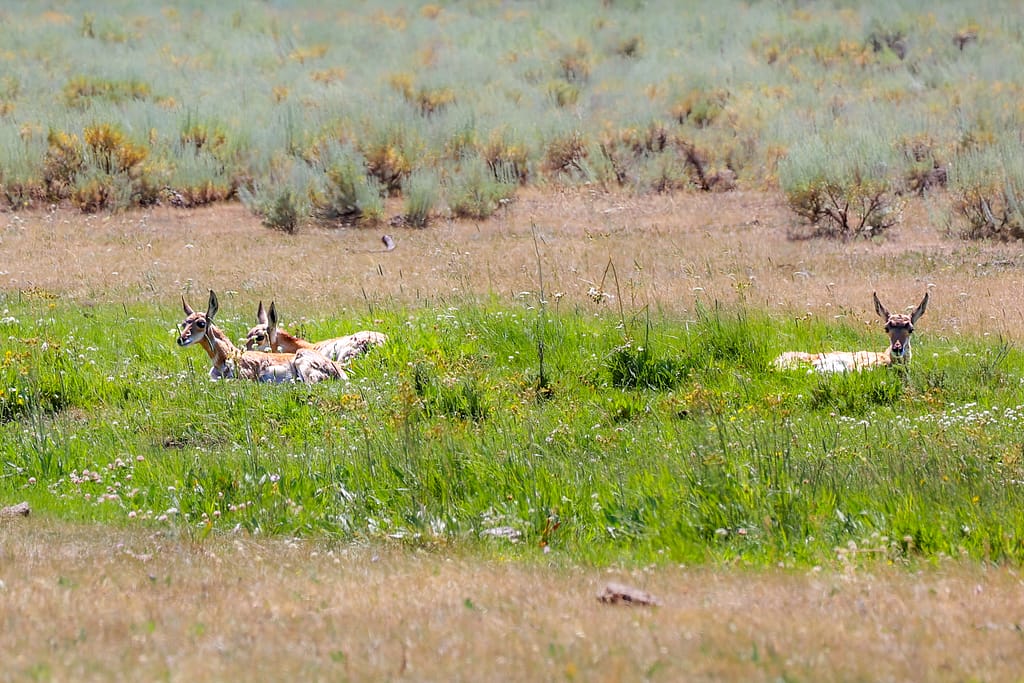
While driving slowly through the valley, we spotted a pronghorn mother and her three babies resting in the tall grass. The babies peeked shyly, their delicate white markings standing out against the golden grass. Watching them interact while staying close to their mother was a gentle reminder of Yellowstone’s rich biodiversity.
Large bison herds grazed nearby, moving gracefully through the fields. The sight of these massive creatures, calm yet imposing, thrilled the girls as they watched the calves sticking close to their mothers and males wandering quietly.
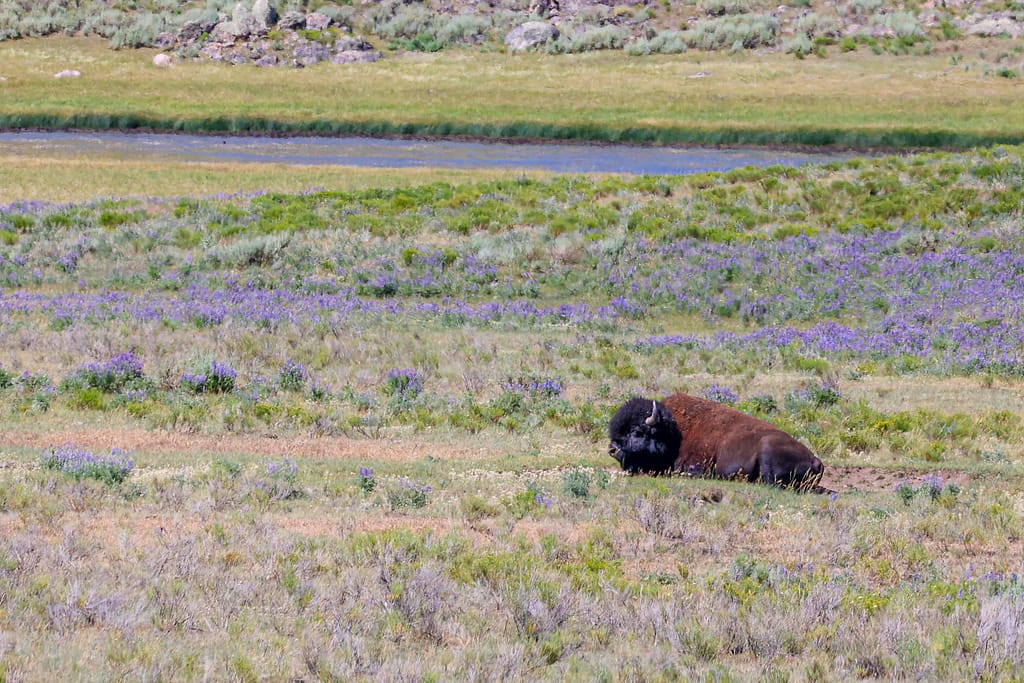
Lamar Valley is also home to wolves, elk, and pronghorn, making it an incredible wildlife corridor. Families can enjoy slow drives with plenty of pullouts for photos and safe wildlife viewing, experiencing Yellowstone with kids in the most memorable way.
- Tip for Families: Bring binoculars and a spotting scope if you have one. Lamar Valley is wide open, and wildlife can be far from the road. Early morning or late afternoon drives increase your chances of spotting wolves, bison, and elk.
Tower Junction
After leaving Lamar Valley, we drove to Tower Junction, a scenic crossroads in the northeast section of Yellowstone. The area is named for the nearby Tower Fall and the striking Tower Rocks, dramatic rock formations that rise sharply from the valley floor. As we drove along the Grand Loop, we made several pullouts to take in the sweeping views of forests, rivers, and distant cliffs. Each stop offered a slightly different perspective of Yellowstone’s rugged beauty, giving the girls plenty of chances to explore, snap photos, and stretch their legs.
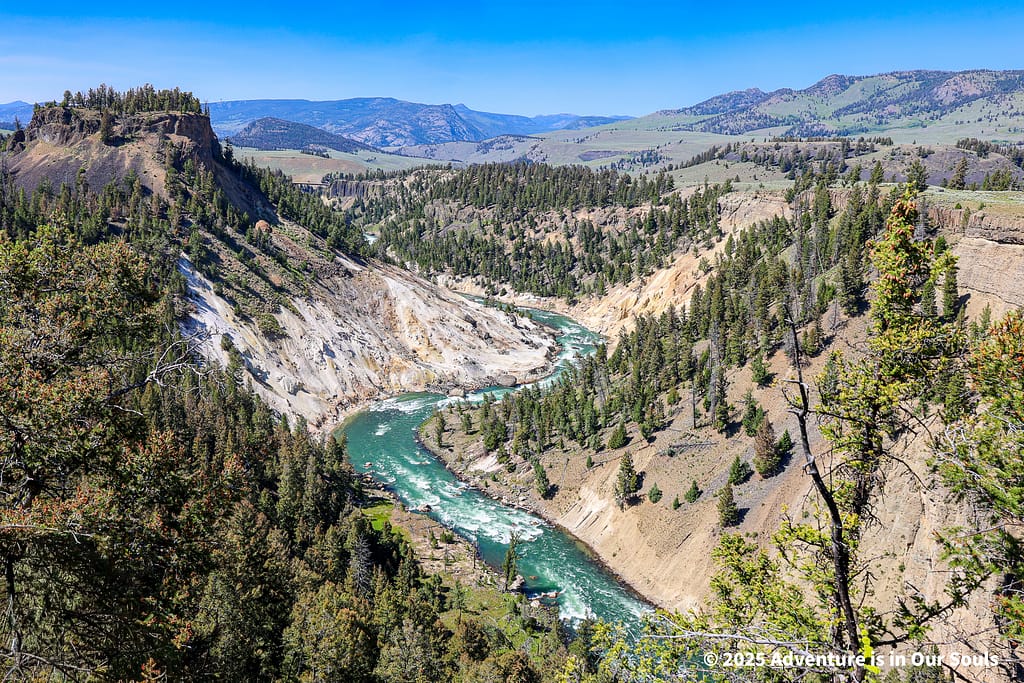
The drive itself felt like a journey back in time, with the wide-open spaces and jagged peaks framing the horizon. Wildlife sightings were frequent, and we were lucky to spot bison grazing in nearby meadows and birds soaring overhead. The calm yet imposing presence of these creatures fascinated the girls, sparking curiosity about Yellowstone’s natural ecosystem. Tower Junction also serves as a gateway to other key park areas, making it an ideal spot for families to pause and appreciate the landscape before continuing along the Grand Loop.
- Tip for Families: Pack snacks and water for these stretches of road. Pullouts are limited, and the scenery is so engaging that kids may get restless without a small treat or drink.
Stagecoach Adventure to the Old West Cookout
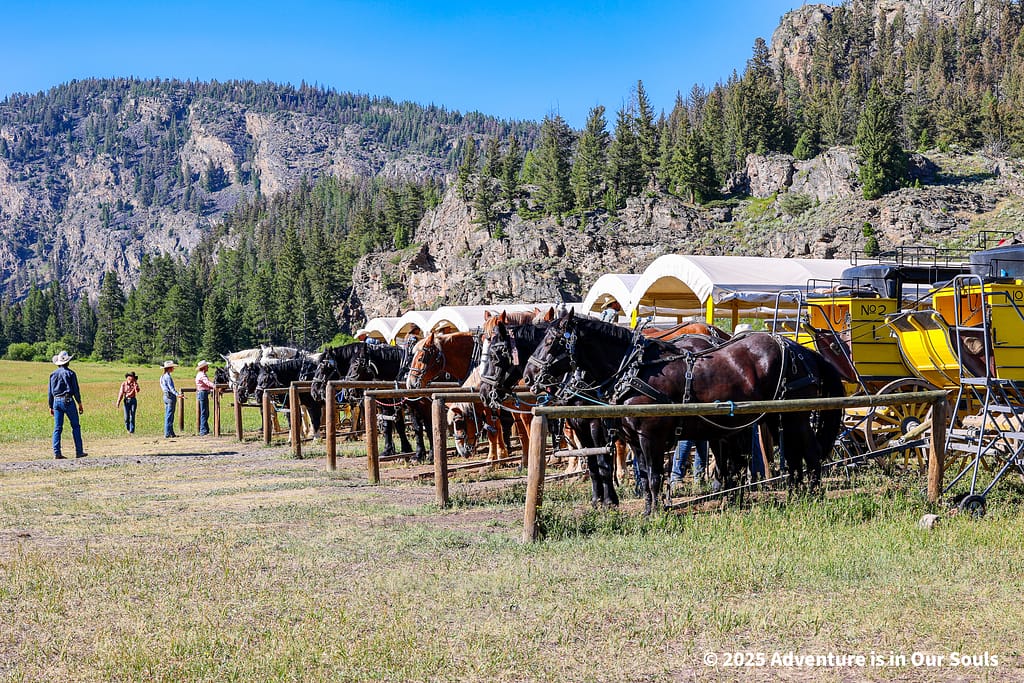
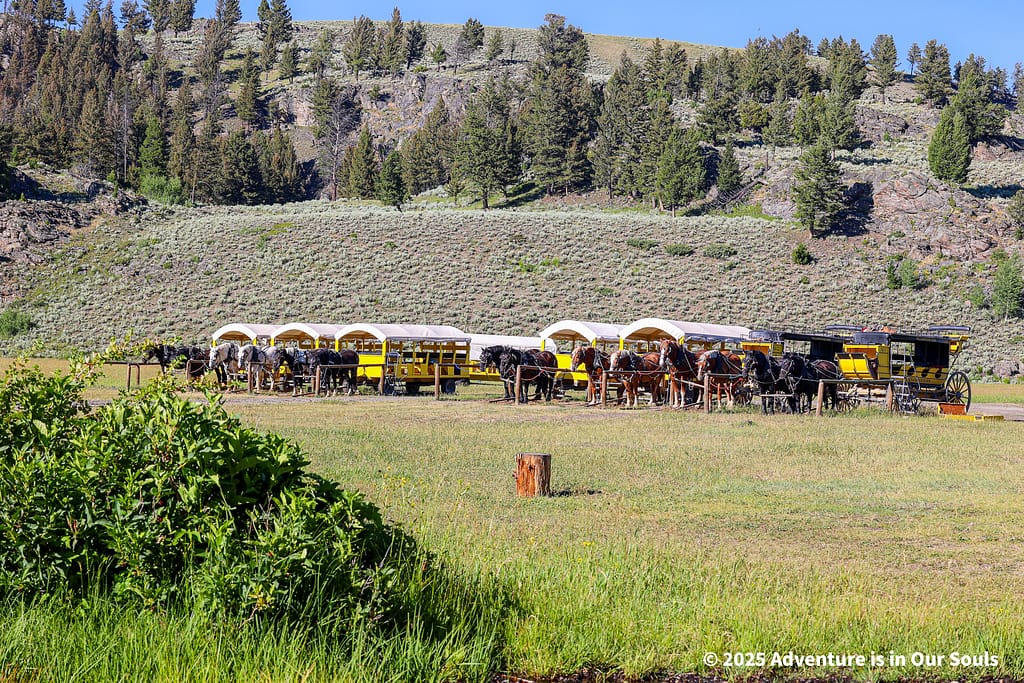
One of the highlights of our Yellowstone trip was the stagecoach wagon ride to the Old West Cookout, starting at the Roosevelt Lodge stables. We climbed aboard a historically accurate reproduction stagecoach, complete with wooden benches and leather straps. The ride carried us through the golden sagebrush flats of Pleasant Valley toward Yancy’s Hole, a wide valley framed by scattered pines and distant ridges that gave the journey a genuine frontier feel.
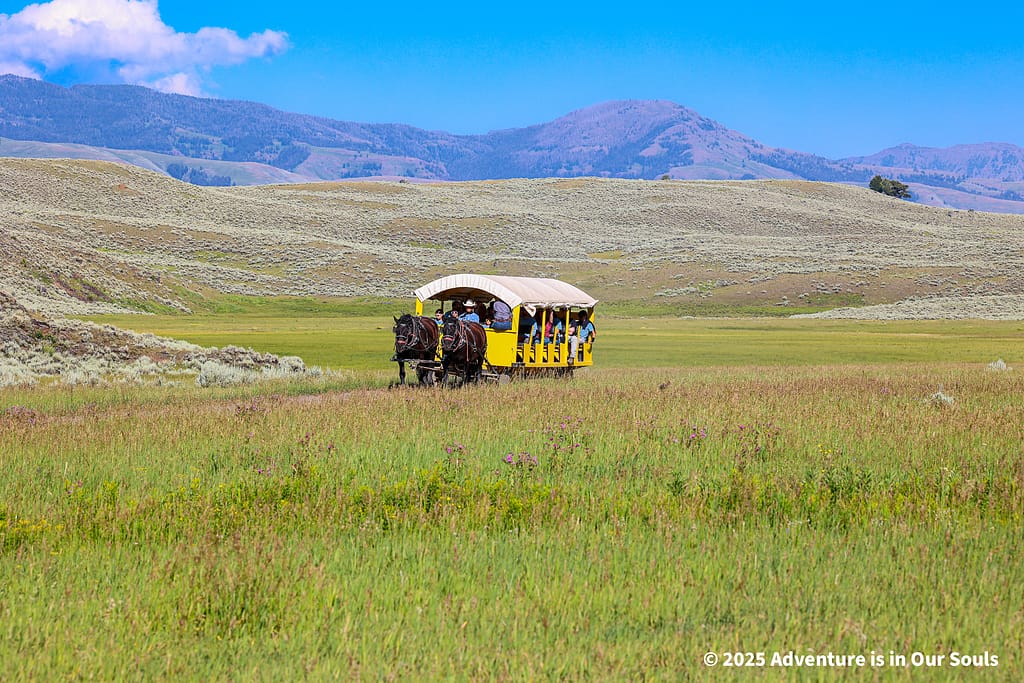
The girls were thrilled to meet the horses pulling the stagecoach and even learned basic roping techniques under the guidance of experienced wranglers. The ride itself offered sweeping views, and the gentle rocking of the wagon added to the excitement, making it feel like a real adventure from the Old West.
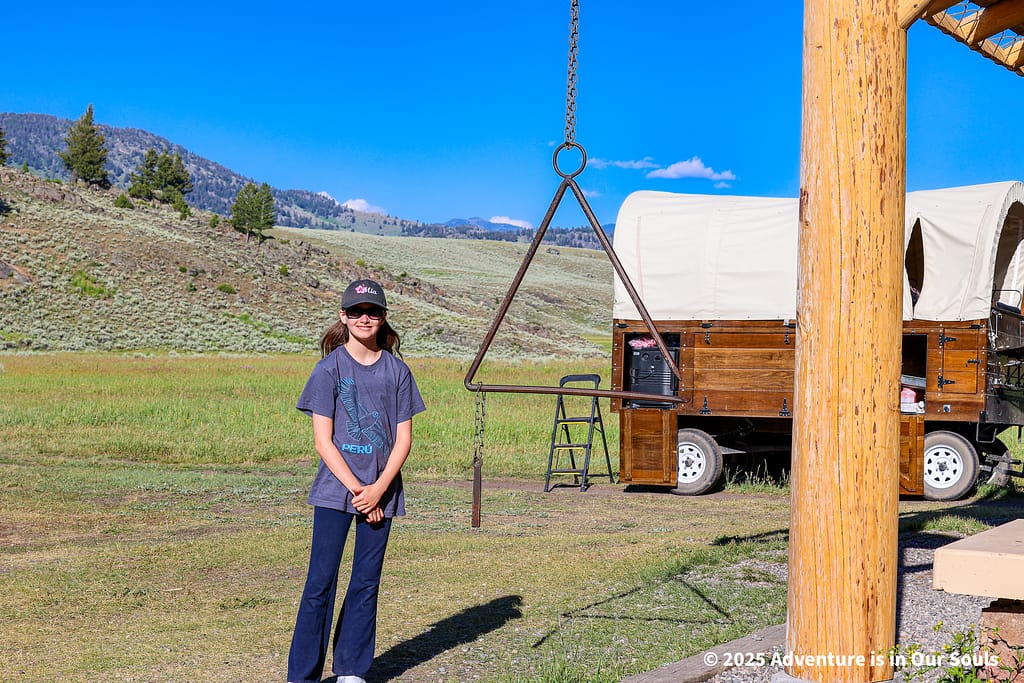
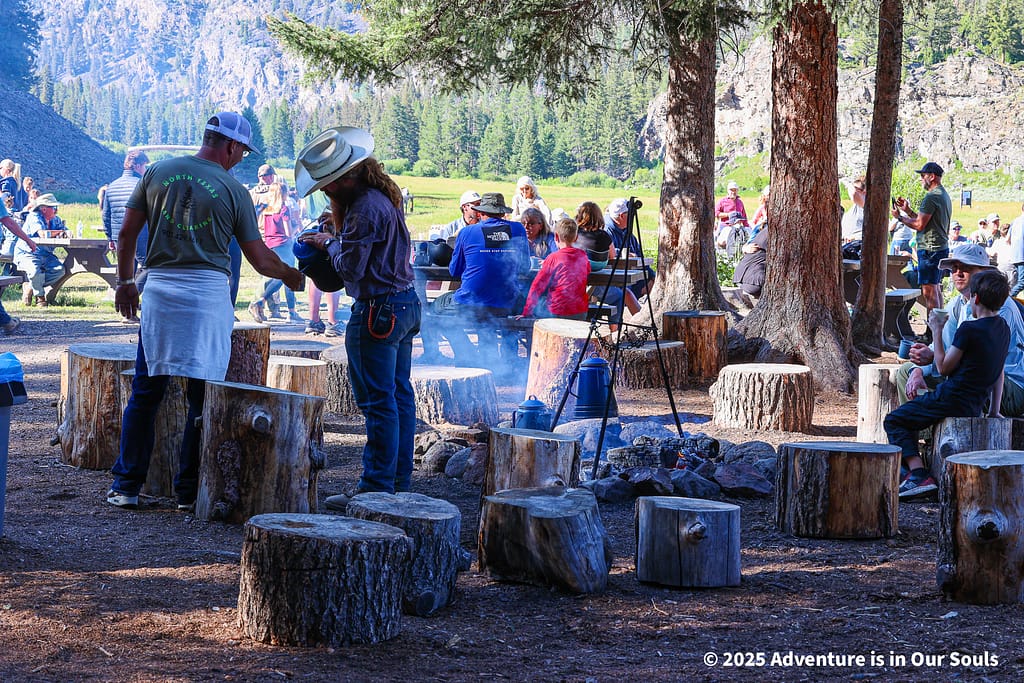
At Yancy’s Hole, we were greeted by a classic cowboy-style chuck wagon dinner under the open sky. Juicy steaks grilled over an open fire were served alongside hearty sides, and we enjoyed sipping cowboy coffee while sharing stories around the flames. As the sun began to set, the sky lit up with warm golden tones, creating a magical atmosphere.
On the drive back to Roosevelt Lodge, we even spotted a black bear quietly moving along a nearby hillside, adding an unexpected wildlife moment to the day. The combination of history, scenery, and hands-on adventure made this experience a highlight of our Yellowstone with kids journey.
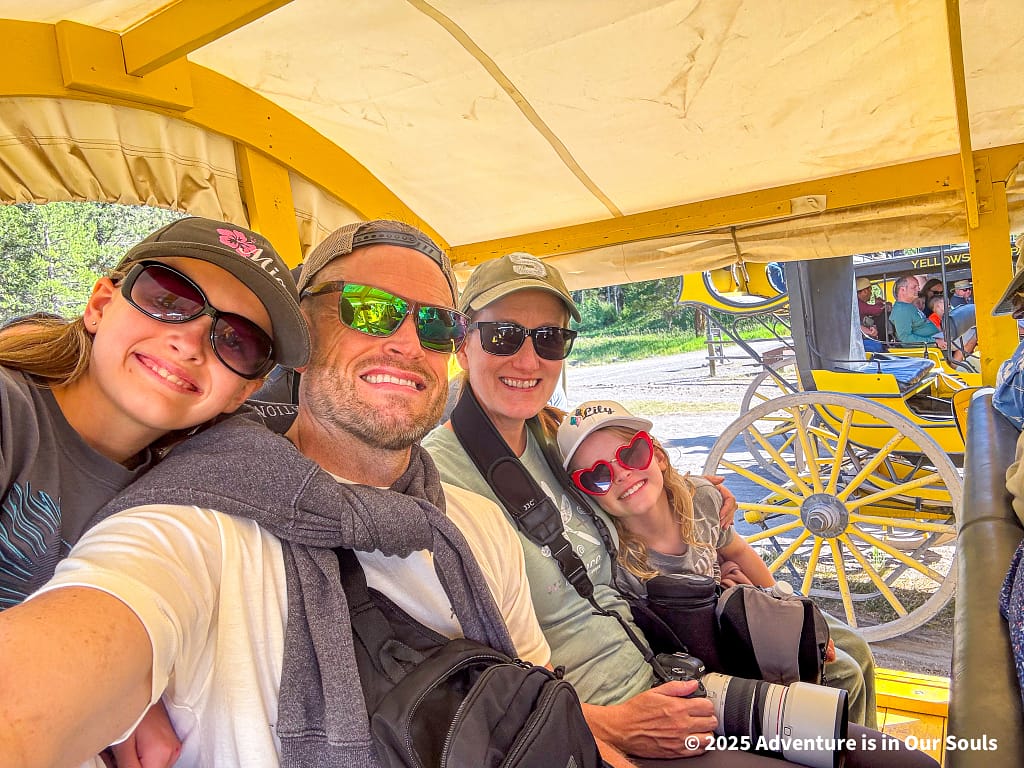
- Tip for Families: Let kids interact with the horses and wranglers. They can learn basic roping techniques safely, and the hands-on experience keeps younger children entertained.
Two Nights at Mammoth Hot Springs
After our stagecoach adventure and wildlife watching, we headed west to Mammoth Hot Springs, where we spent the next two nights of our Yellowstone journey. Mammoth is a fascinating area located near Yellowstone’s north entrance, close to historic Fort Yellowstone and the Mammoth Hot Springs Historic District. The landscape here combines geothermal wonders with rolling sagebrush fields and abundant wildlife, making it a perfect base for families who want both adventure and convenience.
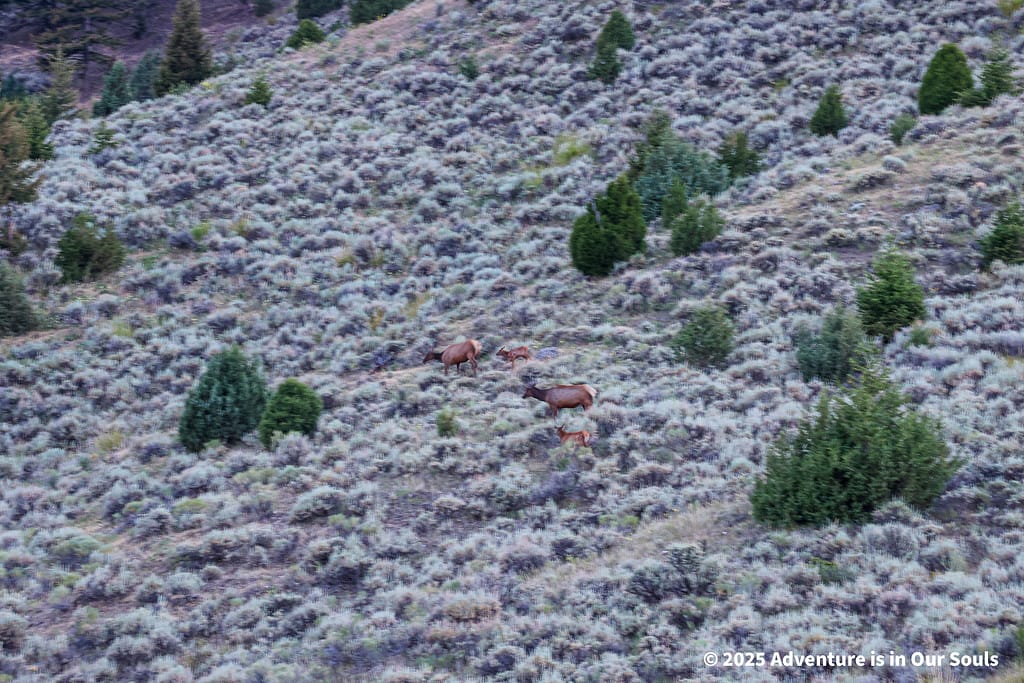
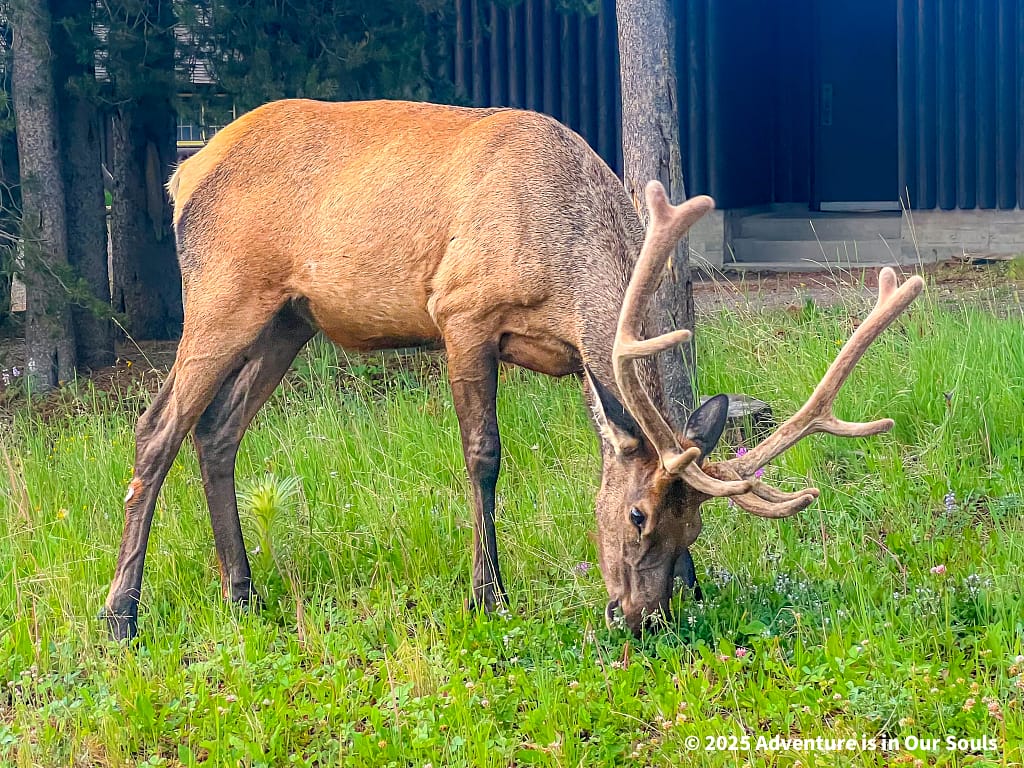
We stayed at the Mammoth Hot Springs Hotel & Cabins, a classic in‑park lodging that has welcomed visitors since the early 1900s and was beautifully renovated while keeping its historic charm. The hotel sits just below the travertine terraces that make this area so unique, and it’s common to spot elk grazing outside the dining room or near the lawn in the early morning and evening.
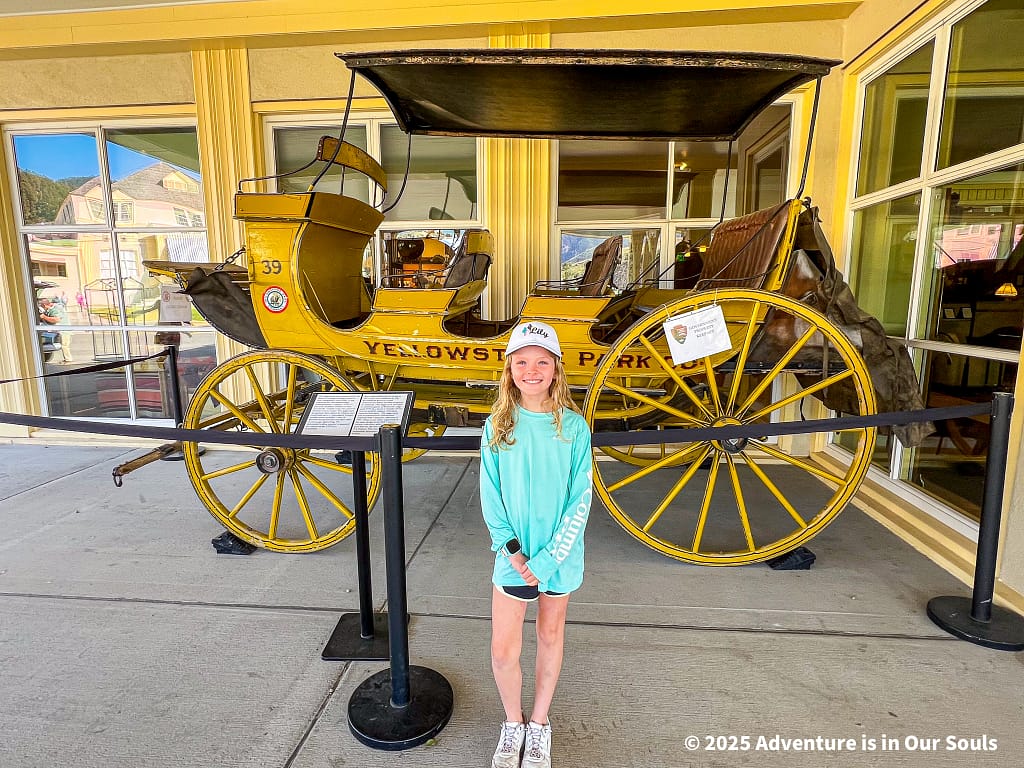
Mammoth’s central location made it easy for us to explore nearby thermal features, historic buildings, and even take wildlife drives into Lamar Valley without long daily commutes. The village feel here was perfect for the girls, with a gift shop, map room with a giant wooden map of the United States, and relaxed spots to enjoy a coffee or early dinner after a day of exploring.
Day 2: Mammoth Hot Springs and Grand Loop South
Mammoth Hot Springs
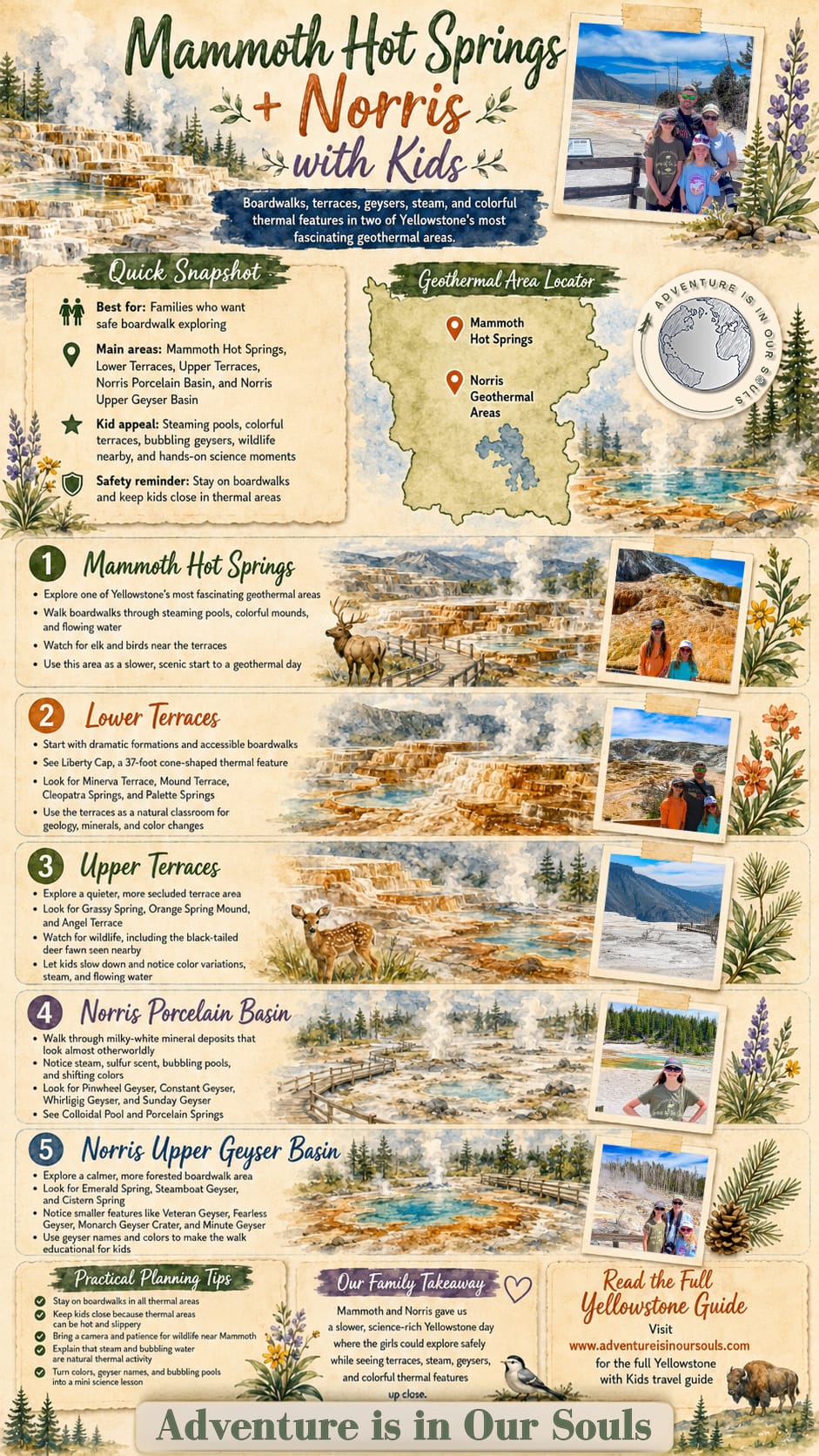
Yellowstone’s Mammoth Hot Springs is one of the park’s most fascinating geothermal areas, offering families a chance to see nature’s artistry in motion. The terraces are formed as hot water rises through limestone, depositing calcium carbonate and creating ever-changing layers of mineral formations. Boardwalks wind through the landscape, making it easy and safe for kids to explore while seeing steaming pools, colorful mounds, and flowing water. Wildlife often adds an extra layer of magic, from elk grazing nearby to curious birds flitting along the terraces.
- Tip for Families: Stick to the boardwalks and keep a close eye on kids. Thermal areas can be hot and slippery, and staying on the paths ensures everyone stays safe while enjoying the colorful formations.
Lower Terraces
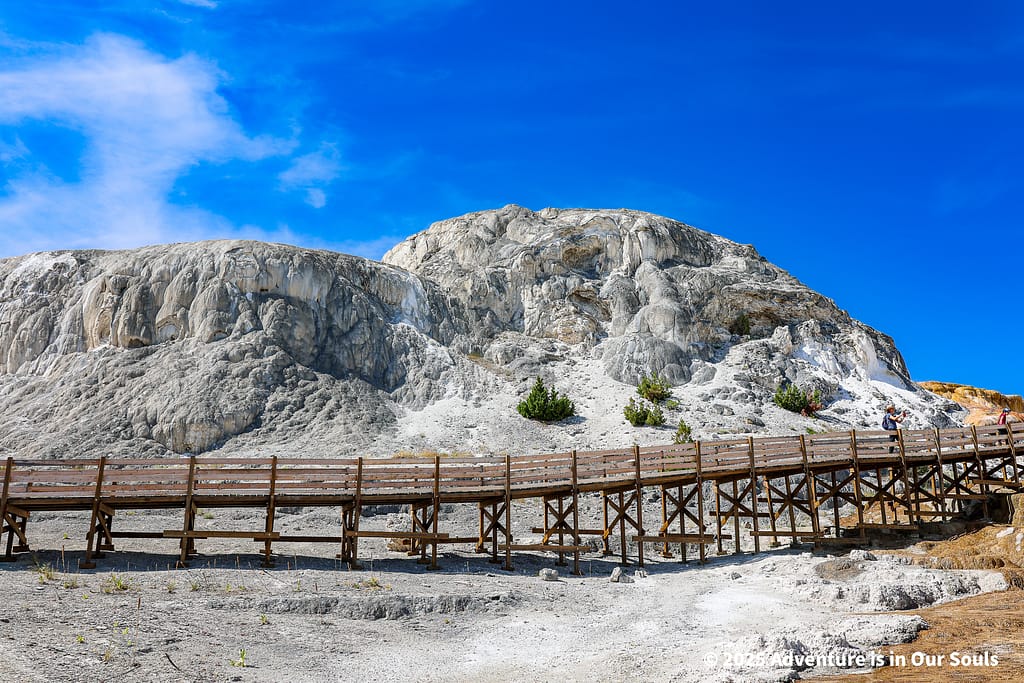
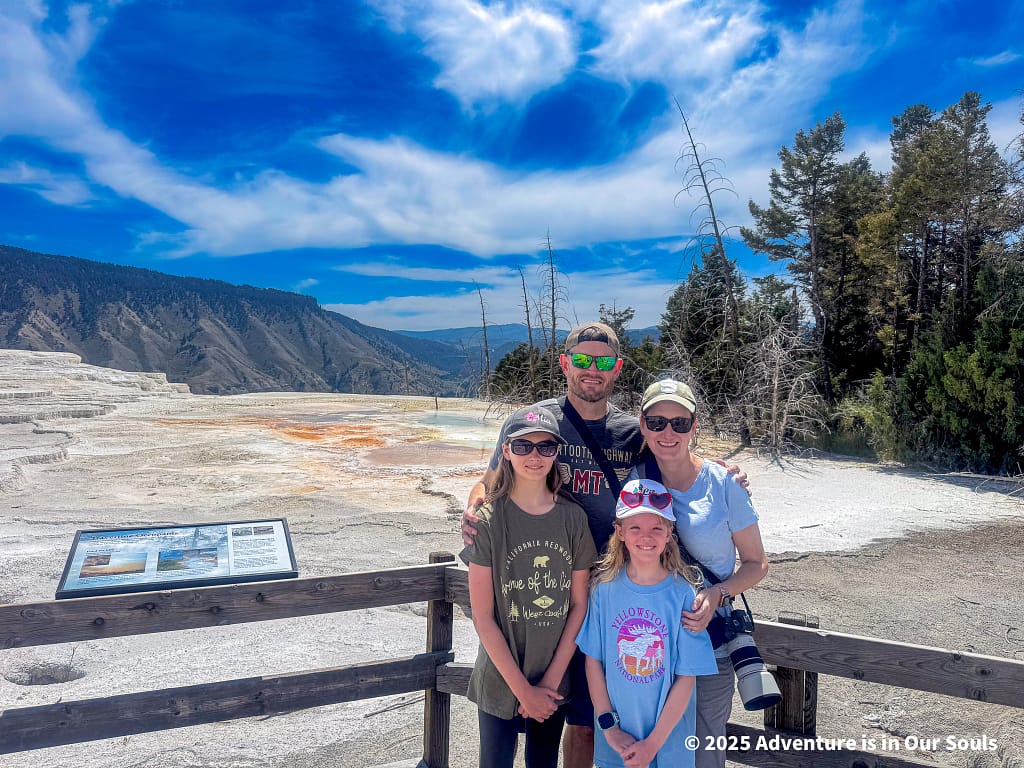
The Lower Terraces are the first areas families usually encounter, offering a mix of dramatic formations and accessible boardwalks. Liberty Cap stands proudly at 37 feet high, formed over thousands of years. Its cone shape gives a clear view of how geothermal activity builds mineral features over time, making it perfect for family photos and a striking introduction to Yellowstone’s natural power.
Minerva Terrace greets visitors with broad, cascading steps of flowing water and colorful mineral deposits. The boardwalks make it safe for kids to explore while learning about how hot water interacts with minerals and microorganisms. Mound Terrace shows older terraces that have shifted color and shape over time, providing a natural classroom for young explorers to understand how geology evolves.
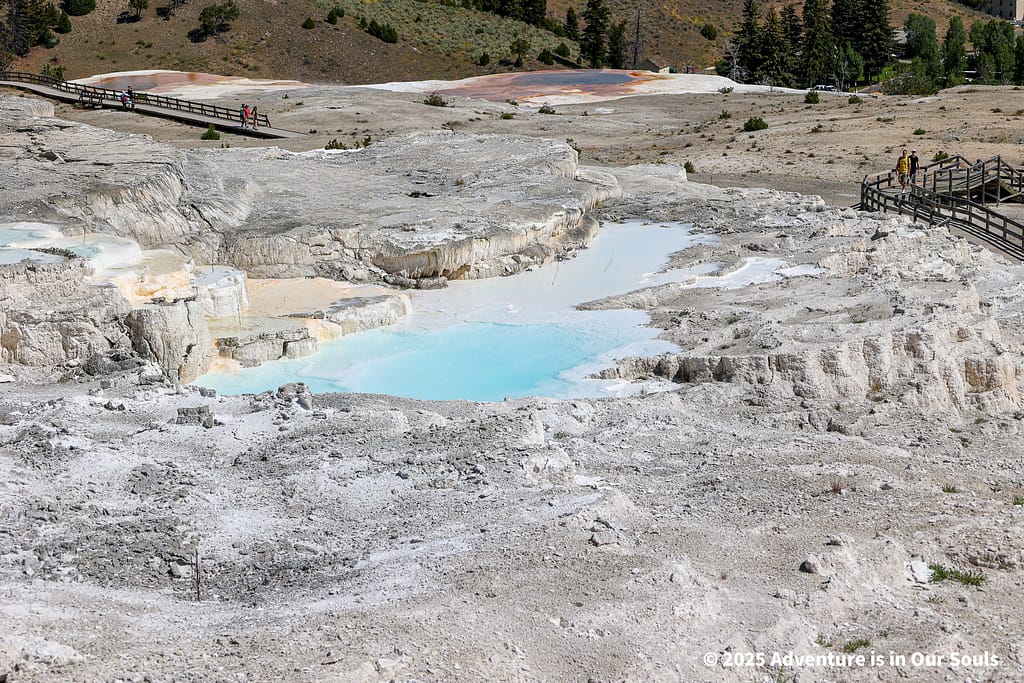
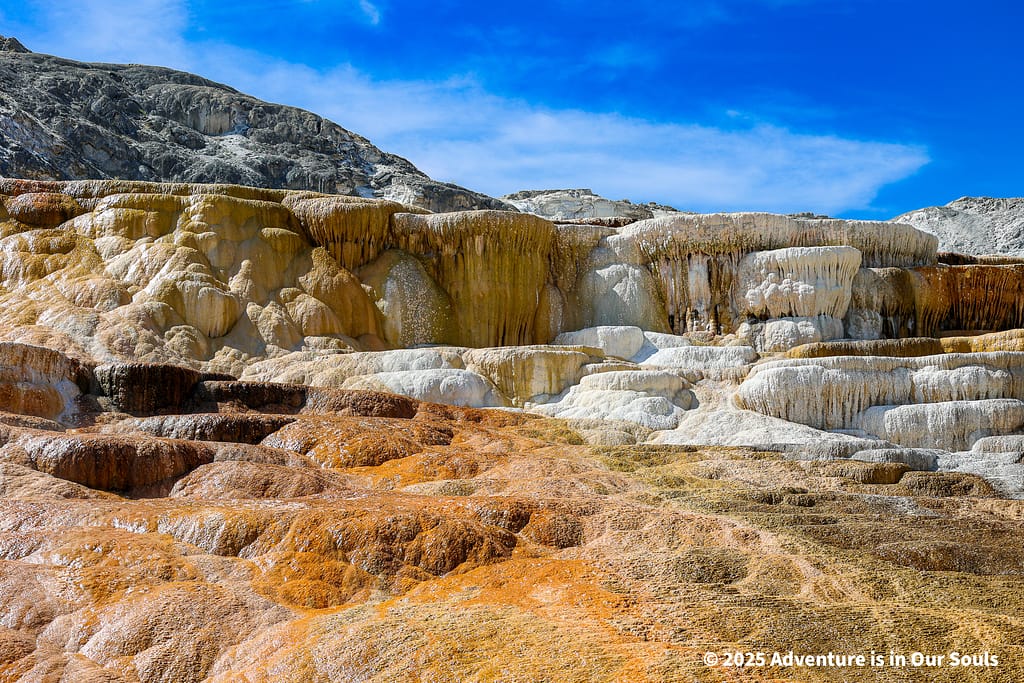
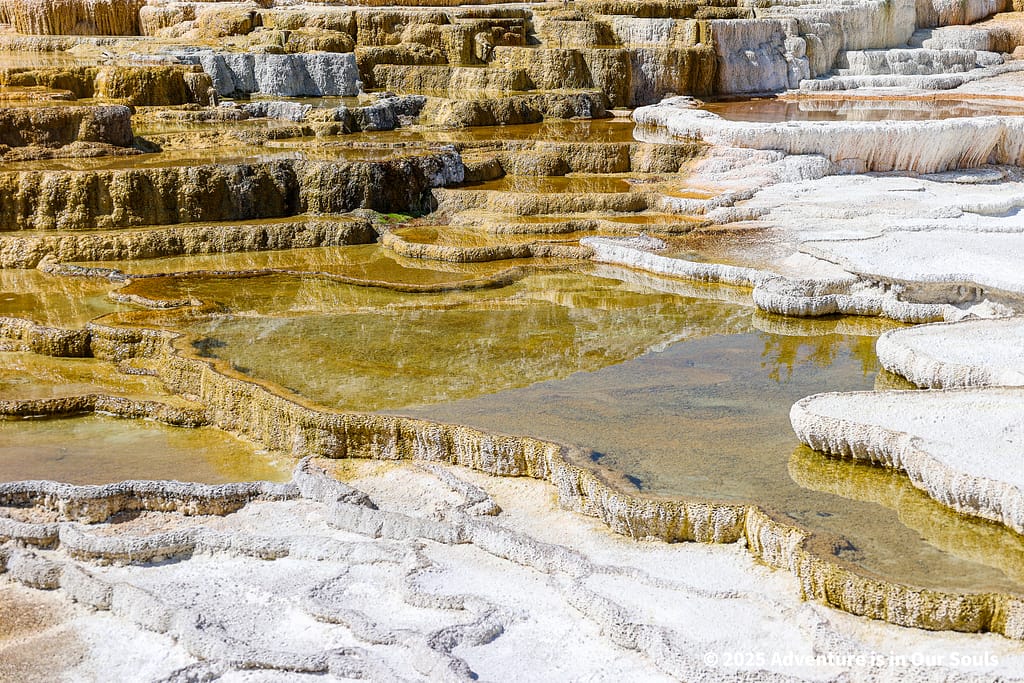
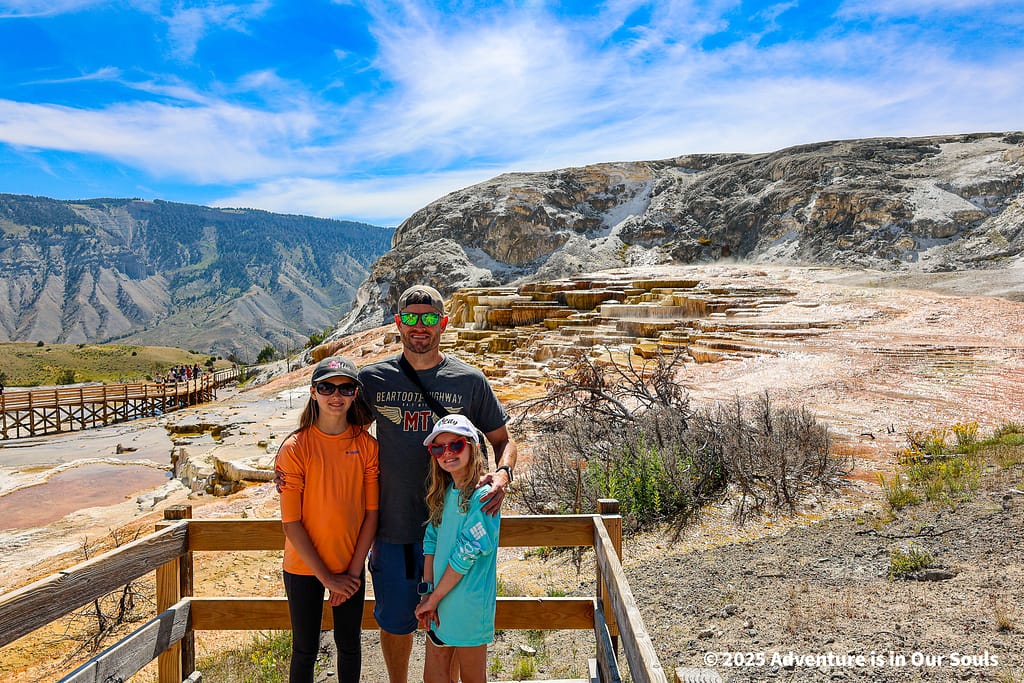
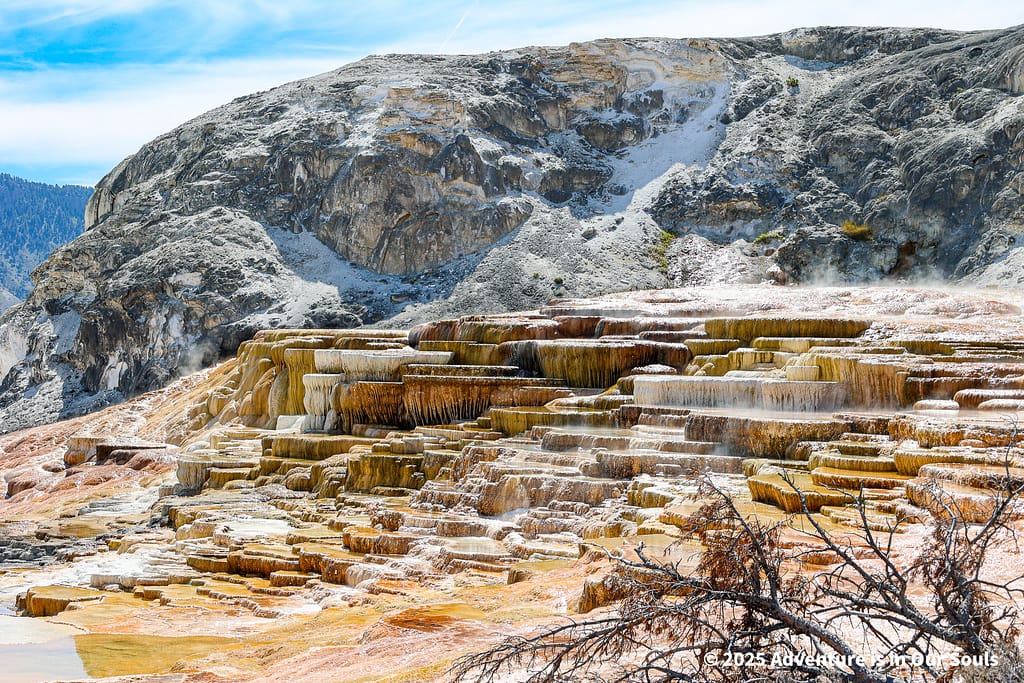
Smaller features like Cleopatra Springs are equally captivating, with bubbling pools and heat-loving microorganisms creating vivid colors. Palette Springs adds excitement, as water continuously flows across terraces, changing patterns and hues with every step. Watching the terraces shift subtly over time reminds families that Yellowstone is alive, constantly reshaping itself in ways both dramatic and delicate.
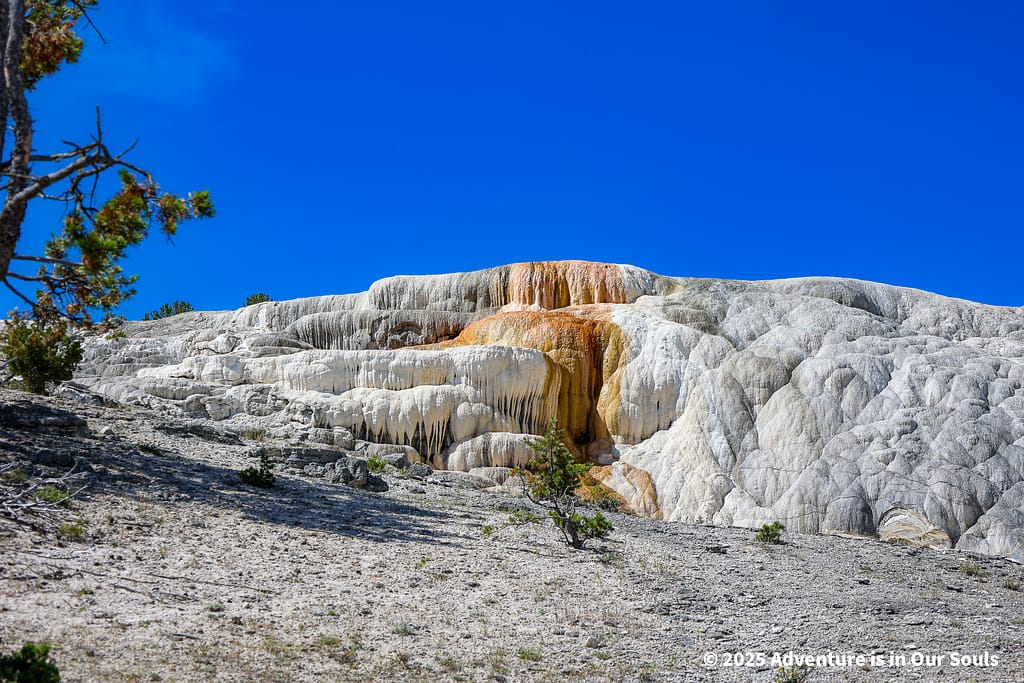
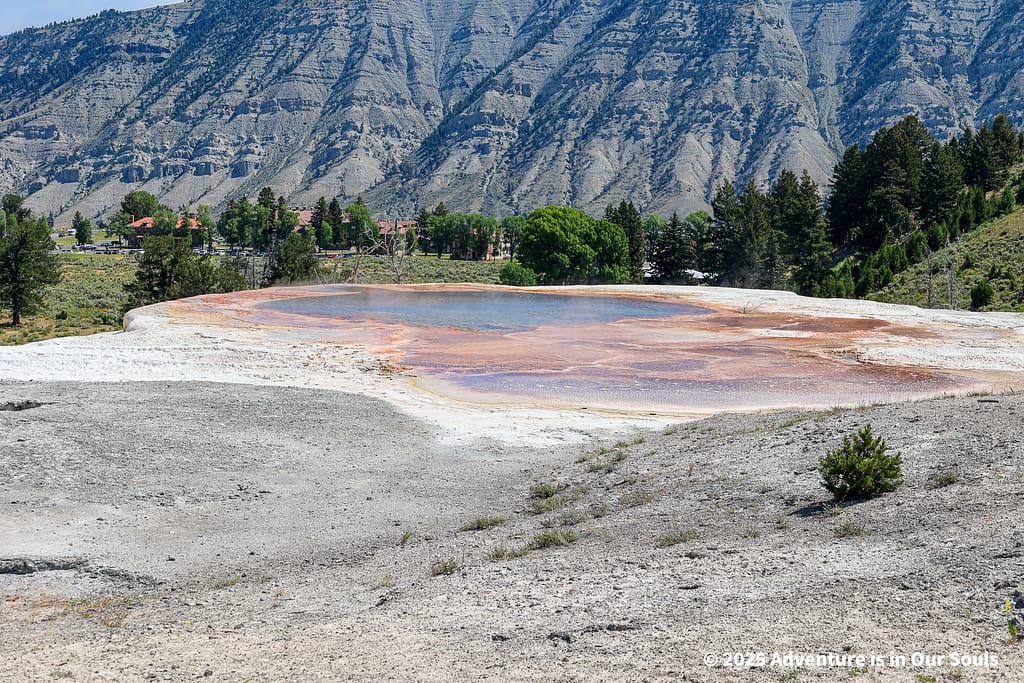
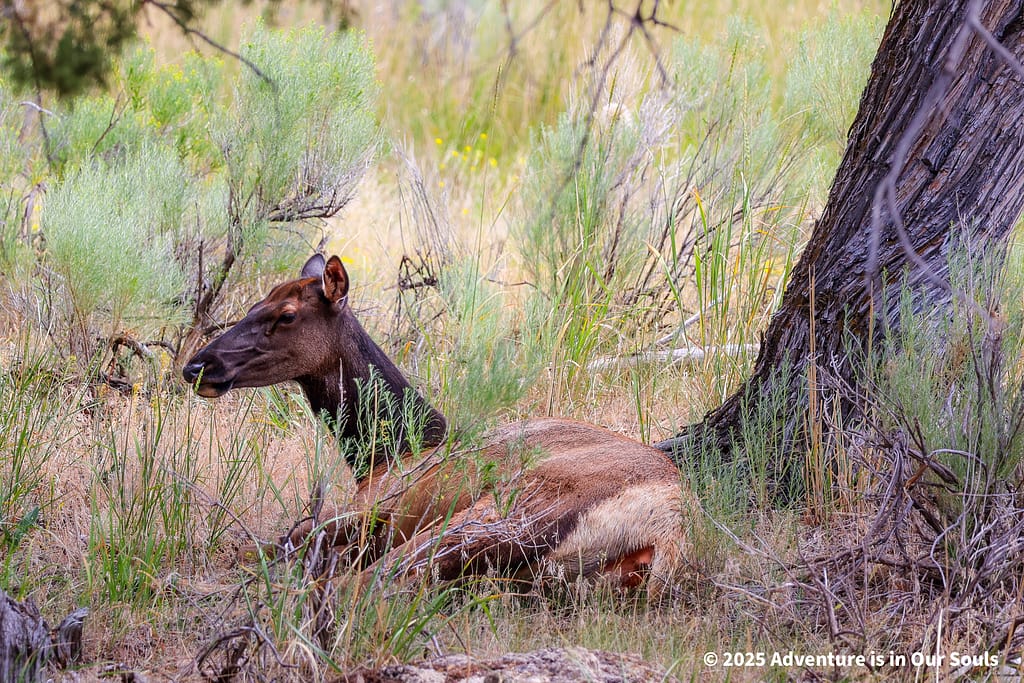
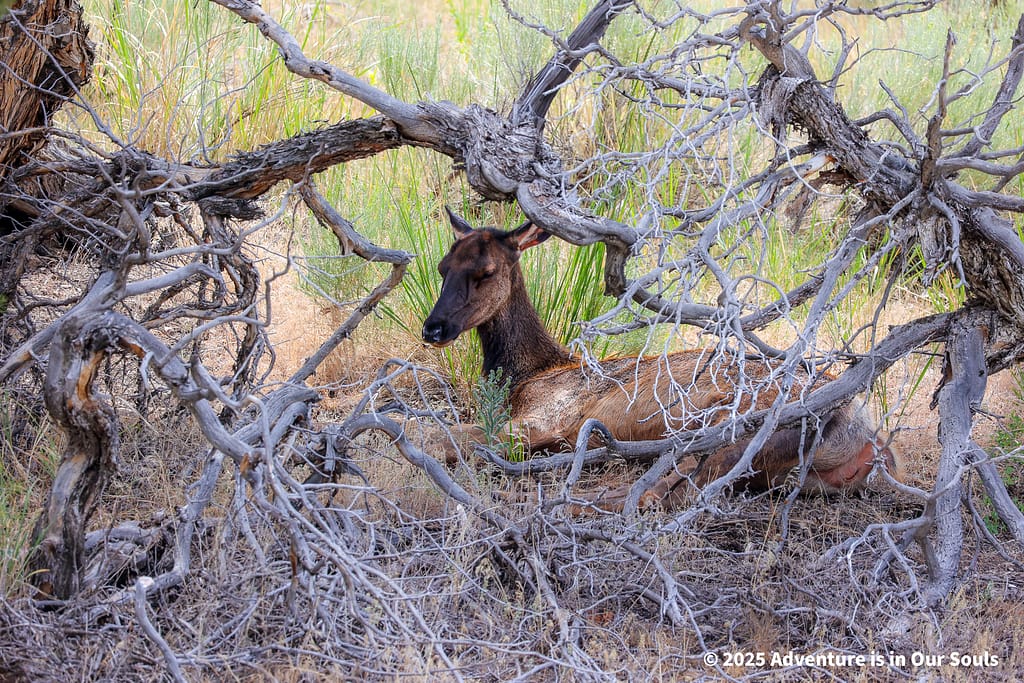
Hiking through the terraces allowed the girls to safely explore on boardwalks while learning about Yellowstone’s geothermal features. An elk herd rested nearby, and the constantly changing formations reminded us of the park’s dynamic natural history.
- Tip for Families: Bring a camera and patience. Elk and bison frequently wander near Mammoth, so having your camera ready and letting the kids watch quietly can make wildlife viewing magical.
Upper Terraces
The Upper Terraces offer a quieter, more secluded experience with equally stunning geothermal formations. Grassy Spring is a gentle feature where warm water trickles through patches of green algae, creating soft, ethereal colors.
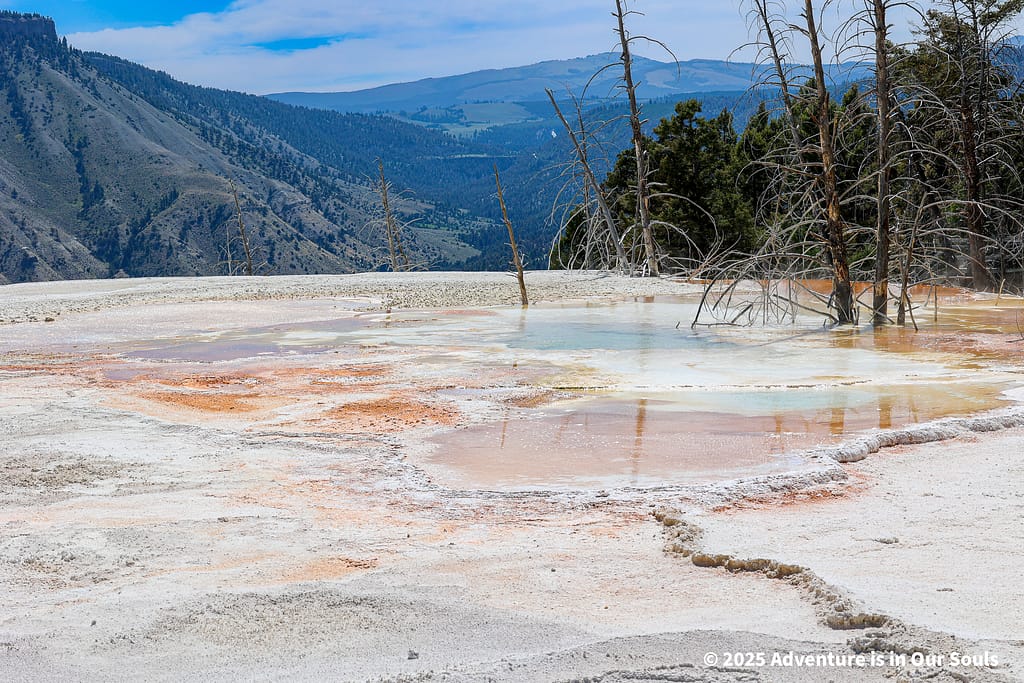
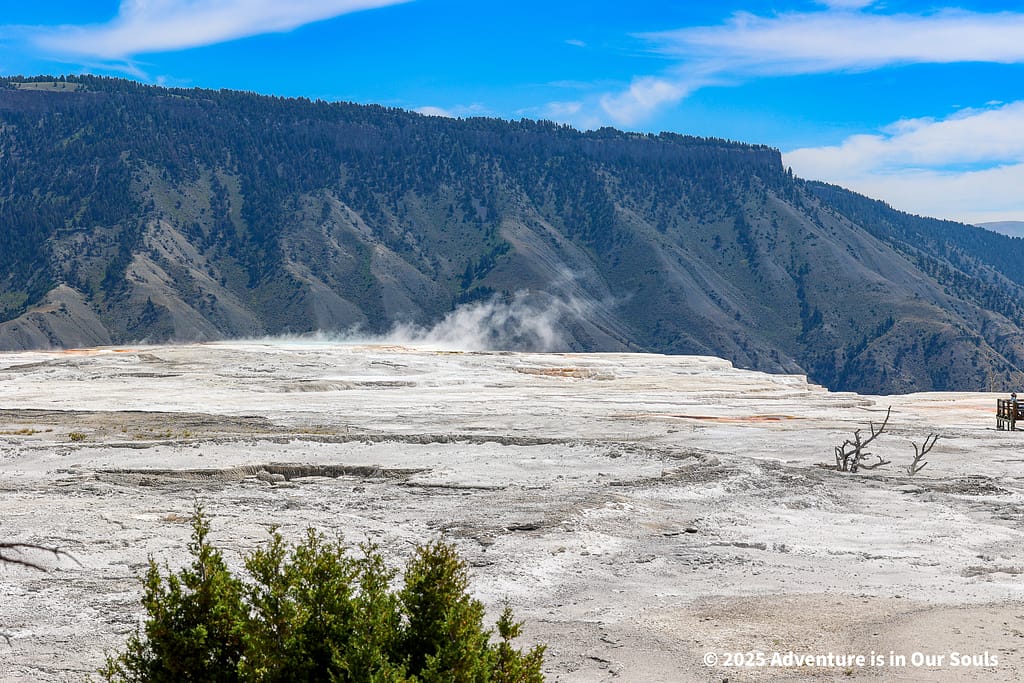
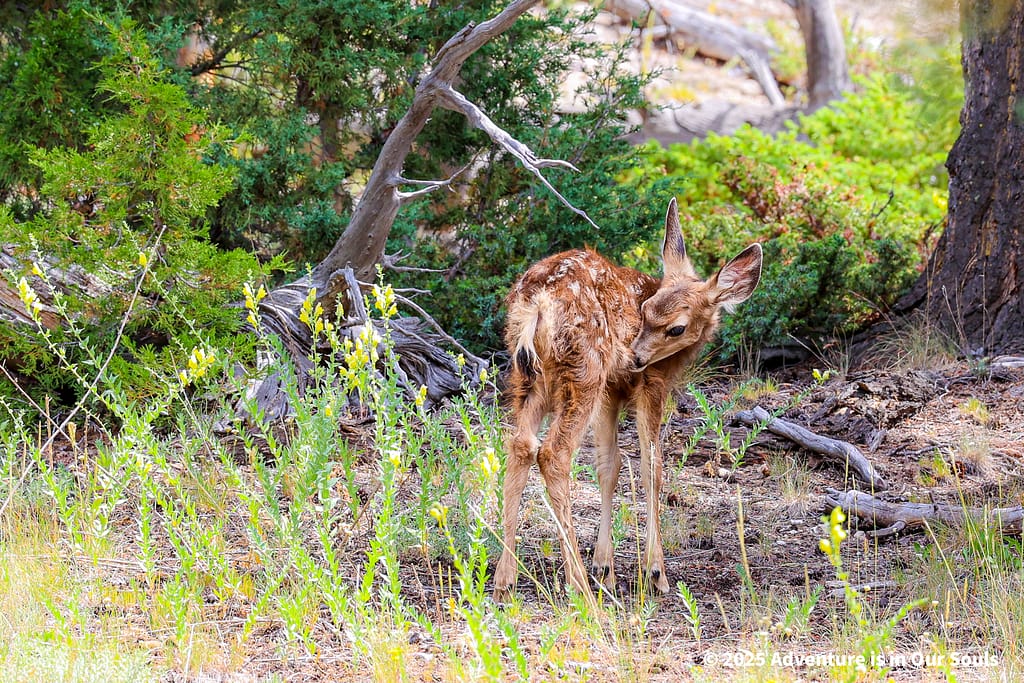
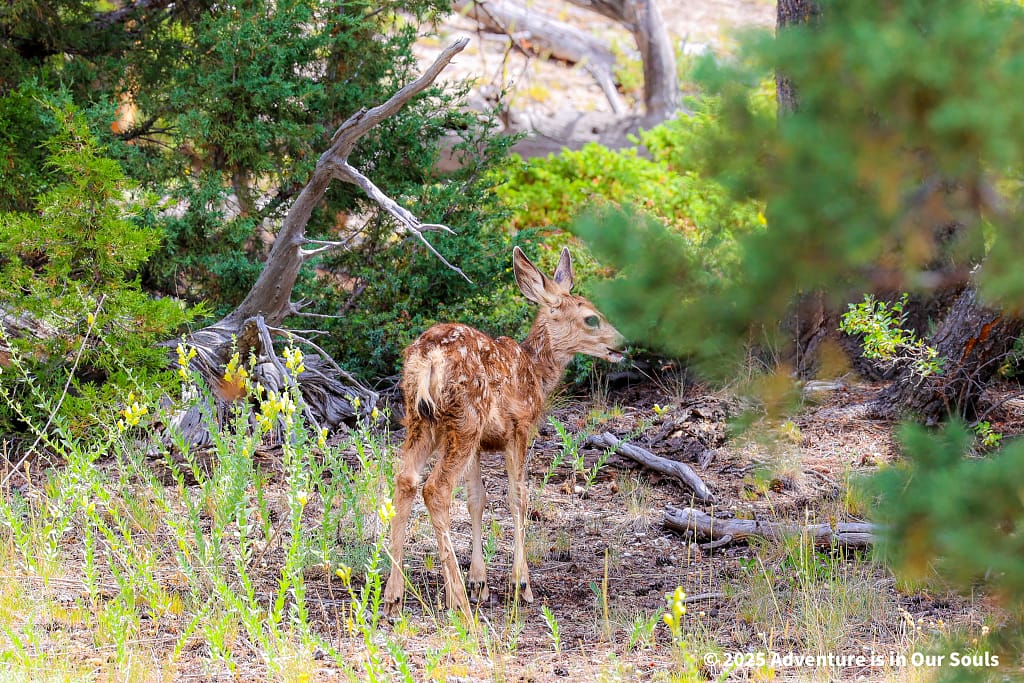
A black-tailed deer fawn resting nearby added an unforgettable wildlife highlight, showing that Yellowstone’s beauty isn’t just in the geology, it’s also in its living inhabitants.
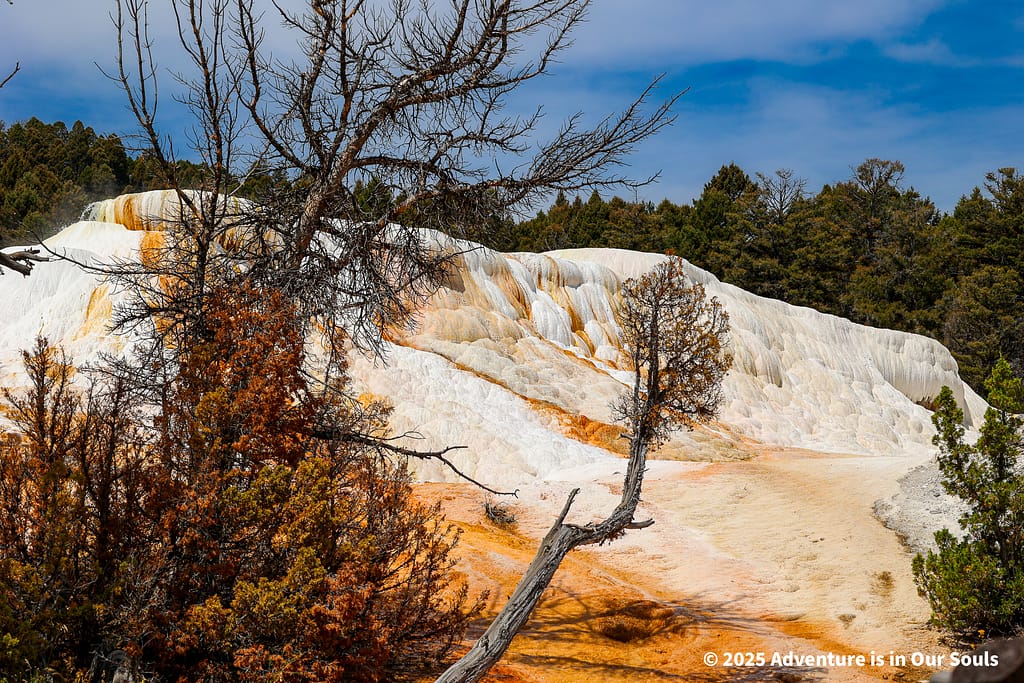
Orange Spring Mound captures the eye with its striking orange-and-white cone, shaped over time by thermophiles (microorganisms that thrive in extreme heat). The girls were fascinated by how living things can survive in such an extreme environment while creating these brilliant formations.
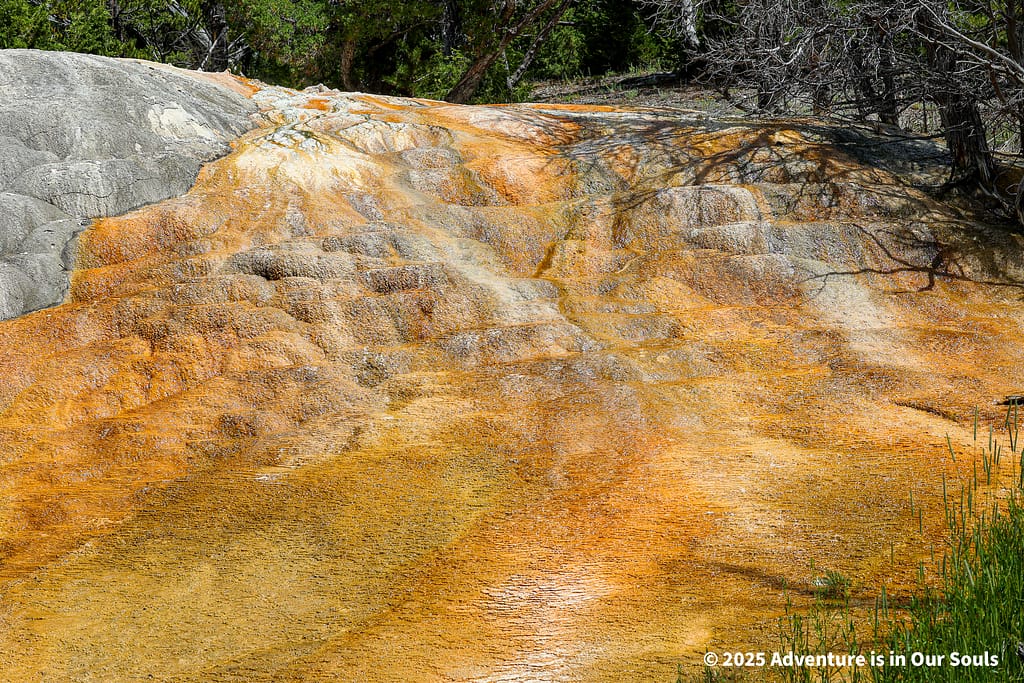
Finally, Angel Terrace lives up to its name with delicate white deposits that spread gracefully across the hillside. The terrace feels almost magical, especially as sunlight glints off the mineral layers.
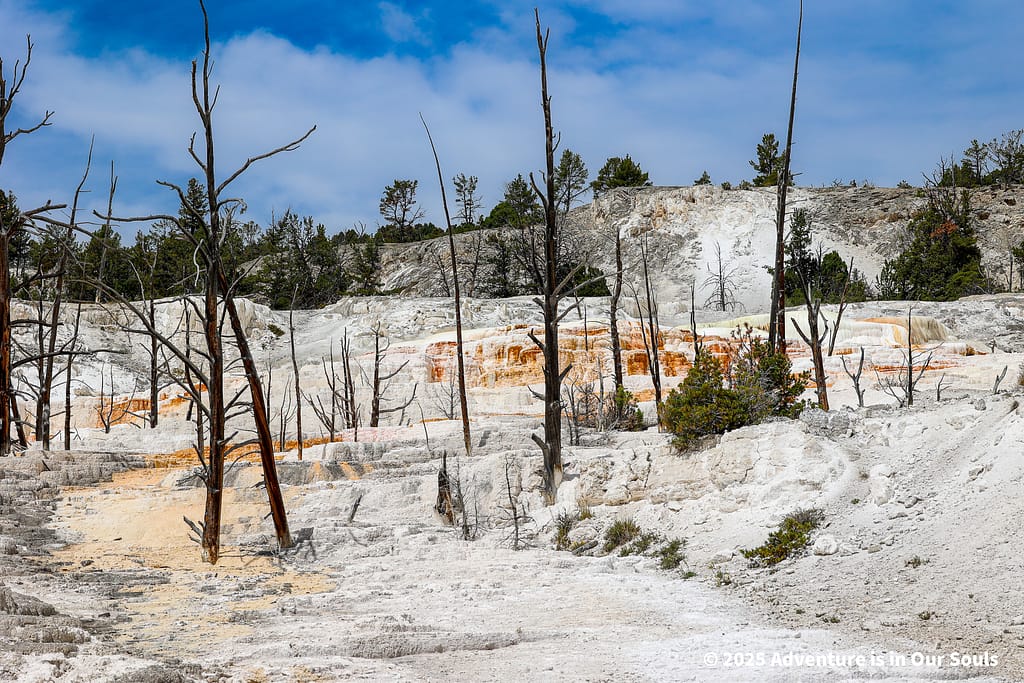
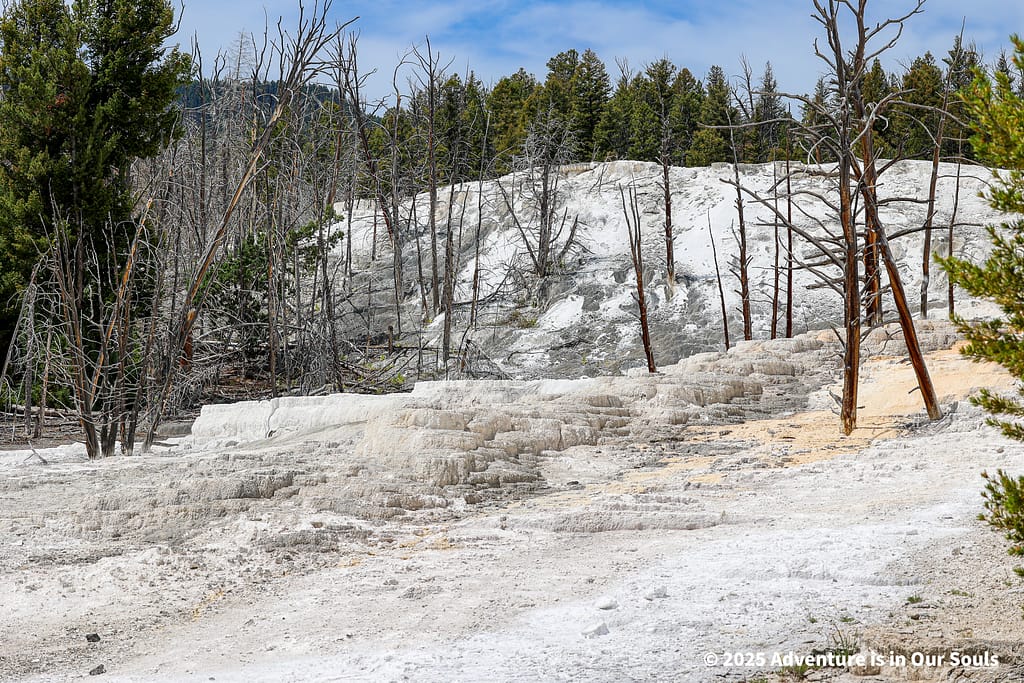
Families can linger here, letting kids explore the boardwalks and discover the subtleties of flowing water, color variations, and the sounds of steaming springs. The Upper Terraces are perfect for a slower, more reflective visit after the grandeur and energy of the Lower Terraces, providing a serene end to a day of geothermal exploration.
South Along the Grand Loop from Mammoth Springs
Continuing south along the Grand Loop, the landscape shifted from the colorful mineral terraces of Mammoth to dramatic canyons, rugged cliffs, and forested slopes.
Golden Gate
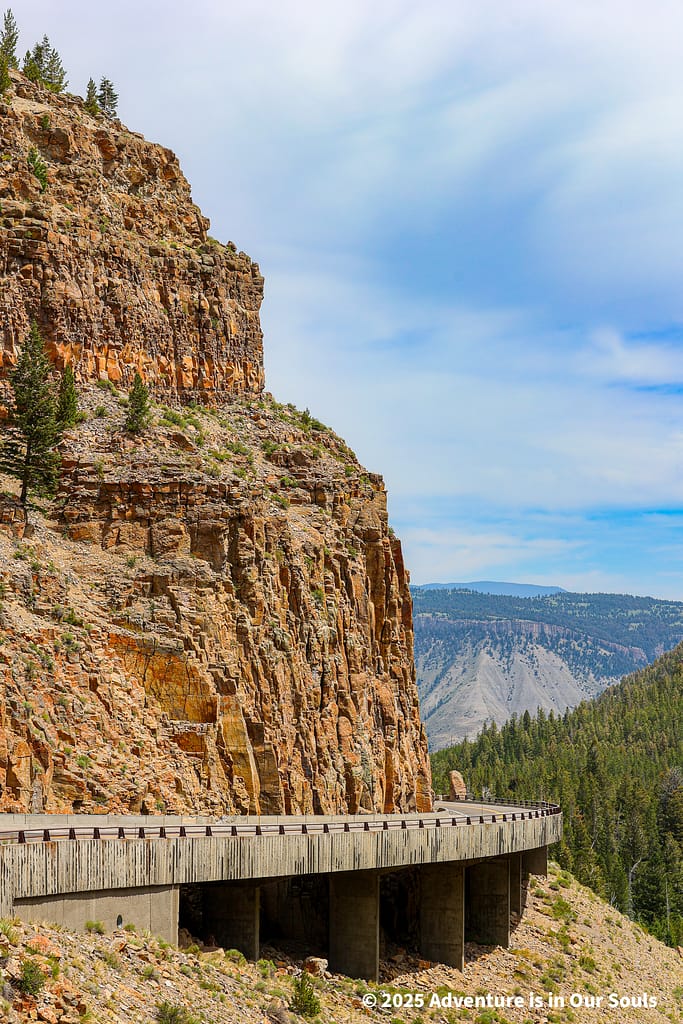
Our first stop was Golden Gate, a stunning canyon passage carved by Glen Creek. The canyon walls glow warm golden in the sunlight, creating a spectacular natural frame for the winding road below. Families can pause safely on the stone bridge, which hugs the canyon wall, for photos or just to marvel at the rushing water and the sheer cliffs. Early in the 1900s, engineers built the first wooden bridge here to connect Mammoth with the rest of Yellowstone’s interior. Today, the modern bridge blends safety with incredible views, allowing kids to experience the grandeur of Yellowstone without leaving the roadside.
Sheepeater Cliff
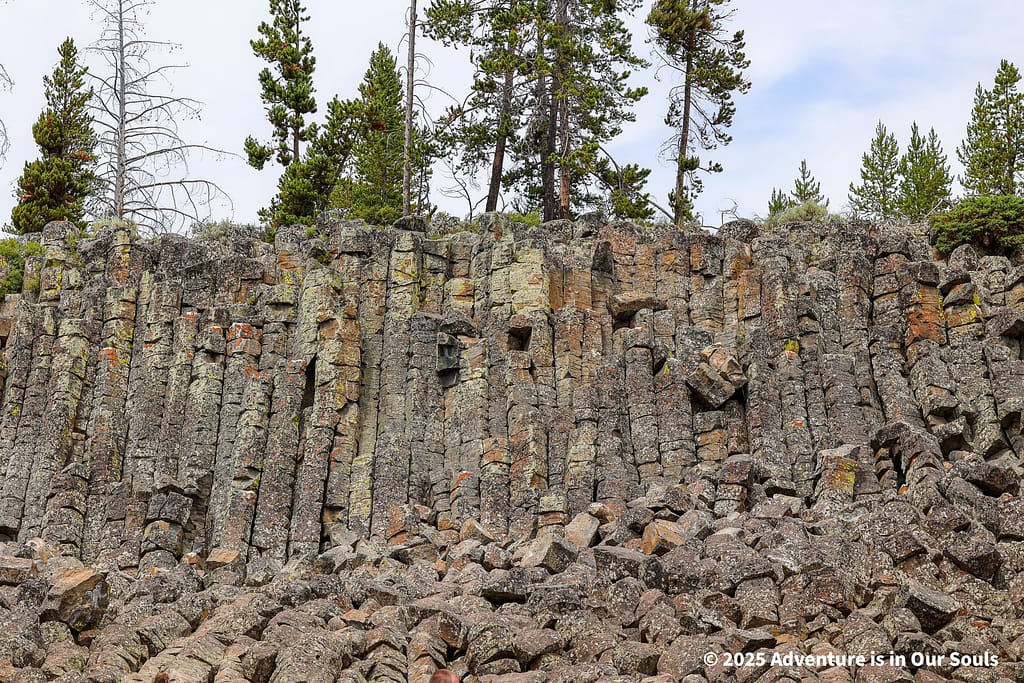
A short drive from Golden Gate brought us to Sheepeater Cliff, an impressive wall of columnar basalt. The cliff was formed when ancient lava flows cooled and cracked into tall, geometric pillars, creating natural patterns that look almost sculpted. The site is named after the Tukudika, or “Sheepeater” band of the Shoshone people, who once hunted bighorn sheep in this region. Walking along the pullouts here gives families a tangible connection to both the park’s volcanic history and the rich cultural heritage of Yellowstone’s earliest inhabitants. The girls were fascinated by the towering columns, imagining the ancient stories that might have unfolded along these cliffs.
Roaring Mountain
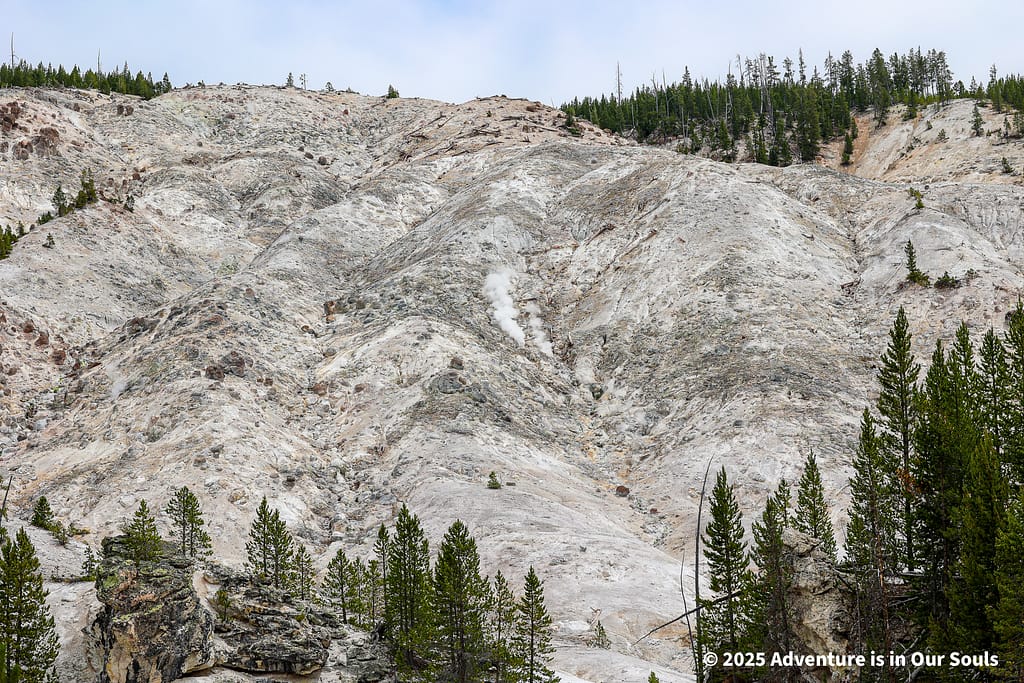
Next, we approached Roaring Mountain, a truly unforgettable stop for families. The mountainside constantly hisses, steams, and releases sulfuric gases, creating a sensory experience that thrills kids and adults alike. Walking along the roadside pullouts, the girls could see the steam rising in wisps and feel the warm heat and occasional scent of sulfur in the air. Early explorers reported that the steam was so intense it could be heard roaring from miles away, giving the mountain its name. Standing here, it was easy to imagine Yellowstone as a living, breathing landscape, where the earth’s energy is visible, audible, and tangible. The combination of sight, sound, and smell makes Roaring Mountain a perfect place to engage children’s curiosity and imagination while learning about the park’s geothermal activity.
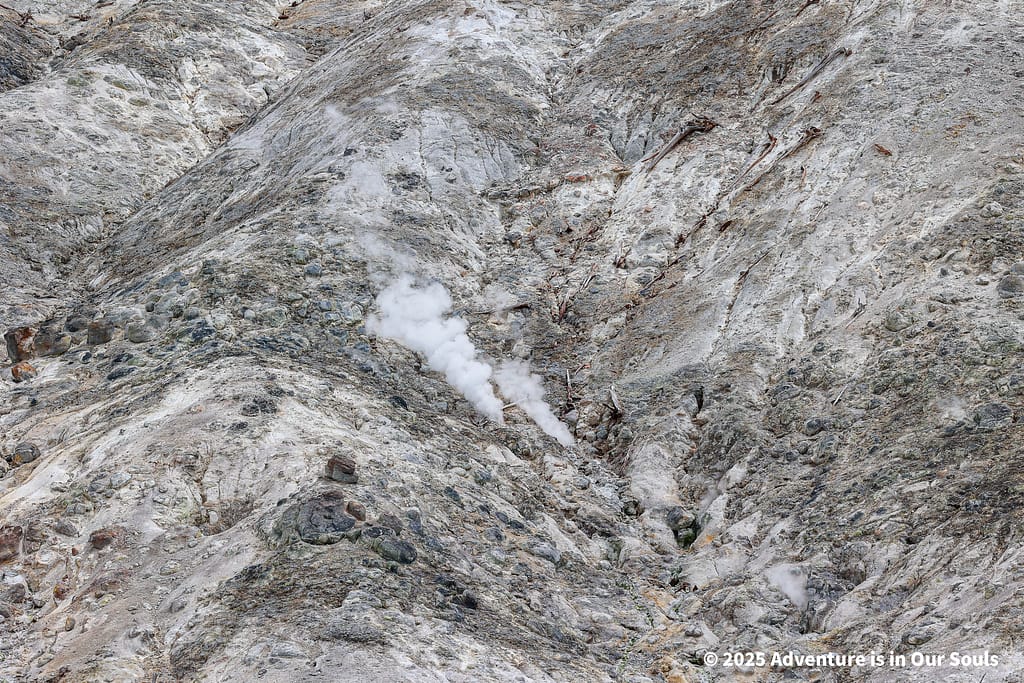
Clearwater Springs
Our last stop was Clearwater Springs, a quieter, less crowded area that feels like a hidden gem. Crystal-clear water bubbles up from underground, forming small, gently steaming pools. Mineral deposits line the edges of the springs, catching sunlight and creating subtle color changes in shades of white, yellow, and orange. This is a perfect spot for families to pause, let kids explore safely along boardwalks or rocky edges, and take a moment to enjoy the calming sounds of flowing water. The serene atmosphere provides a peaceful contrast to Yellowstone’s more dramatic geothermal areas, giving families a chance to observe nature at a gentler pace and spot local wildlife such as birds and small mammals that often visit the springs.
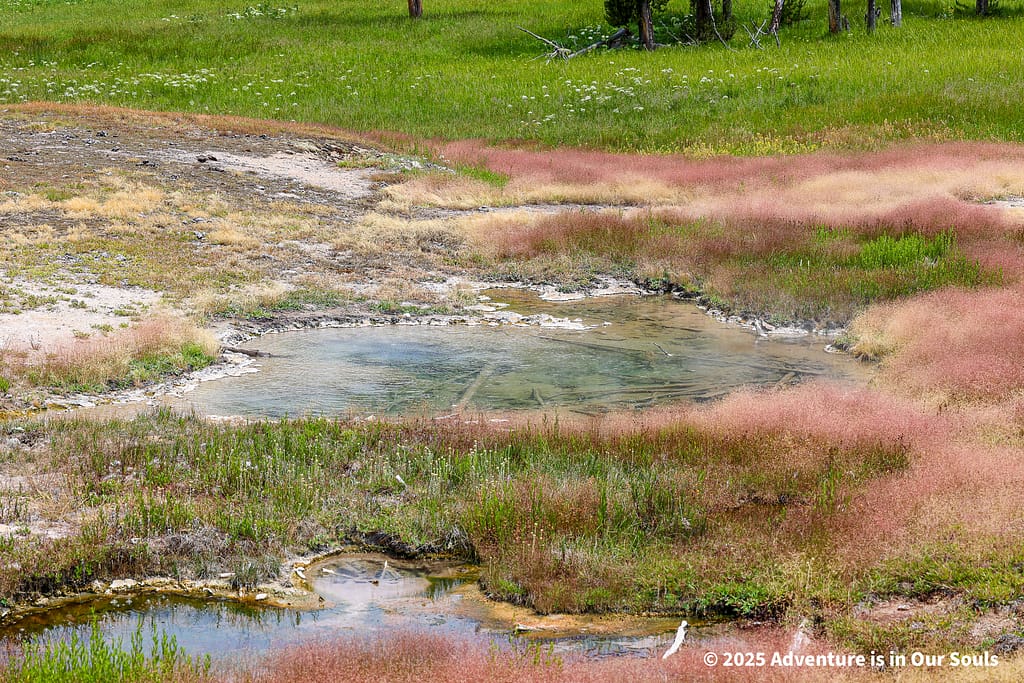
Norris Geothermal Areas
Yellowstone’s Norris Region is one of the park’s most active and dynamic geothermal areas. Sitting atop multiple fault lines, the ground here is constantly shifting and steaming, creating a surreal landscape of bubbling pools, steaming vents, and erupting geysers. It is also the oldest thermal area in the park, with hydrothermal activity ongoing for thousands of years. Families will love exploring the boardwalks, which wind safely through this otherworldly terrain while offering up-close views of natural wonders that feel almost alien.
- Tip for Families: Explain to kids that the steam and bubbling water are natural, not dangerous if you stay on the trails. Pointing out unusual formations and geyser names can make the walk educational and fun.
Norris Porcelain Basin
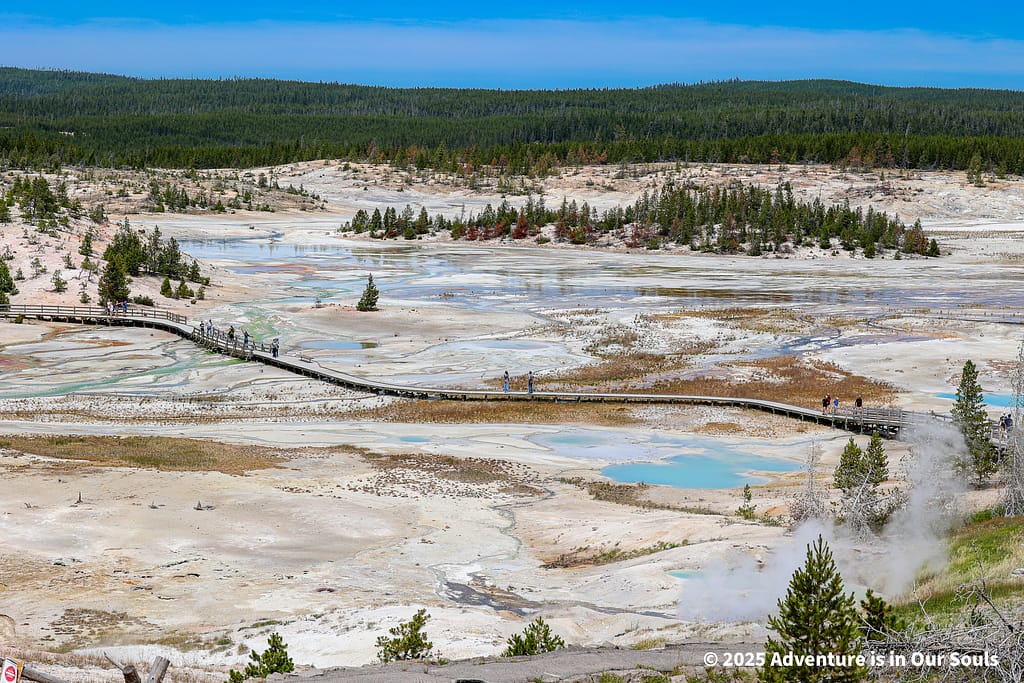
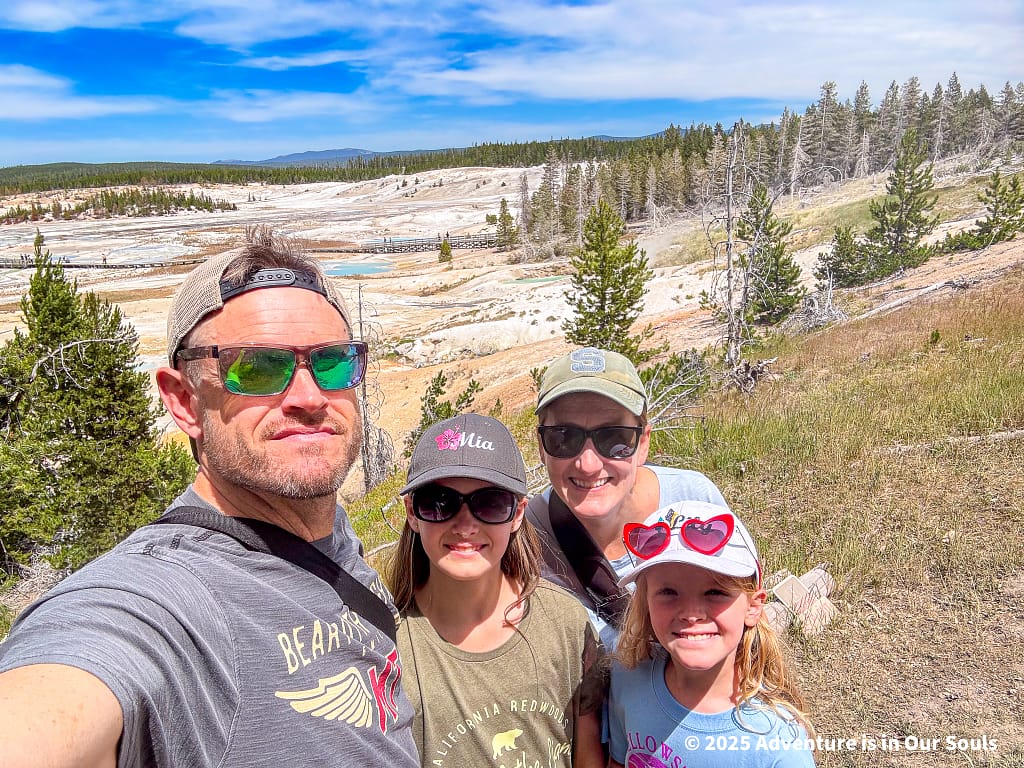
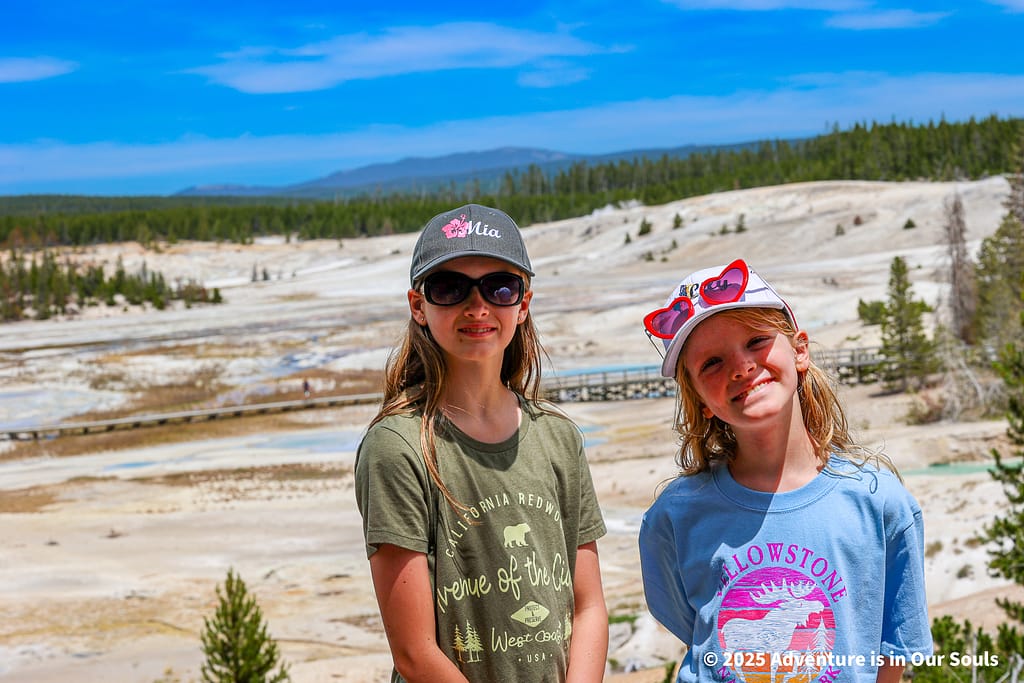
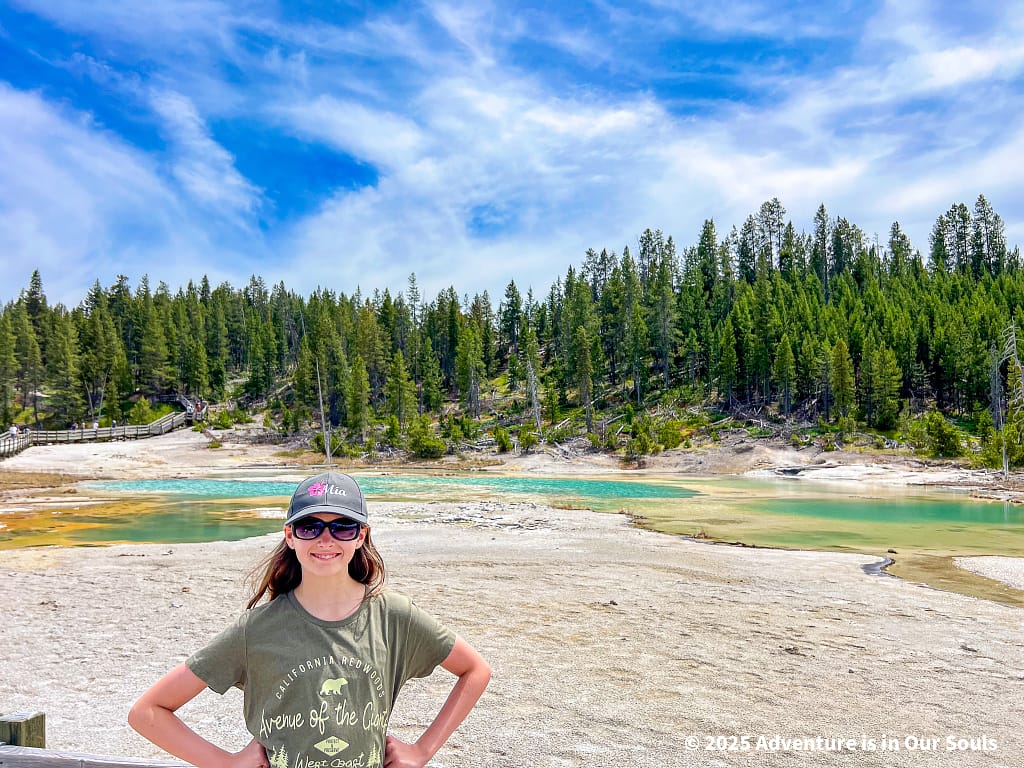
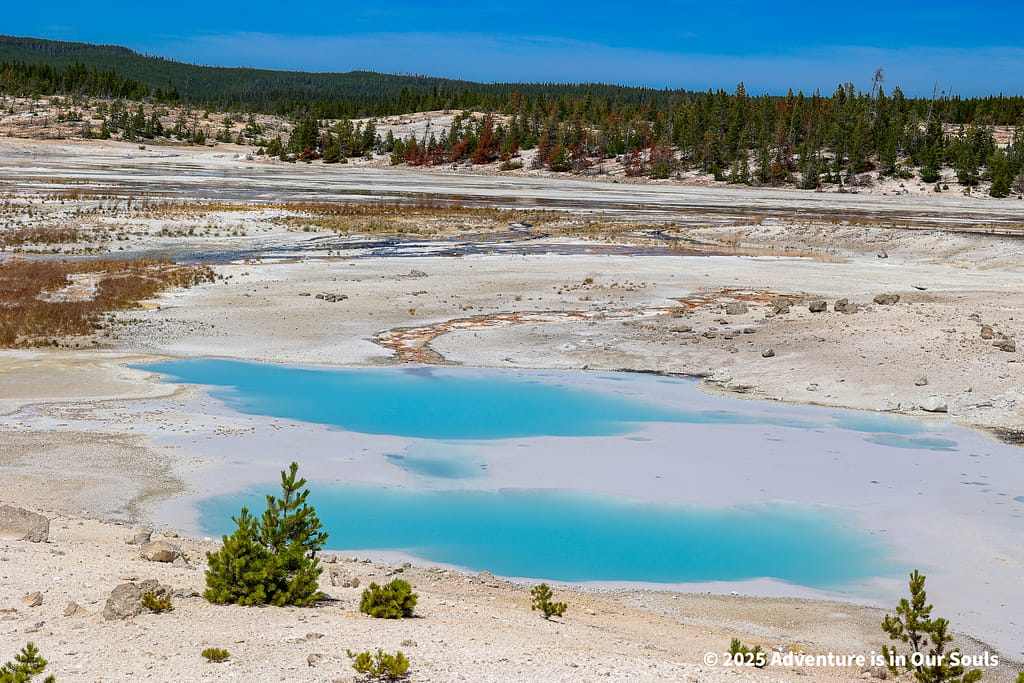
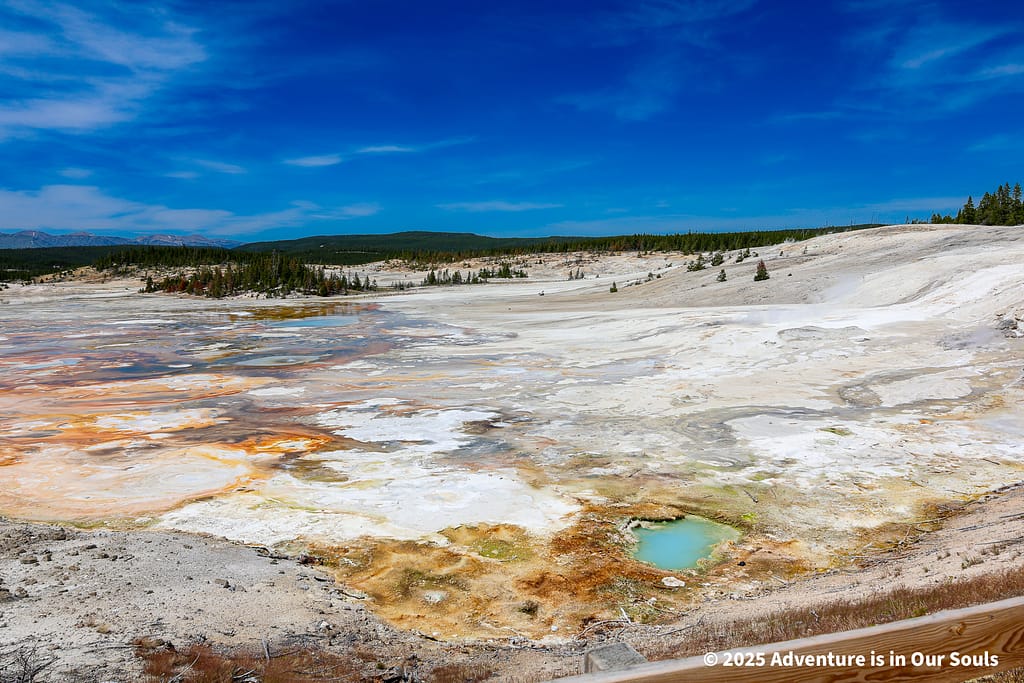
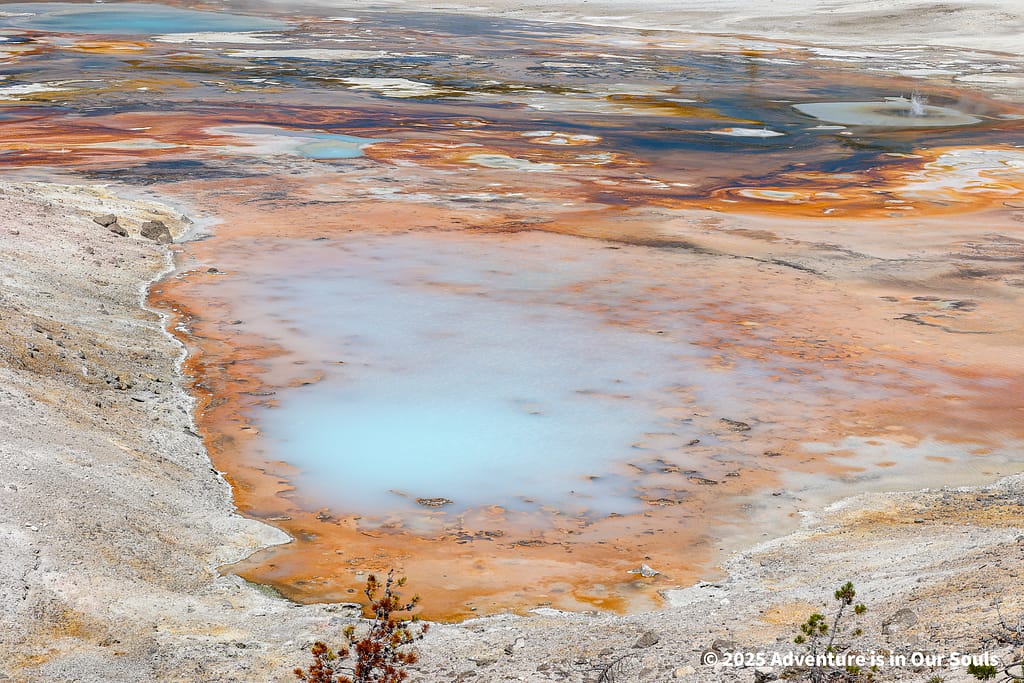
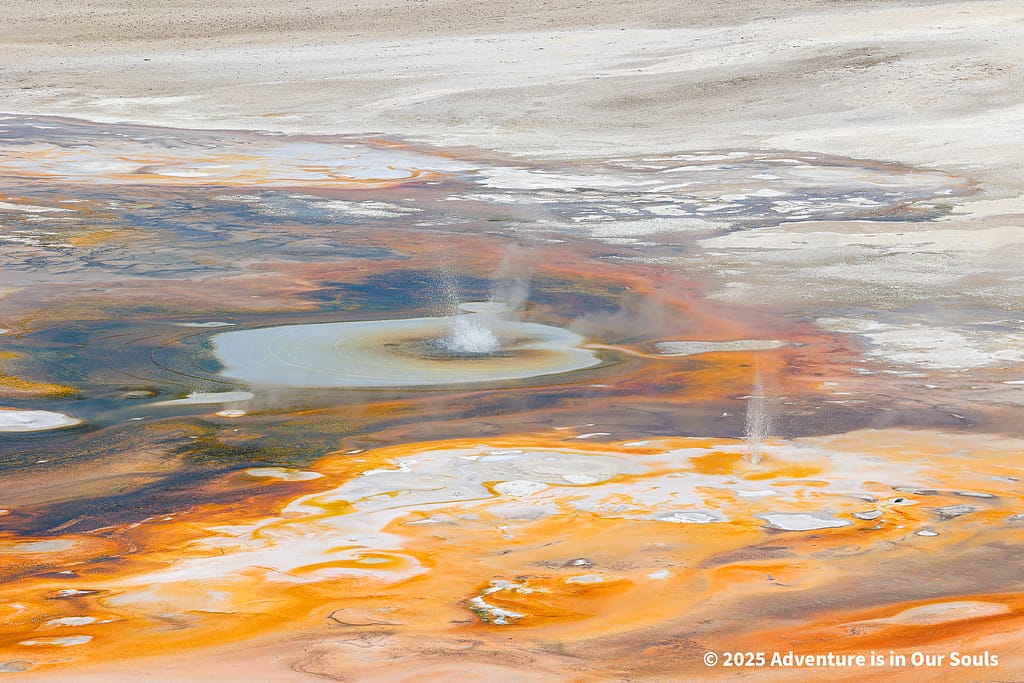
Our first stop in the Norris Region was the Porcelain Basin, named for its shimmering, milky-white mineral deposits that cover the ground like a layer of snow. Walking along the boardwalks, the girls were fascinated by the constantly changing shapes and colors of the terrain. Steam drifted lazily from fumaroles, and the strong sulfur scent added to the feeling of stepping onto another planet.
Several geysers stole the show here. Pinwheel Geyser shot bursts of water in multiple directions, creating mesmerizing spirals that the girls tried to imitate with their arms.
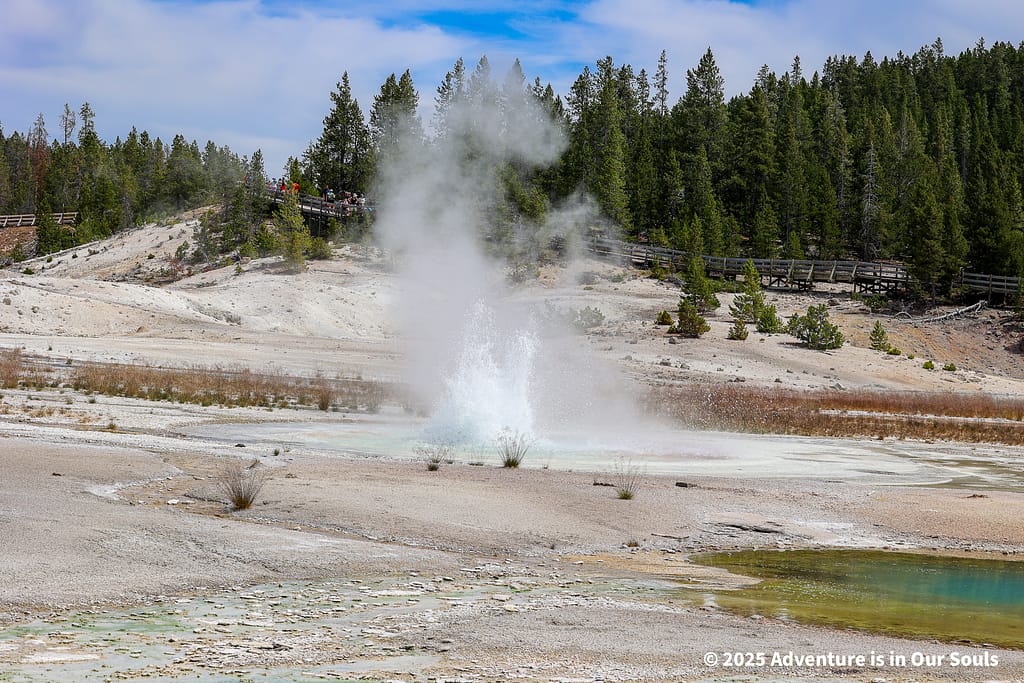
Constant Geyser lived up to its name, erupting continuously with rhythmic spurts of boiling water, offering almost hypnotic entertainment.
Nearby, Whirligig Geyser sent up smaller splashes that sparkled in the sunlight, while Sunday Geyser erupted irregularly but powerfully, keeping everyone on their toes.
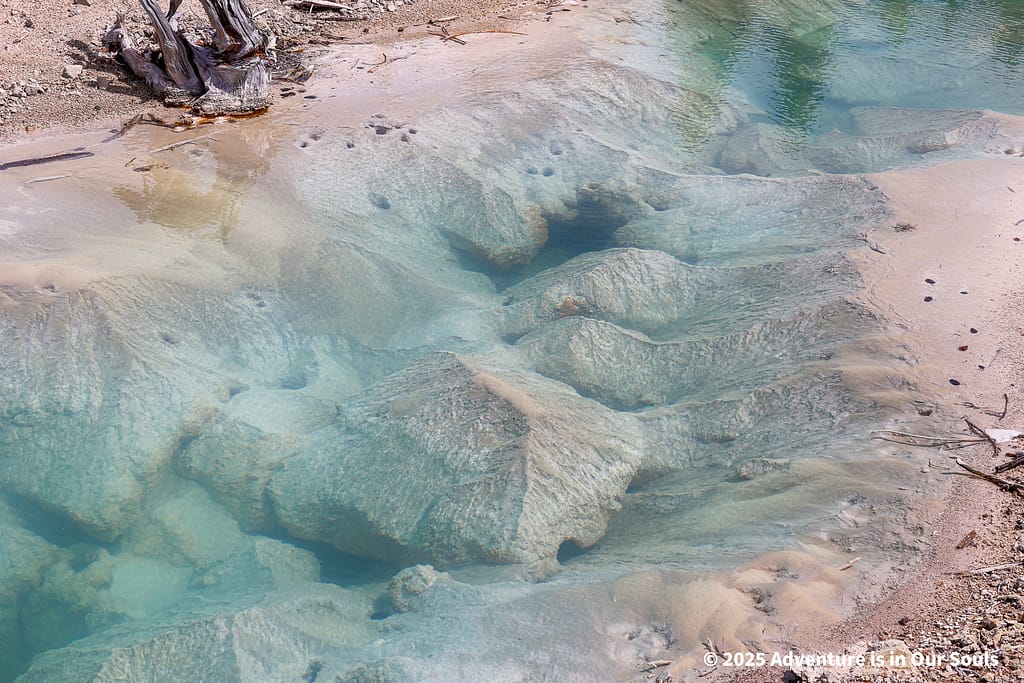
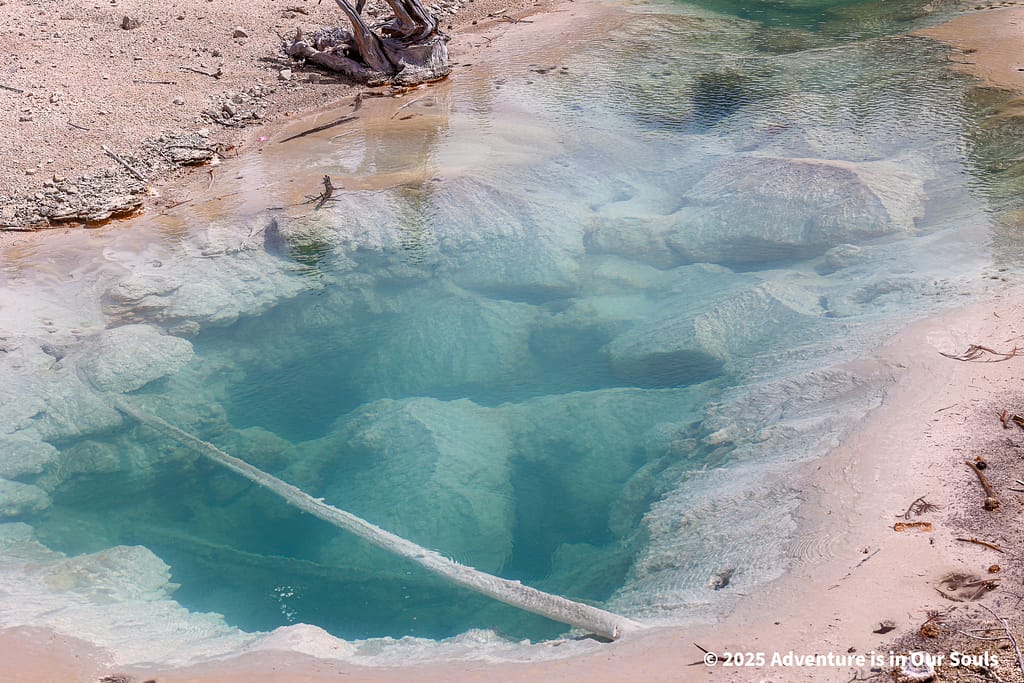
Colloidal Pool glowed deep blue, its vibrant color caused by suspended mineral particles, while Porcelain Springs spread across the hillside, with steaming runoff painting the ground in soft shades of white and yellow.
Norris Upper Geyser Basin
From the Porcelain Basin, we continued to the Norris Upper Geyser Basin, a more forested and secluded area with winding boardwalks that offer shady relief from the sun. The basin feels calmer but just as magical, with colorful pools and powerful geysers hidden among the lodgepole pines.
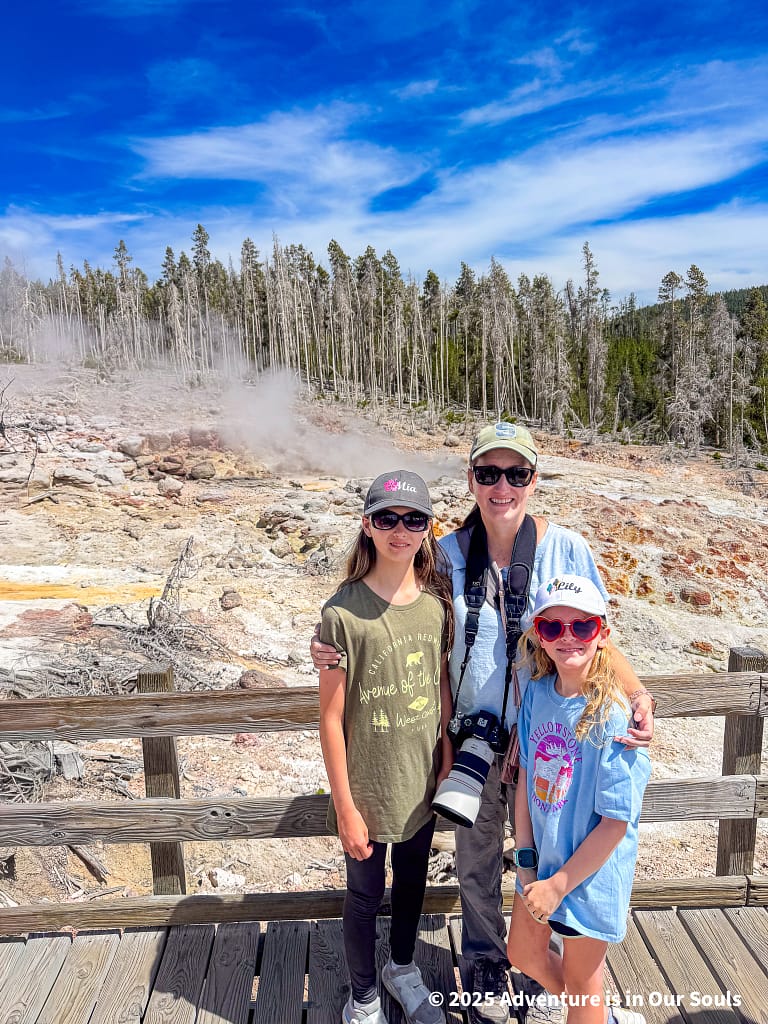
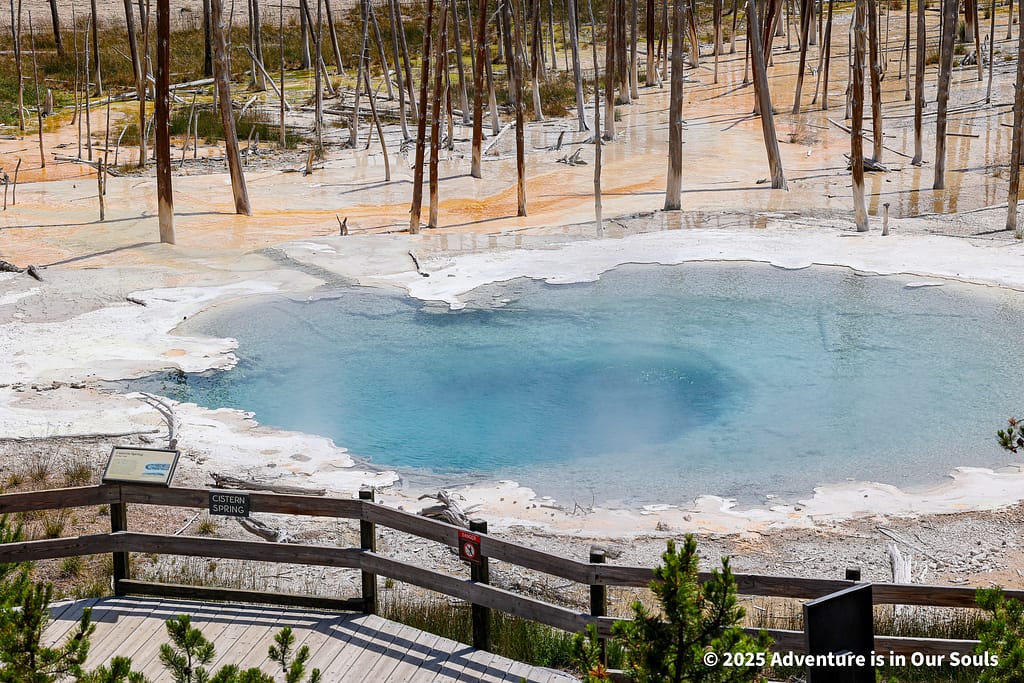
Emerald Spring captivated the girls with its brilliant green hue, created by heat-loving algae and sunlight reflecting off mineral-rich water. Just nearby, Steamboat Geyser, the tallest active geyser in the world, commanded attention. When it erupts, it can shoot water over 300 feet high, though major eruptions are unpredictable. Cistern Spring, connected underground to Steamboat, sometimes drains completely after a large eruption, adding another layer of geological intrigue.
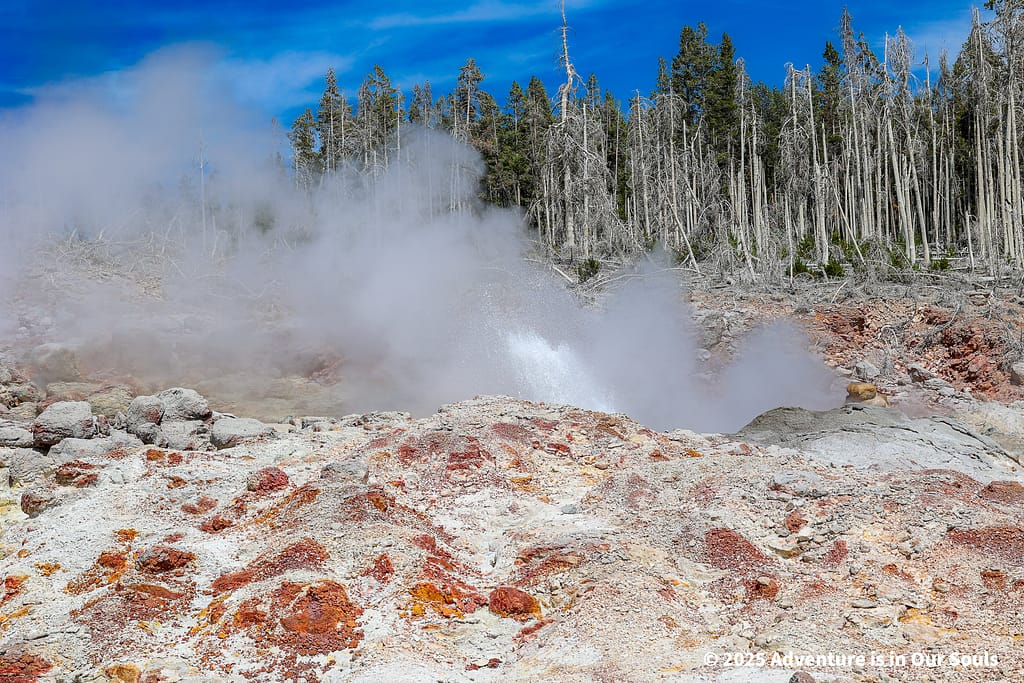
Smaller but equally mesmerizing geysers kept the girls engaged. Veteran Geyser bubbled steadily, while Fearless Geyser sent energetic splashes into the air, appearing almost playful in the steam.
Monarch Geyser Crater, though dormant, still vented occasional bursts of steam, reminding visitors of its powerful past. Finally, Minute Geyser, once erupting every sixty seconds, now only spurted gently from a side vent, but the rhythmic bubbling was captivating for children learning about geyser activity.
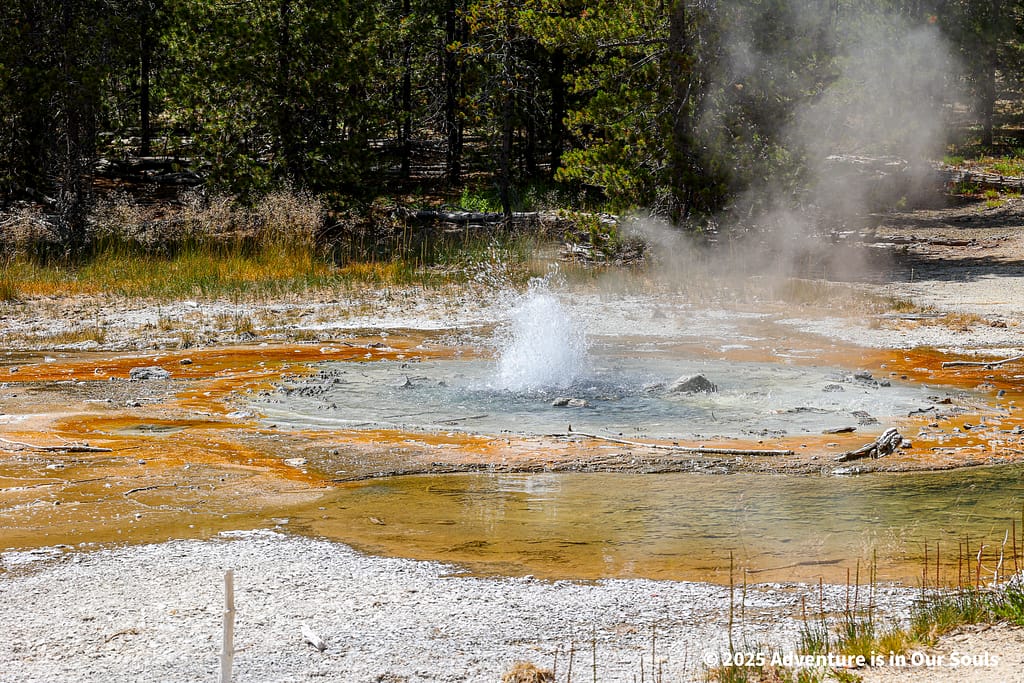
Day 3: Old Faithful Area
Two Nights at Old Faithful Inn
Early the following morning, we packed up and moved deeper into Yellowstone, heading toward the heart of the park’s geothermal action around Old Faithful. For the next two nights, we stayed at the iconic Old Faithful Inn, a truly magical base for families exploring this part of Yellowstone. The Inn sits right next to the Upper Geyser Basin and offers an immersive historic experience that feels like stepping into Yellowstone’s past. While it was our least comfortable stay during our time in the park, the rooms are very stuffy and warm, but the location more than made up for it. You are just steps away from some of the world’s most famous geysers, bubbling hot springs, and colorful thermal features, making it perfect for family adventures.
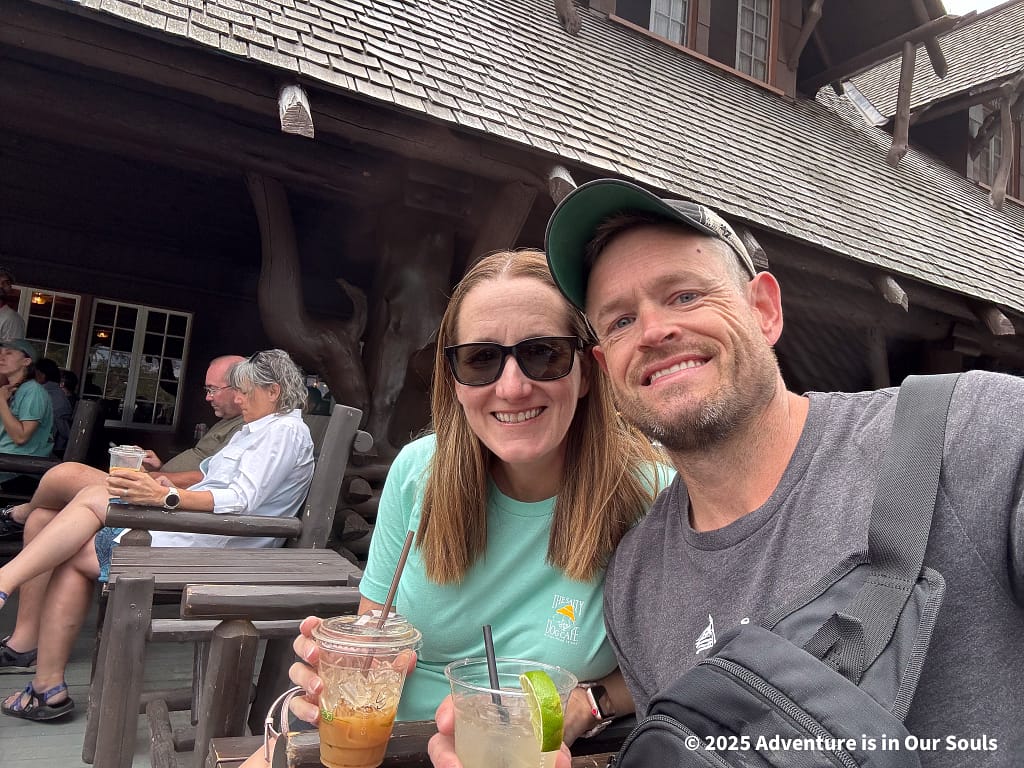
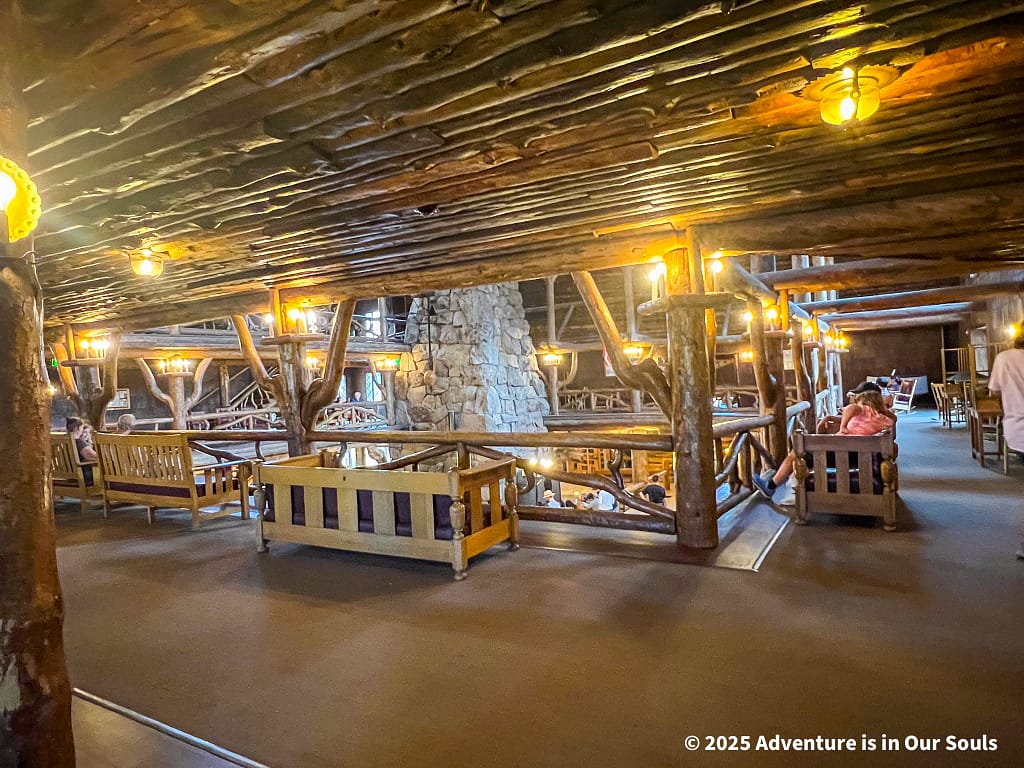
The area around Old Faithful is a hive of geothermal activity. You’re just steps from some of the world’s most famous geysers, bubbling hot springs, and colorful thermal features, and it’s easy to catch the early morning steam rising as the sun warms the basin. Staying at the Inn made it possible for us to step outside in the early hours and watch a quieter eruption of Old Faithful before the day’s crowds arrived. The girls were enchanted by the history of the building and loved exploring its nooks, including the hand‑crafted clock and the log‑beam architecture that tells stories of Yellowstone’s early tourism era.
Artist’s Paint Pots
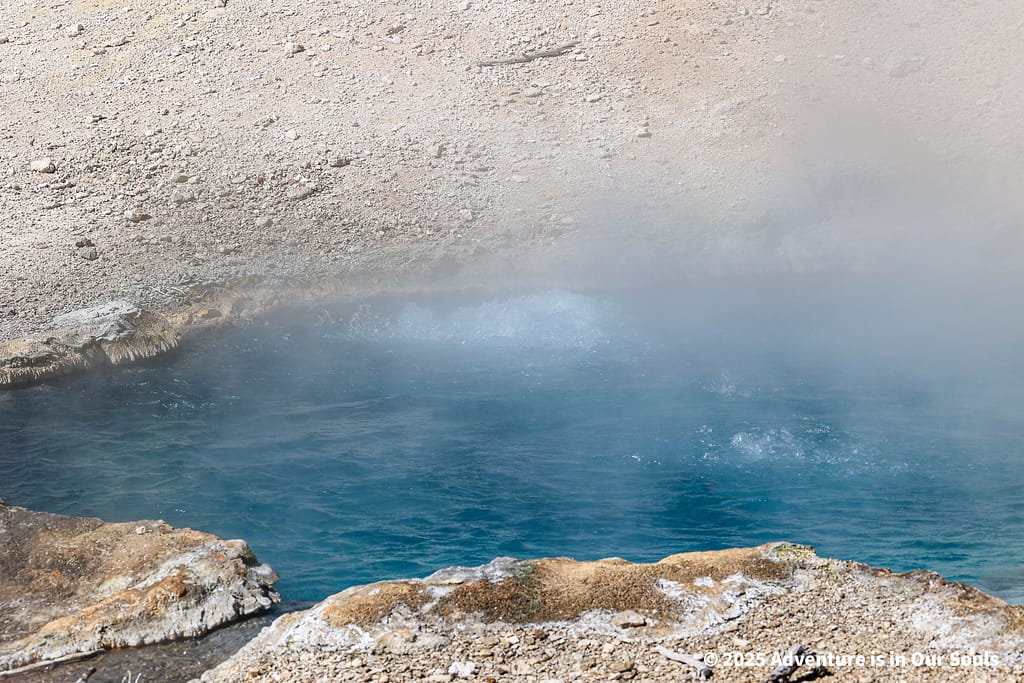
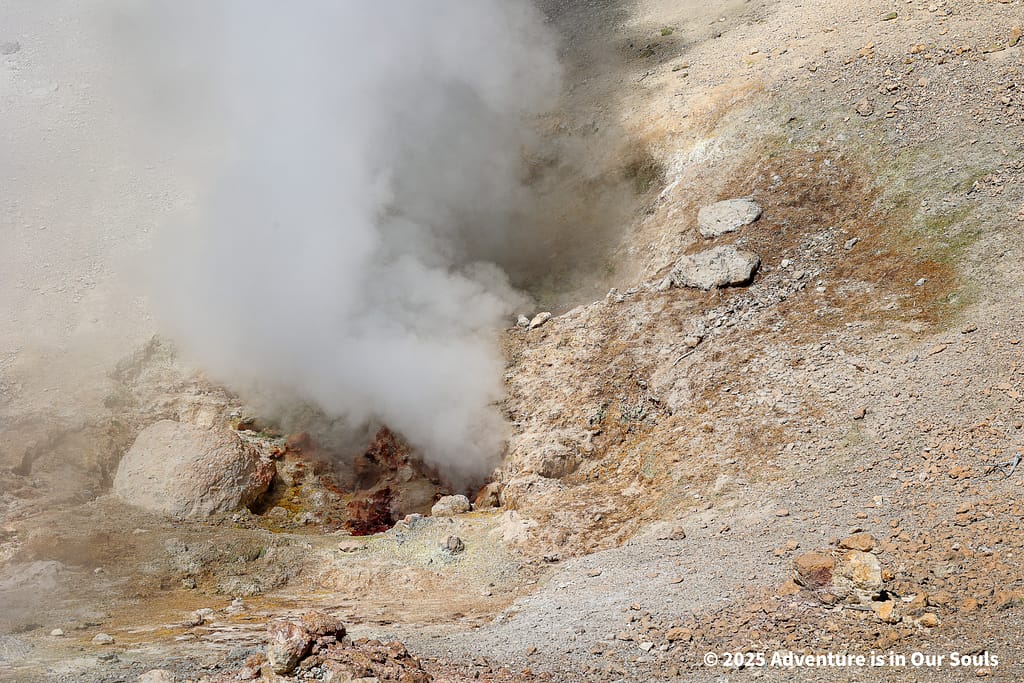
South of Norris, we arrived at Artist’s Paint Pots, a colorful and active geothermal area that immediately captured the girls’ attention. A short, forested hike led us through a trail filled with bubbling mud pots, hot springs, and small geysers, each creating a palette of pink, gray, and tan patterns across the hillside. The vivid colors are caused by minerals interacting with heat-loving microorganisms, or thermophiles, that thrive in Yellowstone’s extreme temperatures.
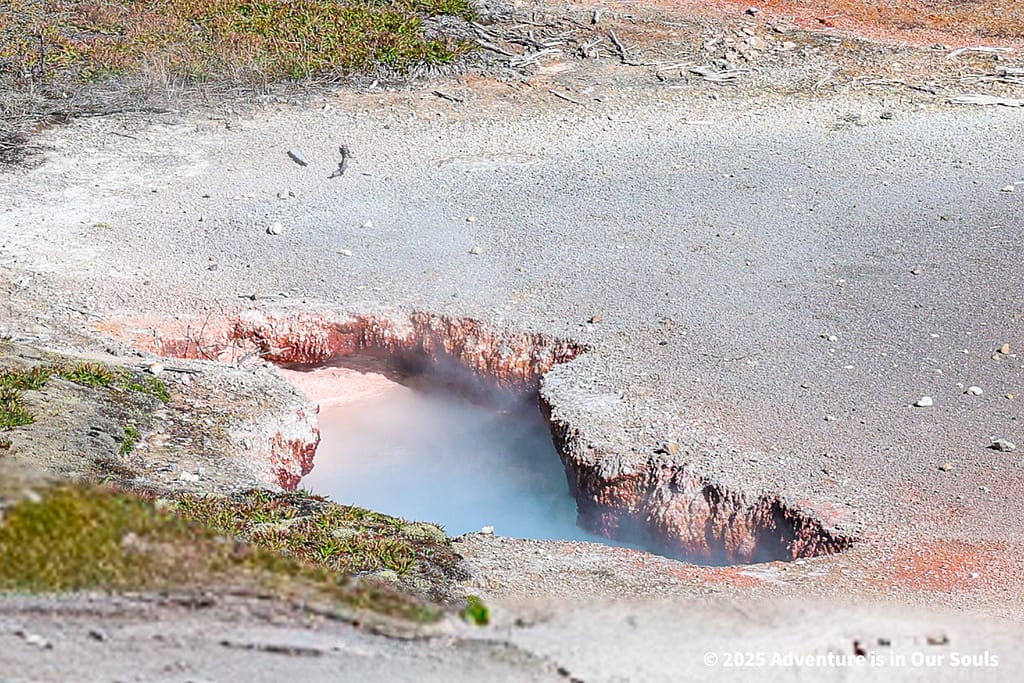
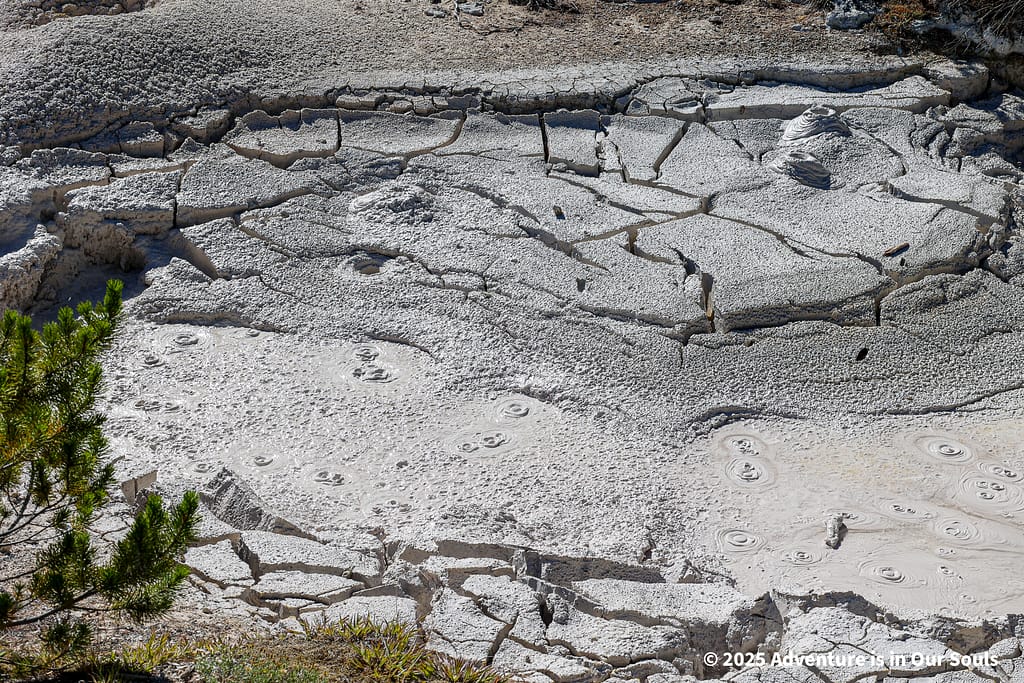
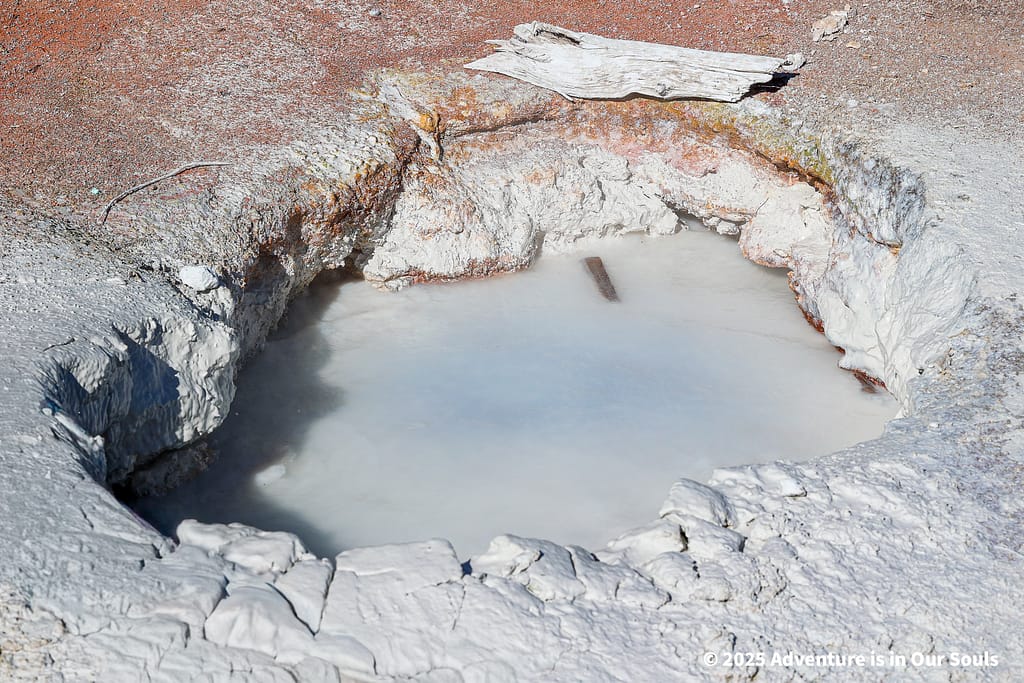
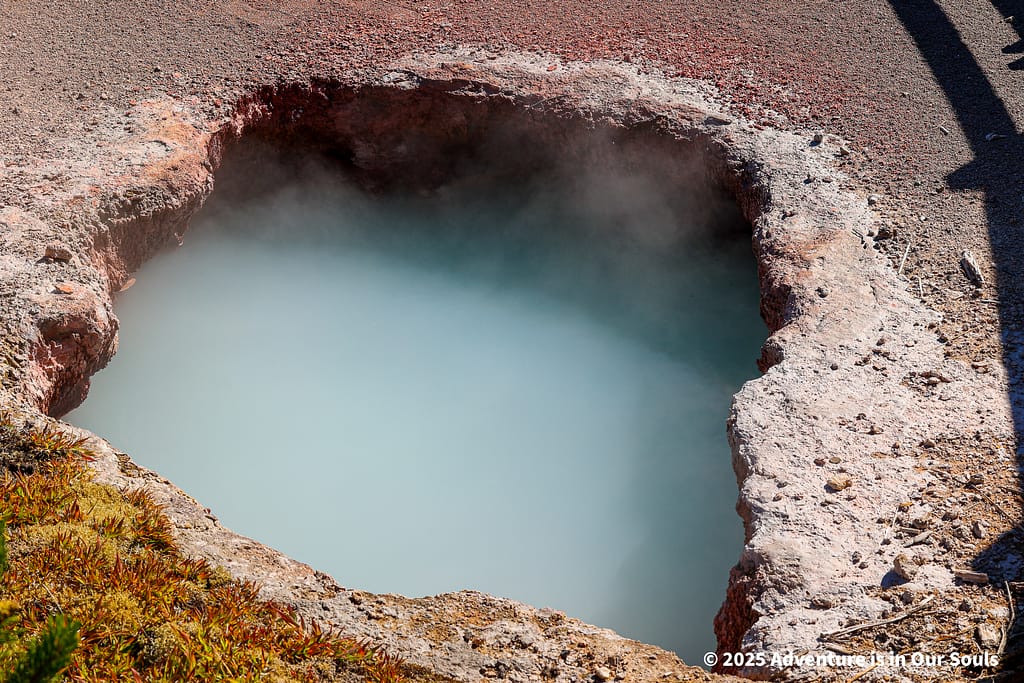
Walking along the boardwalks, the girls could see mud bubbling and occasionally splattering, creating natural artwork that shifted throughout the day. Hot springs emitted steam in gentle wisps, while tiny geysers shot water sporadically, surprising and delighting young explorers. The combination of movement, color, and sound made this area feel like a living canvas, and it was easy to imagine the geological forces at work beneath our feet. Families can linger here safely, letting kids take in the sights, sounds, and textures while learning how Yellowstone’s volcanic activity shapes the landscape.
Scenic Waterfalls
After the Artist’s Paint Pots, we stopped at Gibbon Falls, an 84-foot waterfall plunging over an ancient lava flow. The roar of the water and the mist rising from the base provided an exhilarating sensory experience for the girls. Pullouts along the road made it easy to watch the falls safely and even snap some memorable family photos.
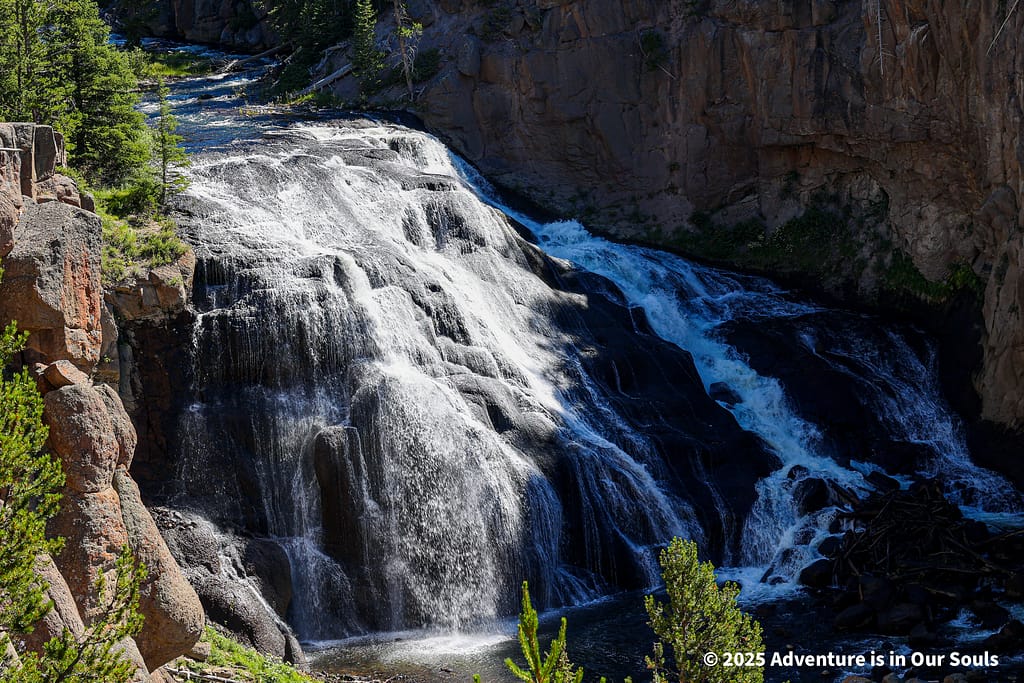
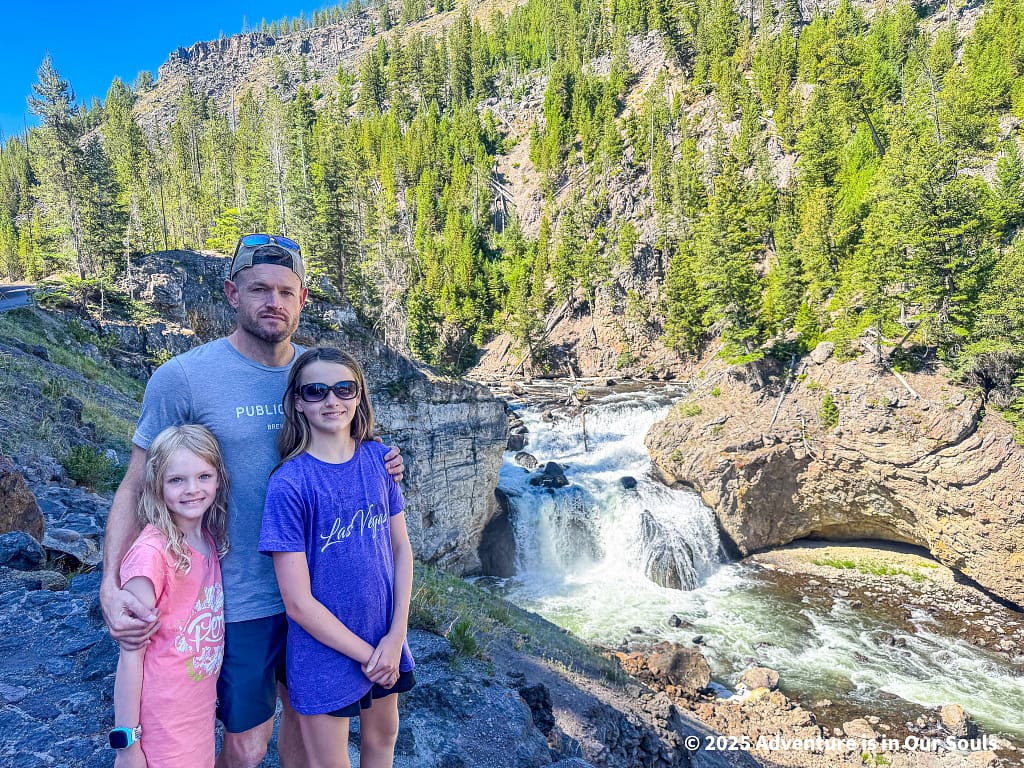
A short drive farther south brought us to Firehole Falls, tucked within the narrower Firehole Canyon. The 40-foot cascade is framed by volcanic cliffs, and the water moves swiftly through the gorge, reflecting steam vents nearby. Named for the geothermal heat that warms sections of the river, Firehole Falls offers a dramatic contrast to the pastel colors of the paint pots, showing how Yellowstone’s volcanic history shapes both its rivers and waterfalls. Kids loved spotting the mini rapids and imagining the water rushing through the canyon thousands of years ago.
Fountain Paint Pots
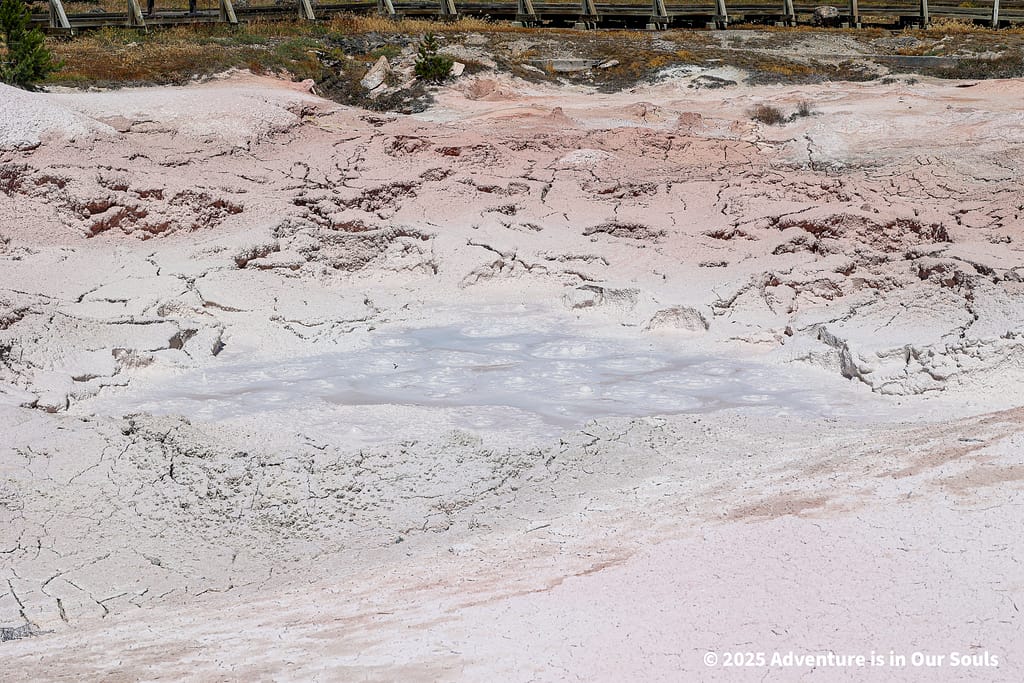
Our next stop was the Fountain Paint Pots Area, one of Yellowstone’s most fascinating geothermal zones, located in the Lower Geyser Basin. This area sits above an underground volcanic system, where superheated water interacts with gases and minerals to create a mix of hot springs, geysers, fumaroles, and mud pots all within a short boardwalk loop. Families can safely explore while seeing dozens of features in action, making it a perfect stop for kids to witness the park’s geothermal energy up close.
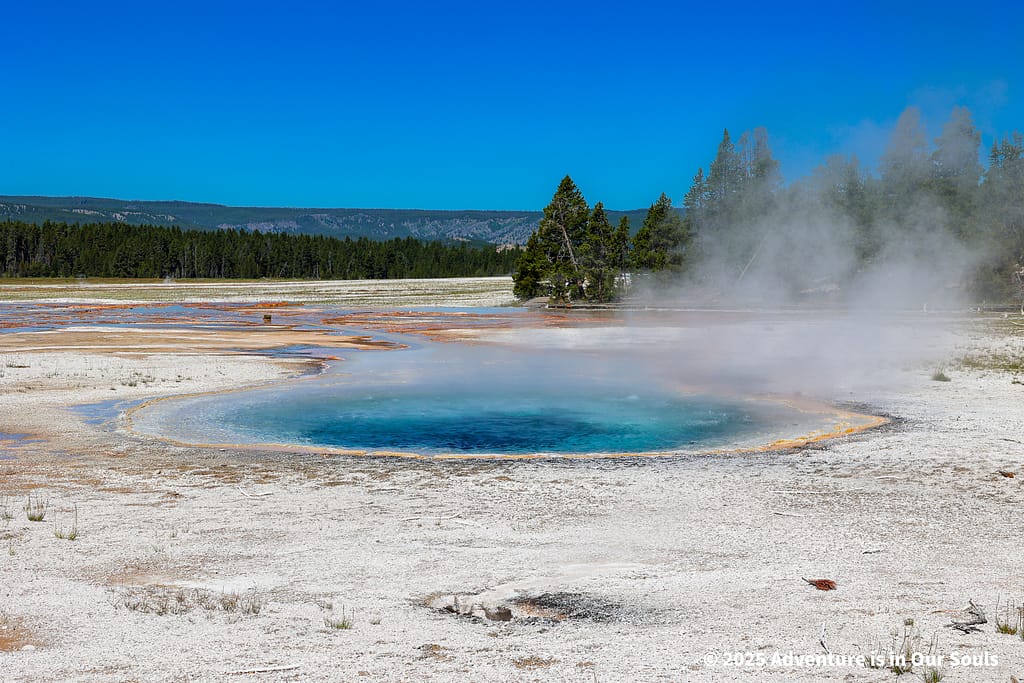
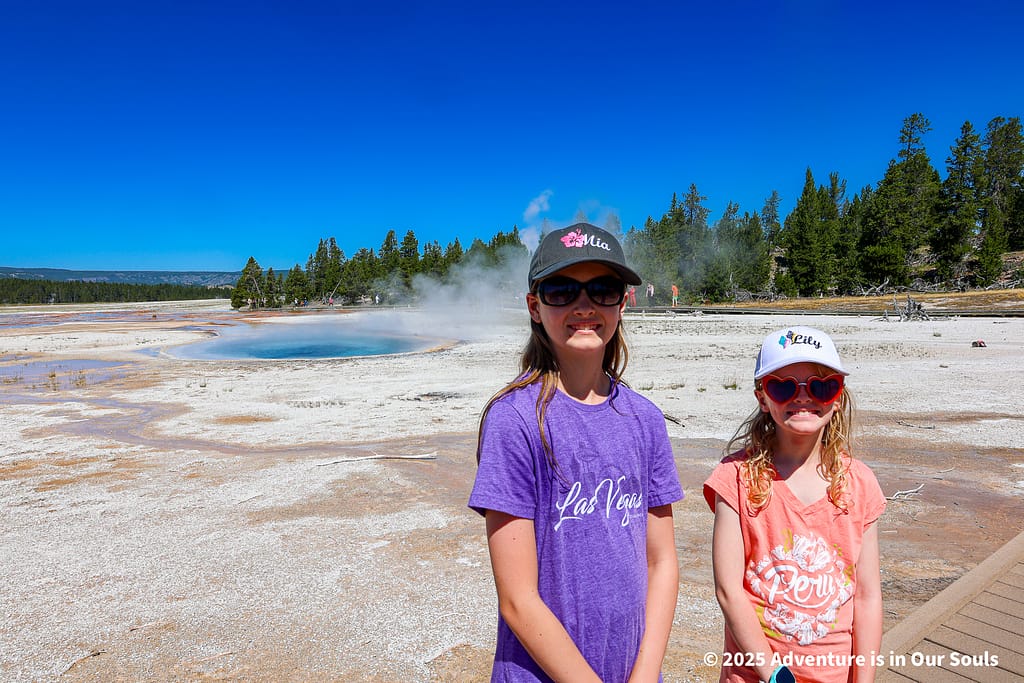
Celestine Pool immediately catches the eye with its deep, clear blue water that reflects sunlight like a magical mirror. Nearby, Jelly Geyser erupts sporadically, sending bursts of water into the air. Sometimes these eruptions interact with other nearby geysers, creating unexpected and fascinating displays that keep kids and adults guessing.
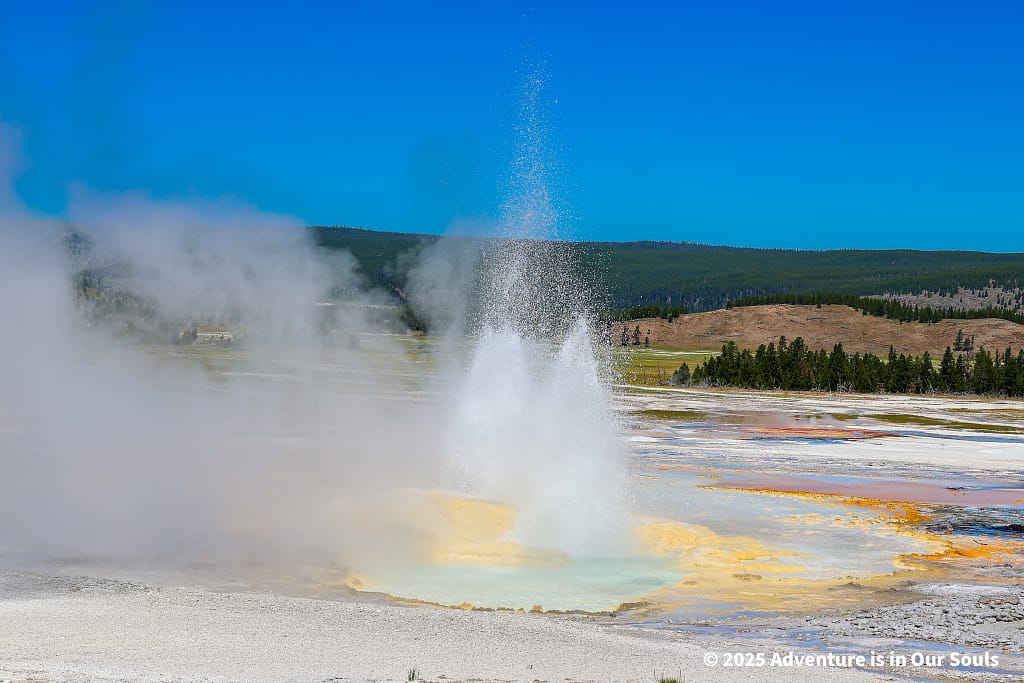
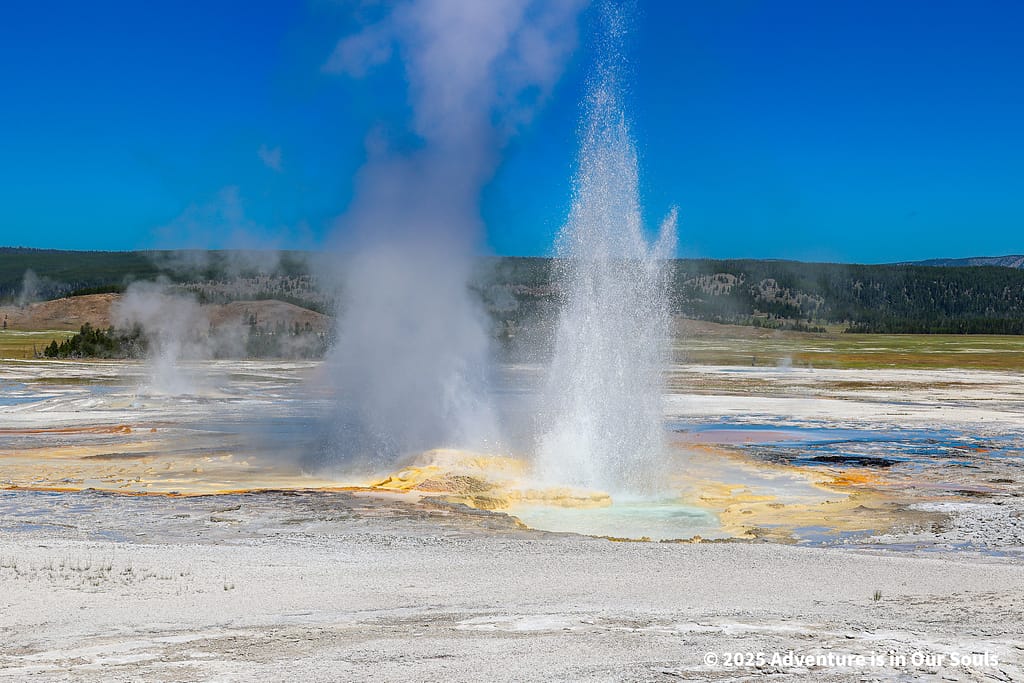
Clepsydra Geyser is one of the park’s most reliable geysers, erupting almost continuously and reaching heights of up to forty-five feet. Jet Geyser often erupts alongside Clepsydra, shooting water between five and twenty feet high. Silex Spring is one of the hottest features in the area, its rim coated in shimmering silica deposits that sparkle in the sun.
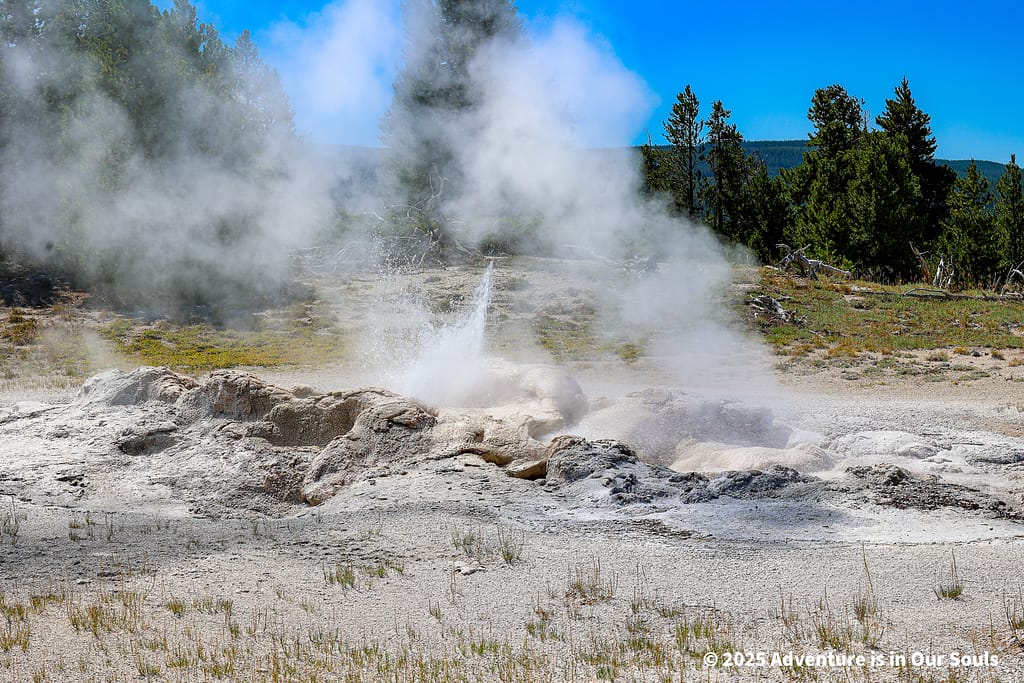
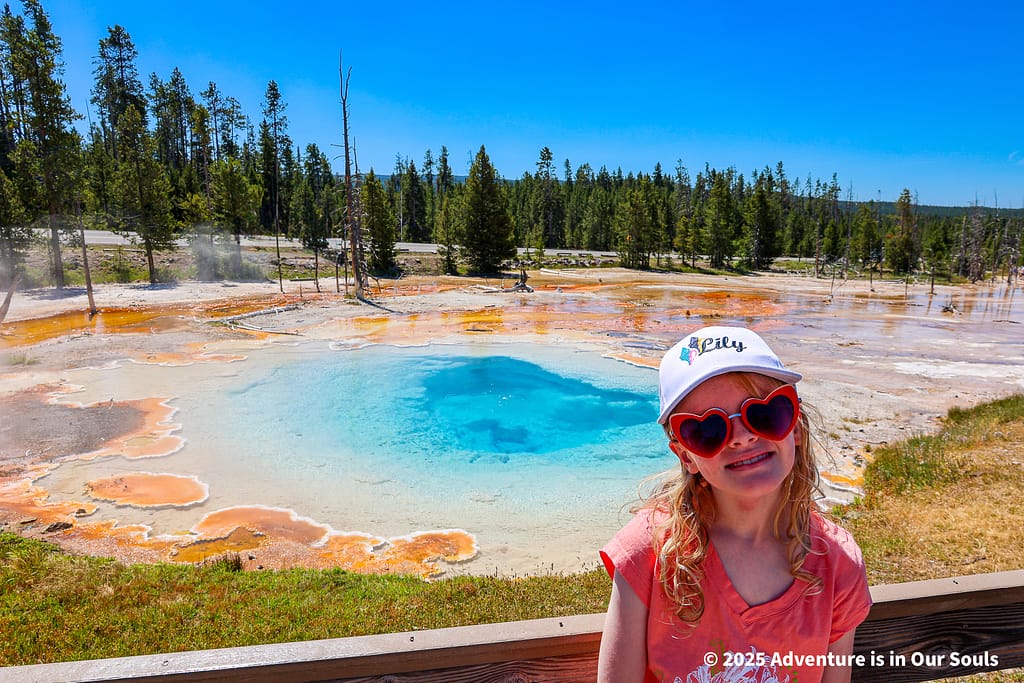
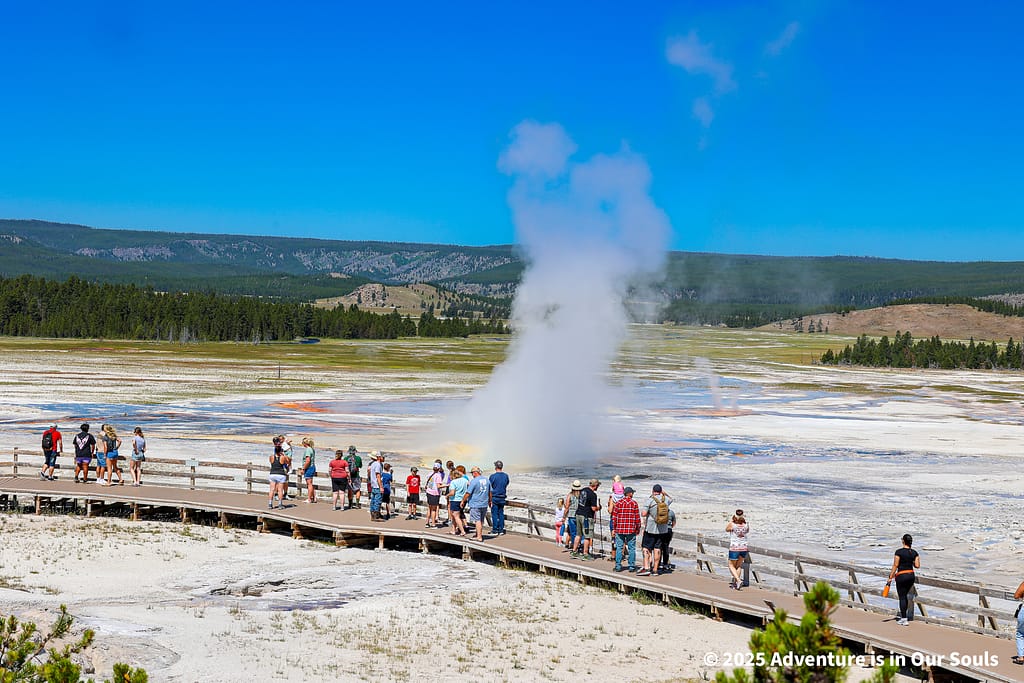
Walking along the boardwalks, the girls loved watching the bubbling mud, steaming vents, and occasional geyser bursts. They tried to predict which feature would erupt next, laughing and pointing as the ground came alive with color and movement. The combination of vivid hues, constant motion, and the sheer energy of Yellowstone’s underground forces makes the Fountain Paint Pots both educational and mesmerizing. It’s a place where families can see the raw power of nature while enjoying a fun and interactive adventure.
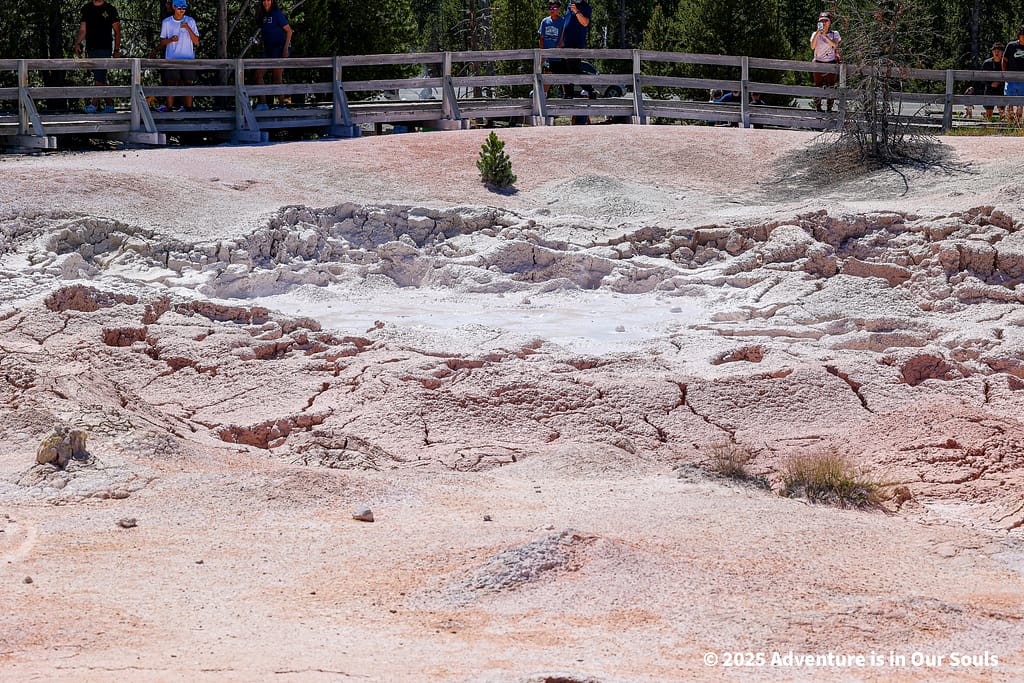
Grand Prismatic Spring
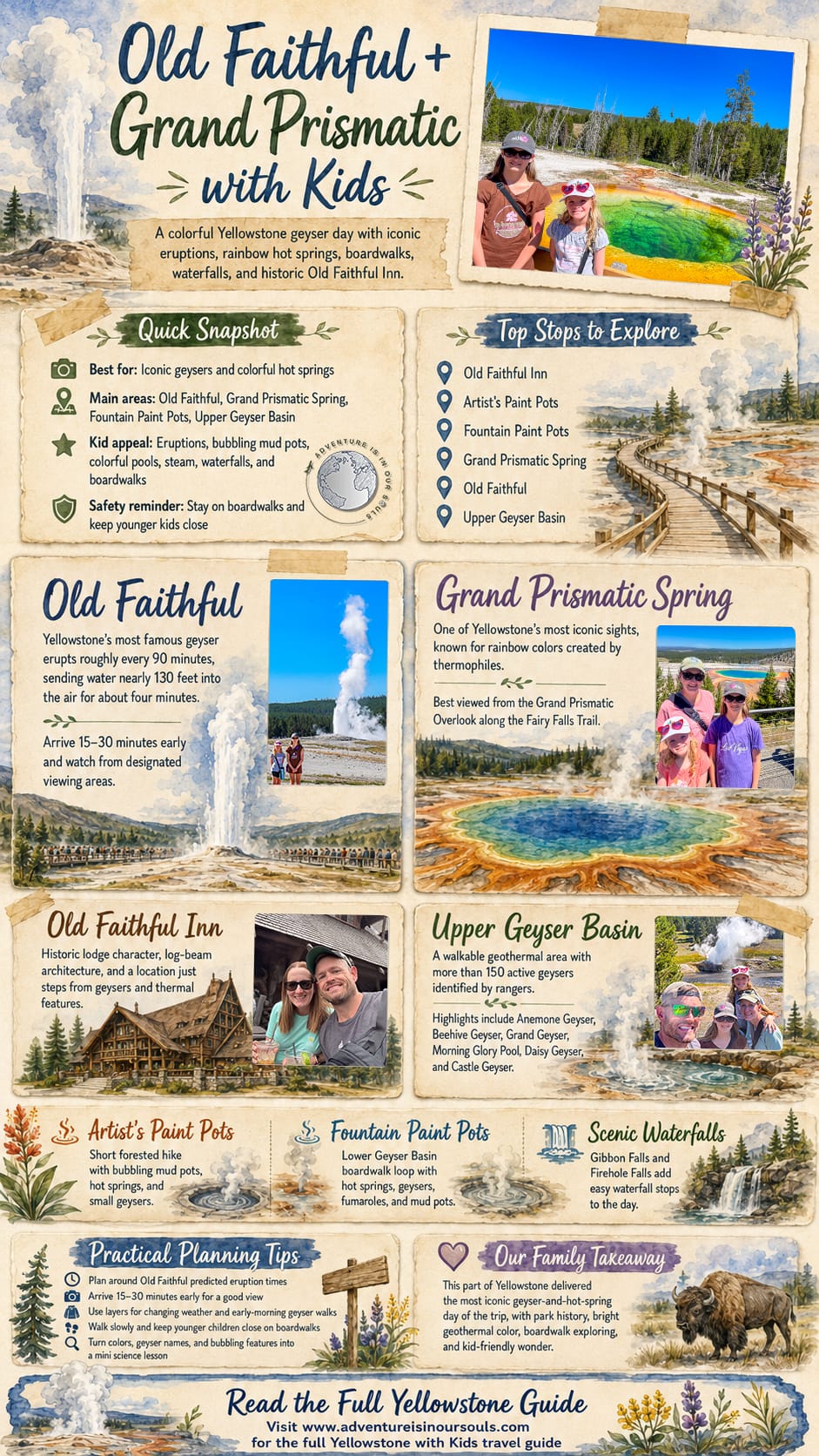
The Grand Prismatic Spring is one of Yellowstone’s most iconic sights and a must-see for families exploring the park. It is the largest hot spring in the United States and the third largest in the world, measuring about 370 feet across and over 120 feet deep. Its vibrant colors, from deep blue at the center to brilliant greens, oranges, and reds around the edges, come from heat-loving microorganisms called thermophiles. These microscopic organisms thrive in different temperature zones, creating the vivid rainbow effect that shifts subtly with sunlight and seasonal changes.
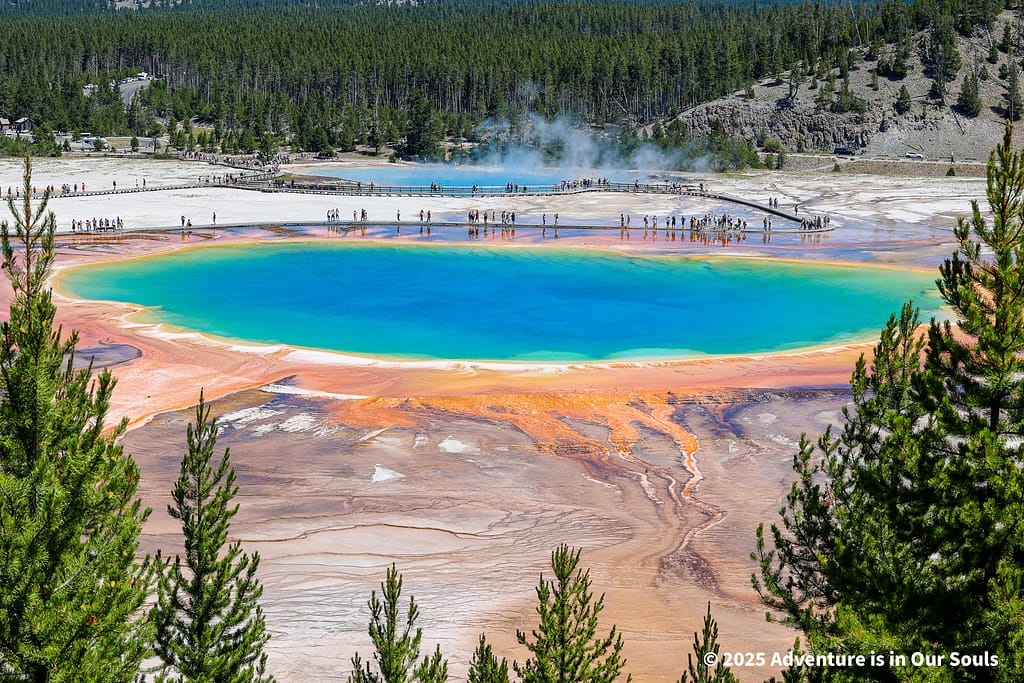
Families can get the best view from the Grand Prismatic Overlook along the Fairy Falls Trail. From this vantage point, the full spectrum of colors spreads across the spring like a living painting, framed by the surrounding forest and mineral-rich terraces. The girls were mesmerized by how the colors radiated outward, almost like a rainbow frozen in time. The steam rising from the spring added a mystical quality, and the faint sulfur scent in the air made it feel like a living, breathing natural wonder.
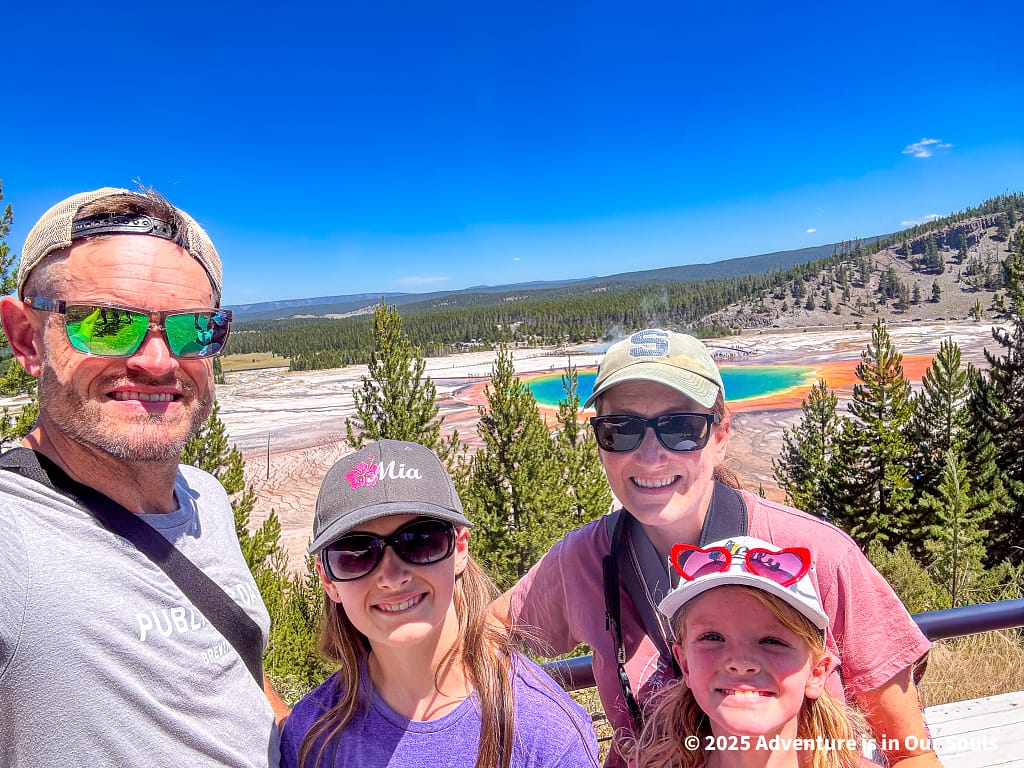
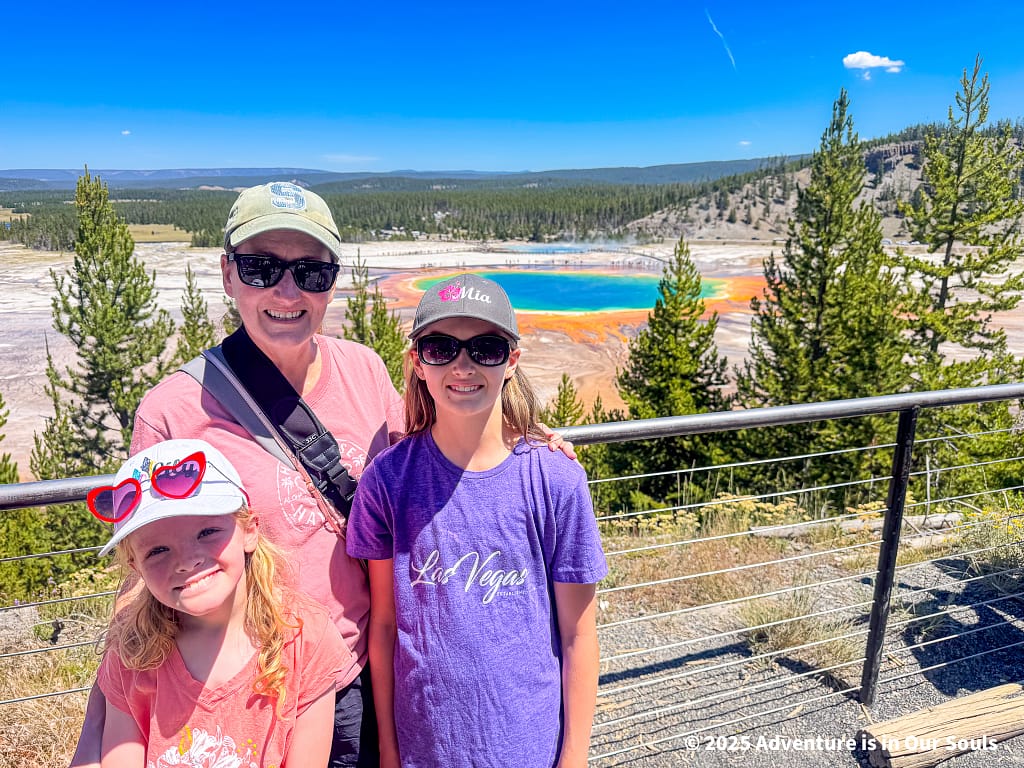
Even from above, the area offers opportunities for families to connect with Yellowstone’s wildlife. Birds can often be seen near the spring, and small mammals occasionally explore the edges of the overlook, providing glimpses into how life thrives alongside these geothermal features. Observing the spring from a distance allowed us to fully appreciate its size and beauty while avoiding the crowds below. Grand Prismatic Spring offers a multi-sensory experience with its dazzling colors, rising steam, and the surrounding forest, leaving visitors of all ages in awe of Yellowstone’s geothermal magic.
Old Faithful
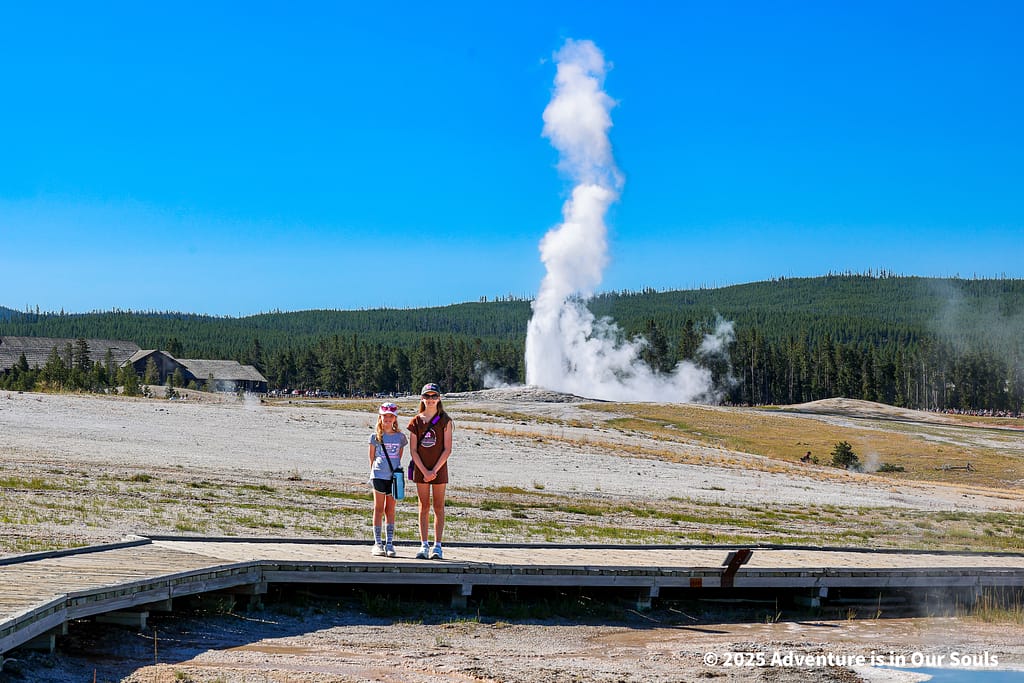
After moving into the Old Faithful Inn for our two-night stay, we spent time exploring the heart of Yellowstone’s geothermal activity. Old Faithful is perhaps the most famous geyser in the world, known for its remarkable predictability. It erupts roughly every ninety minutes, sending a column of boiling water nearly 130 feet into the air for about four minutes. Watching the eruption is thrilling, especially for families, as the anticipation builds while the geyser hisses and sputters before its impressive display.
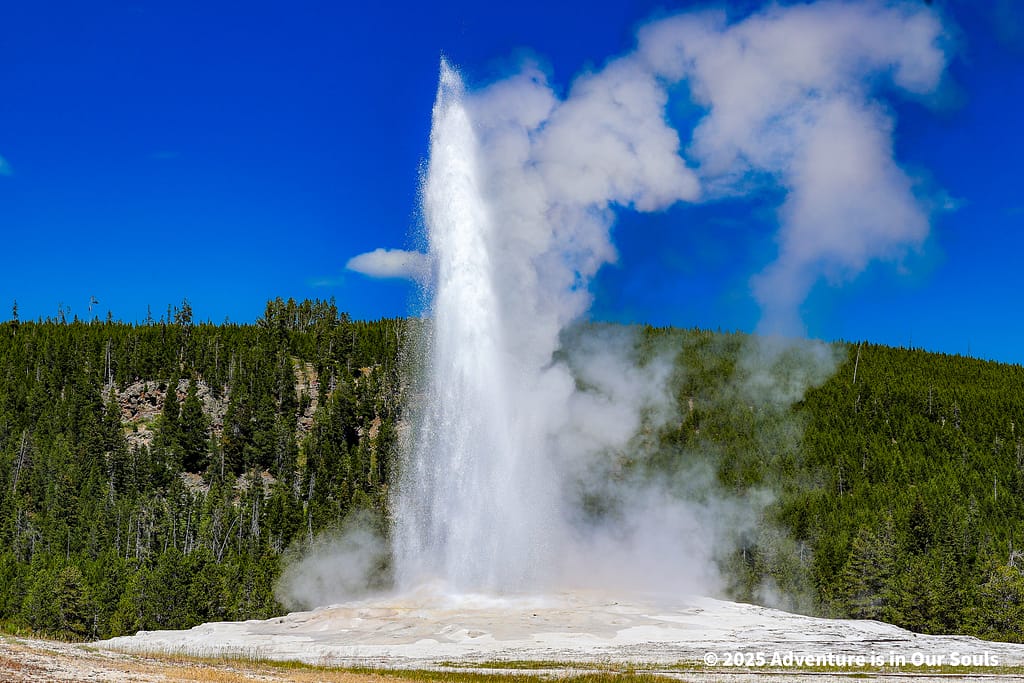
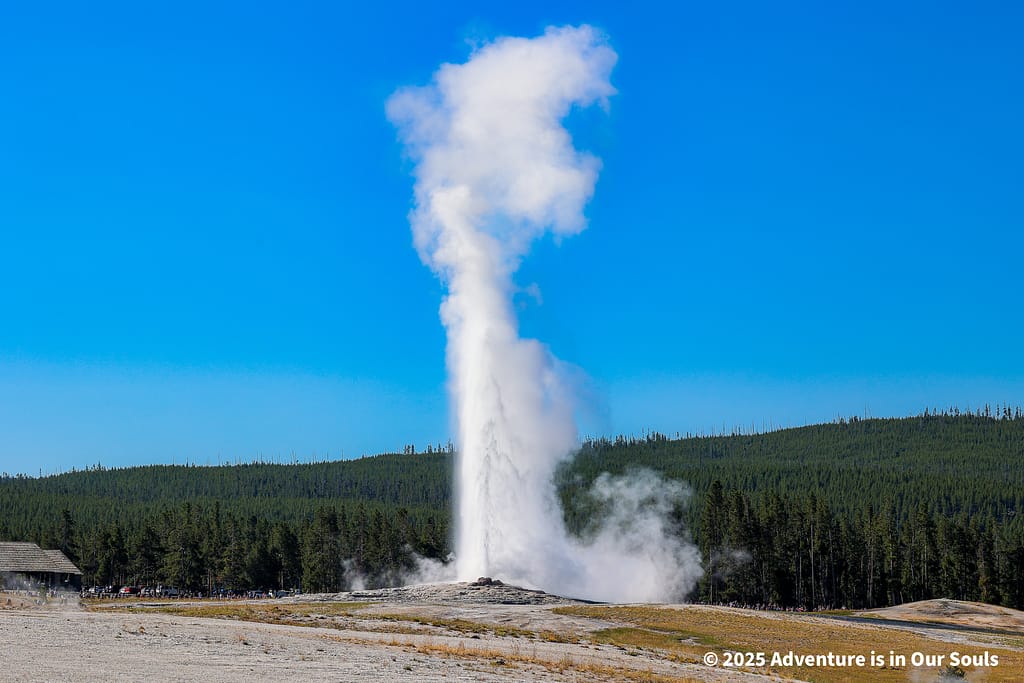
Old Faithful earned its name during the Washburn Expedition of 1870 for its reliable eruptions, and it quickly became a symbol of the park itself. From the boardwalks around the geyser, visitors can take in the geothermal landscape and observe smaller hot springs and vents nearby. Staying at Old Faithful Inn made it easy to catch an early morning eruption before the crowds arrived, providing a quieter, more intimate experience.
- Tip for Families:
- If your kids enjoy earning badges, check out our guide to Junior Ranger badges and booklets before your Yellowstone trip.
- Plan your visit around predicted eruption times for Old Faithful. Arrive at least 15-30 minutes early to secure a good view. Bring a lightweight jacket as the spray can be chilly and damp for little ones.
Day 4: Upper Geyser Basin
We set out early to explore the area around Old Faithful on foot, following the boardwalks that wind through the Upper Geyser Basin. Rangers have identified over 150 active geysers here, making it one of the most geothermally active places on Earth. We paused at Old Faithful once more, catching another eruption from a different viewpoint. From this angle, we could see the water column framed by the surrounding hills.
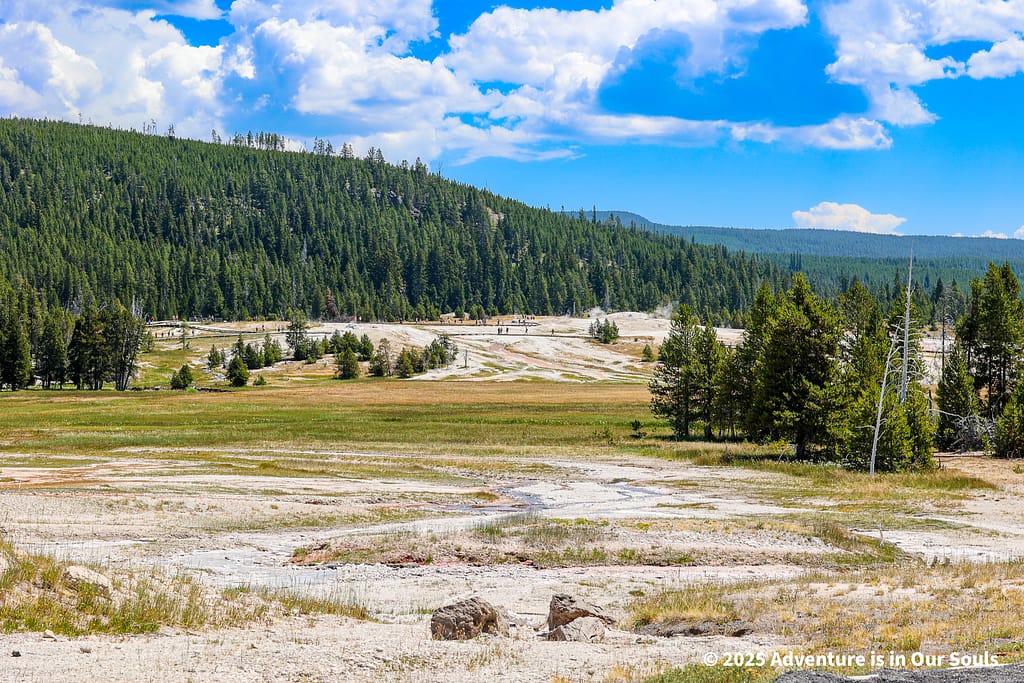
Stepping into the Upper Geyser Basin feels like entering another world. Steam drifts across boardwalks, pools shimmer in vibrant colors, and geysers erupt with bursts of energy that keep everyone on their toes. With over 150 active geysers, this part of Yellowstone is a geothermal playground for families, offering both awe-inspiring natural phenomena and a safe, walkable way to experience them.
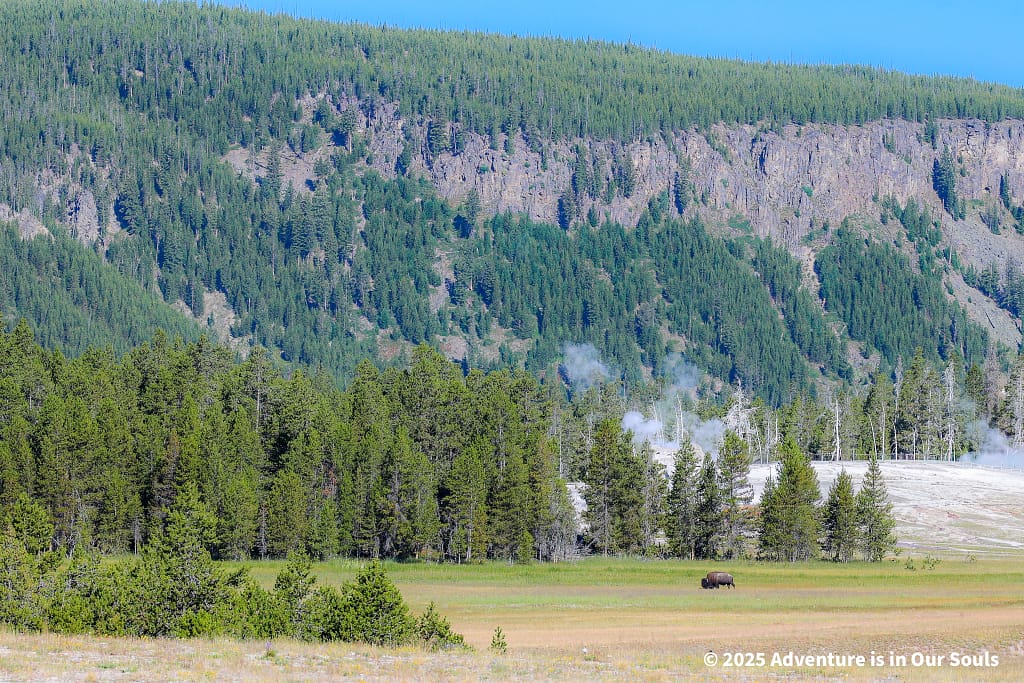
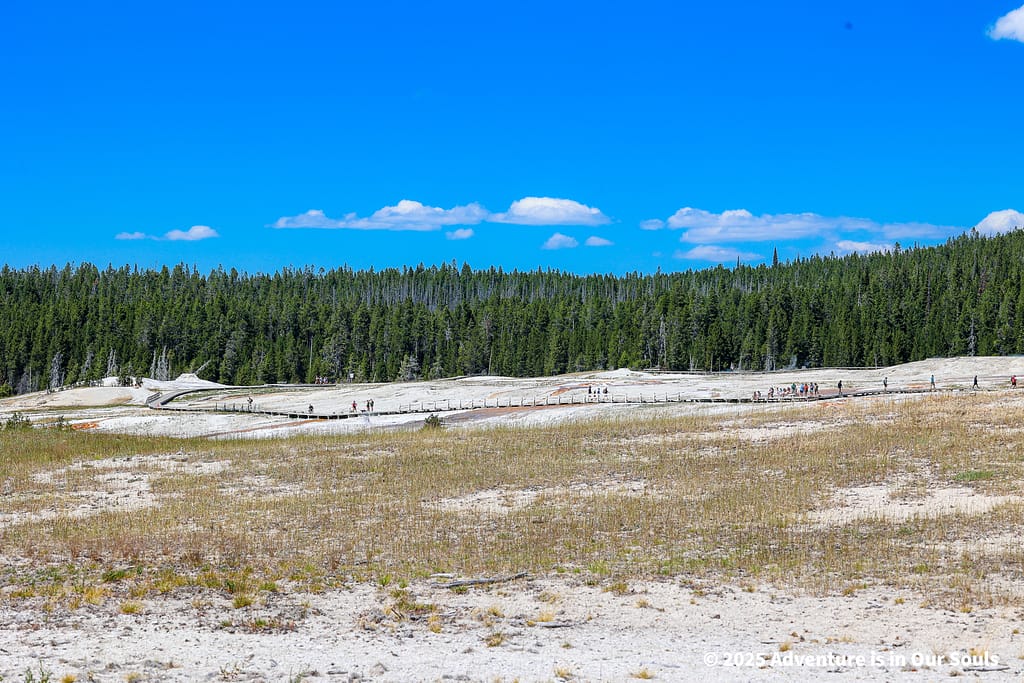
Old Faithful and the Immediate Area
Our walk began at Sulphide Spring, a small but incredibly hot spring. Its high sulfur content gives the air a distinct mineral scent, a signature smell of Yellowstone’s geothermal activity. The surface bubbles quietly, hinting at the intense heat just below. This spring is a reminder of the unseen power simmering beneath the park.
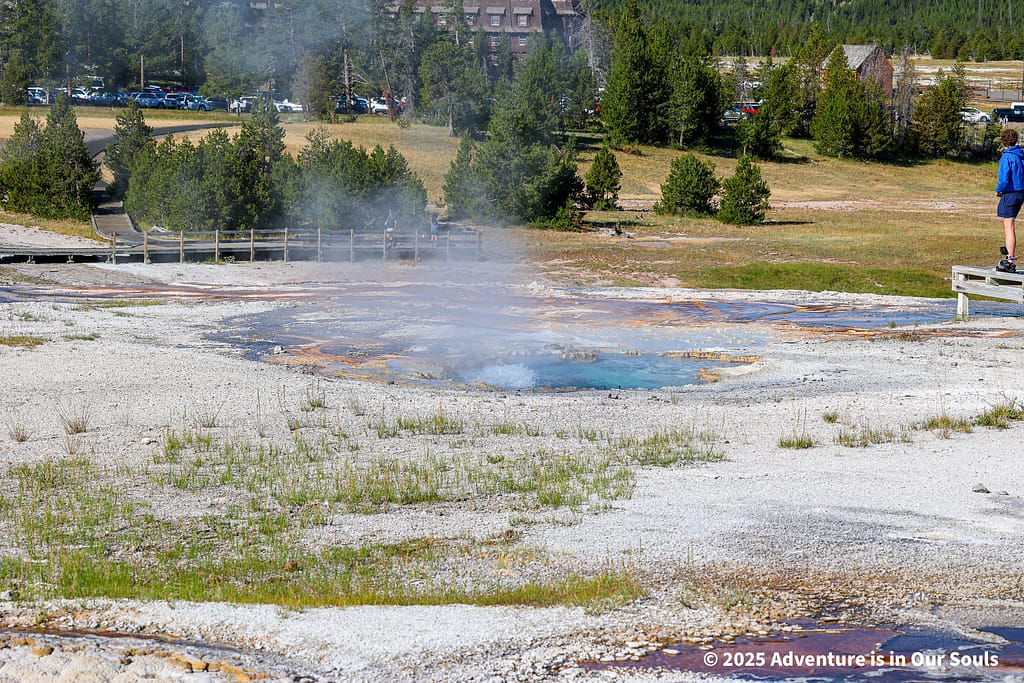
Nearby, Anemone Geyser erupts frequently, roughly every seven to ten minutes. Its twin vents fill and drain in a mesmerizing rhythm, creating a miniature fountain show. The girls loved watching the alternating bursts, fascinated by the way the geyser seemed to “breathe” as it cycled through its natural pattern.
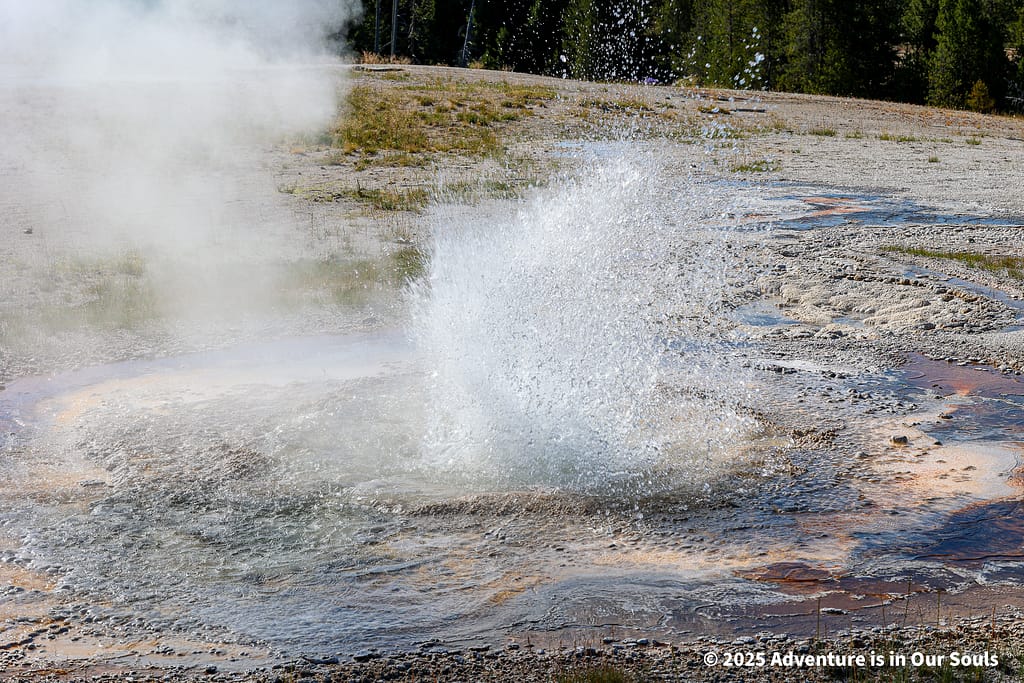
Beehive Geyser is a showstopper. Its cone-shaped structure looks delicate, but when it erupts, water shoots over 200 feet into the sky. The nearby Beehive Indicator acts like a natural warning system, letting visitors know about fifteen minutes before the main geyser bursts. Watching the anticipation build as the geyser sputtered and then finally erupted left the girls’ jaws dropped in delight. It’s a thrilling reminder of how raw and unpredictable nature can be.
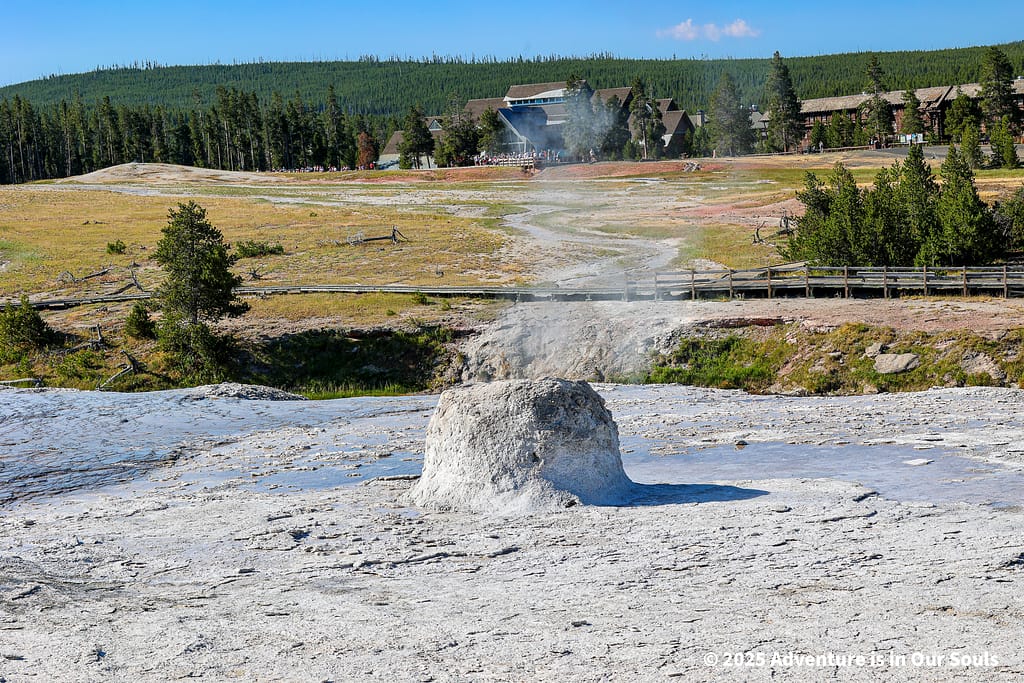
Central Upper Geyser Basin
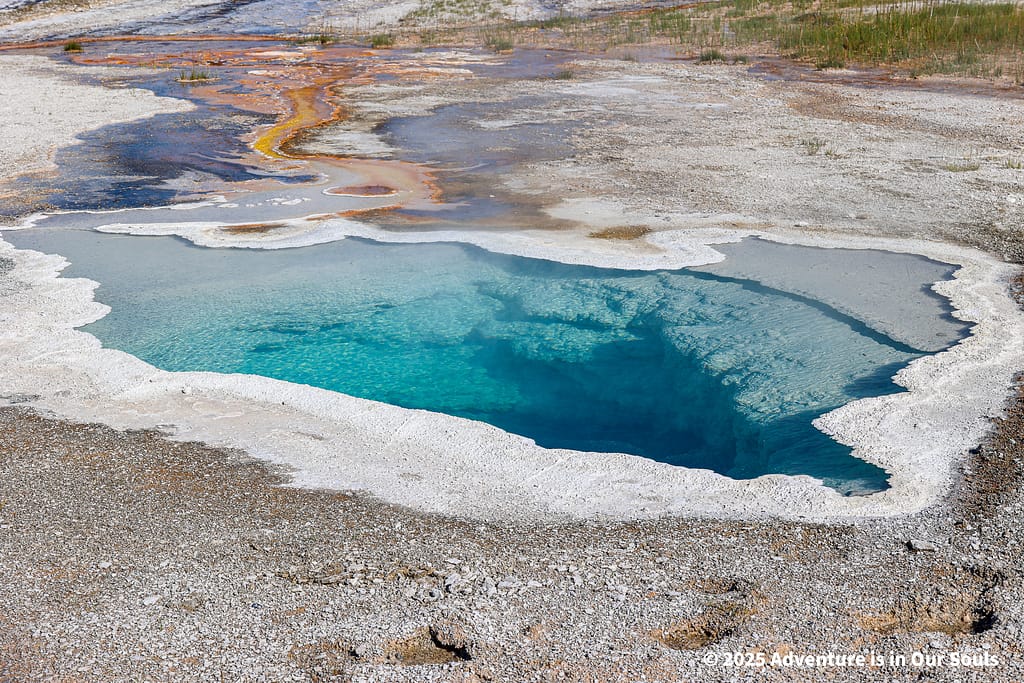
Heart Spring is a quiet, deep-blue pool shaped like a heart. Its clear, gently rippling water creates a serene moment amid the surrounding geothermal energy. The girls were delighted by its perfect shape and the way sunlight reflected off the water, making it sparkle.
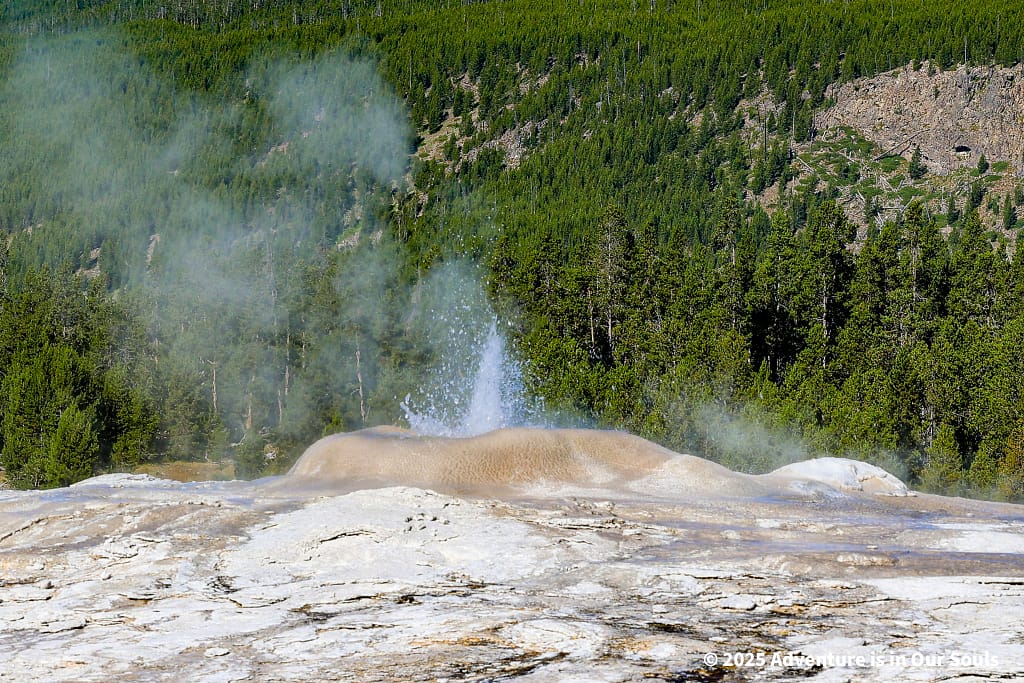
Part of the Lion Group, Lion Geyser earns its name from the deep roaring sound it makes before erupting. The dramatic noise adds a theatrical element to its eruption, making it feel like a stage show orchestrated by nature.
Just a short walk away, Grand Geyser lives up to its name. It is the tallest predictable geyser in the world, reaching heights of 200 feet during multi-phase eruptions that can last up to 12 minutes. Standing nearby, we could feel the spray on our faces and hear the steady roar as water shot skyward. The combination of size, rhythm, and steam makes it feel like the geyser is performing its own natural symphony, a performance that captivates adults and children alike.
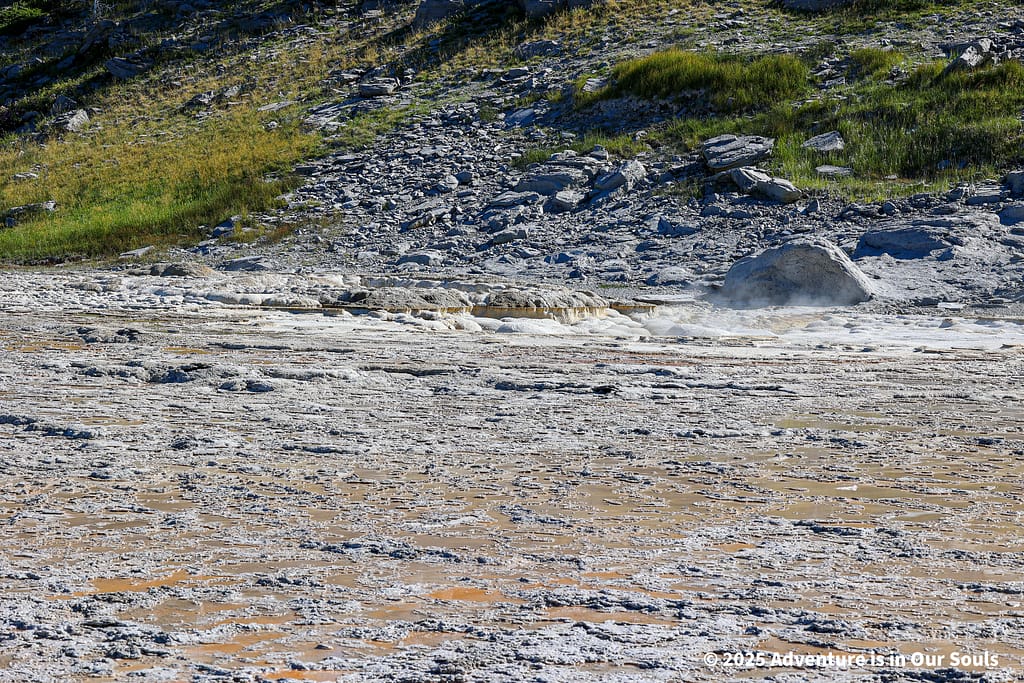
Chromatic Pool lives up to its name with colorful rings created by heat-loving microorganisms. Its vivid hues of orange, yellow, and green make it one of the most visually stunning features in the basin, a perfect stop for family photos.
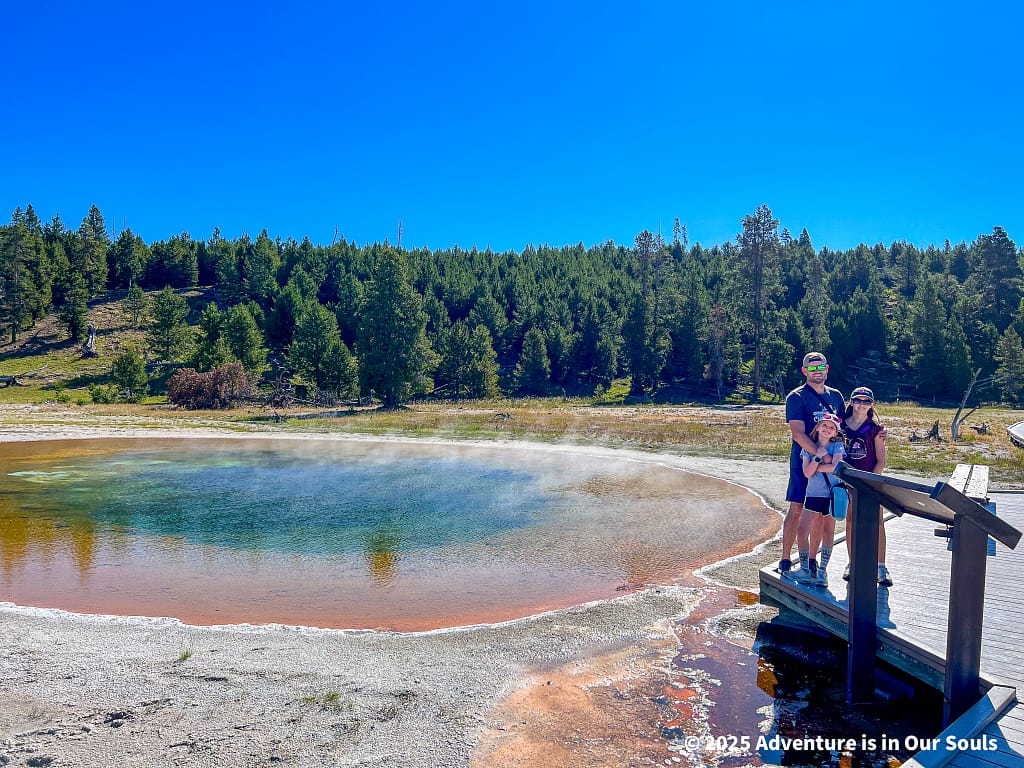
Oblong Geyser erupts in shorter, less predictable bursts reaching up to 50 feet. Its irregular activity keeps visitors guessing, adding an element of surprise to the basin’s landscape. Once among Yellowstone’s most powerful geysers, Giant Geyser is largely dormant today. When it does erupt, water can reach over 250 feet, a reminder of the immense energy stored beneath the surface.
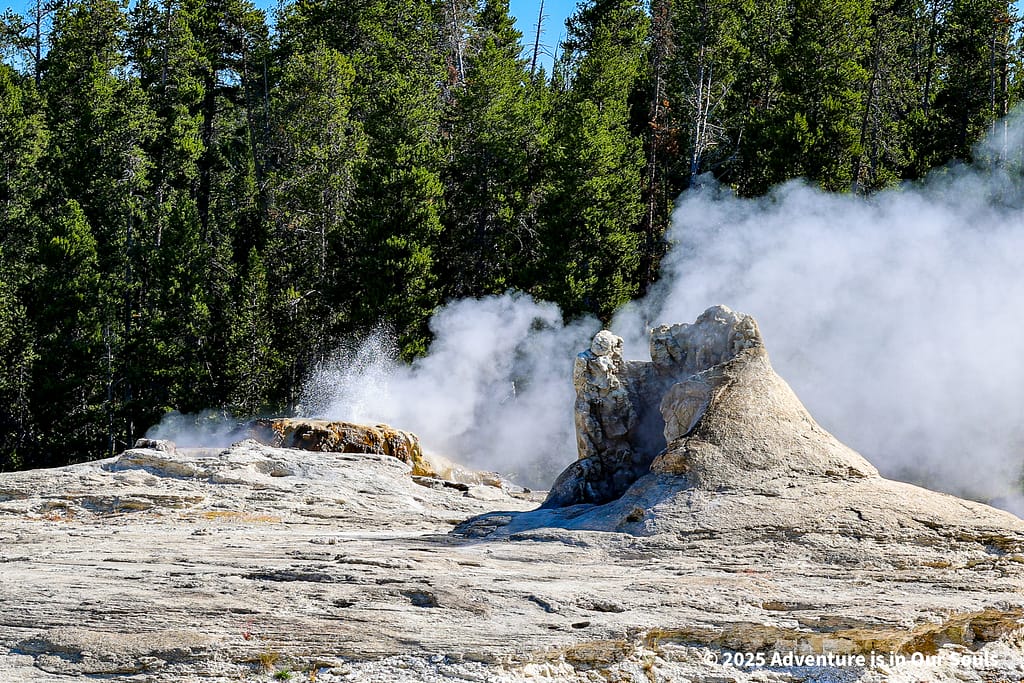
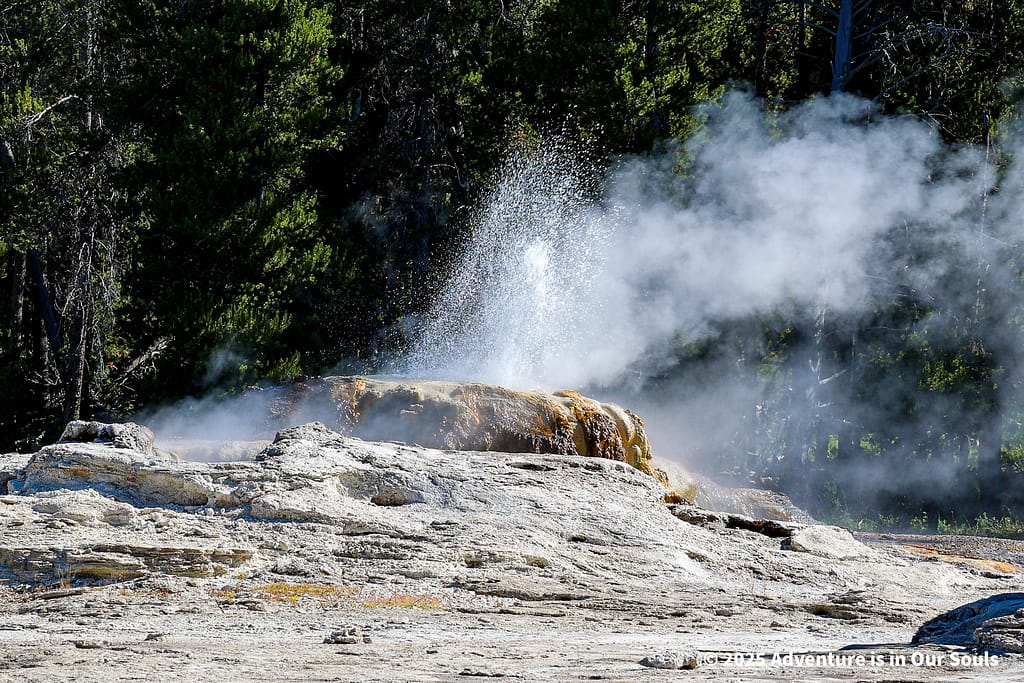
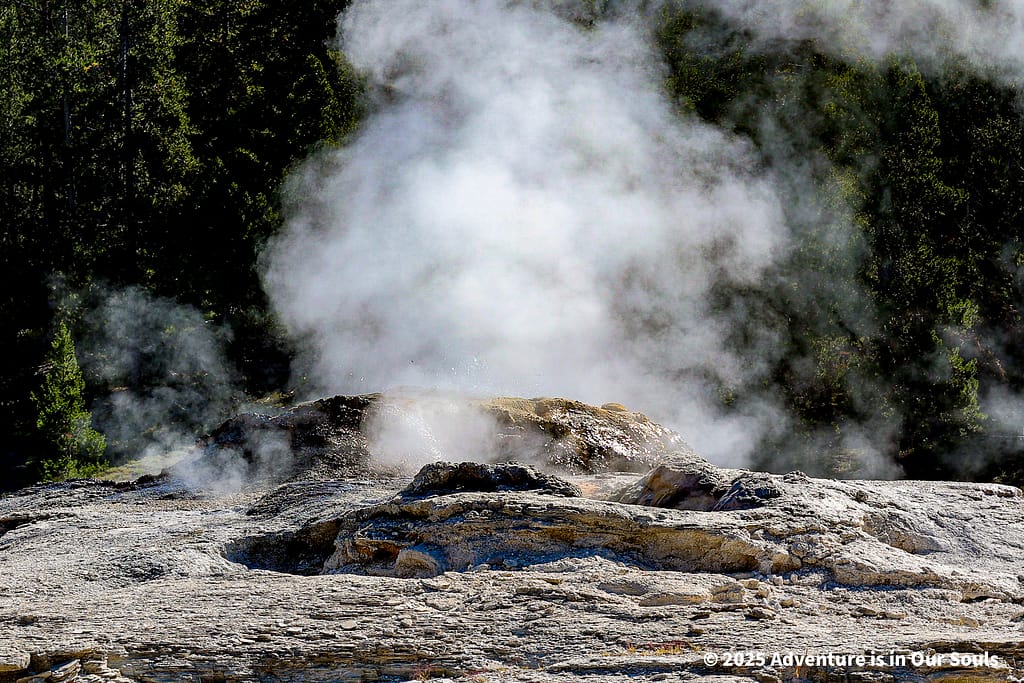
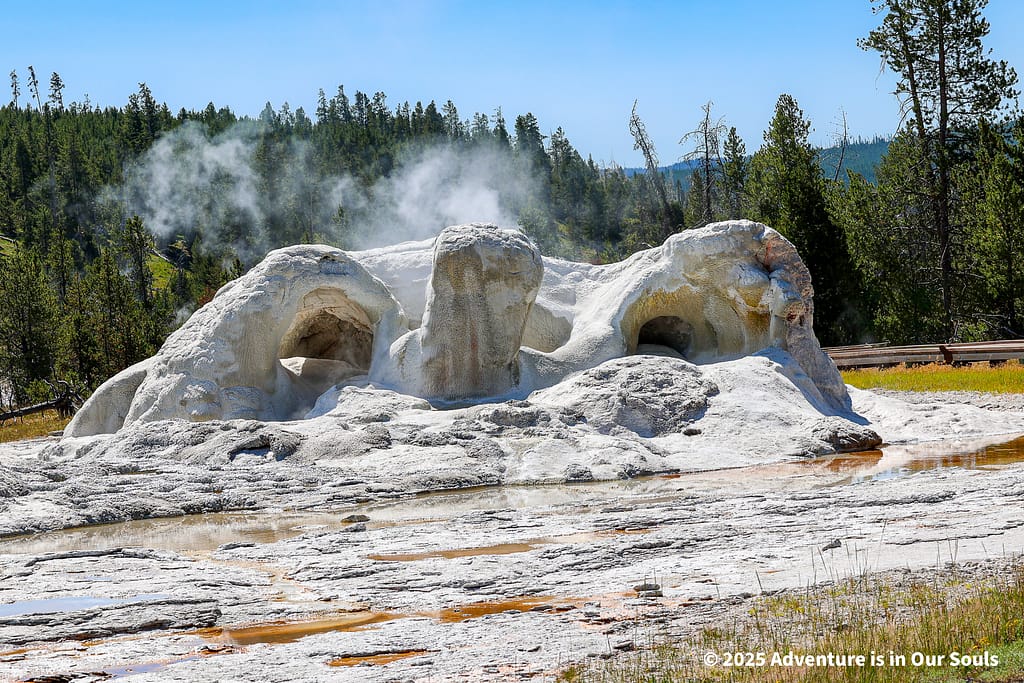
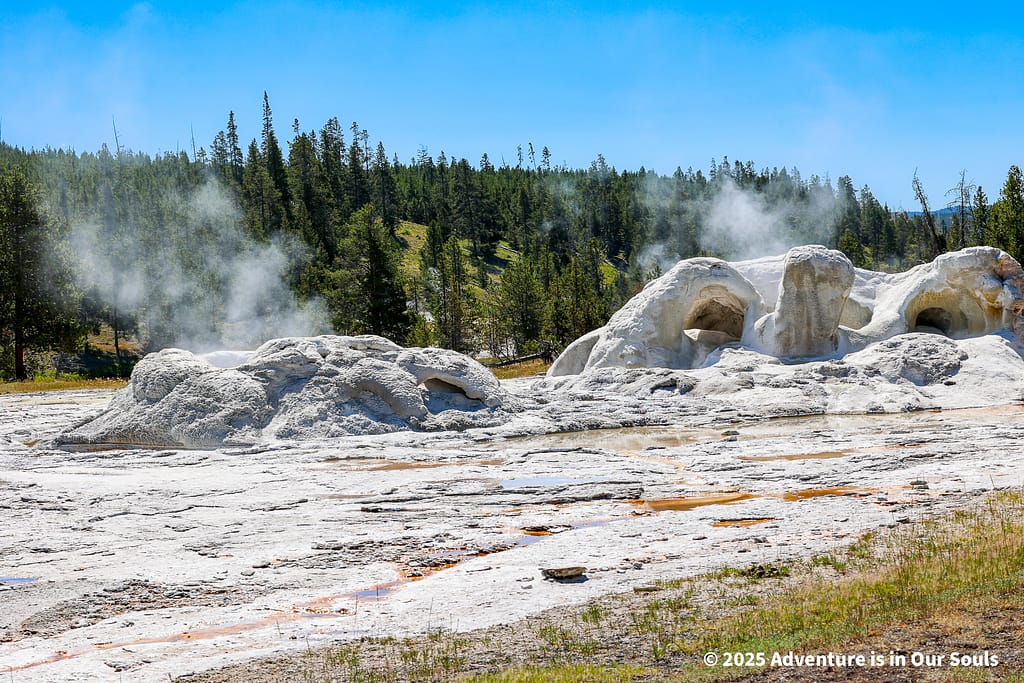
Catfish Geyser is smaller but constantly active, bubbling and occasionally erupting a few feet high. Its persistent activity makes it a fascinating contrast to the larger, less predictable geysers nearby. Grotto Geyser features a cone with unusual rock formations and can erupt for hours at a time. Water shoots through natural arches, creating whimsical shapes that ignite the imagination. The girls loved guessing what the sprays resembled.
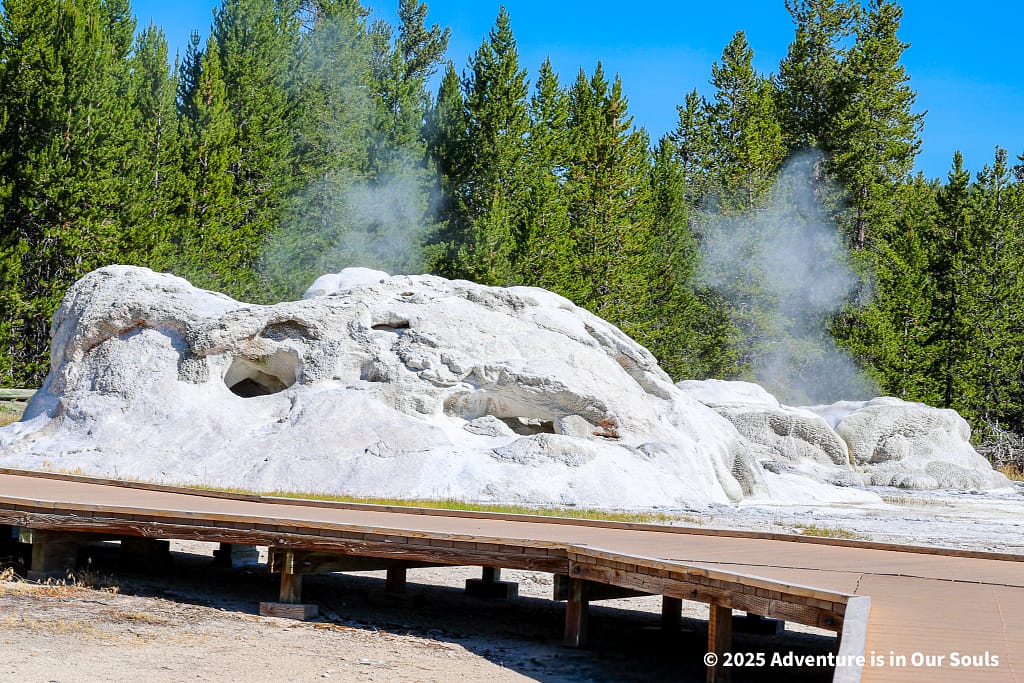
- Tip for Families: Encourage kids to notice the different colors in each pool and geyser. Many of these colors are caused by heat-loving microorganisms. Turn it into a mini science lesson about nature’s chemistry!
Riverside and Morning Glory Area
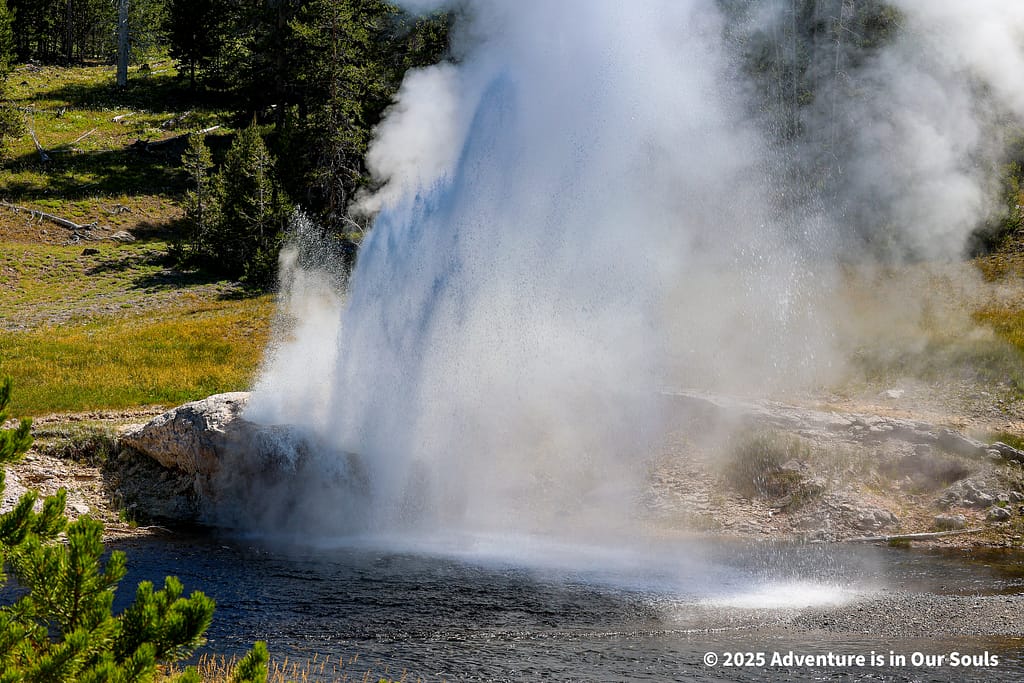
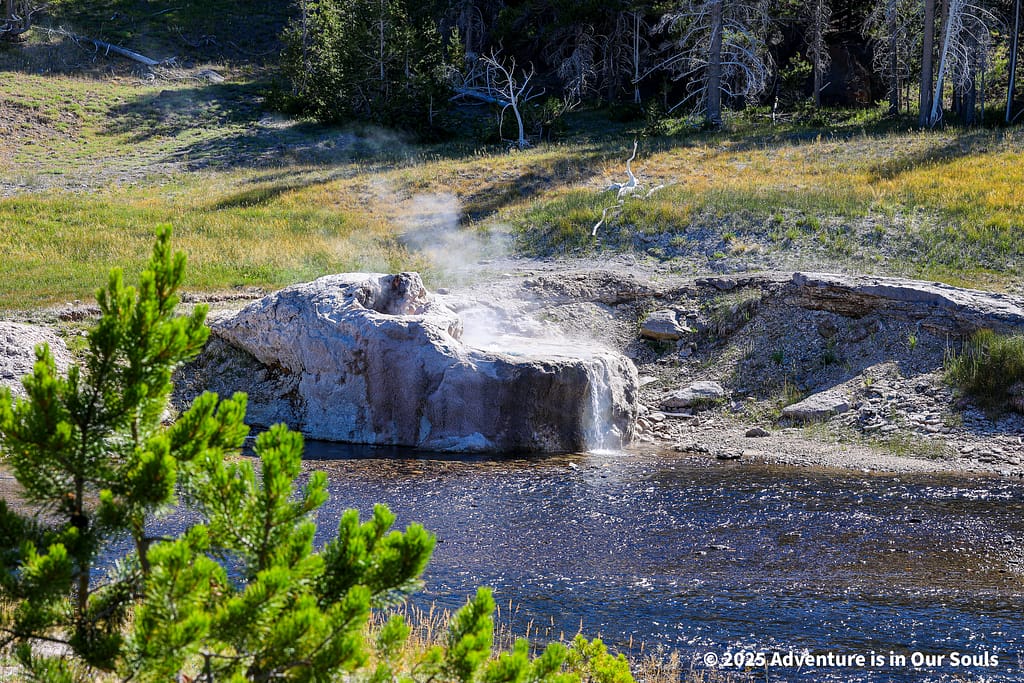
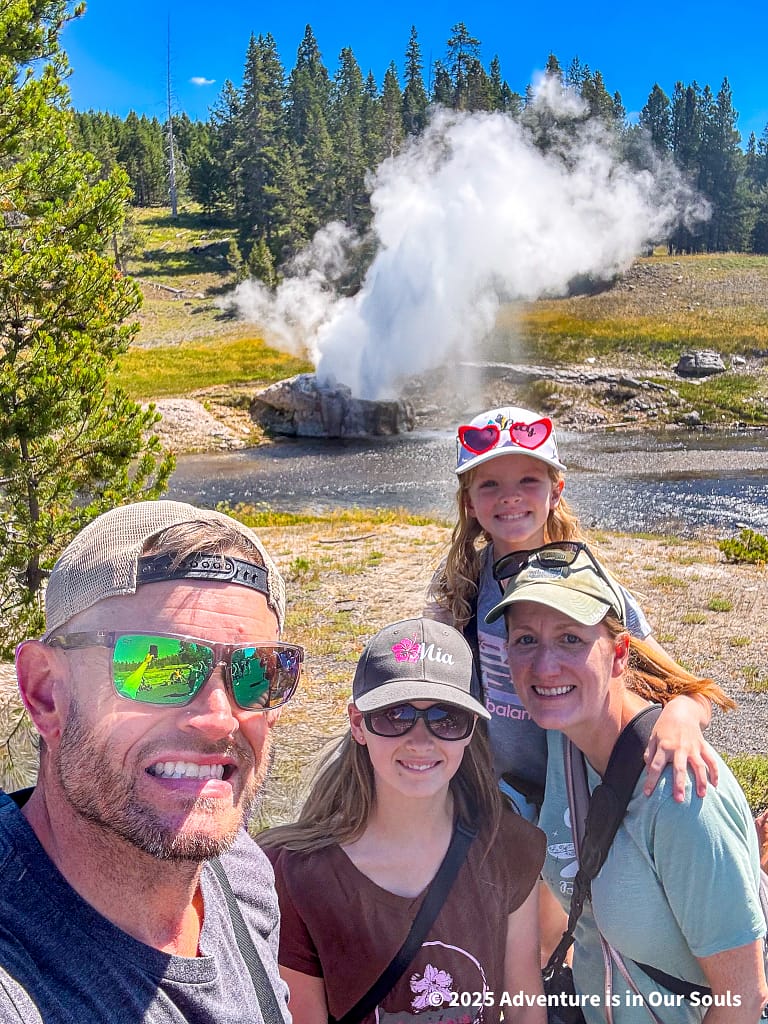
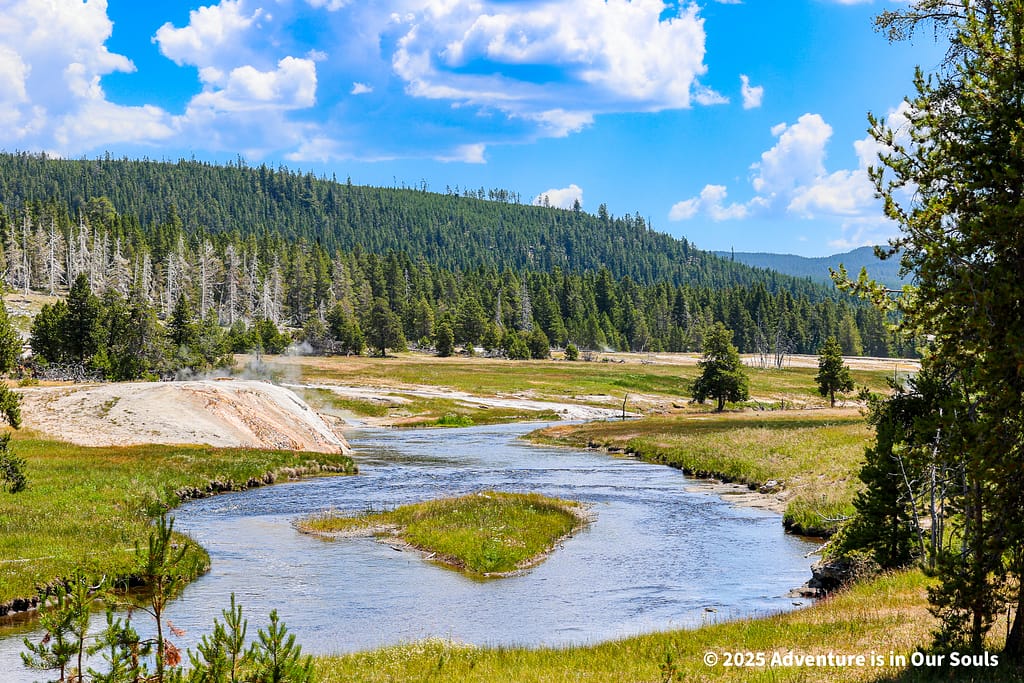
Perched elegantly on the bank of the Firehole River, Riverside Geyser erupts every six to seven hours. The water forms a perfect arch across the river, lasting around 20 minutes. The girls were mesmerized by the way the sunlight caught each droplet mid-air, making it sparkle like liquid diamonds.
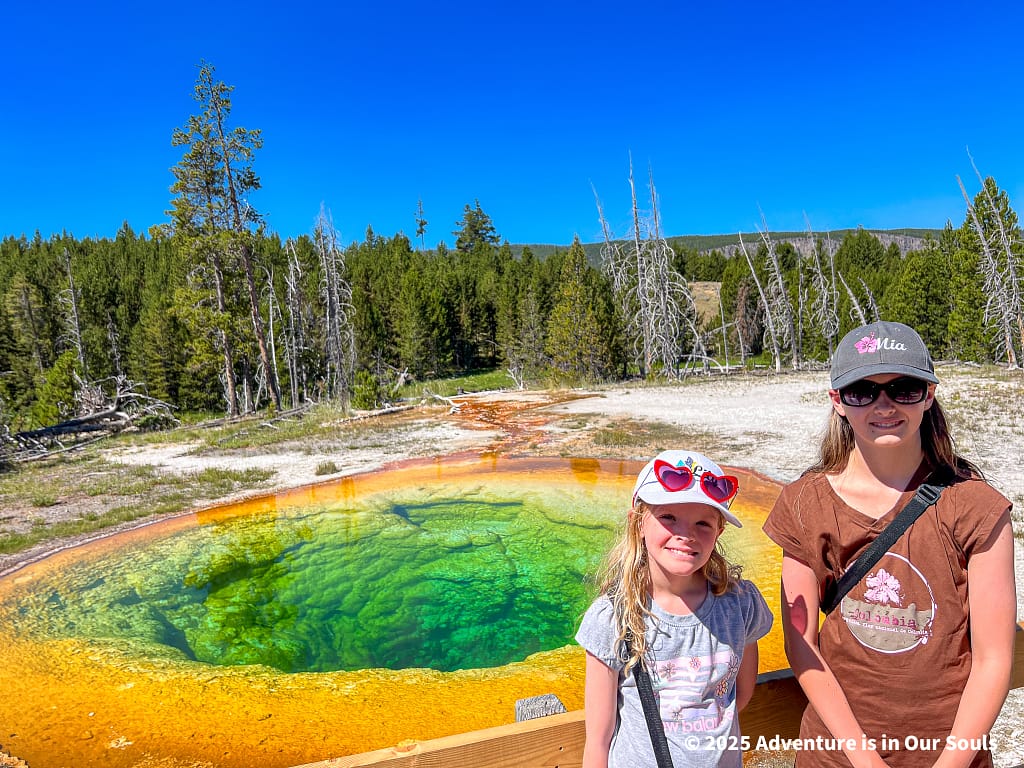
Morning Glory Pool is one of the basin’s most iconic features. Its deep blue center surrounded by green and gold rings is caused by heat-loving bacteria called thermophiles, which thrive in different temperature zones around the pool. The vibrant colors make it feel almost like a painter’s palette come to life. The girls were enchanted by the way the colors changed depending on the angle of the sun and the shadows around the pool, sparking endless questions about how life can survive in such extreme conditions.
Rocket Geyser erupts in short, powerful bursts that can reach up to 40 feet. Often connected to Grotto Geyser, its activity demonstrates the underground networks that link multiple geysers together, a fascinating reminder of Yellowstone’s complex hydrothermal system. Grotto Geyser entertains visitors with long eruptions that send water through natural arches, creating shapes that seem almost sculpted for the imagination. The girls loved guessing what the water patterns might resemble, turning science into play.
Daisy Geyser erupts every two to three hours, sending a strong, angled jet of water up to 75 feet high. Its eruptions are both powerful and predictable, making it perfect for families who want to time their visit to catch the action. Watching the water surge skyward while the girls counted the seconds until it reached its peak made it feel like we were part of nature’s own clockwork.
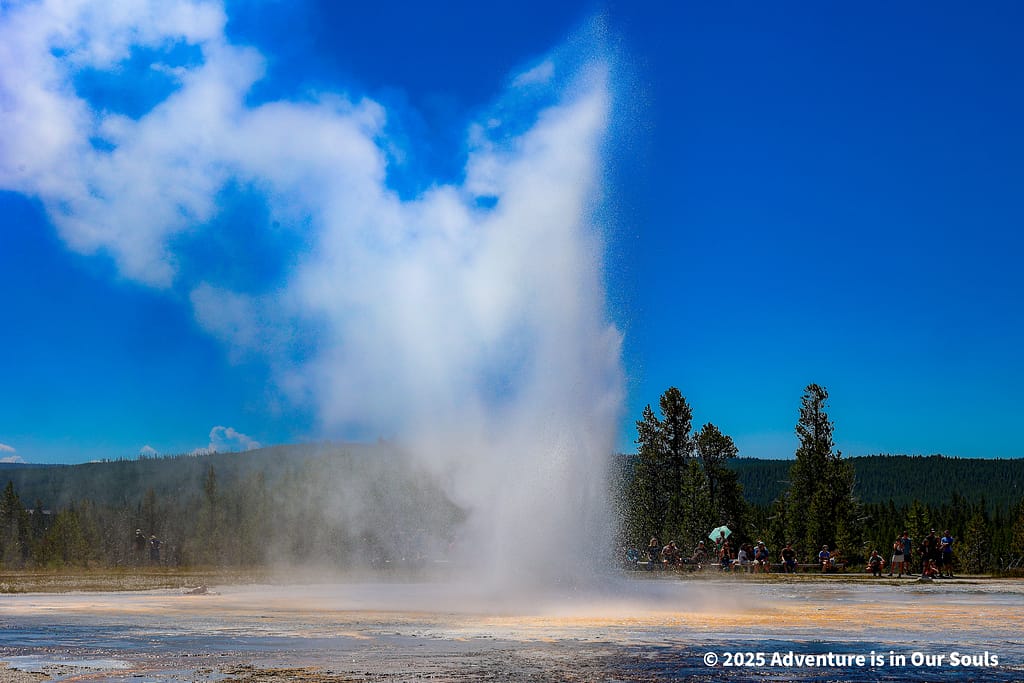
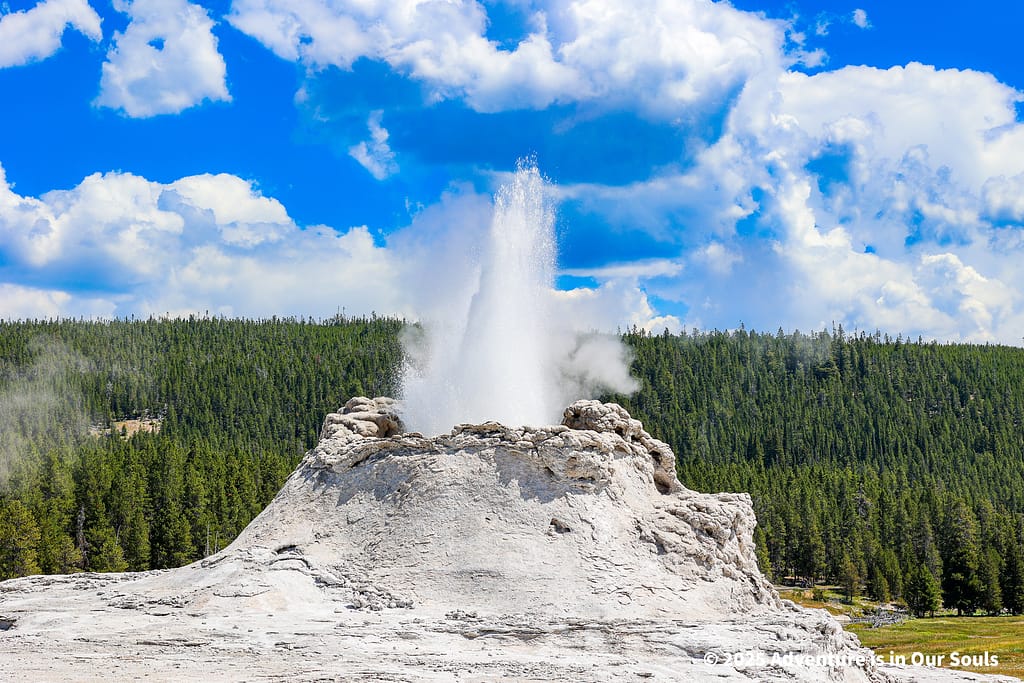
Castle Geyser stands like a medieval fortress, its massive sinter cone having formed over thousands of years. Its eruptions may be less frequent, but the grandeur of the cone itself tells a story of time, heat, and mineral-rich water sculpting the landscape.
After exploring these remarkable features, we returned to the Old Faithful Inn, where we caught another eruption of Old Faithful from the upstairs balcony. The combination of historical charm and proximity to the basin made it the perfect place to end a day filled with geothermal wonder.
- Tip for Families: This area can get crowded, especially around the famous pools. Walk slowly and keep younger children close, pointing out the erupting geysers along the way as a fun game of spotting which ones are active.
Day 5: Grand Loop North
One Night at Lake Yellowstone
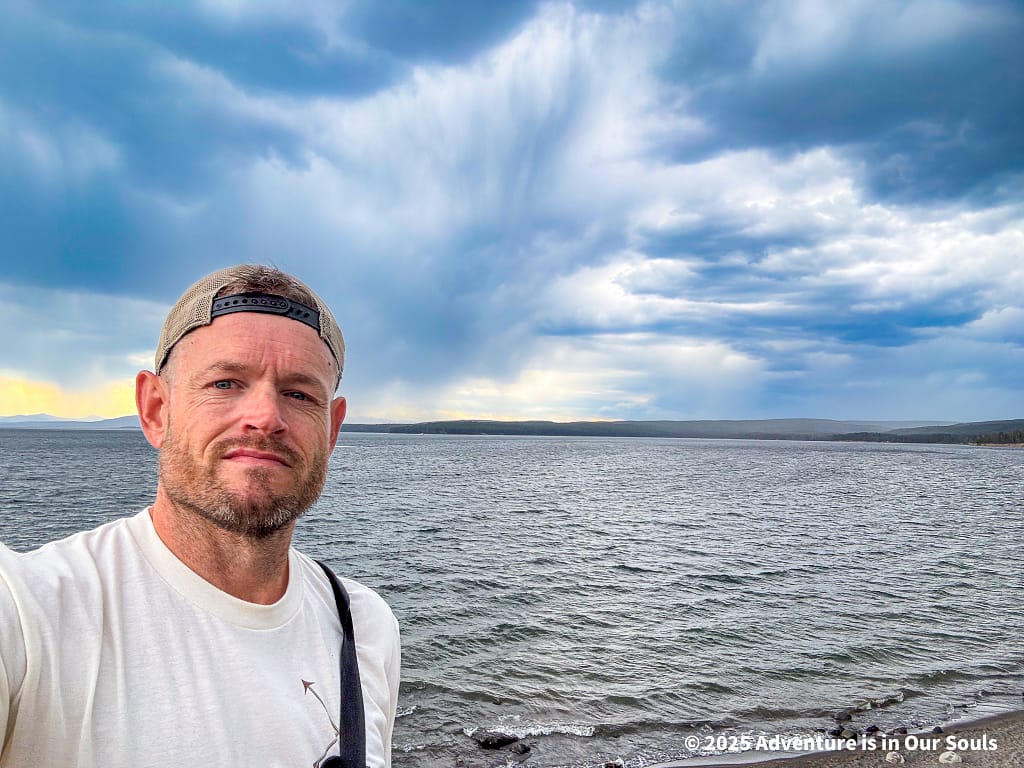
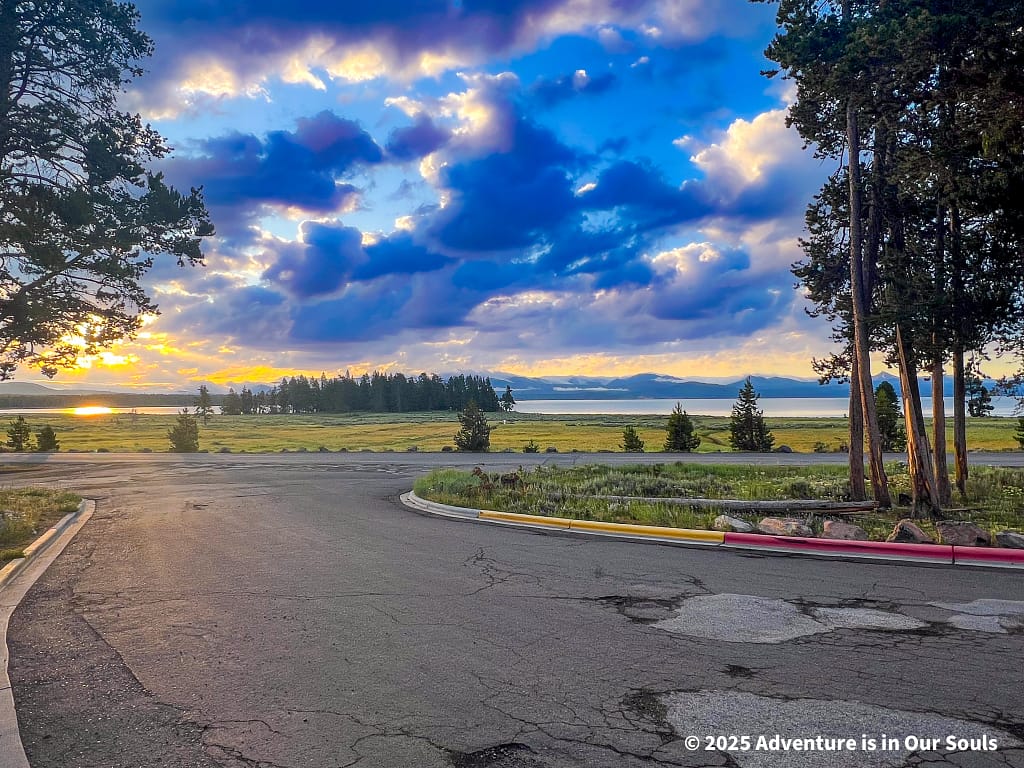
We packed up and left the Old Faithful area behind to spend our last night at the Lake Yellowstone Hotel, the oldest operating hotel in the park. Built in 1891 and remodeled in the 1920s, the hotel is known for its bright yellow exterior and Colonial Revival architecture. Staying here was the perfect finale to our Yellowstone adventure. The historic charm, combined with sweeping views of the lake, made it a memorable experience.
West Thumb Geyser Basin
After leaving the Old Faithful area early in the morning, we made our way to West Thumb Geyser Basin, a unique geothermal area nestled along the edge of Yellowstone Lake. The drive itself was beautiful, with sweeping views of the lake stretching out to the horizon and forested hills framing the shore. The basin is one of Yellowstone’s most intriguing hydrothermal zones, holding some of the park’s deepest hot springs and geysers, all set in a crater formed by prehistoric steam explosions.
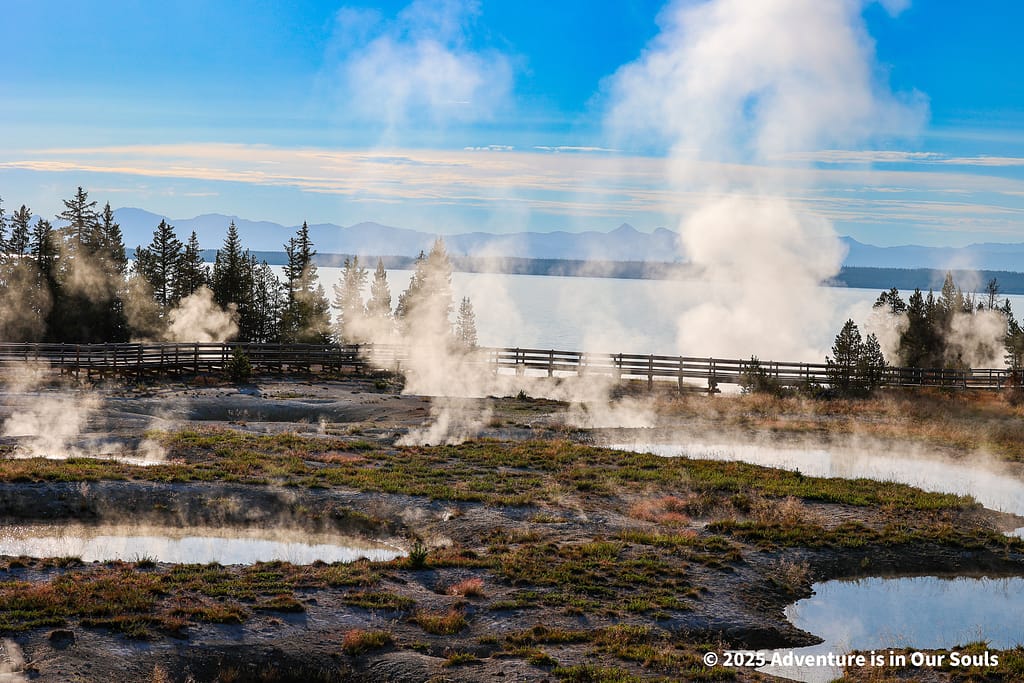
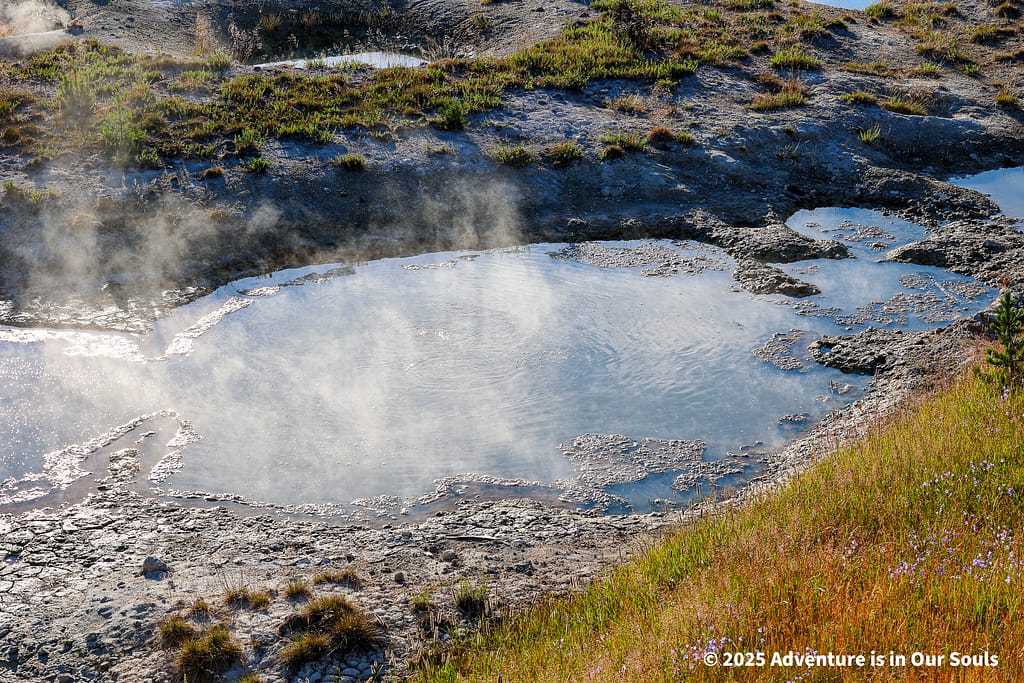
West Thumb feels different from other geothermal areas in Yellowstone. The combination of steaming hot springs against the backdrop of the massive, serene lake creates a surreal, almost otherworldly atmosphere. From the parking area, we could see plumes of steam rising in the early morning sun, reflecting in the calm blue waters of the lake. The mineral-rich pools here bubble and hiss constantly, releasing heat and gases from the still-active volcanic system beneath the lake’s surface.
- Tip for Families: This boardwalk is short and easy for little legs. Bring water shoes or sturdy sneakers if you want to explore nearby shallow pools. Keep a close eye on children as edges can be slippery.
Lehardy Rapids & Hayden Valley
Next, we stopped at Lehardy Rapids along the Yellowstone River. The rapids form as the river drops over volcanic rock ledges, creating a lively flow of water. The area is known for trout migrations in early summer, so we had our hopes up for spotting wildlife. We watched the rushing water, imagining bears darting along the banks, but today the rapids were peaceful and undisturbed.
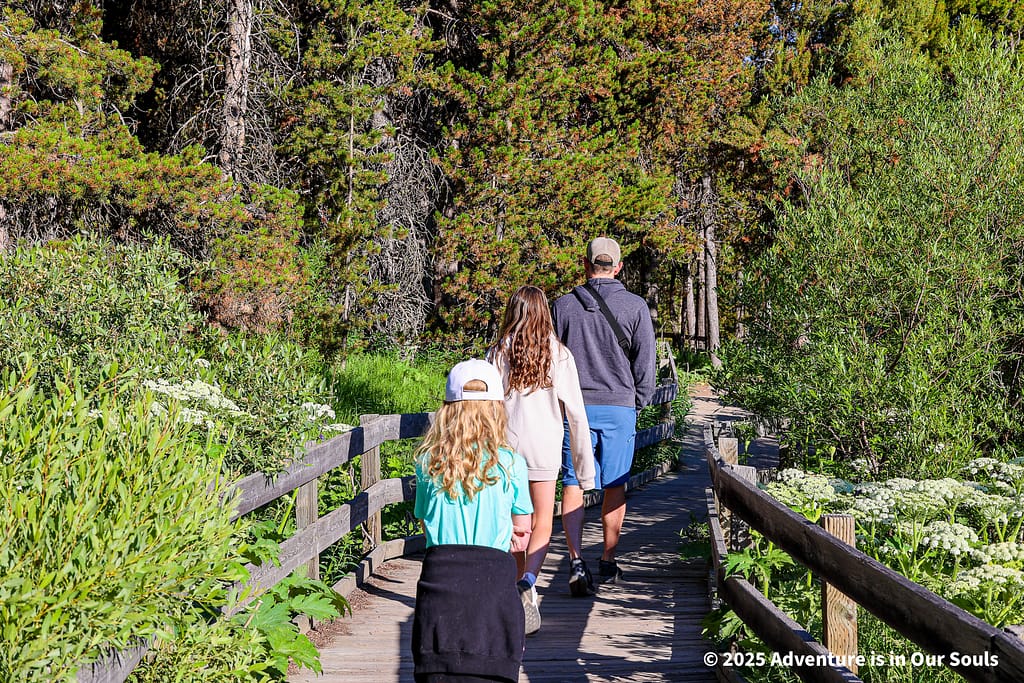
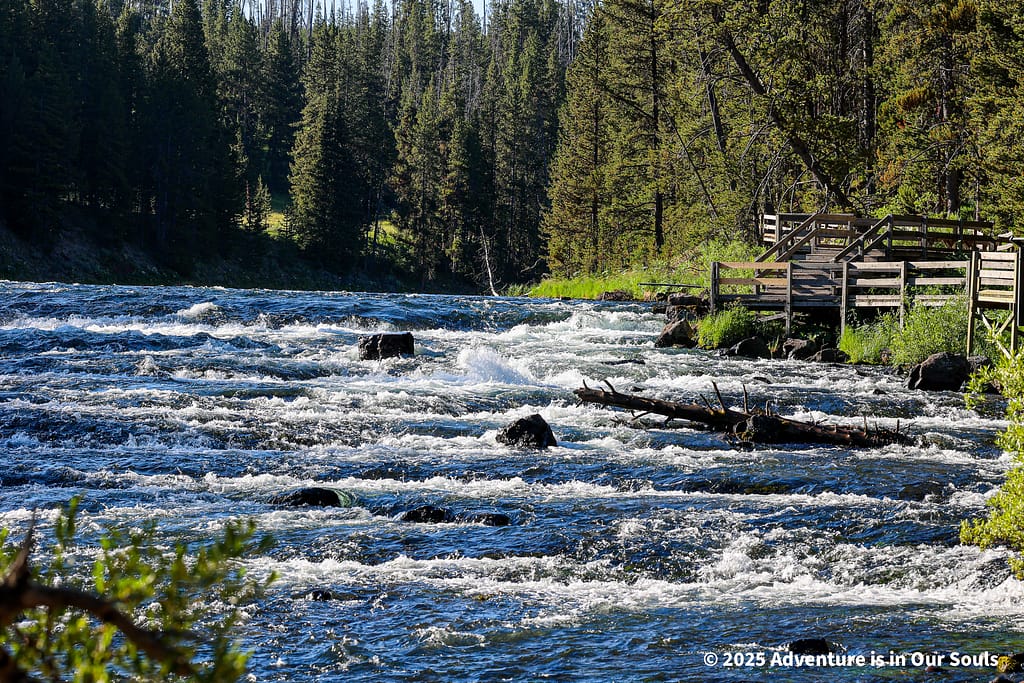
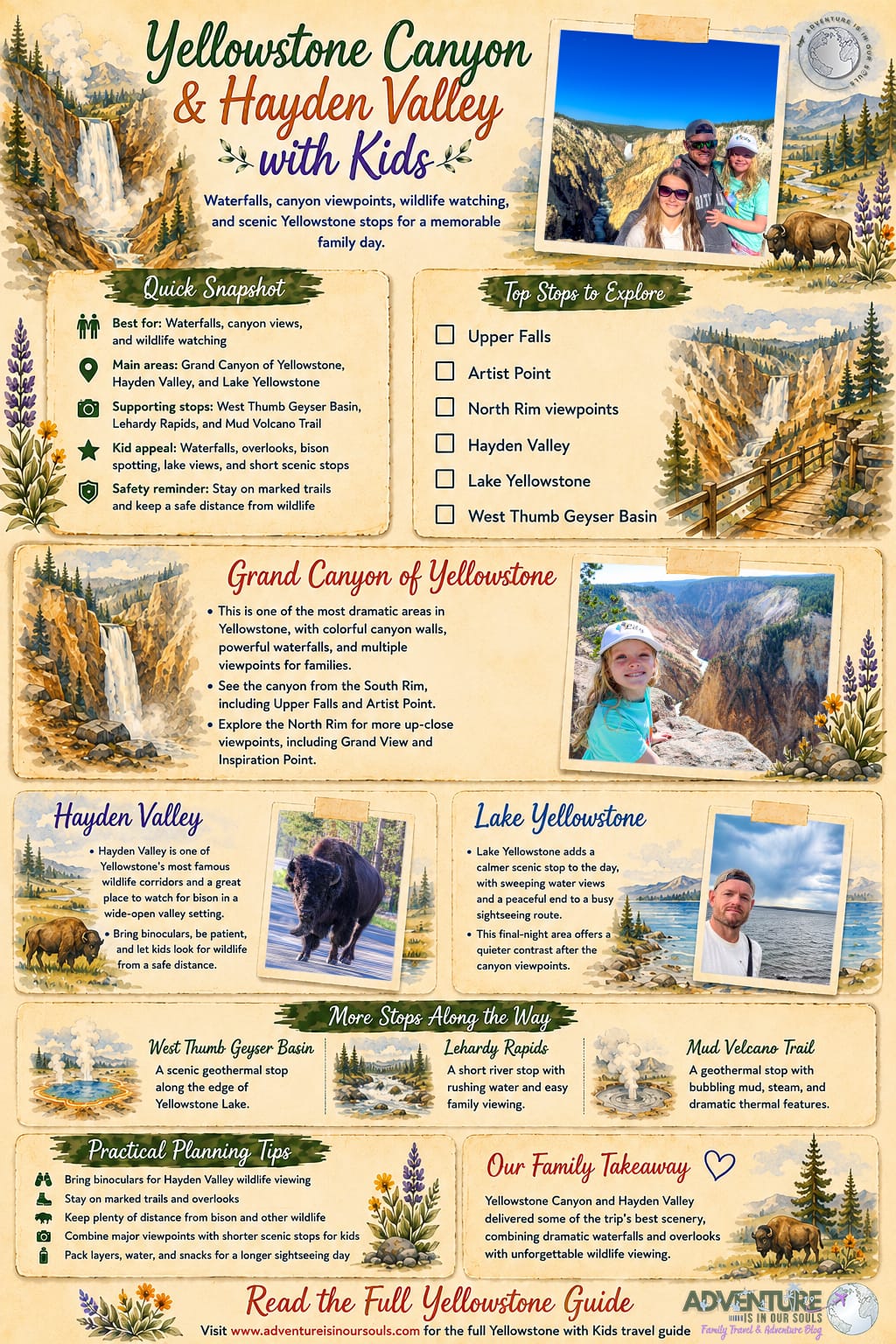
Continuing along the Grand Loop, we entered Hayden Valley, one of Yellowstone’s most famous wildlife corridors and a must-see for families hoping to catch a glimpse of animals in their natural habitat. This broad, sweeping valley was carved by glaciers thousands of years ago, leaving behind expansive grasslands framed by rolling hills and distant peaks. The landscape itself feels vast and untamed, a perfect setting for the incredible wildlife that calls it home.
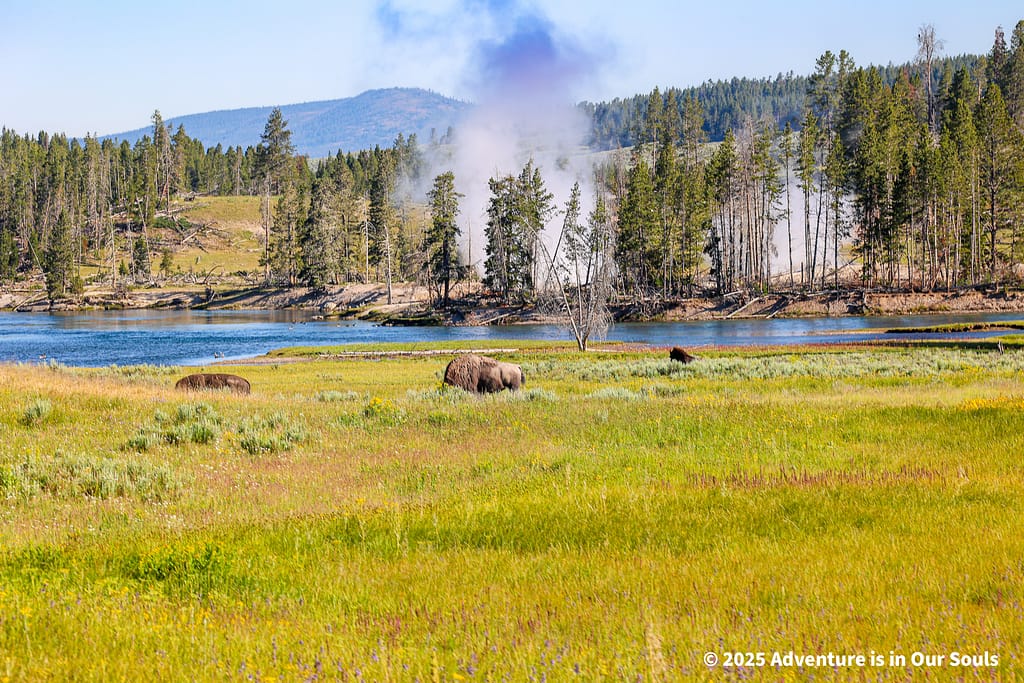
Hayden Valley is renowned for its bison populations, and we were lucky to spot many bachelor herds resting under the shade of scattered trees. The massive bulls and nimble females moved slowly through the fields, while calves played nearby, completely unaware of the humans observing from a distance. At one point, we encountered our first bison jam, as a massive bull strolled leisurely down the road, causing a line of cars to halt in awe.
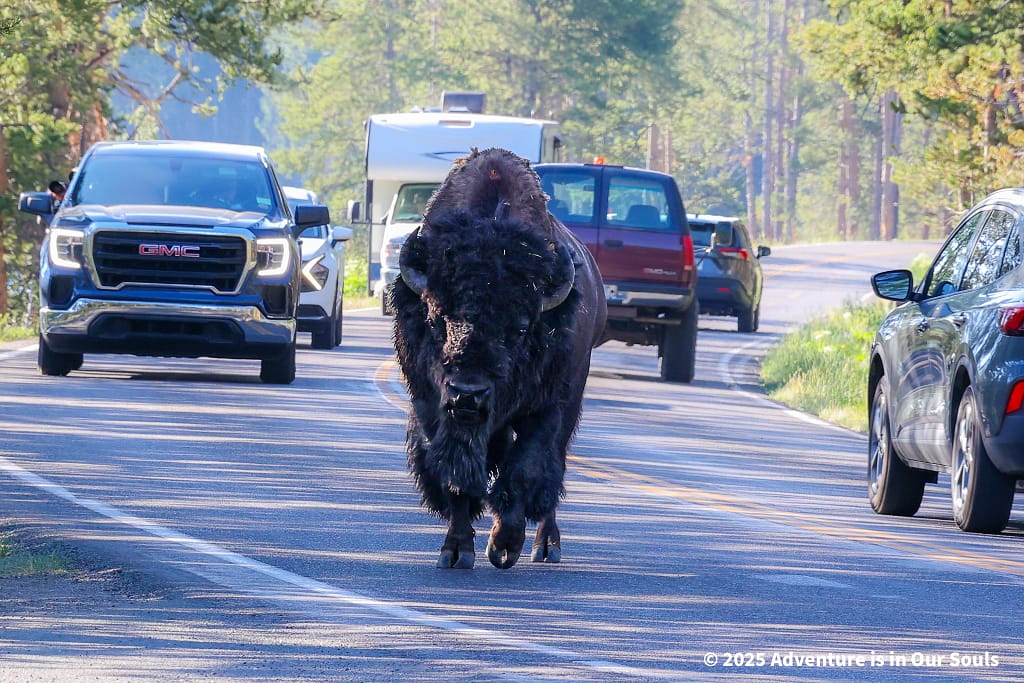
- Tip for Families: Patience pays off. Bring binoculars and snacks. Let the kids spot animals from a safe distance and keep them engaged with fun wildlife games, like counting bison or spotting birds.
Crossing the Continental Divide
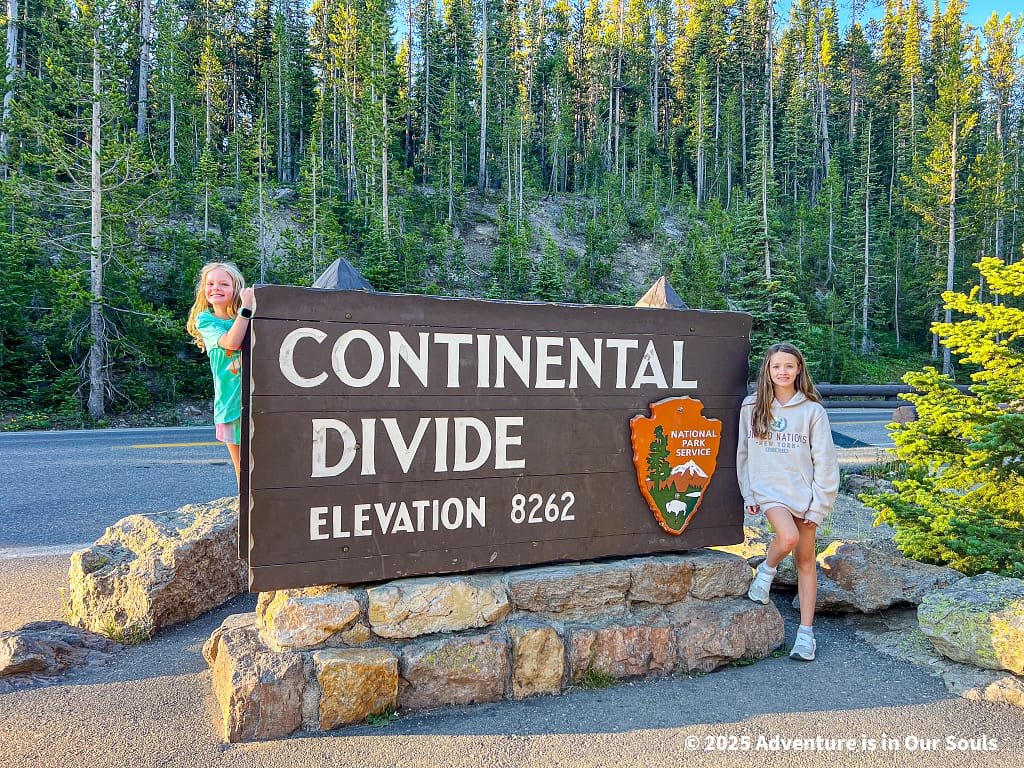
Our drive toward the Grand Canyon of Yellowstone brought us across the Continental Divide, a natural ridge that separates waters flowing to the Pacific Ocean from those heading to the Gulf of Mexico. Standing there, it felt almost magical to think that every drop of water on one side eventually travels hundreds of miles to the Pacific, while water on the other side flows toward the Gulf. The landscape here tells a story of millions of years of mountain building and volcanic activity, and it was easy to imagine early explorers tracing these streams as they charted the Yellowstone backcountry.
South Rim Drive and the Upper Falls
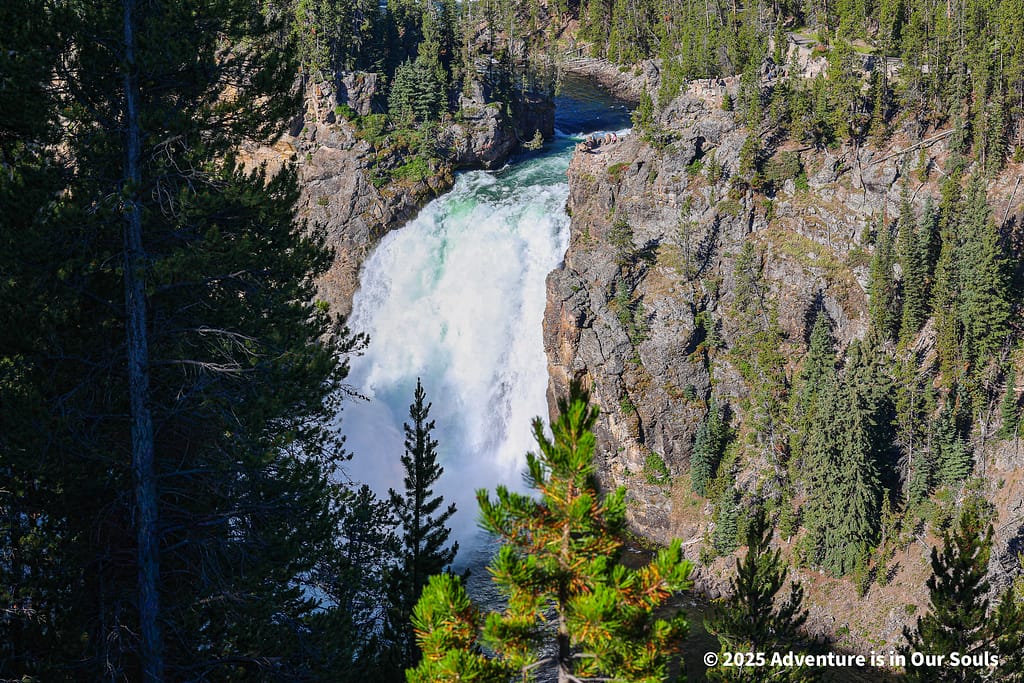
From the Continental Divide, we drove along South Rim Drive, which winds along the south edge of the Grand Canyon of Yellowstone. Our first stop was the Upper Falls Viewpoint, where the Yellowstone River plunges nearly 109 feet. The rushing water, flowing at an astonishing 20,000 gallons per second, created a roar that echoed through the canyon walls. Early survey teams in the 1870s documented this waterfall during some of the first scientific explorations of the park, and it was incredible to stand where history and nature meet.
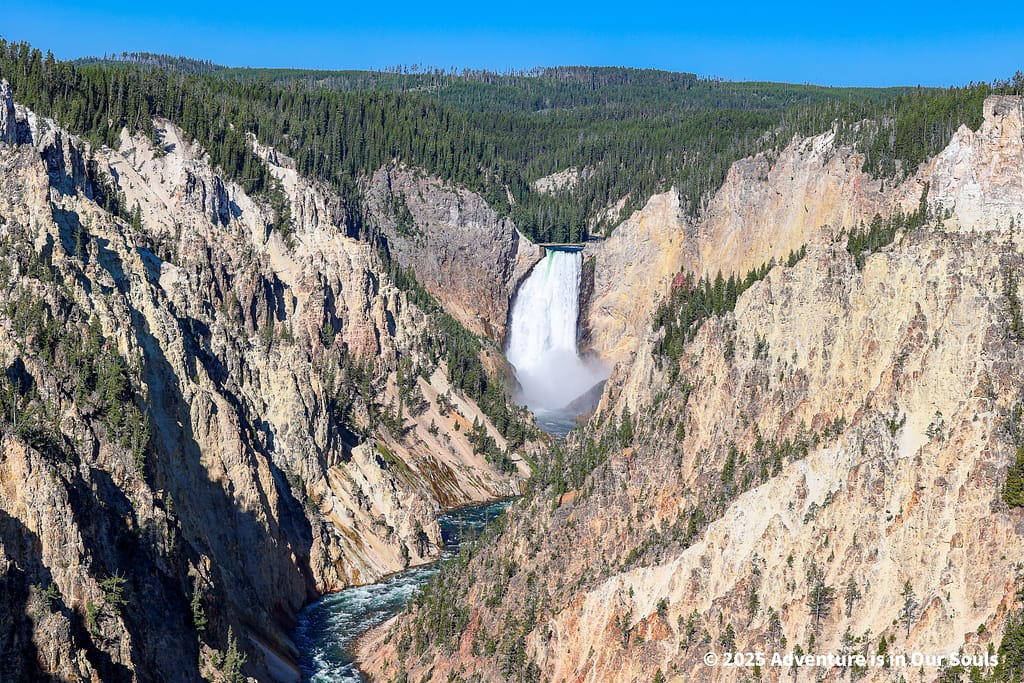
A short drive brought us to Artist Point, perhaps the most famous view in Yellowstone. From here, the Lower Falls drop 308 feet, framed by canyon walls streaked with brilliant reds, oranges, and yellows created by hydrothermal alteration over thousands of years. The combination of sheer height, rushing water, and striking colors made it a scene that felt straight out of a painting. The girls were captivated, counting the rainbow mist in the spray and imagining they were explorers witnessing this natural masterpiece for the first time.
North Rim Drive and Up-Close Views
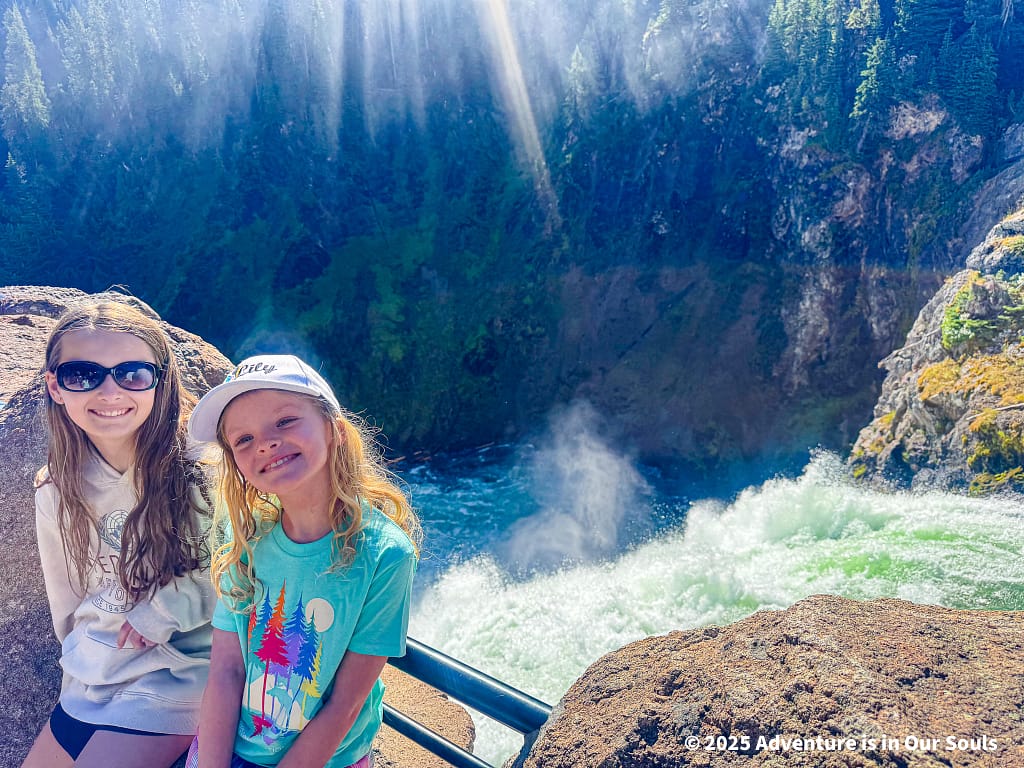
To see the canyon from a different angle, we explored North Rim Drive, where the viewpoints offered a more intimate perspective of the Yellowstone River’s raw power. At the Brink of the Upper Falls, we could stand just a few feet from the edge, feeling the mist on our faces and the thundering force of water below. The scale of the canyon was breathtaking, and it was easy to understand why Yellowstone’s landscapes have inspired countless artists and photographers.
Across from Artist Point, Grand View provided a dramatic sense of the canyon’s depth, revealing layers of rhyolite and iron-stained cliffs that seemed almost sculpted.
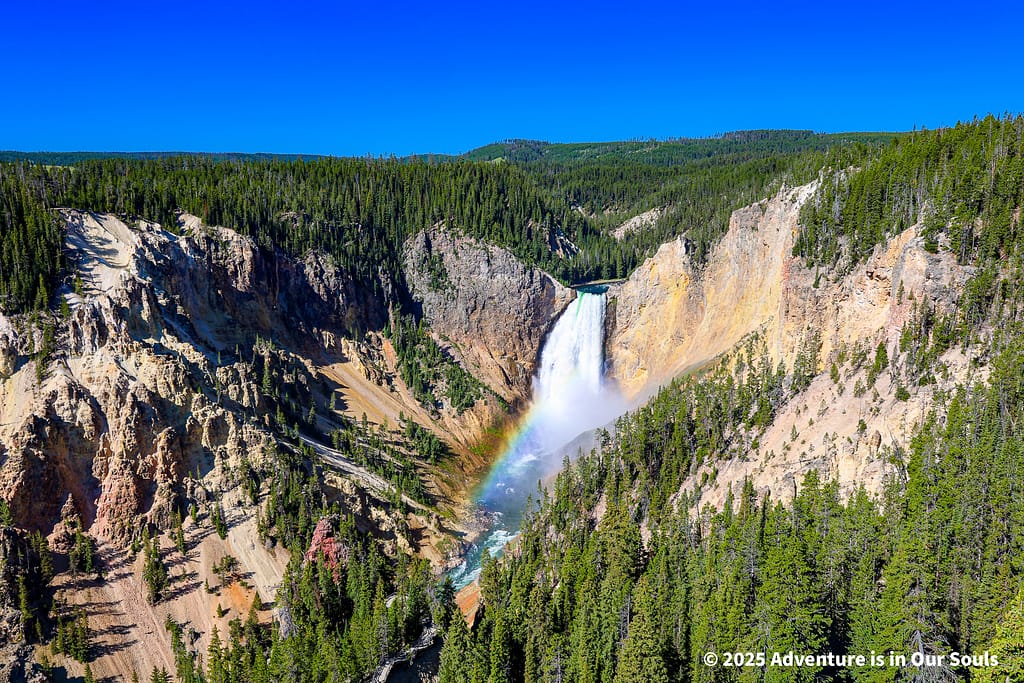
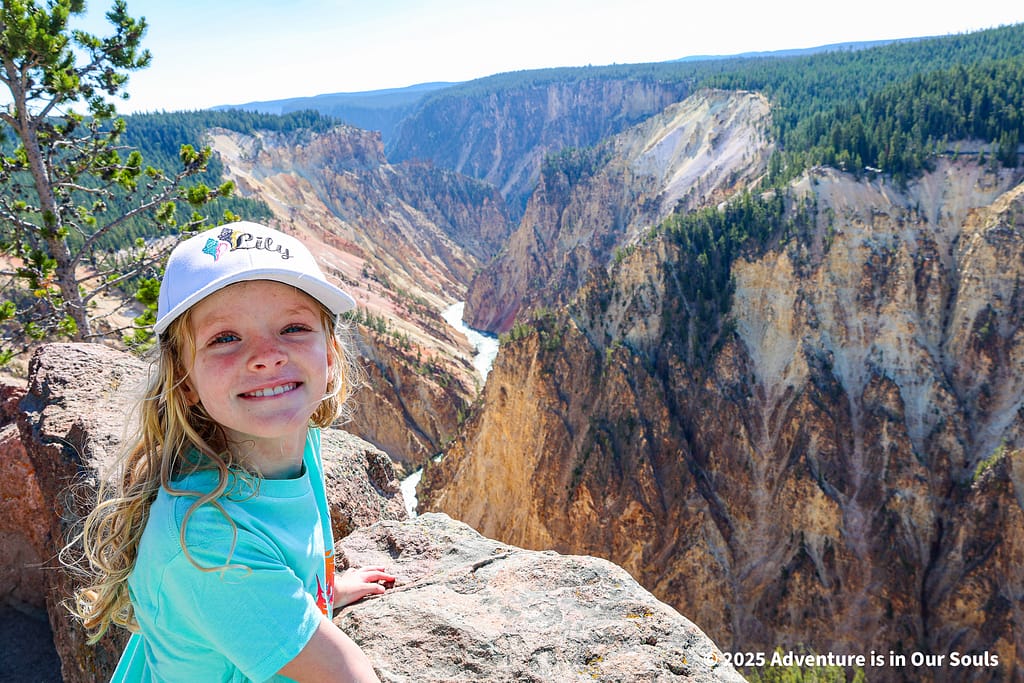
At Inspiration Point, we looked along the length of the canyon, tracing the Yellowstone River as it carved its way through the rocks over thousands of years. From this elevated vantage, the sweeping views reminded us of how dynamic and ever-changing Yellowstone’s landscapes truly are, and we spent a long time pointing out the twists in the river.
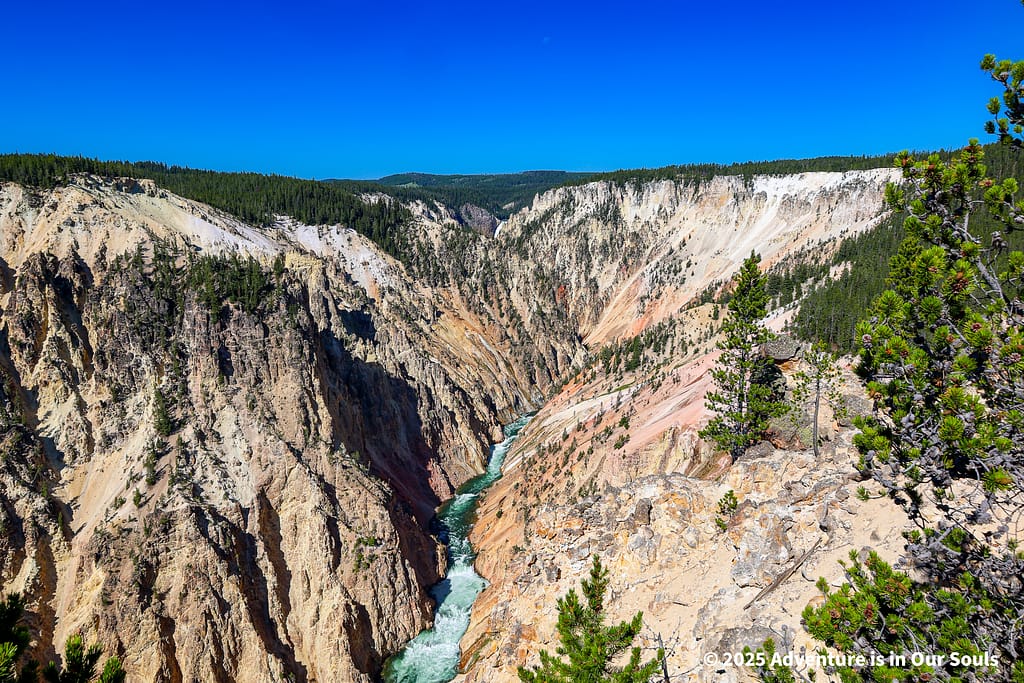
- Tip for Families: Use the viewpoints to give kids perspective on the scale of the canyon. Encourage them to sketch the views or take photos. Make a game of identifying waterfalls, rock colors, and the river’s path.
Canyon Lodge
After exploring the Grand Canyon of Yellowstone from multiple viewpoints, we stopped at Canyon Lodge for lunch. The lodge sits near the heart of the canyon and has long served as a hub for visitors exploring this dramatic part of the park. The original building was constructed in 1910 but was demolished in 1959 due to structural issues. Today, the lodge complex is the largest accommodation area within Yellowstone, supporting millions of visitors each year with dining, lodging, and essential services. Eating here gave us a chance to rest and soak in the canyon views.
Mud Volcano Trail
After lunch, we returned to the Grand Loop and stopped at the Mud Volcano Trail, an area that early explorers in the 1870s described as violently erupting with mud and steam. The entire hillside is heated by the massive volcanic system beneath Yellowstone, and walking through this area is a vivid reminder of the park’s active geothermal heart.
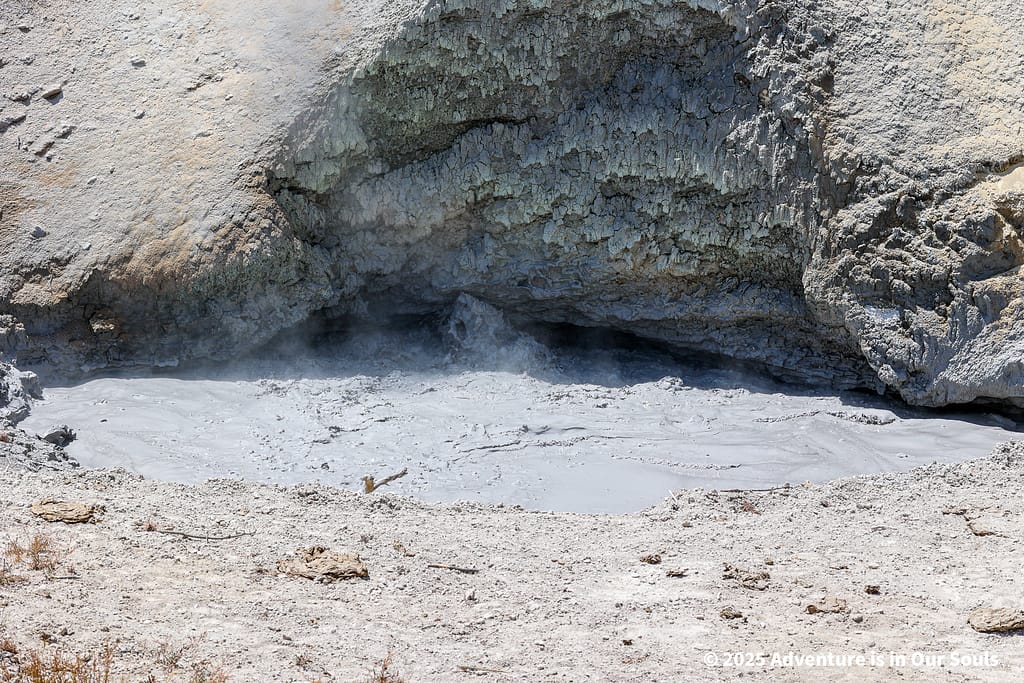
One of the highlights along the trail was Dragon’s Mouth Spring, a feature that releases steam from a deep cave where hot water surges against the cavern walls. Early visitors imagined the rumbling sounds came from a mythical creature inside the earth, giving the spring its evocative name. Even from a distance, the steam rising against the rocky hillside creates a dramatic and almost magical scene. The girls were thrilled by the sound and movement, imagining dragons lurking beneath the earth while learning about the geological forces creating this spectacular display.
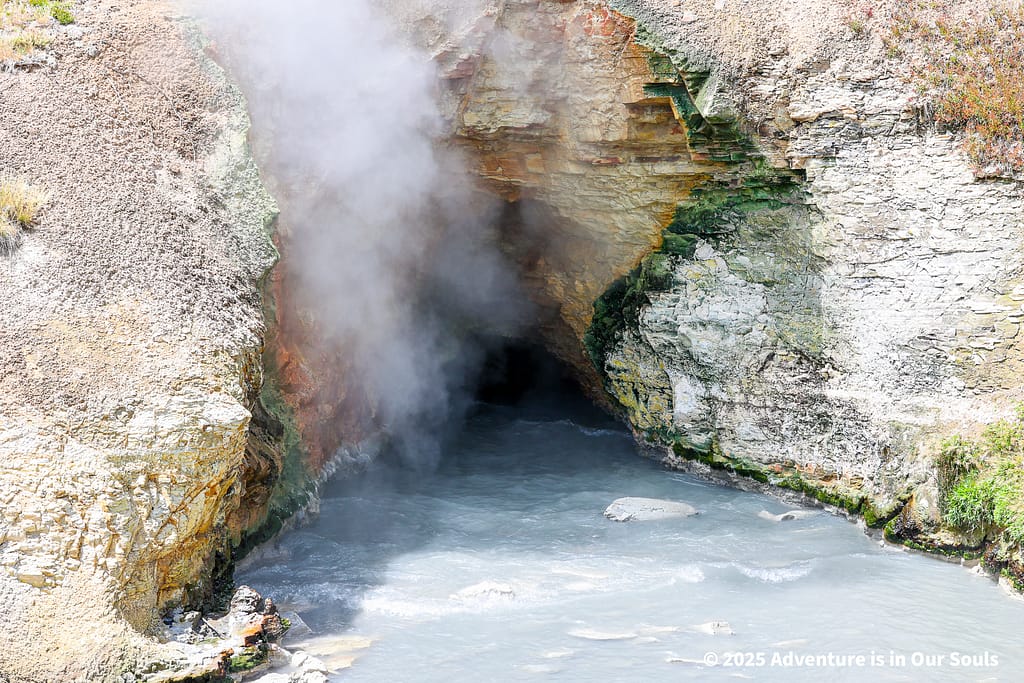
- Tip for Families: The mud pots smell strong, which can be funny for kids. Explain the science behind it.
Lake Yellowstone
As we continued south along the Grand Loop, we arrived at Lake Yellowstone, where we would spend our final night in the park. The lake covers more than 136 square miles at an elevation of nearly 8,000 feet, making it one of the largest high-elevation lakes in North America. It was formed by past volcanic activity, and today it plays a critical role in the park’s ecosystem, supporting fish, birds, and geothermal features along its edges.
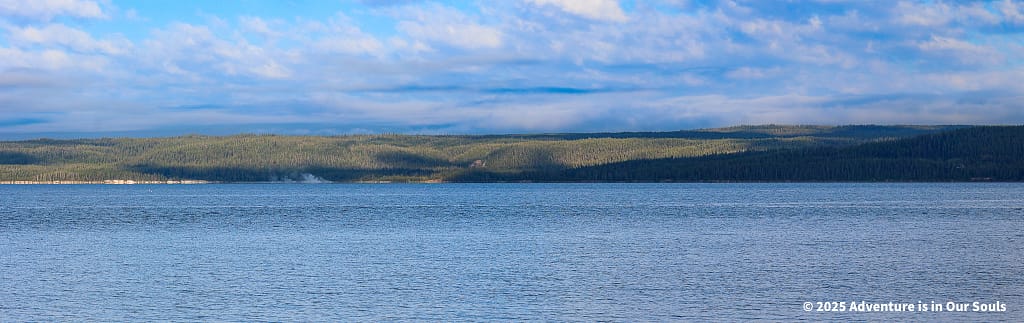
We stopped at Fisherman’s Bridge, a historic site once famous for trout fishing before restrictions were introduced to protect the native cutthroat trout population. From the bridge, the girls loved watching the water rush over volcanic rock ledges, imagining what it would be like to fish here long ago.
- Tip for Families: At Lake Yellowstone, early morning wildlife viewing is ideal; carry binoculars and point out elk, deer, and birds along the shoreline.
Day 6: Leaving Yellowstone
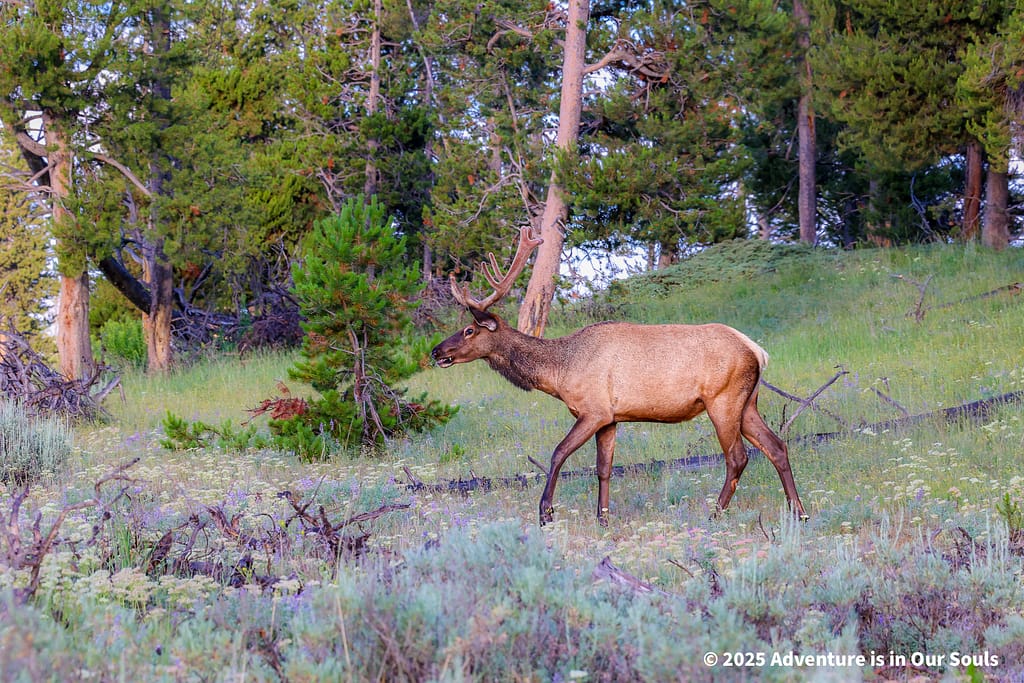
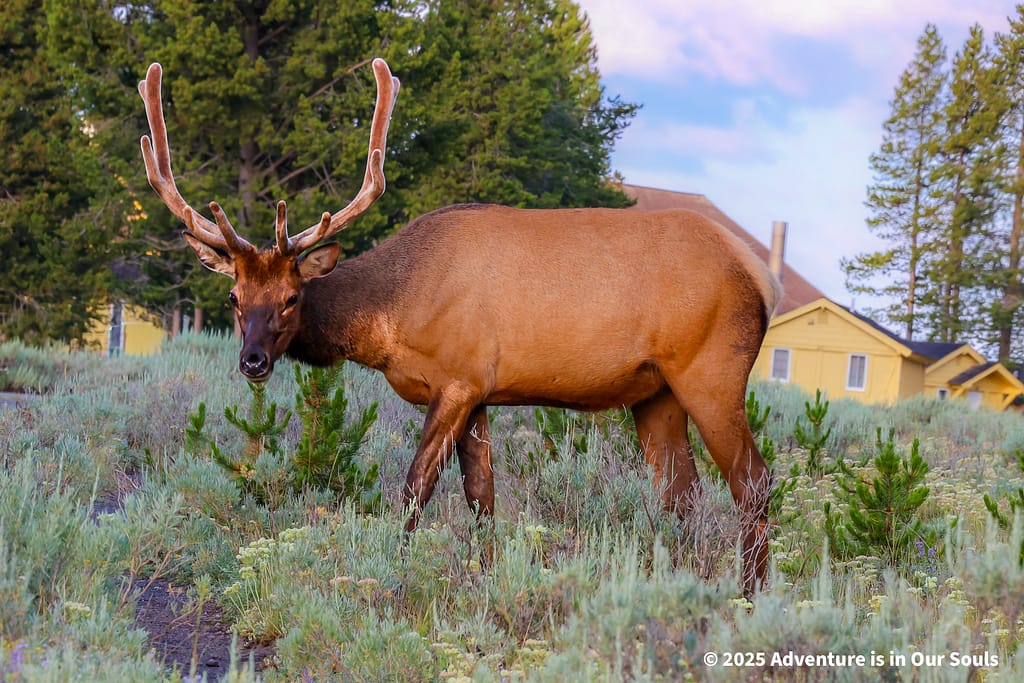
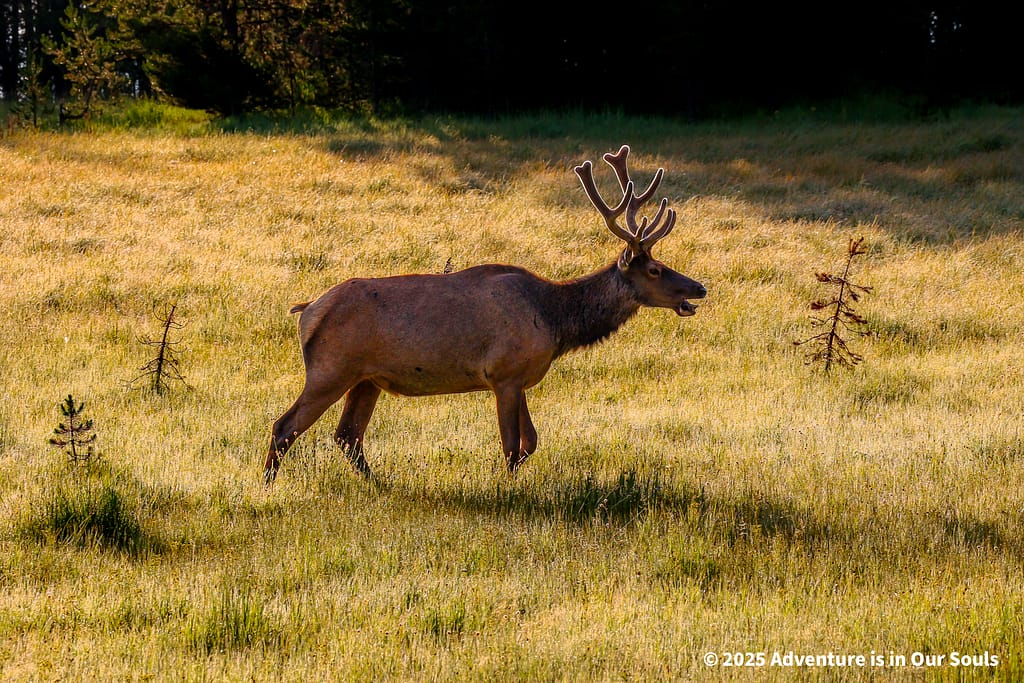
As the sun began to rise, we packed up to drive towards Grand Teton National Park. We spotted several bull elk and black-tailed deer bucks grazing peacefully around the cabins and near the lake. They seemed completely unbothered by our presence, giving us a final, serene wildlife moment before the day ended.
Family Verdict
Our journey through Yellowstone National Park was nothing short of magical. From the rolling valleys of Lamar Valley and the imposing bison herds to the steaming terraces of Mammoth Hot Springs and the unpredictable eruptions of Old Faithful, every stop offered a new adventure for the girls. Buttercup and Spider Monkey were fascinated by the wildlife, while we all marveled at the raw power of nature from the hydrothermal landscapes of the Norris and Upper Geyser Basins to the thundering waterfalls in the Grand Canyon of Yellowstone.
Staying at Mammoth Hot Springs, the Old Faithful Inn, and Lake Yellowstone Hotel allowed us to experience the park from different perspectives, each offering unique charm and history. While the Old Faithful Inn was our least comfortable stay, the location more than made up for it, putting us right in the heart of the geyser activity.
For families, Yellowstone is more than just a national park. It is a living classroom and a playground where wildlife, geology, and history come together in spectacular fashion. The park’s diverse landscapes and abundant wildlife make it a perfect destination for creating lasting memories. Every twist of the road brought new discoveries, and the girls were constantly engaged with the sights, sounds, and smells of the park’s wilderness. Yellowstone’s grandeur is unmatched, and experiencing it as a family was truly unforgettable.
Make sure to check out our nearby adventures in southern Montana, Beartooth Highway, Yellowstone National Park, Grand Teton National Park, Jackson Hole, Craters of the Moon National Monument, and southern Idaho. Follow along on our other amazing family travel adventures at www.adventureisinoursouls.com.